Tree · Cupressaceae
Hinoki Cypress
Chamaecyparis obtusa
Give it acidic soil, steady moisture, and shelter from harsh wind, and this slow evergreen holds its shape for a lifetime.
Full sun
Every 5–10 days
USDA 4–8
50–75 ft · 15.2–22.9 m
Overview
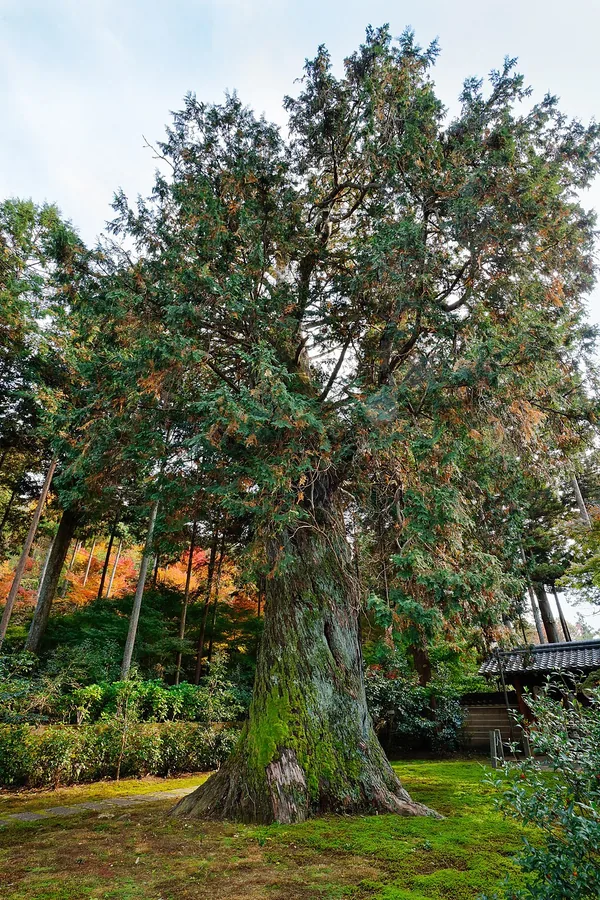
The Hinoki cypress reads as a quiet piece of architecture in the garden, a slow, stately evergreen out of the mountain forests of Japan, where the wild trees grow to great age and height. It counts among the false cypresses, the genus Chamaecyparis, set apart from the true cypresses by its scale-like foliage held in flat, fanning sprays. Pass a hand across it and the resinous scent rises, the same character that has made its timber prized for centuries.
Most gardens frame their design around one of its many cultivars rather than the towering wild form, and that range is the appeal. Breeders have drawn dwarfs, golden forms, and twisted, congested shapes from the species, so the same plant can anchor a courtyard as a knee-high bonsai or line a path as a slender 20-foot column. It settles into a scheme as a year-round backbone, green through every season and hardy across USDA zones 4 to 8.
This is a plant for the long, unhurried garden. It grows slowly and asks little once it has taken to its place, holding to a single rule that shapes how you keep it: it will not regrow from bare wood, so what you remove stays gone. Set it in acidic, well-drained soil with sun and a sheltered aspect, and it rewards the patience with decades of calm, dependable structure.
Care
The short version: full sun to part shade in moist, acidic, well-drained soil, kept evenly watered but never waterlogged, with light pruning only and shelter from drying winter wind.
Light
The Hinoki cypress shows best in full sun, which keeps its growth dense and draws the warmest color from the golden cultivars, a real consideration where it stands as a focal point. It will accept partial shade, but under too little light the form opens and thins, and the lower branches are the first to lose their fullness.
Water
Keep the soil evenly moist but never waterlogged, watering roughly every 5 to 10 days and more often through a dry spell. Attention counts most while the tree is establishing, when steady moisture in those first seasons sets it up for years to come. Soggy ground is the one condition it will not abide.
Soil
Give it fertile, acidic, well-drained loam at a pH between 5.0 and 6.5. Drainage is the point to get right, because the roots rot in standing water, so heavy clay wants lightening with organic matter or the tree set a little proud on a raised spot.
Temperature
The tree stands up to a wide range, hardy from about -29°F to 100°F (-34°C to 38°C) and at ease through USDA zones 4 to 8. It takes real cold in stride, though a young plant left open to harsh winter wind can scorch, which shapes where you site it.
Humidity
Ordinary outdoor humidity suits it, so there is no level to aim for. What matters more to its long-term look is air movement and shelter from drying wind, which in winter can pull moisture from the foliage faster than the frozen roots can send it up.
Feeding
Feed once in spring with a balanced, slow-release fertilizer made for acid-loving evergreens. A single seasonal feeding is ample for so slow a grower, and a formula that keeps the soil acidic holds the foliage a deep, even green that reads well against a facade or a border.
Pruning
This is a tree that asks for little to no pruning beyond clearing dead or damaged branches. The rule that governs its shape is never to cut back into bare old wood, which will not resprout, so every cut belongs within the living, green foliage.
Repotting
Container and bonsai specimens want fresh soil and root work every 2 to 3 years. Roots circling the pot, escaping the drainage holes, water running straight through, or growth slowing to a crawl all say the season has come to repot.
Size & spacing
The full species is a forest tree, reaching 50 to 75 feet (15 to 23 m) tall with a spread of 15 to 25 feet (4.6 to 7.6 m), so a landscape specimen wants real room and a considered spot. Dwarf cultivars keep to a fraction of that, which is why they suit courtyards, containers, and bonsai so gracefully.
When to plant
Place a Hinoki cypress in the garden in spring or early fall, when the soil turns easily and the weather stays mild enough for the roots to take hold before high summer or a hard frost. Both windows give this slow-rooting evergreen room to settle, and since it earns its keep by form rather than crop, there is no harvest to arrange the calendar around.
Northern hemisphere
Southern hemisphere
Typical months for a temperate climate: start earlier in warm zones, later where spring frosts linger.
- Plant: spring or early fall
Hardiness
USDA hardiness zones: 4–8
Temperature: down to -34°C
Troubleshooting
Most of what troubles a Hinoki cypress comes down to a handful of causes: soil that lingers too wet, winter wind stripping moisture from the foliage, and a cut carried into wood that cannot grow back. Read the early signs and the tree can be spared a lost branch. Match what you see below, then act while it still counts.
A whole tree browning and wilting into decline
When a specimen fades from the inside while its bed stays wet underfoot, the cause is usually root rot, and often the Phytophthora form that takes hold in waterlogged ground. A look at the roots settles it, since sound ones stay firm and pale while failing ones turn dark and soft. Correct the drainage, ease off the water, and lift any survivor to a raised, free-draining position, because a Hinoki cypress left standing in wet soil seldom returns to form.
Fix:
- Improve drainage and stop overwatering
- Remove and destroy severely affected plants
- Replant in a raised or well-drained site with amended soil
Foliage gone bronze and dull with faint webbing
Foliage that loses its luster and turns bronze through a hot, dry season is the calling card of spider mites. A branch tapped over white paper reveals them as tiny specks that begin to move. A firm spray of water unseats the colony, a follow-up of horticultural oil or insecticidal soap sees off the rest, and a cypress kept well watered carries the setback with little fuss.
Fix:
- Spray plants forcefully with water to dislodge mites
- Apply horticultural oil or insecticidal soap
- Encourage natural predators by avoiding broad-spectrum insecticides
Silk bags swinging from thinning, chewed branches
The small spindles of silk and clipped foliage that hang from the twigs are bagworms, each one a case around a feeding larva. Handpicking through fall and winter is the tidiest answer, since the cases sit still and stand out once the season quiets. Should young larvae appear feeding in late spring, an application of Bacillus thuringiensis settles the matter before a branch thins out.
Fix:
- Handpick and destroy bags in fall or winter
- Apply Bacillus thuringiensis or an approved insecticide while larvae are young in late spring to early summer
Scorched foliage surfacing at winter's end
Browning that surfaces at winter's end, worst on the side that met the weather, is winter burn, the mark of sun and wind drawing moisture from foliage while the roots stay locked in frozen ground. The pruners can wait, since the buds within may still be green and alive. Let new growth reveal the true loss, remove only what stays dead, and see the tree well watered each fall before the ground freezes.
Fix:
- Wait for new growth before pruning so you can see the true extent of damage
- Prune out branches that remain dead
- Water well during dry fall periods before the ground freezes
Bare inner branches that stay brown for good
Interior or lower branches left as brown wood that never leafs out have been carried past return, most often by a cut or deep shade reaching into old leafless wood. A Hinoki cypress simply will not break new growth from bare wood the way a yew can. Keep the pruners within the living foliage and let light fall on the lower limbs, and every branch you mean to keep stays dressed in green.
Fix:
- Avoid cutting branches back beyond living foliage
- Maintain foliage on all branches you want to keep productive
Toxicity
For a home shared with animals, the news is easy: the Hinoki cypress is not toxic and does not appear among the plants that poison cats or dogs. A pet that takes a sprig may show a brief upset stomach from the fibrous, aromatic foliage, and no more. It can hold its place near pets, livestock, and children with confidence.
Safe for
People · Cats · Dogs · Horses · Rabbits · Livestock · Birds
Cats None
A cat that samples the foliage is in no genuine danger, as the plant holds no known toxin. A mouthful of the resinous needles may bring a little drooling or a brief upset stomach, and it settles on its own.
Dogs None
A Hinoki cypress makes an easy companion in a home with dogs. A chewed sprig of the fibrous, aromatic foliage rarely amounts to more than mild, short-lived stomach upset.
Horses Safe
The tree is not toxic to horses and has never been tied to poisoning them. As with any tree outside their usual grazing, an animal that takes in a great deal of foliage might feel a passing bellyache.
Rabbits Safe
Rabbits run no poisoning risk near this cypress. Its tough, resinous foliage holds little appeal as food, so most sample it once and drift away.
Livestock Safe
Cattle, goats, and sheep can share a paddock with a Hinoki cypress in safety, since it carries no toxin that reaches them. Grazing animals tend to pass over the bitter evergreen growth in any case.
Birds Safe
Birds keep good company with the tree, which so often gives shelter and nesting cover among dense conifers of its kind. Nothing in the foliage would bring them harm.
People Safe
The tree offers no poisoning hazard to people, and no part of it is eaten. Handling the foliage is safe, though the aromatic oils may unsettle very sensitive skin.
As with any plant, nibbling foliage may cause mild stomach upset in pets even though the plant is not considered toxic.
Varieties
In practice the garden reaches for a named cultivar rather than the full-size species, and the field runs from miniature bonsai dwarfs to gold-tinged columns. These are the selections worth knowing by name.
Nana Gracilis
A slow-growing dwarf treasured for the dense, shell-like sprays of its dark green foliage, which is what makes it a mainstay of rock gardens and bonsai.
Crippsii
A golden form whose pendant sprays reach their most luminous yellow when it is given full sun.
Gracilis
A compact, slender pyramid of dark green foliage that settles at about 10 to 20 feet (3 to 6 m).
Fernspray Gold
It carries arching, fern-like golden-yellow sprays on a loose, layered frame.
Kosteri
A dwarf, spreading cultivar that gathers its bright green foliage into flat, horizontal fans.
Tetragona Aurea
An irregular dwarf whose congested, four-sided golden foliage lends it an unusual texture.
How to propagate
Hinoki cypress can be increased by more than one route, though only cuttings and grafts return a faithful copy of a named cultivar. Seed serves for the species, but it yields variable seedlings.
Stem cuttingsModerate
Late summer to fall · Several weeks to a few months to root
Cuttings are the usual route to a faithful copy of a named cultivar, all the more useful because an established tree resents being moved. Take semi-hardwood cuttings from late summer into fall and root them under mist, where they find their feet over several weeks to a few months.
GraftingDemanding
Late winter · Weeks to months
Nurseries reserve grafting for the choicer cultivars, joining them to seedling rootstock in late winter so the union can knit over the weeks to months that follow. It is exacting work, better placed in the hands of a practiced grower.
SeedModerate
Spring · Weeks to germinate
The straight species rises readily from seed sown in spring, with sprouts over a few weeks. The seedlings will not echo a named cultivar, though, since they do not come true.
Myths
The Hinoki cypress is a true cypress.
It belongs to the genus Chamaecyparis, the false cypresses, which stand apart from the true cypress genus Cupressus even while both share the Cupressaceae family. Its other common name, Hinoki false cypress, tells the same story. The plant is a false cypress, not a true one.
An overgrown Hinoki cypress can be hard-pruned into the bare wood to renew it.
Unlike a yew, this false cypress raises no fresh growth from old leafless wood. A branch cut back to bare brown wood only dies. Keep every cut within the living, green foliage.