Shrub · Cupressaceae
Creeping Juniper
Juniperus horizontalis
Set it in full sun and soil that drains, and this hardy evergreen carpet practically tends itself.
Full sun
Every 10–21 days
USDA 3–9
6–18 in · 15–46 cm
Overview
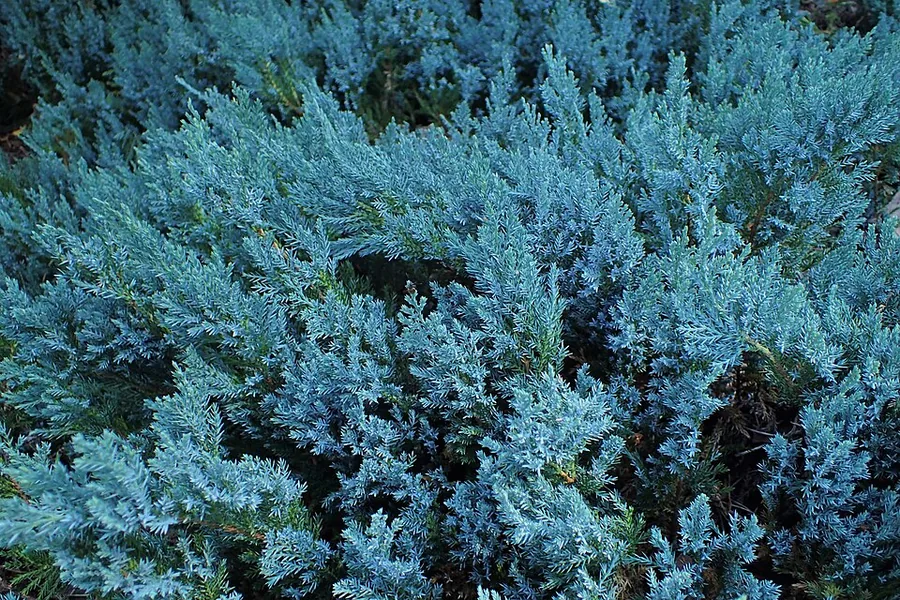
Creeping juniper is the kind of low, spreading evergreen that hugs the ground and quietly defines the floor of a planting. A member of the cypress family, it grows wild through the cold north of the continent, which explains its ease with winters as low as -40°F (-40°C). One plant can reach 4 to 8 feet (122 to 244 cm) sideways while rising scarcely a foot off the soil.
Designers lean on it to dress slopes, fill rock gardens, and soften hot, dry banks where most plantings give up. Settled in, it makes few demands, taking lean sandy soil, salt, drought, and full glare in stride. Because its trailing stems root where they land, the carpet stitches itself together over the seasons, a low-maintenance backdrop for the rest of the garden.
The one indulgence it refuses is wet feet. Give it ground that drains quickly, keep water off the foliage, and leave it room and air, and it holds its calm, even look for decades. Pack it in or leave it sitting in damp soil, and that easy resilience gives way to blight and root rot.
Care
The short version: full sun, soil that drains in a hurry, and very little water once it has settled. Pass over the rich beds and the regular watering can, leave each plant space to roam, and let it run dry between drinks.
Light
Creeping juniper asks for full sun, and the more the better. Strong light keeps the carpet tight and the color honest, while shade thins the foliage and opens the door to the blight that preys on damp, crowded growth.
Water
Settled in, it is very drought tolerant and looks for water only every 10 to 21 days, if even that. Water deeply but seldom, let the soil run dry in between, and keep the spray clear of the foliage, since damp leaves invite tip blight.
Soil
Above all give it soil that drains fast, be it sandy, rocky, or poor. It handles a broad pH span from 5.5 to 8.0 and takes to lean ground, yet it cannot survive anywhere the water lingers.
Temperature
This is a remarkably tough evergreen, hardy from -40°F to 100°F (-40°C to 38°C). Savage winters and scorching summers leave it unbothered, which is exactly why it earns a place on exposed banks where gentler plantings fold.
Humidity
Creeping juniper leans toward low humidity and dry air around the foliage. Still, muggy air is the trouble, so the cure is never to add moisture but to open the plant so air drifts cleanly through it.
Feeding
Feeding hardly registers on its list of needs. A light balanced or slow-release fertilizer in spring earns its keep only when growth has stalled, and a plant in average soil can carry on for years with nothing at all.
Pruning
Prune in dry weather to clear dead, diseased, or blight-killed tips, reaching several inches below the damage into healthy wood and cleaning your blades between cuts. Thin the carpet from time to time to open it and keep air drifting through the middle.
Repotting
Repotting is rarely on the agenda, and most plants spend their whole lives in open ground. In a container, keep an eye out for roots circling or pushing through the drainage holes, water sliding straight through, or growth that simply halts.
Size & spacing
Plants keep low at 6 to 18 inches (15 to 46 cm) tall yet reach 4 to 8 feet (122 to 244 cm) across. Set them apart enough to knit together over time without crowding, which keeps air on the move and disease at bay.
When to plant
Creeping juniper is best set out in spring or early fall, while the soil works easily and the plant can find its footing ahead of fierce heat or hard frost. Small cones come in late spring, and the blue berry-like cones need two full seasons to ripen. With nothing to harvest, the whole point of timing is handing the roots an early start.
Northern hemisphere
Southern hemisphere
Typical months for a temperate climate: start earlier in warm zones, later where spring frosts linger.
- Plant: Spring or early fall
- Harvest: Inconspicuous cones in late spring; blue berry-like cones mature over two seasons
Hardiness
USDA hardiness zones: 3–9
Temperature: down to -40°C
Troubleshooting
Nearly every juniper complaint comes down to a pair of culprits: foliage that lingers wet and soil that holds water. Learn to read the tips, the inner branches, and the roots early, and a small flare-up never gets the chance to travel. Find your symptom below, then move while there is still time to help.
The whole mat thinning as roots turn brown
Standing moisture invites Phytophthora root rot, which turns the roots from white to reddish-brown and quietly cuts off what feeds the canopy. No spray will undo it once the roots have gone. Let the bed dry, lift anything that has been hit hard, and resettle it where the water moves through.
Fix:
- Allow soil to dry out; mildly affected plants may recover
- Improve drainage by amending with organic matter or pine bark or planting in raised beds
- Remove and discard severely affected plants
- Replant with resistant species in well-drained sites
Tips fading and dying back from the ends
What you are seeing is tip blight, the work of one of two fungi that settle in wherever foliage stays damp. Phomopsis favors the soft new flushes of spring and summer, and Kabatina turns up on older, scuffed tips toward the end of winter. Wait for a dry spell, trim the dead ends well into living wood, and wipe the blades clean after each pass.
Fix:
- Prune out blighted tips in dry weather, cutting several inches into healthy wood
- Disinfect pruners between cuts with 10 percent bleach or 70 percent alcohol
- Discard or destroy infected prunings
- Apply a labeled fungicide preventively for Phomopsis as new growth emerges if pressure is high (no effective fungicide for Kabatina)
Flat, speckled foliage threaded with webbing
Speckling and a faint web are the calling card of spider mites, which multiply quickly on plants that are hot, dusty, and stressed. Their busiest seasons are the cool runs of spring and fall. A firm jet of water knocks them down, and insecticidal soap or oil is worth keeping in reserve for the ones that return.
Fix:
- Dislodge mites with a strong, regular spray of water
- Apply insecticidal soap, horticultural oil, or a miticide if needed
- Avoid broad-spectrum insecticides that kill mite predators
Tapered silk bags dangling from stripped branches
Those swaying bags belong to bagworms, caterpillars that feed while hidden in a silk case woven with scraps of your juniper. Each case is packed with eggs that wait out the cold and become next season's brood. Strip the bags off across winter and into early spring, and treat the young larvae with Bt should they show.
Fix:
- Handpick and destroy bags in winter and early spring to remove overwintering eggs
- Spray Bt or another labeled insecticide on young larvae in spring
Pale scales and a sticky film on the needles
Those tiny white or gray bumps tucked under the needles are juniper scale, sap-feeders that leave foliage dull and faintly tacky with honeydew. A dormant oil spray in late winter smothers them before they wake. Watch for the crawlers in spring, and an insecticide closes the case.
Fix:
- Apply horticultural oil as a dormant spray in late winter
- Treat crawlers with a labeled insecticide during the spring growth flush
Brown galls trailing orange jelly in spring
Those swellings are cedar-apple rust, a fungus that has to have an apple or crabapple close by to finish its cycle. The firm brown knots open into bright orange tendrils through wet spring weather. Cut the galls away, and keep junipers clear of apples and crabapples from the start.
Fix:
- Prune out and destroy galls
- Apply a labeled fungicide (mancozeb or propiconazole) if needed
- Avoid planting near susceptible apples or crabapples
Brown, lifeless wood hidden within the mat
As the canopy thickens, the heart of the mat loses both light and airflow, and the inner branches give up while the surface stays green. This is a matter of spacing and density, not infection. Open the plant up by thinning it, clear the dead wood on a dry day, and set it in full sun with breathing room.
Fix:
- Thin and prune to open up the canopy and improve air movement
- Remove dead interior branches in dry weather
- Site in full sun with adequate spacing
Toxicity
Creeping juniper is an easy plant to live alongside, indoors and out. It does not appear on the ASPCA toxic-plant lists, and the most it tends to provoke is a mild stomach upset when a pet works through a quantity of the scented berries or foliage. The greater bother is the prickly foliage, which can scratch tender skin, so reach for gloves at pruning time.
Safe for
People · Cats · Dogs · Horses · Rabbits · Livestock · Birds
Cats Caution
A safe companion for the most part. Should a cat work through a good amount of the scented foliage or berries, the volatile oils can leave it briefly queasy, so it pays to discourage chewing.
Dogs Caution
A passing sniff poses no threat. Eat enough of the berries or foliage and a dog may drool or have a short spell of vomiting and loose stool, which settles without help.
Horses Caution
A nibbled sprig here and there is harmless, yet the berries and resinous oils can upset a horse's gut in larger amounts, so keep them from grazing it freely.
Rabbits Safe
Poses no recognized risk to rabbits, and the thick, prickly growth offers them so little that they usually pass it by.
Livestock Safe
Cattle, goats, and sheep can graze nearby without concern, as the sharp, resinous foliage seldom tempts them into eating much.
Birds Safe
Entirely welcome to birds, which feed on the blue cones and carry the seed along as they go.
People Safe
Safe to grow and touch, and certain juniper berries serve as a cooking spice. Because the prickly foliage can scratch or irritate tender skin, slip on gloves before you prune.
Aromatic foliage and berry-like cones may cause mild stomach upset if eaten in quantity; the prickly foliage can also irritate skin in sensitive people.
Varieties
Almost every creeping juniper on offer is a named cultivar, picked for its foliage color and just how flatly it grows. These are the names you are likeliest to meet.
Wiltonii (Blue Rug)
Lays down an exceptionally flat, low carpet of silvery blue-green foliage.
Bar Harbor
A quick-spreading, low grower whose feathery blue-green foliage warms to a mauve to purplish cast through winter.
Plumosa (Andorra)
Soft gray-green foliage rises into a gentle mound and shifts to a clear plum-purple as the cold arrives.
Mother Lode
A Wiltonii selection that trades the silvery look for golden-yellow foliage on the same very low, flat carpet.
Lime Glow
Lime to golden foliage gathers into a low, vase-shaped mound that warms to bronze over winter.
How to propagate
Creeping juniper can be increased three ways, and the route you choose comes down to how much patience you have and whether the new plants must mirror the parent.
Stem cuttingsModerate
Late fall to winter using semi-hardwood cuttings · Several weeks to a few months to root
Cuttings hold a named cultivar true to type. Take semi-hardwood cuttings across late fall into winter and dust them with rooting hormone, as juniper is slow to root and may need several weeks to a few months to take hold.
LayeringEasy
Spring through summer · One or more seasons
Layering simply follows what the plant already does, since trailing branches strike roots on their own wherever they touch soil. Pin a low branch down from spring through summer and allow it a season or more to anchor before you part it from the parent.
SeedDemanding
After cold stratification · Slow and variable, often a year or more
Seed is the long way around, fit for the patient alone. It calls for cold stratification first, then sprouts slowly and unevenly across a year or more, and it will not return a cultivar true to type.
Myths
Creeping juniper is poisonous and will seriously harm any cat or dog that touches or nibbles it.
Juniperus is absent from ASPCA toxic-plant lists, and the plant is treated as non-toxic across the board. At worst, eating a lot of the aromatic foliage or berries causes a mild, self-limiting stomach upset rather than any lasting trouble.
Junipers thrive in moist, rich soil and do better with frequent watering.
Creeping juniper is made for dry ground and asks for soil that sheds water fast. Wet, heavy, or overwatered ground is what brings on Phytophthora root rot, the single problem most likely to finish it off.
Sources
- NC State Extension Gardener Plant Toolbox
- USDA Forest Service Fire Effects Information System (FEIS)
- Clemson Cooperative Extension Home and Garden Information Center
- Iowa State University Extension and Outreach
- Washington State University Hortsense
- Lady Bird Johnson Wildflower Center (Native Plant Information Network, University of Texas at Austin)
- ASPCA Animal Poison Control