Vegetable · Cucurbitaceae
Watermelon
Citrullus lanatus
Give it full sun, warm soil, and room to sprawl, and watermelon turns a summer garden into the season's centerpiece.
Full sun
Every 7–14 days
68–95°F · 20–35°C
70–90 days
Overview
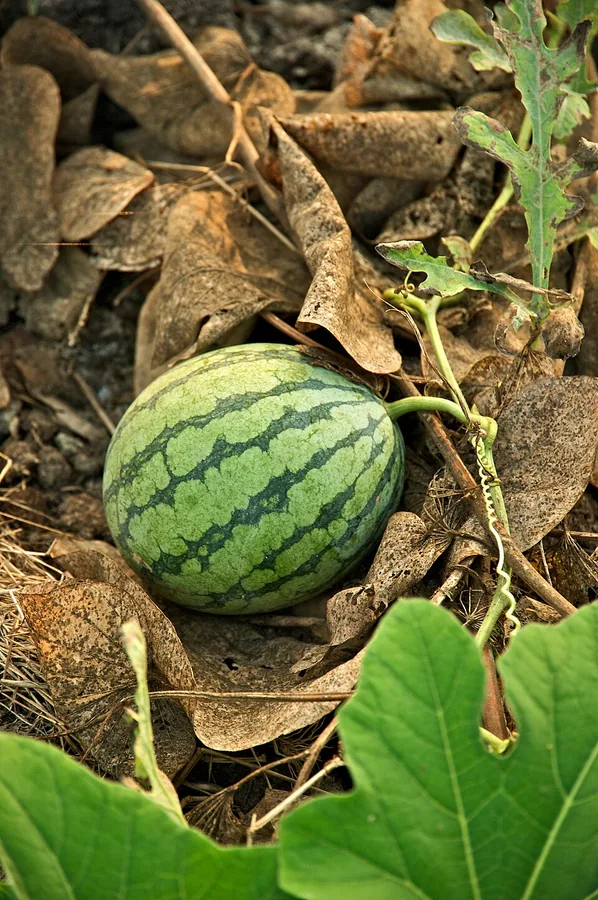
Watermelon is the summer garden's great sprawler, a member of the gourd family that shares a table with cucumbers and squash. Rather than climbing a trellis, it settles into a low, wandering carpet that can cover 5 to 10 feet (1.5 to 3 m) of a sunny bed while barely rising past your ankle. Give it the warmth and the long, unhurried season it craves, and it rewards the patience with fruit worth building a gathering around.
Part of watermelon's charm is how it choreographs its own success. Each plant sets male and female flowers and leaves the matchmaking to the bees, so a garden that hums with pollinators is one that fruits well. The seedless kinds ask a little more of the planner, needing a seeded variety nearby to set fruit at all, a small design note that pays off at the picnic table.
This is a plant for the sun-drenched corner of the plot, happiest with full sun, deep well-drained soil, and steady moisture as the vines run and the fruit swells. As harvest nears, easing back on the water lets the flavor deepen into something a store-bought melon rarely delivers. Fold it into the rhythm of high summer, and it becomes as much a part of the season as long evenings and cold slices on the porch.
Care
The short version: watermelon wants full sun, warm well-drained soil, and 1 to 2 inches of water a week as the vines grow and set fruit, then a little less as the melons ripen. Feed lightly with a low-nitrogen mix and give it generous room to sprawl across the bed.
Light
Watermelon wants a spot bathed in full sun, eight or more hours of it, with nothing casting shade across the bed. The vines trade all that light for sugar, so the sunniest corner of the garden delivers the sweetest, heaviest fruit.
Water
Offer about 1 to 2 inches (2.5 to 5 cm) of water a week in deep soaks every 7 to 14 days, keeping the soil evenly moist while the vines run and the fruit sets. Ease off as the melons ripen so the sugars gather, and water at the base to keep the planting clean and disease-free.
Soil
Set watermelon into deep, well-drained sandy loam enriched with organic matter. A pH of 6.0 to 6.8 suits it best, and that loose, warm ground gives the roots room to reach and drains freely after summer rain.
Temperature
This is a crop of real warmth, at ease between 68°F to 95°F (20°C to 35°C) and undone by frost. Cold soil holds the seed back and cool spells slow the fruit, so wait for settled heat before committing the bed.
Humidity
Ordinary outdoor humidity of 40% to 70% asks nothing special of the gardener. What shapes a healthy planting is airflow, since a damp, crowded canopy is where mildew and blight quietly take root.
Feeding
Work a low-nitrogen balanced fertilizer such as 5-10-10 into the bed before planting, then side-dress before the vines run and again after bloom. Keep the nitrogen in check, or the planting turns lush and leafy at the expense of the melons you are growing it for.
Pruning
Watermelon asks for almost no pruning, so let the vines wander and fill the bed as they please. Clear away any dead or diseased foliage, and holding each vine to a few fruit is the grower's trick for sizing up the melons that remain.
Repotting
This is a plant for open ground rather than a pot on the patio, so repotting rarely enters the picture. In a container it needs moving up only under real crowding, with roots matting at the base and the vines wilting between waterings.
Size & spacing
The vines stay low, just 4 to 8 inches (10 to 20 cm) tall, yet they range 5 to 10 feet (1.5 to 3 m) across the bed. Plan that generous footprint into the layout so the runners can roam and air can move freely through the planting.
When to plant
Watermelon keeps time with the warmth of the season. Start seed indoors a few weeks before the last frost or sow into warmed soil once the cold has lifted, and the harvest arrives to carry you from high summer into early fall.
Northern hemisphere
Southern hemisphere
Typical months for a temperate climate: start earlier in warm zones, later where spring frosts linger.
- Sow: 2 to 4 weeks before the last spring frost in biodegradable pots
- Plant: After all danger of frost has passed and soil is at least 65°F (18°C)
- Harvest: Summer to early fall
Hardiness
USDA hardiness zones: 3–11
Temperature: down to -40°C
Troubleshooting
Even a well-placed planting hits the odd snag, and with watermelon it usually surfaces on the leaves or the ripening fruit, tied back to water, weather, or pollination. Read the signs below and step in early, before a small setback shapes the whole season.
Runners yellowing and wilting one at a time
When runners fade and wilt one at a time, the cause is Fusarium wilt, a soil fungus that clogs the plant from within with no remedy once it arrives. A split lower stem shows brown streaking inside, and warm soil sharpens the damage. The affected plants are best pulled and destroyed rather than composted, with resistant or grafted varieties and a wide rotation away from cucurbits guarding next season.
Fix:
- Remove and destroy infected plants
- Do not compost diseased vines
Sunken brown rot marking the base of the fruit
That sunken, leathery patch at the base is blossom end rot, and it traces back to soil swinging between wet and dry rather than any calcium shortage in the ground. When the bed dries hard and then floods, the plant loses its way carrying calcium into the fruit. Steady, deep watering and a layer of mulch keep the moisture even, and lifting the marked melons lets the vine turn its energy to the rest.
Fix:
- Keep soil evenly moist with deep, regular watering
- Mulch to buffer soil moisture
- Avoid heavy nitrogen fertilizer that outpaces calcium uptake
- Remove affected fruit so the plant redirects energy
Striped or spotted beetles at work on leaves and blooms
The beetles working over the foliage are cucumber beetles, and beyond the chewing they can carry bacterial wilt, though watermelon weathers it better than cucumber or muskmelon. Handpicking keeps numbers down, and a floating row cover shelters young plants until they flower. Should a wilted stem give up a stringy thread of ooze when cut and pressed, that vine carries the wilt and is best removed from the bed.
Fix:
- Handpick beetles or use floating row covers until flowering
- Apply an approved insecticide if populations are high
- Remove and destroy any plant confirmed to have bacterial wilt
A pale, powdery bloom spreading over the leaves
That talc-like film is powdery mildew, a fungus that settles in when warm days meet a crowded, humid canopy. It resists a simple wipe and works through the oldest leaves first. Opening the planting for airflow, keeping water off the foliage, and clearing the worst leaves keeps it from traveling the length of the vine.
Fix:
- Improve air flow and avoid overhead watering
- Remove badly infected leaves
- Apply a labeled fungicide if needed
Fruit that fails to set or ripens small and lopsided
Plenty of bloom with little fruit points to poor pollination. Watermelon carries its male and female flowers apart on the same plant and leans on bees to bridge them, so too few visits leaves the crop thin or misshapen. Seedless types need a seeded variety within about 10 feet (3 m) to set at all, and skipping insecticide during bloom while planting flowers nearby keeps the pollinators coming.
Fix:
- Plant a seeded pollenizer within about 10 feet of seedless types
- Avoid spraying insecticides during bloom and while bees are active
- Add nearby flowers to attract pollinators
Dark, sunken spots across leaves, stems, and fruit
Dark, sunken marks on leaves, stems, and fruit signal anthracnose or gummy stem blight, two fungi that ride splashing water through warm, wet spells. The telltales are tan to dark leaf spots ringed in yellow, sunken patches on the fruit, and a gummy stem ooze where gummy stem blight has set in. Drip watering, dry hands on the vines, cleared debris, and a labeled fungicide through damp weather keep the planting ahead of it.
Fix:
- Remove infected debris
- Use drip irrigation and avoid handling plants when wet
- Apply a labeled fungicide on a preventive schedule
Toxicity
For a household that shares its summer with pets, watermelon is an easy yes: the fruit is safe all round. The sweet flesh is a non-toxic treat for people and animals alike, with only a large helping of tough rind or a mouthful of seeds likely to bring on a brief, mild stomach upset. Served as ripe, deseeded flesh in moderation, it belongs on the table without a second thought.
Safe for
People · Cats · Dogs · Horses · Rabbits · Livestock · Birds
Cats Safe
The flesh is safe, and most cats offer little more than a curious sniff. Only a generous helping of rind or seeds might bring on a passing bout of loose stool, and even that settles on its own.
Dogs Safe
Seedless or deseeded flesh makes a fine treat in moderation. A dog that bolts the tough rind or a mouthful of seeds, though, may spend a day with mild stomach upset.
Horses Safe
Horses take small pieces of flesh happily and without concern. As with any sweet treat, modest portions keep a sudden rush of sugar from unsettling the gut.
Rabbits Safe
A thin sliver of flesh now and then suits a rabbit nicely. The rind is best left off and the servings kept light, since the watery, sugary fruit can loosen the droppings when overdone.
Livestock Safe
Cattle, goats, and sheep make short work of surplus melons without harm, and growers often pass them the culls. A gradual introduction keeps a sudden change of feed from upsetting digestion.
Birds Safe
Backyard hens and pet birds peck the flesh and even the seeds with evident pleasure, and it doubles as a cooling snack through summer. Nothing in it does them any harm.
People Safe
Watermelon is a refreshing fruit enjoyed the world over, seeds and all. The flesh is safe for everyone at the table, children included.
Offer only ripe, rind-free flesh in moderation and remove seeds and rind before sharing with pets.
Varieties
Hundreds of watermelons span the spectrum from tidy icebox melons to showstopping giants. These few are the ones worth knowing as you plan the season.
Crimson Sweet
Crimson Sweet is the crowd-pleasing open-pollinated melon, striped of rind and sweet, crisp, and red at the heart, the one gardeners return to season after season.
Sugar Baby
Sugar Baby is the compact icebox melon, its small, round, dark green fruit ripening early enough to grace even a short season.
Charleston Gray
Charleston Gray is the elegant old standard, carrying large, oblong fruit beneath a soft pale gray green rind.
Jubilee
Jubilee is the generous one, a big, oblong striped melon grown for heavy yields, with open-pollinated forms like Jubilee II beloved in Texas.
Seedless (triploid)
Seedless triploids are the modern favorites for the table, sterile hybrids that set fruit only with a seeded diploid variety planted nearby to pollinate them.
How to propagate
Watermelon begins with seed, the only practical way to bring it into the garden. Raise transplants indoors for an early start, or sow straight into the bed once the weather turns generous.
SeedEasy
Start indoors about 2 to 4 weeks before the last spring frost in peat or paper pots to limit root disturbance · Seeds sprout in about 7 to 10 days at 70 to 90°F (21 to 32°C); transplant after frost once soil is at least 65°F (18°C)
Watermelon dislikes any disturbance to its roots, so seed goes into biodegradable peat or paper pots about 2 to 4 weeks before the last frost, later planted pot and all. Kept warm at 70°F to 90°F (21°C to 32°C), the seedlings appear in about 7 to 10 days. Hardened off and set out once frost has passed and the soil holds at least 65°F (18°C), they slip into the season without a check.
SeedEasy
Direct sow outdoors after all danger of frost has passed and the soil seed zone is at least 65 to 70°F (18 to 21°C) · Emerges in about 7 to 10 days in warm soil, then thin to the strongest plants
Sowing straight into the bed works just as well once frost has lifted and the seed zone reaches 65°F to 70°F (18°C to 21°C). Warm soil coaxes the seedlings up in about 7 to 10 days, after which they are thinned to the strongest. Direct sowing spares them any transplant shock, though the trade is a crop that may ripen up to two weeks later than transplants.
Myths
A watermelon keeps ripening on the kitchen counter after picking.
Once a watermelon leaves the vine, its sweetness is settled and will climb no further. What you pick is what you get, which makes harvesting at true ripeness the moment that matters, not any time spent waiting on the counter.
A hollow thump is the only dependable sign of a ripe melon.
The thump makes a charming ritual but a rough gauge. The dried, brown tendril nearest the fruit and a ground spot gone from white to creamy yellow read far truer, with a rind that has lost its gloss quietly confirming the call.
Watermelon fruit is unsafe for dogs and cats.
The flesh is perfectly safe for pets, with only a large helping of rind or seeds likely to bring a brief stomach upset. The ASPCA even lists the closely related honeydew melon as non-toxic to dogs, cats, and horses.