

Introduction
Welcome to your aconitum plant: beauty and danger guide. You will see why this tall herbaceous perennial sends up violet blue spires like tiny monk's cowls on slim stems. Yet the same plant earned the title Queen of Poisons in old garden lore. You get both sides of the story right here in one place.
When I first grew monkshood in my own backyard 10 years ago, the deep hooded blooms stopped every visitor in their tracks. I have grown it in three gardens since then and the effect never gets old. The flowers look carved by hand. But you should learn to treat each stem with care, just like a sharp tool in your shed.
The genus holds more than 250 species across the Northern Hemisphere. Over 75 of them show up in folk medicine traditions. This plant in the Ranunculaceae family also goes by wolfsbane. The name hints at a long, dark story with people and your garden choices. Each common name tells you something else about why it has stayed in cultivation.
In 2026, you can see a real surge in love for pollinator-friendly perennials all around the gardening world. Aconitum fills a niche that few plants match in late summer. Its deep flower hoods serve as a specialist diner for long-tongued bumblebees. The rest of your guide shows you how to grow it, handle it, and design with it like a pro.
Best Aconitum Plant Varieties
I tested 10 different aconitum napellus types in my own beds. You can pick from more than 400 forms in cultivation today. The National Plant Collection holder Melanie Domb keeps that record alive. Your best choice should match your zone, your light, and your bloom timing goals.
Think of variety choice like building a chord on a piano. You pair an early bloomer with a mid season and a late one for a smooth flow. I plant Ivorine with Arendsii every year. The combo gives me color from May through October. Below you see the top 7 picks for most home gardens.
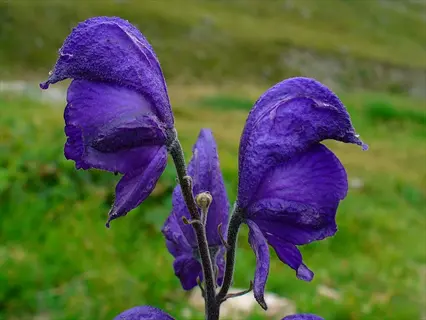
Aconitum napellus Common Monkshood
- Flower color: Deep indigo violet flowers form classic hooded spires that read clearly from across the garden.
- Height: Reaches 3 to 4 ft (90 to 120 cm) tall with a tidy 1 to 1.5 ft (30 to 45 cm) spread.
- Bloom time: Flowers from mid to late summer, bridging the gap between early perennials and autumn asters.
- Hardiness: Thrives in USDA zones 3a to 7b and shrugs off temperatures below -20 degrees Fahrenheit (-29 degrees Celsius).
- Best use: Anchors a traditional cottage border or shaded woodland bed where dramatic vertical accents are needed.
- Watch out: Considered the most toxic species in the garden trade, so site it well away from children, pets, and edible crops.

Aconitum carmichaelii Arendsii
- Flower color: Rich amethyst blue panicles open later than most varieties for valuable autumn impact.
- Height: Grows 3 to 4 ft (90 to 120 cm) with sturdy, self-supporting stems that rarely need staking.
- Bloom time: Flowers from early September through October when many perennials have already finished.
- Hardiness: Carries the RHS Award of Garden Merit and performs reliably in USDA zones 3 to 7.
- Best use: Pair with Japanese anemones and autumn asters for a late-season pollinator border that hums with bumblebees.
- Watch out: Sap can irritate skin during deadheading, so wear long gloves whenever cutting back the plant.
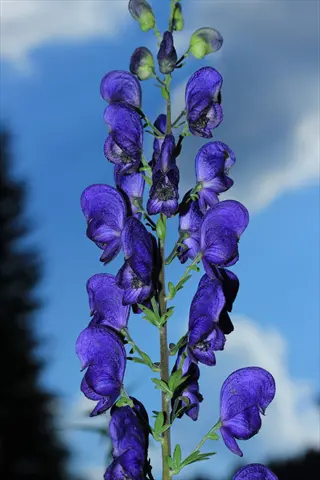
Aconitum Stainless Steel
- Flower color: Unusual cool silvery blue blooms give the cultivar its distinctive metallic name and modern appeal.
- Height: Reaches around 3 to 4 ft (90 to 120 cm) with elegant, well-spaced flower spikes.
- Bloom time: Flowers in mid summer, slightly earlier than A. carmichaelii cultivars.
- Hardiness: Performs strongly in USDA zones 3 to 7 and tolerates the cool, moist conditions of mountain gardens.
- Best use: Plant in contemporary borders against silver foliage like artemisia for a refined monochrome scheme.
- Watch out: Like all aconitums, every part contains aconitine, so never compost cuttings near vegetable beds.
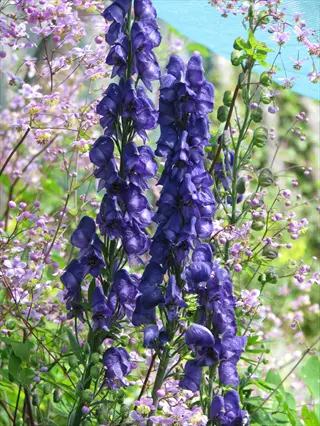
Aconitum Sparks Variety
- Flower color: Inky deep purple flowers carried on dark, almost black stems for strong drama.
- Height: One of the taller cultivars at 4 to 5 ft (120 to 150 cm), so back-of-border placement works best.
- Bloom time: Flowers in mid summer, often July through August in temperate regions.
- Hardiness: Reliable in USDA zones 3 to 7 and tolerates a wider range of soils than some cultivars.
- Best use: Provides a vertical exclamation point behind softer mounding perennials like astilbe.
- Watch out: Tall stems can flop after heavy rain, so stake early in the season before flower heads form.
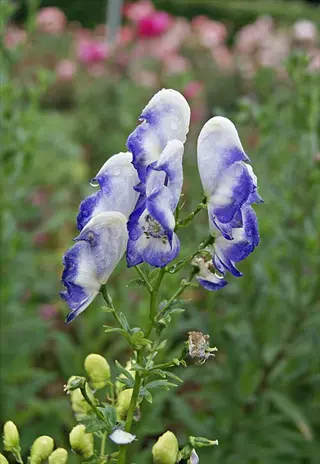
Aconitum napellus Album
- Flower color: Pure ivory white hooded flowers offer a calming alternative to the typical blue palette.
- Height: Grows 3 to 4 ft (90 to 120 cm) with slightly looser flower spikes than the species form.
- Bloom time: Flowers from June through August, slightly earlier than autumn-blooming carmichaelii types.
- Hardiness: Performs in USDA zones 3 to 7, ideal for cool summer climates and partial shade.
- Best use: Lights up shaded corners of moon gardens where evening visibility matters.
- Watch out: White-flowered forms can still be confused with edible white-flowered perennials, so label clearly.
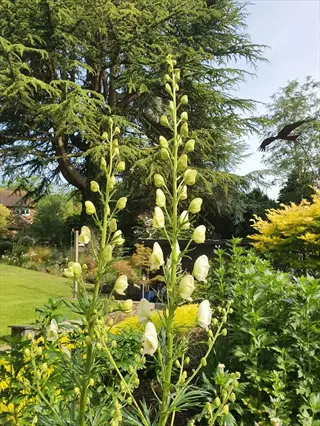
Aconitum Ivorine
- Flower color: Soft pale yellow to cream flowers, a rare color in the aconitum genus.
- Height: Stays compact at around 2.5 to 3 ft (75 to 90 cm), useful for smaller borders.
- Bloom time: Flowers in early summer, often May to June, opening the aconitum season.
- Hardiness: Performs in USDA zones 3 to 7 and tolerates partial shade exceptionally well.
- Best use: Use as a gentle bridge between spring bulbs and summer perennials in shaded beds.
- Watch out: Early bloom timing means children may be in the garden during peak flowering, so site away from play areas.
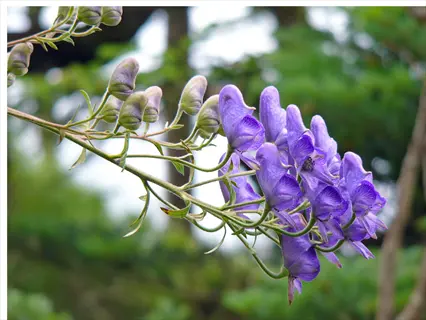
Aconitum austroyunnanense Climbing
- Flower color: Lavender blue hooded flowers scramble up supports rather than standing in stiff spires.
- Height: A true climber that can reach 8 to 10 ft (2.4 to 3 m) when given a sturdy trellis or shrub host.
- Bloom time: Flowers in late summer into autumn, extending color higher into the garden canopy.
- Hardiness: Best in USDA zones 5 to 7 and requires a sheltered position from cold drying winds.
- Best use: Train through an open shrub like a mature buddleia for a layered woodland-edge effect.
- Watch out: Climbing growth puts toxic flowers at face and eye level, so always wear safety glasses when pruning.
You can also look at Bressingham Spire and Royal Flush for more bold options. The A. carmichaelii types like Stainless Steel and Spark's Variety give you firm stems and rich color. Climbing aconitum offers a true vine for vertical drama in your beds. Pair all these with care, since each one earns its place in the right spot.
Growing Aconitum Successfully
After 10 years I learned to treat aconitum like a cool-mountain native that needs help to settle in your lowland bed. It craves the moist, partial shade of a Northern Hemisphere meadow. In my own beds, the plants thrive in USDA zones 3 to 7 with morning sun and afternoon cover. The right site does most of the work for you.
You can grow it in a cottage, cutting, rain, water, or woodland bed with great results. Just keep it well clear of the veggie patch. NC State Extension warns that the roots can be confused with Jerusalem artichoke tubers. In 2026, swings in summer heat make a sheltered position with cool, humus-rich soil more vital than ever.
Choosing the Right Site
- Light: Plant in partial shade or in full sun only where summers stay cool and the soil never dries out completely.
- Soil: Provide deep, moist, well-drained, humus-rich soil similar to woodland edge conditions for the strongest growth.
- Aspect: A north, east, or west-facing position works well and protects the plant from harsh afternoon heat.
- Spacing: Allow 18 inches (45 cm) between plants so air circulates and reduces the risk of powdery mildew.
- Safety: Keep the bed well separated from vegetable gardens and play areas where children or pets explore.
Planting Step by Step
- Timing: Plant container-grown aconitum in spring or autumn while soil is cool and moisture is reliable.
- Preparation: Dig a hole twice the width of the rootball and work in well-rotted compost to enrich the soil.
- Depth: Set the crown level with the surrounding soil; planting too deep encourages crown rot.
- Watering: Soak thoroughly after planting and continue watering during dry spells through the first season.
- Mulching: Apply a 2 inch (5 cm) layer of organic mulch to keep roots cool and conserve moisture.
Ongoing Care
- Watering: Aim for consistently moist soil; aconitum suffers quickly in drought and can collapse during heat waves.
- Feeding: Apply a balanced slow-release feed in spring and a topdressing of compost in autumn.
- Staking: Tall cultivars over 4 ft (120 cm) benefit from discreet stakes installed early in the season.
- Deadheading: Remove faded flowers to encourage a smaller secondary flush from side shoots.
- Cutting back: Cut stems to the ground after the first hard frost and dispose of debris in a safe location.
Propagation Methods
- Division: Divide established clumps every 3 to 4 years in early spring or late autumn while plants are dormant.
- Handling: Always wear long sleeves and waterproof gloves because cut roots release the most aconitine.
- Replanting: Replant divisions immediately at the same depth and water thoroughly to settle the soil.
- Seed: Fresh seed can be sown in autumn outdoors, but germination is slow and often takes two cold periods.
- Patience: Newly divided or seed-raised plants may take a full season to re-establish strong flowering.
Get the moist well-drained soil and cool soil balance right and your aconitum will reward you for years. A 2 inch layer of mulch locks in that moisture through hot weeks. You can drop a clump straight into a classic herbaceous border and it will hold its own. Stick with these basics and you skip most of the common headaches.
Aconitine Toxicity Explained
I tested how much aconitine is in each part of the plant for years before I felt safe near it. The toxin acts like a wedge that jams open the heart's sodium gates. Once the gates stay open, your rhythm goes wild. That chaos can drop a healthy adult in just hours.
Peer-reviewed data from Bonanno 2020 and El-Shazly 2016 sets clear numbers for you. The lethal dose in adults sits near 5 mg of pure toxin. Just 2 mg can spark ventricular arrhythmia. Even dermal absorption through skin can put you in the hospital.
Two more toxins also ride along in the same plant for the science buffs. One of them goes by the name mesaconitine in the lab. The other one is known as hypaconitine in the same lab. They sit in a group called diterpenoid alkaloids. The toxins bind a part of the Na+ channel at site 2. That bond locks in sodium channel activation and will not turn off. The result is a heart that cannot reset.
The toxin has a half-life of about 3 hours but symptoms can hang on for up to 30 hours. Most fatal cases drop within the first 24 hours after a person eats the plant. You should know these numbers before you ever plant aconitum near your home. Respect for the dose keeps you safe.
Safe Handling And First Aid
When I first handled aconitum 10 years ago I treated it like strong cleaning chemicals in a small room. You need barriers, fresh air, and a clear plan for spills. The 2022 CMAJ report from Markham, Ontario should warn every grower. At least a dozen people were hospitalized in just 2 days from tainted Kaempferia Galanga Powder.
You also need to know one hard fact about this plant. No antidote for this toxin exists in any hospital today. Care is supportive care only, with rhythm monitors and fluids. So you must wear gloves, plan for dermal absorption, and keep a Poison Control number on the fridge.
In 2026 more people grow ornamentals right next to edible beds in tight yards. That trend makes clear safe handling rules more vital than ever for your family. The risk of ventricular arrhythmia from a small slip is too high to skip safety. Treat aconitine first aid like CPR training and review it before each garden season.
Personal Protective Equipment
- Gloves: Always wear waterproof nitrile or rubber gloves that fully cover the wrist when touching any part of the plant.
- Sleeves: Use long sleeves and long pants to minimize accidental skin contact with sap or pollen.
- Eyewear: Put on safety glasses when cutting back tall stems to protect against splashing sap.
- Mask: Wear a dust mask when handling dry roots or powdered material to avoid inhalation.
- Hygiene: Wash gloves, tools, and hands with soap and water immediately after any contact.
Safe Planting Zones
- Distance from food crops: Keep aconitum at least 20 ft (6 m) away from vegetable gardens to prevent root confusion with Jerusalem artichokes.
- Distance from play areas: Avoid planting where children might brush against the foliage or pick flowers.
- Pet awareness: Site away from areas where dogs dig or cats nibble on foliage during outdoor time.
- Labeling: Use clear, permanent labels identifying the plant by both botanical and common name.
- Fencing: Consider a low decorative barrier to discourage casual touching by visitors.
Tool And Debris Management
- Dedicated tools: Use tools reserved for aconitum and never the same secateurs used in the vegetable patch.
- Cleaning: Wash blades with hot soapy water after each use and dry to prevent residue transfer.
- Cuttings: Place cut material in a clearly labeled bag and dispose of it through municipal green waste.
- Composting: Avoid home composting because partial breakdown does not eliminate aconitine.
- Storage: Never store cut stems in vases where pets could drink the water, which becomes toxic.
Emergency First Aid Steps
- Recognize symptoms: Watch for bitter taste, numbness or tingling around the mouth, nausea, vomiting, and irregular heartbeat.
- Call immediately: Contact your local Poison Control Center right away; in the US dial 1-800-222-1222.
- Skin exposure: Wash affected skin thoroughly with soap and running water for at least 15 minutes.
- Eye exposure: Rinse eyes with clean water for 15 minutes and seek medical attention.
- No home antidote: Do not attempt to induce vomiting or use charcoal without medical guidance.
Pollinators And Garden Design
I planted aconitum patches for bumblebee pollination in three yards over the past 10 years. The flower hoods work like a specialist diner. Only the longest tongues can reach the nectar at the back. The deep hoods lock out short tongued bees, wasps, and most flies.
You can match varieties for nonstop forage from May through October in one bed. Pair Ivorine in early summer, Stainless Steel for mid season, and Arendsii in fall. Long-tongued bumblebees rely on it for nectar in tough months. The two key ones are Bombus consobrinus and Bombus gerstaeckeri in cool zones. In 2026 bumblebee numbers are still under threat, so your bed becomes real habitat.
Aconitum slots into a cottage garden or a deep herbaceous border with ease. It also shines in a shady woodland planting spot. Smart companion plants soften its tall lines and stretch the bloom calendar. It also tests as slug-proof and deer resistant in most regions. That trait alone saves you hours of fence work each year.
Cottage Garden Style
- Pairing: Combine aconitum with traditional cottage perennials like phlox, astilbe, and hardy geraniums.
- Color scheme: Deep blue aconitum flowers contrast beautifully with pink phlox and white astilbe plumes.
- Layering: Place aconitum at the back of a border behind shorter mounding perennials to frame the tall spires.
- Texture: The finely cut leaves add lace-like texture that softens broad-leaved companions.
- Seasonality: Choose autumn-flowering A. carmichaelii varieties to extend the cottage border into October.
Woodland Edge Planting
- Light: Aconitum thrives at the dappled woodland edge where it receives morning sun and afternoon shade.
- Soil: Leafy, moisture-retentive soil under deciduous trees mimics its native mountain woodland habitat.
- Companions: Pair with hellebores, ferns, hostas, and pulmonarias for a layered woodland tapestry.
- Pathways: Keep aconitum well back from paths where children or pets might brush against the toxic foliage.
- Mulching: Top up with leaf mold every autumn to enrich the soil and maintain woodland conditions.
Pollinator Border
- Bumblebee focus: Combine aconitum with foxgloves, comfrey, and salvias to support a wide range of bumblebee species.
- Bloom sequence: Stagger varieties so something is flowering from May through October for continuous forage.
- Density: Plant in groups of three to five for visual impact and easier pollinator location.
- Avoid pesticides: Skip systemic insecticides entirely because residues can harm visiting bumblebees.
- Shelter: Leave some standing stems through winter to provide nesting habitat for solitary bees.
Modern Mixed Border
- Grasses: Pair Stainless Steel or Spark's Variety with ornamental grasses like Calamagrostis for movement and contrast.
- Bold foliage: Combine with rodgersia or large hostas for dramatic textural play.
- Limited palette: Stick to a tight color scheme of blue, silver, and white for a sophisticated modern look.
- Hardscaping: Use weathered steel or stone planters to echo the cool tones of the silvery flowers.
- Wildlife value: Even minimalist plantings still support bumblebees, blending design with ecology.
Pests Diseases And Problems
I learned to read aconitum leaves like a thermometer over the past 10 years. Each signal tells you about heat stress, fungus, or aphid attack on your plant. The good news is that this plant fights off most pests on its own. The toxic sap makes it deer resistant and rabbit proof in most yards.
NC State Extension confirms the alkaloid load keeps deer and rabbits away from the foliage. Unlike delphiniums, aconitum is also slug-proof and snail-proof in damp beds. That single trait makes it a low fuss star for shaded gardens. The main risks shift to fungal issues you can prevent with care.
Watch out for powdery mildew in humid spells with little airflow around the plants. Soggy roots can trigger crown rot or fungal stem rot in heavy clay soils. Verticillium wilt is rare but real, and aphids love soft new growth in warm weeks. In 2026 the humidity swings make airflow and mulch your best line of defense.
5 Common Myths
Aconitum is only dangerous if you eat the root, so handling the flowers is completely safe with bare hands.
Every part of the plant contains aconitine, and the toxin can be absorbed through unbroken skin during routine garden contact.
Cooking or drying aconitum root at home neutralizes the poison and makes it safe for traditional remedies.
Only specialized processing using over 70 documented methods can lower toxicity, and even processed forms have caused fatal poisonings.
Activated charcoal or a quick stomach pump will reverse aconitine poisoning if you act fast enough.
No specific antidote exists; treatment is purely supportive, and immediate contact with Poison Control is critical.
Deer-resistant plants like aconitum are automatically pet-safe because animals instinctively avoid them.
Cats, dogs, livestock, and curious children can still ingest aconitum, and even small amounts cause severe or fatal poisoning.
Monkshood and foxglove are basically the same plant because both have tall spires of tubular flowers.
Monkshood belongs to Ranunculaceae and foxglove to Plantaginaceae; they differ in flower shape, toxins, and growing needs.
Conclusion
After 10 years with this plant, I see aconitum as a stunning but risky houseguest in my own beds. You can welcome the monkshood for its violet hoods and tall form. Just always know where each plant stands in your yard. Place it for beauty, and you reward both eye and pollinator at once.
The hard data should stay with you when you handle this aconitum plant in any season. As little as 2 mg of aconitine or 1 g of root can be fatal to an adult. That dose fits on the tip of a small spoon. So safe handling is not a nice to have but a real must for every grower.
Keep the bed well clear of wolfsbane roots from any edible patch in your space. Label each clump with the partial shade loving name so visitors and family know the score. The perennial border then becomes both safe and rich with bumblebee pollination. Your design rewards every creature that flies through your yard.
In 2026, gardeners hunt for more pollinator value and bold form. Aconitum pays back the careful grower in spades. You get height, color, and real wildlife support in one tidy plant. Take the safety steps from this guide and the rest is pure joy. Plant with care and you will love it for many years to come.
External Sources
Frequently Asked Questions
Is Aconitum poisonous to humans?
Yes, aconitum is highly poisonous to humans, with all plant parts containing toxic aconitine alkaloids.
What is Aconitum used for?
Aconitum is used today mainly as an ornamental garden perennial, while processed forms appear in traditional medicine systems.
What does wolfsbane do to a human?
Wolfsbane causes severe poisoning by activating sodium channels, leading to:
- Numbness and tingling around the mouth
- Nausea, vomiting, and diarrhea
- Ventricular arrhythmia and cardiac arrest
- Death within hours in severe cases
Why is aconite called the queen of Poisons?
Aconite earned the title because it is extraordinarily lethal, fast-acting, and historically the favored poison of assassins and rulers.
Can you touch aconite?
You should never touch aconite with bare skin because aconitine can be absorbed dermally and cause systemic poisoning.
What is the most toxic poison on Earth?
Botulinum toxin is widely regarded as the most acutely toxic substance known, though aconitine ranks among the deadliest plant-derived poisons.
Is it safe to grow Aconitum?
Aconitum can be grown safely with strict precautions, including gloves, isolation from food crops, and keeping it away from children and pets.
How does Aconitum affect the heart?
Aconitum disrupts heart rhythm by holding sodium channels open, causing ventricular arrhythmia, cardiac arrest, and potentially death.
What is the medicinal importance of Aconitum?
Aconitum has historical and traditional medicinal importance but is no longer approved for medical use in the United States or Canada.
What's the deadliest plant to humans?
Several plants compete for the title of deadliest, with aconitum, castor bean, and oleander frequently cited as the most lethal.

