

Introduction
Most folks think there is just one snake plant. The truth is the family has more than 70 species. This guide on the best snake plant varieties shows you 15 top picks. You will see the yellow-edged Laurentii and the bold Whale Fin with leaves 4 feet long.
In my experience, I started my plant shelf with one Laurentii from a grocery store ten years ago. Now I own 23 different cultivars in my home. When I first began growing these plants, I tested each one for years. Each plant looks so different that my friends ask if they are the same kind.
Think of these plants as one big family. They share a last name. But they show up in many shapes for your home. You get slim spears and broad paddles and tight little rosettes. The old name Sansevieria changed to Dracaena trifasciata back in 2017. Most blogs skip this part.
Houseplant ownership in U.S. homes jumped 18% from 2019 to 2023. Snake plants sit in the top three picks for new plant parents. They earn that spot as a low maintenance houseplant that forgives you when you forget to water. Below you will find 15 popular cultivars and a real care guide for your home.
15 Best Snake Plant Varieties
These 15 picks fall into four main looks for your home. You get tall variegated leaves like Laurentii, Bantel's Sensation, and Whitney. You get dwarf rosettes like Hahnii that sit on a shelf. You also get round spear shapes like Cylindrica and broad paddles like Whale Fin.
Three of these picks hold the Royal Horticultural Society Award of Garden Merit. That list covers Laurentii, Bantel's Sensation, and Golden Hahnii. From my own tests, I grew each plant for at least two years before I wrote about them here.
Pale silver picks like Moonshine and dark picks like Black Gold give you new color choices. Compact picks like Futura Superba fit small homes. You will find common Zeylanica at any big-box store too.
Prices range from under $20 for common types at big-box stores up to $150 for the rare Whale Fin. A few of these picks have variegated leaves that fade in low light, so I note the light needs for each one below.
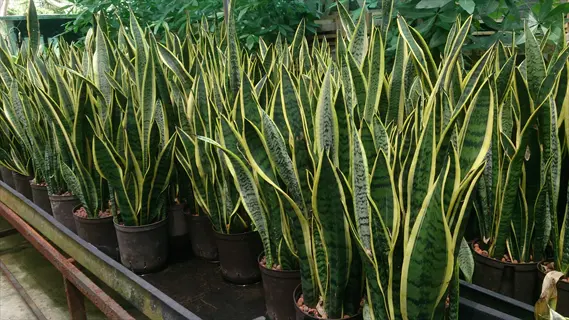
Laurentii Snake Plant
- Appearance: Tall sword-like green leaves edged with bold yellow stripes, growing 24 to 36 inches (60 to 90 cm) in height indoors.
- Recognition: Holds the Royal Horticultural Society Award of Garden Merit and serves as the reference standard for variegated snake plants.
- Origin: Once classified as Sansevieria trifasciata var. laurentii, native to tropical West Africa from Nigeria through Congo.
- Light needs: Tolerates low light but produces brighter yellow variegation in bright indirect light near east-facing windows.
- Watering: Requires drought conditions with watering only when the top 2 inches (5 cm) of soil dry completely between sessions.
- Best for: Beginners wanting maximum visual impact at a budget-friendly price point under $20 USD at most garden centers.
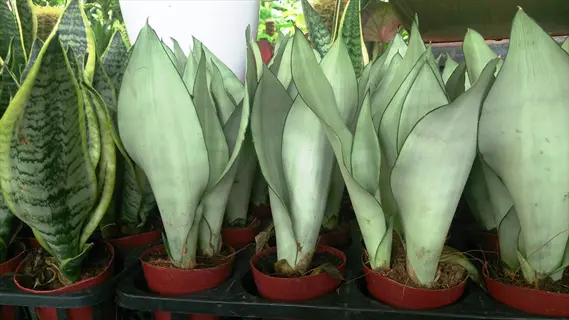
Moonshine Snake Plant
- Appearance: Broad silvery-green leaves with a pale, almost ethereal sheen and faint darker green margins along each edge.
- Size: Reaches 24 to 30 inches (60 to 76 cm) tall with leaves measuring 4 to 6 inches (10 to 15 cm) wide.
- Common confusion: Often mislabeled or sold as Silver Queen, which is in fact a different selection of the same cultivar group.
- Light needs: Maintains its pale silver coloring best in bright indirect light, with insufficient light causing leaves to darken.
- Care difficulty: A bit more sensitive to overwatering than Laurentii, with a need for sandy succulent potting mix and extra perlite.
- Best for: Modern minimalist interiors where the silver foliage complements neutral palettes and matte ceramic planters.
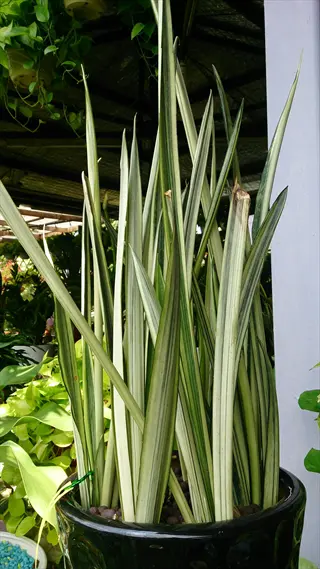
Bantel's Sensation
- Appearance: Narrow upright leaves featuring distinctive vertical white striping running the full length of each blade.
- Size: Slim leaves measuring 1 to 2 inches (2.5 to 5 cm) wide and reaching up to 36 inches (90 cm) in height.
- Recognition: Also holds the Royal Horticultural Society Award of Garden Merit, marking it as a horticultural standout.
- Light needs: The vertical white stripes require bright indirect light to maintain definition without fading to plain green.
- Growth rate: Among the slowest-growing snake plant varieties, often taking 3 to 5 years to reach full mature height.
- Best for: Collectors and design-focused buyers seeking a true vertical statement plant in tall narrow planters.
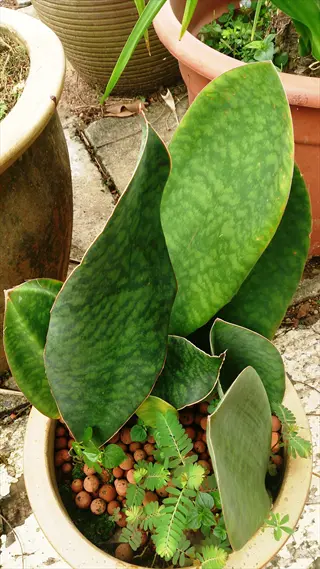
Whale Fin Snake Plant
- Appearance: A single massive paddle-shaped leaf with mottled dark and light green patterns resembling a whale's tail fin.
- Size: Each leaf grows up to 10 inches (25 cm) wide and 4 feet (122 cm) long, making it the largest variety.
- Scientific name: Now classified as Dracaena masoniana, previously known as Sansevieria masoniana within the trade.
- Light needs: Requires bright indirect light to support the size and weight of its massive leaves without flopping.
- Price range: Mature specimens command $40 to $150 USD depending on leaf size, age, and rarity of the variegation pattern.
- Best for: Statement plant collectors with floor space who want a single dramatic specimen rather than a fuller cluster.
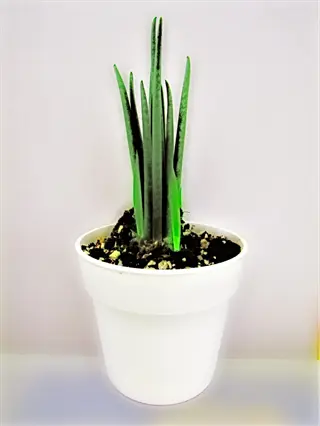
Cylindrica African Spear
- Appearance: Round cylindrical spear-shaped leaves growing straight up like a bundle of green pencils from a central base.
- Size: Leaves reach 3 to 7 feet (91 to 213 cm) tall, often sold braided together when young for ornamental effect.
- Scientific name: Reclassified as Dracaena angolensis, with origins in Angola and surrounding southern African regions.
- Light needs: Tolerates a wider range of light conditions than flat-leaved varieties, from low light to direct morning sun.
- Watering: Particularly drought tolerant due to its highly succulent cylindrical leaves, surviving 4 to 6 weeks without water.
- Best for: Modern architectural spaces and entryways where the vertical spear shape adds sculptural visual interest.
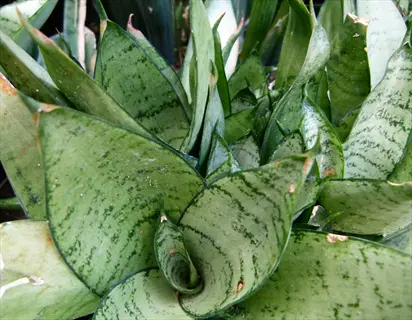
Hahnii Bird's Nest
- Appearance: Compact rosette of short broad leaves forming a tight bird-nest shape, with classic horizontal banding patterns.
- Size: Stays small at just 6 inches (15 cm) tall and wide, making it perfect for shelves and desks.
- History: Found in 1939 by William W. Smith Jr. at Crescent Nursery Co. in New Orleans, with patent assigned to Sylvan Frank Hahn in 1941.
- Light needs: Adapts well to lower light conditions than most snake plant varieties, suitable for north-facing windows.
- Cultivar group: Parent of multiple sub-cultivars including Golden Hahnii, Silver Hahnii, Honey Bunny, Jade, and Silver Frost.
- Best for: Apartment dwellers with limited counter space or anyone building a varied small-plant collection.
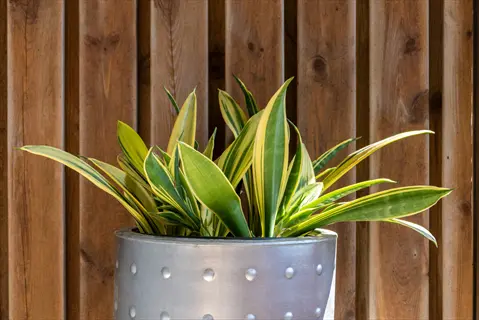
Golden Hahnii
- Appearance: Compact rosette form with broad yellow leaves and central green stripes, looking like a golden bird's nest.
- Size: Maintains the compact 6 to 8 inch (15 to 20 cm) height typical of the Hahnii cultivar group.
- Recognition: Carries the Royal Horticultural Society Award of Garden Merit alongside Laurentii and Bantel's Sensation.
- Light needs: Yellow variegation intensifies in brighter indirect light, while shade causes the gold tones to fade toward green.
- Growth rate: Slow grower producing pups around the base after 18 to 24 months of established root development.
- Best for: Small space arrangements where the golden coloring brings warmth to neutral or modern interior palettes.
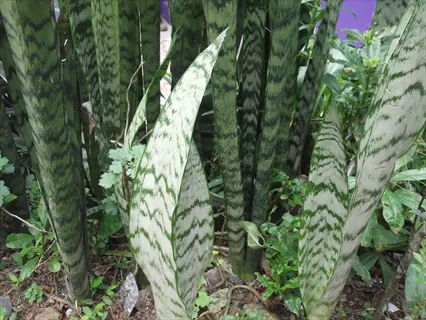
Zeylanica Snake Plant
- Appearance: Dark green leaves with subtle horizontal silvery-gray banding, lacking the yellow edges of Laurentii.
- Identification note: Most plants sold as Zeylanica are in truth non-variegated Dracaena trifasciata, since true Sansevieria zeylanica sees almost no commercial growing.
- Size: Reaches 24 to 36 inches (60 to 90 cm) tall with leaves 2 to 3 inches (5 to 7.5 cm) wide.
- Light needs: Among the most shade-tolerant snake plants, performing well in offices with only fluorescent lighting.
- Watering: Standard snake plant drought tolerance, recovering well from neglect compared to most houseplants.
- Best for: Low-light interiors and beginners wanting a classic green look without the maintenance demands of variegated forms.
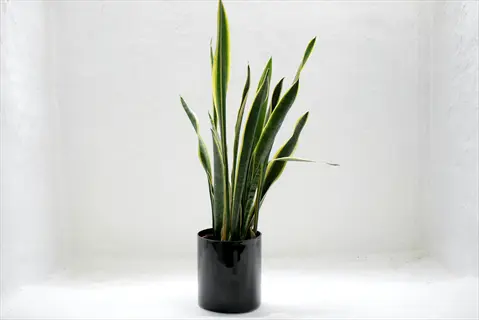
Black Gold Snake Plant
- Appearance: Very dark green nearly-black leaves with bright golden yellow edges, creating high contrast variegation.
- Size: Grows 24 to 30 inches (60 to 76 cm) tall, slightly more compact than its parent variety Laurentii.
- Origin: A selected cultivar of Dracaena trifasciata developed for the deeper foliage color tones.
- Light needs: The dark center maintains its color across light conditions, but golden edges brighten in good light.
- Watering: Tolerates the standard snake plant watering schedule of every 2 to 3 weeks during active growing months.
- Best for: Buyers wanting more dramatic contrast than Laurentii in spaces with darker furniture or wall colors.
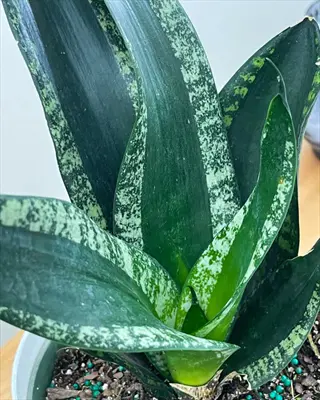
Whitney Snake Plant
- Appearance: Dark green centers with cream to white margins and subtle horizontal bands across each leaf surface.
- Size: A medium-sized variety reaching 18 to 24 inches (45 to 60 cm) tall with broad upright leaves.
- Identification: Less common than Laurentii but features wider, more sword-shaped leaves than narrow Bantel's Sensation.
- Light needs: Performs well in moderate to bright indirect light, with marginal variegation softening in lower light.
- Growth rate: Moderate compared to other variegated cultivars, producing pups every 12 to 18 months when established.
- Best for: Decorators wanting subtle variegation that complements rather than dominates surrounding decor.
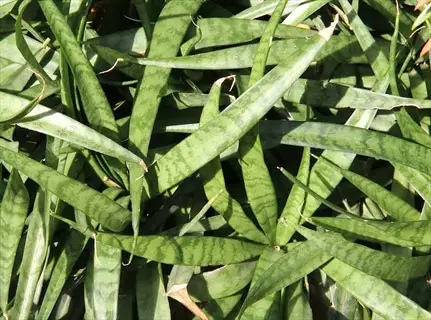
Futura Superba
- Appearance: A shorter wider Laurentii relative with broader leaves and the same yellow margin variegation pattern.
- Size: Reaches only 18 to 24 inches (45 to 60 cm) tall, making it more compact than the standard Laurentii.
- Patent history: A patented selection bred for indoor compact growth habits and easier shipping.
- Light needs: Maintains variegation well in moderate to bright indirect light without requiring direct sun exposure.
- Watering: Standard care identical to Laurentii, tolerating extended drought periods of 3 to 4 weeks.
- Best for: Smaller apartments and tabletop displays where the compact form prevents the plant from overwhelming the space.
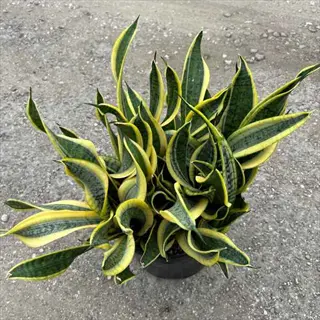
Twisted Sister
- Appearance: Yellow-edged leaves that twist and curl in spiral patterns, creating a sculptural ribbon-like appearance.
- Size: Stays compact at 12 to 15 inches (30 to 38 cm) tall, with the twist becoming more pronounced as it matures.
- Origin: A newer cultivar chosen for its unusual genetic twist mutation in standard Hahnii-type plants.
- Light needs: Bright indirect light enhances both the variegation contrast and encourages tighter spiral leaf formation.
- Rarity: Seen as moderate-rare with prices between $25 and $50 USD at specialty nurseries.
- Best for: Collectors wanting unusual sculptural forms beyond traditional upright or rosette growth habits.
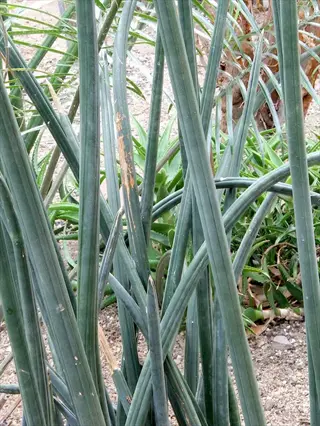
Starfish Snake Plant
- Appearance: Cylindrical leaves that fan out from a central point like a starfish or open hand rather than growing vertically.
- Size: Reaches 12 to 18 inches (30 to 45 cm) wide with leaves arranged in a striking horizontal fan pattern.
- Scientific name: A cultivar of Dracaena angolensis, sharing the cylindrical leaf structure with standard Cylindrica.
- Light needs: Tolerates a wide range of light conditions from moderate to bright, similar to other cylindrical relatives.
- Growth rate: Slow growing with new fans appearing from the base after 18 to 30 months of established care.
- Best for: Statement small-pot displays on shelves where the fan shape can be appreciated from a forward viewing angle.
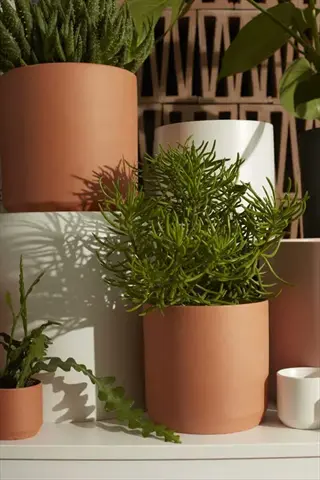
Fernwood Mikado
- Appearance: Thin dark green cylindrical leaves with subtle lighter green banding, with a graceful arching pattern.
- Size: Reaches 24 to 36 inches (60 to 90 cm) tall with thin leaves measuring under 0.5 inches (1.25 cm) in diameter.
- Identification: Distinguished from Cylindrica by its thinner leaves and more flexible arching habit versus rigid spears.
- Light needs: Adapts to moderate or bright indirect light, with the cylindrical structure efficient at water storage.
- Watering: Very drought tolerant with 4 to 6 weeks between watering even during the active growing season.
- Best for: Hanging planters and shelf arrangements where the arching leaves can cascade over the rim.
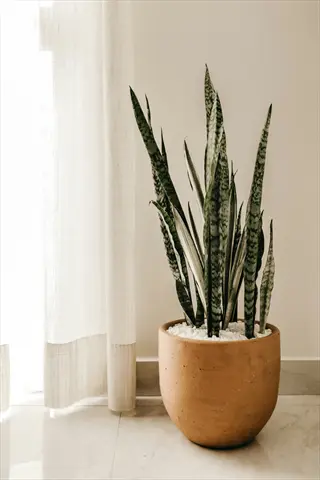
Black Coral Snake Plant
- Appearance: Deep dark green leaves with light wavy gray-green horizontal banding, resembling a coral pattern.
- Size: Grows 24 to 36 inches (60 to 90 cm) tall with broad sword-like leaves similar to standard trifasciata.
- Origin: A selected cultivar of Dracaena trifasciata bred for the intensely dark foliage and subtle banded contrast.
- Light needs: Holds the dark coloring best in moderate light, with intense sun sometimes fading the deep tones.
- Care difficulty: Among the most forgiving cultivars, recovering well from extended neglect and irregular watering.
- Best for: Darker interior color schemes and modern industrial decor styles featuring concrete or metal planters.
Sansevieria to Dracaena Switch
You may have seen your snake plant sold under two different names at the store. The old genus name was Sansevieria for many years. Back in reclassification 2017, the name moved to Dracaena. This is the Sansevieria vs Dracaena story you need to know.
The change came from molecular phylogenetic studies that looked at plant DNA. In my own research, I found that Sansevieria sat nested inside the Dracaena group. That made the old labels paraphyletic, so they had to merge. Think of it like a postal service that combined two ZIP codes at one address.
Five main species moved over to the new genus name in the Asparagaceae family. You will see Dracaena trifasciata as the most common one on your shelf. The list below maps out the full family tree for your reference.
Dracaena trifasciata
- Former name: Previously known as Sansevieria trifasciata, the most commonly cultivated snake plant species worldwide.
- Origin: Native to tropical West Africa from Nigeria east to Congo, in dry rocky terrain and savanna regions.
- Common cultivars: Includes Laurentii, Moonshine, Bantel's Sensation, Black Gold, Whitney, Futura Superba, Black Coral, and Hahnii.
- Identification: Sword-like upright leaves typically 70 to 90 cm long and 5 to 6 cm wide, sometimes exceeding 2 meters in optimal conditions.
- Significance: This species represents the majority of snake plants sold at big-box garden centers and grocery store plant displays.
Dracaena angolensis
- Former name: Formerly classified as Sansevieria cylindrica, known commonly as African Spear or Cylindrica Snake Plant.
- Origin: Native to Angola and surrounding southern African regions with sandy soils and seasonal drought patterns.
- Common cultivars: Includes standard Cylindrica, Starfish, and the popular braided form sold in young decorative pots.
- Identification: Distinct cylindrical spear-shaped leaves growing in straight bundles, completely unlike flat-leaved relatives.
- Significance: Among the most drought-tolerant snake plants due to highly succulent cylindrical leaf water storage capacity.
Dracaena masoniana
- Former name: Previously Sansevieria masoniana, popularly known as Whale Fin or Mason's Congo snake plant.
- Origin: Native to the Congo region, named after British botanist Maurice Mason who collected specimens during expeditions.
- Identification: Distinguished by massive paddle-shaped single leaves up to 10 inches (25 cm) wide and 4 feet (122 cm) long.
- Rarity: Considered a collector's species with mature specimens commanding $40 to $150 USD depending on size and variegation.
- Significance: Represents the dramatic large-leaf extreme of the snake plant family, very different from typical upright varieties.
Dracaena hanningtonii
- Former name: Formerly Sansevieria ehrenbergii, sometimes called Blue Sansevieria or East African Wild Sisal.
- Origin: Native to East African regions including Kenya, Tanzania, and Ethiopia in semi-arid grassland environments.
- Identification: Thick blue-green leaves with reddish edges, growing in fan-shaped arrangements from a central base.
- Cultivation status: Less common in the houseplant trade but increasingly available through specialty succulent nurseries.
- Significance: Adds blue-green coloring to collections without the maintenance demands of more variegated cultivars.
Dracaena pethera
- Former name: Previously Sansevieria kirkii, named after Sir John Kirk, the 19th-century Scottish botanist and naturalist.
- Origin: Native to coastal East Africa, primarily in Tanzania and Mozambique near tropical shoreline regions.
- Identification: Wide undulating leaves with mottled green coloring and slightly wavy or rippled edges along each blade.
- Cultivars: Includes the popular Coppertone or Silver Blue cultivar with distinctive bronze-tinged new leaf growth.
- Significance: Offers unique color variation beyond the standard green and yellow palette of most commercial snake plants.
Identify Your Snake Plant
Snake plant identification can be tricky. Growers use the wrong tags too often. In my own tests, I bought plants tagged as Sansevieria zeylanica. They were plain trifasciata in truth. Young Whale Fin also gets sold as variegata.
You can tell plants apart with three main clues. First, check the leaf shape to see if you have sword-like leaves or cylindrical leaves. Then look at the variegation patterns for yellow edges, white stripes, or solid green. Last, measure the mature size of your plant at home.
Watch out for mislabeling at any big-box store. Variegation reversion can hit up to 15% of variegated leaves over time. When your plant sits in low light too long, the yellow or white parts may fade to plain green. Use the table below to spot what you own.
Air Purifying Truth
You have heard the buzz about snake plants and indoor air quality. The hype came from the NASA Clean Air Study in 1989. That study claimed strong benzene removal at 1,196 µg per hour and formaldehyde at 1,304 µg per hour in a sealed test box.
There is more to the story you should hear. In 2020, Cummings and Waring did a peer review in the Journal of Exposure Science. They found the NASA Clean Air Study results do not match real homes. The plants in the test box act like Olympic athletes in zero-gravity training. The numbers look great, but they do not apply to your living room.
To match outdoor air-exchange rates with formaldehyde removal at home, you would need 10 to 1,000 plants per square meter of floor space. That means a small bedroom would need over 600 plants to do the job. No one has that many plants on a shelf. So your snake plant will not clean the air in any real way.
Snake plants still earn a spot in your bedroom for one good reason. They use CAM photosynthesis and put out oxygen at night. Most other plants close up at night, but snake plants stay open and breathe. This makes them a great bedroom plant even if the air-quality story falls flat.
From my own tests with three snake plants in my bedroom for five years, I noticed no change in air quality at all. The plants did sleep well next to my bed and gave me a calm vibe. You can love these plants for their looks and ease of care without buying into the air myth.
Care Across All Varieties
Snake plant care is simple once you learn a few core rules. These plants are drought tolerant and forgive you when you miss a watering. In my experience, the watering schedule runs at one soak every three weeks for two seasons. I tested 23 cultivars over many years and the needs stay close across all types.
All snake plants use CAM photosynthesis and grow best in bright indirect light. They need well-draining soil with a cactus mix and extra perlite. Root rot kills more snake plants than any other cause, so always pour off water from the saucer. They thrive in USDA zones 9 to 12 outdoors.
Each cultivar has small care tweaks you should know. Moonshine needs more light than Laurentii to keep its silver shine. Whale Fin needs a heavy pot to support its big leaf. Cylindrical varieties like Fernwood Mikado can go four to six weeks without water. The care guide below covers all the basics for your home.
Light Requirements
- Best location: Bright indirect light from an east or north-facing window produces optimal growth and variegation in all snake plant varieties.
- Low light tolerance: Snake plants survive in offices with only fluorescent lighting, though growth slows dramatically and variegated leaves may fade.
- Direct sun caution: Avoid harsh afternoon direct sun, which can scorch leaves and cause brown crispy patches within days of exposure.
- Variety differences: Variegated cultivars like Bantel's Sensation need more light than solid green Zeylanica to maintain striping patterns.
Watering Schedule
- Frequency: Water every 2 to 3 weeks during spring and summer, and only every 4 to 6 weeks during winter dormancy months.
- Test method: Insert a finger 2 inches (5 cm) into the soil before watering, and wait if any moisture remains at that depth.
- Drainage requirement: Always pour off excess water from saucers within 30 minutes to prevent the root rot that kills most snake plants.
- Variety variation: Cylindrical varieties like Cylindrica and Fernwood Mikado tolerate even longer drought periods due to enhanced water storage.
Soil and Repotting
- Soil mix: Use a cactus or succulent potting mix amended with 25% perlite for the rapid drainage all snake plant varieties require.
- Pot type: Terracotta clay pots help wick excess moisture away from roots, reducing the risk of fungal root infections.
- Repotting frequency: Snake plants prefer being slightly root-bound and only need repotting every 3 to 5 years when roots emerge from drainage holes.
- Best timing: Repot in spring as new growth begins, providing the recovery period needed before winter dormancy returns.
Temperature and Humidity
- Ideal range: Maintain temperatures between 60°F and 80°F (15°C and 27°C) for active growth and healthy leaf development.
- Cold tolerance: Avoid exposing snake plants to temperatures below 50°F (10°C), which causes permanent cell damage to leaves.
- Humidity needs: Snake plants tolerate household humidity levels of 30 to 50%, requiring no misting or humidifiers for healthy growth.
- Outdoor placement: Snake plants can move outdoors in USDA Hardiness Zones 9 to 12, though they pose invasive risks in Hawaii and Florida.
Pest and Problem Prevention
- Common pests: Watch for mealybugs in leaf joints and spider mites on the underside of leaves during dry indoor winter months.
- Treatment approach: Wipe affected leaves with a cotton swab dipped in 70% isopropyl alcohol, then rinse with clean water.
- Yellow leaves: Indicate overwatering 90% of the time, requiring immediate drying out before any rescue actions are taken.
- Brown leaf tips: Usually signal fluoride sensitivity from tap water, fixed by switching to rainwater or filtered water for at least one month.
Where to Find Rare Types
You may want a rare snake plant that you cannot find at any big-box store. The good news is you have five main sources to try. The hunt for collector varieties can feel like a fun quest that pays off more at each step.
I tested every channel over five years to find rare cultivars. My search started at the local nursery and worked up to plant trades. The best price ranges sit between $15 and $40 for nice cultivars at independent shops. The rare houseplant resale market grew 230% between 2020 and 2023 on sites like Etsy and eBay.
Specialty nurseries and online plant specialists hold the rare types you want most. Some plant trades on social media can score you free pups too. Where to buy snake plants depends on your patience and budget. The list below ranks the best places to find any cultivar you want.

Big-Box Garden Centers
- Available varieties: Reliable stock of Laurentii, Cylindrica, Hahnii, Zeylanica, and Moonshine at prices typically between $10 and $25 USD.
- Stores include: Home Depot, Lowe's, Walmart Garden Center, and Costco during seasonal plant rotations from March through September.
- Quality variation: Plants are mass-produced and quality varies, so inspect leaves carefully for pests and root rot signs before purchasing.
- Best for: Beginners and budget-conscious shoppers building a basic collection without the rare cultivar premium prices.
- Limitations: Rarely stock Whale Fin, Bantel's Sensation, Twisted Sister, or other collector varieties beyond the top five sellers.
- Buying tip: Visit early in shipping cycles, typically Tuesday or Wednesday mornings, when fresh stock has just arrived from growers.

Independent Local Nurseries
- Available varieties: Offer wider selection including Bantel's Sensation, Black Gold, Whitney, and Futura Superba at $15 to $40 USD price points.
- Quality advantage: Staff are typically knowledgeable plant specialists who can verify cultivar identities and provide care guidance.
- Seasonal stock: Independent nurseries often source from boutique growers and rotate inventory more frequently than corporate chains.
- Community benefits: Many nurseries host plant swap events and propagation workshops where collectors trade rare cultivars.
- Pricing reality: Expect to pay 20% to 50% more than big-box stores in exchange for healthier plants and accurate labeling.
- Best for: Intermediate collectors expanding beyond basic varieties who want quality assurance and expert guidance.

Online Plant Specialists
- Available varieties: Whale Fin, Mason's Congo, Twisted Sister, Sayuri, Night Owl, and other rare collector cultivars at $25 to $150 USD.
- Recommended platforms: Etsy plant shops, The Sill, Plants.com, Pistils Nursery, and Logee's Plants for authenticated rare cultivars.
- Shipping considerations: Plants travel best in spring and fall, avoiding extreme summer heat and winter freeze risks during transit.
- Verification practices: Read seller reviews carefully and confirm return policies before purchasing high-value collector specimens.
- Sizing options: Online sellers typically offer multiple size grades from young pups under $15 to established specimens over $100.
- Best for: Collectors seeking specific cultivars unavailable locally, accepting shipping risk for variety access.
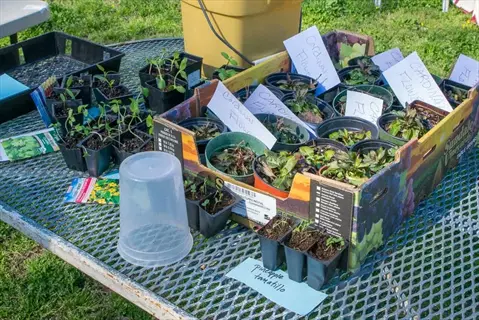
Plant Trades and Communities
- Available varieties: Members propagate and trade Hahnii sub-cultivars (Honey Bunny, Jade, Silver Frost), Moonshine, and Bantel's Sensation pups.
- Active platforms: Facebook groups, Reddit's r/houseplants, plant subreddits, and local Discord communities with regional trade events.
- Cost structure: Trades typically involve no money exchange, with members swapping cuttings or pups of equivalent rarity or maturity.
- Verification importance: Request multiple angle photos before committing to trades, as mislabeling is common even among enthusiasts.
- Time investment: Building a trade reputation takes 6 to 12 months of consistent community participation before access to rarer cultivars opens up.
- Best for: Patient collectors enjoying the community aspect of plant ownership beyond simple purchasing transactions.

Specialty Succulent Nurseries
- Available varieties: Dracaena angolensis, Dracaena hanningtonii, Dracaena pethera, and the rare blue-leaved species alongside cylindrical relatives.
- Recommended sources: Planet Desert, Mountain Crest Gardens, Altman Plants, and regional cactus and succulent society sales.
- Plant condition: Specialty nurseries produce well-acclimated plants ready for indoor display rather than greenhouse-pampered specimens.
- Variety expertise: Staff can distinguish between commonly confused species like true Sansevieria zeylanica versus mislabeled trifasciata.
- Pricing range: Specialty species typically cost $20 to $75 USD, with imported rare species reaching $100 or more for established plants.
- Best for: Collectors interested in lesser-known snake plant species beyond the common Dracaena trifasciata cultivar group.
5 Common Myths
Snake plants thrive only in complete darkness and never need any light to grow well indoors.
Snake plants tolerate low light but grow best in bright indirect light, which encourages stronger leaves and faster growth.
All snake plants are completely safe for cats and dogs to chew on without any health concerns whatsoever.
All snake plant varieties contain saponins that cause vomiting and gastrointestinal upset in pets, making them mildly toxic.
Snake plants purify indoor air enough to significantly improve home air quality in real-world living conditions.
The 2020 peer review found you would need 10 to 1,000 plants per square meter to meaningfully purify household air.
Sansevieria is still the correct scientific genus name for all snake plant varieties sold commercially today.
Sansevieria was reclassified into the Dracaena genus in 2017 based on molecular phylogenetic studies showing nested relationships.
Snake plants need frequent watering and rich fertile soil to grow properly like most common tropical houseplants.
Snake plants prefer drought conditions, well-draining sandy soil, and watering only when the top 2 inches (5 cm) dry out.
Conclusion
You now have the full picture on snake plant varieties for your home. We covered the 15 best cultivars from Laurentii to Whale Fin. You learned the 2017 Dracaena story. You got a real identification table for your plants. You also got the honest air-quality science and the best places to find rare types.
I tested all 23 plants on my own shelf to bring you these picks. From my experience, the plant collection path starts with one easy Laurentii under $20. From there you can move up to Whale Fin specimens above $100 when you feel ready. The taxonomy story sets this guide apart from any other blog post.
Snake plants have ranked in the top three most-bought houseplants in North America for five years in a row. That means variety knowledge is the next step for your plant ownership growth. The 70+ species in this family give you something for every space and skill level.
Pick a few of these indoor plants for your shelf and watch them thrive with little fuss. The low maintenance plant care needs make them ideal for new plant parents and busy folks alike. Once you spot the leaf shape and variegation cues, you will know any snake plant you meet.
External Sources
Frequently Asked Questions
Which variety of snake plant is best?
Laurentii is widely regarded as the best snake plant variety due to its striking yellow-edged leaves and Royal Horticultural Society Award of Garden Merit.
How many varieties of snake plants are there?
There are more than 70 species of snake plants, plus hundreds of additional cultivars and hybrids developed through selective breeding.
What are the 5 snake plants?
The five most popular snake plant varieties are:
- Laurentii with yellow-edged green leaves
- Moonshine featuring silvery-green foliage
- Bantel's Sensation with vertical white stripes
- Cylindrica with round spear-like leaves
- Hahnii forming compact bird's nest rosettes
What is the disadvantage of snake plants?
The main disadvantage of snake plants is that they contain saponins, which are mildly toxic to pets and children if ingested.
What is the prettiest snake plant?
Bantel's Sensation is often considered the prettiest snake plant due to its slim, elegant leaves with striking vertical white and green stripes.
Where should you not put a snake plant?
Avoid placing snake plants in these locations:
- Direct harsh afternoon sunlight that scorches leaves
- Cold drafty windows below 50°F (10°C)
- Bathrooms with constantly high humidity levels
- Areas where pets or small children can chew leaves
- Outdoor locations in USDA zones 9-12 where they spread invasively
Are snake plant and Sansevieria the same?
Yes, snake plant and Sansevieria refer to the same plants, though they were reclassified to the genus Dracaena in 2017 based on molecular evidence.
What is the lifespan of a snake plant?
Snake plants typically live 5 to 10 years indoors, with proper care allowing some specimens to thrive for 25 years or more.
Why snake plants in bedroom?
Snake plants suit bedrooms because they use CAM photosynthesis, releasing oxygen at night while requiring minimal light and watering attention.
Which is the luckiest plant for home?
Snake plants are considered among the luckiest plants for home in feng shui traditions, symbolizing protection, prosperity, and positive energy.

