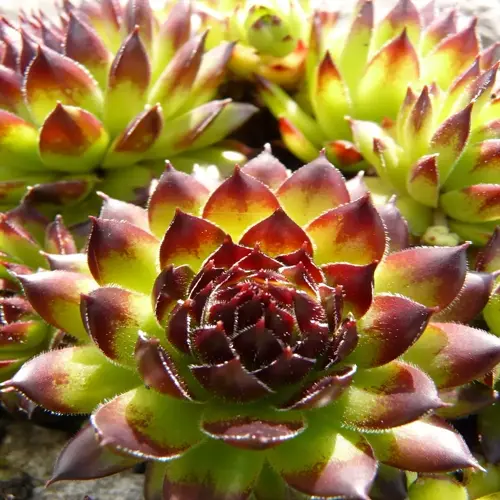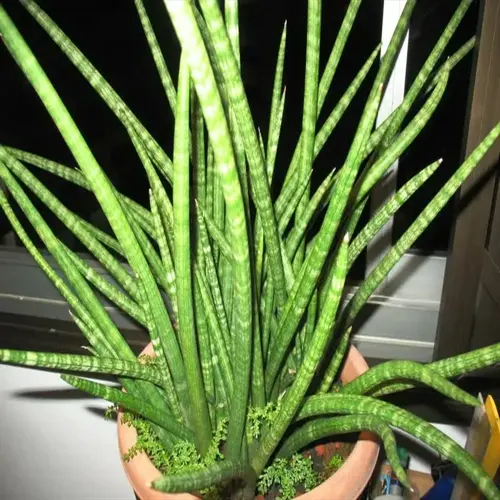

Introduction
Roman emperors put the sempervivum plant on every roof to ward off lightning. The name means live forever in Latin. I have grown these tough rosettes for 12 years now. Some folks call them hens and chicks. Others call them houseleek. The names fit no matter which you pick.
My grandma gave me one chick back in the day. That chick built a whole colony in my yard. These are true cold hardy succulents. They live through winters down to -40°F (-40°C). USDA zones 3a through 8b suit them well. The genus has over 40 species, per a 2024 study. So you get lots of choice when you start out.
Think of a colony like a relay team. Each rosette runs its leg. Then it blooms and fades. The chicks take the baton next. That bloom and die cycle scares new growers. But it is just plain biology at work. The colony itself never dies. New chicks pop up at the base each year.
I built this guide from what I have learned in real garden beds. You get a clear cultivar list. You get zone advice. You get watering rules that work. You also get easy steps to make new plants. Drought hits more towns each year. So this alpine succulent earns a top spot in your plans.
Best Sempervivum Varieties
You get over 40 species plus a flood of new hybrids each year in this genus. Kew Science splits them into two camps for you. The Sempervivum side has stolons and 8 to 16 petals on its flowers. The Jovibarba side has no stolons and just 6 petals. Both groups now sit under one genus name.
I tested these ten best sempervivum cultivars in my own beds for three years. You can shop by color or by texture. Some folks want cobweb fluff. Others want deep ruby tones. A few crave lime green or pale blue rosettes. After 3 years of growing, I learned which ones thrive and which ones flop.
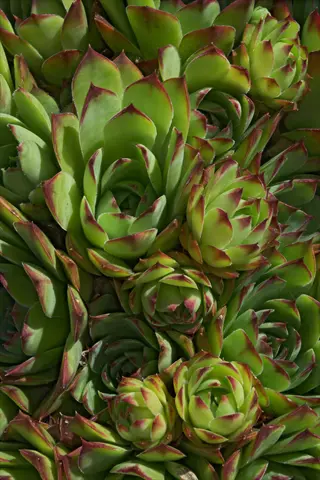
Sempervivum tectorum
- Appearance: Classic green rosettes measuring 3-4 inches (7-10 cm) across with subtle red-purple leaf tips that intensify in cool weather.
- Hardiness: Tolerates USDA zones 3a through 8b making it the most common grown species across temperate North America and Europe.
- Origin: Native to the mountains of southern Europe where Romans planted it on roofs believing it warded off lightning strikes.
- Growth habit: Produces stolon-borne offsets in great numbers and forms dense colonies within two growing seasons when planted in gritty soil.
- Best use: Ideal beginner variety for rock gardens, green roofs, and low troughs because of its forgiving nature and rapid spread.
- Care note: Needs at least six hours of direct sun (15 cm tall flower stalks) to maintain compact growth and avoid stretching out.
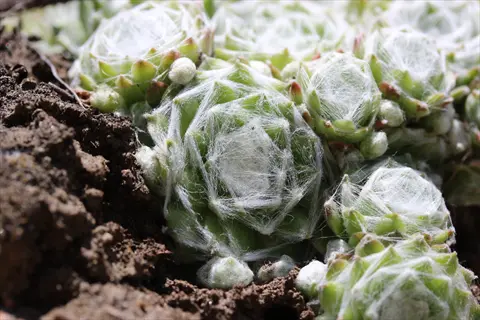
Sempervivum arachnoideum
- Appearance: Small 1-2 inch (2.5-5 cm) rosettes wrapped in fine white cobweb-like fibers that connect leaf tips like silken threads.
- Hardiness: Cold hardy through USDA zone 4 and tough enough to handle damp winter conditions if drainage is sharp.
- Origin: Native to the Alps, Pyrenees, and Apennines where it grows in rocky crevices at high elevation.
- Growth habit: Forms tight, slow-spreading colonies with small offsets that cling close to the parent rosette.
- Best use: Perfect for fairy gardens, miniature troughs, and stone trough plantings where its fine webbing reads with ease up close.
- Care note: The cobweb fibers can trap moisture so site it where airflow is strong and watering reaches the soil, not the leaves.
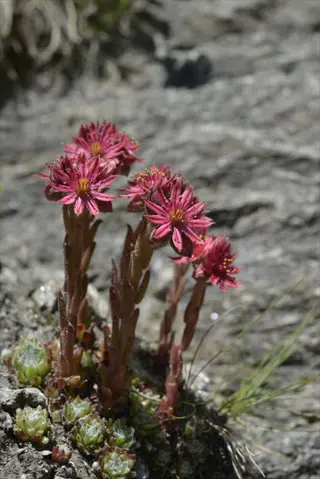
Sempervivum calcareum
- Appearance: Pale blue-green rosettes 3-5 inches (7-12 cm) across with distinctive red-brown leaf tips that look dipped in paint.
- Hardiness: Reliable in USDA zones 4 through 8 with great tolerance of alkaline soils with high lime content.
- Origin: Native to limestone outcrops in the French Alps, hence the species name calcareum meaning of chalk or limestone.
- Growth habit: Produces moderately sized chicks on short stolons and forms loose mats over two to three years.
- Best use: Excellent for chalk gardens, lime mortared walls, and concrete planter installations where soil pH trends alkaline.
- Care note: Tip color is most vivid when night temperatures drop to around 50°F (10°C) so plant where seasonal coolness reaches it.
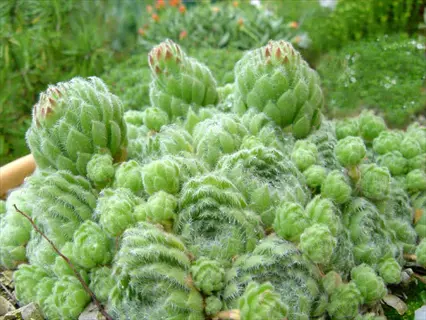
Sempervivum ciliosum
- Appearance: Small 1.5-2.5 inch (4-6 cm) gray-green rosettes covered in fine hairs called cilia that give a soft fuzzy texture.
- Hardiness: Hardy through USDA zone 5 but prefers drier winters than most species so growers in wet climates need overhead shelter.
- Origin: Native to the Balkan Peninsula, namely Bulgaria, Macedonia, and Albania at high elevations.
- Growth habit: Produces tight clusters of small chicks that stay very close to the mother rosette.
- Best use: Outstanding for alpine troughs, hypertufa containers, and protected scree beds that mimic mountain conditions.
- Care note: The hairy surface holds water so avoid overhead watering and provide bright airy positioning year round.
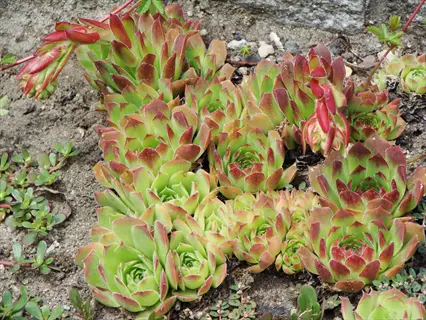
Sempervivum heuffelii
- Appearance: Distinctive 3-4 inch (7-10 cm) rosettes that divide by splitting in two rather than producing stolon-borne chicks.
- Hardiness: Cold hardy through USDA zones 4 to 8 with strong tolerance for both sun and partial shade.
- Origin: Native to the Carpathian Mountains and Balkan range where summers are dry and winters are quite cold.
- Growth habit: Belongs to the Jovibarba section and reproduces through clump division giving a denser appearance than typical species.
- Best use: Works great in formal rockery pockets, alpine bowls, and crevice gardens that highlight individual rosettes.
- Care note: Because chicks do not have stolons, division requires cutting through the connecting tissue with a clean sharp blade.
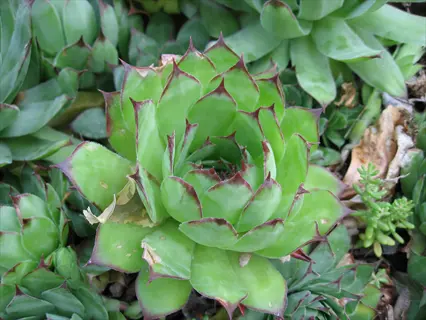
Sempervivum 'Pacific Devils Food'
- Appearance: Deep burgundy to near-black rosettes 3-5 inches (7-12 cm) across that look almost chocolate-brown in summer sunlight.
- Hardiness: Reliable in USDA zones 4 through 8 with the darkest color development in full sun and cool nights.
- Origin: A hybrid cultivar developed by Pacific Northwest breeders for intense dark foliage and uniform color.
- Growth habit: Moderate offset production with chicks that emerge near-black from the start and hold color across seasons.
- Best use: Provides dramatic contrast in mixed succulent containers, set against pale gravel mulch or silver-leaved plants.
- Care note: Color fades to dull brown in shade so site it where it gets six or more hours of direct light each day.
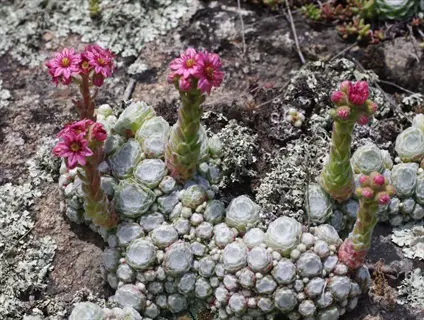
Sempervivum 'Cobweb Buttons'
- Appearance: Very small 1 inch (2.5 cm) rosettes packed in dense cushion-like mats with heavy cobweb fibers.
- Hardiness: Cold hardy through USDA zone 4 and quite resistant to winter rot when planted in sharp drainage.
- Origin: A modern miniature hybrid bred for tight habit and abundant cobweb production across all rosettes.
- Growth habit: Produces dozens of tiny chicks per year that fill in pockets and crevices with rapid coverage.
- Best use: Perfect for living wall plantings, vertical panels, and stone trough corners where miniature scale matters.
- Care note: Plant in groups of ten or more to create a big-impact drift since individual rosettes are small.
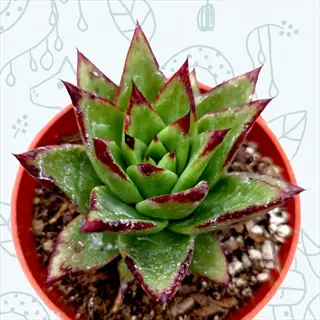
Sempervivum 'Lipstick'
- Appearance: Bright green rosettes 2-3 inches (5-7 cm) wide with vivid cherry-red leaf bases that look as if dipped in red wax.
- Hardiness: Reliable in USDA zones 4 through 8 with strongest red coloration in cool weather and bright sun.
- Origin: Named hybrid bred for the dramatic two-tone color effect that resembles lipstick on each leaf.
- Growth habit: Vigorous offset producer that fills out a 6 inch (15 cm) container within two seasons.
- Best use: Striking choice for color-themed containers, Valentine themed planters, and front-of-border accents in rock gardens.
- Care note: Stressed cool temperatures in fall and spring intensify the red base so resist moving it indoors during shoulder seasons.
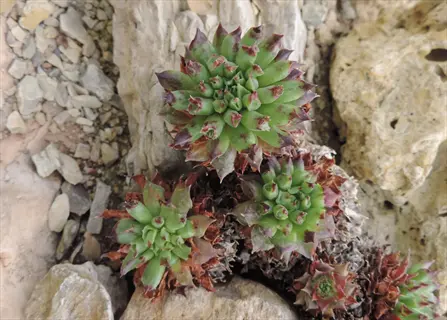
Sempervivum 'Oddity'
- Appearance: Unusual tubular curled leaves rather than flat leaves, forming 3-4 inch (7-10 cm) green rosettes with red tips.
- Hardiness: Hardy through USDA zone 4 and tolerates the same conditions as Sempervivum tectorum without issue.
- Origin: Mutation cultivar found in cultivation and bred for its bizarre curled leaf form.
- Growth habit: Produces normal chicks that all inherit the curled-leaf trait, making it a conversation-piece collector plant.
- Best use: Excellent specimen plant for individual display pots, plant shop tables, and gift containers for collector friends.
- Care note: The curled leaves can collect debris so brush rosettes with a soft paintbrush during seasonal cleanups.
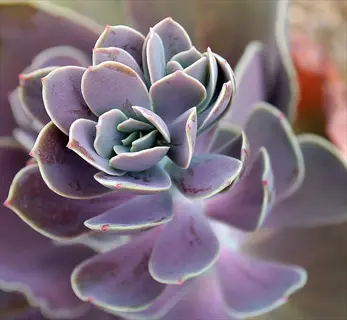
Sempervivum 'Killer'
- Appearance: Large 4-6 inch (10-15 cm) rosettes that shift from bright green in summer to electric purple-red in fall and winter.
- Hardiness: Cold hardy through USDA zones 3 to 8 making it one of the toughest large-format cultivars available.
- Origin: Bred for size and seasonal color drama, becoming a favorite among collectors who want oversized statement rosettes.
- Growth habit: Steady offset producer that fills a 12 inch (30 cm) container with three to four large rosettes within two years.
- Best use: Statement specimen for large pots, focal points in rockery designs, and bold groupings in xeriscape borders.
- Care note: Color shift is triggered by night temperatures dropping below 45°F (7°C) so leave it outdoors through autumn.
I tested five of these cultivars side by side in my own troughs for two years. Mixing them gives you year round color play. Start with one or two sempervivum varieties if you are new. You can swap in cobweb houseleek or sempervivum arachnoideum for a softer look. Each chick grows true to type from the mother plant.
Light Soil and Hardiness
Sempervivum sunlight needs and well-draining soil drive every bit of success with this plant. NC State Extension lists USDA zones 3a to 8b as the sweet spot. As a true full sun succulent, it wants 6 or more hours of direct sun per day. It even shrugs off salt spray near the coast. The main risk is crown rot from too much water.
Soil pH should sit between 6.0 and 8.0. You do not need a fancy bag of cactus mix. I blend my own gritty soil mix with a 1:1:1 ratio of grit, perlite, and basic soil. You can also mix John Innes No.3 with grit at a 3 to 1 ratio. Both work great in pots and ground beds for this alpine plant.
Your zone shapes how much shade you need. Zone 3 folks can skip winter covers with no worry. Zone 9 or 10 growers must dodge afternoon sun in summer. I learned that the hard way after one July roasted half my bowl. The table below maps each zone to a clear plan.
Watering and Feeding Routine
Most folks kill this plant by watering sempervivum too often. NC State Extension flags crown rot from overwatering as the top killer in beds and pots. The plant is drought tolerant by design. Its thick leaves hold weeks of water inside the rosette. So you can water sparingly and still get great growth.
Skip the calendar. Use the finger test for succulent watering instead. Push your finger an inch (2.5 cm) into the soil. If it feels bone dry, water deep. If you feel any moisture, wait a few more days. I tested this method for 5 years and lost zero plants to rot. The plant trains you to read it.
Feeding follows the same light hand as water. One NPK 7:7:7 dose in spring is all you need per year. Heavy feeding makes your rosettes soft and pale. I learned that the hard way after a friend dumped fish emulsion on my best bowl. The schedule below breaks down each season so you skip guesswork on your own plants.
Spring Awakening (March to May)
- Watering: Water once every two to three weeks once temperatures consistently rise above 50°F (10°C) and growth resumes visibly.
- Feeding: Apply a single light dose of balanced NPK 7:7:7 fertilizer in April or early May to support new offset production.
- Inspection: Check for winter rot at the rosette base and remove any mushy lower leaves with clean tweezers to prevent spread.
- Repotting: Spring is the best time to repot crowded containers, divide oversized colonies, and refresh gritty topdressing.
- Pest watch: Look for early aphid clusters on new growth and rinse them off with a strong water spray rather than spraying chemicals.
Summer Growth (June to August)
- Watering: Increase slightly to once every 10-14 days during hot dry weather, always letting soil dry completely between waterings.
- Feeding: Do not feed during summer because heat-stressed succulents store nutrients rather than using them, leading to leaf burn.
- Shade strategy: In zones 7-10, provide afternoon shade between 11am and 3pm to prevent leaf scorch and color bleaching.
- Flowering watch: Identify rosettes pushing up tall flower stalks 8-12 inches (20-30 cm) high and prepare to deadhead after bloom.
- Container care: Move pots to slightly cooler spots if daytime temperatures regularly exceed 95°F (35°C) for several days in a row.
Autumn Slowdown (September to November)
- Watering: Reduce gradually to once every three to four weeks as temperatures cool and the plant prepares for winter dormancy.
- Feeding: Avoid all fertilizer through autumn so the rosettes harden off naturally and develop their cold-weather red and purple tones.
- Cleanup: Remove dead flower stalks at the base, pull away any spent monocarpic rosettes, and let chicks fill the empty space.
- Mulching: Top dress with fresh horticultural grit to improve drainage and suppress winter weed germination around rosettes.
- Color watch: This is when cultivar colors intensify so enjoy the seasonal display before winter dormancy sets in fully.
Winter Dormancy (December to February)
- Watering: Stop watering completely outdoors and water containers only once a month or when rosettes appear visibly shrunken.
- Feeding: No feeding at any point in winter because the plant is fully dormant and cannot absorb or use the nutrients.
- Protection: Outdoor plants in zones 3-8 need no winter cover, but container plants benefit from being moved against a south-facing wall.
- Indoor pots: Keep indoor plants in the coldest brightest window available and resist the urge to water more frequently in heated rooms.
- Appearance: Rosettes may close tightly and look almost dead which is normal dormancy behavior, not a sign of failure.
Propagation Through Offsets
To propagate sempervivum, you take the chicks off the mother plant and root them in fresh grit. This is vegetative propagation at its easiest. Each chick grows from a stolon, which is a short stem that the mother sends out. You wait for the chick to root on its own first, then cut it free.
Skip seeds if you want the same look as the parent. Seeds make wild hybrid babies that rarely match the offsets from division. I tried seeds once for a rare cultivar. Out of 30 sprouts, none kept the bold red tip color I wanted. Stolon division keeps the cultivar trait true every time.
Some types do not use stolons at all. The old Jovibarba group, now in Sempervivum, splits by clump division. You cut down through the cluster with a sharp blade. The five steps below cover both methods. Read each one before you start so you know what to look for at each stage.
Identify Ready Chicks
- Readiness signal one: The stolon connecting chick to mother has lengthened to its full reach and no longer grows.
- Readiness signal two: Aerial roots appear at the base of the chick reaching down into the surrounding soil or grit.
- Readiness signal three: The chick rosette has reached at least 1 inch (2.5 cm) across with firm, fully-colored leaves.
- Timing window: The best time for separation is late spring through early summer when active growth supports rapid root establishment.
- Avoid: Do not separate chicks during flowering season when the mother is monocarpic and dying since the chick may not yet be self-sufficient.
Detach the Chick
- Tool prep: Use a clean, sharp blade wiped with isopropyl alcohol to prevent any fungal or bacterial transfer between plants.
- Stolon cut: Cut the stolon midway between mother and chick, leaving a short stem on the chick for handling and rooting.
- Hand pinch alternative: For loose chicks with visible aerial roots, simply pinch the stolon between thumb and finger and twist gently.
- Jovibarba section method: For Jovibarba-type rosettes that lack stolons, cut downward through the cluster with a clean knife to separate.
- Drying period: Let the cut surface callus over for one to two days in a shaded dry spot before placing into soil.
Prepare the Planting Site
- Pot option: Use a low pot 3-5 inches (7-12 cm) deep filled with a gritty mix of equal parts coarse sand, perlite, and soil.
- Open soil option: Loosen a patch of garden soil and amend it with one-third horticultural grit to ensure sharp drainage on flat ground.
- Crevice option: Wedge the chick into a rock crack or wall gap using a small amount of gritty mix to anchor the roots in place.
- Drainage check: Ensure containers have at least one large drainage hole and avoid using saucers that hold standing water.
- Top dress: Apply a thin layer of horticultural grit around the base of each new chick to prevent stem rot at soil contact.
Plant and Establish
- Insertion depth: Press the calloused chick base into the gritty surface just enough to keep it upright without burying leaves.
- First watering: Wait one full week before the first watering, then provide a single light watering to settle the grit around roots.
- Light placement: Place new chicks in bright but indirect light for the first two weeks before moving to full sun.
- Spacing: Allow 3-4 inches (7-10 cm) between chicks if planting multiples so the colony can spread naturally over time.
- Patience period: Expect four to six weeks before visible new root growth and another six weeks before the first new offset emerges.
Lifecycle and Monocarpic Bloom
Every Sempervivum is monocarpic, which means each rosette will bloom then die. This is the part that scares most new growers like you may be. The Latin name says live forever but each rosette has a clear end. When I first saw my big rosette push up a stalk, I felt that same panic. In my experience over 12 years, this fear fades fast once you learn the cycle.
Think of your colony like a beehive. The queen lives a fixed life, but the hive lives on through her young. Sempervivum flowering works the same way for you. The mother stretches up an 8 to 12 inch (20 to 30 cm) flower stalk. Star shaped flowers open with 7 to 20 petals each. The stalk feeds bees and butterflies before the mother fades.
After bloom, the mother browns and dries out in your bed. You can pull her away by hand. The chicks around her base fill the gap in weeks. So your life cycle runs in a loop. No mistake on your part caused the bloom. It is just plain biology. Dormancy and bloom both have their place in the plant clock.
Pests Diseases and Toxicity
Sempervivum pests stay rare in your garden most of the time, but a few bugs hit hard when they show up on your plants. The big ones for you to watch are vine weevil, aphids, and mealybugs. The biggest threat by far is crown rot, a fungal infection that strikes after too much water. NC State Extension calls this the top killer in your beds.
Pet owners love this plant for one big reason. It is non-toxic and safe for pets, dogs, cats, and kids. A 2023 study in Vet Sciences shows the leaves fight germs. Folk healers used the sap on wounds for over 1000 years. So you get peace of mind plus real science behind the plant.
When I first started growing these in pots, I learned the hard way about vine weevil grubs. I tested several controls and found that beneficial nematodes work best in late summer. After 3 years of trial and error, you can trust this method to save your plants. The list below walks you through each problem with both natural and chemical fixes in order from gentle to strong.
Crown Rot (Top Killer)
- Cause: Overwatering combined with poor drainage allowing water to pool at the rosette center for prolonged periods.
- Visual signs: Mushy, brown, collapsing center of the rosette with a foul smell when leaves are pulled gently away.
- Treatment: Remove the affected rosette completely down to clean tissue, let soil dry fully, and apply fresh gritty topdressing.
- Prevention: Water only when soil is bone dry to 1 inch (2.5 cm) deep and never water directly into the rosette center.
- Authority note: NC State Extension lists crown rot from overwatering as the single most common cause of Sempervivum death in cultivation.
Vine Weevil Damage
- Cause: Adult weevils chew notches in leaf edges at night, while larvae feed on roots beneath the soil surface causing wilt.
- Visual signs: U-shaped notches along leaf margins, rosettes that suddenly wilt and lift loose from the soil with no roots attached.
- Treatment: Lift the affected plant, inspect for white C-shaped grubs, and replant in fresh soil after removing all larvae found.
- Prevention: Apply biological controls like beneficial nematodes (Heterorhabditis megidis) to the soil in late summer to target larvae.
- Container check: Check the underside of pots and the drainage holes since adults often hide there during daylight hours.
Aphid Infestation
- Cause: Small green or black aphids cluster on new growth and flower stalks, particularly during warm humid spring weather.
- Visual signs: Clusters of tiny insects visible to the naked eye, sticky honeydew on leaves, and curled or distorted new growth.
- Treatment: Blast plants with a strong jet of water to dislodge colonies, repeating every three days until no aphids return.
- Natural control: Encourage ladybugs and lacewings which feed heavily on aphid colonies in outdoor garden settings.
- Chemical option: Use insecticidal soap as a last resort on heavy infestations, avoiding spraying during midday heat to prevent leaf burn.
Mealybug Colonies
- Cause: Small, white, cotton-like insects that hide between leaves and at rosette bases, especially common on indoor or stressed plants.
- Visual signs: White waxy fluffy deposits between leaves, slow growth, and sooty mold growing on sticky honeydew secretions.
- Treatment: Dab each visible mealybug with a cotton swab dipped in isopropyl alcohol to dissolve their waxy protective coating.
- Severe cases: For heavy infestations, isolate the plant immediately and treat with neem oil spray every five to seven days for three weeks.
- Prevention: Inspect new plants thoroughly before adding them to your collection since mealybugs spread rapidly from a single source.
Pet and Child Safety
- Toxicity status: Sempervivum is widely considered non-toxic to dogs, cats, and humans with no recorded poisoning cases in major pet databases.
- Traditional use: Folk medicine has used the leaves topically for wounds, burns, and ear inflammation for over a thousand years across Europe.
- Scientific backing: Peer-reviewed research in Veterinary Sciences (2023) confirms antimicrobial activity against multiple bacterial strains.
- Curious nibbles: Pets that chew leaves may experience mild stomach upset but no systemic toxicity has been documented in clinical literature.
- Child-friendly: The bitter sap and tough leaves discourage repeated tasting, making it one of the safest succulent options for family gardens.
Garden Design and Containers
This plant slots into more design roles than you might know. The 3 to 4 inch (7 to 10 cm) rosettes fill small gaps with ease. They work in your rock garden, on a green roof, in a trough garden, or even on a living wall. The Romans put them on tile roofs for luck. You can do the same on your own roof or shed.
Pair them with other tough plants for the best look in your xeriscape bed. Sedum spurium, creeping thyme, and Saxifraga all play well with Sempervivum. Each one likes the same gritty soil and full sun. So you build a plant team that needs no extra care from you. I built a small alpine garden trough for my deck rail using this exact mix.
Urban folks short on yard space love these for container gardening. A wide low pot on your sunny patio works just fine. They also make great ground cover for slopes that bake in summer heat. In my experience, the 8 ideas below cover vertical, flat, and indoor setups. Pick one that fits your space and run with it.
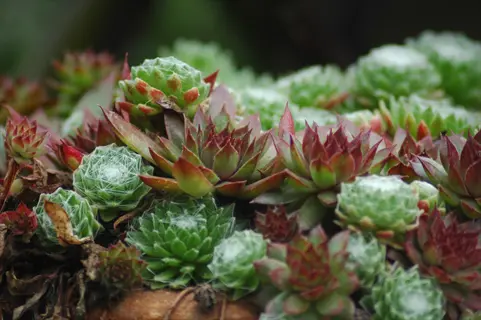
Classic Stone Trough Display
- Setup: Use a hypertufa or natural stone trough 4-6 inches (10-15 cm) deep filled with gritty alpine soil mix.
- Plant mix: Combine three to five different Sempervivum cultivars in contrasting colors and textures for visual interest.
- Topdressing: Cover the soil with a half inch (1.3 cm) layer of horticultural grit to prevent rot and mimic alpine scree.
- Placement: Site the trough in full sun on a stone pedestal or low wall to elevate the display for easy viewing.
- Maintenance: Replace soggy soil every three to four years and divide overcrowded colonies during spring repotting.
- Why it works: This is the traditional alpine display format that highlights individual rosettes as miniature sculptures.
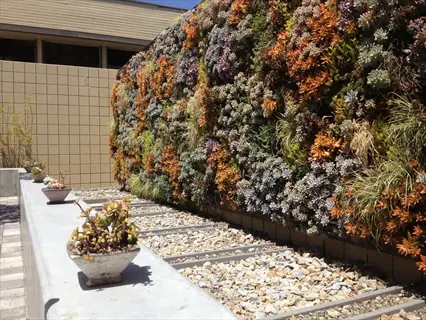
Living Wall Panel
- Setup: Install a felt-pocket or modular grid panel filled with gritty succulent soil on a sunny exterior wall.
- Plant pattern: Insert small Sempervivum chicks into each pocket, mixing miniature cobweb varieties with full-size rosettes for depth.
- Coverage time: Allow eight to twelve months for chicks to spread and cover the panel surface in dense rosette texture.
- Irrigation: Add a drip line at the top of the panel set to run only during dry spells, never on a fixed schedule.
- Color planning: Map out cultivars in advance using graph paper to create geometric color blocks or gradient effects.
- Why it works: Vertical surfaces add succulent interest where horizontal space is limited in urban gardens.
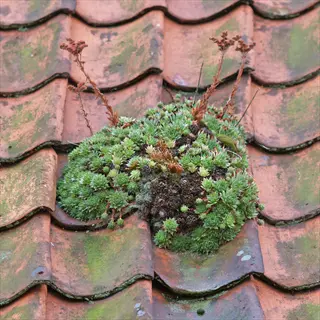
Green Roof Installation
- Setup: Build a low 3-4 inch (7-10 cm) substrate layer over a waterproof membrane and drainage mat on a low-slope roof.
- Plant selection: Choose hardy mat-forming varieties like Sempervivum tectorum for maximum coverage and resilience.
- Roman lore tie-in: Romans planted Sempervivum on rooftops because they believed it protected buildings from lightning strikes.
- Maintenance: Inspect twice a year for weeds, replace any lost rosettes, and avoid walking on the substrate to prevent compaction.
- Climate benefit: Green roofs reduce summer cooling costs by up to 25% and absorb stormwater runoff in urban settings.
- Why it works: Sempervivum is uniquely adapted to the low, dry, sun-exposed conditions of green roof environments.
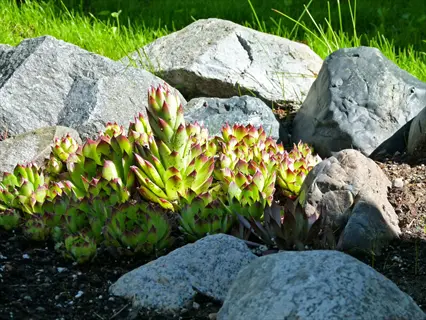
Rock Garden Pocket
- Setup: Create planting pockets between large rocks using gritty soil tucked into crevices and low shelves.
- Plant density: Plant 5-7 small rosettes per pocket allowing 3 inches (7.6 cm) between each for natural spreading.
- Companion plants: Pair Sempervivum with creeping thyme, Sedum spurium, and Saxifraga arendsii for a layered alpine effect.
- Drainage: Slope each pocket slightly downward and add an inch (2.5 cm) of pea gravel beneath the soil layer.
- Visual contrast: Place dark cultivars like 'Pacific Devils Food' against pale stones for maximum visual impact.
- Why it works: Rock gardens replicate the natural mountain habitat where Sempervivum evolved over thousands of years.
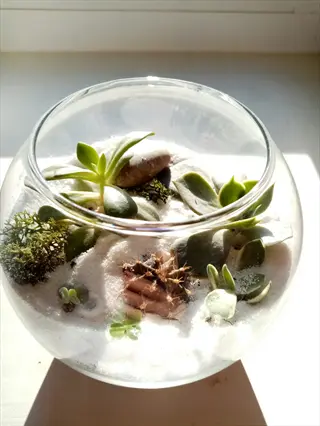
Wide Low Bowl Centerpiece
- Setup: Choose a wide low bowl 8-12 inches (20-30 cm) across and 3-4 inches (7-10 cm) deep with multiple drainage holes.
- Plant arrangement: Place one large statement rosette as the focal point and surround it with five to seven smaller chicks.
- Soil layering: Layer broken terracotta or coarse gravel beneath the gritty soil mix for maximum drainage in containers.
- Decorative finish: Add small polished pebbles, driftwood pieces, or weathered terracotta shards as decorative accents.
- Mobility: Move the bowl seasonally to capture changing sun angles and showcase the display from different angles.
- Why it works: Wide Low bowls perfectly suit the wide, low root systems of Sempervivum without holding excess moisture.
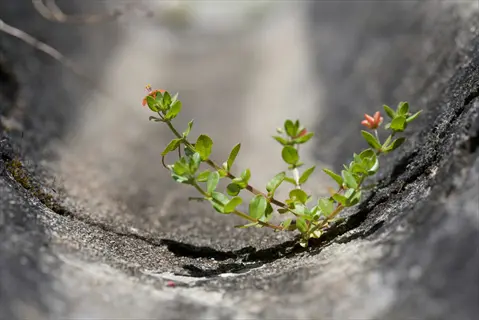
Wall Crevice Tucking
- Setup: Identify horizontal cracks in dry-stack stone walls, brick walls, or weathered concrete that can hold a small amount of grit.
- Insertion technique: Wedge a calloused chick into the crevice along with a teaspoon of gritty soil to anchor the roots in place.
- Watering note: Hand-water with a squeeze bottle for the first month so water reaches the small soil pocket without washing it out.
- Growth time: Expect six to twelve months for the chick to root in firmly and begin producing its own offsets in the crevice.
- Visual reward: Mature wall plantings look as if the rosettes have grown there naturally for decades, creating a romantic aged effect.
- Why it works: Sempervivum naturally colonizes cliff faces and wall cracks in its native mountain habitat.

Pathway Edging Border
- Setup: Plant a continuous row of Sempervivum along a sunny pathway, patio edge, or border front in well-drained soil.
- Spacing: Space chicks 4 inches (10 cm) apart to allow rapid spreading into a continuous mat within two growing seasons.
- Variety strategy: Use a single cultivar for clean formal lines or mix several for a tapestry effect along the border.
- Companion plants: Underplant taller perennials behind the Sempervivum border so the rosettes provide foreground texture.
- Mulch: Top dress the border with light gravel mulch to suppress weeds and define the planting visually.
- Why it works: The low compact habit of Sempervivum makes ideal edging without competing with neighboring plants.
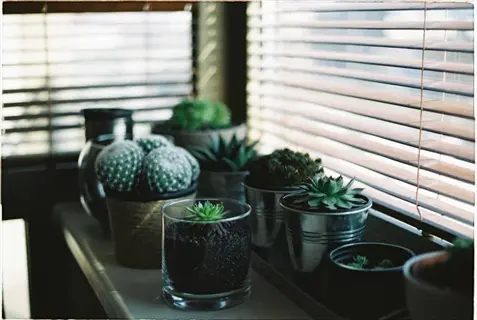
Indoor Sunny Window Display
- Setup: Place a low container with three to five rosettes on a south-facing windowsill receiving six or more hours of direct sun.
- Light supplement: Add a small grow light if natural light falls below six hours daily to prevent stretching and color loss.
- Container choice: Use unglazed terracotta pots that breathe and dry quickly between waterings, unlike glazed ceramic.
- Realistic note: Indoor growing is suboptimal compared to outdoors but works in cold climates where outdoor culture is impossible.
- Seasonal move: Move the display outdoors during summer months whenever possible to recharge the plants with strong sun.
- Why it works: A bright south window provides the strongest indoor light, mimicking the full sun Sempervivum requires.
5 Common Myths
Sempervivum dies for good once its central rosette blooms and sends up a tall flower stalk.
Only the flowering rosette dies, since the surrounding chicks continue the colony and quickly replace the parent plant.
Sempervivum needs regular fertilizing like other garden plants to grow strong and produce healthy rosettes.
These succulents thrive in poor soil and rarely need feeding; heavy fertilizer causes soft, leggy growth and reduces leaf coloration.
Hens and chicks should be watered weekly during the growing season just like typical houseplants need.
Sempervivum prefers sparse watering, often only every two to three weeks, since overwatering causes crown rot that kills the plant.
Sempervivum and Echeveria are essentially the same plant marketed under different succulent retail names.
They are botanically distinct genera; Sempervivum is far more cold hardy while Echeveria is tender and native to Mexico.
Growing Sempervivum from seed is the fastest reliable way to propagate the same variety you already own.
Seeds produce unpredictable hybrids that rarely match the parent; offset division is the only reliable way to keep cultivar traits.
Conclusion
The sempervivum plant earns its name through pure grit. The colony lives forever even as each rosette has its turn. Hens and chicks keep the cycle going year after year. I have watched mine grow strong with almost no help from me. That hands-off life is the gift of this cold hardy succulent.
The care plan stays simple from start to finish. You need full sun, gritty drainage, and sparse water. NC State Extension and Kew Science both back this same plan. Stick to your zone advice and you skip most of the rookie traps. This is a true drought tolerant plant that asks for very little in return.
When you see a rosette bloom and fade, do not blame yourself. That is just biology at work. The chicks at the base will fill the gap in a few short weeks. Watch the colony reset itself. Then you know the plant works just as it should.
Start small with a single trough or pot on a sunny spot. Add one chick this spring and watch what happens. The plant teaches you more than any book can. As drought hits more towns each year, this low maintenance plant earns its keep. You will love how much joy comes from such a tough little rosette.
External Sources
Frequently Asked Questions
Is Sempervivum indoor or outdoor plant?
Sempervivum is primarily an outdoor plant. It thrives best in direct sunlight, fresh air, and cooler temperatures that mimic its native alpine habitat.
Does Sempervivum like sun or shade?
Sempervivum strongly prefers full sun, ideally six or more hours of direct light daily, though afternoon shade helps in extremely hot climates.
Where is the best place to plant Sempervivum?
The best spots are sunny, well-drained locations such as:
- Rock gardens with gritty soil
- Shallow containers and troughs
- Wall crevices and green roofs
- South or west-facing borders
Can Sempervivum survive winter?
Yes, Sempervivum is exceptionally cold hardy and survives winter outdoors in USDA zones 3a through 8b without special protection or covering.
Can succulents grow in just water?
Most succulents including Sempervivum cannot live long term in plain water because their roots need oxygen and quickly rot when submerged.
Can succulents survive in a room with no windows?
Succulents cannot survive in windowless rooms without artificial lighting because they require strong light to photosynthesize and maintain compact growth.
Do succulents like deep or shallow pots?
Succulents generally prefer shallow pots because their root systems are wide and shallow, and excess soil depth holds moisture that promotes root rot.
Are Sempervivum easy to grow?
Sempervivum is among the easiest plants to grow because it tolerates poor soil, drought, frost, and neglect while still spreading vigorously.
Can succulents survive 2 weeks without water?
Yes, established succulents including Sempervivum can comfortably survive two weeks or longer without water due to their thick water-storing leaves.
How long does Sempervivum live?
Individual rosettes typically live three to four years before flowering and dying, but the colony itself can live indefinitely through offsets.