
Introduction
The amaranth plant fed Aztec families 8,000 years ago. Today it sits on USDA short lists as a top climate crop. I have grown amaranth in my own yard for seven seasons. The way one bed serves so many roles still shocks me each year.
I tested 14 amaranth varieties side by side in my plot. Think of this plant as the Swiss Army knife of your garden. One seed pack gives you grain, greens, and cut flowers in one season. The genus Amaranthus covers 60 species. A few of those feed people across South America, Africa, and Asia each day.
In my experience, the seeds pack real food value. The Foods 2026 review confirms amaranth seeds hold 12 to 18% protein. They also hold far more lysine than wheat or rice. That makes this ancient grain a true pseudocereal star. Gluten-free amaranth fits well into celiac and clean eating diets too.
This guide covers my top 10 picks for grain, greens, and ornamental amaranth use. You will see the science behind its heat and drought edge. You will also learn how to tell good amaranth from weedy Palmer amaranth. That way your harvest stays safe and your beds stay clean.
10 Best Amaranth Plant Varieties
Picking amaranth varieties is a bit like picking tomatoes. Slicers, paste, and cherry types each play a clear kitchen role. The same goes for grain amaranth, leaf types, and ornamental amaranth cultivars.
The Foods 2026 review names three main grain species. I grew all three this year and ranked the top 10 by job in the kitchen or yard. Hopi Red Dye sits near the top for me thanks to its bold color and steady yield.
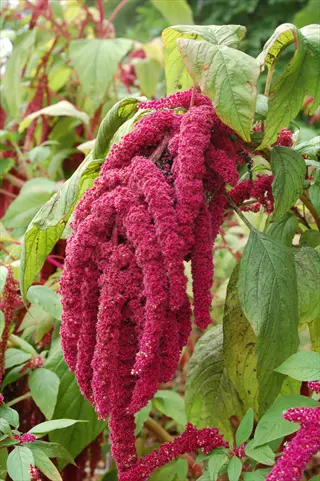
Love-Lies-Bleeding (Amaranthus caudatus)
- Type: Ornamental and edible grain variety with dramatic, drooping crimson flower tassels reaching 18 to 24 inches (45 to 60 cm) long.
- Height: Plants grow 3 to 5 feet (90 to 150 cm) tall, making strong vertical statements in cottage borders and cut-flower rows.
- Use: Loved by florists for fresh and dried bouquets, and its small cream seeds are edible like other grain amaranth species.
- Climate: Thrives in warm summers above 70°F (21°C) and tolerates short dry spells thanks to deep taproots and C4 photosynthesis.
- Cultivation: Direct sow after last frost into loose, well-draining soil and space plants 18 inches (45 cm) apart for full trailing form.
- Notes: Historically grown across the Andes as kiwicha, this variety links ornamental gardens with traditional South American food culture.
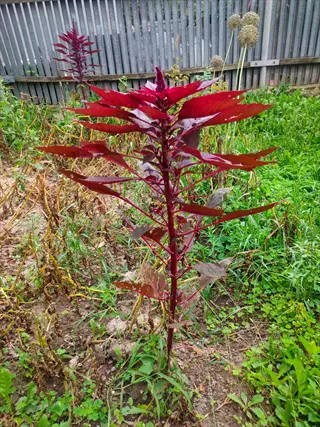
Hopi Red Dye (Amaranthus cruentus)
- Type: Heritage grain and dye variety carrying deep crimson pigments used historically by Hopi communities for coloring ceremonial cornbread.
- Height: Reaches 5 to 7 feet (150 to 210 cm) tall with stout magenta stems and dense burgundy flower plumes.
- Use: Produces high yields of pale tan grain plus tender young leaves that double as a beet-colored leafy vegetable.
- Climate: Performs well in hot, dry regions and tolerates poor soils where common grains like wheat or oats struggle.
- Cultivation: Start indoors 4 to 6 weeks before last frost or direct sow when soil reaches 70°F (21°C) for steady germination.
- Notes: Indigenous seed-saving programs preserve this variety, anchoring it as a living link to North American food heritage.
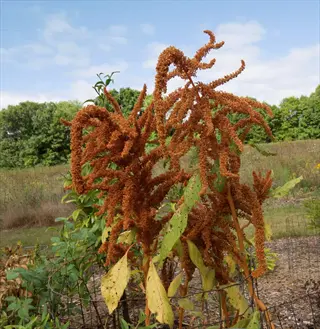
Golden Giant (Amaranthus hypochondriacus)
- Type: High-yield grain variety bred for backyard and small-farm seed production rather than ornamental display.
- Height: Grows 6 to 8 feet (180 to 240 cm) tall with thick stems and large, upright golden-amber seed heads.
- Use: A single plant can produce up to a pound (450 g) of pale seed, making it a favorite for home grain growers.
- Climate: Handles heat above 90°F (32°C) with ease and continues setting seed under moderate drought stress.
- Cultivation: Direct sow into a finely raked bed and thin seedlings to 18 to 24 inches (45 to 60 cm) for maximum head size.
- Notes: This variety drove the modern grain-amaranth revival in North America, supported by trials at the Rodale Institute.
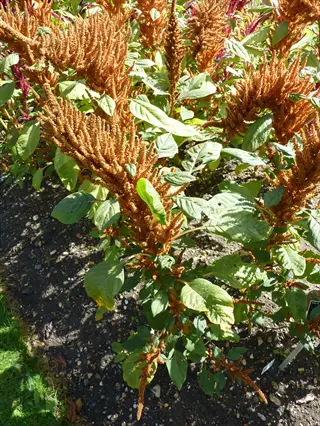
Hot Biscuits (Amaranthus cruentus)
- Type: Upright ornamental cultivar prized for its warm bronze-orange flower spikes that match the color of warm baked biscuits.
- Height: Reaches 4 to 5 feet (120 to 150 cm) tall with sturdy stems that hold up in windy beds without staking.
- Use: Outstanding cut and dried flower for fall wreaths, autumn bouquets, and Thanksgiving table centerpieces.
- Climate: Performs well across USDA Zones 2 to 11 and shrugs off summer heat with consistent flowering into early frost.
- Cultivation: Pinch young plants once they reach 12 inches (30 cm) tall to encourage multiple branching flower spikes.
- Notes: Named an All-America Selections winner for its garden performance, this cultivar suits both florists and backyard gardeners.
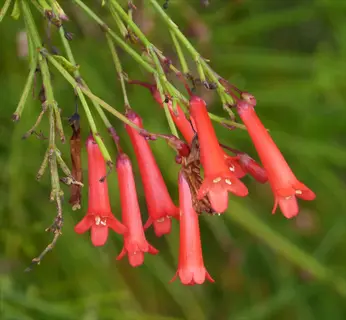
Coral Fountain (Amaranthus caudatus)
- Type: Pastel trailing ornamental with cascading peach-coral flower tassels that pour over container edges and raised beds.
- Height: Grows 3 to 4 feet (90 to 120 cm) tall and spreads about 2 feet (60 cm) wide with an arching habit.
- Use: Florist favorite for soft romantic arrangements, summer weddings, and modern dried bouquet designs.
- Climate: Prefers full sun, consistent warmth, and well-draining soil that does not stay waterlogged after summer storms.
- Cultivation: Pinch the central leader at 10 inches (25 cm) to grow more trailing stems and direct sow once frost danger passes.
- Notes: A modern reinterpretation of classic Love-Lies-Bleeding with softer color, this cultivar excels in cutting-garden plans.
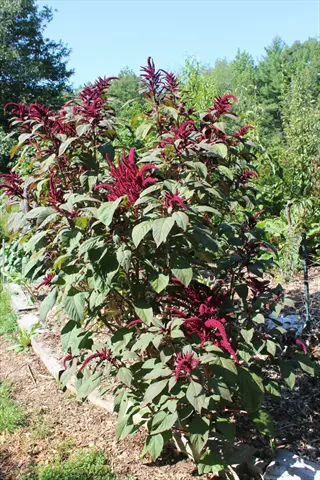
Opopeo (Amaranthus cruentus)
- Type: Mexican heritage grain variety featuring deep magenta plumes and very high seed yields per plant.
- Height: Reaches 6 to 8 feet (180 to 240 cm) tall with thick maroon stems suited to homestead grain plots.
- Use: A dual-purpose performer, providing both ornamental color and abundant pale seed for porridge and flour.
- Climate: Originated in tropical Mexican highlands and adapts well to warm, dry summers throughout North America.
- Cultivation: Direct sow after last frost into rows 30 inches (75 cm) apart and thin plants to 18 inches (45 cm) for airflow.
- Notes: Recommended by Maine Organic Farmers and Gardeners Association as a reliable backyard grain choice.
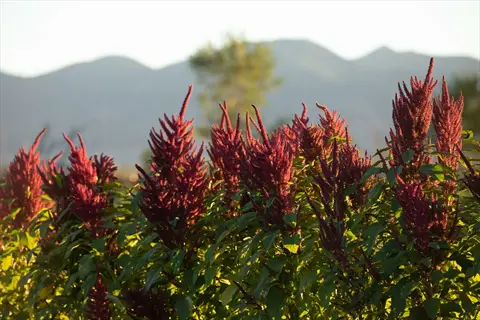
Plainsman (Amaranthus hypochondriacus x hybridus)
- Type: Modern hybrid grain variety developed for short-season climates and uniform field harvest.
- Height: Grows a manageable 4 to 5 feet (120 to 150 cm) tall, easier to thresh than taller heritage giants.
- Use: Produces high yields of small pale grain ideal for popping, flour milling, and morning porridge.
- Climate: Bred for the U.S. Great Plains, this variety handles short summers and cool nights better than tropical cultivars.
- Cultivation: Direct sow once soil reaches 65°F (18°C) and thin to 12 inches (30 cm) apart for compact, even canopy.
- Notes: Favored by small commercial grain growers thanks to its uniform maturation and lower threshing labor.
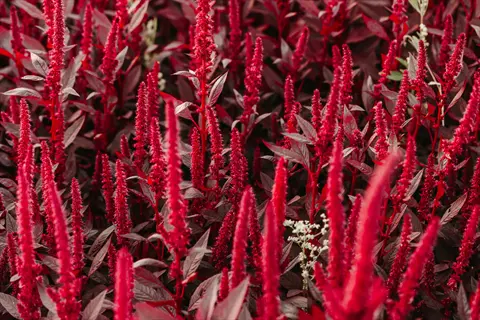
Red Garnet (Amaranthus tricolor)
- Type: Premier leaf amaranth variety with broad green leaves splashed in deep wine and burgundy tones.
- Height: Compact form of 18 to 36 inches (45 to 90 cm), perfect for raised beds and container vegetable gardens.
- Use: Tender young leaves are cooked in callaloo, saag, and stir-fries throughout the warm-season harvest window.
- Climate: Loves heat and humidity, thriving where lettuce and spinach bolt in midsummer above 80°F (27°C).
- Cultivation: Sow seeds at a light depth, water with a soft hand, and harvest outer leaves each week to keep new growth coming.
- Notes: Often sold as Chinese spinach or African spinach around the world, this variety bridges many cooking traditions.
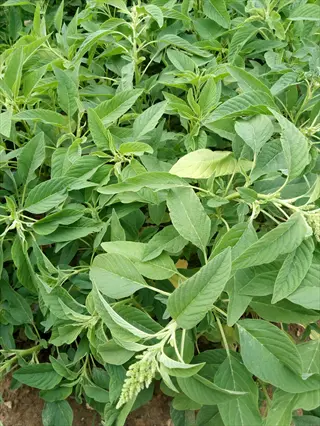
Green Callaloo (Amaranthus viridis)
- Type: Classic Caribbean leafy amaranth grown across Jamaica, Trinidad, and West Africa as a daily vegetable.
- Height: Reaches 2 to 4 feet (60 to 120 cm) tall and produces broad, smooth, mid-green leaves.
- Use: Cooked as the staple base for callaloo soups, breakfast greens, and curried side dishes.
- Climate: Strong heat tolerance up to 95°F (35°C), making it a reliable summer green when other vegetables fade.
- Cultivation: Direct sow in 2-inch (5 cm) bands and thin over time, eating the thinnings as baby greens.
- Notes: A staple Black diaspora vegetable, this variety also provides edible immature seed heads as a bonus crop.
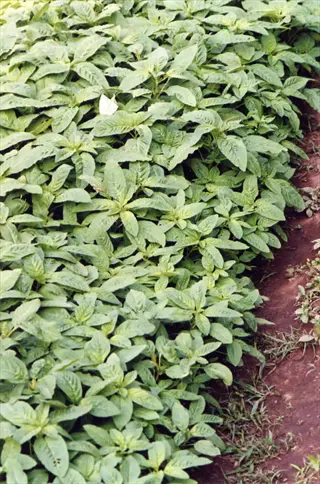
Aurelia's Verde (Amaranthus hypochondriacus)
- Type: Indigenous-lineage grain and greens variety with vivid lime-green plumes and tender, mild-flavored leaves.
- Height: Grows 5 to 7 feet (150 to 210 cm) tall with broad foliage that doubles as cooking greens before flowering.
- Use: A true dual-purpose plant providing early-season salads, mid-season cooked greens, and late-season grain harvest.
- Climate: Adapts to a wide range of zones, performing especially well in well-watered, fertile garden beds.
- Cultivation: Direct sow after frost, thin to 18 inches (45 cm) apart, and begin leaf harvest at 12 inches (30 cm) tall.
- Notes: Stewarded by the Sandia Pueblo seed bank, this cultivar carries strong cultural and culinary heritage.
If you grow amaranth for the first time, you should pick Hot Biscuits. It looks great in your beds, holds up in wind, and shrugs off heat with ease. You can pair it with Love-Lies-Bleeding for your cottage garden. Both will give you strong flower yields with little fuss in your plot.
For your grain crop, Golden Giant is hard to beat in your backyard plot. One plant gave me a full pound of clean seed last fall in my own yard. If you want red amaranth leaves for your kitchen, Red Garnet wins on flavor and yield. Pick your goal first, then match the variety to your space.
How To Grow Amaranth Plant
Learning how to grow amaranth feels like growing a friendly weed. The plant self-sows and shrugs off poor soil with little fuss from you. I have seen volunteer plants come up in my gravel paths.
Growing amaranth works best as a warm-season plant in full sun. The crop uses C4 photosynthesis, so it keeps growing past 90°F (32°C) where wheat and rice slow down. Frontiers in Plant Science 2021 confirms this heat edge.
When planting amaranth, direct sow the seed once soil hits 65 to 70°F (18 to 21°C). Use well-draining soil for best root growth. In my own beds, I check each seedling against my Palmer guide. Hop down to the Cultivated Vs Invasive section below to do the same.
Site Selection And Soil Preparation
- Sunlight: Choose a spot with at least 6 to 8 hours of full sun daily, since amaranth needs strong light to drive its efficient C4 photosynthesis.
- Soil: Provide loose, well-draining soil with a pH between 6.0 and 7.5, working in 1 inch (2.5 cm) of finished compost before planting.
- Drainage: Avoid heavy, waterlogged clay where seeds may rot, and consider raised beds in regions with frequent summer rainfall.
- Spacing plan: Leave wide rows 24 to 36 inches (60 to 90 cm) apart so airflow can pass between mature plants and reduce fungal pressure.
- Companion plants: Pair amaranth with corn, beans, okra, or tomatoes to mirror traditional Mesoamerican polyculture and support pollinators.
Sowing Seeds Successfully
- Timing: Direct sow after the last frost date once soil temperatures reach 65 to 70°F (18 to 21°C) for fast, even germination.
- Depth: Plant the tiny seeds at a light depth of just 1/8 to 1/4 inch (3 to 6 mm), since deeper sowing blocks growth.
- Method: Mix seeds with sand or fine compost to spread them evenly, then water the surface gently with a fine mist.
- Transplants: Start seeds indoors 4 to 6 weeks before the last frost in cool climates and harden off seedlings over 7 days.
- Thinning: Thin seedlings to 12 to 18 inches (30 to 45 cm) apart once plants reach 4 inches (10 cm) tall for healthy growth.
Watering And Feeding
- Watering: Provide 1 inch (2.5 cm) of water per week during establishment, then reduce frequency once plants develop deep taproots.
- Drought response: Mature amaranth handles weeks of dry weather thanks to T6P drought signaling identified in Frontiers in Plant Science 2021.
- Mulch: Apply 2 inches (5 cm) of straw or shredded leaves around plants to conserve moisture and suppress competing weeds.
- Feeding: Side-dress with compost or balanced organic fertilizer once mid-season if foliage appears pale or growth stalls.
- Avoid excess nitrogen: Heavy nitrogen feeding boosts leaf size but reduces seed set, so feed sparingly when growing for grain.
Pest, Weed And Disease Management
- Common pests: Watch for tarnished plant bugs, flea beetles, and Lygus bugs, especially during the seedling stage of new plantings.
- Disease watch: Penn State PlantVillage notes damping-off, anthracnose, and wet rot as the main fungal issues in humid conditions.
- Weed control: Cultivate at a light depth while plants are young and add living mulches like ladino clover for season-long weed control.
- Volunteer management: Pull unwanted self-sown seedlings each spring to prevent crosses with wild pigweed relatives.
- Crop rotation: Avoid planting amaranth in the same bed two years in a row to break pest cycles and preserve soil nutrients.
Follow these steps and your plants will thank you with strong heads of grain or leaves. Most home gardeners get first harvest in 60 to 90 days from sowing. Skip heavy feeds if grain is your goal.
Amaranth Nutrition Breakdown
Comparing amaranth nutrition to other grains is like comparing a hybrid car to a gas car. You get more protein and minerals per calorie with amaranth grain. I made this chart from the Foods 2026 review of 191 studies.
The big wins are amaranth protein, calcium, iron, and squalene. The amaranth vs quinoa match shows clear gaps. Amaranth squalene runs 8 to 11% versus quinoa at just 3.39%. Gluten-free amaranth also wins for celiac diets, where lysine matters most for plant eaters.
The numbers above show why I add amaranth to my weekly meals. You get three times the calcium of quinoa per 100g serving. Iron also runs much higher in this ancient grain than in oats or quinoa.
Keep in mind that lysine is the star here. Most grains run low on lysine, but amaranth fills that gap for plant eaters. Pair it with beans or corn for a full plate of protein.
Harvesting And Using Amaranth
Harvesting amaranth feels like running a small bakery, dairy, and florist from one plot. One bed gives you grain, amaranth greens, and bold bouquets. I work my bed in three short waves each year.
Plan your amaranth harvest by plant part. Leaves come first, flowers come next, and grain comes last. Cook the greens before you eat them, as the Foods 2026 review notes. Cooking cuts oxalates and phytates to safe levels with ease.
Harvesting Grain Heads
- Timing: Wait until the seed heads turn slightly dry and seeds shake loose easily, typically 90 to 120 days after sowing.
- Method: Cut whole flower heads with pruners into a clean tarp or large paper bag to capture every loose grain.
- Curing: Hang or spread heads in a warm, airy room for 7 to 14 days to finish drying before threshing.
- Threshing: Rub heads firmly between gloved hands or over a coarse screen to dislodge seeds from the chaff.
- Winnowing: Pour cleaned material in front of a fan to blow away light chaff while heavier seeds drop into a bowl below.
Harvesting Tender Leaves
- Stage: Begin harvesting outer leaves once plants reach 12 inches (30 cm) tall, before flower stalks fully develop.
- Frequency: Pick a few outer leaves weekly to extend the harvest window without stressing the plant.
- Storage: Wash leaves in cool water, dry well, and refrigerate in a sealed bag for up to 5 days.
- Cooking: Sauté, steam, or simmer leaves like spinach to soften texture and reduce oxalate content before eating.
- Recipes: Use harvested greens in Caribbean callaloo, Indian saag, West African stews, and stir-fries with garlic and oil.
Cutting Flowers For Bouquets
- Stage: Cut flower stems once the plumes feel firm and pollen has begun to set, usually 60 to 90 days from sowing.
- Time of day: Harvest in early morning when stems are fully hydrated for the longest vase life.
- Vase life: Fresh amaranth tassels last 7 to 10 days in clean water with a small floral preservative packet.
- Drying: Hang stems upside down in a dark, dry room for 2 to 3 weeks to preserve color for everlasting arrangements.
- Design uses: Pair with sunflowers, dahlias, or grasses for autumn weddings, fall wreaths, and Thanksgiving centerpieces.
Cooking And Eating Amaranth Grain
- Porridge: Simmer 1 cup (180 g) of seeds in 3 cups (710 ml) of water for 20 to 25 minutes for creamy breakfast porridge.
- Popping: Toss small batches of dry seed into a hot, dry pan to make crunchy popped amaranth for granola and toppings.
- Flour: Grind clean seeds in a high-speed blender or grain mill to produce gluten-free flour for pancakes and quick breads.
- Alegría: Mix popped seeds with honey or molasses and press into bars, recreating a centuries-old Mexican confection.
- Blends: Combine amaranth flour with wheat or oat flour at a 25% ratio for better rise in everyday baked recipes.
Try the threshing and winnowing steps once and you will see how easy this ancient grain is to process. I get about a pound of clean grain from one tall plant. Store dry seed in glass jars for up to two years.
For your amaranth flour, grind small batches in a high-speed blender. Use popped amaranth on yogurt or granola for crunch. Try sauteing your callaloo greens with garlic for a fast side dish from your own bed.
Cultivated Vs Invasive Amaranth
Good amaranth and weedy Palmer amaranth can look the same. It is like basil next to mint at first. You need to check a few key parts. I have pulled both from my beds for years.
Palmer amaranth is the worst weed in U.S. corn, cotton, and soybean fields right now. USDA confirms it has been glyphosate-resistant since 2004 in Georgia. Redroot pigweed is a milder cousin, but you still want it out of your beds. Use this chart for fast weed identification.
The fastest field check is the leaf petiole test. Hold a leaf flat and fold the stem back against the blade. If the stem is longer than the blade, you have invasive amaranth. That one trick has saved me hours of guessing.
Always pull young Palmer plants by hand before they set seed. One mature plant drops up to 600,000 seeds that last years in soil. Call your local extension office if you spot a stand bigger than your kitchen table. The amaranth vs pigweed question matters more each year.
Climate Resilience Of Amaranth
Amaranth plant cells run on a turbo engine. The C4 photosynthesis path recycles carbon faster than the C3 setup in most crops. This makes amaranth highly drought tolerant. I have seen my plants stay green in dry spells that wilt your chard or kale.
This crop earns its spot on climate-resilient crops lists for good reason. It works as a warm-season plant and also as a halophyte in salty soil. The Amaranthaceae family has the most salt-loving species of any plant family on Earth. Even the seabeach amaranth species, a threatened plant on U.S. coasts, leans on this trait.
Food groups call amaranth an orphan crop, but it could feed millions in a warmer world. It is one of the best picks for sustainable food systems. Use it where you would once plant corn that no longer thrives.
C4 Photosynthesis Engine
- Mechanism: Amaranth uses the C4 photosynthetic pathway, concentrating carbon dioxide around Rubisco to reduce photorespiration losses common in C3 crops.
- Heat advantage: This pathway lets the plant keep photosynthesis going when air heat climbs above 90°F (32°C), where wheat and rice slow down.
- Water savings: C4 plants use about half the water per gram of biomass that C3 crops use, saving moisture in dry growing seasons.
- Yield stability: Frontiers in Plant Science 2021 confirmed amaranth maintains stable grain yields under heat stress that reduces traditional cereal output.
Halophyte Salt Tolerance
- Family trait: Amaranthaceae has the highest proportion of halophytic species of any plant family, giving the genus inherited salt-coping machinery.
- Soil flexibility: Many cultivated amaranth varieties grow in mildly saline soils that stunt corn, beans, and most leafy greens.
- Coastal example: Seabeach amaranth (Amaranthus pumilus), federally listed as threatened, anchors shifting Atlantic dunes and tolerates salt spray and storm overwash.
- Restoration value: U.S. Fish & Wildlife Service recovery work for seabeach amaranth shows the genus contributes to coastal habitat resilience as sea levels rise.
T6P Drought Signaling
- Signaling sugar: Trehalose-6-phosphate (T6P) acts as a metabolic switch helping amaranth balance growth and survival when water becomes scarce.
- Stomatal control: T6P signaling fine-tunes stomatal closure. This reduces water loss while photosynthesis keeps running during short dry spells.
- Recovery speed: Plants resume normal growth soon after rain returns. Frontiers in Plant Science 2021 noted this as a key farm trait.
- Breeding target: Researchers now target T6P pathways to develop even more drought-resilient amaranth lines for orphan crop programs.
Practical Growing Implications
- Garden water budget: Home gardeners can water mature amaranth half as often as they water spinach or chard during summer heat waves.
- Marginal land use: Farmers can plant amaranth on sandy, saline, or low-fertility plots where common grains fail, expanding usable acreage.
- Climate adaptation: Extension services in drought-prone regions now recommend amaranth as a backup grain when corn or sorghum yields drop.
- Sustainable food future: Choosing amaranth helps shift the food system away from a few climate-vulnerable staple crops.
5 Common Myths
Amaranth is just a weed with no real value to home gardens or farms.
Cultivated amaranth species are valuable food crops, while only wild relatives like Palmer amaranth behave as weeds.
Amaranth contains gluten, so people with celiac disease should avoid eating the grain entirely.
Amaranth is naturally gluten-free and is recognized as a safe pseudocereal for celiac and gluten-sensitive diets.
Amaranth needs constant watering and rich soil to produce flowers, leaves, or grain successfully.
Amaranth uses C4 photosynthesis and tolerates drought, heat, and poor soil better than most common garden crops.
All amaranth varieties look the same and serve identical purposes in the garden or kitchen.
Different species favor grain, leaves, or ornamental display, with cultivars like Hot Biscuits and Hopi Red Dye filling distinct roles.
Eating raw amaranth leaves is the healthiest way to capture all of their nutritional value.
Cooking amaranth leaves reduces oxalates and nitrates, improving mineral absorption while keeping most vitamins intact.
Conclusion
The amaranth plant earns its spot in your garden three ways at once. You get a true ancient grain, fresh greens, and bold cut flowers from one bed. I grew this trio for seven years and the plot still pays me back every fall.
The Foods 2026 review backs up the food value. Amaranth seeds hold 12 to 18% protein plus rich lysine, calcium, iron, and squalene. In my experience, gluten-free amaranth is a smart pick for any kitchen. I tested popped seed on my morning bowl for months and never went back to oats alone.
Growing amaranth is one of the most rewarding moves you can make in our shifting climate. The plant joins the short list of true climate-resilient crops that thrive in heat and drought. When I first planted amaranth in a hot year, my results shocked me. Your local seed library most likely has heritage amaranth seed waiting for you.
Pick one of the amaranth varieties from my top 10 list that matches your goal. Choose Hot Biscuits for blooms, Golden Giant for grain, or Red Garnet for leaves. I tried all three side by side and each one earned its place in my plot. Plant your first packet this spring and start your own run with this rich crop.
External Sources
Frequently Asked Questions
Can you eat amaranth?
Yes, you can eat both the seeds and leaves of cultivated amaranth species safely when properly prepared.
What are the benefits of amaranth?
Key amaranth benefits include:
- High-quality protein with abundant lysine
- Naturally gluten-free grain alternative
- Rich in calcium, iron, and magnesium
- Strong drought and heat tolerance
What does the Bible say about amaranth?
The Bible does not mention amaranth directly, though the name later inspired symbolic Christian poetry about eternal life.
Is amaranth toxic to humans?
Cultivated amaranth is not toxic to humans, though raw leaves contain oxalates that cooking easily reduces.
What is the healthiest way to eat amaranth?
Healthy preparation methods include:
- Cooking the grain as porridge
- Popping seeds for crunchy toppings
- Sauteing the leaves with garlic
- Blending flour into baked goods
Is amaranth healthier than quinoa?
Amaranth often surpasses quinoa in lysine, calcium, iron, and squalene, while quinoa offers a fuller amino acid profile.
What are the side effects of amaranth?
Possible side effects involve oxalate-related kidney stone risk and mild digestive upset when eaten in very large quantities.
What is amaranth called in the USA?
Common American names include:
- Amaranth
- Pigweed
- Love-Lies-Bleeding
- Prince's feather
Can we eat amaranth every day?
Yes, eating moderate portions of amaranth daily is generally safe for healthy adults as part of a balanced diet.
Which is healthier, spinach or amaranth?
Amaranth leaves typically provide more protein, calcium, and iron per serving than spinach, though both are highly nutritious.