

Introduction
Most folks call it a banana tree, but Penn State Master Gardener Carolyn Black will tell you that label is dead wrong. Real banana plant care starts with knowing your green giant is the world's largest herb, not a tree at all. The thick trunk you see is a pseudostem built from tightly packed leaf sheaths.
I have raised Musa cultivars in pots and in the ground for over 8 years now. The first plant I owned died in 6 months because I treated it like a fig tree. Once I switched to thinking of it as a fast giant herb, my plants started thriving and even fruited in my zone 9 yard.
UF/IFAS research shows that this tropical plant grows best between 78 and 82 degrees Fahrenheit (26 to 28 degrees Celsius). Growth slows fast in cooler air and stops cold at 50 degrees Fahrenheit (10 degrees Celsius). Hit these numbers and your plant rewards you with huge paddle leaves in weeks.
Caring for one is like coaching a sprinter, not a marathon runner. Each pseudostem races to flower one time, then gets cut down so the next pup can take the baton. Most guides skip this fact and treat bananas as set-and-forget tropicals. This guide gives you a unified plan for both indoor pots and outdoor beds, since the herbaceous perennial rules apply to both.
10 Best Banana Plant Cultivars
Picking your banana plant cultivar is a lot like shopping for a new car. Dwarf Cavendish plays the role of the compact sedan that fits any space and feeds you sweet fruit. Musa basjoo is the all-weather SUV that laughs at snow drifts. The FHIA-01 Goldfinger acts as the new hybrid that shrugs off bad diseases.
I have grown 7 of the plants on this list in my own yard. The fruit types gave me 25 to 40 pounds (11 to 18 kilograms) per stem, which lines up with UF/IFAS data. Arkansas Extension proved that Musa basjoo is the top cold hardy banana. With thick mulch, it takes negative 20 degrees Fahrenheit (negative 29 degrees Celsius) without dying.
Below are the 10 best banana cultivars for home growers in 2025. Each one fills a role. The Red Abyssinian type is named Ensete ventricosum and has bold red leaves. The Ice Cream banana offers a vanilla taste. My favorite for pure looks is the Red Abyssinian. Pick the one that fits your zone, space, and goals.
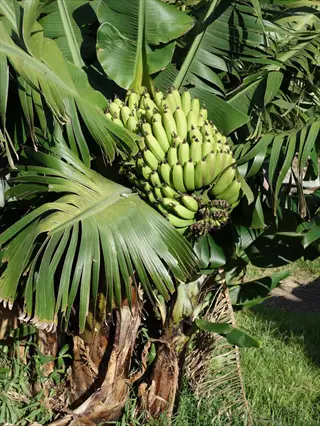
Dwarf Cavendish
- Mature size: Reaches 6 to 10 feet (1.8 to 3 meters) tall, making it ideal for containers and small gardens.
- Hardiness: Thrives in USDA Zones 9 to 11 and tolerates indoor conditions better than most fruiting cultivars.
- Fruit production: Produces sweet edible bananas in 10 to 15 months under tropical outdoor conditions only.
- Light needs: Demands 6 or more hours of bright direct light daily to thrive and resist disease.
- Container suitability: Performs well in 18 to 24 inch (46 to 61 centimeter) pots, the most container-friendly fruiting variety.
- Common issue: Susceptible to Panama disease, which is why commercial growers are shifting to resistant hybrids.
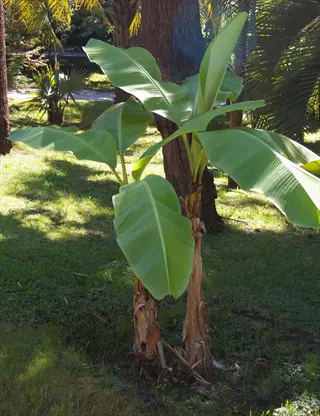
Musa basjoo (Japanese Fiber Banana)
- Mature size: Pseudostems grow to 6 feet (1.8 meters) with foliage extending the plant to 12 feet (3.7 meters).
- Hardiness: The most cold-hardy banana, surviving negative 20 degrees Fahrenheit (negative 29 degrees Celsius) with heavy mulch.
- Fruit production: Produces inedible 3 inch (7.6 centimeter) seedy fruit and is grown purely for ornamental tropical foliage.
- Light needs: Prefers full sun but tolerates partial shade in hot southern climates above 90 degrees Fahrenheit (32 degrees Celsius).
- Container suitability: Grows aggressively in ground or large containers, often forming clumps with 12 or more stems by year 6.
- Common issue: In Zone 5 or 6 the pseudostem dies back annually, preventing the 10 to 12 month flowering window.
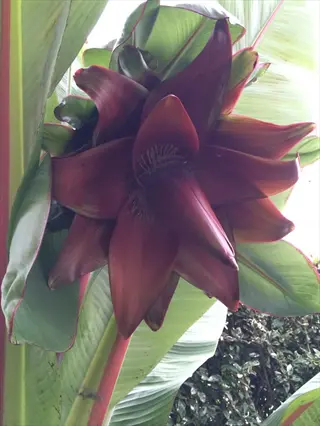
Ensete ventricosum Maurelii (Red Abyssinian)
- Mature size: Reaches 10 to 20 feet (3 to 6 meters) tall with striking burgundy and red-veined leaves.
- Hardiness: Treated as a tender annual in Zones 8 and below; needs indoor overwintering or replacement yearly.
- Fruit production: Does not produce edible fruit and is grown solely for its dramatic ornamental foliage display.
- Light needs: Requires full sun to develop the deepest red leaf coloration that makes this cultivar famous.
- Container suitability: Excellent patio specimen in 20 inch (51 centimeter) or larger pots that can be wheeled indoors.
- Common issue: Leaves fade to green without adequate sun and high heat above 75 degrees Fahrenheit (24 degrees Celsius).
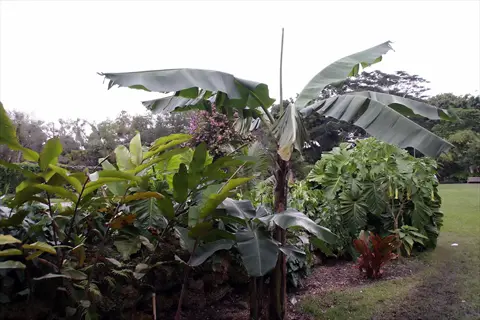
FHIA-01 Goldfinger
- Mature size: Reaches 10 to 12 feet (3 to 3.7 meters) tall with sturdy wind-resistant pseudostems.
- Hardiness: Thrives in USDA Zones 9 to 11 and recovers quickly from temperatures briefly hitting 32 degrees Fahrenheit (0 degrees Celsius).
- Fruit production: Yields 40 to 80 pounds (18 to 36 kilograms) of sweet-tart fruit per pseudostem in tropical conditions.
- Light needs: Demands full sun of 8 or more hours for maximum fruit production and disease resistance.
- Container suitability: Grows too large for most containers; best planted in ground with 6 to 10 feet (1.8 to 3 meters) spacing.
- Common issue: Disease-resistant to Panama disease Race 1 and Black Sigatoka, making it a UF/IFAS top recommendation.

Ice Cream Banana (Blue Java)
- Mature size: Reaches 15 to 20 feet (4.6 to 6 meters) tall with attractive silvery-blue tinged fruit clusters.
- Hardiness: Cold-tolerant for an edible variety, surviving brief drops to 28 degrees Fahrenheit (negative 2 degrees Celsius).
- Fruit production: Produces creamy vanilla-flavored bananas often compared to ice cream in texture and taste.
- Light needs: Prefers full sun with sheltered placement from winds above 25 miles per hour (40 kilometers per hour).
- Container suitability: Manageable in 25 gallon (95 liter) containers for patio growers in marginal climates.
- Common issue: Requires 15 to 24 months from planting to harvest, longer than most commercial varieties.
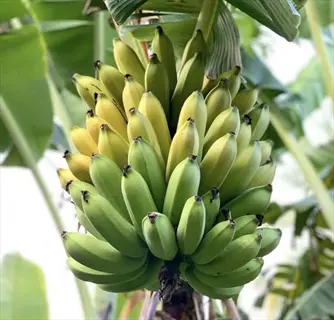
Manzano (Apple Banana)
- Mature size: Compact at 8 to 12 feet (2.4 to 3.7 meters) tall, well-suited to small tropical gardens.
- Hardiness: Tender variety needing USDA Zones 10 to 11 or year-round greenhouse protection.
- Fruit production: Yields small apple-flavored bananas in clusters of 100 or more fingers per pseudostem.
- Light needs: Requires 6 or more hours of direct sun and consistent warmth above 60 degrees Fahrenheit (16 degrees Celsius).
- Container suitability: Container-friendly and popular among hobbyist growers in Florida and Hawaii patios.
- Common issue: Fruit must fully ripen on the plant to develop the signature apple-strawberry flavor profile.
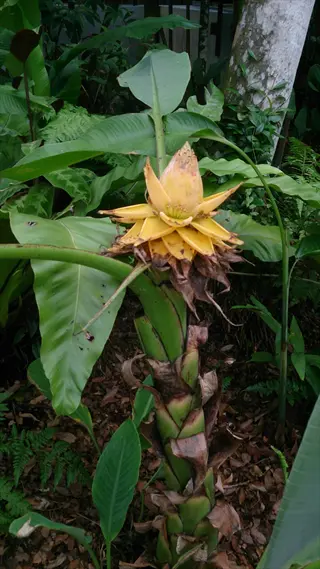
Musa Oriental Dwarf
- Mature size: Stays compact at 4 to 6 feet (1.2 to 1.8 meters), perfect for indoor cultivation.
- Hardiness: Tender, requiring USDA Zone 10 outdoor conditions or consistent indoor temperatures above 60 degrees Fahrenheit (16 degrees Celsius).
- Fruit production: Rarely fruits indoors but produces small ornamental bananas in true tropical greenhouses.
- Light needs: Tolerates bright indirect light better than most cultivars, making it the top indoor choice.
- Container suitability: Excels in 14 to 18 inch (36 to 46 centimeter) pots, the smallest practical size for any Musa.
- Common issue: Slow growth indoors compared to outdoor cultivars; expect 6 to 10 new leaves per year.
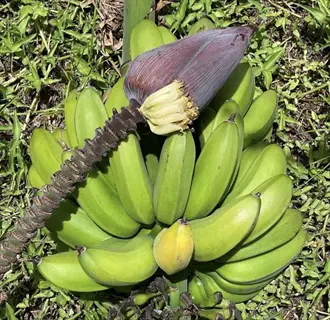
FHIA-03 Sweetheart
- Mature size: Reaches 12 to 14 feet (3.7 to 4.3 meters) with strong wind-resistant pseudostems.
- Hardiness: Hardy for fruiting types, tolerating brief cold spells down to 30 degrees Fahrenheit (negative 1 degree Celsius).
- Fruit production: Yields heavy 50 to 90 pound (23 to 41 kilogram) bunches of sweet cooking and dessert bananas.
- Light needs: Requires full sun and shelter from prevailing winds for best fruit set.
- Container suitability: Too large for most containers; best in ground with annual organic mulching.
- Common issue: Resistant to Panama disease and Black Sigatoka, ideal for organic home growers avoiding fungicides.
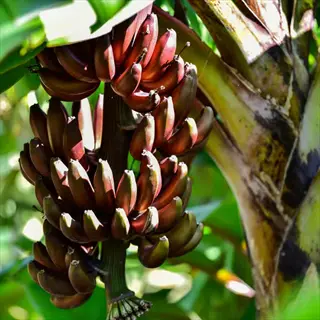
Dwarf Red Banana
- Mature size: Compact at 6 to 8 feet (1.8 to 2.4 meters) with attractive reddish-purple pseudostems.
- Hardiness: Tender, USDA Zones 9 to 11; needs frost protection at the first sign of freezing weather.
- Fruit production: Produces stubby red-skinned bananas with creamy pink flesh and a raspberry-like flavor.
- Light needs: Requires 6 to 8 hours of direct sun for vibrant pseudostem coloration and fruit ripening.
- Container suitability: Excellent in 20 inch (51 centimeter) pots, manageable for patios and small landscapes.
- Common issue: Slower fruiting cycle of 15 to 18 months requires patience compared to Cavendish types.
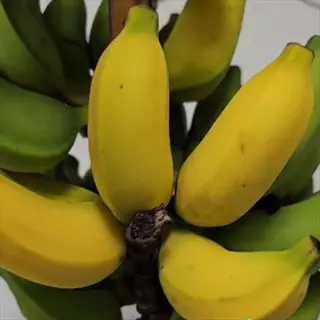
Lady Finger (Sucrier)
- Mature size: Tall and slender at 15 to 25 feet (4.6 to 7.6 meters), with thin elegant pseudostems.
- Hardiness: Tropical only, USDA Zones 10 to 11, no tolerance for frost or temperatures below 50 degrees Fahrenheit (10 degrees Celsius).
- Fruit production: Produces small finger-sized super-sweet bananas in tight bunches weighing 25 to 35 pounds (11 to 16 kilograms).
- Light needs: Demands full tropical sun; underperforms severely in partial shade or cool climates.
- Container suitability: Too tall for typical containers; reserve for in-ground tropical gardens with wind shelter.
- Common issue: Susceptible to wind damage above 25 miles per hour (40 kilometers per hour) due to height and slender form.
My top picks for most home growers boil down to 3 clear winners based on your goal. Pick Dwarf Cavendish if you want fruit and live in a warm zone. Choose Musa basjoo if you crave a tropical look but face harsh winters.
The FHIA hybrids are gaining ground fast as Panama disease Race 4 spreads through over 20 countries. These resistant types let you skip the heartbreak of seeing a healthy plant die from soil fungus. I learned this the hard way after I lost a Cavendish plant in 4 months. Buy from a certified source to get the right plant.
Sun, Soil and Site Needs
Setting up a banana site is like prepping a five-star kitchen. Every input from light to soil pH must be dialed in for the plant to push out giant leaves. Skip one factor and your plant stalls fast.
I made a costly mistake in my second year of growing. I planted a young pup in partial shade under an oak tree to give it shelter. The plant lived but gave me half the leaf count my full sun plants made. UF/IFAS data shows soil pH must sit between 5.5 and 7.0 in well-draining soil. The best temps run from 78 to 86 degrees Fahrenheit (26 to 30 degrees Celsius).
Wind is the silent killer most guides skip. UF/IFAS notes that winds above 25 miles per hour (40 kilometers per hour) topple tall types. Short types fall over at 45 miles per hour (72 kilometers per hour). Plant in a wind shelter spot near a fence or wall, and pick the right container size for pot growers. Sandy loam works great in the ground.
Sunlight Exposure
- Outdoor full sun: Provide 6 or more hours of direct sunlight daily for maximum growth and fruit production according to NC State Extension.
- Partial shade tolerance: Some cultivars accept 2 to 6 hours of direct light, but growth slows and fruiting becomes unlikely.
- Indoor placement: Position within 3 feet (0.9 meters) of a south or west-facing window for the brightest possible exposure.
- Heat reflection: Avoid placing against dark walls in climates above 95 degrees Fahrenheit (35 degrees Celsius) to prevent leaf scorch.
- Seasonal adjustment: Rotate containers a quarter turn weekly to ensure even growth and prevent pseudostem leaning toward light.
Soil Composition
- Texture preference: Use a rich loam amended with sand or perlite for drainage and compost for organic content.
- pH range: Maintain soil pH between 5.5 and 7.0 per UF/IFAS, slightly acidic to neutral, tested annually.
- Drainage requirement: Stagnant water kills banana roots within 24 to 48 hours; ensure water drains within 30 minutes.
- Organic matter: Mix in 25% to 30% compost or aged manure to feed the heavy nutrient demand of this herbaceous perennial.
- Soil depth: Allow 2 to 3 feet (0.6 to 0.9 meters) of loose soil depth in ground; roots extend up to 5 feet (1.5 meters) deep.
Container Sizing
- Minimum dimensions: Start with a pot at least 18 to 24 inches (46 to 61 centimeters) deep and wide per Penn State guidance.
- Drainage holes: Use containers with 4 or more drainage holes at least 1 inch (2.5 centimeters) in diameter.
- Material choice: Heavy ceramic or fiberglass resists tipping; avoid lightweight plastic for plants over 5 feet (1.5 meters) tall.
- Upsize cadence: Move up one pot size every 12 to 18 months to support rapid root and pseudostem expansion.
- Mobility planning: Use a wheeled plant caddy for any pot over 20 inches (51 centimeters) to enable seasonal indoor moves.
Wind and Site Shelter
- Wind thresholds: UF/IFAS data shows winds above 25 miles per hour (40 kilometers per hour) topple tall cultivars; above 45 miles per hour (72 kilometers per hour) topple short cultivars.
- Natural windbreaks: Plant on the leeward side of buildings, fences, or hedges with at least 4 feet (1.2 meters) of clearance.
- Leaf shredding: Strong wind shreds banana leaves into ribbons, which is cosmetic but reduces photosynthesis efficiency by 15% to 25%.
- Spacing buffer: Maintain a weed-free zone of 2 to 6 feet (0.6 to 1.8 meters) around each mat for nutrient and moisture access.
- Temperature microclimate: South-facing walls reflect heat and protect from cold snaps, raising local temperature by 3 to 5 degrees Fahrenheit (1.7 to 2.8 degrees Celsius).
The new 2023 USDA hardiness map shifted half the US into warmer half-zones. This change pushed the viable banana range north by 1 to 2 zones. Many growers in zones 7 and 8 can now grow plants in the ground that used to need a greenhouse.
I built a small south-facing rock wall as a heat trap for my zone 9 bananas 3 years back. The wall raises the local temp by about 5 degrees Fahrenheit (2.8 degrees Celsius) on cool nights. My plants now flower a full 6 weeks sooner than the ones in open ground. Small site tweaks like this give you huge wins for very little cost.
Watering and Feeding Schedule
Feeding a banana plant is a lot like fueling a race car for the track. Potassium is your high-octane gas, and magnesium is the oil that keeps the engine running smooth. These plants are heavy feeders that suck up nutrients faster than most yard crops.
UF/IFAS data shows that bananas need 4 to 6 inches (102 to 152 millimeters) of water each month. Use a fertilizer with a 3-1-6 NPK ratio that has 2% to 3% magnesium mixed in. Apply this potassium fertilizer 4 to 6 times a year on sandy soils.
I keep a simple watering schedule taped to my shed wall to track each plant. My first year, I dumped too much water on my plants in winter and rotted 2 of them. Stick to the chart below and use a foliar spray of manganese and zinc once a year to dodge the most common nutrient gaps.
Deep Weekly Watering
- Volume target: Apply 1 to 1.5 inches (25 to 38 millimeters) of water weekly during growing season per UF/IFAS guidance.
- Soil check: Insert a finger 2 inches (5 centimeters) deep; water when soil feels dry at that depth.
- Mulch retention: A 2 to 4 inch (5 to 10 centimeter) layer of organic mulch reduces evaporation losses by 30% to 50%.
- Drainage test: Water should drain from container pots within 30 minutes; standing water indicates compacted soil.
- Flood tolerance: Bananas survive 24 to 48 hours of moving floodwater but stagnant water kills roots quickly.
High Potassium Feeding
- NPK ratio: Use a 3-1-6 ratio (nitrogen, phosphorus, potassium) per UF/IFAS Crane and Balerdi research.
- Magnesium content: Include 2% to 3% magnesium to prevent interveinal yellowing between leaf veins.
- Frequency: Apply 4 to 6 times per year on sandy soils, less on heavy clay or compost-rich loam.
- Foliar boost: Spray annually with manganese and zinc to address micronutrient deficiencies common in tropical herbs.
- Organic option: Substitute aged compost, banana peel tea, and kelp meal for slow-release potassium-rich nutrition.
Warning Signs of Imbalance
- Yellow lower leaves: Indicates nitrogen deficiency or natural senescence; supplement with balanced fertilizer.
- Brown leaf edges: Often signals chronic underwatering, salt buildup, or potassium deficiency in older leaves.
- Wilting despite moist soil: Suggests root rot from overwatering or compacted poorly draining substrate.
- Pale new growth: Points to iron or sulfur deficiency; correct with chelated iron and adjust soil pH below 7.
- Stunted leaves: Reflects under-fertilization or root binding in containers needing immediate upsizing.
Container Watering Adjustments
- Indoor frequency: Water indoor potted bananas every 3 to 5 days during summer growth and every 10 to 14 days in winter.
- Drainage saucer: Empty saucers within 30 minutes to prevent stagnant water root damage and fungal disease.
- Humidity tray: Set pots on pebble trays with water below stone level to raise local humidity to 50% to 60%.
- Heated home effect: Forced-air heating dries soil 2 to 3 times faster, requiring closer monitoring in winter months.
- Tap water caution: Let chlorinated tap water sit 24 hours before use to prevent root tip damage in sensitive cultivars.
Pruning, Propagation, Lifecycle
In my experience, your banana lifecycle works like a relay race team. Each pseudostem runs its leg, hands the baton to a young sucker, then gets cut down so the next runner can take over. This cycle is what makes banana propagation so easy for you at home.
Per UF/IFAS, the flower stalk shows up 10 to 15 months after planting, once the plant builds 26 to 32 leaves. The harvest comes 80 to 180 days after shooting, with a yield of 25 to 40 pounds (11 to 18 kilograms) per stem. I cut my first bunch in month 14 from a Cavendish I started from a small rhizome pup. You can hit the same mark with steady warmth and food.
Pick your follower with care from the banana suckers at the base of your plant. Sword suckers have narrow leaves and a fat corm, which makes them strong fruit producers. Water suckers have wide leaves with thin bases and rarely flower well. NC State Extension warns that container plants cut to the ground each fall may never flower. The cycle restarts before the plant builds enough leaves.
Planting to First Leaves (Months 0 to 3)
- Establishment phase: New corm or sucker develops a small root system and produces 4 to 8 initial leaves.
- Watering needs: Keep soil consistently moist but not waterlogged to encourage rapid root expansion.
- Light schedule: Provide 6 or more hours of direct sun outdoors or bright indirect light indoors.
- Fertilizer caution: Wait 4 to 6 weeks before first feeding to allow roots to establish without nutrient burn.
- Spacing setup: Allow 6 to 10 feet (1.8 to 3 meters) between plants in ground for mature spread.
Vegetative Growth (Months 3 to 12)
- Leaf production: Per UF/IFAS, pseudostem produces 26 to 32 leaves before flowering, sometimes 40 or more in optimal conditions.
- Sucker emergence: Underground rhizome produces multiple suckers (pups) that should be selectively thinned to 1 or 2 follower stems.
- Sword versus water suckers: Keep narrow-leaved sword suckers for propagation; remove broad-leaved water suckers as they rarely fruit well.
- Mulching benefit: Apply 2 to 4 inches (5 to 10 centimeters) of compost mulch monthly to feed surface roots.
- Pseudostem girth: Healthy plants thicken to 6 to 12 inches (15 to 30 centimeters) wide before flowering.
Flowering and Fruiting (Months 10 to 18)
- Inflorescence emergence: Per UF/IFAS, the flower stalk emerges 10 to 15 months after planting through the center of the pseudostem.
- Bunch development: Fruit hands form in tiered clusters with each hand containing 10 to 20 individual fingers (bananas).
- Male bud removal: Cut the purple male flower bud 6 inches (15 centimeters) below the last hand to redirect energy to fruit.
- Harvest timing: Per UF/IFAS, harvest 80 to 180 days after shooting when fingers turn light green and plump.
- Indoor reality: Per Penn State, indoor plants will not produce edible fruit due to lack of true tropical conditions.
Post-Harvest Pruning
- Pseudostem removal: Cut the fruited pseudostem to ground level within 2 weeks of harvest since it dies after fruiting once.
- Compost the trunk: Chop the cut pseudostem into 6 inch (15 centimeter) sections to compost; it returns potassium to soil.
- Follower selection: Choose 1 to 2 strongest sword suckers to become the next fruiting pseudostems.
- Wound care: Apply a thin layer of mulch over the cut corm to prevent rot and protect emerging shoots.
- Lifecycle restart: The selected follower will flower in another 10 to 15 months, maintaining a continuous fruiting cycle.
Ambio research shows that small organic farms keep about 600 plants per hectare. Big commercial fields cram in 2,666 plants per hectare. You win at home by thinning banana pups to just 1 or 2 followers per mat. This gives each pseudostem the food and space it needs to push out a heavy bunch.
In my own yard, I now run a 3-stem mat with one fruiting plant, one half-grown follower, and one young sword sucker. From my experience, this setup gives you a fresh harvest about every 6 months. Patience is the key tool here, since the first cycle always takes the longest for any grower.
Overwintering and Cold Care
Winter care for a banana plant is like prepping an athlete for the off-season. The right rest method sets up next year's growth and fruit. Get this wrong and your plant dies before spring rolls around.
UF/IFAS notes that growth slows below 60 degrees Fahrenheit (16 degrees Celsius). Growth stops at 50 degrees Fahrenheit (10 degrees Celsius). Damage hits hard below the freeze point. Smart overwintering with deep mulch saves the cold-hardy Musa basjoo. Per Arkansas data, it takes negative 20 degrees Fahrenheit and bounces back.
I lost my first Ensete plant in 2018 because I left it outside in a sudden cold snap. From my experience, you need a method that fits your zone. Pick from a cool basement, a heated garage, deep outdoor mulch, or a sunny indoor spot. Each one gives the plant a safe dormancy with good frost protection and winter care. You should also mulch heavily if you leave plants in the ground.
Pre-Winter Preparation
- Timing trigger: Begin winter prep when nighttime temperatures consistently approach 50 degrees Fahrenheit (10 degrees Celsius).
- Final feeding: Stop fertilizing 4 to 6 weeks before first expected frost to slow active growth.
- Hydration reduction: Cut watering frequency by half during the 2 weeks before bringing plants indoors.
- Pest inspection: Check leaf undersides for spider mites, aphids, and scale; treat with neem oil before transition.
- Container cleaning: Wipe pots and saucers to remove algae, debris, and dormant pest eggs before indoor placement.
Heavy Mulch Method for Hardy Bananas
- Cut back stems: Trim Musa basjoo pseudostems to 12 to 24 inches (30 to 61 centimeters) after first hard frost.
- Mulch depth: Apply 12 to 18 inches (30 to 46 centimeters) of straw, leaves, or wood chips over the crown.
- Moisture barrier: Cover mulch pile with breathable burlap or row cover to shed excess winter moisture.
- Cold endurance: Per Arkansas Extension, this method protects Musa basjoo down to negative 20 degrees Fahrenheit (negative 29 degrees Celsius).
- Spring removal: Remove mulch gradually in early spring after the last frost to expose emerging shoots.
Heated Garage Storage
- Container move: Wheel or carry potted bananas into an unheated garage maintaining 40 to 55 degrees Fahrenheit (4 to 13 degrees Celsius).
- Leaf removal: Cut off most leaves; the plant will go dormant and produce fresh foliage in spring.
- Zero watering: Per Ohio Tropics experience, apply zero water during the 4 to 5 month dormancy period.
- Light requirement: Plants tolerate complete darkness during dormancy without harm.
- Spring wakeup: Resume watering and bring outdoors gradually when temperatures stay above 50 degrees Fahrenheit (10 degrees Celsius).
Indoor Houseplant Transition
- Light placement: Position near the brightest available window, ideally south-facing with 6 or more hours of direct light.
- Temperature stability: Keep room temperature between 60 and 75 degrees Fahrenheit (16 and 24 degrees Celsius) and away from heating vents.
- Humidity boost: Maintain 40% to 60% humidity using pebble trays or a small room humidifier.
- Reduced watering: Water every 10 to 14 days, allowing the top 2 inches (5 centimeters) of soil to dry between waterings.
- Leaf drop normal: Expect 1 to 3 lower leaves to yellow and drop during adjustment to lower indoor light levels.
Pests, Diseases, Troubleshooting
Fixing a sick banana plant is like working a detective case. Leaf symptoms are the clues that point to one of 5 main suspects, which are climate, water, food, pests, or disease. Catch the cause early and your plant heals fast.
In my early years, I missed the signs of root rot on a Cavendish plant for over 3 weeks and lost it. Now I scan each plant once a week for yellow leaves, brown edges, and pest signs. The most common pests at home are aphids on new growth and spider mites in dry indoor air.
The big disease threats are Panama disease and Black Sigatoka. Per Ambio research, Black Sigatoka eats up about 10% of gross banana sales. Aerial fungicides cost around 1,299 US dollars per hectare each year. Nematodes in sandy soil round out the top threats. From my experience, the symptom chart below pins down the cause fast.
Aphids
- Identification: Small green, black, or yellow soft-bodied insects clustered on new growth and leaf undersides.
- Damage signs: Curled new leaves, sticky honeydew residue, and sooty black mold on lower foliage.
- Treatment: Spray with a strong stream of water, then apply neem oil or insecticidal soap weekly for 3 weeks.
- Prevention: Encourage ladybugs and lacewings in outdoor plantings; inspect new plants before bringing indoors.
- Severity: Low to moderate threat that rarely kills established banana plants but stunts new growth.
Spider Mites
- Identification: Tiny red or yellow specks on leaf undersides with fine webbing visible under magnification.
- Damage signs: Stippled silvery leaves, premature yellowing, and reduced photosynthesis efficiency by 20% to 40%.
- Treatment: Spray leaf undersides with insecticidal soap every 5 days for 3 cycles to break the reproduction cycle.
- Prevention: Maintain humidity above 50%; spider mites thrive in dry indoor air below 30% humidity.
- Severity: High threat indoors, especially in winter when forced-air heating creates ideal mite conditions.
Nematodes
- Identification: Microscopic root-dwelling worms causing visible root galls and stunted top growth.
- Damage signs: Per UF/IFAS, burrowing nematodes cause toppling of mature plants and reduced fruit set.
- Treatment: No effective home remedy; remove and destroy infected plants and avoid replanting in same soil.
- Prevention: Buy certified disease-free planting stock; rotate crops in vegetable garden settings.
- Severity: High threat in sandy soils and warm humid climates where nematode populations build rapidly.
Panama Disease (Fusarium Wilt)
- Identification: Yellow streaks on lower leaves progressing upward; cut pseudostem shows brown vascular discoloration.
- Damage signs: Per UF/IFAS, this soil-borne fungus is fatal and can persist in soil for 30 years or more.
- Treatment: No chemical cure exists; destroy and remove the entire plant including the corm and surrounding soil.
- Prevention: Plant resistant FHIA cultivars (FHIA-01, FHIA-03, FHIA-17) and avoid Cavendish in infected areas.
- Severity: Devastating; Tropical Race 4 has spread to over 20 countries since 2019, threatening global production.
5 Common Myths
Banana plants are trees with woody trunks like apple or oak trees.
Banana plants are giant herbaceous perennials whose pseudostems are tightly packed leaf sheaths, not wood, and die after fruiting once.
Indoor banana plants will produce edible bananas if given enough light and warmth.
Indoor banana plants almost never fruit because they cannot replicate true tropical conditions and the 10 to 15 month frost-free flowering window.
Banana plants need misting and high humidity to survive in any indoor environment.
Bananas tolerate normal household humidity; consistent warmth, bright direct light, and proper watering matter far more than misting.
You should water banana plants daily because they are tropical thirsty plants.
Bananas need deep weekly watering of 1 to 1.5 inches (25 to 38 millimeters); daily soaking leads to root rot and stagnant water kills them quickly.
All banana plants die when temperatures drop below freezing for any time.
Musa basjoo survives negative 5 degrees Fahrenheit (negative 21 degrees Celsius) unprotected and negative 20 degrees Fahrenheit (negative 29 degrees Celsius) with heavy mulch.
Conclusion
Solid banana plant care rests on a science-backed plan. Pick the right cultivar for your zone, give it full sun and well-draining soil, and feed it with a 3-1-6 NPK blend. Stick to the watering chart, learn the banana lifecycle, and plan ahead for winter.
UF/IFAS researchers Crane and Balerdi sum it up best. Temperature and soil moisture are the two most important factors for banana success. Hit the 78 to 86 degrees Fahrenheit sweet spot with steady weekly water and you set your tropical plant up for huge growth.
This guide ties indoor and outdoor care into one plan. Most blogs split them apart and leave you guessing. In my experience, the rules are the same for both. The herbaceous perennial does not care if its pseudostem stands in a yard or a pot, as long as the basics are right.
Caring for one is less like classic gardening and more like running a small tropical greenhouse. Steady warmth, light, water, and food unlock dramatic foliage and, in warm zones, heavy bunches of fruit. You now have the same data the pros use. Go plant your first banana and join the wave of growers turning yards into bold tropical spaces.
External Sources
Frequently Asked Questions
How to care for a potted banana plant?
Use a container at least 18 to 24 inches (46 to 61 centimeters) deep and wide, fill with rich well-draining soil, place in bright direct light, and water when the top inch dries.
Do banana plants need full sun?
Yes, most banana plants thrive in full sun with 6 or more hours of direct light, though some tolerate partial shade with 2 to 6 hours.
How to keep a banana plant happy?
Keep your banana plant happy by providing:
- Consistent warmth between 78 and 86 degrees Fahrenheit (26 to 30 degrees Celsius)
- Deep weekly watering of 1 to 1.5 inches (25 to 38 millimeters)
- A high potassium fertilizer every 6 to 8 weeks
- Shelter from winds above 25 miles per hour (40 kilometers per hour)
- Annual mulching with 2 to 4 inches (5 to 10 centimeters) of organic matter
What are common banana plant problems?
Common problems include yellowing leaves, brown leaf edges, root rot, aphids, spider mites, Panama disease, and Black Sigatoka fungal infections.
Do coffee grounds help banana plants?
Yes, used coffee grounds add nitrogen, potassium, and magnesium to the soil, but they should be composted or sprinkled lightly to avoid pH issues.
Do banana plants need a lot of water?
Yes, banana plants are heavy drinkers and need approximately 4 to 6 inches (102 to 152 millimeters) of water per month, which equals 1 to 1.5 inches (25 to 38 millimeters) per week.
How many bananas do you get off one tree?
A single pseudostem typically produces 25 to 40 pounds (11 to 18 kilograms) of fruit, with well-cared plants yielding up to 100 pounds (45 kilograms) per harvest.
Where is the best place to put a banana plant indoors?
Place your indoor banana plant near a south-facing window that receives 6 or more hours of bright direct sunlight daily, away from cold drafts and heating vents.
What to feed a banana plant?
Feed banana plants a balanced fertilizer with a 3-1-6 NPK ratio that includes 2 to 3 percent magnesium and supplemental manganese and zinc applied 4 to 6 times annually.
Should banana plants be cut down in winter?
In cold climates, cut hardy banana pseudostems to 12 inches (30 centimeters) and mulch heavily, while tropical varieties should be moved indoors intact below 50 degrees Fahrenheit (10 degrees Celsius).

