

Introduction
That bare, weedy strip under your trees and along the north side of the house is not your fault. Grass refuses to grow where the light barely reaches, so you get patchy turf, muddy runoff, and weeds that move in fast. I planted the right shade ground cover in my own dry, root-filled strip under a maple, and it carpeted the dirt where grass had failed for years. These tough plants fill the dim spots where nothing else will, and they hold the soil in place while they do it.
A ground cover is just a low plant, usually 12 inches (30 cm) tall or shorter, that spreads fast into a dense, leafy mat. That thick growth is the whole point. Once these plants settle in, they out-compete most weeds and choke them out before they can take hold. So a good ground cover for shade does double duty. It covers the bare dirt and gives you real weed suppression at the same time.
A flat list of shade plants with a few photos leaves you guessing about which one fits your yard and how many you actually need. This guide goes further. You get a quick way to read your own shade. You get the real spacing math behind how fast a bed fills in. And you get honest warnings about the pretty spreaders that turn invasive, plus native plants that behave.
Here is the plan. First you get a list of the best plants for shade. Then a simple test to match each one to your exact light. After that come clear planting and spacing steps, plus native picks set against the invasive ones to skip. You also get care tips for keeping a low maintenance ground cover looking sharp. Let's start with the plants worth your money.
Best Shade Ground Covers
I dug eight plugs of 'Black Scallop' bugleweed into the damp north-facing corner where my lawn meets the woods, about six years back. Two hostas had sulked and died in that spot. By the next summer the dark glossy mat had knit across the bare ground and crept toward the fence line.
That corner taught me which plants to reach for, and the list below uses the same logic. The best ground cover for shade spreads on its own and fills space you would fight weeds in. All the heights match Iowa State Extension figures, so the numbers line up across every entry.
A quick heads up before you plant. A few of these spreaders move fast. Periwinkle is one. So are bugleweed and pachysandra. Some areas flag all three as invasive. Box yours in with a defined edge, or pick a native swap like Allegany spurge in place of Japanese spurge. You get the full native versus invasive question in its own section later.
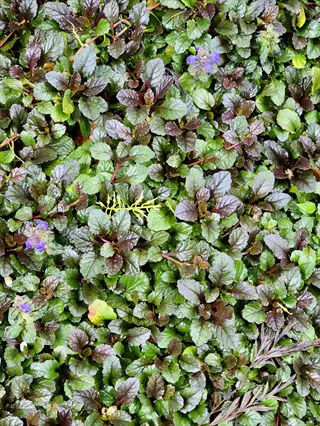
Bugleweed (Ajuga reptans)
- Height: Stays low at 2-8 inches (5-20 cm), forming a dense mat that knits together quickly across shaded ground.
- Light: Handles partial to full shade, though it appreciates a few hours of early-morning or late-afternoon sun for best color.
- Flowers: Sends up short spikes of blue-purple flowers in spring above glossy foliage that can be green, bronze, or near-black.
- Spread: Spreads by runners into a tight carpet, which makes it a strong weed suppressor in part to full shade.
- Caution: Missouri Extension flags Ajuga as potentially invasive, so give it a defined bed or edging to keep it contained.
- Best for: Filling shaded slopes and edges where you want fast, low, colorful cover with minimal fuss.
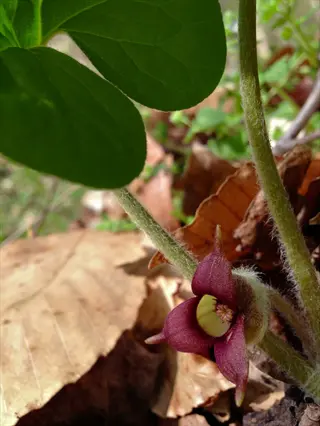
Wild Ginger (Asarum)
- Height: A modest 4-8 inches (10-20 cm) tall with rounded, heart-shaped leaves that overlap into a lush, low layer.
- Light: Thrives in partial to full shade and tolerates the dry shade found beneath established trees better than many plants.
- Foliage: Grown for its handsome foliage rather than its hidden flowers, giving a clean woodland-floor look all season.
- Native value: Several species are North American natives, making wild ginger an ecologically friendly choice for shaded beds.
- Spread: Spreads slowly and politely by rhizomes, so it rarely overruns neighbors the way aggressive spreaders can.
- Best for: Naturalistic woodland gardens and dry shade under trees where a refined, well-behaved carpet is wanted.
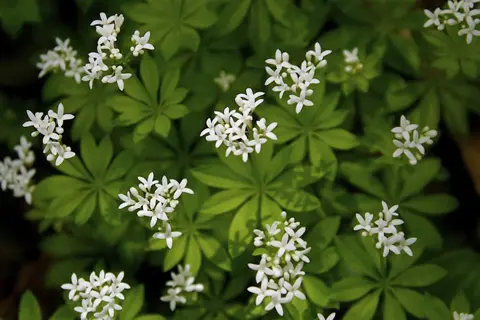
Sweet Woodruff (Galium odoratum)
- Height: Compact at 6-8 inches (15-20 cm) with whorls of slender leaves that create a soft, fine-textured green sheet.
- Light: Performs well in partial to full shade and is a classic choice for moist woodland and shaded borders.
- Flowers: Carries clusters of tiny white star flowers that bloom from April well into June for a long bright display.
- Fragrance: The dried foliage has a sweet hay-like scent, adding a sensory bonus to its dense, weed-blocking growth.
- Spread: Spreads readily to fill space, so give it room or edging where you want it to stay within bounds.
- Best for: Moist shade beneath shrubs and trees where a fragrant, flowering carpet is desired.
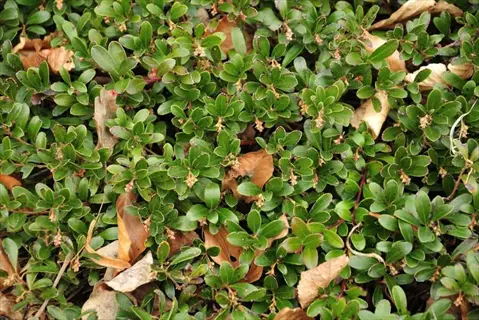
Pachysandra (Japanese Spurge)
- Height: Reaches 6-15 inches (15-38 cm) with glossy whorled leaves that form one of the densest evergreen mats for shade.
- Light: One of the few plants that grows in dense shade and even under evergreens, where most ground covers refuse.
- Evergreen: Holds its rich green foliage through winter, giving year-round cover and strong weed suppression in deep shade.
- Native swap: Iowa State recommends Allegany spurge (Pachysandra procumbens) as a native, hardier, less-aggressive alternative.
- Spread: Spreads steadily by rhizomes into a uniform sheet that crowds out weeds once fully established.
- Best for: Deep, dry shade under trees and on north-facing beds where little else will fill in.
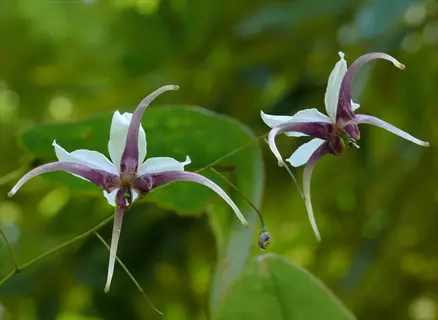
Barrenwort (Epimedium)
- Height: Grows 8-12 inches (20-30 cm) with heart-shaped leaflets on wiry stems that take on red tints in spring and fall.
- Light: Excels in partial to full shade and is prized for tolerating the dry shade under trees that defeats many plants.
- Flowers: Produces delicate spurred flowers in spring in shades of yellow, white, pink, or red above the foliage.
- Hardiness: Per SDSU Extension, some varieties are hardy only to Zone 5 and above, so check the cultivar for your area.
- Spread: Forms slow, tidy clumps that gradually knit together, making it well-behaved and easy to live with.
- Best for: Dry shade and the tough root-filled ground beneath established trees and large shrubs.
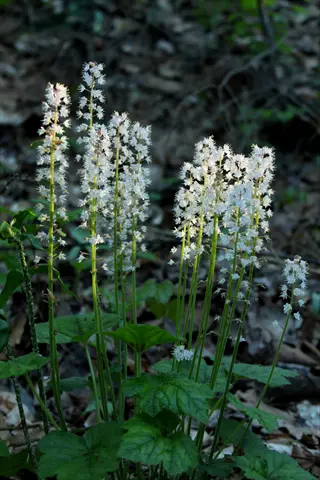
Foamflower (Tiarella cordifolia)
- Height: Ranges 6-18 inches (15-46 cm) including bloom spikes, with lobed leaves that often show dark central veining.
- Light: Prefers partial shade and consistently moist soil, making it ideal for woodland edges and shaded borders.
- Flowers: Sends up airy spikes of foamy white-to-pink flowers in spring above mounding, attractive foliage.
- Native value: A North American native recommended by University of Maryland Extension for moist, partly shaded sites.
- Spread: Spreads gently by runners to form colonies without the aggression of invasive ground covers.
- Best for: Moist partial shade and native plantings where pollinator-friendly flowers and good foliage matter.
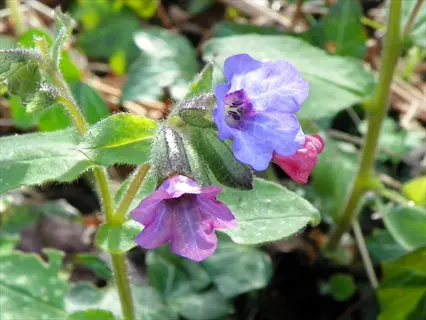
Lungwort (Pulmonaria)
- Height: Stands 9-18 inches (23-46 cm) with rough, often silver-spotted leaves that brighten dim corners all season.
- Light: Grows best in partial to full shade with steady moisture, rewarding shaded beds with early color.
- Flowers: Blooms very early, with flowers that frequently open pink and shift to blue on the same plant.
- Foliage: The speckled and silvered foliage is a major draw, lighting up shade long after the flowers fade.
- Spread: Forms slowly expanding clumps that combine well with ferns, hostas, and other shade companions.
- Best for: Moist shade where early-season flowers and eye-catching variegated leaves are wanted.
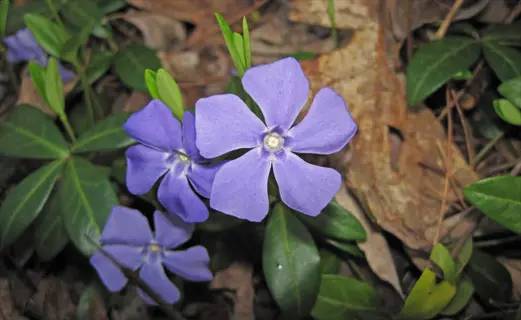
Periwinkle (Vinca minor)
- Height: Very low at about 6 inches (15 cm) with glossy evergreen leaves on trailing stems that root as they spread.
- Light: Tolerant of partial to full shade and one of the fastest ways to cover difficult shaded ground.
- Flowers: Bears starry blue-purple flowers in spring scattered across the deep green evergreen mat.
- Speed: Per Missouri Extension, periwinkle at 6-inch (15 cm) spacing can give complete cover in one year.
- Caution: Missouri Extension lists Vinca minor as potentially invasive, so contain it or choose a native instead.
- Best for: Fast, evergreen cover on shaded slopes and banks where containment can be managed.
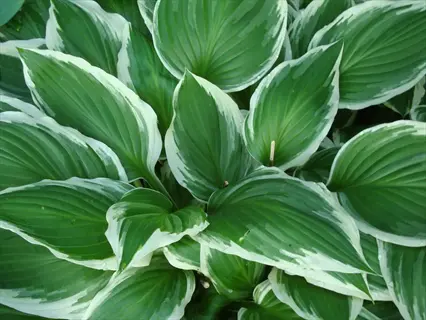
Hosta
- Height: Varies widely by cultivar from low edgers to large clumps, with bold leaves that overlap to shade out weeds.
- Light: A shade-garden staple that grows in partial to full shade, with leaf color shifting by exposure.
- Foliage: Grown above all for foliage, with greens, blues, golds, and variegation in many leaf shapes and sizes.
- Flowers: Sends up summer flower stalks of lavender or white that are a bonus to the dramatic leaves.
- Spread: Forms expanding clumps rather than running, so it stays where planted and is easy to divide.
- Best for: Mass plantings in partial to full shade where bold texture and weed-smothering leaves are wanted.
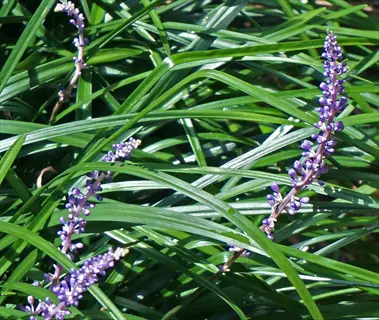
Creeping Lily-Turf (Liriope)
- Height: Grows 8-12 inches (20-30 cm) with grassy, strap-like evergreen foliage that forms a neat, durable cover.
- Light: Adaptable and grows almost anywhere, handling partial to full shade as well as sun and dry conditions.
- Flowers: Produces upright spikes of purple or white flowers in late summer above the grassy clumps.
- Evergreen: Holds its strappy leaves through much of the year, offering reliable cover and tidy edging.
- Spread: Creeping lily-turf spreads by underground stems to fill space, while clumping types stay put.
- Best for: Edging, shaded slopes, and tough spots where a grass-like evergreen carpet is wanted.
Match the plant to the spot and the work mostly takes care of itself. For dry shade under trees, wild ginger and barrenwort hold their own where thirsty plants give up. For steady moisture, foamflower and lungwort earn their keep, and sweet woodruff throws white flowers from April into June.
Most of these are grown for foliage, not bloom, so set your sights on leaf texture and color first. Get that right and you end up with a low carpet that smothers weeds and saves you hours on your knees each season.
Match Plants to Your Shade
Picking the right plant starts with knowing the kind of shade you actually have. Diagnosing your shade is a lot like reading a room. You check how many hours of direct sun a spot gets, how moist the soil stays, and how dense the canopy overhead is. Those three readings together tell you which plant will thrive and which one will sulk.
Set your expectations on flowers first. Most flowering plants want sun, so shade ground covers are the exception, not the rule. You'll choose the best of them for their foliage and dense cover more than their blooms. A few do flower in shade, but the real payoff is a low, weed-blocking carpet of leaves.
Dry shade is the hardest spot in the yard. It sits under trees and big shrubs, where thirsty roots grab the moisture before your new plants can. Tough shade-tolerant plants like barrenwort and wild ginger handle it well. Pachysandra is one of the few that holds up in the dust and gloom under evergreens.
Moist shade is the easy mode of shade gardening. Think woodland soil and shaded beds that stay evenly damp through the season. Foamflower and lungwort love these spots and want that steady moisture in partial shade. They reward you with fuller growth than anything you could push into a bone-dry bed.
Deep shade is the north side of the house or a dense canopy that lets almost no direct sun through. Your choices shrink here, but pachysandra, wild ginger, and ferns still spread and fill in. Dappled shade is gentler. Filtered light moves through a high or open canopy. That broader light opens the door to bugleweed, periwinkle, and foamflower.
Here's a trick for telling true deep shade from dappled shade. Even tough shade plants like Ajuga grow better with a few hours of direct sun in the early morning or late afternoon. If your spot catches a slice of low-angle sun each day, treat it as dappled and you'll have more plants to work with. The table below maps each shade type to ground covers that earn their keep.
Once they are established, groundcovers require less maintenance than turf, they can out-compete most weeds, and some have attractive flowers as well.
Planting and Spacing Guide
How many plants do you need, and how soon will they fill in? Ground cover spacing answers both. The University of Missouri Extension worked out the math for you. 100 plants cover 11 square feet (1 square meter) at 4-inch (10 cm) spacing. At 6 inches (15 cm) they cover 25 square feet (2.3 square meters). At 8 inches (20 cm) they reach 44 square feet (4.1 square meters). At 12 inches (30 cm) they fill a full 100 square feet (9.3 square meters). Wider gaps stretch your budget but take longer to close.
Plant spacing for coverage is the one lever that controls both speed and cost. Tighter spacing fills in sooner, yet it eats more plants and more money. Wider spacing is cheaper, but you wait. Periwinkle (Vinca minor) set at 6-inch (15 cm) spacing gives complete cover in one year, which is about as fast as a shade bed gets.
Spread 100 plants out to 18-inch (46 cm) spacing and they handle 225 square feet (20.9 square meters). Push to 24 inches (61 cm) and the same 100 plants reach 400 square feet (37.2 square meters). That is the cheapest route for a big area, but it can take two or three seasons to knit shut. Here is how the plants per square foot math breaks down across the common spacings.
Soil preparation sets the pace once the spacing math is done. Dig the bed 6 to 8 inches (15 to 20 cm) deep and work in 8 to 10 bushels of organic material per 100 square feet (9.3 square meters). At planting, add 3 pounds (1.4 kg) of 5-10-5 fertilizer per 100 square feet, then feed at that same rate each spring. Loose, rich soil lets young roots run, and that is what closes the gaps on schedule.
My own damp, north-facing back corner went from bare mud to a green carpet. It sits where the lawn meets the woods edge. I set wild ginger and bugleweed (Ajuga) wider than the tags suggested to save money. Then I mulched the open ground between them. The mulch held back weeds while the plants spread. Over a couple of seasons they met in the middle and the bare patches were gone.
Timing matters too. The best time for when to plant ground cover is spring or early fall, when the soil stays cool and damp enough for roots to settle in. Skip the heat of midsummer. Get the spacing, the soil, and the season right, and the bed does the rest while you wait.
Skipping soil prep is the most common error. Loosen the bed 6-8 inches (15-20 cm) deep and work in organic material so new plants establish and spread on schedule.
Native Picks vs Invasive Plants
Most plant lists push English ivy, Vinca, and wintercreeper with no warning at all. Those three cover ground fast, which is why they show up everywhere. But fast is the whole problem, because they rarely stop where you want them to.
Think of an aggressive ground cover as a great worker with no off switch. It fills a bare spot, then it keeps going into your beds. Soon it climbs the fence into your neighbor's yard. The University of Missouri Extension flags four of these as risky. The list names Ajuga and purple wintercreeper. It calls out English ivy invasive habits too. And it warns about Vinca minor invasive spread.
You don't have to give up coverage to stay safe. A good native alternative does the same work without the takeover. Iowa State Extension likes Allegany spurge as a swap for Japanese spurge. It is hardier and far less pushy. Maryland Extension likes two more picks. Golden ragwort and alumroot make solid native cover for shade.
Here is the swap list. Match each aggressive spreader on the left with a tamer pick on the right.
- English ivy spreads into trees and woods and is flagged as potentially invasive by Missouri Extension.
- Vinca minor (periwinkle) covers fast but is listed as potentially invasive and escapes into natural areas.
- Purple wintercreeper (Euonymus fortunei) is a vigorous spreader flagged as potentially invasive.
- Bishop's goutweed and lily-of-the-valley spread too aggressively and need firm containment.
- Allegany spurge (Pachysandra procumbens), a native, hardier, less-aggressive alternative to Japanese spurge.
- Wild ginger and foamflower, native woodland plants that form polite, dense cover.
- Golden ragwort (Packera aurea) and alumroot (Heuchera), native cover recommended by Maryland Extension.
- Christmas fern and other native ferns for layered, well-behaved shade cover.
Already love an aggressive spreader? Give it a hard boundary. Iowa State flags bishop's goutweed and lily-of-the-valley as too pushy. SDSU Extension says lily-of-the-valley needs about 6-inch (15 cm) deep edging underground to hold its roots in. Wild ginger, foamflower, and Christmas fern give you the same dense look with far less drama.
Native shade plants are getting more love these days, and for good reason. A native ground cover for shade beats an invasive ground cover on every front. You dig less, you fret less, and your yard plays nice with the woods next door. Check with your local extension office too, since invasive status shifts from state to state.
So, choose your ground cover plants carefully so that you do not end up with a mass planting that is on its way to take over your garden a few years after planting.
Evergreen and Low Care Picks
Your shade beds can look bare and brown all winter, and that gap is where an evergreen ground cover earns its keep. The plants below hold their leaves through the cold, so your patch stays green when everything else goes dormant.
If you want the most shade tolerant evergreen for a dark corner, pachysandra is hard to beat. It is one of the few plants that grows in dense shade and even under evergreens, where little else takes hold. Periwinkle stays glossy and green all year, and both Christmas fern and bearberry keep their color straight through winter.
These picks also earn the low maintenance ground cover label for a simple reason. Iowa State Extension notes that once established, ground covers out-compete most weeds and need less work than turf. Strong weed suppression means you spend less time pulling and more time enjoying the bed.
Pachysandra (Japanese Spurge)
- Cover: Forms one of the densest evergreen mats and is one of the few plants that grows in dense shade and under evergreens.
- Care: Largely hands-off once established; an occasional shearing keeps it uniform and removes any winter-tattered leaves.
- Best use: Deep, dry shade under trees where year-round green cover and strong weed suppression are the goal.
Periwinkle (Vinca minor)
- Cover: Glossy evergreen leaves on trailing rooting stems give fast, low, year-round cover on shaded slopes.
- Care: Needs edging and a spring pass to pull strays, since Missouri Extension flags it as potentially invasive.
- Best use: Banks and large shaded areas where rapid evergreen cover is wanted and containment can be managed.
Creeping Lily-Turf (Liriope)
- Cover: Grassy strap-like evergreen foliage forms a tidy, durable carpet that handles part to full shade.
- Care: Cut old foliage back in late winter before new growth so the clumps look fresh through the season.
- Best use: Edging and shaded slopes where a grass-like evergreen look and easy upkeep are wanted.
Christmas Fern (Polystichum acrostichoides)
- Cover: A native evergreen fern recommended by Maryland Extension that holds green fronds through winter in shade.
- Care: Very low effort; simply remove flattened old fronds in early spring as fresh growth emerges.
- Best use: Woodland and shaded slopes where native, layered, year-round texture is desired.
Last spring the periwinkle I see from my kitchen window had crept past its bed. It pushed a foot into the lawn and a neighboring planting in the damp back corner. I cut a clean edge along the grass with a half-moon spade. Then I pulled the strays by hand. Now I walk that corner each spring and trim back what wandered, which takes ten minutes.
That yearly check is the heart of establishment care done right. New plants need steady water through their first season so the roots settle in. An established cover still wants the odd soak during a long drought. A late-winter pass to cut back lily-turf and tattered foliage keeps everything looking fresh.
Edging is what keeps the eager spreaders honest. SDSU Extension says lily-of-the-valley needs about 6 inches (15 cm) of deep underground edging. This plant races through soil on hidden runners. A buried barrier and a yearly trim let you enjoy fast cover without giving the whole yard to one plant.
Low maintenance is not no maintenance. Water new plantings through the first season, edge spreaders each spring, and tidy old foliage in late winter for a clean, dense cover.
Shrubs for Full Shade
Wild Coffee (Psychotria nervosa)
- Shade: Per UF/IFAS, this low-growing native shrub tolerates heavy shade where most flowering shrubs would fail.
- Wildlife: Produces flowers that attract bees and berries that feed birds, adding ecological value to shaded beds.
- Best for: Warm-region woodland gardens that need a native understory layer above a ground cover carpet.
Creeping Oregon Grape (Berberis repens)
- Shade: Listed by PlantTalk Colorado as a native low evergreen for shaded Rocky Mountain gardens and slopes.
- Interest: Holds leathery evergreen leaves that bronze in winter, with yellow spring flowers and blue berries.
- Best for: Cold-climate shade where a low, spreading evergreen shrub adds year-round structure.
Salal (Gaultheria shallon)
- Shade: A Pacific Northwest native that thrives in shade and forms a dense, spreading low to medium shrub layer.
- Interest: Leathery evergreen leaves with bell-shaped flowers and edible berries that draw wildlife.
- Best for: Shaded woodland and slopes in cool, moist regions where an evergreen understory is wanted.
Bergenia (Elephant's Ears)
- Shade: A tough, low evergreen perennial often used like a small shrub, handling partial to full shade well.
- Interest: Large, glossy paddle-shaped leaves that flush red in cold weather, with pink spring flowers.
- Best for: Front-of-bed structure and shaded edges where bold evergreen foliage is desired.
A low carpet looks great, but a flat bed can feel one-note. The next question most readers ask is simple. Which bush for shade will grow above that carpet and give the bed some height? Shrubs for full shade answer that, and a few tough ones do fine where almost nothing flowers.
Picture a shaded bed as a forest in miniature. Your ground covers are the floor, and low shrubs become the understory plants that fill the space between the carpet and the tree canopy. Pair the two layers and the bed gains depth that a single sheet of green can never match. You also get winter structure once the soft growth dies back.
Set your hopes the right way first. Most flowering shrubs still want some sun to bloom well, so the list of true full-shade shrubs is short. You choose these plants for their leaves and shape, not for heavy flowers. A glossy evergreen shrub shade garden reads as lush all year, and that quiet foliage often beats a brief flush of blooms.
Go native where you can, since a native shade shrub tends to handle local soil and pests with less fuss. Per UF/IFAS, wild coffee is a low-growing native shrub that takes heavy shade and still pushes out flowers to draw bees. In cold zones, PlantTalk Colorado picks creeping Oregon grape. It is a low evergreen, and it holds up well in shaded beds. These few shrubs give your understory real backbone.
5 Common Myths
Nothing useful will grow in deep shade, so bare soil and patchy mulch are the only realistic options under big trees.
Plenty thrives there. Pachysandra is one of the few plants that grows in dense shade and even under evergreens, forming a dense carpet.
Ground covers are completely maintenance-free once you put them in the ground, needing no care, watering, or attention ever again.
They are low maintenance, not no maintenance. They need establishment watering, occasional cutting back, and edging to keep spreaders in bounds.
Every popular spreading ground cover is a safe, harmless choice, so you can plant periwinkle or ivy anywhere without any worry.
Several spread aggressively. Missouri Extension flags Ajuga, English ivy, Vinca minor, and wintercreeper as potentially invasive, so contain them or pick natives.
Creeping thyme and creeping phlox are great shade ground covers because they spread low and fast across the ground.
Both are sun lovers. Creeping thyme prefers full sun to part shade and moss phlox is a full-sun plant, so they disappoint in real shade.
More plants packed tightly together is always the only way to get a full ground cover, no matter your budget.
Spacing is a budget tool. Wider spacing uses fewer plants and still fills in: 100 plants at 12 inches (30 cm) cover about 100 square feet (9.3 square meters).
Conclusion
Picking a shade ground cover is not about grabbing the first plant off a top-ten list. You start by reading your shade, whether it is dry ground under trees, moist woodland soil, or deep shade where little light reaches. Then you match a plant to that spot, and you space it for the speed and budget you have.
That order is what flat listicles skip, and it is what saves you money and dead plants. A good ground cover for shade rewards the planning. The core payoff is real. Once it settles in, the plant needs far less work than turf. It out-competes most weeds too, so bare dirt turns into a dense green carpet that mostly takes care of itself.
Keep one number in your back pocket when you shop. At 6-inch (15 cm) spacing, 100 plants cover about 25 square feet (2.3 square meters). Space them wider and the same 100 plants stretch over more ground, just slower. That single fact lets you walk into a nursery and budget your own bed without guessing.
Choose with care and you protect more than your own yard. A native ground cover feeds local insects and birds and stays put, while a few popular spreaders can creep into nearby woods. When you favor a well-behaved or native pick, you build a low maintenance ground cover that respects the wild ground past your fence too.
So look forward to that shaded corner rather than dreading it. It is not a problem patch to apologize for. It is room for a calm, living lawn alternative that knits itself shut, quiets the weeds, and asks little of you in return. Plant the right thing once, and the shade does the rest.
Glossary
- Dappled shade
- Soft, shifting light that filters through a high or open tree canopy rather than full darkness.
- Dry shade
- A shaded spot, often under trees, where the soil stays dry because roots take most of the moisture.
- Evergreen
- A plant that keeps its green leaves through winter instead of dropping them in fall.
- Ground cover
- A low-growing plant, usually 12 inches (30 cm) tall or shorter, that spreads to form a dense carpet over the soil.
- Invasive plant
- A plant that spreads so aggressively it escapes the garden and crowds out other plants and natural areas.
- Native plant
- A plant that grows naturally in a region and supports local wildlife and pollinators.
- Rhizome
- An underground stem that spreads sideways and sends up new shoots, letting a plant form a wider patch.
- Weed suppression
- Blocking weeds by forming a dense cover that shades the soil so weed seeds cannot sprout.
External Sources
Frequently Asked Questions
What ground cover does best in shade?
It depends on your shade type, but reliable performers include bugleweed, sweet woodruff, wild ginger, pachysandra, barrenwort, foamflower, and lungwort.
What is the fastest growing shade ground cover?
Vigorous spreaders like periwinkle, bugleweed, and pachysandra fill in fastest. Periwinkle at 6-inch (15 cm) spacing can give complete cover in one year.
What is the best low maintenance ground cover for shade?
Pachysandra, barrenwort, and wild ginger are among the easiest. Once established, ground covers need less work than turf and out-compete most weeds.
What is the most shade tolerant evergreen ground cover?
Pachysandra is one of the few that grows in dense shade and under evergreens. Periwinkle, bearberry, and Christmas fern also stay green.
What is the best shade ground cover to stop weeds?
Dense, fast-knitting plants like pachysandra, periwinkle, bugleweed, and sweet woodruff smother weeds best once they form a continuous mat.
Can creeping thyme grow in full shade?
Not well. Creeping thyme prefers full sun to part shade. In full shade choose sweet woodruff, wild ginger, or bugleweed instead.
What are the downsides of creeping phlox?
Creeping phlox (moss phlox) is a full-sun plant, so it performs poorly in shade. It can also brown out after bloom and needs good drainage.
What is the cheapest way to cover ground in shade?
Buy fewer plants and space them wider, then let them spread. 100 plants at 12-inch (30 cm) spacing cover about 100 square feet (9.3 square meters).
Is October too late to plant ground cover?
Often no. Fall planting works in mild regions if roots have weeks to settle before hard frost. In cold zones, spring is safer.
What is the best ground cover instead of grass in shade?
In shade where turf struggles, pachysandra, periwinkle, wild ginger, and sedges form a dense, lower-maintenance lawn alternative.

