
Introduction
The rodgersia plant gives you the lush, tropical look of a jungle garden without a single tender plant that dies the first cold night. Its huge leaves spread out like a horsechestnut, deeply cut and crinkled, and they pull the eye to any shady spot. Yet this bold foliage perennial is cold-hardy down to roughly USDA Zones 4 to 9. You get drama and toughness in the same plant.
Most northern gardeners give up on big, architectural leaves because the usual options let them down. Gunnera freezes out, butterbur runs wild, and many other choices sulk through a hard winter. Rodgersia, also called rodgersflower, fills that gap. It is a well-mannered shade perennial that stays put and comes back stronger each year. It is the plant you reach for when you want size without the fuss.
You do not have to take that on faith either. The Chicago Botanic Garden ran a 10-year trial from 2004 to 2014 and studied 16 different rodgersias side by side. The results put an old worry to rest. These plants are dependable, not fussy, and they hold up through real winters and real neglect. One simple rule drives the whole thing: keep the moist soil they love, and the rest takes care of itself.
Here is the catch with most care pages. One tells you about sun and shade, another covers watering, a third mentions slugs, and none of them put the full picture in one place. This guide does. You will get clear answers on the best planting spot and sun versus shade. You will learn how often to water, whether rodgersia spreads where you do not want it, and if you need to deadhead. Let's start with where this plant truly belongs in your garden.
What Is a Rodgersia Plant?
The rodgersia plant is a bold perennial grown for its huge, deeply veined leaves more than its blooms. You will hear most gardeners use the common name for rodgersia, which is rodgersflower. At the nursery you may also spot one species sold as fingerleaf rodgersia. The whole group sits in the Saxifragaceae family, so it shares a branch with other shade lovers you might know.
You only need to know 5 recognized species in this genus, so you can learn them fast. Botanist A. Gray named the plant in 1885 after United States Admiral John Rodgers. His crew first found the type species, Rodgersia podophylla, in the 1850s. The name has stuck with the plant ever since.
The leaves do most of the work here, so you should look at them first. Each leaf takes one of two shapes. A palmate leaf is hand-shaped, much like a horsechestnut. A pinnate leaf is feather-shaped, with smaller leaflets set along a central stem. The big basal leaves can reach 2 feet (60 cm) across, and those wide palmate leaves give your plant its tropical, jungle-like look.
New foliage often pushes up a coppery bronze in spring, then turns green by summer. You will see the deep veins and coarse teeth catch light and shadow in a way few hardy plants can match. This bold look is the real reason you would add a rodgersia to your shady bed.
In summer the plant sends up tall flower plumes that look like a taller, bolder astilbe held high above the leaves. The blooms are apetalous, so they have no true petals. The creamy white, pink, or red color comes from the sepals and stamens instead. You get a tropical feel and a real flower show on a plant that shrugs off hard winters.
As the largest of the Rodgerasias it makes a bold architectural and textural statement in the shade garden.
Best Place to Plant Rodgersia
A soggy back corner where my lawn meets the woods edge sat bare for two seasons until a single rodgersia plant turned it into a lush green anchor. Now the broad leaves catch every bit of light back there, and people ask what it is each time they walk past.
I lost a hosta and three astilbe in that same spot before the rodgersia went in. They all rotted in the wet clay over winter, but the rodgersia drank up the damp and never looked back. The trick was matching the plant to the ground instead of fighting the ground.
So where to plant rodgersia comes down to four choices you make at the same time: light, soil, moisture, and wind shelter. Get all four right and your plant nearly grows itself. Miss one and your bold leaves turn ratty by July.
Aim for partial shade with steady moist soil that holds water but never sits stagnant. The RHS calls for deep, humus-rich, fertile ground, and rodgersia takes clay or loam at any pH, whether your soil runs acid, alkaline, or neutral. Full sun works only where summers stay cool and the soil never dries out.
Your sweet spot is a sheltered waterside or woodland setting that mirrors its native streamside home. Pond margins, a bog garden, a stream bank, or a damp woodland garden edge all suit it well. Just tuck your plant behind a shrub or a wall, because cold, drying winds shred those big leaves faster than anything else.
Light: Partial Shade Is Ideal
- Best exposure: Partial shade gives the strongest growth and protects the bold leaves from scorching in summer heat.
- Full sun caution: Full sun is tolerated only where summers stay cool and the soil never dries out, otherwise leaf edges burn.
- Deep shade: Very dense shade reduces flowering and the fleeting bronze spring tint, so aim for dappled or part-day shade.
Soil: Moist and Humus-Rich
- Texture: Deep, fertile clay or loam enriched with compost holds the steady moisture rodgersia depends on.
- Moisture: Soil should stay reliably moist but not stagnant; the plant suits bog and waterside ground where many perennials fail.
- pH: Rodgersia is unfussy about pH and grows well in acid, alkaline, or neutral soil.
Site: Sheltered Waterside or Woodland
- Prime spots: Pond margins, stream banks, bog gardens, and moist woodland edges all match its native streamside habitat.
- Wind shelter: Protect plants from cold, drying winds with nearby shrubs, walls, or a building edge to keep leaves intact.
- Space to spread: Give each plant room for a 3 to 5 foot (1 to 1.5 m) clump so the foliage shows off without crowding.
Companions That Share Its Needs
- Ferns: Moisture-loving ferns echo the woodland setting and contrast with rodgersia's broad leaves.
- Waterside perennials: Meadow rue, Solomon's seal, cardinal flower, and bugbane all enjoy the same damp, shaded conditions.
- Bold pairings: Combine with other large-leaved shade plants for a layered, tropical-looking but fully hardy planting.
Give each clump room to spread 3 to 5 feet wide, and pair it with ferns or other damp-loving perennials that share its needs. The RHS sums up the whole brief in one line worth pinning above your trowel.
Grow in deep, humus-rich, fertile reliably moist soils in full sun or partial shade with shelter from cold drying winds.
Watering, Feeding and Care
Keep moist is vague advice, so here is the plain number for how often to water rodgersia. Water it about once or twice a week. Step that up in hot, dry spells, when the top inch of soil dries out fast and the leaves start to droop.
Steady rodgersia watering is the one habit that makes or breaks this plant. The big leaves go ratty and scorched when the roots run dry, and they bounce back slowly. A spring mulch of compost or leaf mold around the crown locks in that moisture and feeds the soil as it breaks down.
Water about once or twice a week, and more in heat, so the soil never fully dries; this is the single most important care task.
Spread a few inches of compost or leaf mold around the crown each spring to conserve moisture and slowly enrich the soil.
Apply an all-purpose organic feed in spring; avoid high-nitrogen fertilizer, which produces floppy, weak growth that flops over.
Trim spent flower stalks if you prefer a tidy look, but leave seed heads on if you want fall and winter interest.
Division is rarely needed; lift and split crowded clumps in spring, knowing the plant resents being moved and may wilt afterward.
Skip the high-nitrogen fertilizer. It pushes soft, floppy growth that flops over, while steady moisture does far more for healthy rodgersia foliage.
You do not need to deadhead rodgersia to get more flowers. Cutting spent stalks only tidies the plant, so it is your call. Leave the faded seed heads on and they turn a rich claret shade that holds fall and winter interest in the border long after the blooms fade.
That is the heart of rodgersia care and maintenance. This plant asks for water and patience, not pampering. Give it steady moisture and a yearly mulch. Split the clump in spring only when it gets crowded, and skip the constant fussing that other showy perennials demand.
Rodgersia Species and Varieties
The genus holds 5 recognized species. Four of them do most of the garden work. The fingerleaf, rodgersia aesculifolia, is the one you see most. There is rodgersia podophylla with its bold star-shaped leaves. There is also rodgersia pinnata, the feather-leaved one. A fourth, sambucifolia, shows up less often. What sets them apart is leaf shape, palmate like a spread hand or pinnate like a feather.
Those palmate leaves on R. aesculifolia look so much like a horsechestnut that the plant earned the name fingerleaf. R. pinnata goes the other way with feather-shaped leaves for a softer texture. Pick your rodgersia species by the foliage, because you will look at the leaves far longer than the flowers.
Variety choice gets easier once you lean on real trial data. The Chicago Botanic Garden ran a 10-year test of rodgersias. One selection came out ahead of the rest. That kind of head-to-head result is rare for these plants, so use it when you shop.
The coppery new leaves of R. podophylla 'Smaragd' glow in the damp back corner of my garden, right where the lawn gives way to the woods edge. A chestnut-leaved R. aesculifolia sits a few feet over, its broad hand-shaped foliage catching the same morning light. Side by side, the two leaf colors and shapes tell you everything about why variety choice comes down to foliage.
These 4 picks below cover both leaf forms and the darker selections. The first one is the best rodgersia variety for most gardeners, backed by that decade-long trial.
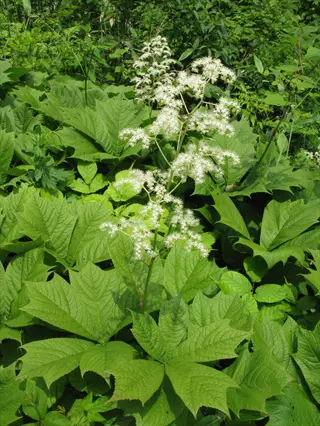
Rodgersia podophylla 'Smaragd'
- Why grow it: Named the undisputed star of the Chicago Botanic Garden's 10-year trial for its dependable, robust performance.
- Foliage: Palmate, horsechestnut-like leaves emerge bronze and turn deep green, giving strong texture all season.
- Flowers: Giant creamy-white plumes rise well above the leaves in early summer for a bold display.
- Hardiness: Proven cold-hardy in Zone 5b trials, rarely frost-damaged despite early emergence.
- Size: Forms a substantial clump in the 3 to 5 foot (1 to 1.5 m) range with stalks taller still.
- Best use: A reliable first choice for gardeners who want one outstanding rodgersia.
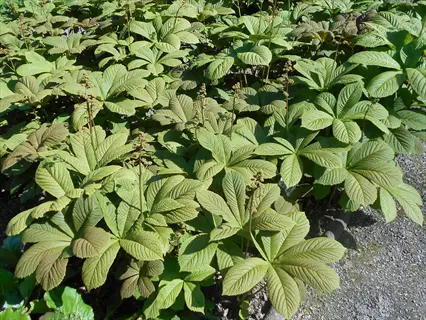
Rodgersia aesculifolia (Fingerleaf)
- Why grow it: The largest species and an RHS Award of Garden Merit holder, making a bold architectural statement.
- Foliage: Palmately lobed, deeply veined leaves up to 2 feet (60 cm) wide that resemble horsechestnut foliage.
- Flowers: Fluffy creamy-white or pink spikes held above the leaves from late spring into summer.
- Conditions: Excellent for bog and water gardens and tolerant of full sun to partial shade with moisture.
- Wildlife: Attracts birds and butterflies, adding life to a damp border or understory planting.
- Best use: A specimen plant or understory groundcover under trees where soil stays moist.
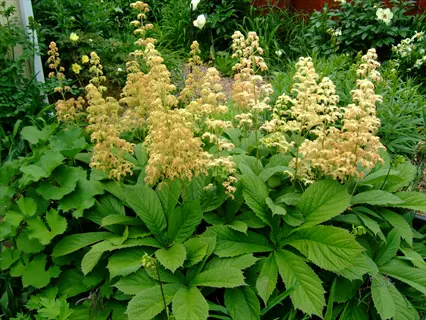
Rodgersia pinnata (Featherleaf)
- Why grow it: Offers the alternative feather-shaped leaf form for contrast with palmate species.
- Foliage: Pinnately compound, deeply veined leaves give a different texture in a mixed planting.
- Flowers: Astilbe-like panicles in cream, pink, or red depending on selection.
- Winter interest: Many forms hold claret-colored seed heads that deepen through winter.
- Conditions: Wants the same reliably moist, humus-rich soil and partial shade as its relatives.
- Best use: Pair with palmate-leaved types to show off both rodgersia leaf shapes.
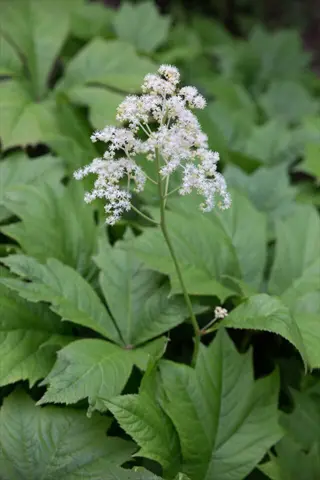
Dark-Leaved Selections
- Why grow them: Named cultivars like 'Bronze Peacock' and 'Chocolate Wing' are chosen for richer, darker foliage.
- Foliage: Leaves hold deeper bronze or chocolate tones for longer than the fleeting spring color of many plants.
- Flowers: Pink to red plumes often contrast handsomely with the dark leaves.
- Conditions: Color is strongest with good light, but the plant still needs consistent moisture.
- Design value: Dark foliage anchors a shade border and sets off lighter companions.
- Best use: A focal point where you want bold, moody foliage rather than plain green.
Most of these emerge with bronze foliage in spring before turning green by summer, so the copper show is brief but worth it. R. pinnata often holds claret-colored seed heads into winter. That stretches the interest well past the flowers. Among all the rodgersia varieties, the trial verdict on 'Smaragd' still stands out.
'Smaragd' bronzeleaf rodgersia (R. podophylla 'Smaragd') was the undisputed star of the group.
Common Problems and Safety
Most rodgersia problems trace back to one thing: dry soil. This plant wants steady moisture, and the moment the ground dries out the leaves pay for it. The good news is that almost every issue you'll hit has a quick fix once you know the cause.
Leaf scorch is the single biggest failure mode. When the soil dries or the plant sits in too much sun, the edges go crisp and tattered. Keep the soil damp, add a thick mulch, and shift the plant into more shade if the leaves keep frying through summer.
As for rodgersia pests, there is really only one to watch. Slugs and snails chew holes in the foliage, and they love the soft new growth that pushes up in spring. Beyond that, rodgersia is essentially disease-free, so you won't spend your season fighting fungal spots or rot.
Worried about it taking over the bed? Don't be. To answer the question is rodgersia invasive, the plain fact is no. It's not classified as invasive anywhere in the United States. It spreads by stout rhizomes into slow, tidy clumps, so it stays well-mannered and won't run through your border.
One more thing to watch is late-spring frost. It can nip the early new growth, and R. podophylla emerges soon enough to take the hit. Throw a cover over the plant during a cold snap, or pick a later-emerging species if your garden gets sharp spring frosts.
Pet owners ask about safety too, and here the honest answer is we don't have full data. Rodgersia isn't on the ASPCA toxic or non-toxic lists, so treat it as not known to be harmful rather than proven safe. Keep curious dogs and cats from chewing it, the same way you would with any plant you can't confirm.
Rodgersia is not listed on ASPCA toxic-or-non-toxic plant lists, so treat it as not known to be toxic rather than confirmed safe, and keep curious pets from chewing unfamiliar plants.
Designing With Rodgersia
From the kitchen window I watch the damp back corner where the rodgersia sits. Its big hand-shaped leaves spread wide over a low ring of ferns at its feet. The whole bed holds together because of that one plant. Its bold foliage carries the shaded ground that used to look flat and empty, and the ferns soften the base so no patch reads as bare soil.
That is the trick most people miss with rodgersia in the garden. You buy it for the flower plumes, but the leaves do the real work for nine months of the year. One mature clump anchors a planting the way a small shrub would, and it gives you a tropical look without the tender plant that comes with it.
This is where rodgersia earns its keep as a gunnera alternative. Gunnera grows huge and often dies in a cold winter, butterbur spreads like a weed, and ligularias sulk the moment they dry out. Rodgersia stays hardy, keeps to a slow clump, and gives you the same bold leaf with far less fuss.
- Cold-hardy roughly to USDA Zones 4 to 9, surviving northern winters.
- Well-mannered, spreading slowly into manageable clumps.
- Big, deeply veined leaves give a tropical look without the risk.
- Adds coppery fall color and, on some species, winter seed heads.
- Often too tender for cold regions and needs winter protection.
- Gunnera can grow enormous and demands a lot of space.
- Butterbur spreads weedily, and ligularias can be finicky.
- Less reliable for gardeners who want bold foliage with low fuss.
Good rodgersia companion plants all want the same damp, shaded ground, so they slot in around it with no fight. Pair it with ferns at the base, then meadow rue, Solomon's seal, cardinal flower, and bugbane for height and bloom. Each one shares the moist soil and dappled light, which keeps the whole rodgersia shade garden thriving as a single happy group.
The plant also pulls its weight well past summer. Your leaves turn a deep coppery tone in fall, and on R. pinnata the spent flower heads dry to a rich claret that holds through winter. So you get a strong shape in your border for much of the year, not just a few weeks of plumes.
5 Common Myths
Rodgersia is a tricky connoisseur plant that only expert gardeners can keep alive in cold regions.
A 10-year Chicago Botanic Garden trial debunked this, finding rodgersias dependable and hardy enough that nearly any gardener can grow one.
Rodgersia needs full sun all day to flower well and develop its richest bronze leaf color.
It prefers partial shade and reliably moist soil; full sun works only where summers stay cool and the ground never dries out.
Because it spreads by underground rhizomes, rodgersia is invasive and will quickly take over a garden bed.
Rodgersia spreads slowly into well-behaved clumps and is not classified as invasive in the United States.
Deadheading rodgersia after it flowers will push the plant to produce a second flush of blooms.
Deadheading only tidies appearance; it does not stimulate more flowers, and the faded seed heads add fall and winter interest.
Rodgersia is a woody shrub, so it can be sheared and shaped like any evergreen foundation plant.
It is a herbaceous perennial that dies back to the ground each winter and regrows from its rhizomes in spring.
Conclusion
The whole point of a rodgersia plant is how few demands it makes once you read its needs right. Give it moist soil that stays rich and damp, set it in partial shade, and shelter it from cold drying winds. Do those three things and the rest takes care of itself.
Get the spot right and this bold foliage perennial pays you back fast. The big crinkled leaves spread to a clump 3 to 5 feet (1 to 1.5 m) wide. The flower stalks climb to 5 to 8 feet (1.5 to 2.5 m) of tall summer plumes. It is hardy across roughly USDA Zones 4 to 9, so it earns its place in most shade garden beds.
I planted my first rodgersia in a soggy spot where nothing else would settle, half expecting to lose it. It is still there years later, wider every June. Day to day there is almost nothing to fuss over. You water it once or twice a week, more in a heat wave, and watch for slugs on the new spring leaves. That makes it a true low-maintenance perennial, not a connoisseur plant you need years of practice to keep alive. A first-time gardener can do as well with one as a seasoned hand.
Picture it anchoring a damp, shaded corner for years, not just one good season. The bronze spring leaves green up by summer, the plumes arrive in June, and the claret seed heads hold on through winter. That long run of interest is why rodgersia belongs in any shade garden with steady moisture.
The Chicago Botanic Garden put that to the test over a 10-year trial and came away convinced. Their plant evaluation manager summed it up better than any care list could.
Glossary
- Apetalous
- Describes a flower that has no true petals, so its color comes from other parts like the sepals and stamens.
- Award of Garden Merit
- A mark given by the Royal Horticultural Society to plants judged dependable and worth growing.
- Herbaceous perennial
- A non-woody plant that dies back to the ground each winter and regrows from its roots in spring.
- Humus-rich soil
- Soil that contains plenty of decomposed organic matter, helping it hold moisture and nutrients.
- Palmately compound
- A leaf shape where several leaflets spread out from one point like the fingers of a hand.
- Pinnately compound
- A leaf shape where leaflets are arranged in rows along a central stalk like a feather.
- Rhizome
- A thick underground stem that creeps sideways and lets a plant slowly form a wider clump.
- Saxifragaceae
- The botanical plant family that rodgersia belongs to, which also includes saxifrages and astilbes.
External Sources
Frequently Asked Questions
What is the common name for rodgersia?
Rodgersia is commonly called rodgersflower or fingerleaf rodgersia, named after United States Admiral John Rodgers.
Where is the best place to plant rodgersia?
Plant rodgersia in moist, humus-rich soil in partial shade, such as a pond margin, bog garden, or sheltered woodland edge.
Does rodgersia like sun or shade?
Rodgersia prefers partial shade and tolerates full sun only where summers stay cool and the soil remains reliably wet.
How often should rodgersia be watered?
Keep the soil consistently moist, watering roughly once or twice a week and more often during hot, dry weather.
Is rodgersia drought tolerant?
No. Rodgersia resents drought, and dry soil quickly scorches and tatters its bold leaves.
Is rodgersia invasive?
No. Rodgersia is not classified as invasive in the United States; it spreads slowly by rhizome into clumps.
What are common rodgersia problems?
The main problems are leaf scorch from drought, slug and snail damage, and frost damage to early spring growth.
Do you deadhead rodgersia?
Deadheading is optional. It improves appearance but does not stimulate more flowers, and faded heads add fall interest.
Is rodgersia a shrub?
No. Rodgersia is a herbaceous perennial that dies back to the ground each winter, not a woody shrub.
How big does rodgersia get?
Most rodgersia reach about 5 to 8 feet tall in bloom and 3 to 5 feet wide, filling out in two to five years.