

Introduction
A bare yard can fill with color in a matter of weeks once the right plants wake up. That fast payoff is why spring blooming shrubs earn a spot in almost every garden. Most folks plant forsythia, maybe a lilac, and stop there. But the range is far wider, and the plants you skip are often the ones that carry color before and after the usual show.
Here is the part the glossy lists never tell you. Most spring flowering shrubs bloom for only about two weeks. Virginia Tech says a plant's genes set that window. Heat, drought, or heavy rain can cut it even shorter. So one shrub gives you a brief, lovely burst and then green leaves for the rest of the year. Plant just one and you set yourself up to feel let down.
Commercial listicles love to rattle off cultivar names and pretty photos. What they leave out are the three things that actually decide success in your yard. This guide gives each shrub its place in the bloom order. It names the old-wood pruning time that saves next year's flowers. And it flags the flower bud hardiness that keeps cold regions in bloom. Get those right and your plants reward you for decades.
The real trick is to treat spring color as something you sequence, not buy once. Witch hazel can open in February or March while a lilac waits until late spring. Stagger a few early blooming shrubs and mid-season picks and you trade one short burst for months of steady color. The guide ahead covers easy-care, fragrant, and cold-hardy flowering bushes too, so you can match the bloom time and the look to your own yard.
10 Best Spring Blooming Shrubs
These 10 spring blooming shrubs are listed in the order they flower. The first witch hazel opens in late winter. The last mockorange waits until early summer. Plant a few from across that range and you get color from February straight through June.
Each entry below gives you the bloom month, mature size in feet and meters, sun needs, and whether it flowers on old wood. That last detail tells you when to prune, since these shrubs set their buds the summer before they bloom.
My first forsythia taught me how much cultivar choice matters. A common forsythia went in the damp back corner where the lawn meets the woods. It pushed through a -20°F (-29°C) winter without dying. But it never flowered again. I dug it out and put in 'Meadowlark', which now lights up bright yellow every April. I watch it from the kitchen window. Same spot, same care, different buds.
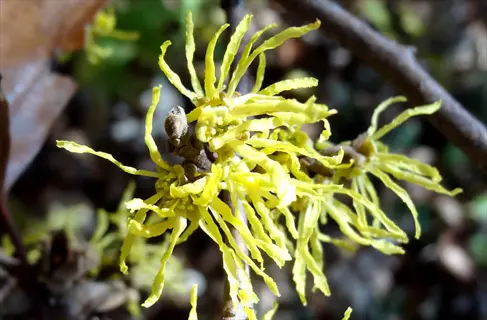
Vernal Witch Hazel
- Bloom time: Opens first of all, usually February to March, with strap-like petals that curl on cold days and unfurl when the sun returns.
- Size: A large shrub reaching roughly 9 to 15 feet (2.7 to 4.6 m) tall and wide over time in an open vase shape.
- Light: Grows well in full sun to part shade and tolerates a range of garden soils with steady moisture.
- Color and scent: Yellow to coppery flowers carry a light fragrance that stands out when little else is blooming outdoors.
- Old wood: Sets flower buds the previous summer, so prune only right after the late-winter flowers finish.
- Why grow it: Earliest color of the season makes it the anchor for any bloom sequence in cold-winter gardens.
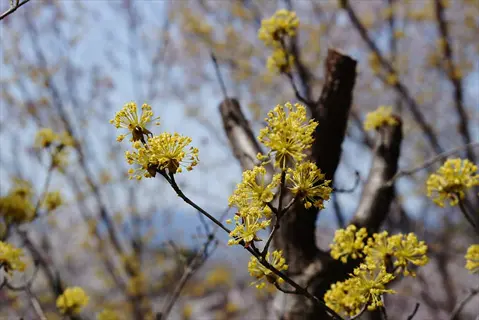
Cornelian Cherry Dogwood
- Bloom time: Small yellow flower clusters appear in mid-April before the leaves emerge, brightening the early-spring garden.
- Size: A large shrub or small tree, often 9 to 15 feet (2.7 to 4.6 m) tall, useful as a screen or specimen.
- Light: Performs in full sun to part shade and adapts to most well-drained garden soils without fuss.
- Multi-season value: Despite the name it is a European dogwood, not a cherry, and bears tart red fruit good for jams.
- Old wood: Blooms on old wood, so any shaping should happen soon after the spring flowers fade.
- Why grow it: Early bloom plus edible fruit gives it more than the usual single season of interest.
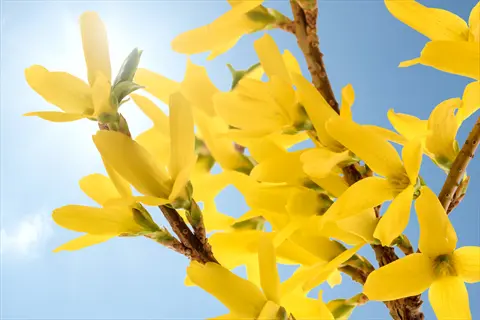
Forsythia 'Meadowlark'
- Bloom time: Bright yellow flowers cover the stems in April for about one to two weeks before the leaves appear.
- Size: Reaches a mature height and spread of about 6 to 10 feet (1.8 to 3 m) in an arching, fountain-like form.
- Light: Thrives in full sun and tolerates poor soil, making it one of the easiest shrubs to establish.
- Cold-hardy buds: A joint NDSU and SDSU release with flower buds hardy to about -35°F (-37°C), unlike common forsythia.
- Old wood: Blooms on old wood, so prune right after flowering and never in late winter.
- Why grow it: Dependable early gold in cold regions where common forsythia survives but fails to bloom.
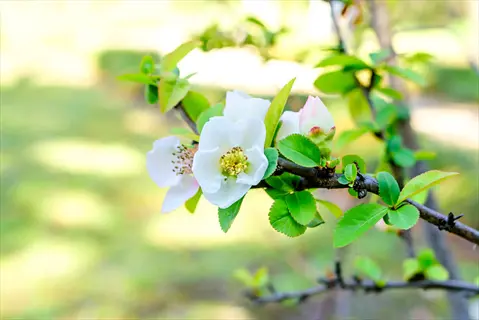
Flowering Quince
- Bloom time: Cup-shaped flowers in red, orange, pink, or white open in early spring, often before the foliage fills in.
- Size: A medium shrub generally 5 to under 9 feet (1.5 to 2.7 m) tall with a dense, twiggy habit.
- Light: Best flowering comes in full sun, though it adapts to a wide range of soils and conditions.
- Garden use: Thorny stems make it a useful informal barrier, and cut branches force easily indoors.
- Old wood: Flowers on old wood, so prune just after the spring display to protect next year's buds.
- Why grow it: Vivid early color and toughness make it a reliable choice for difficult spots.
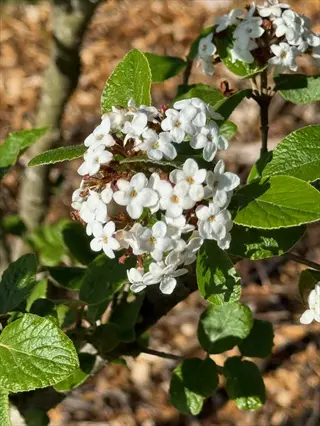
Koreanspice Viburnum
- Bloom time: Reddish-pink buds open to white flowers in late April in rounded clusters about 2 to 3 inches (5 to 8 cm) wide.
- Size: A medium shrub around 5 to under 9 feet (1.5 to 2.7 m) tall with a neat, rounded form.
- Light: Grows in full sun to part shade and prefers moist, well-drained garden soil.
- Fragrance: The sweet scent is famously strong and can be enjoyed from a surprising distance across the garden.
- Old wood: Sets buds on old wood, so prune right after the flowers fade in spring.
- Why grow it: One of the most powerfully fragrant spring shrubs, ideal near a path or doorway.
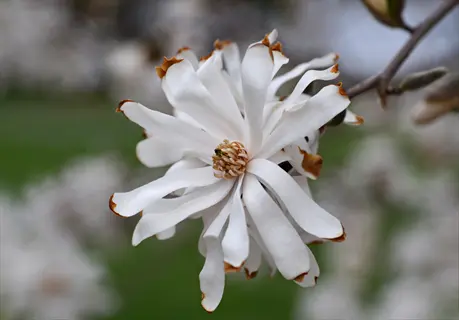
Star Magnolia
- Bloom time: White, fragrant flowers about 3 to 4 inches (8 to 10 cm) across open in April on bare branches.
- Size: A large shrub or small tree reaching roughly 9 to 15 feet (2.7 to 4.6 m) tall and wide.
- Light: Site on an east or north exposure rather than south or west to delay bloom and reduce frost damage.
- Frost note: Early flowers can be browned by late frosts, so placement matters more than for later bloomers.
- Old wood: Blooms on old wood, so prune lightly right after flowering if shaping is needed.
- Why grow it: Showy, fragrant early flowers reward gardeners who give it a protected site.
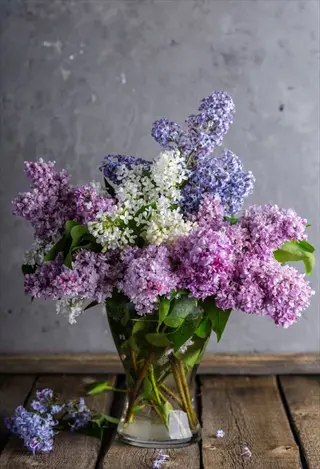
Common Lilac
- Bloom time: Fragrant purple, lavender, or white flower clusters open in mid to late spring for about two weeks.
- Size: A large shrub commonly 9 to 15 feet (2.7 to 4.6 m) tall, often used as a hedge or screen.
- Light: Needs full sun and well-drained soil to flower heavily and resist mildew on the leaves.
- Fragrance: The classic lilac perfume is one of the defining scents of the late-spring garden.
- Old wood: Blooms on old wood, so prune right after flowering and remove spent clusters and suckers.
- Why grow it: Unmatched fragrance and nostalgia make the short bloom window well worth the space.
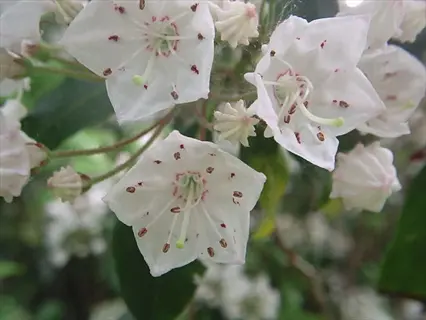
Mountain Laurel
- Bloom time: Detailed cup-shaped pink to white flowers open in late spring, often May into early June.
- Size: A medium to large evergreen shrub, generally 5 to 15 feet (1.5 to 4.6 m) depending on the type.
- Light: Requires part shade and well-drained, acidic, organic soil to grow and flower well.
- Native value: A U.S. native that suits woodland edges and naturalistic plantings.
- Old wood: Flowers on old wood, so prune only right after the blooms fade.
- Why grow it: Detailed flowers and evergreen leaves give multi-season interest in shady spots.
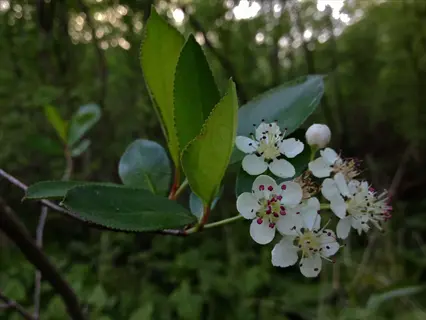
Black Chokeberry
- Bloom time: White flower clusters of nine to twenty small florets open in May above glossy green leaves.
- Size: A compact native shrub that stays under 5 feet (1.5 m) tall and wide.
- Light: Tolerates part shade to full sun and adapts to wet or average garden soils.
- Multi-season value: Dark berries and strong fall color extend interest well past the spring bloom.
- Old wood: Blooms on old wood, so any pruning should follow the spring flowers.
- Why grow it: A tough, compact native that supports pollinators and birds with little care.
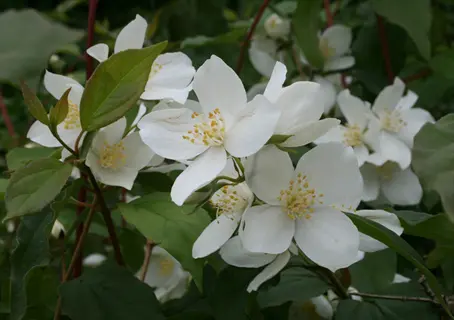
Mockorange
- Bloom time: Pure white, intensely fragrant flowers open in May into June at the tail end of spring.
- Size: A medium to large shrub roughly 5 to 12 feet (1.5 to 3.7 m) tall with an upright, arching habit.
- Light: Flowers best in full sun but tolerates light shade in average, well-drained soil.
- Fragrance: The orange-blossom scent makes it a favorite for the late-spring garden.
- Old wood: Blooms on old wood, so prune right after flowering to keep it from getting leggy.
- Why grow it: Late, fragrant white flowers bridge the gap between spring and summer bloomers.
Mix early, mid, and late bloomers from this list and you never have a bare week. A witch hazel and a forsythia carry the early show. Then a flowering quince and Koreanspice viburnum take over. The lilac comes last and scents the whole yard.
Notice how many of these set buds on old wood. That one fact decides your whole pruning calendar, so cut each shrub right after its flowers fade and never in late winter.
Bloom Order Early to Late
Most spring shrubs flower for only about 2 weeks. Plant just one and your yard peaks for a couple weeks, then goes quiet for the rest of the season. The fix is to think about bloom time before you think about color.
Treat each shrub like a relay runner. One hands the color off to the next, so the show never stops. When you overlap early spring bloomers with mid-spring and late spring picks, that single 2-week burst stretches into roughly two months of flowers. This succession of bloom is simple to plan, and it costs you nothing extra.
Late Winter (February to March)
Vernal witch hazel usually opens first, with spidery yellow flowers that curl in cold and unfurl in sun.
Early Spring (Late March to Mid-April)
Cornelian cherry and forsythia light up with yellow flowers before their leaves appear.
Mid-Spring (April)
Star magnolia, flowering quince, and early rhododendrons add white, pink, and lavender to the display.
Late Spring (Late April to May)
Koreanspice viburnum, lilac, and black chokeberry bring fragrance and fuller flower clusters.
Spring into Summer (May to Early June)
Mountain laurel and mockorange close the season, overlapping with the first summer bloomers.
Iowa State puts vernal witch hazel at the front of the line, usually opening in February or March. Forsythia and star magnolia follow in April, and lilac shows up later in spring. Pick one shrub from each band and you build a true continuous bloom, not a single spike of color that fades fast.
These dates shift with your climate, so use them as a guide and not a calendar. Virginia Tech found one pattern. A shrub that flowers in mid-April in a milder area can bloom 2 to 3 weeks later up in cooler mountains. Watch your own yard for a season, then fill the gaps with shrubs from the bands that go quiet first.
When and How to Prune
Knowing when to prune spring flowering shrubs is the part most people get wrong, and one bad cut can cost you a whole year of blooms. Penn State and the University of Georgia agree on the core rule, so you don't have to guess.
Shrubs that flower before mid-June bloom on old wood, meaning the flower buds form the summer before. Cut them in late winter or early spring and you snip off the very buds you were waiting on. So you prune after flowering, right when the petals drop and before new buds set.
My Koreanspice viburnum in the damp back corner gave me almost no flowers the spring after a tidy late-winter trim. The next year I left it alone until the blooms faded, then cut. It covered itself in sweet clusters all over again.
When you do prune, keep the one-third rule in mind. Never take more than a third of the largest, oldest stems in one year. For a tired, overgrown shrub, UGA backs harder renewal pruning. You cut the whole plant down to 6 to 12 inches (15 to 30 cm) as spring growth begins. That trick works on forsythia and lilac, but skip it on boxwood and junipers.
Prune right after the spring flowers finish, while new buds for next year have not yet formed on the old wood.
Take out dead, diseased, or crossing stems with clean thinning cuts back to a lateral branch, bud, or the trunk.
Remove no more than one-third of the largest, oldest stems at a time to renew the shrub without shocking it.
Lower height by cutting tall stems back to a side branch rather than shearing the whole shrub into a ball.
Avoid pruning in late summer or fall, which removes next year's buds and raises the risk of winter injury.
One last warning from UGA: avoid shearing your spring shrubs into tidy balls with hedge trimmers. Shearing packs growth on the outside, leaves the inside bare and twiggy, and opens the plant up to more pests, disease, and storm damage. Reach in with hand pruners and thin instead.
Spring flowering shrubs (those that bloom before mid-June) should be pruned after flowering. Their flower buds develop during the previous growing season on 'old wood.' If pruned too early, you will remove the flower buds.
Cold-Hardy Flower Buds
I stood at the kitchen window after a -20°F (-29°C) winter and stared at the common forsythia in the back corner. The branches had leafed out green and full, but not a single yellow flower opened on the whole shrub. The next year I pulled it and put a 'Meadowlark' in the same spot. That April the corner glowed gold while the rest of the yard was still bare.
The shrub had not died. Its flower buds had. Plant survival and bloom survival are two different things, and that catch trips up gardeners across the cold belt every spring. Your shrub can sail through winter alive and leafy yet refuse to bloom, because its tender buds froze months before they ever opened. So check the bud rating, not just the plant zone, before you buy.
Common border forsythia loses its flower buds below about -10°F (-23°C). A hard winter wipes out the show even when the wood pulls through. The bud-hardy cultivars hold on far longer. 'Meadowlark', a joint NDSU and SDSU release, keeps its buds to about -35°F (-37°C). 'Northern Sun' and 'Northern Gold' hold to about -30°F (-34°C). 'PJM' rhododendron buds take the same -30°F (-34°C) and open lavender-pink in early April.
This is why flower bud hardiness matters more than the plant rating on the pot. Two forsythias of the same species can carry very different numbers. So treat USDA hardiness zones as a starting point. Then pick the bud-hardy cultivar bred for your climate. Read the table below as cultivar guidance, not one fixed figure per species. That is how you choose cold hardy shrubs that actually flower in your yard.
Star magnolia plays a different game. Its buds open early enough that a warm March followed by a cold snap can brown your petals overnight. Iowa State points to a simple fix for late frost protection: plant it on an east or north exposure instead of south or west. The cooler spot delays your bloom a few days and keeps the early flowers out of the worst frost damage. Put it on a hot south wall and you invite the very freeze you want to dodge.
A forsythia or rhododendron can come through winter alive yet flowerless when its tender flower buds freeze, so choose bud-hardy cultivars for cold gardens.
Color and Fragrance Picks
Color is the first thing most people sort by, but it works better as a plan than a single filter. Pick a lead color for your showy flowers, then add one or two shades that play off it. Yellow flowering shrubs like forsythia and cornelian cherry read from across the yard, so they earn a spot in a back border or screen.
White flowering shrubs do a different job. Star magnolia and mockorange brighten a shady corner and make deeper colors next to them pop. For richer tones, lilac brings purple and flowering quince covers red, orange, or pink. Use pink flowering shrubs as a focal point near a bench or your front door, where the color stops you.
Scent is the part of a shrub you notice before you ever see it. I planted a Koreanspice viburnum 20 feet off my back step, and the sweet smell still reached the door every April. That is why fragrant shrubs earn far more value when you put them where you walk. Lilac and mockorange are the classic scented spring shrubs for an entry, so site one by a path or doorway and you double what it gives you.
Yellow Flowering Shrubs
- Top picks: Forsythia 'Meadowlark', cornelian cherry, and vernal witch hazel deliver the earliest yellow color of the season.
- Bloom timing: Witch hazel opens in February to March, while forsythia and cornelian cherry follow in early to mid April.
- Garden use: Their bright color reads from a distance, making them strong choices for a back border or screen.
- Care note: All bloom on old wood, so prune right after flowering to protect next year's display.
White Flowering Shrubs
- Top picks: Star magnolia, mockorange, and black chokeberry carry clean white flowers from early into late spring.
- Fragrance bonus: Mockorange adds a strong orange-blossom scent in May, extending the fragrant season.
- Garden use: White flowers brighten shady corners and pair well with deeper colors nearby.
- Care note: Star magnolia flowers early, so site it on an east or north exposure to reduce late-frost loss.
Pink and Purple Flowering Shrubs
- Top picks: Lilac, mountain laurel, and 'PJM' rhododendron supply lavender, pink, and purple tones.
- Bloom timing: Rhododendron flowers in early to mid April, while lilac and mountain laurel arrive in late spring.
- Garden use: These richer colors work well as focal points near a seating area or entry.
- Care note: Mountain laurel needs part shade and acidic, well-drained soil to grow and flower well.
Most Fragrant Choices
- Top picks: Koreanspice viburnum, lilac, and mockorange lead the spring garden for powerful scent.
- Standout: Koreanspice viburnum's sweet fragrance can be enjoyed from a surprising distance across the yard.
- Garden use: Plant fragrant shrubs near a path, patio, or doorway where you pass them often.
- Care note: All three bloom on old wood, so prune right after the flowers fade to keep them blooming.
Easy-Care Pollinator Shrubs
Plant tags love to slap on words like easy or carefree, but they rarely tell you why. The honest answer is that the toughest low maintenance shrubs are the ones that shrug off bad soil, cold, and dry spells without help from you. Match one of those to the right spot and it pretty much runs itself.
A few standouts earn the easy to grow shrubs label for good reason. Siberian peashrub takes poor, alkaline, and dry soils. It also shrugs off cold and wind. That makes it one of the better drought tolerant shrubs for an exposed site. Forsythia thrives in poor soil and grows fast. Black chokeberry stays under 5 feet (1.5 m) and handles part shade to full sun without fuss.
These picks also pull their weight for wildlife. Early bloomers feed bees when little else is in flower. They are the pollinator shrubs that matter most in late winter. Witch hazel and pussy willow catkins open before most plants wake up. Several here are U.S. native shrubs too. You can pick a chokeberry, a fothergilla, or a serviceberry to feed the birds and bugs in your own yard. Many also rank among reliable deer resistant shrubs, which spares you a fight with hungry browsers.
Forsythia
- Why it is easy: Tolerates poor soil and full sun, grows fast, and asks for little beyond a post-bloom prune.
- Mature size: Reaches about 6 to 10 feet (1.8 to 3 m) tall and wide in an arching form.
- Wildlife value: Early yellow flowers offer some of the first nectar of the season.
- Best use: A dependable choice for a fast informal screen or a tough back-of-border filler.
Black Chokeberry
- Why it is easy: A native that tolerates wet or average soil and part shade to full sun with little care.
- Mature size: Stays compact under 5 feet (1.5 m), so it rarely needs much pruning.
- Wildlife value: White spring flowers support pollinators and dark fall berries feed birds.
- Best use: A low, multi-season native for naturalistic plantings and rain-garden edges.
Siberian Peashrub
- Why it is easy: Tolerates poor, alkaline, and dry soils plus cold and wind in exposed sites.
- Mature size: A large shrub that works well as a tough windbreak or hedge.
- Wildlife value: Yellow spring flowers draw pollinators, and seed pods pop audibly when they open.
- Best use: A practical pick for harsh, dry, or windy spots where little else thrives.
Serviceberry
- Why it is easy: A North American native that adapts to most well-drained soils with modest care.
- Mature size: A large shrub or small tree useful as a specimen or woodland-edge plant.
- Wildlife value: White April flowers feed early pollinators and summer berries attract birds.
- Best use: A native choice offering spring flowers, edible fruit, and strong fall color.
The lowest-maintenance shrub is one suited to your soil, light, and climate, since a well-matched native needs little watering or feeding once established.
5 Common Myths
Spring blooming shrubs should be pruned in late winter like summer bloomers, so you can shape them before the new season starts.
Spring shrubs bloom on old wood, so late-winter pruning cuts off the flower buds; prune right after the flowers fade instead.
If a forsythia or lilac survives a hard winter, it will always flower well the following spring no matter how cold it got.
The plant can survive while its flower buds are killed by cold; bud hardiness, not plant hardiness, decides whether you get blooms.
Spring blooming shrubs flower for most of the season, giving you weeks and weeks of nonstop color from a single plant.
Most spring shrubs bloom only about two weeks; combining early, mid, and late bloomers is what creates a long display.
All forsythias are equally tough, so any forsythia you buy will bloom reliably even in very cold northern gardens.
Common forsythia buds die below about -10F (-23C); only hardy cultivars like 'Meadowlark' bloom reliably where winters are severe.
Shearing spring shrubs into tidy balls with hedge trimmers keeps them healthy and encourages more flowers each year.
Shearing creates dense outer growth, bare interiors, and more pest problems; thinning cuts and renewal pruning keep shrubs healthier.
Conclusion
Three ideas carry this whole guide. Plan your bloom sequence. You want one shrub to open early, one to follow in mid spring, and one to finish late. Time your cuts to the way each plant grows. And pick shrubs whose buds can take the cold where you live. Get those three right and your beds wake up in waves instead of one quick flash.
Most spring blooming shrubs flower for only about 2 weeks, so a single plant gives you a short show. Layering an early bloomer like witch hazel, a mid-spring lilac, and a late viburnum stretches that color across many weeks. The shrubs profiled earlier each fill a slot, and together they hand you a season of bloom rather than one good fortnight.
Two habits separate a shrub that blooms every year from one that sulks. First, buy cultivars with strong flower bud hardiness, since a plant can survive a hard winter and still lose every flower for that spring. Second, prune right after the blooms fade, because these shrubs set buds on old wood from the year before. Cut in late summer or fall and you slice off next spring's flowers.
A thoughtful mix of these low maintenance shrubs pays you back for years with little fuss once they settle in. You now know how to plan the order, plant for your zone, and prune at the right moment. Sketch out an early, a mid, and a late bloomer this season, and your yard will reward you every spring without asking much in return.
Glossary
- bloom succession
- Combining early, mid, and late bloomers so their flowers overlap for a longer continuous display.
- flower bud hardiness
- The lowest temperature a shrub's flower buds can survive, which can be more cold-sensitive than the plant itself.
- new wood
- The current season's fresh growth, on which summer-flowering shrubs produce their blooms.
- old wood
- Stems that grew the previous season, on which spring shrubs form their flower buds the summer before they bloom.
- rejuvenation pruning
- Cutting an entire shrub down to about 6 to 12 inches (15 to 30 cm) to force vigorous new growth from the base.
- renewal pruning
- Gradually removing up to one-third of the oldest stems each year to refresh a shrub without cutting it all at once.
- thinning cut
- A pruning cut that removes a whole stem back to a branch, bud, or the trunk rather than shearing the surface.
- USDA hardiness zone
- A regional rating, based on average lowest winter temperatures, used to judge which plants can survive in an area.
External Sources
Frequently Asked Questions
What is the easiest flowering shrub to grow?
Forsythia is one of the easiest, thriving in sun, poor soil, and most zones with little care.
What is the first shrub to bloom in spring?
Vernal witch hazel is usually the first, blooming in February or March.
When should you prune spring flowering shrubs?
Prune right after flowering finishes, because the buds form on old wood the prior summer.
Why did my forsythia or lilac not bloom?
Most often the flower buds were killed by cold or removed by pruning at the wrong time.
What spring shrubs bloom on old wood?
Lilac, azalea, forsythia, fothergilla, kerria, mockorange, rhododendron, and weigela bloom on old wood.
How long do spring blooming shrubs flower?
Most spring shrubs bloom about two weeks, controlled mainly by genetics.
Which spring blooming shrubs are the most fragrant?
Koreanspice viburnum, lilac, and mockorange are among the most fragrant spring shrubs.
What are the most cold hardy spring flowering shrubs?
Forsythia 'Meadowlark', 'Northern Sun', and 'PJM' rhododendron hold flower buds in deep cold.
What are the best low maintenance spring flowering shrubs?
Forsythia, black chokeberry, and Siberian peashrub need little care once established.
How do you plan a spring shrub bloom sequence?
Pair early, mid, and late bloomers so flowers overlap from late winter into late spring.