
Introduction
That dim corner along the fence is not a dead spot. It is the easiest part of your yard to fill with shade loving shrubs that other plants would never touch. The cool ground there stays moist longer, so your plants need less fuss than the ones baking in the open sun. Most people treat shade as a problem to solve, but it can be the calmest, greenest patch you own.
Most plant lists skip the step that matters most. They hand you 20 names but never teach you to read your own light first. So you buy a shrub, plant it in the dark, and watch it sulk for two years. The truth is simpler than the labels suggest. Clemson Extension notes that most shrubs are shade tolerant rather than shade loving and grow best in dappled or partial shade. They survive low light, but they do not love it.
That difference shapes everything you plant. Shade tolerant shrubs hang on in a dark spot and give you a lighter bloom. A true shade lover actually thrives there. So a deep, sunless corner usually means picking tough survivors. You also accept fewer flowers than a garden center photo promises. Knowing this up front saves you money and a lot of grief.
This guide flips the usual order. First you will run a quick hours-of-sun check to learn your real light, since partial shade means just 3 to 4 hours of direct sun a day. Then you will factor in your soil moisture, because a damp spot and a dry one call for very different plants. Only after that do we get to the shrubs for shade worth your time. Get the diagnosis right, and the right plant becomes obvious.
8 Best Shrubs for Shade
The best shrubs for shade are not the ones with the showiest tag at the garden center. They are the ones that keep flowering, hold their leaves, or light up a dim corner when most plants would sulk. Each shrub below earns its spot for a real reason, not just a pretty photo.
Six years ago I dug an oakleaf hydrangea into the damp north-facing corner where my back lawn runs into the woods. The spot stayed dark by noon and nothing I tried there had lasted. That first July the shrub threw up white cones the size of my forearm, and by October the leaves turned deep burgundy against the gray fence. The dead corner became the part of the yard people ask about.
A few of these plants take deeper shade with no complaint. Clemson rates aucuba and Oregon grape holly as the toughest shade tolerant shrubs. Save those for your darkest spots. Others want a softer deal. Rhododendron and viburnum both bloom and berry far better with morning sun and afternoon shade than in full gloom.
One soil note matters before you buy. Rhododendron, camellia and mountain laurel all need acidic, well-drained soil, so test your ground first if your other plants struggle. Here are the eight shrubs I reach for again and again.
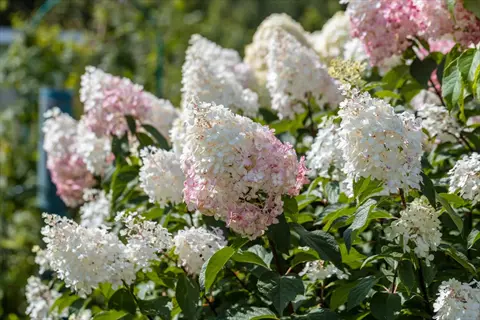
Oakleaf Hydrangea
- Why it works: Handles deeper shade better than other hydrangeas and rewards a dim corner with large white flower cones in summer.
- Light: Best in part shade or morning sun with afternoon shade, and one of the few hydrangeas worth trying in fuller shade.
- Size: Reaches roughly 6 to 8 feet (1.8 to 2.4 m) tall and wide, so give it room at the back of a border.
- Soil: Prefers moist, well-drained, slightly acidic soil and dislikes sitting in soggy ground for long periods.
- Season: Offers white summer blooms that age to pink, plus deep burgundy fall foliage and peeling winter bark.
- Zones: Generally hardy in USDA zones 5 to 9 and widely grown as a native shade shrub across much of the eastern United States.
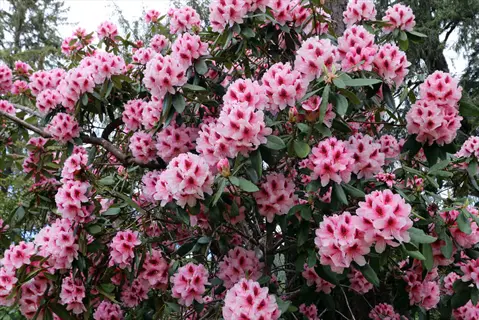
Rhododendron and Azalea
- Why it works: A classic shade bloomer that covers itself in spring flowers when given the protected, partly shaded site it prefers.
- Light: Performs best in morning sun with afternoon shade or in dappled light beneath high tree canopies.
- Size: Ranges widely from compact azaleas near 2 feet (0.6 m) to large rhododendrons over 8 feet (2.4 m).
- Soil: Needs moist, acidic, well-drained soil rich in organic matter, as alkaline soil quickly causes yellowing leaves.
- Tip: Hardy cultivars such as PJM, Aglo and Olga Mezitt are reliable choices noted by Iowa State Extension.
- Zones: Hardiness varies by type, with many garden rhododendrons suited to USDA zones 4 to 8.
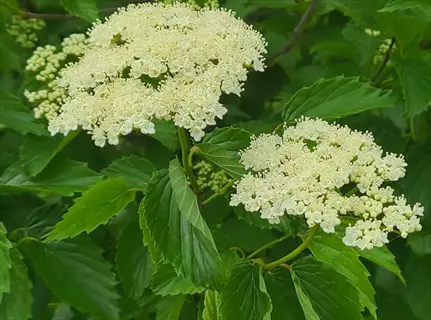
Viburnum
- Why it works: A tough, adaptable group of shrubs that tolerates partial shade while offering flowers, berries and fall color.
- Light: Grows well in partial shade, though bloom and berry set improve with a few hours of direct sun.
- Size: Arrowwood viburnum reaches about 6 to 8 feet (1.8 to 2.4 m), with other species both larger and smaller.
- Soil: Adaptable to many soils but does best in moist, well-drained ground with steady moisture.
- Wildlife: Spring flowers feed pollinators and the berries draw songbirds, making it a strong wildlife shrub.
- Zones: Depending on species, viburnums suit a broad span of USDA zones 2 through 9.
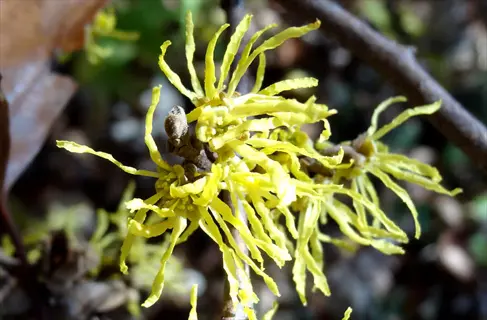
Witch Hazel
- Why it works: A large shade-tolerant shrub prized for fragrant, spidery flowers that appear in late winter when little else blooms.
- Light: Tolerates partial shade and woodland edges, flowering reliably even without full sun.
- Size: Common witch hazel grows tall at roughly 12 to 15 feet (3.7 to 4.6 m), working as a screen or small specimen.
- Soil: Prefers moist, well-drained soil but adapts to a range of conditions once established.
- Season: Provides late-winter or early-spring fragrance and clear yellow fall foliage for multi-season interest.
- Zones: Common witch hazel is hardy across USDA zones 3 to 8 and is native to eastern North America.
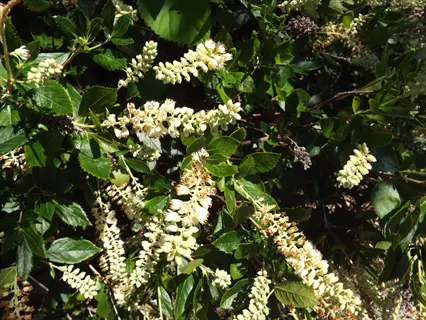
Summersweet (Clethra)
- Why it works: A native shrub that brings late-summer fragrance to shade when most other shrubs have finished flowering.
- Light: Thrives in partial shade and tolerates damp ground, making it useful near downspouts and low spots.
- Size: Typically grows 3 to 8 feet (0.9 to 2.4 m) tall depending on cultivar, with compact forms for small gardens.
- Soil: Prefers consistently moist, acidic soil and handles wet sites better than many shade shrubs.
- Wildlife: Sweetly scented summer spikes are a magnet for bees and butterflies in a shaded border.
- Zones: Reliably hardy in USDA zones 3 to 9 and recommended for shade by Iowa State and Penn State Extension.
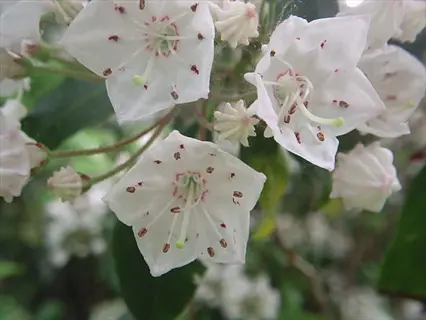
Mountain Laurel
- Why it works: A broadleaf evergreen native that offers detailed cup-shaped flowers and year-round structure in part shade.
- Light: Grows best in partial to dappled shade, ideally with morning sun and afternoon shade.
- Size: Usually reaches 5 to 8 feet (1.5 to 2.4 m) tall and wide with a dense, rounded habit.
- Soil: Requires moist, acidic, well-drained soil similar to rhododendrons and dislikes heavy wet clay.
- Season: Clusters of pink to white flowers open in late spring above glossy evergreen leaves.
- Zones: Native to eastern North America and hardy through USDA zones 4 to 9.
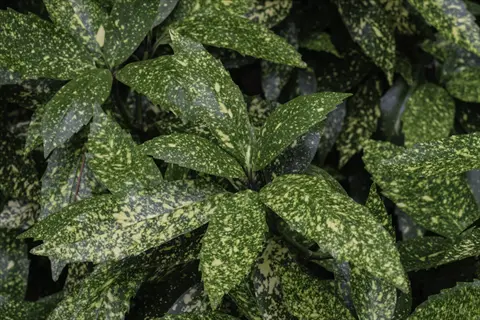
Aucuba (Gold Dust Plant)
- Why it works: One of the few broadleaf evergreens flagged by Clemson as tolerating deeper shade, with leaves often speckled gold.
- Light: Handles full to deep shade and is a strong choice for dark, north-facing corners.
- Size: Grows around 6 to 10 feet (1.8 to 3 m) tall and wide, useful for filling shaded gaps.
- Soil: Adapts to most well-drained soils and tolerates dry shade once it is established.
- Design: The gold-flecked foliage brightens gloomy spots, a technique designers use for dark corners.
- Zones: Best in milder regions, generally hardy in USDA zones 7 to 10.
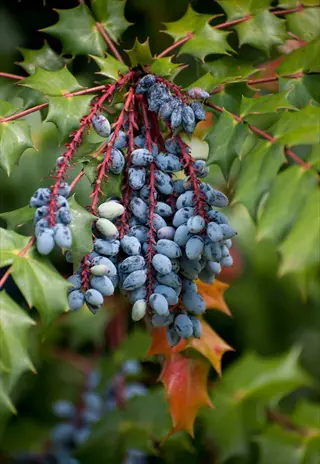
Oregon Grape Holly (Mahonia)
- Why it works: An evergreen native that handles shade well, offering holly-like leaves, yellow flowers and blue berries.
- Light: Tolerates full shade though it often does a little better with some filtered light, per PlantTalk Colorado.
- Size: Typically grows 3 to 6 feet (0.9 to 1.8 m) tall and spreads slowly into a colony.
- Soil: Adaptable and tolerant of dry shade once established, suiting tough spots under trees.
- Wildlife: Early yellow flowers feed pollinators and the blue berries attract birds.
- Zones: Hardy across USDA zones 5 to 9 depending on species.
Most shrubs are also shade tolerant rather than shade loving and will grow best in dappled or partial shade or in morning sun and afternoon shade.
How to Diagnose Your Shade
Most guides hand you a plant list before you know what kind of shade you have. That order is backward. Your spot has a specific amount of light, and the right shrub depends on reading that light first. So before you shop, go stand in the bed and watch how the sun moves across it.
The simplest way to grade shade is by hours of direct sun. Iowa State Extension puts partial shade at 3 to 4 hours of direct sun, with the spot in shade the rest of the day. A site that gets 6 or more hours counts as full sun, which is too much for shade plants to enjoy. Deep shade means no direct light at all, like the north side of a building or the ground under an evergreen.
Light quality counts too. Dappled shade is sunlight that filters through a high tree canopy all day, and it is the sweet spot where shade shrubs do their best. Compare that to the hard, flat shadow cast by a north wall, where light never breaks through. On paper both spots read as shade. Plants treat them very differently.
Run a quick self-test on a clear day. Note the clock times your spot sits in direct sun, then add them up at the end of the day. While you watch, ask whether the light comes filtered through leaves overhead or as a solid wall shadow. Sun is fiercer in some regions, so treat these numbers as general guidance and adjust for your own climate.
On a clear day, count the hours your spot gets direct sun and note whether the soil there stays damp or dries fast. Those two readings decide which shrubs will thrive.
Shade is about more than light. Soil moisture swings hard from one corner of a yard to the next. A low spot near a downspout can stay damp for days, while the ground under a thirsty maple bakes dry even in the rain. That pairing of light and water is what sorts the survivors, so true full shade shrubs need to match both before they earn a place in your bed.
Best Shrubs for Dry Shade
Dry shade under a mature tree is the hardest spot in any garden to plant. The canopy blocks the rain before it ever reaches the ground, so the soil stays dry even after a real downpour. Below the surface, established tree roots act like a sponge and drink up most of the water that does get through.
That mix of canopy and root competition is why so many shrubs sulk and fade here. University of Minnesota Extension says dry shade is one of the hardest spots to plant. Picking the right dry shade shrubs cuts your watering, but it does not erase it.
The good news is that a handful of tough plants cope with these conditions once their roots take hold. The best shrubs for dry shade under trees come from picks tested by Colorado State and Clemson Extension. Oregon grape holly, aucuba, sweet box, alpine currant and snowberry all tolerate dry shade once they settle in.
These are your drought tolerant shade shrubs, the ones that earn their place in the worst corner of the yard. Each one below brings something useful. You get winter color, evergreen cover or a way to hold a shaded slope. Here is what each plant offers and where it fits best.
Oregon Grape Holly (Mahonia)
- Toughness: Tolerates dry shade once established and copes with the root competition found under mature trees.
- Looks: Evergreen, holly-like leaves with yellow late-winter flowers followed by clusters of blue berries.
- Use: Spreads slowly into a low colony, useful for filling shaded ground that struggles to hold moisture.
Aucuba (Gold Dust Plant)
- Toughness: One of the best broadleaf evergreens for deep, dry shade, handling dark corners other shrubs refuse.
- Looks: Glossy leaves often speckled with gold that brighten gloomy spots beneath trees and eaves.
- Use: Grows 6 to 10 feet (1.8 to 3 m) tall and wide, filling large shaded gaps with year-round foliage.
Sweet Box (Sarcococca)
- Toughness: A compact evergreen that tolerates dry shade and the difficult ground close to building foundations.
- Looks: Small glossy leaves with tiny but intensely fragrant white winter flowers near the stems.
- Use: Works as a low evergreen edge or groundcover-style filler in shaded, dry beds.
Alpine Currant
- Toughness: A hardy deciduous shrub noted by Iowa State Extension that adapts to shade and tougher dry sites.
- Looks: Dense, twiggy growth with small lobed leaves that make it a neat informal screen.
- Use: Grows about 3 to 6 feet (0.9 to 1.8 m) tall and shears well into a low hedge in shade.
Snowberry
- Toughness: A native, adaptable shrub that handles shade and dry ground while spreading by suckers.
- Looks: Arching stems carry small pink flowers followed by distinctive white berries into late autumn.
- Use: Good for stabilizing shaded slopes and filling rough ground where little else competes with roots.
Dry shade is the one corner where you cannot skip the watering can. Even these tough picks need help while their roots learn to compete with the tree above them. Give each new shrub a deep, infrequent soak rather than a daily splash, since the tree roots win the race for any shallow water you add.
Aim to wet the top 3 to 4 inches (about 10 cm) of soil whenever it dries out, the same target you use across the rest of the garden. Then lay a mulch ring around each plant to hold what little moisture reaches these thirsty roots. Keep that mulch pulled back from the stems so the bark stays dry and healthy.
Dry shade is one of the most limiting sites for plants. Even drought-tolerant shrubs need deep soaks that wet the top 3 to 4 inches (about 10 cm) of soil whenever it dries, plus a mulch ring kept off the stems.
Flowering and Evergreen Picks
Most shrub lists blur the line you actually care about. You want one of two things in a dark corner. Either flowering shrubs for shade that put on a seasonal show, or evergreen shrubs for shade that hold their leaves and screen the view all winter. Pick the job first, then pick the plant.
Few shrubs do both jobs well in deep shade, so trying to get one plant to flower hard and stay green is how people end up let down. The shrubs that bloom best want some light. The ones that stay green through January give you structure, not color. Sort your corner into one camp or the other.
For real shade shrubs that flower, oakleaf hydrangea is the name people cite most for blooming in fuller shade, with white summer cones and strong fall color. Rhododendron, camellia and pieris all flower well in part or dappled shade. Just know that all three want moist, acidic, well-drained soil, so test your dirt before you dig.
Only a limited number of evergreens truly do well in shade. Yew and boxwood are dependable, but both need well-drained soil to avoid root problems in damp, shady ground.
On the evergreen side, Iowa State Extension is blunt that only a limited number of evergreens do well in shade. Yew and boxwood are the dependable picks, but both need well-drained soil or the roots rot in damp ground. For the darkest spots, aucuba earns its keep among full shade shrubs with bright, gold-speckled leaves that lift a gloomy bed.
One last thing to set your hopes by. Bloom intensity drops as light drops, so even a good shade bloomer flowers more lightly the deeper the shade gets. Want a seasonal show? Lean flowering and give it the brightest shade you have. Want structure and a green screen through winter? Plant an evergreen and let it do the quiet work.
Native Shrubs for Wildlife
The back corner of my yard sat quiet for years. No bird traffic, no hum, just a tidy bed of imports that looked fine and did nothing. Six years ago I tucked a summersweet and an oakleaf hydrangea along the woods edge. By the second summer that same corner buzzed with bees, and chickadees worked the branches for cover and seed.
Native shrubs for shade do more than look good. A native planting is a small food web that pays you back. If biodiversity is your goal, aim for at least 80% natives by cover, not a token plant or two by the path. That is the guidance from the University of Maryland Extension.
Native shade plants pay off through fall and winter too. Leave the fallen leaves where they drop instead of bagging them. That layer shelters luna moths and bumble bees through the cold. It also feeds next spring's pollinators and the birds that hunt them.
Match the shrub to the light at the spot. Forest-edge natives like summersweet and Virginia sweetspire take morning shade with a few hours of sun. Spicebush is a forest-interior native, so it wants the deeper, dappled light under a tree. The five pollinator shrubs below all earn their keep with bees, butterflies, or birds.
Summersweet (Clethra)
- Wildlife: Fragrant late-summer flower spikes are a strong draw for bees and butterflies in shaded borders.
- Site: Thrives in partial shade and damp ground, filling low or wet spots other shrubs dislike.
- Range: Native across much of the eastern United States and hardy through USDA zones 3 to 9.
Virginia Sweetspire (Itea)
- Wildlife: Drooping white flower tassels feed pollinators in early summer above arching stems.
- Site: Handles part shade and moist soil, and tolerates wetter ground than many shade shrubs.
- Range: Native to the southeastern United States with brilliant red to purple fall foliage.
Spicebush (Lindera)
- Wildlife: A host plant for the spicebush swallowtail butterfly, with red berries that feed birds.
- Site: Grows in partial to fairly deep shade and prefers moist woodland soil.
- Range: Native understory shrub of eastern forests, noted for shade by Iowa State and Penn State Extension.
Fothergilla
- Wildlife: Honey-scented bottlebrush flowers in spring attract early pollinators in shaded beds.
- Site: Prefers part shade with moist, acidic, well-drained soil similar to its woodland habitat.
- Range: Native to the southeastern United States with outstanding orange and red fall color.
Oakleaf Hydrangea
- Wildlife: Large summer flower cones support pollinators while the layered shrub gives birds cover.
- Site: One of the best natives for fuller shade, blooming where other hydrangeas will not.
- Range: Native to the southeastern United States and hardy through USDA zones 5 to 9.
Layer these shrubs and you get two payoffs at once. A leafy, multi-level bed builds the habitat that brings bees and songbirds to your biodiversity shade garden. That same green, settled look is also what raises curb appeal. Mature, healthy plantings can lift property value, so the corner that feeds wildlife reads as a cared-for yard.
Recent research suggests that if biodiversity is your motive, you'd do well to use at least 80% natives by cover, rather than just planting a few.
Planting and Care Basics
A PJM rhododendron now anchors the damp north-facing back corner of my yard, and it leafs out with purple blooms every spring. A sun-loving spirea sat in that same spot first. It sulked for two seasons and dropped half its leaves. So I pulled it out and gave the shade to a plant that wanted it.
Most of the work with planting shade shrubs happens before you ever dig the hole. You match the plant to the light and soil, then give it a steady first year. Get those two things right and the shrub mostly takes care of itself after that.
Watering shade shrubs trips up a lot of new gardeners. Shady soil holds moisture longer, but dry shade under trees can stay parched even after rain. University of Minnesota Extension says to soak the top 3 to 4 inches (about 10 cm) of soil when it dries out. A drip hose, simple irrigation, or hand watering all work. Good site knowledge is what helps a plant thrive rather than just hang on.
Shrubs under trees ask for the most patience. Tree roots fill the soil and steal water, so you dig between the big roots instead of slicing through them. A wide, shallow hole in a gap does far less harm than a deep one through a major root.
Confirm the spot matches the shrub by counting hours of direct sun and feeling whether the soil stays damp or dries quickly.
Under trees, find gaps between large roots and dig a wide, shallow hole rather than cutting through major roots.
Place the root ball so its top sits level with the surrounding soil, never buried deeper than it grew in the pot.
Refill with the native soil, firming gently to remove air pockets, and avoid piling soil against the stems.
Soak the area so the top 3 to 4 inches (about 10 cm) of soil are wet, then repeat whenever that layer dries the first year.
Spread a few inches of mulch over the root zone, kept clear of the stems, to hold moisture and reduce root competition.
Mix canopy, understory, shrubs and groundcover instead of scattering single plants. Layered shade plantings hold moisture, look fuller, and give pollinators and songbirds more habitat.
One soil note saves you a lot of grief. Acid lovers need acidic, well-drained soil. Rhododendron and camellia want it. So do pieris and mountain laurel. Plant them in heavy clay and they yellow. The same goes for a spot tight against a concrete foundation, no matter how well you water. A fresh ring of mulch over the root zone, kept clear of the stems, holds moisture and eases the root competition that comes with shade.
5 Common Myths
Most shrubs sold for shade are truly shade loving and will bloom heavily even in a dark, sunless corner of the yard.
Most are shade tolerant, not shade loving. They survive shade but grow and flower best in dappled or partial shade, per Clemson Extension.
Any shrub that survives shade will flower just as well there as the same shrub would in a sunny, open spot.
Flowering usually drops as light drops. Many shade shrubs bloom less heavily, so choose proven shade bloomers and expect a lighter show.
If a spot is shady, the soil stays cool and damp, so you never need to water shrubs growing there.
Dry shade under trees is one of the most limiting sites. Root competition and overhead canopy keep soil dry, so deep watering is still needed.
Evergreen shrubs are the easiest plants to use because nearly all of them grow happily in deep, full shade.
Only a limited number of evergreens do well in shade, such as yew, boxwood, and aucuba. Most prefer at least dappled light.
It does not matter whether shade shrubs are native, since any plant that survives gives wildlife the same benefit.
Native shrubs support far more pollinators and songbirds. University of Maryland Extension suggests aiming for at least 80 percent natives by cover.
Conclusion
Every good plan for shade loving shrubs starts with your own yard, not a plant list. Walk the spot at a few points in the day and count the hours of direct sun it gets. Then check whether the soil stays damp or dries out fast. Once you know your light and your dirt, the right plants almost pick themselves.
Here is the honest part most lists skip. Almost none of these plants truly love the dark. Clemson Extension calls them shade tolerant rather than shade loving. Most want dappled light, or morning sun with afternoon shade. So a deep, dark corner still gives you a real show. It just means you lean on the toughest shrubs for shade and accept a softer, leafier look over heavy bloom.
Your shortlist is short on purpose. Want flowers? Plant oakleaf hydrangea with a rhododendron and a viburnum. Those three give you color across the seasons. For year-round structure, aucuba and yew hold their leaves and frame the bed through winter. For wildlife, lean on native shade shrubs like summersweet that feed bees and birds. Mix a few shade tolerant shrubs from each group and the corner reads full instead of patchy.
Get two things right in year one and these plants take over from there. Match each shrub to its real site, and water deep enough to soak the top 3 to 4 inches of soil, about 10 cm, whenever it dries out. Aim for at least 80% natives by cover and you build a small habitat, not just a hedge. That shady patch you once wrote off now stays cooler in summer, asks little of you, and adds quiet value to the whole yard.
Glossary
- Dappled shade
- Soft, shifting light that reaches the ground after filtering through the branches and leaves of a canopy.
- Deep shade
- An area that gets no direct sunlight, such as the north side of a building or under a dense evergreen.
- Dry shade
- Shaded ground that stays dry because tree roots and overhead canopy take most of the available water.
- Native shrub
- A shrub that grows naturally in a region and tends to support more local pollinators and birds than non-native plants.
- Partial shade
- A site that receives about 3 to 4 hours of direct sun and is shaded for the rest of the day.
- Root competition
- The way established tree roots draw water and nutrients away from nearby plants, making the soil hard to garden in.
- Shade loving
- A plant that genuinely thrives in low light, which is far rarer than plants that merely tolerate shade.
- Shade tolerant
- A plant that survives in shade but actually grows and flowers best in dappled or partial shade rather than deep shade.
External Sources
Frequently Asked Questions
What shrubs grow well in full shade?
Reliable full shade shrubs include:
- Aucuba (gold dust plant)
- Yew
- Oakleaf hydrangea
- Leucothoe
- Oregon grape holly
What evergreen shrubs will grow in part shade?
Dependable evergreens for part shade are:
- Yew
- Boxwood
- Aucuba
- Pieris (lily-of-the-valley shrub)
- Oregon grape holly
Are there flowering shrubs that like shade?
Yes. Flowering shade shrubs include rhododendron, oakleaf hydrangea, summersweet, mountain laurel, and camellia.
What is the difference between shade tolerant and shade loving?
Most shrubs are shade tolerant, meaning they survive shade but grow and flower best in dappled or partial shade rather than deep shade.
Which shrubs grow best in dry shade under trees?
Tough dry shade shrubs include:
- Aucuba
- Oregon grape holly (mahonia)
- Sweet box (Sarcococca)
- Alpine currant
- Snowberry
How many hours of sun is partial shade?
Partial shade means a site gets 3 to 4 hours of direct sun and is shaded the rest of the day.
Do hydrangeas grow well in shade?
Many hydrangeas grow in part shade, and oakleaf hydrangea is the best choice for deeper shade with morning sun.
What are the best native shrubs for a shade garden?
Top native shade shrubs include:
- Summersweet (Clethra)
- Virginia sweetspire (Itea)
- Spicebush (Lindera)
- Oakleaf hydrangea
- Fothergilla
How do you plant shrubs under trees in shade?
Dig planting holes between large tree roots, water deeply, and mulch to reduce root competition for shade shrubs under trees.
How often should you water newly planted shade shrubs?
Water new shade shrubs deeply whenever the top 3 to 4 inches of soil dry out, especially through the first growing season.