

Introduction
You slice into a fresh blood orange tree harvest and watch ruby juice spill across the cutting board like spilled wine. The flesh inside shines deep crimson with hints of raspberry on the tongue and a sweetness that surprises you. I grew my first Moro tree 12 years ago in a small backyard, and that first cut still ranks as one of my favorite garden moments.
Most folks shopping for a Citrus sinensis variety expect every fruit to bleed bright red on the plate. The truth is messier than that. University of Florida IFAS data shows deep flesh color forms only when nights stay cool. You need 15 to 30 days with night lows of 46 to 59°F (8 to 15°C). Skip that cool window and you get pale orange flesh.
Think of the Ruby gene as a thermostat switch wired to the cold inside your fruit. Warm nights leave it stuck in the off position, no matter what variety you bought from the nursery. That single fact explains why folks in Florida and the Gulf Coast often feel cheated by their harvest. I learned this hard lesson before moving my potted Moro to a cool garage each winter.
Growing blood oranges works best in a Mediterranean climate with mild days and chilly nights. The sweet spot falls inside USDA hardiness zones 9-11. Cold nights bring out flavor but hard freezes stay away. The 2025 and 2026 home citrus boom brought fresh waves of dwarf grafted nursery trees to stores. This guide walks you through types, climate, pots, pest control, and harvest tips. Soon you can grow ruby flesh that earns its name.
10 Best Blood Orange Trees
Think of these 10 cultivars like wine grapes from different vineyards. A Moro blood orange brings the bold punch of a Cabernet while a Tarocco blood orange plays the softer notes of a Pinot Noir. Each one shows its own version of climate and soil on the plate. I planted four of these side by side and the flavor swings still surprise me.
The list below mixes well known blood orange varieties with rare finds you can buy in 2026. Micro budded trees in 5 gallon (19 liter) pots ship to home growers now. Modica 2024 in Foods journal ranked the top picks by Citrus Color Index. Moro hit 71.2 in Italian plots. Tarocco has 10 to 12 flesh segments while Sanguinello has 8 to 10 per UF/IFAS HS1500 data.
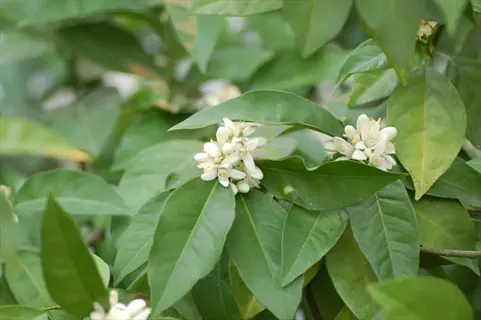
Moro Blood Orange Tree
- Origin: Found in early nineteenth century Sicily, Italy, and now the most planted blood orange across California, Spain, and southern Italy.
- Color: Produces the deepest burgundy to nearly black flesh among commercial cultivars, achieving Citrus Color Index values up to 250.5 in Modica 2024 plots.
- Flavor: Bold, tangy raspberry with strong berry undertones and a slightly bitter finish that pairs beautifully with chocolate and rich seafood dishes.
- Harvest: Earliest blood orange to ripen, typically from December through February, making it ideal for winter farmers market sales and home use.
- Tree size: Reaches 12 to 15 feet (3.7 to 4.6 meters) in ground, or stays compact at 6 feet (1.8 meters) in containers.
- Best use: Top choice for juice extraction, granita, salad vinaigrettes, and any recipe where vivid red juice color is desired.
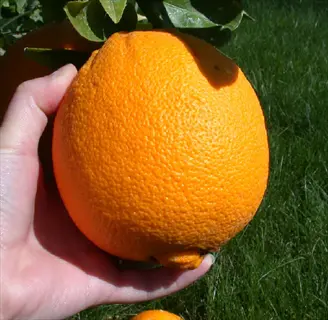
Tarocco Blood Orange Tree
- Origin: Native to Italy and considered the most widely consumed blood orange variety in Europe, prized for table eating rather than juicing.
- Color: Develops a marbled orange flesh streaked with crimson rather than uniform red, with lighter overall pigmentation than Moro or Sanguinello.
- Flavor: Universally rated the sweetest blood orange with low acidity, gentle raspberry notes, and a smooth honeyed finish.
- Harvest: Ripens mid season from January through March, with 10 to 12 distinct flesh segments per UF/IFAS HS1500 measurements.
- Tree size: Vigorous grower reaching 15 to 20 feet (4.6 to 6.1 meters) in optimal Mediterranean conditions outdoors.
- Best use: Excellent for fresh eating out of hand, fruit salads, sorbet, and culinary applications where balanced sweetness matters most.

Sanguinello Blood Orange Tree
- Origin: Found around 1929 as a limb sport of Doblafina blood orange in Spain, per University of Florida IFAS Extension records.
- Color: Produces consistently deep red flesh with intense pigmentation across all 8 to 10 flesh segments, second only to Moro in color depth.
- Flavor: Sweet tart balance with strong berry character, fewer seeds than older varieties, and excellent juice quality.
- Harvest: Latest ripening commercial blood orange, peaking from February through April, extending fresh fruit availability into spring.
- Tree size: Vigorous and high yielding tree reaching 12 to 18 feet (3.7 to 5.5 meters) when grown in ground in zones 9 and above.
- Best use: Ideal for juice production, cocktails, marmalade, and growers seeking late season harvest after Moro and Tarocco finish.
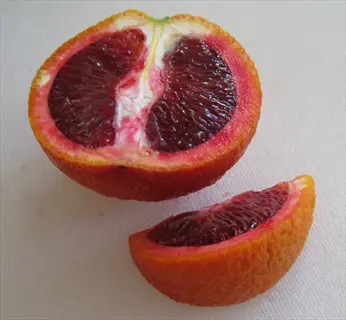
Tarocco Rosso Blood Orange Tree
- Origin: Modern Italian selection of Tarocco featured in the Modica 2024 study, bred for deeper red pigmentation than standard Tarocco.
- Color: Develops noticeably more anthocyanin than parent Tarocco, especially when grown in eastern Sicily near Mount Etna with cool night temperatures.
- Flavor: Retains classic Tarocco sweetness while gaining the berry intensity of Moro, considered a best of both worlds variety.
- Harvest: Mid to late season ripening from January through March with high total soluble solids of 13 to 16 degrees Brix.
- Tree size: Similar to standard Tarocco at 15 to 20 feet (4.6 to 6.1 meters) outdoors and 6 to 8 feet (1.8 to 2.4 meters) in containers.
- Best use: Premium fresh market sales, gourmet desserts, and home growers in cool night climates wanting both color and sweetness.
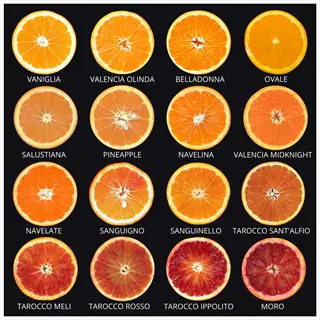
Tarocco Ippolito Blood Orange Tree
- Origin: Italian selection of the Tarocco family cited in Modica et al. 2024 study, named after the breeder and grown commercially in eastern Sicily.
- Color: Moderate red pigmentation that intensifies dramatically with the 5 to 10°C night temperatures present near Mount Etna.
- Flavor: Smooth, low acid sweetness with subtle berry hints, often preferred by consumers who find Moro too tart.
- Harvest: Mid season ripening with consistent yields and excellent fruit size, harvested from late January through early March.
- Tree size: Compact to medium size at 10 to 15 feet (3 to 4.6 meters), making it suitable for smaller orchards and large patios.
- Best use: Specialty fresh market growers, restaurant supply, and cool climate hobbyists seeking a reliable mid season producer.
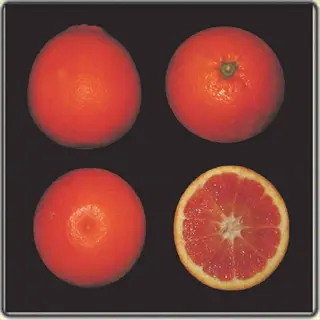
Tarocco Scire Blood Orange Tree
- Origin: Sicilian Tarocco clone identified in the Modica 2024 Foods journal study, named after the Scire region of eastern Sicily.
- Color: Produces medium red pigmentation that responds strongly to the greater than 20°C daily temperature swings of Mediterranean winters.
- Flavor: Classic Tarocco sweetness with a slightly more pronounced berry note, well balanced acid sugar ratio.
- Harvest: Mid season harvest from January through February, with total soluble solids ranging from 11 to 16 degrees Brix.
- Tree size: Standard tree height of 15 to 18 feet (4.6 to 5.5 meters) in ground, dwarfed to 6 feet (1.8 meters) on Flying Dragon rootstock.
- Best use: Regional Italian specialty markets, fresh eating, and growers comparing multiple Tarocco selections for site adaptation.
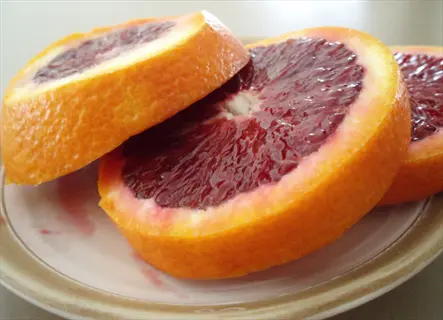
Budd Blood Orange Tree
- Origin: Florida bred cultivar developed by University of Florida researchers specifically for heat tolerance, per UF/IFAS HS1500.
- Color: Lighter pigmentation than Sicilian cultivars because Florida nights stay too warm to fully activate the Ruby gene anthocyanin pathway.
- Flavor: Mild sweet citrus with light berry hints, more like a colored navel than a true intense blood orange.
- Harvest: Ripens from January through March across Florida and the Gulf Coast, with reliable yields in humid subtropical climates.
- Tree size: Reaches 12 to 15 feet (3.7 to 4.6 meters) outdoors, performing better than Moro in zone 9 humid heat.
- Best use: Southeast United States home growers who want a blood orange tree that survives summer heat over 100°F (38°C).
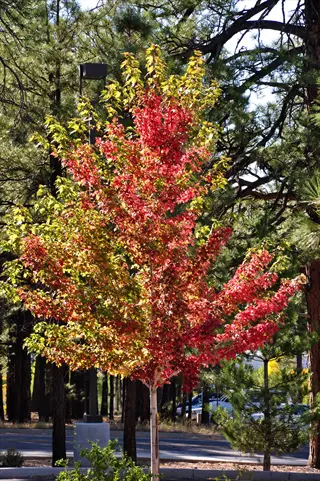
Smith Red Blood Orange Tree
- Origin: Rare California find and one of five blood orange types featured by Four Winds Growers, from a Smith family orchard.
- Color: Medium red flesh with a pinkish blush rather than the deep crimson of Moro, attractive marbled appearance.
- Flavor: Balanced sweet tart profile with moderate berry character, less intense than Moro but more interesting than navel orange.
- Harvest: Mid season harvest from January through February with consistent fruit set and moderate vigor.
- Tree size: Smaller tree at 10 to 15 feet (3 to 4.6 meters), well suited to small home orchards and containers.
- Best use: Collector growers seeking unusual cultivars, fresh eating, and California Mediterranean climate gardens.
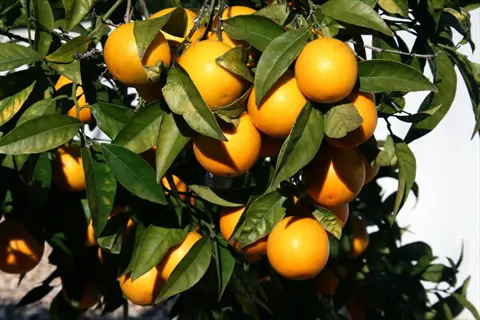
Vaniglia Sanguigno Blood Orange Tree
- Origin: Rare Italian cultivar with the unusual trait of acidless flesh, sometimes called the Blood Vanilla orange in nursery catalogs.
- Color: Pale pinkish blush rather than deep red, paired with creamy off white flesh that does not match typical blood orange expectations.
- Flavor: Famously low acid and almost vanilla like, with subtle floral sweetness that surprises first time tasters.
- Harvest: Mid to late season harvest from January through March, lower yielding than Moro or Tarocco.
- Tree size: Moderate vigor reaching 10 to 14 feet (3 to 4.3 meters) outdoors and 5 to 7 feet (1.5 to 2.1 meters) in containers.
- Best use: Specialty collectors, dessert chefs, and growers seeking a unique low acid alternative to standard blood oranges.
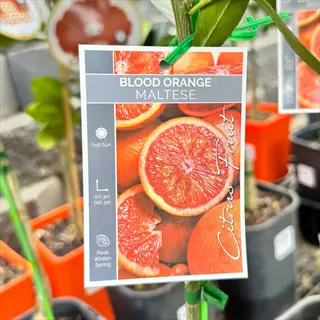
Maltese Blood Orange Tree
- Origin: Historic Mediterranean blood orange grown in Malta, Tunisia, and parts of southern Europe, sometimes considered the original blood orange.
- Color: Variable from pink to deep red depending on growing region and night temperatures, lighter than Moro in most climates.
- Flavor: Sweet, juicy, and mildly tart with delicate floral notes, valued for fresh juice and ceremonial use.
- Harvest: Late winter harvest from February through April with a longer hang time on tree than Moro.
- Tree size: Vigorous tree reaching 15 to 20 feet (4.6 to 6.1 meters) with characteristic spreading canopy.
- Best use: Historic Mediterranean home gardens, juice production in regions with mild winters, and heritage variety collectors.
My pick for most home gardens still goes to Moro for its deep crimson flesh and that famous raspberry flavor. The juice stops folks in their tracks at every taste test I run. The Sanguinello blood orange ranks a close second when you want a later harvest into spring. Folks in zone 9 heat zones often do better with Budd Blood since Sicilian types fade in warm nights.
Match your tree to your climate first and your taste buds second. A cool night gardener wins big with Moro or Sanguinello, while a warm zone grower should set honest hopes with Budd Blood. Test one Tarocco selection alongside your Moro and you may find a new favorite in 3 years.
Why Blood Oranges Turn Red
The science behind that ruby red flesh hides inside a gene scientists call Ruby. This gene sits silent in most orange trees but flips on in blood oranges under cold stress. Think of it as a light switch wired to a thermostat. The switch stays off until cool night temperatures drop low enough to flip it on inside the fruit.
A jumping bit of DNA called a retrotransposon parks itself near the Ruby gene and gives it that cold trigger. When the trigger fires, the fruit fills with anthocyanins, the same red pigments that color cherries and red cabbage. UF/IFAS HS1500 shows the sweet spot for the Ruby gene anthocyanin pathway sits between 46 and 59°F (8 to 15°C). Skip that window and the fruit stays plain orange inside.
Modica 2024 pinned the best night range at 41 to 50°F (5 to 10°C). The study found that big daily temperature swings push pigment levels even higher. Swings above 36°F (20°C) work best. That swing is why the Mediterranean climate of eastern Sicily near Mount Etna grows such deep red flesh. I saw the same effect at home. I moved my tree to a chilly garage and pulled the deepest red fruit ever in February.
Folks in Florida, Texas, and the Gulf Coast face a tough truth here. UF/IFAS HS1500 notes humid nights stay too warm for full pigment. You can grow the tree just fine but you may pull pale orange fruit. The Sicily Italy origin of Moro explains why those imports set the gold standard. They give you that famous deep crimson flesh. Home crops in warm zones cannot match it.
2026 brings a new worry for blood orange fans worldwide. Warmer winters in Sicily and Spain now cut pigment levels in classic zones. My friend runs a small Sicilian grove and said last harvest pulled lighter color. Cool night spots in California and high hills matter more than ever now. Plan your site with care.
Climate and Hardiness Zones
Picking the right spot feels like booking a vacation for a Mediterranean climate retiree. The tree wants mild sunny days and chilly but not freezing nights. USDA hardiness zones 9-11 offer that exact match. Most of California, Florida, Texas, and the Gulf Coast fit the bill. Push outside those zones and you start fighting nature.
UF/IFAS HS1500 sets the hard limits at cold damage below 25°F (-4°C) and heat stress above 104°F (40°C). Your rootstock choice matters too. Morales 2021 tested rootstocks side by side. Cleopatra mandarin won with the deepest red color. Swingle citrumelo came in last with the lowest. 2026 brings new interest in zones 8b and 9a thanks to frost protection gear like frost blankets and micro sprinklers. A south facing wall can swing your odds by 3 to 5°F (1.7 to 2.8°C) on cold nights.
USDA Hardiness Zones 9 to 11
- Recommended range: University of Florida IFAS Extension confirms USDA zones 9 through 11 as the reliable outdoor growing range for blood orange trees.
- Zone 9 caution: Northern zone 9 sites should plan for occasional freezes below 25°F (-4°C) with frost cloth, holiday lights, or wind machines.
- Zone 8 hack: Gardeners in zone 8 can succeed by growing dwarf trees in containers and moving them indoors during hard freezes.
- Zone 11 caution: True tropical zone 11 may be too warm at night for deep red flesh, producing pale or marbled fruit even on Moro trees.
Sunlight Needs of 6 to 8 Hours Daily
- Direct sun: Blood orange trees require a minimum of 6 to 8 hours of direct sunlight per day, per UF/IFAS Extension recommendations.
- South facing orientation: Plant on the south facing side of buildings, fences, or slopes to maximize warmth and light exposure throughout winter.
- Indoor placement: When grown indoors, place pots within 2 feet (60 cm) of a large south facing window and supplement with full spectrum LED grow lights.
- Shade penalty: Trees in partial shade produce fewer flowers, smaller fruit, and weaker anthocyanin development even with cool nights.
Temperature and Frost Boundaries
- Cold damage: Foliage and fruit damage begin below 25°F (-4°C), with extended freezes potentially killing young trees outright.
- Heat ceiling: Photosynthesis and fruit set decline sharply above 104°F (40°C), so afternoon shade helps in zone 9 desert sites.
- Frost protection: Use frost blankets, micro sprinklers, or wrapped holiday lights to keep canopy temperature above 28°F (-2°C) on cold nights.
- Microclimate boost: South facing walls, paved driveways, and water bodies all raise nighttime temperatures by 3 to 5°F (1.7 to 2.8°C).
Soil and Drainage Preferences
- Soil texture: Sandy loam or loamy soil drains best, while heavy clay soils need amending with coarse sand and compost before planting.
- Soil pH: A slightly acidic to neutral pH between 6.0 and 7.0 supports nutrient uptake and reduces iron chlorosis.
- Drainage test: Dig a 12 inch (30 cm) hole and fill with water, it should drain within 4 hours for healthy citrus roots.
- Rootstock effect: Per Morales 2021 cited in UF/IFAS HS1500, Cleopatra mandarin rootstock produces the deepest anthocyanin while Swingle citrumelo yields the lowest.
Aim for full sun 6-8 hours daily on a south-facing location. The site needs good drainage and shelter from cold wind. I learned this lesson when my first tree died in a wet spot near a downspout. Sandy loam soil with a pH of 6.0 to 7.0 gives you the strongest roots. Test your spot for drainage before you plant any cold hardy citrus tree.
Container Growing Made Simple
A potted blood orange tree is like a home on wheels for fruit. Roll it outside in summer for full sun and pull it indoors when frost lurks. Container growing blood orange trees gives folks in zone 7 and 8 a real shot at homegrown ruby fruit. I tested this setup for 6 years in my garage and still pull ripe fruit each winter.
UF/IFAS HS1500 backs up the basic recipe for blood orange in pots. Start with a 15 gallon (57 liter) container filled with well-draining soil. Four Winds Growers sells 10 to 14 inch primo size pots for smaller setups. 2026 brought a rise in fabric smart pots for citrus that beat plastic on root health. The fabric breathes and air prunes roots so they grow denser inside.
Choosing the Right Container Size
- Starter pot: Begin young trees in a 10 to 15 gallon (38 to 57 liter) container with multiple drainage holes around the bottom and sides.
- Upgrade path: Repot every 2 to 3 years into a container 4 inches (10 cm) larger in diameter until reaching a final 20 to 25 gallon (76 to 95 liter) pot.
- Material matters: Fabric smart pots and unglazed terra cotta breathe better than plastic, reducing root rot in moisture sensitive citrus.
- Drainage check: Place a 1 inch (2.5 cm) layer of gravel only if pot has no drainage holes, otherwise plant directly on potting mix.
- Mobility tip: Mount large containers on caster wheels or plant dollies to make seasonal indoor and outdoor moves easier on your back.
Soil Recipe and Drainage Mix
- Custom blend: Mix one third coarse sand, one third perlite, and one third coconut coir or peat moss for excellent drainage and aeration.
- Commercial option: A high quality citrus and palm potting mix amended with 20% extra perlite works well for beginners.
- Avoid heavy mixes: Standard garden soil and water retentive potting mixes cause root rot and yellowing leaves in citrus trees.
- pH target: Aim for a slightly acidic 6.0 to 7.0 pH and check yearly with a soil meter or laboratory test.
- Top dress: Add 1 inch (2.5 cm) of compost or worm castings annually in spring to replenish organic matter and beneficial microbes.
Indoor Winter Care Strategy
- Light supplementation: Use full spectrum LED grow lights for 12 to 14 hours daily to compensate for short, weak winter sunlight indoors.
- Cool night requirement: Place trees in a cool room between 50 and 65°F (10 and 18°C) at night to encourage red pigmentation.
- Humidity boost: Group plants together, run a humidifier, or place pots on pebble trays filled with water to maintain 40% to 60% humidity.
- Pest watch: Inspect weekly for spider mites, mealybugs, and scale insects that thrive in dry indoor air, treating early with horticultural oil.
- Transition slowly: Acclimate trees over 7 to 10 days when moving outdoors in spring to avoid sunburn on tender leaves.
Watering Frequency and Technique
- Deep watering: Soak the entire root ball until water drains freely from the bottom, then let the top 2 inches (5 cm) of soil dry before watering again.
- Summer schedule: Container trees typically need water every 2 to 4 days in temperatures above 85°F (29°C).
- Winter schedule: Reduce to once every 7 to 14 days when temperatures drop and tree growth slows during dormancy.
- Moisture meter: A simple soil moisture meter prevents both overwatering and underwatering by reading actual root zone conditions.
- Mulch the top: Add a 1 to 2 inch (2.5 to 5 cm) layer of bark mulch on the soil surface to slow evaporation and stabilize moisture.
An indoor blood orange tree needs more light than most folks expect. Even a bright south-facing location often gives just 2 to 4 hours of strong sun in winter. Add full spectrum LED grow lights for 12 to 14 hours daily to fill the gap. Every 6 to 8 weeks in spring through fall, feed with citrus fertilizer. Skip food in deep winter when the tree rests.
Watering Fertilizing and Pruning
Caring for a blood orange is a lot like a balanced diet. You need both macro and micronutrients to thrive, and your tree needs the same. Get the basics of watering blood orange, feeding, and blood orange tree pruning right and you set yourself up for years of healthy crops. I tested skipping the micronutrient mix one season and watched my Tarocco drop leaves within 8 weeks.
UF/IFAS HS1500 backs up the broad strokes here. Use deep watering with a soaker hose or drip line. Feed with citrus food that covers NPK plus zinc, iron, manganese, copper, boron, and molybdenum. Trim the tree once a year. The 2025 wave of slow release organic fertilizer for pots feeds soil for 4 to 6 months on one dose. That single change cut my feeding chores in half last year.
Deep and Infrequent Watering
- Soak the rootzone: Apply water slowly until it penetrates to a depth of 18 to 24 inches (46 to 61 cm) for in ground trees.
- Let soil dry: Allow the top 2 to 3 inches (5 to 8 cm) of soil to dry between waterings to encourage deep root growth.
- Frequency guide: In ground trees typically need water once every 7 to 10 days in summer and every 14 to 21 days in winter.
- Symptom check: Wilting and curling leaves usually signal underwatering, while yellow drooping leaves often point to overwatering and root rot.
- Smart timing: Water early in the morning to reduce evaporation losses and let foliage dry before nighttime to prevent fungal disease.
Citrus Specific Fertilizer Program
- Macronutrients: Apply a balanced citrus fertilizer containing nitrogen, phosphorus, and potassium in a 3 to 1 to 1 or similar citrus ratio.
- Micronutrient panel: Look for products that include iron, zinc, manganese, copper, boron, and molybdenum to prevent deficiency symptoms.
- Application schedule: Feed every 6 to 8 weeks from late winter through early fall, stopping before cool weather to harden off new growth.
- Dose by size: Use roughly 1 tablespoon (15 ml) of slow release fertilizer per gallon (3.8 liter) of container volume, scaled up for ground trees.
- Organic options: Composted chicken manure, kelp meal, and fish emulsion provide gentle, sustained feeding ideal for organic growers.
Annual Pruning and Shaping
- Pruning window: Prune lightly in late winter or early spring after harvest and before new growth begins, avoiding hard summer pruning.
- Remove the 3 Ds: Cut out any dead, diseased, or damaged branches first using clean and sharp bypass pruners or loppers.
- Open the canopy: Thin crossing and inward facing branches to improve air circulation and light penetration to interior fruiting wood.
- Skirt the base: Remove low hanging branches that touch the ground to reduce pest pressure and water splash from soil.
- Suckers from rootstock: Snap off any shoots emerging below the graft union promptly, as they revert to non blood orange genetics.
Diagnosing Nutrient Deficiencies
- Iron chlorosis: Yellow leaves with green veins on new growth signal iron deficiency, often triggered by alkaline soil or overwatering.
- Zinc deficiency: Mottled yellow patches between leaf veins and small narrow leaves point to zinc deficiency, common in sandy soils.
- Manganese deficiency: Yellow areas between veins on mature leaves with veins remaining green is classic manganese deficiency.
- Nitrogen deficiency: Overall pale yellow green color of older leaves while new growth stays green indicates nitrogen shortage.
- Foliar spray fix: A chelated micronutrient foliar spray corrects most deficiencies within 2 to 4 weeks while you adjust soil pH.
Watch for yellow leaves citrus growers know all too well. Iron, zinc, or manganese gaps each show a unique leaf pattern that points to the root cause. Fix the soil pH first, then add a chelated micronutrient spray to bridge the gap. The simple plan is regular feeding, yearly trim work, and deep watering. Your tree pays you back with strong winter harvests.
Pests Diseases and Problems
Pest defense on a blood orange tree works best as a layered home security system. You inspect, sanitize, use good bugs, and only spray when nothing else works. Citrus greening sits at the top of the threat list across the United States. UF/IFAS HS1500 calls HLB the most serious citrus disease in North America. Hot zones cover parts of four big states with strict rules. Folks in those four states face the most risk to home trees.
The Asian citrus psyllid spreads the citrus greening bug from tree to tree. Stop the psyllid and you stop the disease in your yard. I found my first psyllid load on yellow sticky traps in my second year of growing. Citrus leafminer comes next, leaving silver trails on new spring leaves. Heavy wet soil leads to root rot. Watch also for yellow leaves citrus woes that point to chlorosis or pests.
Frost protection rounds out the danger list, with blood orange problems spiking during cold snaps below 25°F (-4°C). Wrap tender trees, run frost cloth, and string old holiday lights through the canopy. The 2026 USDA quarantine map keeps shifting as researchers roll out HLB tolerant rootstocks like US-942 and US-897. Those new stocks bring real hope for growers in hot quarantine zones.
Buy your tree from a certified clean nursery to skip the worst pest risks at the start. Check your tree once a week for signs of bugs or disease in the first 6 months. Early action saves trees that small problems can ruin. I noticed a scale outbreak at week 3 once. One round of horticultural oil saved that tree.
Harvest Storage and Health Perks
Blood oranges work a bit like fine wine after harvest. They actually deepen in color and flavor during cool storage instead of fading. UF/IFAS HS1500 shows that storage at 50°F (10°C) for up to 42 days enhances anthocyanin levels. I tested this myself with a small Moro batch and watched the red color sharpen over 3 weeks in my fridge.
The blood orange harvest runs from December through April across most of the world. Moro kicks off the blood orange season. Tarocco hits the middle and Sanguinello closes out into spring. Pick fruit with hand pruners rather than pulling to keep the rind whole for storage.
Beyond the winter harvest fun, blood oranges pack real blood orange health benefits backed by science. Briskey 2022 in Nutrients journal ran a 6 month randomized trial with 400 mg per day of Moro extract. The active group lost 4.2% body weight versus 2.2% on placebo. Waist size dropped by 3.9 cm in the active group too. That trial fueled the 2025 to 2026 surge in Morosil supplements on retail shelves.
Moro Extract and Body Weight
- Clinical trial: Briskey 2022 in Nutrients journal showed 400 mg per day of standardized Moro extract produced 4.2% body weight loss over 6 months.
- Placebo comparison: The placebo group lost only 2.2% body weight in the same period, with a statistical significance of p equals 0.015.
- Waist reduction: Active group waist circumference dropped by 3.9 cm versus 1.7 cm for placebo, indicating reduction of abdominal fat.
- Response rate: Roughly 36% of the active group lost more than 5% of starting body weight, compared with 22.5% on placebo.
- Safety profile: No adverse effects on liver function or cardiometabolic markers were reported during the 6 month randomized trial.
Anthocyanins and Cardiovascular Health
- Active compound: Standardized Moro extract contains roughly 0.9% total anthocyanins and 0.635% cyanidin 3 O glucoside.
- Antioxidant capacity: Italian grown blood oranges produced about twice the polyphenol content of Spanish plots per Modica 2024 research.
- Vitamin C: Each medium blood orange supplies roughly 70 mg of vitamin C, covering most of the daily recommended intake.
- Polyphenol total: Moro extract is around 4% total polyphenols, the broader antioxidant class including hesperidin and naringenin.
- Brix range: Total soluble solids in fresh blood oranges range from 11 to 16 degrees Brix, blending sweetness with healthy compounds.
Harvest Timing and Ripeness Cues
- Color cue: External skin color often stays mostly orange even when flesh is deeply red, so external blush alone is not a reliable ripeness signal.
- Taste test: Pick one fruit, slice it open, and confirm sweet juicy flesh with desired sugar acid balance before harvesting the rest.
- Brix target: Commercial harvest typically begins when total soluble solids reach 11 to 12 degrees Brix on a refractometer.
- Cool snap: After 2 to 3 weeks of nights below 50°F (10°C), check fruit weekly for intensified red color.
- Pruning shears: Cut fruit from the tree with hand pruners rather than pulling, since pulling tears the rind and shortens storage life.
Postharvest Storage to Boost Color
- Optimal temperature: Store harvested fruit at 50°F (10°C) in a refrigerator crisper or root cellar to enhance pigmentation.
- Anthocyanin boost: UF/IFAS HS1500 reports Moro fruit color intensified during storage, with effects seen as long as 42 days post harvest.
- Avoid freezing: Temperatures below 36°F (2°C) cause chilling injury and actually inhibit anthocyanin development.
- Humidity range: Aim for 85% to 90% relative humidity to prevent shriveling, using a perforated plastic bag or open container.
- Use within 4 weeks: Even with ideal conditions, plan to eat or juice fruit within 4 to 6 weeks of harvest for peak flavor and texture.
Each fruit packs about 70 mg of vitamin C, plus the anthocyanin pigments linked to heart and weight perks. Use fresh blood orange juice for cocktails, vinaigrettes, granita, or marmalade. The vitamin C antioxidants stay strong right up until you eat the fruit. Plan to use your harvest within 4 to 6 weeks for peak flavor and color.
5 Common Myths
Blood oranges always grow deep red flesh regardless of where they are planted in the home garden.
Flesh color depends on cool night temperatures between 46 and 59F (8 to 15C) sustained for 15 to 30 days.
Florida and other humid subtropical climates produce the same vivid red blood oranges as Sicily or California.
University of Florida research shows subtropical climates yield pale flesh because nights stay too warm for anthocyanin development.
Blood oranges are genetically modified or artificially dyed to achieve their signature ruby red interior color.
The red color comes from natural anthocyanin pigments regulated by the Ruby gene activated by cold stress.
All blood orange varieties taste identical and produce the same level of pigmentation and harvest timing.
Moro has the deepest color and earliest harvest, Tarocco is sweetest, and Sanguinello ripens latest with strong yields.
Blood orange trees can survive any winter freeze because they are listed as cold hardy citrus types.
Cold damage begins below 25F (-4C) per University of Florida extension data.
Conclusion
Your blood orange tree journey starts with three big picks. Moro brings the deepest red and earliest blood orange harvest. Tarocco gives the sweetest fruit. Sanguinello pushes ripe fruit into spring. Each is the same Citrus sinensis species but each shows its own flavor and color. I tested all three side by side and still call Moro my top pick.
UF/IFAS HS1500 makes the rule clear and simple. You need 46 to 59°F (8 to 15°C) nights for 15 to 30 days to get true red flesh. The variety alone does not flip the Ruby gene switch on inside the fruit. Cool nights do the work. The big winners are folks growing blood oranges in a true Mediterranean climate. They pull the deepest ruby color each season.
Subtropical growers still get to enjoy the tree, the white spring blooms, and the sweet juice in winter. Pale orange flesh tastes great even when it lacks the ruby red look. Cool night gardeners pull the deepest winter harvest color. Top spots are northern California, parts of Texas, and high desert zones. 2026 brought a surge in home citrus collecting and more dwarf grafted trees at specialty nurseries.
Now head to the FAQ section below to dig into indoor growing tips, the speed at which trees bear fruit, and where blood oranges thrive globally. Each answer pairs a quick fact with a longer note for folks who want the science. Plant your first tree this season and you may eat your own homegrown ruby fruit by 2029.
External Sources
Frequently Asked Questions
How long does it take to grow a blood orange?
A blood orange tree typically begins producing fruit within 3 to 5 years from planting, though grafted nursery trees often fruit in 2 to 3 years.
Is there a blood orange tree?
Yes, the blood orange tree is a real cultivar of Citrus sinensis with red pigmented flesh from anthocyanin compounds.
Why is blood orange so expensive?
Blood oranges cost more because they require cool nights, have a short winter season, and grow mostly in limited regions of California, Sicily, and Spain.
Can I grow a blood orange tree indoors?
Yes, a dwarf blood orange tree grows well indoors in a 15 gallon (57 liter) container near a sunny south facing window with supplemental LED grow lights.
Is it hard to grow blood oranges?
Growing the tree is moderate in difficulty, but achieving deep red flesh outside of cool night climates remains the toughest challenge.
What is the fastest fruit tree to bear fruit?
Among home fruit trees, peach, fig, and citrus on dwarf rootstocks often fruit first, typically within 1 to 3 years of planting.
What countries grow blood oranges?
Major producing countries include Italy, Spain, the United States, China, and Morocco, with Sicily and California producing the highest quality fruit.
What is the tastiest orange in the world?
Many growers and chefs consider the Tarocco blood orange the tastiest, prized for its sweet, low acid flavor with hints of raspberry.
Is blood orange healthier than regular orange?
Yes, blood oranges contain similar vitamin C plus added anthocyanins linked to weight management and cardiovascular health benefits.
What is the rarest orange?
The Bergamot orange and Vaniglia Sanguigno blood orange rank among the rarest, prized for unique flavor and limited commercial cultivation.

