

Introduction
The boysenberry plant almost died out in the late 1920s. Walter Knott found a few sick canes on Rudolph Boysen's old farm. He took them home and nursed them back to life. By 1932, those vines became the star crop at Knott's Berry Farm. A lost hybrid berry was reborn.
I have grown this trailing perennial in my own yard for over ten years. The plant pays you back like few others. One cup of frozen boysenberries has just 66 calories. You get 7 grams of fiber in each cup. You also get 31% of your daily manganese, per USDA data.
New science is fueling fresh interest in this old fruit. A 2016 study by Shaw and his team in New Zealand found a link. Boysenberries cut lung swelling in mice. The science behind Rubus ursinus x R. idaeus is catching up to its taste.
Think of a boysenberry plant like a long pearl necklace draped over wire. Each cane can stretch 8 feet or more across a strong trellis. New Zealand now grows about 2,700 tonnes per year from just 19 farms. This guide will show you how to grow this bramble fruit in your own full sun gardening spot.
How to Grow Boysenberry Plants
Learning how to grow boysenberries is a lot like baking a cake. You need the right steps in the right order. I made every rookie mistake my first year and lost two plants to root rot. The good news is that this vining perennial is forgiving once you set it up right.
Growing boysenberry plants starts with one big idea. The canes live for two years. Year one canes are called primocanes and grow long and green. Year two canes are called floricanes and bear all the fruit. Then they die back.
Each plant lives 15 to 20 years in your yard. A mature plant can give you several pounds of fruit each season. Think of it as a long term gift, not a quick crop. Bare root planting in the December to February window works best in mild climates.
Site Selection and Sun Exposure
- Sun requirements: Boysenberries need at least 6 to 8 hours of direct sunlight daily for maximum fruit production and sugar development in the drupelets.
- Wind protection: Choose a location sheltered from strong wind because long trailing canes can snap or whip off the trellis during storms causing fruit loss.
- Space planning: Allow 8 to 10 feet between rows and 2 to 2.5 feet between plants within a row to give the trailing canes room to spread.
- Drainage check: Avoid low spots where water pools because boysenberries are extremely susceptible to root rot in saturated soil during winter dormancy periods.
- Future access: Pick a spot with access from both sides of the trellis for easier pruning, harvesting, and training of new primocanes each season.
Soil Preparation and Amendments
- Target pH: Aim for a soil pH between 5.6 and 6.5 based on botanical references, or up to 7.5 per UC ANR Chico for adapted local soils.
- Texture goal: Boysenberries prefer loamy to sandy loam soil that drains quickly while retaining enough moisture to feed the surface root system through summer.
- Organic matter: Mix 3 to 4 inches of finished compost into the planting hole to boost fertility, structure, and microbial activity around new roots.
- Pre plant fertilizer: Add bone meal at planting for slow phosphorus release that supports strong root establishment during the critical first year of growth.
- Mulch finish: Top dress with 2 to 3 inches of straw or wood chip mulch to suppress weeds, conserve moisture, and moderate soil temperature year round.
Planting Bare Root Boysenberries
- Timing window: Plant dormant bare root canes between December and February in mild climates, or just after the last spring frost in colder USDA zones.
- Hole sizing: Dig a hole twice as wide as the root spread and just deep enough so the crown sits level with the surrounding soil line.
- Root soaking: Soak bare roots in water for 1 to 2 hours before planting to rehydrate tissues and prepare the plant for transplant shock recovery.
- Crown depth: Set the crown right at soil level because planting too deep causes crown rot while planting too high exposes roots to drying winds.
- Initial pruning: Cut bare root canes back to 6 to 8 inches above the ground after planting to push energy into root growth rather than top growth.
First Year Establishment Care
- Watering schedule: Provide 1 to 2 inches of water per week through drip irrigation, increasing during hot summer weeks when soil dries faster than normal.
- Weed control: Hand pull weeds within the planting strip because surface boysenberry roots are easily damaged by hoes, cultivators, or aggressive mechanical weeding tools.
- Trellis install: Set up the three wire trellis before canes need training, ideally during planting week so you avoid disturbing established root systems later.
- Cane training: Gently tie the longest primocanes to the lowest trellis wire as they grow to keep them off the ground and prevent disease.
- Fruit expectations: Do not expect a real harvest in year one because boysenberries fruit on second year floricanes, so focus on building strong primocanes.
I learned the hard way that the trellis must go in early. My first plant grew so fast I had to scramble. Set up your wire support during planting week. This saves your back later. You should also know that USDA zones 5-9 are the sweet spot for this fruit.
Plan a 3 to 4 foot wide planting strip per the UC ANR guide. Skip the harvest dreams in year one. Focus on strong canes instead. Year two will pay you back with real fruit. By year three you will have a full crop.
Origins and Plant Botany
Think of a boysenberry as a family reunion on one plate. Four berry kin crowd around the same fruit. You can taste each parent if you slow down. I tested this with my kids in a blind taste test. The story starts with Rudolph Boysen. He crossed four berries on his farm. Then his health failed.
USDA botanist George Darrow heard rumors of a lost berry in the late 1920s. He went on a hunt with farmer John Lubben to find the plant. They tracked the sick vines to Boysen's old land. There they found just a few canes left. Walter Knott got the rescue call.
Knott took the vines home and brought them back to life. In 1932 he sold the first crop at his roadside stand. People asked what the fruit was called. He named it after Rudolph Boysen. That stand grew into Knott's Berry Farm and a whole theme park. You can still buy the pie there today.
Your plant's Latin name is Rubus ursinus x R. idaeus. The plant is a trailing bramble with a biennial cane life cycle. Each fruit is an aggregate fruit built from many small drupelets. You get a hybrid berry with deep maroon color.
California once led the world in this crop. The state hit a peak of 2,400 acres in the 1950s. Then growers gave up due to weak prices and tough field work. Today the Nelson region of New Zealand grows over half the world's crop. When you plant one in your yard, you join that long story.
Soil, Site, and Climate
Picking a site for your boysenberry plant is much like a real estate check. You walk the land. You test the soil. You watch the sun. I learned this when I planted my first row in a low spot that flooded each winter. Two plants drowned within a year.
The soil pH for boysenberry should sit between 5.6 and 6.5 in most cases. UC ANR Chico notes that local soils up to 7.5 can work too. You want sandy loam with quick drainage. Well draining soil is the one rule you must not break.
USDA zones 5-9 are the best fit for this fruit. Cold gardeners in zone 4 can still grow it with frost cloth protection and deep mulch. You can also plant near a south facing wall to gain heat. The climate for boysenberry is much like coastal California.
Skip overhead sprinklers near your plants. UC ANR warns that water on fruit or leaves triggers fungal disease. Full sun means 6 to 8 hours of direct light per day. Less sun cuts your yield in half. Block strong wind with a fence or hedge.
Trellis Training and Pruning
Boysenberry pruning and trellis work is like braiding hair. You split new growth from old growth. Each strand gets its own lane on the wire. I made a mess of this my first year. The canes tangled into one big knot. It took me two hours to sort them.
The three wire trellis layout comes from UC Cooperative Extension. Set the lowest wire at 1.5 ft (46 cm) above the soil. Run the middle wire at 2.5 ft (76 cm). Place the top wire at 4.5 ft (137 cm). You can add a 4th wire at 6 ft (183 cm) for strong vines.
Keep 9 to 12 primocanes per plant during dormant pruning. Cut them back to 6 to 8 ft long. Trim side branch pruning to 12 inches. Floricane removal is the next big step. You cut all spent fruited canes to the ground after harvest.
Setting Up the Three Wire Trellis
- Post placement: Drive 8 ft (2.4 m) wooden or metal posts 2 ft (61 cm) into the ground, spaced 15 to 20 ft (4.5 to 6 m) apart along the planting row.
- Wire heights: Run the lowest galvanized wire at 1.5 ft (46 cm) above ground, the middle wire at 2.5 ft (76 cm), and the top wire at 4.5 ft (137 cm).
- Wire gauge: Use 12 gauge galvanized wire that can hold the weight of mature canes loaded with fruit without sagging or stretching across the span.
- End post bracing: Brace end posts with diagonal supports because tension on three taut wires plus heavy cane weight will pull unsupported end posts inward over time.
- Optional 4th wire: Add a fourth wire at 6 ft (183 cm) when vines show strong vigor, providing more training space and improving sunlight penetration into the canopy.
Training Primocanes Through the Season
- Separate by year: Train new green primocanes on one side of the trellis and second year fruiting floricanes on the opposite side for clear identification.
- Tie gently: Use soft garden twine or stretchy plant ties because rigid wire ties can girdle and damage the green flexible canes as they thicken with growth.
- Weaving pattern: Weave primocanes horizontally along the top wire as they reach length, encouraging lateral bud breaks that will produce side branches for next year.
- Tip pinching: Pinch primocane tips at 6 to 8 ft (1.8 to 2.4 m) to force lateral branching, which dramatically increases the number of fruiting sites next season.
- Frequent checks: Walk the row weekly during peak summer growth because canes can extend several feet per week and become tangled without regular training attention.
Dormant Winter Pruning
- Remove old canes: Cut all two year old canes that have fruited completely back to the ground because they will die naturally and only harbor pests if left.
- Retain primocane count: Keep 9 to 12 of the strongest healthiest new primocanes per plant, removing weak thin or damaged canes during the dormant pruning window.
- Length cutback: Shorten retained primocanes to 6 to 8 ft (1.8 to 2.4 m) long to encourage stronger lateral fruiting branches and easier handling on the trellis.
- Side branch trim: Cut lateral side branches back to 12 inches (30 cm) which concentrates the plant's energy on fewer, larger, sweeter berries the following season.
- Tool hygiene: Sterilize pruning shears with 70% isopropyl alcohol between plants to avoid spreading cane gall, anthracnose, or other systemic plant diseases.
Mid Season Maintenance Pruning
- Sucker removal: Pull or cut suckers emerging from rhizomes outside the planting strip to control spread and keep the patch contained within its dedicated row.
- Damaged cane removal: Remove any wind broken, disease spotted, or pest damaged canes immediately rather than waiting for dormant pruning to prevent issue spread.
- Airflow opening: Thin overly crowded interior canes to improve airflow through the canopy, which dramatically reduces fungal disease pressure during humid summer weeks.
- Fruiting lateral support: Tie heavily loaded fruiting laterals to the trellis wires so they do not sag, break, or drag ripening fruit onto wet soil.
- Post harvest cleanup: Right after harvest finishes, mark spent floricanes for removal so you can identify and prune them quickly during winter dormancy work.
Primocane training takes ten minutes a week in peak summer. You walk the row. You weave new canes along the top wire. You tie loose ones with soft twine. This small task saves hours of fixing tangled growth later. Your fruit count next year will thank you.
Watering, Feeding, Maintenance
Feeding a boysenberry plant is like fueling a long runner. You want steady slow release fuel all season. One big sugar rush will not work. I dumped too much nitrogen on my plants in year two and got tall green canes with few berries. The plant grew leaves not fruit.
Boysenberry maintenance stands on three legs. The first leg is water from a drip irrigation line or soaker hose. The second leg is a balanced fertilizer spread at the right time. The third leg is mulch that locks in moisture and blocks weeds.
UC ANR warns that overhead water on fruit or leaves brings fungal disease. Use bone meal for slow phosphorus and fish meal for slow nitrogen. Companion planting with blueberries, peas, or tansy helps your patch thrive. Keep peppers, potatoes, and tomatoes away from the row.
Drip Irrigation Setup
- Why drip wins: Drip lines deliver water at the soil line where roots actually drink, while keeping leaves and fruit dry to reduce fungal disease pressure significantly.
- Tubing layout: Run 1/2 inch drip tubing along each row with 1 GPH emitters spaced every 12 inches (30 cm) directly over the planting strip.
- Watering depth: Apply 1 to 2 inches (2.5 to 5 cm) of water per week, increasing to 2 to 3 inches during hot dry summer weather above 85°F (29°C).
- Soil moisture check: Push a finger 2 to 3 inches into the soil before watering and water only when the top inch feels dry to avoid overwatering.
- Mulch over lines: Cover drip lines with straw or wood chip mulch to slow evaporation, protect tubing from UV degradation, and keep emitters from clogging quickly.
Fertilizing Through the Year
- Early spring boost: Apply a balanced 10-10-10 or 20-20-20 NPK fertilizer at bud break, roughly 1 cup (240 ml) per mature plant scattered around the drip line.
- Organic alternatives: Use UC ANR recommended bone meal for phosphorus and fish meal for slow nitrogen, applied as a 1 inch (2.5 cm) top dressing.
- Post fruit feeding: Side dress with compost after harvest ends to fuel late season primocane growth that becomes next year's fruiting wood the following spring.
- Avoid late nitrogen: Stop nitrogen feeding by late summer because soft late growth will not harden off before winter and is prone to cold damage.
- Soil testing: Conduct a soil test every 2 to 3 years to fine tune fertilizer choices and avoid building up excess phosphorus or salts in the planting strip.
Mulching and Weed Control
- Mulch depth: Maintain 2 to 3 inches (5 to 7.5 cm) of straw, wood chip, or pine needle mulch year round to suppress weeds and conserve soil moisture.
- Mulch refresh: Top up mulch each spring after the plants leaf out because old mulch breaks down and thins by 50% over a single growing season.
- Weed prevention: A thick mulch layer prevents most annual weeds from germinating, drastically reducing the need for hand weeding around surface feeder roots.
- Hand weeding only: Pull any escaped weeds by hand rather than hoeing because boysenberry roots run within the top 6 inches (15 cm) of soil.
- Crown clearance: Keep mulch pulled back 2 to 3 inches (5 to 7.5 cm) from the crown itself to prevent crown rot from constant moisture contact.
Companion Planting and Spacing Friends
- Beneficial companions: Plant blueberries nearby because they share acidic soil preferences, or interplant with tansy and peas to attract beneficial insects and fix nitrogen.
- Pollinator attractors: Add yarrow, borage, or alyssum near the boysenberry row to draw bees and hoverflies that improve fruit set during peak bloom weeks.
- Plants to avoid: Keep peppers, potatoes, and tomatoes away from boysenberries because they share verticillium wilt pathogens that can spread between plant families.
- Crop rotation: Do not plant new boysenberries where solanaceous crops grew within the last 3 years to avoid lingering verticillium wilt fungal spores in soil.
- Pathway access: Leave at least 4 ft (1.2 m) of pathway between rows so you can access both sides of the trellis without trampling companion plantings.
Plan for a 10-10-10 or 20-20-20 NPK feed at bud break each spring. Cut off nitrogen by late summer. Soft late growth will not survive a hard winter. You want canes that harden off before the first frost. This one tip saves you from heavy cane loss.
Boysenberry Cultivars to Grow
Picking from the boysenberry cultivars is like picking a wine grape. Each one has a regional accent and a flavor signature. I grew three types side by side in my yard last year. The taste gaps were small but real. NZ boysenberry varieties like Brulee, Mapua, and Tasman were bred for the freezer market.
Most home growers stick with the classic or the thornless boysenberry. Both share the same sweet tart flavor. The thornless type makes picking and pruning a joy with no scratches. Seeds rarely grow true to the parent plant. You will need nursery starts or rooted tip cuttings.
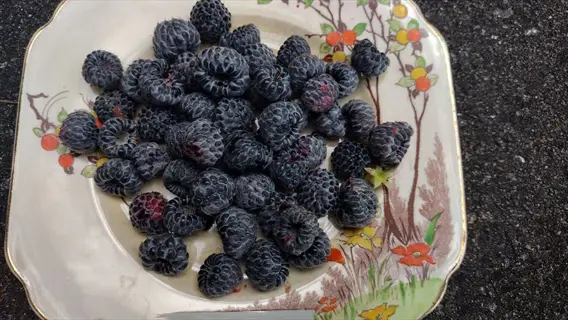
Original Boysenberry
- Heritage: This is the cultivar Walter Knott commercially propagated in 1932 at Knott's Berry Farm and remains the standard reference for flavor comparisons.
- Flavor profile: Sweet tart taste with a strong raspberry blackberry blend, deep maroon color, and a soft melting texture when fully ripe on the cane.
- Growth habit: Vigorous trailing canes that can reach 8 to 10 ft (2.4 to 3 m), requiring full three wire trellis support throughout the growing season.
- Yield potential: Mature plants produce 4 to 8 lbs (1.8 to 3.6 kg) of fruit per plant in a good year with proper pruning and consistent watering.
- Climate fit: Performs best in USDA zones 5 to 9 with mild Mediterranean style climates similar to coastal California and northern New Zealand growing regions.
- Cane characteristics: Original cultivar has thorns, so wear thick gloves and long sleeves during pruning and harvest to protect arms from scratches.
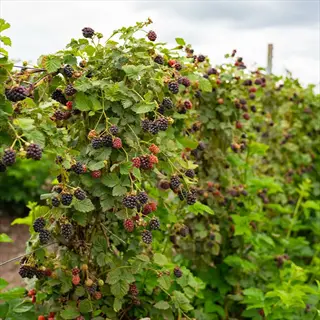
Thornless Boysenberry
- Convenience factor: Bred specifically for home gardeners who want the classic boysenberry flavor without the painful thorns of the original 1932 selection.
- Flavor consistency: Tastes nearly identical to the original with the same sweet tart raspberry blackberry blend that made boysenberries famous at Knott's Berry Farm.
- Easier handling: Allows quick weekly training without gloves and faster harvest sessions because hands can move freely through the canopy without snags.
- Slightly lower yield: Some growers report slightly smaller harvests than thorny types, but most home gardeners find the convenience tradeoff well worth a few pounds.
- Same growing needs: Requires the same full sun, well draining soil, three wire trellis, and biennial pruning regimen as the standard thorny boysenberry.
- Best for families: Ideal choice for backyards where children pick berries, since there are no thorns to scratch small hands during summer harvest sessions.
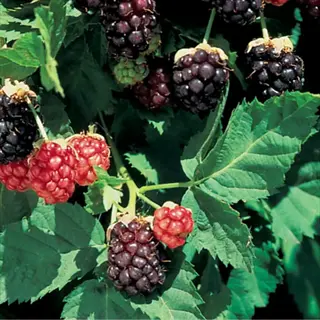
Brulee
- New Zealand origin: Bred in New Zealand for the commercial export market, this cultivar is now grown across Nelson region farms that supply over half the world.
- Fruit quality: Large firm berries with excellent freezing performance, which is why this cultivar dominates the 1,500 tonnes of NZ frozen export annually.
- Disease resistance: Better resistance to cane rust and orange rust compared to the original boysenberry, reducing the need for fungicide sprays in humid climates.
- Harvest window: Slightly later ripening than the original, extending the overall boysenberry harvest season when planted alongside earlier maturing cultivars.
- Plant vigor: Highly vigorous trailing growth that benefits from the optional fourth trellis wire at 6 ft (183 cm) recommended by UC Cooperative Extension.
- Availability: Increasingly available from specialty nurseries in North America, though still less common than the original thornless or thorny boysenberry types.

Mapua
- Bred for processing: Specifically developed in New Zealand for the juice concentrate and frozen processing market that supplies 480 tonnes of processed boysenberry product annually.
- Sweetness profile: Higher sugar content than the original boysenberry, which produces a sweeter juice concentrate prized for ice cream, jam, and smoothie applications.
- Polyphenol rich: Like other boysenberries, Mapua contains cyanidin glycosides, ellagitannins, and chlorogenic acid associated with reduced lung inflammation in peer reviewed studies.
- Yield potential: Reliable heavy cropper in commercial settings, producing consistent harvests year after year when grown under standard three wire trellis training methods.
- Best uses: Excellent for home gardeners who want to make boysenberry juice, syrup, or jam from a single dedicated cultivar for consistent flavor results.
- Climate preference: Performs especially well in the cool wet winter and warm dry summer pattern found in Nelson NZ, coastal California, and Pacific Northwest gardens.
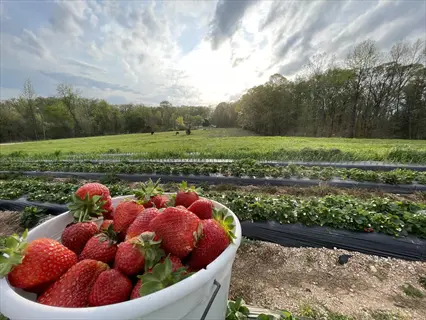
Tasman
- New Zealand selection: Named for the Tasman region of New Zealand, this cultivar is part of the modern breeding program that revived commercial boysenberry growing globally.
- Firm fresh market berry: Selected for slightly firmer fruit texture, making it one of the better choices for fresh market sales or local farmers market stalls.
- Shelf life: Holds up better than the original boysenberry during transport and refrigeration, addressing one of the historical limitations that made boysenberries hard to find fresh.
- Flavor balance: Sweet tart balance similar to the original, with the deep maroon color and aromatic complexity that defines a premium boysenberry eating experience.
- Disease tolerance: Improved tolerance to common boysenberry pathogens like anthracnose and cane rust compared to older cultivars, reducing chemical input requirements.
- Harvest timing: Mid season ripening that pairs well with early Brulee and late Mapua plantings to extend the home garden harvest from June through August.
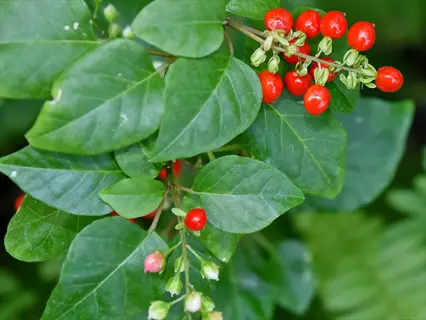
Newberry and Other Specialty Selections
- Newberry origin: A 2007 release also called Ruby Boysen, selected for slightly different fruit characteristics while maintaining the core boysenberry flavor heritage and growth pattern.
- Silvanberry relative: Often grouped with boysenberries due to similar parentage and growth habit, Silvanberry offers a slightly more tart flavor profile for jam and pie applications.
- Nectar variety: Less commonly available but prized by enthusiasts for its especially sweet flavor and high sugar content, making it ideal for fresh eating in the garden.
- Sourcing challenge: These specialty cultivars are harder to find than the original boysenberry, requiring searches at specialty bramble nurseries and heritage fruit catalogs.
- Garden trial value: Worth planting one cane of a specialty cultivar alongside your main boysenberry rows to compare flavor and decide which performs best locally.
- Propagation note: All these cultivars must be propagated from rooted tip layers or nursery starts because seed grown plants do not come true to parent variety.
Newberry and Silvanberry are worth a try if you can find them. Nectar is sweeter than the rest and great for fresh eating. Try one cane of a specialty type next to your main row. You will learn fast which one fits your soil and your taste buds best.
Pests, Diseases, and Problems
A pest problem is much like a clogged drain. Easy to fix when you spot it on day one. Much harder once it backs up the whole system. I missed the first signs of aphids on my plants one June and lost three weeks of fruit. The lesson stuck with me.
Boysenberry pests include sap suckers like aphids and raspberry fruitworm. Cane borers tunnel into stems. Birds peck ripe fruit off the cane. Spider mites stipple leaves in dry summer weather. Each pest gives a clear sign if you watch the plant each week.
Boysenberry diseases hit harder than pests in most yards. Verticillium wilt spreads from old tomato or pepper beds. Anthracnose spots canes in shades of purple gray. Cane rust makes orange pustules pop out on bark. Neem oil and beneficial nematodes are two tools that work without harsh chemicals.
Smart use of row covers, bug releases, and targeted sprays cuts fungal disease by 60% to 80% in home gardens. Skip overhead sprinklers per UC ANR. Pick a sunny dry site. Walk the row each week to catch problems early. Most pests are easy to stop in the first stage.
Harvest, Storage, Nutrition
A ripe boysenberry slips off the cane like a button popping off a coat. If you tug hard it is not ready. Come back the next day. I learned this rule after I bruised half my first crop by picking too soon. The berries went mushy in the fridge within hours.
Knowing when to harvest boysenberries comes down to color and feel. Wait for a deep dull maroon hue close to black. The fruit should fall into your palm with one soft pull. Boysenberry storage is short. Fresh berries hold up just 3 days in the fridge.
Boysenberry nutrition is a real win. USDA boysenberry data shows 66 calories per cup. You get 7 g of fiber and 31% of your daily manganese in one serving. These are some of the top polyphenol berries on the market today. Shaw and his team found they cut lung swelling in 2016.
Identifying Peak Ripeness
- Color cue: Wait for berries to turn from glossy red to a deep dull maroon almost purple black color, which signals full sugar development inside the drupelets.
- Easy release test: A ripe boysenberry detaches with the slightest pull, while a berry that resists removal needs another day or two of ripening on the cane.
- Daily checks: Inspect plants every morning during the 2 to 4 week harvest window because berries ripen quickly once they hit the deep maroon stage.
- Pick early in the day: Harvest during cool morning hours after dew dries because fruit gets soft and bruises easily when picked during hot afternoon heat.
- Use low containers: Place berries in low trays no more than 3 to 4 inches (7.5 to 10 cm) deep to prevent crushing under their own weight.
Short Term and Long Term Storage
- Fresh fridge storage: Store unwashed berries in a single layer on a paper towel lined tray in the refrigerator for up to 3 days at 32 to 36°F (0 to 2°C).
- Freezing method: Spread washed dried berries on a baking sheet, freeze solid for 4 hours, then transfer to freezer bags where they keep up to 4 months.
- Dehydrating option: Dehydrate at 135°F (57°C) for 12 to 18 hours until leathery, then store in sealed jars for up to 5 years in a cool dark pantry.
- Freeze drying: Freeze dried boysenberries keep their nutrients and flavor for up to 15 years in mylar bags with oxygen absorbers, making them a long term option.
- Jam and preserves: Cook with pectin and sugar for 10 to 15 minutes to make boysenberry jam that keeps for 1 year in properly canned and sealed jars.
Nutrition Per One Cup Serving
- Calorie content: 66 calories per 1 cup (132 g) frozen unsweetened boysenberries based on USDA Standard Reference data, making them a low calorie nutrient dense snack option.
- Fiber powerhouse: 7 g of dietary fiber per cup, which equals roughly 25% of the recommended daily fiber intake for adults from a single serving.
- Manganese standout: 0.722 mg of manganese (31% DV), one of the highest manganese contents among common berries and important for bone health and metabolism.
- Folate and copper: 83.16 mcg folate (21% DV) and 0.11 mg copper (12% DV), supporting red blood cell production and immune function.
- Polyphenols: Boysenberries contain cyanidin glycosides, ellagitannins, and chlorogenic acid linked in Shaw et al. peer reviewed research to reduced lung inflammation in mouse models.
Culinary and Preservation Uses
- Fresh eating: Eat ripe boysenberries straight off the cane, sprinkle on yogurt or oatmeal, or blend into smoothies for a sweet tart breakfast boost.
- Classic pies and cobblers: Boysenberry pie was popularized at Knott's Berry Farm in the 1930s and remains a signature American dessert showcasing the deep maroon fruit.
- Jams and preserves: The high pectin content and balanced sweet tart flavor make boysenberries one of the easiest berries to turn into a thick spreadable jam.
- Juice and concentrate: Press for fresh juice or simmer for syrup, following the same approach that New Zealand processes 480 tonnes of boysenberries into concentrate annually.
- Baking and saucing: Use in muffins, pancake toppings, savory glazes for duck or pork, and sweet sauces for vanilla ice cream or panna cotta.
Freezing boysenberries is the best way to save a big harvest. Spread clean dry berries on a tray and freeze for 4 hours. Bag them flat for up to 4 months. Boysenberry jam is the next best plan. Cook with pectin and sugar for 10 to 15 minutes. Sealed jars keep for a year.
5 Common Myths
Boysenberry plants grow true from seed, so you can save seeds and replant them next season for the same fruit.
Boysenberry seeds rarely produce true plants because of hybrid sterility. Propagate from tip layering, root cuttings, or nursery starts instead.
Boysenberries are just oversized blackberries and the two plants need the same exact care and growing setup.
Boysenberries are a unique hybrid with trailing growth needing trellis support, while blackberries often grow more upright with different pruning needs.
You should water boysenberries with overhead sprinklers because that mimics natural rainfall and keeps foliage clean.
Overhead watering wets leaves and fruit, triggering fungal diseases. Use drip irrigation or soaker hoses to deliver water directly at the soil line.
Boysenberry plants only fruit once and then die, so you must replant new canes every single year for a harvest.
Boysenberry plants live 15 to 20 years. Canes are biennial, but the crown sends up new primocanes yearly that fruit the next season.
Boysenberries grow best in commercial farms only, so home gardeners cannot get a meaningful harvest from a backyard plant.
A single well cared for boysenberry plant can produce several pounds of fruit per season in a home garden with proper trellis and pruning.
Conclusion
Planting a boysenberry is like writing a love letter to your future self. The work you do this winter pays back every summer for two decades. Boysenberry plant care rests on three pillars. The plant is a trailing perennial. The canes follow a biennial life cycle. The site sits in USDA zones 5 to 9.
Growing boysenberries at home rewards you in many ways. One cup gives you 7 g of fiber and 31% of your daily manganese. The Shaw 2016 lung swelling study adds real health weight to each bowl. This hybrid berry is more than a treat. It is a smart food choice that pays daily dividends.
Your boysenberry trellis and dormant pruning takes a few hours each winter. The boysenberry harvest in summer can stretch for weeks of sweet picking. A single plant lives 15 to 20 years and gives pounds of fruit each year. A small patch can supply jam, pies, and frozen bags for the whole family.
You join a long story when you plant your first cane in the yard. The Knott's Berry Farm heritage started in 1932 with rescued vines. New Zealand now grows 2,700 tonnes per year from just 19 farms. Your backyard patch is part of that global revival. Grab a shovel this winter and join the next chapter.
External Sources
Frequently Asked Questions
Is boysenberry a tree or vine?
Boysenberry is a trailing vine, also called a bramble or cane fruit, that needs trellis support.
Why is boysenberry so hard to find?
Boysenberries are fragile and bruise easily, which makes them hard to ship fresh. Most are sold frozen or as preserves.
What country grows the most boysenberry?
New Zealand grows the most boysenberries, producing about 2,700 tonnes annually, mostly in the Nelson region.
Can you eat boysenberries raw?
Yes, boysenberries are safe and delicious to eat raw when fully ripe and deep maroon in color.
What is the rarest berry in the world?
Some of the rarest berries include:
- White strawberries (pineberries)
- Miracle fruit
- Chupa-chupa berry
- Australian finger lime
- Boysenberries in fresh form
Are boysenberries difficult to grow?
Boysenberries are moderately easy to grow with the right trellis, sun, and well draining soil, but they do require yearly pruning.
Which is the healthiest berry to eat?
Top contenders for the healthiest berries are:
- Blueberries
- Blackberries
- Boysenberries
- Strawberries
- Raspberries
What two berries make a boysenberry?
A boysenberry is a complex hybrid of European raspberry, European blackberry, American dewberry, and loganberry.
Which is the tastiest berry in the world?
Boysenberries are often called one of the tastiest berries due to their sweet, slightly tart, raspberry blackberry flavor.
Are boysenberries better than blueberries?
Boysenberries offer more fiber and manganese per cup, while blueberries contain more antioxidants from anthocyanins.

