
Introduction
You have a shady spot in your yard where almost nothing grows well. You keep planting hostas. The deer chew them down to nubs by July. The brunnera plant fixes both problems at once. Its silver heart shaped leaves taste rough, so deer and rabbits walk on by.
I planted my first Brunnera macrophylla about ten years ago. My neighbor gave me a small division from her yard. After 10 years of testing this plant in tough spots, I learned more about shade gardens than any book on my shelf. In my garden, brunnera now anchors three beds under old maple trees.
Think of brunnera as a watercolor painting in the shade. Tiny silver strokes spread across heart shaped leaves. The cultivar called Jack Frost won the title of Perennial Plant of the Year in 2012. Purdue Extension also backs up this prize from the plant group.
Also called Siberian bugloss or false forget-me-not, this shade perennial gives you blue spring flowers. The bright foliage stays good from April through October. This guide walks you through the 10 best cultivars. You will learn how to plant, when to water, and which plants pair well with brunnera.
10 Best Brunnera Cultivars
I tested more than a dozen brunnera cultivars in my own beds over the past 10 years. Some scorch by July and others stay bright till frost. The list below ranks the top 10 cultivars based on real garden trials and Chicago Botanic Garden data.
I built this list to mix award winners like Jack Frost with newer picks like Sea Heart and Looking Glass. You will see big leaf forms like Alexander's Great next to tough silver picks like Silver Heart. Variegated cultivars like Hadspen Cream get a fair shot too.
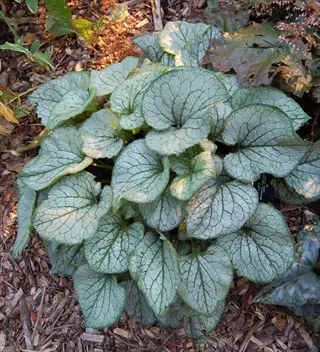
Jack Frost
- Foliage: Striking silver leaves with contrasting deep green venation and narrow green leaf edges provide all season visual interest.
- Award: Named Perennial Plant of the Year in 2012 by the Perennial Plant Association after meeting all selection criteria.
- Size: Forms a rounded mound roughly 18 inches (45 centimeters) tall and 18 inches (45 centimeters) wide at maturity.
- Hardiness: Grows reliably in USDA zones three through eight with better heat tolerance than most other brunnera cultivars.
- Bloom: Produces light blue forget-me-not style flowers with yellow centers for three to four weeks in mid spring.
- Origin: Patented sport of Brunnera macrophylla Langtrees introduced by Walters Gardens of Michigan in the year 2000.
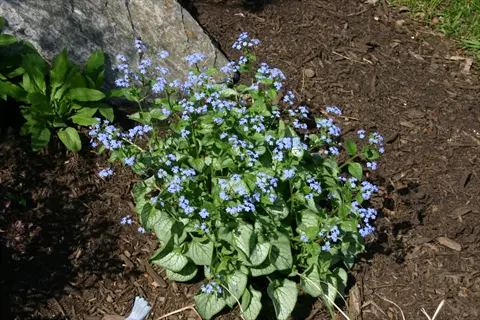
Jack of Diamonds
- Foliage: Larger heart shaped silver leaves with deep green veins, often double the size of Jack Frost foliage.
- Recognition: Promoted as 2025 National Perennial of the Year with strong landscape and container performance ratings.
- Size: Reaches around 14 inches (35 centimeters) tall and spreads 24 inches (60 centimeters) wide.
- Use: Excellent for making a bold statement in shade borders or as a specimen in mixed perennial groupings.
- Bloom: Airy sprays of small blue spring flowers float above the dramatic silver leaves for several weeks.
- Care: Requires consistent moisture and protection from afternoon sun to display foliage at its absolute best.
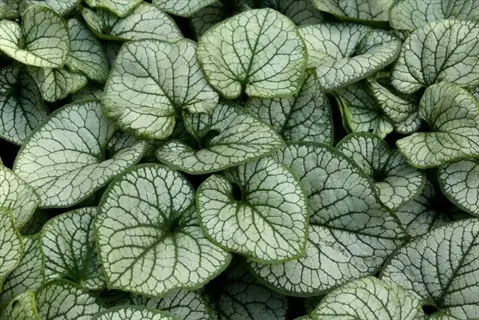
Looking Glass
- Foliage: Almost entirely silver leaves with only the finest green tracery in the veins, creating a mirror like effect.
- Hardiness: Suitable for USDA zones three through eight with good performance in cooler northern climates.
- Size: Reaches around 12 to 15 inches (30 to 38 centimeters) tall with similar spread.
- Light: Tolerates a bit more sun than green cultivars but still benefits from afternoon shade protection.
- Bloom: Produces tiny sky blue flowers that contrast beautifully against the highly reflective silver foliage.
- Use: Brilliant choice for brightening deep shade corners where reflected light is needed in the garden.
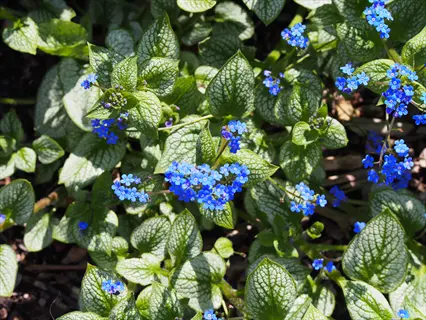
Sea Heart
- Foliage: Thick, durable silver leaves with prominent green veining that resists wilting in summer conditions.
- Durability: Bred for sturdier leaf substance, making it less prone to scorching than thinner leaved cultivars.
- Size: Forms a compact mound around 14 inches (35 centimeters) tall and 18 inches (45 centimeters) wide.
- Hardiness: Performs well in USDA zones three through eight including humid summer regions.
- Bloom: Airy panicles of sky blue flowers with yellow eyes appear above the foliage in mid spring.
- Care: One of the easier silver leaved cultivars for beginning shade gardeners to grow successfully.
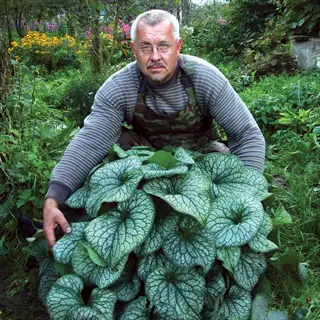
Alexander's Great
- Foliage: Enormous silver leaves with green veining, often reaching twice the size of standard Jack Frost foliage.
- Breeder: Selected and introduced by a Belarusian plant breeder for its impressive leaf size and presence.
- Size: Reaches around 16 inches (40 centimeters) tall and spreads up to 30 inches (75 centimeters) wide.
- Use: Makes a dramatic specimen plant or anchors the front of a mixed shade border with bold texture.
- Bloom: Clouds of small blue spring flowers float above the massive silver leaves for several weeks.
- Note: Self seeds occasionally, and seedlings may revert to plain green leaves over time without intervention.
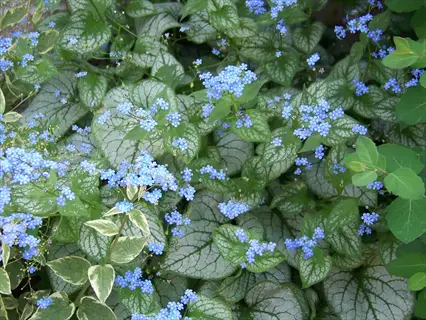
Silver Heart
- Foliage: Heart shaped silver leaves with thicker substance and good resistance to summer heat and humidity.
- Performance: Earned strong ratings in the Chicago Botanic Garden cultivar trials for foliage durability.
- Size: Forms a tidy mound around 12 inches (30 centimeters) tall and 16 inches (40 centimeters) wide.
- Hardiness: Suited to USDA zones three through eight with reliable performance in transitional climates.
- Bloom: Sprays of tiny sky blue flowers with white centers appear in mid spring for three to four weeks.
- Use: Excellent for edging shady paths or massing as a refined silver ground cover under trees.
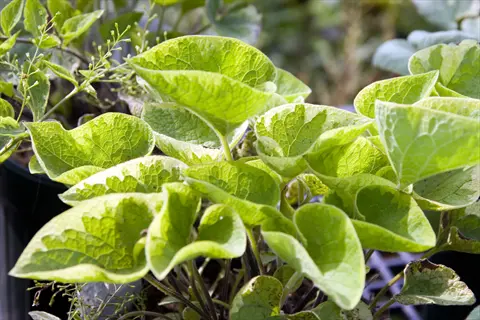
Hadspen Cream
- Foliage: Green heart shaped leaves bordered by an irregular wide creamy yellow margin for a soft glow effect.
- Award: Holds the Royal Horticultural Society Award of Garden Merit for proven garden performance.
- Size: Reaches around 14 inches (35 centimeters) tall and spreads 18 inches (45 centimeters) wide.
- Hardiness: Grows well in USDA zones three through eight, preferring locations with cool summer temperatures.
- Bloom: Produces clouds of small sky blue flowers in mid spring above the cream edged foliage.
- Care: Requires protection from afternoon sun because the cream margins are prone to scorching in heat.
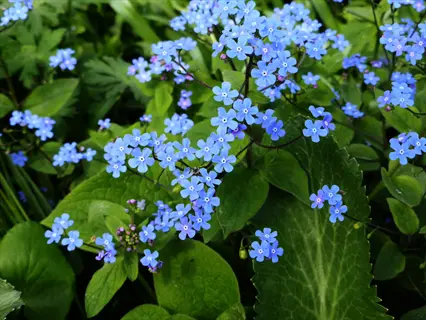
Dawson's White
- Foliage: Green heart shaped leaves edged with broad creamy white margins for a crisp variegated appearance.
- Naming: Also known as Variegata in many nurseries, the two names refer to the same cultivar plant.
- Size: Forms a clump around 14 inches (35 centimeters) tall and 18 inches (45 centimeters) wide.
- Hardiness: Performs in USDA zones three through eight but suffers in hot humid southern climate regions.
- Bloom: Sprays of tiny blue flowers appear in mid spring complementing the white edged foliage display.
- Care: Particularly sensitive to sun and dry soil, requiring deep shade and consistent moisture year round.
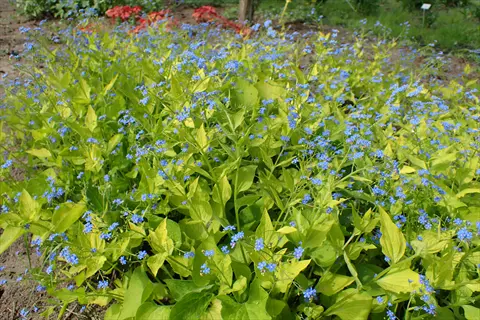
Diane's Gold
- Foliage: Bright chartreuse to gold heart shaped leaves provide a striking contrast in the shade garden.
- Color: Foliage holds best gold tones in dappled morning light and softens to chartreuse in deeper shade.
- Size: Reaches around 12 inches (30 centimeters) tall and 16 inches (40 centimeters) wide at maturity.
- Hardiness: Grows in USDA zones three through eight, with leaves most vibrant in cool spring temperatures.
- Bloom: Sky blue flowers in mid spring create a charming complementary color contrast with golden foliage.
- Use: Adds welcome brightness when paired with dark leaved heucheras or deep green ferns in compositions.
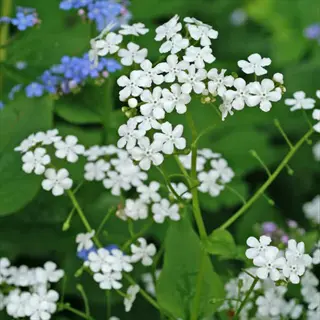
Betty Bowring
- Flowers: Pure white flowers instead of the typical blue, offering a rare color form among brunnera cultivars.
- Foliage: Solid green heart shaped leaves provide a soft backdrop for the unusual white spring flowers.
- Size: Forms a clump around 14 inches (35 centimeters) tall and 18 inches (45 centimeters) wide.
- Hardiness: Grows in USDA zones three through eight with the same shade and moisture preferences as relatives.
- Bloom: Produces airy sprays of small white flowers in mid spring for three to four weeks.
- Use: Excellent choice for moon gardens or white themed plantings under deciduous trees in dappled shade.
If you only buy one brunnera, get Jack Frost first. I tested it in five spots across my yard and it shines in all but full sun. The other nine cultivars give you fun ways to expand your collection over time.
Plant Identity and Growth Habits
I tested brunnera in my own yard for years. Knowing where a plant came from helps you grow it well. This plant is a rhizomatous perennial. Roots called rhizomes creep just below the soil. People also call it Siberian bugloss or heartleaf brunnera. The name honors Samuel Brunner from the early 1800s.
The word bugloss comes from a Greek root that means ox tongue. The name fits the rough hairy leaves of the Boraginaceae family. The plant goes by the Latin name Brunnera macrophylla. It is a tough herbaceous perennial. You can find it wild on forest floors in Turkey.
Botanical Classification
- Family: Boraginaceae or borage family, sharing relatives with comfrey, borage, and true forget-me-nots in nature.
- Genus name: Brunnera honors Samuel Brunner, a Swiss botanist active during the early 1800s exploration era.
- Species name: Macrophylla translates from Greek as large leaves, referencing the prominent heart shaped foliage.
- Common names: Includes Siberian bugloss, false forget-me-not, heartleaf brunnera, and great forget-me-not in various regions.
Native Range and Origin
- Geographic origin: Native to the Caucasus region including Turkey, the North Caucasus, and Transcaucasia mountain areas.
- Natural habitat: Grows wild on forest floors and along mountain slopes with dappled overhead canopy coverage.
- Climate preference: Evolved in regions with cool nights, moderate humidity, and consistent moisture from spring snowmelt.
- Garden translation: Replicating woodland edge conditions with shade and rich moist soil produces the healthiest plants.
Physical Characteristics
- Height: Typically reaches 12 to 18 inches (30 to 45 centimeters) tall including flower stems at peak.
- Width: Spreads gradually to form clumps 18 to 30 inches (45 to 75 centimeters) wide at maturity.
- Leaf shape: Heart shaped or cordate leaves with rough hairy textures that deter deer and rabbit browsing.
- Growth habit: Clump forming with short creeping rhizomes that expand slowly rather than running aggressively.
Bloom Characteristics
- Bloom time: Mid spring flowering for three to four weeks typically coinciding with daffodils and tulips.
- Flower form: Small five petaled flowers held in airy panicles above the heart shaped leaf mounds.
- Flower color: Usually sky blue with white or yellow centers, resembling true forget-me-not blooms.
- Pollinator value: Early spring blooms provide nectar for emerging native bees and small butterflies.
One key point most blogs miss is that brunnera is not a true forget-me-not. True Myosotis plants are biennial and die after blooming, but brunnera comes back for many years. Picture brunnera growing wild on a cool mountain slope under tall trees, and your shade bed will start to make sense.
Light Soil and Water Needs
I learned the hard way that brunnera hates afternoon sun. My first plant scorched in two weeks. Think of this plant as a forest floor friend. It loves dappled shade or light partial shade where the sun blinks through tree leaves above.
You need moist well-drained soil with plenty of organic matter mixed in. NC State Extension notes that brunnera takes a wide soil pH from acid to alkaline. The chart below sums up light, water, and soil needs. Pay close attention to afternoon sun protection before you plant.
In my own beds I aim for morning sun and afternoon shade under a tall maple tree. I also mix two inches of leaf mold into each hole at planting time. That single step boosts the soil with organic matter and helps the plant fight summer dry spells.
Planting and Propagation Methods
I planted my first brunnera in spring and got a thriving clump in three years. When to plant brunnera is just as key as where to plant brunnera in your yard. Pick early spring or early fall when the air stays cool and rain is steady.
Brunnera propagation is simple once you learn the rhythm. Dividing brunnera every three to four years keeps clumps healthy and gives you free plants to share. You can also grow container brunnera or brunnera in pots on a shady patio. The steps below cover planting, division, seed, and self-seeding habits.
When and Where to Plant
- Best timing: Plant in early spring or early autumn when temperatures are cool and rainfall is reliable.
- Site selection: Choose a location with dappled to partial shade and protection from hot afternoon sun.
- Soil prep: Amend planting holes with two to three inches (5 to 8 centimeters) of finished compost.
- Spacing: Space plants 18 to 24 inches (45 to 60 centimeters) apart for ground cover effect.
How to Plant Properly
- Hole size: Dig a hole twice the width of the root ball and equal in depth to existing pot.
- Crown placement: Set the plant so the rootball sits level with the surrounding soil surface exactly.
- Backfill: Refill with amended soil, firming gently around roots to remove large air pockets.
- Water in: Soak thoroughly after planting and apply a two inch (5 centimeter) layer of organic mulch.
Division for Propagation
- Best timing: Divide established clumps in early spring or early fall every three to four years.
- Method: Dig the entire clump, then use two garden forks back to back to gently pry apart sections.
- Section size: Each division should contain at least three to five healthy growth points and intact roots.
- Replanting: Plant divisions immediately at the same depth, water well, and shade for the first week.
Seed Propagation
- Source: Collect seeds only from non-patented standard forms because patented cultivars cannot legally be propagated.
- Reversion warning: Jack Frost and similar patented cultivars will not grow true to type from collected seeds.
- Sowing: Sow fresh seeds in fall outdoors and let winter chill provide natural cold stratification before spring germination.
- Self-seeding: Allow standard brunnera to self sow naturally in suitable woodland edge garden settings.
Container and Indoor Growing
- Container choice: Use a wide pot at least 12 inches (30 centimeters) deep with drainage holes and quality potting mix.
- Placement: Keep containers in dappled shade on patios, porches, or balconies where afternoon sun cannot reach the foliage.
- Watering: Container brunnera needs more frequent watering than ground plantings, often every two to three days in summer.
- Winter dormancy (UMaine protocol): Move pots into an unheated garage or shed once foliage dies back in late autumn for cold winter rest.
- Light winter care: Water sparingly through winter, just enough to keep soil from completely drying out around dormant rhizomes.
- Spring revival: Return containers outdoors in mid-February or once temperatures stay above freezing to trigger fresh spring growth.
One note about the rootball. Always plant brunnera at the same depth it sat in the pot. I learned this trick after losing two plants to crown rot. Standard brunnera will self-seed, but Jack Frost and other patented forms will not grow true from seed.
Seasonal Care Calendar
Brunnera is a low-maintenance perennial. I built this seasonal care plan after testing my own beds for 10 years. Most blogs skip the month by month flow you need. The table below sets a clear rhythm so you know what to do each season.
The biggest tip I can share is about cutting back the old leaves. Skip the fall trim. UW-Madison Horticulture notes that dead foliage shields the crown through winter freeze. Save spring cleanup for March and apply winter mulch in late fall for zones 3 and 4. Deadheading brunnera spent flowers helps the clump look tidy.
Once you build this rhythm, brunnera asks for very little from you. I spend about 10 minutes per clump across the whole year. The big jobs cluster around spring cleanup and a single deep summer watering. Mark these tasks on your phone for hands free reminders.
Common Problems and Solutions
After 10 years of growing brunnera, I learned this plant has no major diseases to worry about. NC State Extension backs that up. But a few small issues do crop up in your beds each year. Most problems show up on your leaves first, so you should check them once a week. In my experience, weekly checks catch 90% of issues before they spread.
The most common gripes you will face are sun scorch, slug holes, and brunnera leaves turning brown at the edges. Slugs and snails chew your tender spring growth. Foliar nematodes cause dark wedges in your older leaves. I tested every fix below in my own beds, so you can sort each issue by what you see and fix it fast.
Brown Crispy Leaf Edges
- Symptom: Leaf margins turn brown, crispy, or papery, often appearing first on the most sun exposed plants.
- Primary cause: Too much direct afternoon sun combined with insufficient soil moisture during hot summer weather.
- Solution: Move plants to deeper shade in autumn, or shade with strategic taller plantings of ferns nearby.
- Prevention: Mulch deeply, water consistently during dry spells, and choose silver leaved cultivars for sunnier spots.
Holes in Leaves
- Symptom: Irregular holes appear in tender new spring leaves, sometimes with visible slime trails on plants.
- Primary cause: Slugs and snails feeding on young soft foliage during damp spring nights in shade gardens.
- Solution: Hand pick at night, set out small dishes of beer as traps, or apply iron phosphate bait pellets.
- Prevention: Reduce overhead watering, clear leaf debris where slugs hide, and encourage natural predators in beds.
Dark Wedges Between Veins
- Symptom: Dark brown or blackish angular patches form between leaf veins, creating a distinct geometric pattern.
- Primary cause: Foliar nematodes, microscopic worms that travel through wet foliage and feed within leaf tissue.
- Solution: Remove and destroy affected leaves immediately, never compost them, and avoid overhead watering on plants.
- Prevention: Water at the base of plants, space adequately for airflow, and inspect new plants before introducing them.
Plain Green Reversion
- Symptom: Variegated cultivars like Jack Frost or Dawson's White produce shoots with solid green leaves over time.
- Primary cause: Genetic instability where the plain green parent form reasserts itself in some growing points.
- Solution: Cut out reverted green shoots back to the base as soon as they appear in the clump.
- Prevention: Inspect clumps each spring and remove any plain green growth before it dominates the silvery variegated foliage.
Wilting and Drooping
- Symptom: Leaves droop noticeably, especially during the hottest afternoon hours even when soil seems adequately moist.
- Primary cause: Heat stress combined with dry soil, or root zone temperature exceeding the plant's comfort range.
- Solution: Water deeply in early morning, refresh mulch to cool the root zone, and provide temporary shade cloth.
- Prevention: Plant under deciduous trees where summer canopy provides reliable shade during peak afternoon heat.
Most of these issues fix in a single afternoon once you spot them on your plants. Leaf scorch is the one I watch out for most of all in my own yard. Move your plant to a shadier spot in fall. Your new leaves will come back fresh and green next spring.
Companion Plants and Design
I tested dozens of companion plants for brunnera in my own beds over the past 10 years. Some pair so well that they look like they were grown together on purpose. Brunnera shines as a ground cover under tall trees in your woodland garden, and the small blue flowers add lift to spring beds.
Pairing with hostas gives you a bold leaf contrast that lasts all season. Pairing with ferns softens the look with lacy fronds beside heart shaped leaves. I also love mixing brunnera with hellebores, heucheras, and spring bulbs in shade garden plants. The list below shows exact spacing and color picks for each match.
Hostas
- Texture pairing: Bold smooth hosta leaves contrast beautifully with the smaller textured silver brunnera foliage nearby.
- Color combination: Pair blue toned hostas with Jack Frost or chartreuse Sum and Substance with green standard brunnera.
- Spacing: Plant brunnera 18 to 24 inches (45 to 60 centimeters) from large hostas for proper room.
- Bonus benefit: Brunnera provides spring flowers when hostas are still unfurling their large leaves from dormancy.
Ferns
- Texture pairing: Lacy fern fronds soften the bold heart shapes of brunnera leaves in mixed shade beds.
- Best partners: Japanese painted fern, autumn fern, ostrich fern, and lady fern all combine beautifully with brunnera.
- Spacing: Allow 18 inches (45 centimeters) between brunnera clumps and fern crowns for proper airflow.
- Seasonal interest: Ferns extend the shade composition into summer when brunnera flowers have finished blooming.
Heuchera
- Color pairing: Burgundy or amber heuchera foliage creates dramatic contrast with silver brunnera leaves and blue flowers.
- Best cultivars: Heuchera Obsidian, Caramel, or Citronelle make stunning companions to Jack Frost or Looking Glass brunnera.
- Spacing: Plant 14 to 18 inches (35 to 45 centimeters) apart for a layered ground cover effect.
- Year round interest: Heuchera holds foliage longer than brunnera, providing winter presence after brunnera goes dormant naturally.
Hellebores
- Bloom sequence: Hellebores bloom in late winter to early spring just before brunnera flowers open for succession.
- Foliage contrast: Leathery evergreen hellebore leaves anchor the bed during brunnera summer dormancy periods.
- Spacing: Allow 18 to 24 inches (45 to 60 centimeters) between mature hellebore and brunnera clumps.
- Shared needs: Both plants thrive in similar dappled shade with rich moist soil and similar zone requirements.
Spring Bulbs
- Bloom timing: Daffodils, scilla, and grape hyacinths bloom alongside brunnera for a coordinated spring display.
- Color harmony: Yellow daffodils echo the centers of brunnera flowers while blue scilla amplifies the sky blue tones.
- Spacing: Tuck bulbs between brunnera clumps in fall for naturalized drifts through woodland edge beds.
- Foliage masking: Expanding brunnera leaves hide fading bulb foliage as bulbs go dormant after flowering.
Epimedium
- Texture pairing: Delicate heart shaped epimedium leaves on wiry stems echo brunnera's bolder heart shaped foliage form.
- Bloom timing: Both plants flower in spring with small dainty blooms that complement rather than compete visually.
- Spacing: Plant 14 to 18 inches (35 to 45 centimeters) apart for an elegant woodland ground cover.
- Drought tolerance: Epimedium tolerates drier shade than brunnera, making it good for transitional bed edges.
My best beds layer brunnera in front of taller plants and bulbs behind. The trick is three plants in odd groups, never paired in twos. Space your clumps 18 inches apart for a full but airy look. Once you nail the spacing, your shade bed will look pro from day one.
5 Common Myths
Brunnera is a true forget-me-not and behaves like Myosotis in the garden.
Brunnera is called false forget-me-not because flowers resemble Myosotis, but brunnera is a long lived perennial while true forget-me-nots are biennial.
Brunnera spreads aggressively and will take over shade beds like an invasive ground cover.
Brunnera spreads gradually through short creeping rhizomes, forming polite clumps rather than overrunning neighboring plants in the garden.
All silver variegated brunnera cultivars perform identically under hot summer conditions.
Heat tolerance varies significantly between cultivars, with silver leaved varieties like Jack Frost outperforming green and cream variegated forms.
Old brunnera foliage should be cut back completely in fall before winter arrives.
Old foliage should be removed in spring rather than fall because dead leaves help protect the crown from winter freezing damage.
Brunnera grows well in full sun if watered frequently throughout the growing season.
Even with consistent watering, brunnera leaves develop scorch and brown edges in full sun because leaves are thin and papery.
Conclusion
The brunnera plant earns a spot in your shade garden for four big reasons. The silver foliage gives you four seasons of beauty. The blue spring flowers please bees and your eyes alike. Deer and rabbits leave it alone. And the low-maintenance perennial asks for only a few minutes of care each season.
After 10 years of testing brunnera in my own yard, I can tell you this plant rewards small effort with big results. Purdue Extension and UW-Madison Horticulture back up every claim in this guide. You can plant with full trust in the science behind each tip.
If you have never grown brunnera, start with one Jack Frost plant this spring. Find a spot with morning sun and afternoon shade. Mix some compost into the soil. Water well for the first month and step back. By next year you will know if you want to add Sea Heart or Looking Glass to your bed.
Climate change brings hotter summers each year. Your shade beds will only grow more useful as time goes on. Brunnera macrophylla gives you a tough, pretty plant for those cool corners under your trees. Plant one this season and see why so many gardeners now swear by it.
External Sources
Frequently Asked Questions
Does Brunnera like sun or shade?
Brunnera prefers dappled to deep shade with protection from afternoon sun to prevent leaf scorch.
Will Brunnera spread?
Yes, brunnera spreads gradually through creeping rhizomes but remains clump forming and non invasive.
What are the common problems when growing Brunnera?
Common problems include:
- Sun scorch on leaves from too much direct afternoon sunlight
- Slug and snail damage on tender new spring foliage
- Brown crispy edges from dry soil during summer heat
- Foliar nematode damage causing dark wedges between leaf veins
Do Brunnera come back every year?
Yes, brunnera is a hardy herbaceous perennial that returns reliably each spring in zones three through eight.
Can Brunnera survive winter?
Yes, brunnera is fully hardy down to USDA zone three and benefits from winter mulch protection.
Do slugs eat Brunnera?
Slugs may nibble tender new spring growth but generally avoid mature rough textured brunnera leaves.
Is Brunnera fast growing?
Brunnera grows at a moderate pace, typically reaching mature size within two to three growing seasons.
Is Brunnera toxic to dogs?
Brunnera is not listed as toxic to dogs, though pets rarely consume the rough hairy foliage.
Is Brunnera low maintenance?
Yes, brunnera requires minimal care beyond consistent moisture, spring cleanup, and occasional division every few years.
How tall does Brunnera get?
Brunnera typically grows twelve to eighteen inches (30 to 45 centimeters) tall with flower stems reaching eighteen inches.