

Introduction
Butterfly host plants are the plants caterpillars actually eat. They are not the same as the flowers adult butterflies sip from. A host plant feeds the young caterpillar. Nectar plants feed the grown adult. A real butterfly garden needs both, and skipping the host side is the mistake that quietly costs you butterflies.
I planted milkweed one June and watched monarchs strip it bare in a week. Here is the part that should change how you shop. Just 14% of native plant genera support more than 90% of butterfly and moth species. A 2020 study in the journal Nature Communications proved it. A few plants do nearly all the work. Most do almost none.
A long plant list alone leaves out the part that matters most. It hides why a short set of larval host plants does almost all the work. It hides why that should change which plants you buy. That blind spot is the whole reason for this guide. You will learn to pick the few plants that earn their space.
Most caterpillars eat just a few kinds of plants. They can only grow up on the caterpillar host plants their species can eat. A monarch will starve next to the wrong leaf. The stakes are real too. Flying insects like moths have dropped about 78% over 40 years. So the right plants matter. Up next, you get a simple way to pick the best native plants for your yard.
Best Butterfly Host Plants
I knelt at the edge of my back border. The old white oak shades that spot late in the day. I counted three fat monarch caterpillars on a single stem of common milkweed. I planted that milkweed three springs ago and then left it alone. I never released a butterfly or babied an egg. The plant filled with life on its own, the way the right host plant does for you.
That is the whole idea behind the best butterfly host plants. You pick plants that caterpillars can eat, set them in your sunniest spot, and let the butterflies find you. Lead with native host plants and the work mostly does itself.
The plants below are not a random list. Each one raises a specific caterpillar in your yard. Several are also among the most productive native genera you can grow. So every plant you add here earns its space instead of padding your count.
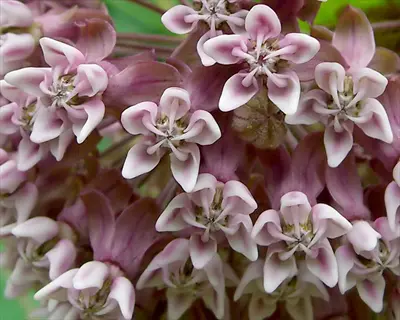
Common Milkweed
- Hosts: Monarch caterpillars feed exclusively on milkweed (Asclepias), making this the single most important host plant for the species.
- Why it works: Caterpillars store the plant's bitter chemicals in their bodies, which makes them taste bad to predators and aids survival.
- Growth: Common milkweed spreads by underground roots and forms colonies, so give it room in a sunny spot with average soil.
- Bonus: The fragrant summer flowers also feed adult butterflies and many other pollinators with nectar at the same time.
- Tip: Plant several stems together, because a single plant can be stripped quickly once eggs hatch into hungry caterpillars.
- Range: It is native across much of the eastern and central United States and is widely available from native plant nurseries.
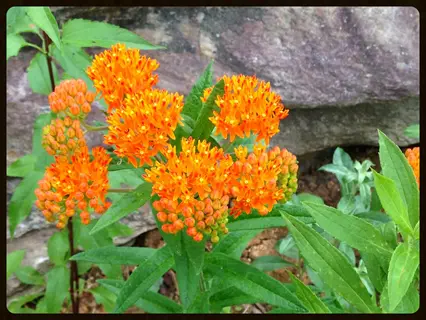
Butterfly Weed
- Hosts: Butterfly weed (Asclepias tuberosa) is a milkweed that hosts monarch caterpillars while staying tidy and clump-forming in the garden.
- Why it works: As a true milkweed it carries the same chemistry monarchs need, so females will lay eggs on its leaves.
- Growth: It prefers full sun and dry, well-drained soil, and its deep taproot makes it drought tolerant once established.
- Bonus: Bright orange flowers draw nectaring butterflies, bees, and other beneficial insects through the middle of summer.
- Tip: It is slow to emerge in spring, so mark its spot to avoid digging into the crown by mistake while it sleeps.
- Range: Native to much of the eastern and southern United States and a reliable, well-behaved choice for smaller gardens.
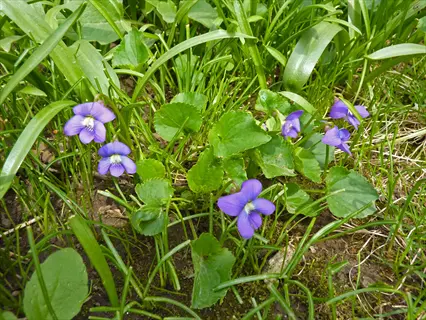
Violets
- Hosts: Violets (Viola) are the host plants for great spangled fritillary caterpillars, which feed on the leaves at night.
- Why it works: Fritillaries depend on violets specifically, so without them these striking orange butterflies cannot complete their life cycle.
- Growth: Native violets thrive in part shade and moist soil and spread on their own to form a low, leafy groundcover.
- Bonus: Their early spring flowers add color and support early pollinators before many other plants have started blooming.
- Tip: Resist treating violets as a lawn weed, since the patches you tolerate are exactly what fritillary caterpillars need.
- Range: Many violet species are native across North America and adapt well to shady, naturalized corners of a yard.
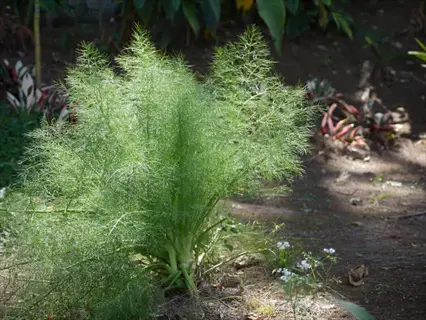
Parsley, Dill, and Fennel
- Hosts: These carrot-family herbs host black swallowtail caterpillars, a pairing noted across multiple extension host plant lists.
- Why it works: Black swallowtails evolved to feed on carrot-family plants, so familiar kitchen herbs double as caterpillar food.
- Growth: All three grow easily in sunny vegetable beds or containers and need only regular water and decent soil.
- Bonus: You can grow extra plants so you have enough to share some with caterpillars while still harvesting for the kitchen.
- Tip: Skip insecticidal sprays on these herbs, because the same chemicals that kill pests will also kill the swallowtail caterpillars.
- Range: Widely grown across the country in gardens and pots, which makes this one of the easiest host pairings to start with.
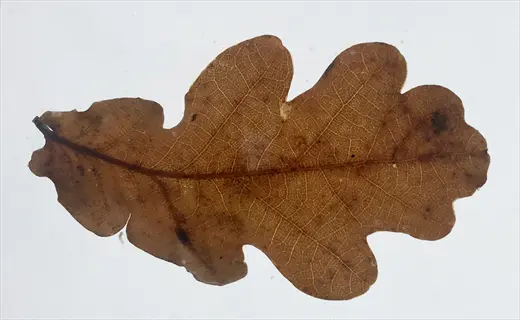
Oak Tree
- Hosts: Oaks (Quercus) support more than 500 caterpillar species, making a single tree a powerhouse host for hairstreaks and many others.
- Why it works: As the top keystone genus nationally, oaks feed an enormous range of butterflies and moths from one plant.
- Growth: Oaks are long-lived shade trees that prefer full sun and, once mature, ask for very little ongoing care.
- Bonus: The caterpillars an oak raises become food for birds, since most nesting songbirds rear their young on larvae.
- Tip: If you have room for only one tree, an oak native to your region gives the greatest return for butterflies and wildlife.
- Range: Many oak species are native across the United States, so there is usually a local oak suited to your soil and climate.
Two pairings drive the point home. Monarch caterpillars feed exclusively on milkweed, so no milkweed means no monarchs in your yard. Violets are the host for fritillary caterpillars. That is why you should keep those weedy little patches you might pull up.
Notice the oak at the bottom of that list. Trees host the most caterpillars by far. So pair these herbaceous favorites like butterfly weed and violets with one strong tree. That keystone idea is exactly where we head next.
Host Plants vs Nectar Plants
Host plants vs nectar plants trips up most new butterfly gardeners, and you can mix up the two roles. A host plant feeds the caterpillar, the hungry larval stage that does nothing but eat and grow. Nectar plants feed the winged adult, which sips sugar to fuel its flying and mating. Your garden needs both, because each plant covers a different stage of the same life.
Think of it this way. Your host plants are the nursery and the dinner table for the young. Larval food plants get chewed to bits, and that is the whole point. Your nectar plants are the fuel station for adults on the move, and they stay mostly intact while the blooms keep coming.
Virginia's wildlife agency breaks a real butterfly habitat into five parts. You need host plants, nectar plants, moist soil for puddling, sunny basking spots, and shelter from wind. Host and nectar plants are the two food roles. The other three keep your visitors at ease enough to stay and breed.
- Feed caterpillars, the growing larval stage of the butterfly.
- Are often specific to one butterfly species or plant family.
- Show chewed leaves, which is a sign of success rather than damage.
- Examples include milkweed, violets, oaks, and carrot-family herbs.
- Feed adult butterflies with sugary nectar from flowers.
- Can attract many different butterfly species at once.
- Stay mostly undamaged, since adults only sip from the blooms.
- Examples include coneflower, joe pye weed, and asters.
Butterfly bush attracts many nectaring adults but grows no caterpillars and can be invasive, so it cannot sustain butterflies on its own.
Egg-laying females seek out your host plants, and so do the males. Males patrol the same leaves to find mates and the next generation. So a strong host patch pulls in adult butterflies of both sexes, which gives your garden more life than the females alone would.
Plant both roles in the same beds and you cover the full cycle. The host plants raise the caterpillars, and the nectar flowers feed the adults that those caterpillars become. Skip one half and you have a snack stop, not a home.
Specialists and Generalists
Not every butterfly eats the same way. Some need one exact plant family. Others lay eggs across a dozen. You will meet two types in your garden, a host plant specialist and a host plant generalist. That split is the biggest reason your yard either grows caterpillars or just feeds the adults that drift through your flowers.
The reason runs deeper than taste. Most plants pack their leaves with harsh chemicals to fight off the bugs that eat them. Think of that as a plant chemical defense. A caterpillar gets past your plant only by breaking down that one set of toxins. The Alabama Butterfly Atlas notes that this skill is limited and tuned to each species. So your garden menu gets set by chemistry, not by choice.
That is the plain answer to why monarchs only eat milkweed. A monarch caterpillar breaks down the bitter stuff in the milkweed family and nothing else. So you cannot feed one parsley. Parsley sits in the carrot family, and a monarch never learned to handle those toxins. Hand a monarch a parsley sprig from your garden and you will watch it starve on a full plate.
Specialist Butterflies
- Definition: Specialists depend on a single plant or plant family and cannot complete their life cycle on anything else.
- Why they exist: Their caterpillars can only detoxify the defensive chemicals of one narrow group of plants, which fixes their diet.
- Classic example: The monarch is a milkweed specialist, so losing milkweed in an area means losing the monarchs that depend on it.
- More examples: The zebra swallowtail needs pawpaw, and the great spangled fritillary needs violets, with no substitutes accepted.
Generalist Butterflies
- Definition: Generalists can lay eggs on many different plant families, so their caterpillars have a much wider menu to choose from.
- Why it helps them: A broad diet makes generalists more flexible and often more common, since they are less tied to one plant.
- Examples: The painted lady and the red-spotted purple both use a wide range of host plants across different families.
- Garden meaning: You support generalists by accident, but specialists need you to plant the exact host on purpose.
Why the Difference Matters
- Planting strategy: To help specialists you must grow the one specific host plant, since no general flower bed will do the job for you.
- Conservation value: Many at-risk butterflies are specialists, so targeted host plants have an outsized effect on their survival.
- Egg laying: Females taste plants with receptors on their feet to confirm the correct host before laying their eggs.
- Takeaway: A garden that includes a few key specialist host plants supports butterflies that a generic flower garden never could.
How Females Find the Right Host
- Foot sensors: Female butterflies taste plants with receptors on their feet to confirm a leaf is the correct host before laying.
- Long search: Penn State Extension notes that females can travel for miles in search of the right host plants to lay their eggs upon.
- Why it matters: This careful selection means caterpillars hatch onto a plant they can actually eat, which decides whether they survive.
- Garden meaning: When you plant the exact host a species needs, you make your garden far easier for searching females to find and use.
This lock between bug and plant is coevolution at work. As plants grew tougher toxins, a few insects grew the tools to beat them. Over time each side shaped the other. The monarch and milkweed are the famous pair you know. The zebra swallowtail is just as tied to pawpaw, and the great spangled fritillary will only raise young on violets. No substitute works in your beds.
Here is why that changes how you plant. A generalist like the painted lady can find a meal in your messy yard without your help. A specialist cannot. Say you want monarchs, pawpaw butterflies, or fritillaries. Then you have to grow their one exact host on purpose. Your general flower bed will never fill in for the right plant, so you must add it yourself.
The ability to detoxify is limited, so Monarchs, whose caterpillars eat plants from the Milkweed family, cannot eat parsley, a member of the Carrot family.
Keystone Plants for Caterpillars
The back border fills with more caterpillars and chickadees every single summer, and the old white oak in the corner does most of that quiet work. I never planted that oak. It was already the single highest-value plant on my whole property before I added one milkweed or aster. Each year I watch the canopy hang heavier with tiny green inchworms, and the birds work it from dawn until dark.
That oak is what scientists call a keystone plant, and the math will change how you shop. A 2020 study in Nature Communications looked at more than 12,000 native butterfly and moth species. The work spanned 25 states. The team found that about 14% of local plant genera do most of the feeding. Those few genera support more than 90% of all butterfly and moth diversity. Oaks ranked as the top keystone genus in that study.
These powerhouse plants carry the food web because so few genera do the heavy lifting. The top five keystone native plants nationally are oaks, willows, cherries, pines, and aspens or poplars. So a handful of smart picks beats a long random list of natives every time. Many native genera host zero caterpillars at all, which is why blind planting wastes your space and money.
The oaks Quercus group sits at the very top for one simple reason. These trees feed hundreds of caterpillar species, and that anchors the entire native plant food web around them. The table below shows the genera that pull the most weight, from towering oaks down to the humble aster in your flower bed.
Keystone plants matter far beyond the butterflies you came to see. NWF magazine reports that about 96% of nesting songbirds rear their young on butterfly and moth larvae, not seeds or berries. So when you plant an oak, you feed the warblers and chickadees raising chicks in your yard. One tree turns your garden into a working nursery for the whole neighborhood.
There are certain native plants, and there are actually not that many of them, that are doing the bulk of the work. So, if you build landscapes without these powerhouse plants that support caterpillars, the food web is doomed.
Hosts for Common Butterflies
Once you know the host plant for species you want, you can attract that exact butterfly on purpose. You stop hoping the right ones drift in and start putting out the one plant their caterpillars must have. Each row in the chart below is a matched pair, and the butterfly on the left can only raise young on the plant on the right.
The monarch host plant is milkweed, full stop, and no other plant will do for its caterpillars. The swallowtail host plants split by species, so the black swallowtail host plants are kitchen herbs like parsley, dill, and fennel. Plant a passionvine and you set the table for the gulf fritillary passionflower pairing in warmer regions.
One warning before you shop. Some butterflies have learned to use non-native lookalike hosts like garlic mustard and Canada thistle. Penn State Extension flags both as invasive, so never plant them. Stick to the native pairings in the chart and you feed the caterpillars without spreading a weed that chokes out everything else.
Design a Butterfly Garden
One June morning I found the violets under my old white oak chewed to lace. Whole leaves hung in tatters. For a second I thought something was wrong with the patch. Then I leaned in and saw them. Fat fritillary caterpillars were working through the leaves one bite at a time.
Those shredded violets are what a working butterfly garden should look like. Chewed leaves mean the food web is doing its job. So welcome the holes, and do not reach for a spray. Penn State Extension is blunt here. It says to use no pesticides on your host plants, because the same sprays that kill pests will kill your caterpillars too.
Virginia DWR breaks a good butterfly habitat into five parts. Plants are only two of them. You need host plants for the caterpillars and nectar plants for the adults. Then you add a patch of moist soil where males gather to drink. You give them an open sunny spot to bask in. And you leave some shelter from wind so they can rest.
When you plan how to attract butterflies, your first rule is simple. Plant native for butterflies, since your local species know the plants they grew up with. The second rule trips up most people. Plant more than one of each small host. A lone violet or milkweed can vanish before the caterpillars are ready to pupate, so set out a cluster of three or more.
Do not forget your trees either. Woody plants host the most caterpillars of all, far more than any flower bed, yet most garden plans skip them. One native tree like an oak or a cherry can feed hundreds of caterpillar species. So plant one wherever you have the room. Use the checklist below to cover every piece at once.
- Go native: Choose host and nectar plants native to your region so local butterflies recognize and can use them.
- Plant in clusters: Set out several of each host plant, since caterpillars can quickly strip a single small specimen.
- Include a tree: Add a native tree such as an oak or cherry where space allows, because woody plants host the most caterpillars.
- Skip pesticides: Avoid insecticides entirely, as the same sprays that kill pests will also kill butterfly caterpillars.
- Accept leaf damage: Welcome chewed leaves as a sign of a working food web rather than a problem to fix.
- Add water and sun: Provide a patch of moist soil for puddling and an open sunny spot where adults can bask.
- Offer shelter from wind with shrubs or a hedge so butterflies have a calm place to rest.
Plant more than one of each small herbaceous host, because hungry caterpillars can clear a lone plant before they are ready to pupate.
5 Common Myths
Any flowering plant a butterfly visits is also a host plant where that butterfly can raise its caterpillars.
Visiting a flower for nectar is different from laying eggs on it; caterpillars can only grow on specific host plants their species can digest.
Butterfly bush is the best plant you can grow because its name promises it will support butterflies in the garden.
Butterfly bush attracts nectaring adults but grows no caterpillars and can be invasive, so it does not actually sustain butterfly populations.
Caterpillars chewing holes in your plant leaves is plant damage that you should stop with sprays right away.
Leaf feeding is a sign of a working food web, not damage; avoid pesticides and let caterpillars eat so they can become butterflies.
As long as a plant is native to your region, it will automatically be productive and feed plenty of caterpillars.
Native does not always mean productive; many native genera host zero butterflies and moths, so keystone choices matter most.
Planting a single host plant in your yard is enough to raise a healthy group of butterflies each season.
Caterpillars can quickly strip one small plant, so plant several of each host species, especially for low herbaceous plants.
Conclusion
The whole plan comes down to one simple split. Butterfly host plants feed the caterpillars while nectar plants feed the adults that flit around your flowers. A garden full of bright blooms looks busy, but without the right leaves to eat, no eggs ever turn into the next generation.
Here is the part that makes this easy. Only about 14% of native plant genera support more than 90% of butterfly and moth species. You do not need a long shopping list. A few smart picks do almost all the work in your yard.
So keep the plan short and follow it. Choose native host plants over showy non-natives, and lean on keystone plants like oaks that feed hundreds of species at once. Plant several of each host so hungry caterpillars never run out, and skip the pesticides that wipe out the very bugs you want.
The payoff reaches far past the butterflies too. Roughly 96% of nesting songbirds rely on caterpillars to feed their chicks. So every one of your caterpillar host plants helps feed the birds as well. A backyard butterfly garden becomes a working part of the food web.
You do not need acres to make this count. I started with two milkweed plants in a half-barrel by my back steps, and monarch caterpillars found them inside a month. Even a small space with the right plants gives local butterflies a real place to feed, lay eggs, and grow. Start with one or two host plants this season, and watch your patch come alive.
Glossary
- host plant
- A specific plant that butterfly or moth caterpillars eat and that a species needs to complete its life cycle.
- host plant generalist
- A butterfly whose caterpillars can feed on plants from many different families rather than just one.
- host plant specialist
- A butterfly whose caterpillars can feed on only one plant species or family, such as the monarch on milkweed.
- keystone genus
- A small group of native plant types that supports most of the caterpillar species in an area.
- keystone plant
- A small group of native plant genera that support the great majority of local butterfly and moth species.
- Lepidoptera
- The insect order that contains all butterflies and moths.
- nectar plant
- A flowering plant whose sugary nectar feeds adult butterflies but does not raise their caterpillars.
- puddling
- Butterflies gathering at moist soil or mud to take up water and minerals.
External Sources
Frequently Asked Questions
What is a good host plant for butterflies?
Native plants that feed caterpillars are best.
- Milkweed for monarchs
- Oaks for hairstreaks and many others
- Violets for fritillaries
- Parsley, dill, and fennel for black swallowtails
How many host plants should I plant?
Plant several of each host species, not just one.
Why do monarch caterpillars only eat milkweed?
They evolved to detoxify milkweed chemicals only.
What are the best perennials for butterflies?
Native perennials that host caterpillars are best.
- Milkweed for monarchs
- Violets for fritillaries
- Asters for many species
- Golden alexanders for black swallowtails
Are snapdragons a host plant for butterflies?
Mainly a nectar source, not a reliable host.
Which trees host the most butterfly caterpillars?
Oaks, willows, cherries, and poplars lead.
- Oaks host 500-plus caterpillar species
- Willows are a top keystone genus
- Cherries support many species
- Aspens and poplars rank high too
Will sugar water help a butterfly?
Only short-term; nectar and host plants help more.
Do you get butterflies in October?
Yes, many butterflies are active in October.
What is the lifespan of a butterfly?
Most adults live a few weeks.
What is a butterfly's biggest enemy?
Habitat loss and pesticides cause the most harm.

