

Introduction
Open the fertilizer aisle and sulfate potash sits next to cheaper bags that promise the same thing. It is not the same thing. Sulfate of potash also goes by potassium sulfate, or SOP for short. Like the strongest feeds on the shelf, it is the premium potassium fertilizer you reach for when crop quality matters more than the price.
Three traits set it apart from the cheap stuff. It is a chloride-free fertilizer with under 1% chloride. It carries 17 to 18% sulfur along with its potassium. And it has a low salt index. The bag reads about 0-0-50. That figure means close to 50% potassium oxide and nothing harsh to scorch tender roots. Those numbers come from USDA AMS and Penn State Extension, not a marketing label.
Plenty of garden writing covers what it is and its benefits, then trails off. The hard parts get glossed over. This guide takes a different place to start and gives you all three. You get the real chemistry with sources you can check. You get a fair cost comparison so you know what you pay. And you get plain content on rates so you do not burn your plants.
Think of it as the gentle cousin of muriate of potash, the chloride-heavy salt that can stress fruit and vegetables. That contrast is the clear reason to pay more for it. The sulfur it adds matters more now than it used to. Penn State reports median soil sulfur fell about 50% over 15 years as acid rain faded. By the end you will know which plants thrive on it, what it costs, and the answer to the tomato question that splits other growers.
What Sulfate of Potash Is
Sulfate of potash is a chloride-free potassium fertilizer that also feeds your plants sulfur. Its chemical name is potassium sulfate, written as K2SO4, and it carries a grade of about NPK 0-0-50. That last number is the part that matters most for your garden.
The 50 in that grade means the product is about 50% potassium oxide, which gardeners read off the bag as the K2O figure. On top of the potassium it brings 17 to 18% sulfur, a number backed by USDA AMS and Penn State Extension. Chloride sits under 1%, so the label calls it chloride-free.
It also acts gentle on your soil. The product is only about one-third as soluble as muriate of potash. In water its salt reading runs under a third of an equal muriate mix. The data here come from the IPNI plant nutrition group. The low salt index is why it suits salt-shy plants in pots and beds.
Think of the potassium oxide as the shared part. Every potash feed gives you that same potassium for water flow, fruit set, and strong stems. The sulfur is the bonus your plants get here, and they put it straight to work building protein and running enzymes.
You will see this same product wear a few different labels at the store. USDA AMS lists it as sulfate of potash, SOP, potash of sulfur, and arcanite, its pure mineral name. Spot any of those and you are looking at the exact same bag of nutrients.
Potassium sulfate (commonly referred to in the trade as sulfate of potash or SOP) is a premium fertilizer product, with certain grades particularly valuable because they are essentially free of chlorides and are admirably suited for use on chloride and/or salt-sensitive crops.
Benefits Backed by Science
The potassium role in a plant is real work, not a vague boost. Extension experts spell it out. Potassium moves water, turns on enzymes, builds starch and protein, and works the leaf pores that give your plants drought resistance. Each one of those jobs feeds a benefit you can see.
That work shows up above ground. A good supply of potassium backs steady flowering and fruiting because the plant can push sugars and water where they belong. The University of Minnesota ties potassium to how water, food, and sugars move in a plant. That one idea drives almost every perk you get.
The sulfur half matters too. Penn State calls sulfur a secondary food at about 0.15% of plant tissue. A sulfur deficiency shows up first in new growth as pale young leaves. Soil sulfur has dropped as the air got cleaner. So a sulfur-bearing feed now fills a gap that did not exist years ago.
I grew 'Sungold' tomatoes along the south-facing fence one summer, and the fruit came in flat and watery. No amount of sun fixed it. The next year I worked sulfate of potash into that same row before the plants set fruit. The tomatoes came back sweeter and firmer, with skins that snapped instead of squashing.
Hard data backs up that flavor swing. A 2022 study in Frontiers in Plant Science ran a two-year potato trial. Chloride fertilizer cut starch by 9 to 14%. Potassium sulfate held the loss to just 4 to 10%. The chloride feed also dropped vitamin C and raised rancid off-flavor compounds. It left tubers with lower specific gravity too, so they came out wetter and shrank more in storage.
Potassium for water and stress control
- Water movement: Potassium drives water and sugar transport through plant tissue, which University of Minnesota Extension links to drought resistance and steady growth.
- Enzyme activation: It switches on enzymes behind starch, protein, and energy production, so deficient plants grow slowly and yield less.
- Stomatal control: It opens and closes leaf pores that regulate water loss, helping plants cope with heat and dry spells.
Sulfur for proteins and color
- Protein building: Sulfur is needed to form amino acids and proteins, so a shortage stunts new growth and pales young leaves, per Penn State Extension.
- Immediate availability: The sulfate form supplies sulfur in a plant-ready state rather than needing soil microbes to convert it first.
- Filling a gap: Penn State reports soil sulfur fell about 50% over 15 years as airborne deposits dropped, raising the value of sulfur-bearing feeds.
Better fruit and crop quality
- Proven starch gain: The 2022 Frontiers in Plant Science study found potassium sulfate preserved more potato starch than chloride fertilizer, which cut starch 9 to 14%.
- Cleaner flavor: That study tied chloride fertilizer to rancid off-flavor compounds and lower vitamin C, while potassium sulfate avoided those effects.
- Less storage loss: Higher specific gravity means denser, less watery tubers that shrink less in storage, per extension findings.
Gentle on sensitive plants
- Low salt stress: Its low salt index means less risk of root and leaf scorch than chloride feeds, which suits delicate crops.
- No chloride load: With under 1% chloride, it avoids the chloride buildup that the potato study linked to quality loss.
- Steady release: Being only about one-third as soluble as muriate, it feeds gradually instead of flooding roots with a salt spike.
How and When to Apply It
Knowing how to apply sulfate of potash the right way matters as much as buying the right product. Get the timing and the rate wrong and you waste money, or worse, you can scorch the plants you wanted to feed.
The simplest method is top dressing. You scatter the granules over moist soil around your plants in early spring as buds swell, then rake them in and water so they reach the roots. Plants only feed on potassium that has dissolved in the soil. That makes watering in the step most gardeners skip. Then they wonder why nothing changed.
For a quicker mid-season boost, you dissolve the granules and pour on a liquid feed. Think of your granular top dressing as setting a slow table that releases over weeks. Your liquid feed is the fast plate when plants are flowering and fruiting hard. You can spray a foliar feed on the leaves too, but keep it dilute since a strong mix burns foliage.
Now for the application rate. Your common home-garden starting point is about 20 grams per square meter for vegetables and flowers. That works out to roughly 0.7 ounce per square yard. Fruit trees take more, near 50 grams per square meter. Treat these as rough guides only. Always check the product label and a soil test before you spread anything on your beds.
Use a soil test to confirm potassium is actually low before adding more, since extra potassium on rich soil causes imbalance rather than benefit.
Apply in early spring as buds swell or through the growing season when plants are flowering and fruiting, when potassium demand peaks.
Spread roughly 20 grams per square meter (about 0.7 ounce per square yard) for vegetables and flowers, and more for fruit trees, confirming against the product label.
Rake granules lightly into moist soil and water it in so it dissolves and reaches the roots, since plants absorb potassium only from the soil solution.
Where larger amounts are needed, apply in several smaller doses over the season to avoid salt damage and a surplus of potassium in the soil.
Never leave granules sitting dry on leaves or grass, where concentrated salt can scorch them. Brush them down to the soil and water them in so they dissolve safely.
Does a plant need a heavy potassium dose? Split it into several smaller feeds across the season rather than one big helping. This avoids salt damage. It also stops surplus potassium from building up in the soil. Spread it out, water it in, and the roots get a steady supply without the risk.
Best Plants for This Feed
The plants that like sulfate of potash fall into two camps. Some hate salt and chloride in the soil. Others just want a steady supply of potassium during fruiting. Sort your garden into those two groups and the planting choices get simple.
Your clearest winners are chloride-sensitive crops. Potatoes, blueberries, citrus, and other soft fruit all dislike the salt buildup a chloride feed leaves behind. The USDA calls this product well suited to salt-sensitive crops. A 2022 potato study backs that up. It found potassium sulfate held onto more starch and gave cleaner flavor than chloride fertilizer.
Tomatoes trip people up, and the reason is simple once you see it. They are not chloride-sensitive in the strict sense, so they do not need the chloride-free trait. But they are heavy potassium feeders while they fruit. So they still respond to the potassium itself. You feed them for the nutrient, not the salt story.
Some plants gain little here. If your soil already tests high in potassium, more does not help and can even hurt. Extra potassium can lock out magnesium and calcium, so you trade one problem for another. Feed by your soil test, not by habit.
My row of established blueberry bushes fruited so hard one summer that the canes bent over. They sit in a raised acidic bed. I had switched them to a chloride-free feed that spring. The year before, on muriate of potash, the same bushes showed the leaf-edge browning of salt stress and a thin crop. Blueberries are textbook chloride-sensitive crops, and the harvest made the point for me.
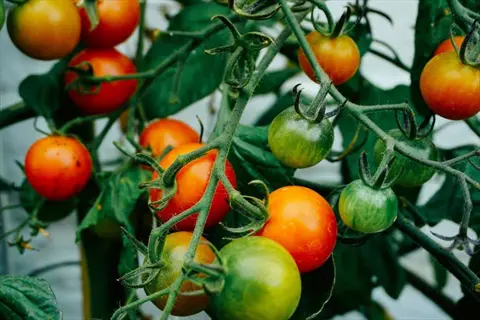
Tomatoes and peppers
- Why it helps: These heavy potassium feeders use large amounts of potassium during fruiting, which supports flavor, color, and firm fruit.
- Quality link: Steady potassium helps fruit fill evenly and can reduce blossom-end problems tied to nutrient stress.
- Salt comfort: The low salt index means less root and leaf stress than a chloride feed during the heat of summer cropping.
- How to feed: Apply as fruit sets and continue through the cropping season when potassium demand is highest.
- Why the confusion: Some guides leave tomatoes off because they are not strictly chloride-sensitive, but they still benefit from the potassium itself.
- Pairing: Combine with balanced feeding so heavy potassium does not crowd out magnesium and calcium.
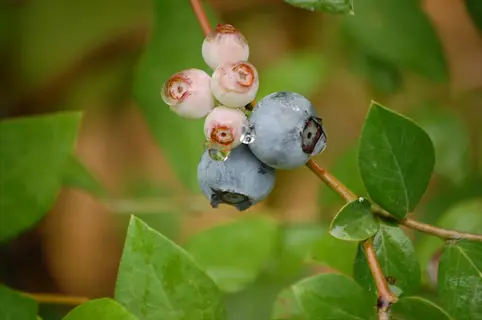
Blueberries and soft fruit
- Chloride sensitivity: Berries are classic chloride-sensitive crops, so a chloride-free feed avoids the salt buildup they dislike.
- Fruiting boost: Potassium supports flowering, fruit set, and sugar movement into ripening berries for better flavor.
- Acid bed friendly: It feeds without the liming effect of wood ash, which suits acid-loving blueberries.
- Sulfur bonus: The sulfur content can gently support the acidic conditions these plants prefer.
- Timing: Feed in early spring as growth resumes and again as fruit develops.
- Watering in: Water it into the moist, mulched root zone so it reaches shallow berry roots.
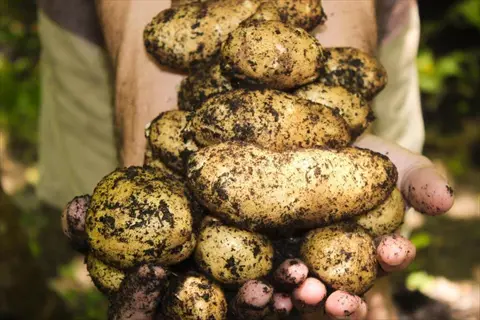
Potatoes
- Proven quality: The 2022 Frontiers study found potassium sulfate preserved more starch and cleaner flavor than chloride fertilizer in potatoes.
- Less watery: Higher specific gravity means denser tubers with less water and less storage shrink.
- Chloride-sensitive: Potatoes are a textbook chloride-sensitive crop, so the chloride-free trait directly matters here.
- When to apply: Work it into the soil before planting and as tubers bulk up through the season.
- Storage payoff: Denser tubers hold up better through months of storage with less loss.
- Rate care: Match potassium to soil test results so you feed the crop without oversupplying.
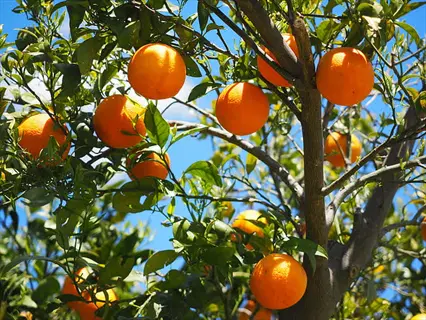
Citrus, roses, and flowering shrubs
- Bloom and fruit: Potassium supports strong flowering and fruiting in citrus, roses, and many flowering shrubs.
- Citrus flavor: Extra potassium can support juicier, better-flavored citrus fruit.
- Salt sensitivity: Citrus is sensitive to salt, so the low salt index and chloride-free form suit it well.
- Hardiness: Potassium strengthens cell walls and stems, supporting resistance to drought and cold stress.
- Feeding window: Apply in spring and during active flowering and fruiting.
- Even spread: Keep the rate modest and watered in to avoid concentrated salt near roots.
Sulfate vs Muriate of Potash
The whole sulfate of potash vs muriate of potash question comes down to one trade. Muriate gives you more potassium per pound for less money. Sulfate gives you a cleaner, chloride-free feed that protects crop quality. Neither one wins every time, so the right pick depends on your crop and your budget.
Muriate of potash carries about 60 to 62% potassium oxide, while sulfate of potash sits near 50%. That gap matters on the price tag. Muriate runs roughly 40 to 50% cheaper per pound of potassium oxide. Penn State pegs sulfate at $1.35 per pound of sulfur, the priciest sulfur source it tested back in 2019.
The catch is what muriate brings along. It feeds potassium as potassium chloride, so every dose adds chloride and pushes up the salt load in your soil. Sulfate skips the chloride and adds sulfur instead. The table below puts the SOP vs MOP numbers side by side so the cost comparison is easy to read.
Think of muriate as the budget bulk option for tough field crops that shrug off chloride and salt. Sulfate is the premium grade you pay extra for when flavor, storage life, or salt-sensitive plants are on the line. The global market reflects this split. Output sat near 39 million metric tons of potassium oxide in 2023. Canada, Russia, and China led the way, with muriate moving the volume and sulfate sold as the high-end grade.
Choose sulfate of potash when the crop is salt-sensitive or quality matters, such as fruit, berries, and potatoes. For tough, chloride-tolerant field crops, cheaper muriate often makes more sense.
Safety and Over-Application
So is sulfate of potash toxic? The short answer is no, not in any serious way. It carries a low toxicity rating for people and pets, much like a kitchen cleaner that stays safe when you use it as the label says. Treat it with the same plain sense, and the real risk drops to almost nothing.
The honest dangers of potassium sulfate are mild and easy to manage. The raw powder is a light irritant to skin, eyes, and the gut, so you do not want to rub it in your eyes or breathe a cloud of dust. A pair of gloves and a closed bag handle that risk in full. This is low-risk, not no-risk, and that gap matters less than most people fear.
The bigger trouble starts when you add too much potash to soil that did not need it. Over-feeding does not poison your plants. It harms them through salt buildup and nutrient lockout instead. A flood of potassium blocks magnesium and calcium, so the roots starve for what they actually want. A simple soil test tells you whether the bed is short on potassium before you reach for the bag.
On the plant itself, the damage shows up as leaf burn. Dry granules left on foliage or grass pull moisture out of the tissue. Concentrated foliar sprays do the same thing from the surface. Heavy rates dumped at once also push salt stress into the root zone, which scorches grass and stunts young growth. Brush stray granules to the soil, water them in, and split big doses into smaller ones to keep this from happening.
Use the quick checklist below to handle, store, and apply it safely.
- Protect yourself: Wear gloves and avoid breathing the dust, since it is a mild irritant to skin, eyes, and lungs even though it is low in toxicity.
- Store safely: Keep it sealed, dry, and out of reach of children and pets, and away from food and feed.
- Soil test first: Confirm potassium is genuinely low before applying, because adding more to rich soil locks out magnesium and calcium.
- Avoid leaf and grass scorch: Do not leave granules dry on foliage or grass, where concentrated salt can scorch them; brush them to the soil and water in.
- Split heavy doses: Break large amounts into several smaller applications to prevent salt damage and a potassium surplus in the soil.
- Keep foliar spray dilute and within label strength, since over-concentrated sprays can burn leaves.
Sulfate of potash is low in toxicity to people and pets, but it is still a salt. Most harm comes from over-application that builds salt and blocks other nutrients, not from poisoning.
5 Common Myths
Sulfate of potash is just burnt wood ash with a fancier name and the two products do exactly the same job in soil.
Wood ash is a variable alkaline byproduct of burning, while sulfate of potash is a refined mined mineral with a fixed analysis and no liming effect.
Because it is gentle on plants, you can apply sulfate of potash heavily and never worry about harming your crops or soil.
Excess potassium blocks magnesium and calcium uptake and raises soil salt levels, so even a low-salt feed needs measured, modest application rates.
Sulfate of potash is poisonous to humans, so any contact with skin or accidental traces on produce pose a serious danger.
It has low toxicity and is only a mild irritant, so basic care such as gloves and dust avoidance handles the real, limited risk.
Sulfate of potash works faster and stronger than every other potassium feed because it dissolves instantly in any soil.
It is only about one-third as soluble as muriate of potash, so it releases steadily rather than acting as an instant high-strength boost.
Every plant benefits from sulfate of potash, so adding it to all beds will always improve growth, flowering, and fruiting.
Plants in potassium-rich soil gain little, and extra potassium can cause nutrient imbalances, so a soil test should guide whether you apply it.
Conclusion
Strip away the marketing and one idea holds the whole topic together. Sulfate of potash is a chloride-free fertilizer. It feeds potassium and sulfur at once, and it has a very low salt index. That mix is what lets it earn its higher price. But you only see that payoff on the crops that need those traits.
Keep the core numbers in mind and the rest gets easy. The analysis sits at about 0-0-50 with 17 to 18% sulfur and under 1% chloride. The strongest proof came from a 2022 potato study in Frontiers in Plant Science. The sulfate form held on to more starch, vitamin C, and flavor than the chloride form did.
So here is the plain plan. Soil test first, because there is no point paying for potassium your ground already holds. Then apply modest split doses into moist soil and water them in, rather than dumping one heavy hit. Save the product for salt-sensitive crops and quality crops like potatoes, berries, and citrus, where that quality edge pays back the cost.
Picking sulfate over muriate of potash is never about one being better for every garden. It is about matching the feed to the crop and the budget, plain and simple. For chloride-tough crops on healthy soil, cheap muriate still does fine work.
The case for this feed only grows stronger with time. Soil sulfur has dropped sharply in recent years. Cleaner air now means less sulfur falls with the rain. So a single product that gives you potassium and sulfur together becomes a smarter staple. If you chase flavor and quality, that pairing is worth keeping on your shelf.
Glossary
- Chloride-sensitive crops
- Plants such as potatoes, berries, and citrus whose quality or growth suffers when fed fertilizers high in chloride.
- Muriate of potash
- A cheaper, high-potassium fertilizer made of potassium chloride that adds chloride and has a higher salt index than sulfate of potash.
- Nutrient lockout
- When an excess of one nutrient, such as potassium, blocks a plant from taking up others like magnesium and calcium.
- Potassium oxide
- The standard way potassium content is measured and labeled on fertilizers, shown as the K number in an NPK grade.
- Salt index
- A measure of how much a fertilizer raises salt levels in the soil solution, which affects the risk of scorching roots and leaves.
- Specific gravity
- A density measure for potatoes; higher specific gravity means denser, less watery tubers with more starch and less storage loss.
- Sulfate of potash
- A chloride-free fertilizer that supplies about 50% potassium oxide plus sulfur, also called potassium sulfate.
- Top dressing
- Spreading fertilizer on the soil surface around growing plants rather than mixing it in before planting.
External Sources
Frequently Asked Questions
What is sulfate of potash and what is it made of?
Sulfate of potash, or potassium sulfate, is a chloride-free fertilizer that supplies about 50 percent potassium oxide plus 17 to 18 percent sulfur.
What is sulfate of potash used for in the garden?
It is used to supply potassium and sulfur to flowering and fruiting plants, especially chloride-sensitive crops like fruit, potatoes, and berries.
Does sulfate of potash need to be watered in?
Yes, you should water it into moist soil so it dissolves and reaches the root zone, since plants take up potassium only from the soil solution.
Do tomatoes like sulfate of potash?
Yes, tomatoes are heavy potassium users during fruiting and respond well to this chloride-free feed, which supports flavor and reduces salt stress.
What plants don't like sulfate of potash?
Plants growing in already potassium-rich soil gain little, and adding more can lock out magnesium and calcium rather than help.
Can you put too much potash in the soil?
Yes, too much potash can block magnesium and calcium uptake, raise salt levels, and harm soil balance, so test before adding more.
Can sulfate of potash burn grass?
It can scorch grass if you apply it too heavily or leave granules undissolved, though its low salt index makes burning less likely than with chloride feeds.
Is sulfate of potash toxic to people and pets?
It has low toxicity but can irritate skin, eyes, and the gut, so wear gloves, avoid breathing dust, and keep it away from children and pets.
Is sulfate of potash the same as wood ash?
No, wood ash is a variable, alkaline byproduct of burning, while sulfate of potash is a refined mineral product with a fixed analysis and no lime effect.
Is sulfate of potash better than muriate of potash?
It is gentler and chloride-free, which suits salt-sensitive and quality crops, but it costs more, so muriate of potash can be the better value elsewhere.

