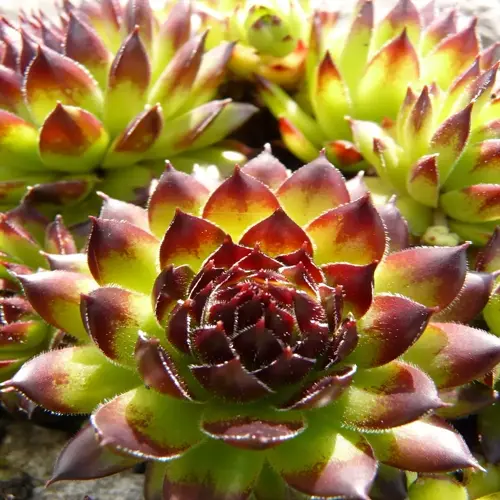

Succulents grow in water for a short time but never thrive long term in a glass. Sempervivum and other succulent roots need air just as much as they need water. Sit those roots in plain water for too long and they will rot from the bottom up. The plant follows within weeks.
I ran a four-week water propagation succulents test last summer with three types. A Sempervivum, an Echeveria, and a small Jade cutting all sat in shot glasses of water on my kitchen sill. The Echeveria put out tiny new roots by week two. The Jade did the same. The Sempervivum turned mushy and rotted within ten days.
Even my two winners gave me trouble later on. I moved both to soil at week four. The Echeveria lost most of its water roots within days. The Jade did better but still needed new roots to take hold. Water roots and soil roots are not the same. The plant has to build a fresh set when you make the move.
The biology here is simple to grasp. Succulent roots come from dry desert and mountain soils. They take a quick drink from rain then sit in air-filled pores for weeks while they wait for the next storm. Their cells need oxygen between drinks. Constant water blocks oxygen and suffocates the cells fast.
Plants store water in their leaves for one reason. Their roots cannot trust the soil for steady moisture. So the leaves act as the storage tank. This means the roots evolved for dry spells, not wet ones. Putting them in hydroponic succulents setups goes against everything the plant is built for.
Oxygen starvation
- Root suffocation: Submerged roots cannot pull in air, which kills cells in 3-7 days for most rosette succulents and even faster in summer heat.
- Visible signs: Brown soft spots near the waterline, slimy stem texture, and a sour smell from the water mark the start of rot.
- No recovery: Once cells die from low oxygen, the damage cannot be reversed even if you move the plant to soil right away.
Wrong root type forms
- Water roots are weak: Roots that grow in water have thin walls and no air channels, which makes them fragile and short-lived in any setting.
- Soil roots differ: Real soil roots have thick walls, root hairs, and side branches that water roots never form during their short life span.
- Transition shock: Moving water roots to soil often kills them within a week and forces the plant to start over from zero.
When can you put succulents in water vs soil? You can use water for short-term rooting of cuttings only. Two to three weeks max is your safe window. Pull the cutting out the moment you see roots and move to dry soil. Wait any longer and you set up the same rot you wanted to avoid.
The better method skips water entirely. Let your cutting callus over for 3-5 days on a dry counter first. Then place the callused end on top of dry soil. Mist the soil once a week. Roots will form within 2-3 weeks and grip the soil right from the start with no transition shock.
I have used this dry method for years with near perfect results. My Sempervivum offsets root in soil this way without losing a single one. Water propagation gave me trouble even when it worked, since the move to soil often killed off plants that looked healthy in the glass. The dry method just works.
If you want a houseplant in water, stick with plants that evolved for it. Pothos, philodendron, and lucky bamboo grow well in vases of water for years. Your succulents need dry soil and bright sun to do their best. Skip the water trick and use soil from day one for the best results.
Read the full article: Sempervivum Plant Complete Care Guide