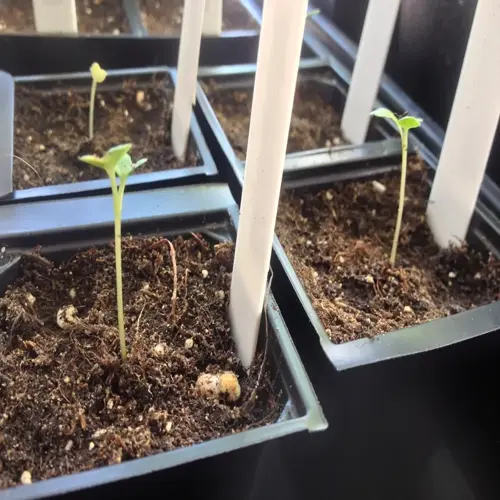

My tomato seedlings in a 72-cell tray on the west kitchen windowsill went pale and stalled out. They sat there for almost two weeks and looked half dead. I tried a regular feed, and within days they greened up and put on real growth. So yes, you can grow vegetables in soilless mix, and you can grow great ones. You just have to feed them yourself, because the mix on its own carries almost no food.
Once I noticed how fast those seedlings turned around, the reason was clear. The mix was holding them fine. It simply had nothing to feed them. That is the whole story of growing vegetables soilless. A bag of peat, coir, perlite, and vermiculite gives the roots water, air, and something to grip. It does not carry the nitrogen or potassium that garden dirt holds in reserve.
Here is the technical part, and it is simpler than it sounds. The medium does three jobs for you. It holds water. It lets air reach the roots. And it props the plant up so it stays steady. You handle the fourth job, which is feeding. You mix a balanced fertilizer into your water, and the roots drink it straight from the damp mix. This split between holding and feeding is exactly how big greenhouses run their crops.
And this is not some fringe trick that a few hobby growers swear by. About 95% of greenhouse vegetables in the United States, Canada, and Europe are grown with no soil at all. Tomatoes alone made up 30.4% of the hydroponic market in 2018. The next supermarket tomato you slice was most likely raised in a soilless system. It never touched a field of dirt at any point.
Some vegetables take to this method better than others, so it helps to know which ones reward you. The list below covers the crops I reach for first when I set up a tray.
Tomatoes and peppers
- Why they fit: You control their feed and water down to the day, which suits these heavy feeders well.
- Watch for: Stake or cage them early since the light mix gives the roots less grip than soil.
- Payoff: Steady feeding gives you bigger fruit and a longer harvest window through the season.
Leafy greens
- Why they fit: Lettuce, spinach, and kale grow fast and stay clean with no soil to splash grit on the leaves.
- Watch for: They dry out quickly in a light mix, so check moisture once or twice a day.
- Payoff: You can cut outer leaves and keep harvesting from the same plant for weeks.
Herbs
- Why they fit: Basil, parsley, and cilantro thrive on the same steady feed your greens get.
- Watch for: Pinch the tops often so the plants stay bushy instead of going to seed.
- Payoff: A small tray on a sunny sill gives you fresh herbs within arm's reach all year.
Heavy root crops like potatoes are the fussy ones, and you can still grow them. They just need a deep, sturdy container so the roots have room to bulk up. For most other vegetables, the one rule you cannot skip is a steady routine. A soilless vegetable garden keeps no food in reserve. A plant that misses its meals shows it fast, with pale leaves and slow growth, just like my stalled tomatoes did.
Feed at every watering with a diluted balanced fertilizer rather than waiting for plants to look hungry. The mix holds no nutrient reserve to fall back on.
I always check the moisture by hand each day, since these mixes dry out quicker than soil and a dry tray sets your plants back fast. Keep the feed steady and the water consistent, and your vegetables will reward you with a strong, clean harvest. You get all the control of a greenhouse setup right on your own windowsill.
Read the full article: Soilless Growing Medium: A Complete Guide