
Introduction
My first batch of seedlings drowned in a heavy bag of cheap potting mix that never drained. The stuff your roots grow in matters more than almost anything else you do. Most people fuss over light and water and never think about it. But a good soilless growing medium is the quiet base under every healthy root. The wrong one sinks your plant before it gets a fair shot.
This is not some fringe trick for hobbyists. About 95% of greenhouse vegetables in the United States, Canada, and Europe now grow with no soil at all. Tomatoes lead the way. So the bagged soilless mix on your garden center shelf is the same basic idea that feeds much of the produce you buy.
Think of a soilless mix as a custom-built home for roots. Each part has one job. Peat or coir holds the water. Perlite opens up space for air. The whole substrate gets blended for the plant you want to grow. You are not stuck with whatever dirt the backyard hands you. You build the container medium to fit the job.
This guide hands you the real numbers behind your growing media. For each part you get the water-holding capacity. You also get the air-filled porosity and the pH. And you get an honest ranking of which ones are kind to the planet. Container gardening and indoor growing keep booming. The hydroponics market was worth about $21.2 billion back in 2016. Knowing these values is what splits a thriving plant from a slow, soggy mess.
What Soilless Growing Medium Is
A soilless growing medium is any material that holds plant roots and feeds them without using garden soil. It can be peat, coir, perlite, rockwool, or a blend of several parts. Growers also call it a substrate, and it does the same core jobs that dirt does in a garden bed.
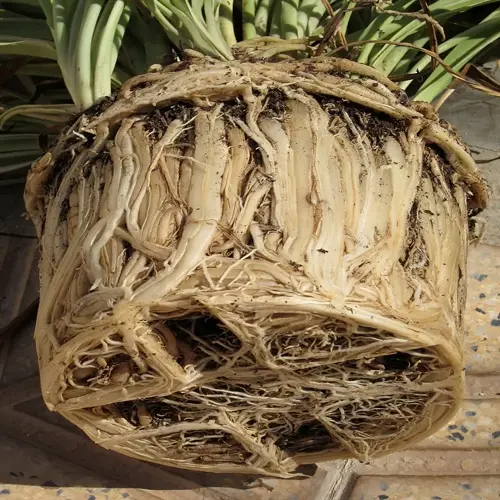
Plant scientists put it in simple terms. A good medium has to give roots oxygen, water, nutrients, and support, just the way soil does. Miss one of those four jobs and your plants stall out fast. Get all four right and roots grow thick and healthy.
Think of the medium as a sponge crossed with a scaffold. The sponge side soaks up water and holds it near the roots between waterings. The scaffold side keeps open air pockets so roots can still breathe. A pile of soggy peat fails the scaffold test, and a tray of dry pebbles fails the sponge test.
Here is the catch with that fourth job. Most soilless mixes carry few nutrients on their own, so the medium mainly holds onto the food you supply. That means you feed the plant through your water or a fertilizer, and the substrate stores it and releases it slowly. This is why root support and water control matter more than any built-in fertility.
Soilless media must provide oxygen, water, nutrients and support the plant roots just as soil does.
None of this is new science. Dr. William Gericke gave us the word hydroponics in 1937. Growers used soilless culture to study plant food even before that. So when you mix your own substrate today, you work with a soil substitute that has been tested for the better part of a century.
Organic Ingredients Explained
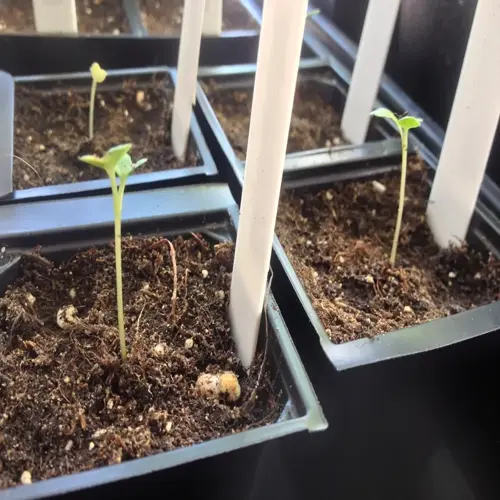
I knelt at the west kitchen windowsill, mixing a batch for a 72-cell seedling tray. The blend ran 60% coco coir, 20% perlite, and 20% compost. The coir sprang back damp under my fingers. It crumbled apart with a light squeeze. Next to it sat a dry peat brick from last season. That brick shed water like wax until I soaked it twice and worked it by hand.
Most of the soilless world rests on a handful of organic materials. Peat, coir, wood, and composted matter are the top substrates worldwide. These few ingredients fill the bulk of every bagged mix you buy. Knowing how each one acts saves you from guessing at water and feeding later.
Each material below holds water, sets the pH, and shapes the mix in its own way. The numbers come from University of Arkansas testing by Dr. Michael R. Evans. So you can match an ingredient to a plant. No more trusting a vague label.
Sphagnum Peat Moss
- Water holding: Holds about 60% to 68% of its volume in water, making it the backbone of most bagged mixes for steady moisture.
- Acidity: Comes in very acidic at pH 3.0 to 4.5, so growers add limestone to lift it into a range most plants prefer.
- Texture: Stays light and fluffy with a low bulk density near 0.1 grams per cubic centimeter, which keeps containers easy to lift.
- Trade-off: Once fully dried it resists rewetting and raises peatland carbon concerns, which pushes many gardeners toward alternatives.
Coco Coir
- Source: Made from the fibrous husk left over after coconut processing, so it is a renewable byproduct rather than a mined material.
- Behavior: Holds water well yet rewets easily after drying, unlike peat, which makes it forgiving for busy or beginner growers.
- Quality note: Cation exchange capacity and salt levels vary widely with source and buffering, so buffered, low-salt coir performs more reliably.
- Resistance: Carries a reputation for resisting some root pathogens, one reason commercial greenhouses lean on it heavily.
Composted Bark
- Water holding: Holds about 60% of its volume in water while keeping near 20% air-filled porosity for healthy roots.
- Acidity: Softwood bark sits near pH 6.0 to 7.0, close to what most container plants enjoy without heavy correction.
- Structure: Coarse particles open up the mix and improve drainage, so bark often partners with finer, water-holding materials.
- Value: Ranks among the more sustainable substrates and is widely available, making it a practical bulk ingredient.
Compost
- Role: Adds a modest supply of slow-release nutrients and living biology that most other soilless components simply do not provide.
- Caution: Quality and salt content vary by batch, so finished, well-cured compost works far better than fresh material.
- Blending: Used as a minor share of a mix rather than the base, since too much can reduce drainage and air space.
- Benefit: Brings a small built-in food supply, which softens the heavy feeding that purely inert mixes demand.
Not every peat is the same, either. Sphagnum peat moss runs very acidic and needs lime. Hypnum peat holds 70% to 75% of its volume in water. It also sits at a friendlier pH 5.0 to 6.5. Read the bag before you assume a peat product acts like the bulk mixes do.
For most home blends, mix one acidic water holder with a coarse opener and a little biology. Pair coir or peat with composted pine bark for drainage. Then fold in cured compost for nutrients. Each organic substrate covers a gap the others leave open. That is why the best mixes never lean on a single ingredient.
Inorganic Ingredients Explained
Mineral parts give your soilless growing medium its backbone. Peat and coir hold the water and feed the roots. The inert medium group does the structural work that keeps a mix open and stable. The four you meet most are perlite, vermiculite, rockwool, and coarse sand.
The numbers tell you what each one does. Perlite sits at pH 7.0 to 7.5. It holds about 25% air and almost no nutrients. Vermiculite runs from pH 7.0 to 9.0. It carries a CEC of 10 to 23 meq per 100g, so it grabs and trades nutrients.
Think of it this way. Perlite is like the gaps in a gravel path. Water rushes straight through. Vermiculite is like a stack of tiny sponges that cling to every drop. So perlite adds air and speeds drainage. Vermiculite holds water and hands roots potassium, magnesium, and calcium. You pick by what your mix lacks.
Perlite
- Air: Provides about 25% air-filled porosity, one of the best oxygen-retention levels of any common medium for breathing roots.
- Water: Holds only around 38% water, so it lightens a mix and speeds drainage rather than storing moisture.
- Chemistry: Sits at pH 7.0 to 7.5 with negligible cation exchange capacity and is chemically inert, so it adds no nutrients.
- Use: Added to reduce water-holding and raise air space, which is exactly why it appears in almost every commercial blend.
Vermiculite
- Water: Holds moisture strongly and clings to it, making it the counterweight to free-draining perlite in a balanced mix.
- Nutrients: Carries a cation exchange capacity of 10 to 23 meq per 100g and supplies potassium, magnesium, and calcium to roots.
- Acidity: Ranges from pH 7.0 to 9.0 depending on where it was mined, so its starting pH is worth checking.
- Weakness: Fragile flakes compress over time and lose air space, so it is often blended rather than used alone.
Rockwool
- Porosity: Granular grades reach about 91% total pore space with 65% water-holding and 25% air, a rare balance of wet and dry.
- Acidity: Starts at pH 8.0 or higher with little buffering, so the irrigation water and feed must be managed carefully.
- Reuse: Slabs can be steam sterilized and reused between crops, which suits high-output commercial greenhouses.
- Origin: Spun from melted rock, it entered greenhouses after Scandinavian and Dutch growers tested it in the late 1960s.
Sand
- Weight: Mainly added to increase bulk density, which helps steady tall, top-heavy plants that would tip in a light mix.
- Air: Coarse sand can aid drainage, but in containers it does not meaningfully raise air-filled pore space on its own.
- Chemistry: Carries negligible cation exchange capacity, so it contributes structure and weight rather than any nutrients.
- Value: Cheap, widely available, and among the most sustainable substrates, which keeps it in many budget recipes.
These minerals are not a niche choice. Rockwool, also sold as mineral wool, covers more than 10,000 hectares of growing space worldwide. About 6,000 of those hectares sit in Europe. That scale shows how much pro growers trust a spun-rock slab to anchor and feed high-value crops.
Perlite is generally added to the root substrate to increase the proportion of large pores and thus to reduce water-holding capacity and increase the air-filled pore space of the root substrate.
Compare Media by the Numbers
Most guides describe each medium in its own little paragraph and leave you to keep all the numbers straight in your head. Here you get the hard figures side by side in one table, so you can read across a row and see what you actually gain or give up.
Two numbers drive almost every choice. Water-holding capacity is how much water a medium keeps for the roots. Air-filled porosity is how much open space stays full of air. These two pull in opposite ways. A medium that scores high on one tends to score low on the other.
Picture a seesaw. Tip it toward the water-holders and the roots can drown in soggy mix. Tip it the other way and they dry out fast between drinks. Reading the table is about finding the balance your plant needs. You want pH close to neutral too, so roots can take up food.
Keep one thing in mind before you trust a single row. Total porosity and cation exchange capacity both shift the moment you blend two things. Coarse bits open up drainage pores. Fine bits pack in water pores. So a mix never matches the single-ingredient values below. Treat these as your starting points.
Peat and rockwool sit at the acidic and alkaline extremes, so both usually need correction before plants take up nutrients well. Check the pH of any new medium before planting.
Choose and Mix Your Own
My 72-cell tray on the west kitchen windowsill sat soggy for days, and the seedlings stalled with yellowing leaves that should have been deep green. The mix was a batch of coir, perlite, and compost I had stirred together by eye. A year earlier a peace lily and a pothos had rotted in reused garden soil on that same sill. I dumped the tray, cut in a few more scoops of perlite to open up the air space, and within a week the new seedlings pushed out roots and stood up straight.
That fix points to the real skill here, which is mixing media in the right ratios rather than guessing. A 2020 study in Agronomy found that components do not keep their own porosity once you blend them. So your perlite does not just add its drainage to the pile in a clean way. Small shifts in the blend change how the finished mix holds water and air, and that is why a working soilless mix recipe lives or dies on proportions.
First work out how to choose a growing medium for your setup. The team at Oklahoma State University Extension says you should weigh six things here. They are your plant type, your water pH, cost, how long the bag stays good, the system you grow in, and what you like. A windowsill seed starting mix has different needs than a deck of big pots. So let those six factors steer the recipe before you buy a bag.
A commonly recommended starting point for a DIY potting mix is 40% peat, 20% pine bark, 20% vermiculite, and 20% perlite or coarse sand. The peat holds water. The bark and perlite open up drainage. The vermiculite grabs water and food so roots get them later. Treat those numbers as a base you can tune, not a law. Push the perlite up if your blend stays wet like my tray did. For thirsty plants, lean on more peat and vermiculite instead.
Two things will trip you up if you skip them. A homemade mix needs added fertilizer. Peat, perlite, bark, and sand carry few nutrients, so your plants will starve in clean media. A peat base also needs limestone. Peat starts out acidic, near a pH of 3.0 to 4.5, and most plants want it raised a bit. Follow the steps below to build a balanced blend you can trust.
Begin with a moisture-holding base such as peat or coco coir, which makes up the largest share and stores water for roots between waterings.
Blend in perlite, coarse sand, or bark to open up the mix so excess water drains and roots keep enough oxygen.
If using peat, mix in limestone to lift the acidic pH into a range most plants prefer, since peat starts near pH 3.0 to 4.5.
Add a slow-release fertilizer or plan a feeding routine, because most soilless components carry few nutrients on their own.
Wet the finished mix evenly, then check that it feels damp yet springy, not soggy, before filling pots or trays.
Sustainability and Big-Scale Use
Going soilless saves a stunning amount of resources. Soilless culture needs only about one-fifth the land and one-twentieth the water of soil-based growing for the same crop. That water savings alone is why so many farms made the switch.
This is not a fringe method. About 95% of greenhouse vegetables in the U.S., Canada, and Europe now grow without soil. Tomatoes lead the pack. Globally, near 95,000 hectares of cropland sit under soilless farming, or roughly 3.5% of all farmland. The scale is huge and still growing.
But the medium you pick carries its own price tag for the planet. Think of choosing a substrate like choosing packaging. Two options can do the exact same job for your plant while leaving very different footprints behind. A life cycle look at each material shows where those costs pile up.
Peat sustainability is the big one to watch. Peat is the most expensive substrate on the list, and harvesting it tears up peatlands that store huge amounts of carbon. That is why so many growers now hunt for a peat-free mix. Perlite has the highest life cycle impact of all. Rockwool comes next, then vermiculite. Plain sand and composted bark sit at the friendly end.
The chart below sorts the common substrates by impact. It helps you spot an eco-friendly growing medium fast.
- Sand ranks among the most sustainable substrates and is widely available.
- Composted bark is renewable and low in life-cycle impact.
- Coco coir is a renewable coconut byproduct that reuses waste material.
- Perlite carries the highest life-cycle impact of the common substrates.
- Rockwool ranks high in impact and is slow to break down.
- Peat is the most expensive substrate and raises peatland-carbon concerns.
Soilless systems can save up to about 95% of water versus soil growing, but fossil-fuel heating in a greenhouse can cancel out those gains. The power source matters as much as the medium.
So the substrate is only half the story. A heated greenhouse running on gas or coal can wipe out the water and land savings through its carbon footprint. If you grow under glass, your energy source shapes your true impact just as much as the medium in your pots.
5 Common Myths
Soilless growing medium is just bagged dirt with a fancier name printed on the label.
Soilless mix contains no garden soil at all. It blends materials like peat, coir, and perlite to give roots air, water, and support.
Plants cannot get the nutrients they need without real soil holding minerals around the roots.
Plants take up nutrients from the water in any medium, so a soilless mix works well once you add fertilizer to feed the roots.
A soilless mix drains so freely that you can water far less often than you would in soil.
Many soilless mixes hold a great deal of water but also dry quickly, so they often need more frequent, careful watering, not less.
Soilless growing is a niche hobby trick that serious vegetable farmers never actually use.
Roughly 95 percent of greenhouse vegetables in the United States, Canada, and Europe are grown in soilless systems on a commercial scale.
Every soilless ingredient is harmless and equally good for the environment once you buy it.
Environmental costs vary widely. Sand and bark rank as most sustainable, while peat raises carbon and peatland concerns and perlite ranks high in impact.
Conclusion
A good soilless growing medium does the same four jobs as soil. It gives roots oxygen, holds water, carries nutrients, and props the plant up. The difference is that you build those jobs from chosen parts instead of digging in the yard. So the best blend always depends on what you grow and the system you grow it in.
Keep the numbers that matter in your head. Peat holds 60% to 68% of its volume in water, while perlite gives you 25% air-filled porosity and only holds about 38%. One part stores moisture and one part opens up space for air. And 95% of greenhouse vegetables now grow in soilless systems across the U.S., Canada, and Europe. So this is proven ground, not a fringe trick.
No single ingredient wins on its own. The real skill is balancing water-holding against air-filled porosity until your roots get both a drink and a breath. That is why a smart soilless mix leans on two or three parts that cover each other's weak spots. Just know that any homemade balanced mix starts out close to empty, so you have to feed it. Most growing media bring little stored food of their own.
Picking your container medium feels like a small choice next to seeds, light, and water. But it is the home your roots live in every single day. Get that home right and the plant rewards you for months. Few decisions in growing media carry this much weight for so little effort, and now you know how to make the call.
Glossary
- Air-filled porosity
- The portion of a medium's volume that stays as open air space after watering, giving roots the oxygen they need.
- Cation exchange capacity
- A measure of how well a medium holds onto nutrients so they stay available to plant roots instead of washing away.
- Coco coir
- A renewable growing material made from the fibrous husk left over after coconut processing.
- Perlite
- A lightweight white mineral made from heated volcanic glass that adds air space and drainage to a mix.
- Soilless growing medium
- A blend of organic and inorganic materials that supports plant roots and supplies water, air, and nutrients without using garden soil.
- Sphagnum peat moss
- A spongy, water-holding material harvested from peat bogs that forms the base of many traditional potting mixes.
- Substrate
- Another name for a growing medium, the material that roots grow into and draw water and air from.
- Water-holding capacity
- The share of a medium's volume that fills with water after draining, which sets how much moisture roots can draw on.
External Sources
Frequently Asked Questions
What is a soilless growing medium?
A soilless growing medium is a blend of organic and inorganic materials that supports plant roots and supplies water, air, and nutrients without using garden soil.
Is a soilless growing medium the same as soil?
No. A soilless growing medium contains no mineral garden soil and relies on blended components for drainage and structure, while it carries few nutrients on its own.
Is soilless potting mix the same as potting soil?
Not quite. Both can be soilless, but products labeled potting soil may contain field soil or compost, while soilless mix excludes mineral soil entirely.
What is the best soilless growing medium?
There is no single best medium. The best choice depends on your plant, watering routine, and system, which is why most growers use a balanced blend.
How do you make your own soilless mix?
Blend a water-holding base with air-building amendments. A common recipe is 40 percent peat, 20 percent pine bark, 20 percent vermiculite, and 20 percent perlite or sand.
What can you use instead of soil as a growing medium?
You can use peat, coco coir, composted bark, compost, perlite, vermiculite, rockwool, sand, pumice, or expanded clay, usually blended together.
What is a free alternative to perlite?
Coarse sand, rinsed rice hulls, crushed pine bark, or small pumice can add air and drainage in place of perlite, often at little or no cost.
Can you grow vegetables in a soilless mix?
Yes. Most commercial greenhouse vegetables, including the majority of tomatoes, are grown in soilless systems with added nutrients.
What are the disadvantages of a soilless mix?
Soilless mixes carry few nutrients, can dry out faster, often cost more than garden soil, and require careful, consistent feeding and watering.
What is the number one killer of houseplants?
Overwatering is the leading cause of houseplant death, and a poorly draining medium makes it worse by keeping roots short of oxygen.