

Introduction
The cranesbill geranium is not the bright red plant your neighbor buys in a hanging basket each May. That one is a Pelargonium, a tender annual in most yards. This plant is a tough perennial that lives in the ground for years and comes back on its own every spring. Sort out that Geranium vs Pelargonium mix-up first. It will save you money and a lot of grief at the garden center.
The true geranium group is huge. The genus holds about 400 species, and most garden types survive USDA zones 3 to 9. That hardiness is the whole point. You plant it once, and it returns year after year with no replacing, no fuss. This is why people call it a hardy geranium or a perennial geranium. It is not one of the throwaway bedding plants.
Here is where many quick care pages fall short. They rush past the hardy-versus-tender split, and they skip the native-plant angle that decides which species belongs in your garden. This guide fills both gaps with sourced specifics on zones, heights, bloom times, and the varieties worth your bed space. You get real numbers, not vague advice.
The name itself helps it stick. It comes from the Greek word geranos, meaning crane, because the long seed pods that follow the flowers look like a crane's beak. Once you spot that pointed shape, you never forget it. In Britain they rank as the most popular perennials of all, says the Royal Horticultural Society. The reason is simple. They are tough, easy to grow, and many flower for months at a stretch.
Cranesbill Geranium Basics
The cranesbill geranium sits in the genus Geranium. That is a huge group with about 400 species worldwide. The number comes from a 2024 review in the Saudi Journal of Biological Sciences. So when you shop for one, you pick from one of the biggest plant families in the garden.
People also call it the hardy geranium or true geranium, and both names matter. The true part sets it apart from the tender pot plant most folks know, which is really a Pelargonium. Both sit in the Geraniaceae family. But only the hardy type lives through a cold winter outdoors year after year.
The common name comes from the seed capsule, which forms a long thin point that looks like a crane's beak. Once you spot that beaked pod, you will never confuse this plant with anything else. It is the clearest field mark on the whole plant.
These are herbaceous perennials, so the top growth dies back to the ground each winter. The roots stay alive underground, and fresh shoots push up again every spring. You get a fuller plant each year without buying anything new.
Most common types are tough across USDA hardiness zones 3 to 9. The exact range shifts by species. NC State Extension rates Geranium maculatum at zones 3a to 11b. It rates Geranium sanguineum at zones 3a to 9b. Check your own zone first, and you will skip a plant that struggles where you live.
Where a plant comes from is worth a quick note too. The species known as Geranium maculatum grows wild in the east of North America. That makes it a great fit for a wild or pollinator bed. Many garden picks, such as Geranium sanguineum, hail from Europe and parts of Asia. Neither choice is wrong. The origin just helps you plant with a goal in mind.
Size ranges widely across the genus. Compact forms stay near 6 inches (15 cm) tall, while the tallest meadow types reach about 36 inches (90 cm). Match the height to the spot, and the plant will look right whether you tuck it at the front of a bed or let it fill a wide border. Here are the key facts at a glance.
Top Cranesbill Varieties
The north side of my house used to have a thin gap along the border that nothing wanted to fill. I planted one Rozanne there in spring, and by its second summer it had spread into a solid sheet of violet-blue that ran the whole length of the bed. Before that, the spot was a bare patch of dry soil and a few weeds I kept pulling. One vigorous plant carried the entire border on its own.
That kind of payoff is why cranesbill geranium varieties stay near the top of so many planting lists. Some flower for months, some glow red in fall, and a few are tough native plants that feed local bees. The picks below mix the famous performers with some quieter award holders worth your space.
Geranium Rozanne sits at the front of the pack for good reason. The Royal Horticultural Society gave it a big honor in 2013. A public vote crowned it Chelsea Plant of the Centenary that year. The Perennial Plant Association also named it Perennial Plant of the Year in 2008. You get blooms from June until a hard frost, and you never have to deadhead. That stamina is rare among award-winning hardy geraniums.
If you want native plants, Geranium maculatum gives you a clear pick. This wild geranium grows wild across eastern North America. It feeds butterflies and bees, and songbirds eat its seeds. For sunny spots, try bloody cranesbill instead. It brings magenta flowers in late spring, and its leaves turn deep red after the first frost.
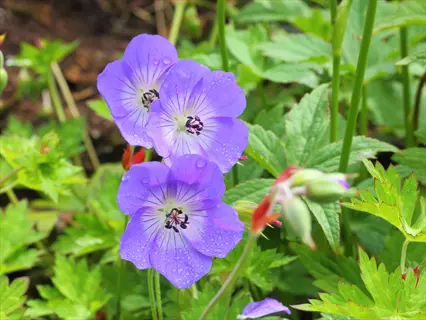
Rozanne (Geranium Gerwat)
- Flowers: Saucer-shaped violet-blue blooms about 2.5 in (6.4 cm) wide with purple veins and small white centers.
- Bloom time: Flowers from June until a hard frost, one of the longest blooming hardy geraniums available.
- Size: Reaches about 24 in (60 cm) tall and spreads into a vigorous, trailing mound that fills space fast.
- Hardiness: Reliable in USDA zones 5 to 8, with afternoon shade helping it through hot summers.
- Awards: RHS Chelsea Plant of the Centenary in 2013 and Perennial Plant of the Year in 2008.
- Best use: Excellent ground cover and a strong container plant that needs no deadheading to keep flowering.
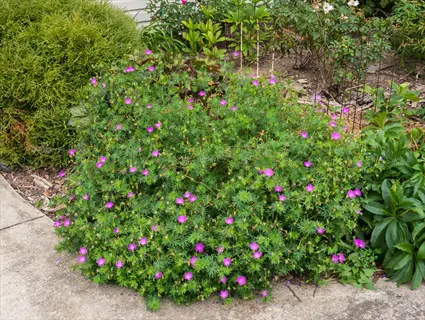
Bloody Cranesbill (Geranium sanguineum)
- Flowers: Magenta cup-shaped blooms up to 1.5 in (3.8 cm) wide appear in May and June and may rebloom.
- Size: A mounding clump about 10 to 20 in (25 to 50 cm) tall and 12 to 24 in (30 to 60 cm) wide.
- Foliage: Deeply cut leaves turn rich red and burgundy after the first autumn frosts.
- Toughness: Tolerates clay soil, heat, and some drought once established, and resists deer and rabbits.
- Origin: Native to Europe and temperate Asia and one of the most popular perennial geraniums grown.
- Best use: A dependable front-of-border mound and edging plant for sunny, well-drained spots.
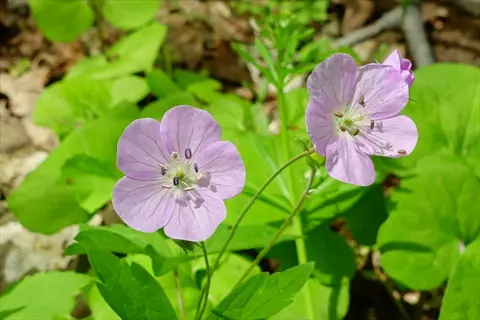
Wild Geranium (Geranium maculatum)
- Native range: Native to eastern North America, from southeast Canada through the central and eastern United States.
- Flowers: Saucer-shaped pink to lilac flowers open from April to June above a low clump.
- Size: Grows about 12 to 24 in (30 to 60 cm) tall and prefers light shade to partial sun.
- Wildlife: Nectar feeds butterflies and bees, supports the specialized bee Andrena distans, and songbirds eat the seeds.
- Conditions: Likes rich, loamy soil that stays moist to slightly dry and will naturalize in good conditions.
- Best use: A top choice for native plant gardens, woodland edges, and pollinator-focused plantings.
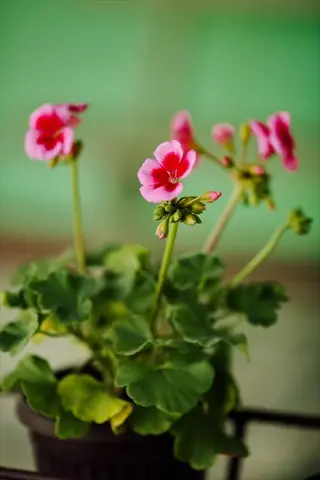
Ann Folkard
- Flowers: Vivid magenta flowers with dark centers stand out against bright golden new foliage.
- Habit: Vigorous and scrambling, useful as a ground cover or threaded up through nearby shrubs.
- Size: Reaches about 20 in (50 cm) tall and weaves widely through a mixed border.
- Awards: Holds the Royal Horticultural Society Award of Garden Merit for reliable garden performance.
- Season: Long flowering through summer, adding color where it climbs into neighboring plants.
- Best use: A lively filler for cottage borders where its scrambling stems can roam freely.
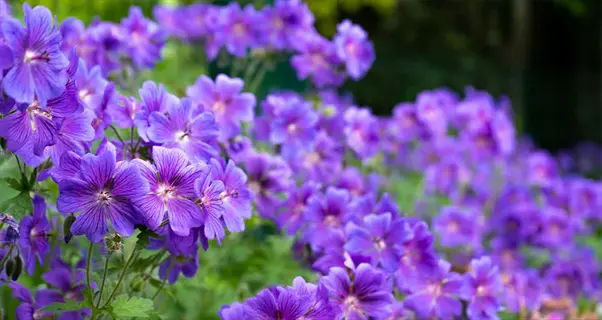
Compact and Tall Picks
- Most compact: Ballerina stays around 6 in (15 cm) tall, ideal for rock gardens and tight edging.
- Tallest: Geranium pratense Mrs Kendall Clark reaches about 36 in (90 cm) for the back of a border.
- Best foliage: Geranium renardii is grown for its sage-green, textured, quilted leaves.
- Poor drainage: Dilys tolerates heavier, less-drained ground better than most hardy geraniums.
- Awards: These selections also carry the Royal Horticultural Society Award of Garden Merit.
- Best use: Mix heights to layer a border from low edging up to a tall, airy back row.
How to Plant Cranesbill
Learning how to plant cranesbill geranium takes about ten minutes once you know the order of steps. Get the site and the depth right at the start, and the plant mostly takes care of itself for years.
These plants want a spot with full sun to part shade and soil that stays moist but drains well. In hot regions, a bit of afternoon shade keeps the leaves from scorching during a long July afternoon.
Good drainage matters more than anything else for long-term survival. So work some compost into heavy or clay soil before you dig, and pick a spot where water never pools after rain. Well-drained soil is what keeps the roots healthy through a wet winter.
Three springs ago I knelt in the part-shade border on the north side of my house and scraped mulch back from a Rozanne that had sulked all season. The crown sat a full inch under the soil, soft and dark where I planted it too low the year before. I dug up the whole clump and set it back so the crown rested level with the surface. By midsummer it threw out fresh leaves and the first violet-blue flowers.
Set the crown level with the surrounding soil and never plant it too deep. A buried crown sits wet, rots, and the plant slowly fails. Planting depth is the small detail that decides whether your geranium thrives or quietly dies back.
Choose a site in full sun to part shade with moist but well-drained soil. In hot climates, afternoon shade keeps plants from scorching.
Loosen the planting area and mix in compost to improve drainage. Good drainage is the most important factor for long-term survival.
Dig a hole as deep as the root ball and set the crown level with the surrounding soil. Planting too deep invites crown rot.
Set plants 12 to 24 in (30 to 60 cm) apart so clumps have room to knit together into a cover over one to three seasons.
Soak the area thoroughly after planting and keep the soil evenly moist while new roots establish over the first few weeks.
Planting the crown too deep is the most common cause of failure. Keep the crown level with the soil surface to avoid rot and weak growth.
Plant spacing is the last piece people get wrong. Set your plants 12 to 24 in (30 to 60 cm) apart so each clump has room to fill out. Over one to three seasons the gaps close and the plants knit into a soft, weed-smothering cover.
Cranesbill Geranium Care
By July my Rozanne clump in the north-side border had sprawled wide open. The middle went bare and floppy, with stems flopping onto the path and not a flower in the center. I grabbed the shears and cut the whole thing back by half. Within a few weeks fresh leaves filled the gap and a second wave of violet-blue flowers pushed up, and the clump sat tidy again.
That midsummer haircut is the one move that defines real cranesbill geranium care. Most other tasks barely register. Once your plant settles in, it shrugs off long dry spells and asks for almost nothing. That makes it a genuine low maintenance perennial for a busy garden.
Water new plants through their first season, then ease off. Established cranesbills are drought tolerant and need a drink only during long dry stretches. They feed lightly too, so a single spring helping of compost beats a steady drip of fertilizer that just builds weak, leggy stems.
You can deadhead cranesbill plants to coax some repeat bloom and keep your clumps neat. A tired clump responds best to a hard midsummer shearing that triggers new growth. Rozanne skips that fuss. It flowers from June to hard frost with no deadheading at all, so it is the easy choice in the group. On the trouble front these plants stay calm, with only minor leaf spots or rust showing up in damp, crowded beds.
Watering
- Establishing: Keep soil evenly moist through the first season while new roots spread into the surrounding ground.
- Established plants: Once settled, most cranesbills tolerate some drought and need watering only during long dry spells.
- Avoid extremes: Soggy ground causes rot, so water deeply but let the surface dry slightly between soakings.
Feeding
- Light feeder: Hardy geraniums are not heavy feeders, so a single spring application of compost is usually enough.
- Slow release: A balanced slow-release feed in spring supports steady growth without forcing weak, floppy stems.
- Soil first: Healthy, well-drained soil rich in organic matter matters more than frequent fertilizing for these plants.
Deadheading and shearing
- Deadhead: Removing spent flowers encourages some repeat bloom and keeps clumps looking tidy through the season.
- Midsummer haircut: Shear a tired, floppy clump back hard in midsummer to trigger fresh foliage and a second flush.
- Exception: Rozanne keeps flowering from June to hard frost without any deadheading, an easy-care standout in the group.
Dividing and tidying
- Dividing: Lift and divide crowded clumps in spring or autumn every few years to keep plants vigorous and flowering.
- Winter dieback: Plants die back to the roots in winter, so cut spent foliage and let them regrow in spring.
- Pests and disease: Largely trouble free, with only minor leaf spots or rust possible in damp, crowded conditions.
Pots, Ground, and Ground Cover
Where you plant a cranesbill geranium changes how it behaves more than most people expect. The ground gives you long-lived clumps that widen for years. A pot lets you show off a trailing type at eye level, right by the door.
The pots vs ground call comes down to what you want the plant to do. Use the open ground for long-lived clumps and for slope or weed cover. Reach for a large pot when you want a trailing variety to spill over an edge. Rozanne earns its spot either way, since both Purdue and the RHS note it works as vigorous ground cover and still performs well in containers.
One rule holds true on both sides. Good drainage stays critical in a bed or a pot. Standing water is the main thing that kills these plants, and the University of Illinois Extension flags it too. Soggy soil rots the crown faster than any pest or frost. So fix the drainage first and the rest gets easier.
- Suits long-lived clumps that return and widen for many years in the same spot.
- Works as ground cover on slopes and under shrubs, knitting together to suppress weeds.
- Needs less watering once established, since roots reach deeper soil moisture.
- Lets vigorous creepers such as Geranium macrorrhizum spread into a true carpet.
- Shows off trailing types like Rozanne that spill attractively over the rim.
- Gives full control over soil mix and drainage, which is critical for these plants.
- Needs more frequent watering because pots dry out faster than open ground.
- Requires extra root protection in cold zones so containers survive winter freezes.
As a hardy geranium ground cover, these plants shine on slopes and under shrubs where you want to skip the mulch and the weeding. Garden Frontier shows clumps fill in over one to three seasons, so a thin first-year planting turns into a thick mat by the third summer. The leaves block light at soil level, and that is how they smother weeds.
Spacing makes or breaks the carpet. Set plants 12 to 24 in (30 to 60 cm) apart so they knit together without crowding. Tighter spacing closes the gaps faster but costs more plants. Wider spacing saves money and waits a season longer for full weed suppression.
Pick the right variety for the job. Want a thick creeping cranesbill carpet? Two top picks fit the bill. The first is bloody cranesbill, and the next one goes by the long Latin name Geranium macrorrhizum. Both spread by low stems. Both shrug off dry shade once they settle in. So the choice is simple. Use in-ground for clumps and cover, and save the large pots for trailing types you want spilling over a rim.
Pollinators and Native Value
A pollinator-friendly geranium earns its spot in your bed twice over. The open, saucer-shaped flowers hand out easy nectar, so butterflies and many kinds of bees drop by all season. Songbirds work the plant too. You will see them pick seeds from the long capsules shaped like a crane's beak.
A native cranesbill feeds your local wildlife and stays off the menu for the animals you want to keep out. The wild geranium even props up a specialist bee called Andrena distans. That bee leans on this kind of flower to get through its short flying season.
That mix is rare in one plant. You get a true deer resistant perennial that bees and butterflies still mob, and you almost never find both in the same perennial. Below you can scan its wildlife and heritage value point by point.
Feeds pollinators
- Nectar source: Open, saucer-shaped flowers offer easy nectar that draws butterflies and many kinds of bees.
- Specialist support: Wild geranium supports the specialized bee Andrena distans, a species that relies on it.
- Long season: Long-blooming types such as Rozanne keep feeding pollinators from early summer to frost.
Resists browsing
- Deer resistant: Multiple cranesbill species are tolerant of deer, which usually leave the foliage alone.
- Rabbit resistant: Rabbits also tend to skip these plants, making them useful where browsing is heavy.
- Practical win: Few perennials both feed pollinators and shrug off deer and rabbits the way cranesbills do.
Supports birds
- Seed food: Songbirds eat the seeds released from the distinctive crane-beak-shaped seed capsules.
- Habitat: Low clumps and ground-cover mats give small wildlife cover at the front of a bed.
- Naturalizing: Wild geranium will naturalize in good conditions, spreading gently to support more wildlife.
Native and medicinal heritage
- Native species: Geranium maculatum is native to eastern North America and prized in native plant gardens.
- Traditional use: Native Americans used wild geranium to treat diarrhea and open wounds and sores.
- Plant chemistry: The astringent tannin geraniin is the genus's most characteristic compound across its leaves.
The heritage runs deep, and it adds to what you are growing. The genus holds about 400 species worldwide, and people have leaned on them in traditional medicine for a long time. Native Americans used the wild geranium to treat diarrhea and to dress open wounds and sores.
Much of that comes down to plant chemistry. The plant's most typical compound is an astringent tannin called geraniin, found across its leaves. That tannin gave the plant its old name as a natural binder. Treat this as backstory, not garden advice, but it shows why folks have grown the plant for so long.
Wild geranium is a woodland perennial flower in the Geraniaceae family native to eastern North America that will naturalize in optimal growing conditions.
5 Common Myths
Cranesbill geraniums are the same as the red and pink geraniums sold every spring at the garden center.
Those bedding plants are Pelargonium, a tender annual. Cranesbills are true hardy perennials in the genus Geranium that return each year.
Cranesbill geraniums are invasive and will quickly take over the whole flower bed if you plant them.
Most cranesbills widen into tidy clumps or self-seed lightly. They spread slowly and are valued as well-behaved ground cover, not invasive runners.
You must dig up cranesbill geraniums and store them indoors every winter so the cold does not kill them.
Hardy geraniums in their zone overwinter outdoors. They die back to the roots in winter and regrow on their own each spring with no lifting.
Cranesbill geraniums only grow in full shade and will scorch and die in any direct sunlight at all.
They grow in full sun to part shade. Many flower best with good light, though afternoon shade helps in hot climates.
Once cranesbill geraniums flop and look tired in midsummer the plant is finished blooming for the year.
Shearing a tired clump back hard in midsummer triggers fresh foliage and a second flush of flowers in many varieties.
Conclusion
The big thing to hold onto is simple. A cranesbill geranium is a true hardy Geranium. It is not the tender Pelargonium people grow in summer pots. It comes back on its own every spring, and most types shrug off winter across roughly USDA zones 3 to 9. Plant one well and it earns its spot for years.
These plants ask for so little. Give a hardy geranium full sun to part shade and well-drained soil, and it mostly takes care of itself after that. Deer and rabbits leave it alone, per NC State Extension. The flowers are pollinator friendly too, feeding bees and butterflies through the warm months. Rozanne even blooms from June straight to a hard frost without any deadheading, which Purdue confirms.
That is real value from one clump. You get a long blooming perennial for color, a tidy ground cover that shades out weeds, and a food source for wildlife, all from the same plant. Few perennials pull this much weight while asking you to do this little in return.
So picture your own garden for a moment. Maybe Rozanne sprawls along a sunny border, or wild geranium fills a shady spot under the trees. The Royal Horticultural Society calls these the top garden plants in Britain. They are tough, easy, and long flowering. Pick the variety and the spot that fit your space, and you will see exactly why.
Glossary
- Award of Garden Merit
- A Royal Horticultural Society mark given to plants that perform reliably well in gardens.
- crown
- The point where a plant's stems meet its roots, which should sit level with the soil when planting.
- deadheading
- Removing faded flowers to tidy a plant and encourage it to produce more blooms.
- Geraniaceae
- The plant family that includes the genus Geranium and its relatives.
- Geranium
- The plant genus that contains the true, hardy perennial geraniums commonly called cranesbills.
- herbaceous perennial
- A plant that dies back to its roots each winter and regrows new growth the following spring.
- Pelargonium
- The genus of tender bedding geraniums sold as annuals, which are different from the hardy perennial cranesbill geraniums.
- USDA hardiness zone
- A regional rating that shows the lowest winter temperatures a plant can survive in a given area.
External Sources
Frequently Asked Questions
Do cranesbill geraniums come back every year?
Yes. Cranesbill geraniums are hardy herbaceous perennials that die back in winter and regrow from the roots each spring across roughly USDA zones 3 to 9.
Does cranesbill geranium spread?
Yes, but slowly and politely. Most cranesbills widen into clumps or self-seed lightly rather than running aggressively, so they are not considered invasive.
How tall do cranesbill geraniums get?
It depends on the variety. Heights range from about 6 inches (15 cm) for compact types to about 36 inches (90 cm) for the tallest meadow forms.
Where is the best place to plant cranesbill geranium?
Plant cranesbill geranium in full sun to part shade in moist but well-drained soil. Good drainage is the single most important factor for long-term survival.
Do cranesbill geraniums do better in pots or in the ground?
Both work well. In-ground planting suits long-lived clumps, while large containers suit vigorous trailing types such as Rozanne that spill over the edge.
Can I leave my cranesbill geraniums outside over winter?
In their hardiness range, yes. Hardy geraniums in the ground overwinter outdoors, while potted plants need extra root protection in cold zones.
How do you keep cranesbill geraniums flowering?
Deadhead spent flowers, and give a tired clump a midsummer haircut. Shearing back triggers fresh leaves and a second flush of bloom in many varieties.
Do slugs eat cranesbill geraniums?
Slugs may nibble soft new spring growth, but established hardy geraniums shrug off most damage and are not a slug favorite compared with hostas.
What should you not plant with cranesbill geraniums?
Avoid pairing them with plants that need constantly wet feet or with fast, aggressive spreaders that will smother the clump before it establishes.
What is another name for cranesbill geraniums?
Cranesbill is also called hardy geranium or true geranium. All belong to the genus Geranium, named for crane-beak-shaped seed capsules.

