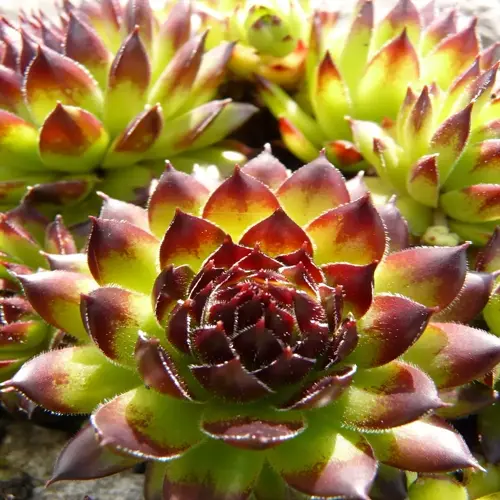

The sempervivum sun or shade debate has a clear answer. These plants want full sun with at least six hours of direct light each day. Shade leads to weak floppy rosettes and dull color. You will see better growth and brighter tones with more sun.
I ran a test with one red cultivar split across three spots in my yard last year. The sempervivum full sun group on my south wall turned deep crimson by July. The morning-only group held some red but stayed paler. My dappled shade group went pure green and stretched out by August.
Light shapes how tight the rosettes grow. Strong sun keeps the leaves packed in a low dense form. Weak light makes the leaves reach up and gap apart in search of more rays. This stretched look ruins the neat geometry you want from these plants.
Color comes from stress pigments. The plant makes red and purple tones when bright light pushes it to protect inner cells. Move a red cultivar to shade and the tones fade within weeks. I learned this when I moved a prized purple variety under a tree and lost all its color by month two.
Offset count tracks with sun too. My full sun plants made 10 to 15 chicks per mother rosette last season. The shade group made just 3 or 4. More sun means more energy for new growth and a faster spreading colony over time.
NC State Extension calls for 6+ hours of direct sun as the gold standard. They add a key caveat for warm spots. In zones 8 and warmer, light sempervivum partial shade during afternoon hours helps prevent heat scorch on the leaf tips.
Watch your leaves for clues about light. Healthy plants in good hens and chicks sunlight stay tight with crisp color. Pale leaves and gaps between layers mean the plant wants more sun. Move it to a brighter spot when you spot these signs early.
Acclimate plants slowly when you shift them into more sun. A sudden move from shade to full sun can scorch the leaves in a single afternoon. I learned this the hard way with a tray of greenhouse plants. Give them two weeks to adjust by adding one extra hour of sun each day.
Cool zone growers should default to the sunniest spot in your yard. Hot zone growers need to think more about layout. Use a wall or trellis to shield from harsh 3pm sun in zones 8 and up. Your plants will thank you with tight colorful rosettes that hold their form all summer long.
I keep my best red and purple cultivars on a south-facing slope where they get sun from dawn to dusk. The colors look so deep that visitors think the plants are fake when they walk past my rock bed. None of my shaded plants have ever come close to that level of color depth in any season.
If you want one rule to follow, give your plants more sun than you think they need. These plants can take more direct light than almost any other rosette succulent on the market. Bright spots that fry an echeveria will still leave a healthy sempervivum colony looking sharp and tight by month's end.
Track your sun hours before you pick a planting spot. Stand in your chosen area at 9am, noon, and 4pm for one weekend. Note when sun hits and when it leaves. You want at least six full hours of direct rays, not just bright sky overhead.
Read the full article: Sempervivum Plant Complete Care Guide