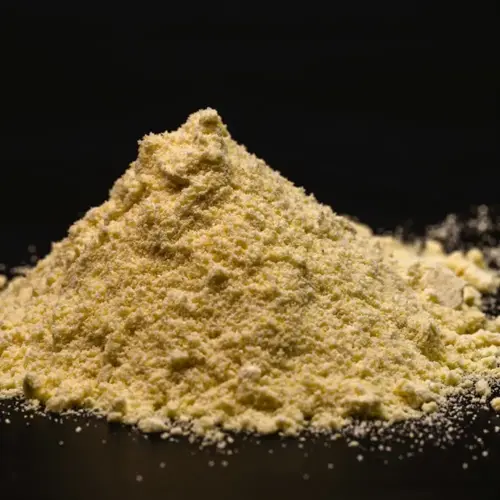

Yes, you do need to water sulfate of potash in to get any benefit from it. The dry granules sit on the surface and feed nothing until water dissolves them. So watering in sulfate of potash is the step that turns a pile of crystals into food your plants can actually use. Skip it and you waste both the feed and your money.
I scattered granules around my first-year 'Victoria' rhubarb crown and then watched it sulk for weeks. The white crystals lay there dry on the soil, and the new shoots stayed small and pale the whole time. Then a long rain soaked the bed for two full days. I watched the granules vanish into the ground, and within a week fresh red stalks were pushing up fast and thick. I used the same feed on a tired gooseberry that spring and it shrugged off its yellow leaves once I soaked the roots.
The reason comes down to how your roots feed. Your plants pull potassium out of the soil solution, which is the thin film of water that clings around every soil particle. The granules have to dissolve in soil moisture first, because your roots cannot grab a solid crystal. Dry potash just sits there with the nutrient locked inside, well out of your reach. Add water and the lock opens, and your plant can finally drink the feed up.
Sulfate of potash is also slow to melt next to other forms of potash. It is only about one-third as soluble as muriate of potash, so it needs more water and a bit more time to break down. This slow pace is good for your plants, because it feeds them over weeks instead of all at once. But it does mean you cannot skip the water and expect a fast result.
Always feed when the soil is already damp. Dry soil makes the granules sit longer and raises the risk of salt scorch on nearby roots and stems.
There is one exception you should know about. Ultra-fine grades sold for foliar sprays work straight through the leaf, so you mix them with water and spray the foliage. These dissolve fully before they ever touch your plant. But the standard granular feed most gardeners buy is made to go in the ground. That kind always needs watering in to release its potassium and sulfur where the roots can find them.
So how much water is enough for you to use? You want the top few inches of soil to feel properly moist, not just dusted on top. A light sprinkle will not melt the granules, and it can leave them sitting on the surface where they pull moisture out of your nearby stems. Give your bed a real soak instead. You should aim for about a full watering can per crown, then check that your granules have disappeared down into the soil.
Here is the routine I use on the rhubarb and on everything else in the beds. Start with soil that is already moist, because wet ground helps the granules melt faster. Scatter the feed evenly around the plant, and keep it off the crown and the leaves. Then rake it in lightly so it sits just under the surface where the feeding roots live.
Finish with a good soak from a can or a hose. The water carries the dissolved potash down to the root zone where it can get to work. This last step matters most, since granules left dry on top can pull moisture out of your plants and scorch foliage on a hot day. A proper watering also speeds root uptake, so your plants get the potassium boost they need for strong stems, better flowers, and bigger crops.
Read the full article: Sulfate of Potash: A Complete Guide