

Introduction
Your summer flowers start to fade in September, and the garden goes quiet right when the weather turns perfect for sitting outside. Fall blooming plants fix that gap. They wake up as the days grow short and carry rich color from late summer all the way to the first frost.
Think of your garden as a relay race. Summer flowers run the early laps, then late bloomers grab the baton and sprint to the finish. The science behind this is simple. Most fall bloomers are short-day plants. Their buds form once the days get short in late summer, a cue the University of Maryland Extension has long tracked. Shorter days, not colder air, flip the switch.
Most fall plant lists let you down here. They give you a flat roundup of full-sun favorites and stop. This guide goes further. You get a bloom calendar for early, mid, and late fall. You get the right timing for fall planting. You get real shade options that other lists ignore, plus a quick comparison table to match each plant to your yard. That mix of fall flowers and fall perennials keeps the show going for weeks.
Late-season color does more than please your eyes. It feeds migrating monarchs, who pack on weight from fall nectar before a trip of up to 3,000 miles (4,800 km) to Mexico. Plant the right autumn garden, and you give them fuel for the road. Let's look at the plants that deliver this late-season color best.
Best Fall Blooming Plants
One early fall I knelt by the kitchen window and set a single New England aster 'Purple Dome' into the sunny back border. The next October it threw a wall of purple so thick you could not see the leaves. It carried that whole bed on its own.
That is the case for fall blooming perennials. One tough native, planted in the right spot, gives you weeks of color while the rest of your yard fades. The plants below are the ones I reach for first. I have grouped them by how you use them, not in a flat list.
Two plants anchor every fall list: goldenrod and New England aster. These are your keystone native fall bloomers, and almost every other plant here pairs with them. You will also find sedum Autumn Joy, tall Joe Pye weed, and the graceful Japanese anemone. You get a fit for sun, shade, and damp corners.
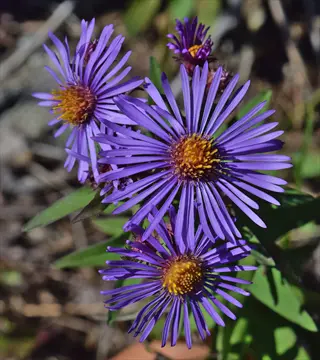
New England Aster (Symphyotrichum novae-angliae)
- Why grow it: This keystone native fall flower covers itself in purple, pink, or blue daisy-like blooms just as most summer color fades.
- Size: Cultivars stay around 18 to 36 inches (45 to 90 cm), while wild forms can reach 4 to 6 feet (1.2 to 1.8 m) tall.
- Light and soil: Plant in full sun in moist, well-drained soil for the fullest flowering and the sturdiest, most upright stems.
- Bloom time: Flowers open from late summer and hold their color until the first killing frost or even slightly later in mild years.
- Wildlife value: Asters are a top late-season nectar source for migrating monarchs, native bees, and other fall pollinators.
- Design tip: Pinch stems back in early summer to keep plants compact and to reduce the need for staking tall, top-heavy clumps.
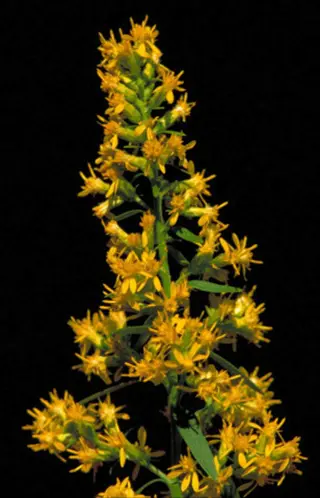
Goldenrod (Solidago)
- Why grow it: Goldenrod lights up the autumn garden with plumes of bright yellow flowers and is a documented fall nectar source for monarchs.
- Size: Garden cultivars are well-behaved at 1 to 3 feet (30 to 90 cm), far tidier than tall roadside wild types.
- Light and soil: It thrives in full sun and tolerates lean, dry soil, making it an easy, low-input native choice.
- Bloom time: Goldenrod provides vivid color until the first killing frost, and it pairs well with purple asters.
- Myth note: Goldenrod gets the blame for hay fever, but that is wrong. People confuse it with ragweed, the true allergen, which blooms at the same time.
- Wildlife value: Its flowers draw bees and butterflies, and leaving seedheads supports goldfinches and other birds into winter.
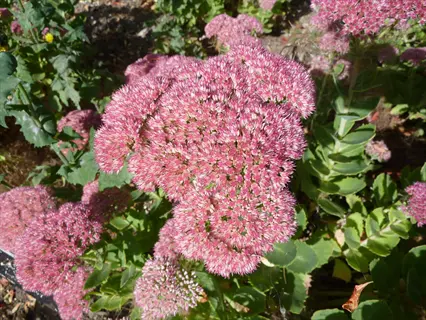
Autumn Joy Sedum (Hylotelephium 'Autumn Joy')
- Why grow it: This showy stonecrop forms domes of pink flower heads that deepen to rusty red as the season cools.
- Size: Plants form a tidy clump about 18 to 24 inches (45 to 60 cm) tall and wide, perfect for the front of a border.
- Light and soil: Give it full sun and sharp drainage, where its succulent leaves shrug off heat and drought with ease.
- Bloom time: Flower heads color up in late summer and hold their shape through fall and into winter as dried seedheads.
- Wildlife value: The broad flower heads act as landing pads for bees and butterflies foraging for late-season nectar.
- Design tip: Leave the faded heads standing for winter interest and frost-catching texture rather than cutting them back in fall.
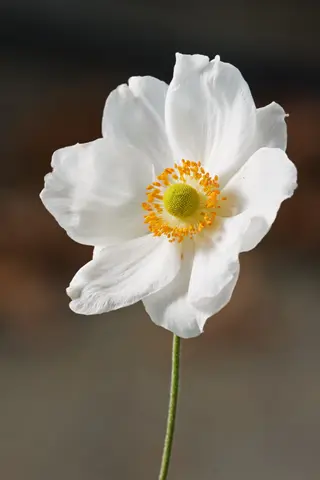
Japanese Anemone (Anemone hupehensis)
- Why grow it: Elegant, saucer-shaped pink or white flowers float on tall wiry stems above clean foliage for weeks.
- Size: Flowering stems rise to about 2 to 4 feet (60 to 120 cm), bringing welcome height to the mid or back border.
- Light and soil: It performs best in full sun to part shade in moist, fertile soil that never dries out.
- Bloom time: Flowers open from late summer through fall, filling the gap between summer perennials and the first frost.
- Wildlife value: The open blooms offer accessible pollen and nectar to bees during the cooler weeks of autumn.
- Design tip: Plants spread by runners once settled, so give them room or site them where a gentle colony is welcome.
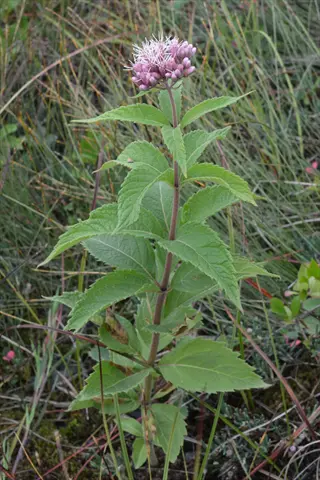
Joe Pye Weed (Eutrochium)
- Why grow it: This bold native forms towering clumps topped with large mauve-pink flower clusters that pollinators adore.
- Size: It is the giant of the fall border at 6 to 10 feet (1.8 to 3 m) tall, so place it at the back of a bed.
- Light and soil: Plant in full sun to part shade in steady moist soil, including the edges of rain gardens and ponds.
- Bloom time: Large blossoms appear in late summer and carry into early fall as a magnet for butterflies.
- Wildlife value: University extension sources name its big blossoms a favorite for attracting pollinators to the garden.
- Design tip: Compact named cultivars exist if the full height is too much for an average suburban border.

Russian Sage (Salvia yangii)
- Why grow it: Airy spires of small lavender-blue flowers rise over silvery aromatic foliage for a long, hazy display.
- Size: Plants form an open, shrubby mound about 3 to 4 feet (90 to 120 cm) tall and nearly as wide.
- Light and soil: It demands full sun and well-drained soil, where it is both drought-tolerant and deer-resistant.
- Bloom time: The long bloom season stretches from midsummer well into fall, bridging the seasons with cool color.
- Wildlife value: Bees work the tiny flowers all day, and the aromatic leaves help keep browsing deer at bay.
- Design tip: Pair the blue haze with yellow goldenrod or rusty sedum for a classic, high-contrast autumn combination.
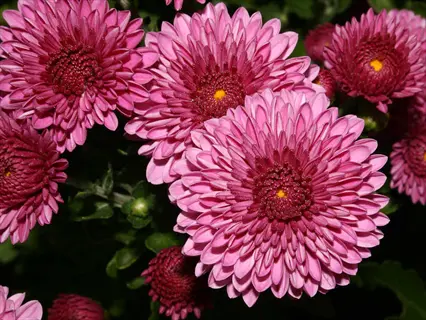
Garden Mum (Chrysanthemum)
- Why grow it: The signature flower of fall displays, mums deliver dense mounds of color in nearly every warm shade.
- Size: Cushion types stay compact at 1 to 3 feet (30 to 90 cm), ideal for beds, borders, and large pots.
- Light and soil: Give them full sun and well-drained soil, and water container plants often because they dry out fast.
- Bloom time: They flower hard through fall, though the throwaway florist types are most often grown as annuals.
- Perennial note: Only hardy garden mums, planted early enough to root, come back year after year in cold zones.
- Design tip: Set hardy mums in the ground in early fall rather than late so roots establish before winter cold arrives.
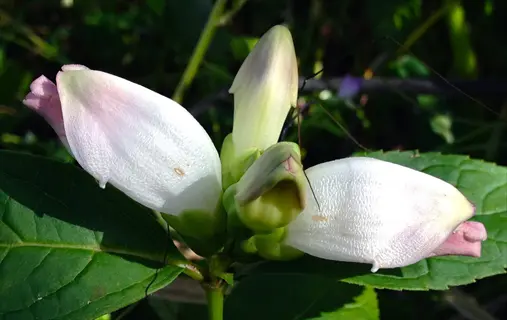
Turtlehead (Chelone)
- Why grow it: This underused native produces curious snapdragon-like pink or white flowers shaped like a turtle's head.
- Size: Upright clumps reach about 2 to 3 feet (60 to 90 cm), fitting into a mid-border or streamside planting.
- Light and soil: It is one of the better fall bloomers for part shade and thrives in moist to wet, rich soil.
- Bloom time: Flowers open in late summer and continue into early fall when many sun-loving perennials are finishing.
- Wildlife value: Turtlehead is a larval host for the Baltimore checkerspot butterfly and draws bees to its hooded blooms.
- Design tip: Use it to add late color to damp, shaded corners where typical fall flowers struggle to perform.
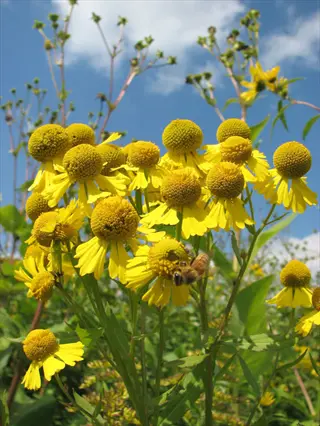
Sneezeweed (Helenium)
- Why grow it: Despite the unfortunate name, sneezeweed offers warm daisy-like blooms in red, orange, and gold tones.
- Size: Sturdy clumps grow about 3 to 5 feet (90 to 150 cm) tall, bringing fiery color to the middle of the border.
- Light and soil: Plant in full sun in average to moist soil for the strongest stems and most generous flowering.
- Bloom time: It blooms from late summer into fall, echoing the autumn foliage colors of the surrounding landscape.
- Myth note: The name comes from old powdered uses, not pollen. Like goldenrod, it does not cause hay fever.
- Wildlife value: Bees and butterflies flock to the nectar-rich, daisy-shaped flowers throughout the autumn weeks.
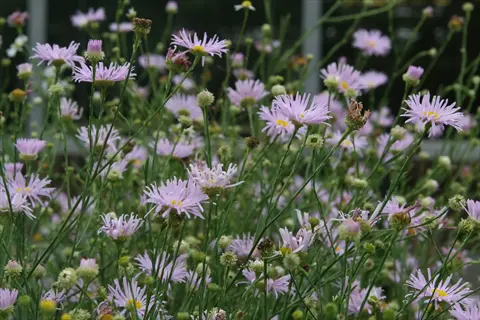
Boltonia (Boltonia asteroides)
- Why grow it: Often called the thousand-flowered aster, boltonia smothers itself in masses of small daisy-like blooms.
- Size: Airy clumps reach about 3 to 5 feet (90 to 150 cm), with individual flowers around 1 inch (2.5 cm) across.
- Light and soil: Plant in full sun in average, well-drained soil, where it stays trouble-free and upright.
- Bloom time: White or soft purple flowers blanket the plant in late summer and fall, including the popular Snowbank cultivar.
- Wildlife value: The cloud of tiny blooms gives bees and butterflies an abundant late-season nectar buffet.
- Design tip: Use it as a frothy, fine-textured backdrop that softens the bolder shapes of mums and sedum nearby.
Mix a few of these and you get a border that stays alive from August right up to the first hard frost. Pair the blue and purple of asters and Russian sage with the gold of goldenrod and the rust of sedum, and the contrast does most of your design work for you. The experts say the same about how deep this plant list runs.
Classic, colorful fall plantings that usually come to mind are chrysanthemum, aster, and goldenrod ... but they are just the tip of the iceberg.
Why Plants Bloom in Fall
These flowers do not bloom late by accident. They are short-day plants. Their buds form once daylight starts to shrink after the summer solstice. The University of Maryland Extension calls this the real trigger. The science word for it is photoperiod. Think of the shorter days as a calendar alarm clock. It tells these plants it is finally their turn to flower, just as you start to miss your summer color.
That timing is no small thing for the insects still on the move. Late-season nectar arrives right when many pollinators need fuel the most. As summer flowers fade, asters and goldenrod step in and keep the table set well into autumn.
Monarchs make the clearest case. Each fall, monarch migration sends eastern butterflies south to Mexico. The USDA Forest Service says they fly up to 3,000 miles (4,800 km). The strange part is that they gain weight as they fly south. They feed on nectar the whole way, and that builds the fat they need for the long trip and the winter ahead. Your fall flowers help fund that journey.
These butterflies follow nectar corridors, moving from one patch of blooms to the next like rest stops on a highway. A gap in the flowers means a gap in their food. So you want your garden to bloom from early spring through late fall, with no empty stretches in between. Your yard becomes one more stop on the route.
Plant fall bloomers in clumps rather than singly so pollinators can find them easily, and choose single-flowered natives over doubled hybrids that breeders have stripped of nectar and pollen.
One last warning shapes which flowers you pick. The USDA Forest Service cautions that doubled hybrid blooms often lose their pollen, nectar, and scent. They look full and showy, but they leave wildlife with little to eat. For the best fall pollinator plants, single-flowered natives beat fancy hybrids every time.
Fall Bloom Succession Calendar
A great fall garden works like a relay race. Early bloomers open first, then hand the baton to mid-season flowers, and those pass it on to the latest bloomers before frost. Plan it right and your beds never go dark from late summer until the cold shuts things down.
Here is a clear fall bloom calendar you can shop from. Early fall flowers like sedum and Joe Pye weed open from August into early October. Asters and goldenrod then carry the show, and they hold color until the first killing frost or a bit past it.
Late Summer to Early Fall
Sedum, Russian sage, Joe Pye weed, sneezeweed, and Japanese anemone open first, generally from August into early October, bridging the gap as summer flowers fade.
Mid Fall
Asters, goldenrod, boltonia, and turtlehead reach their peak, painting the garden purple, gold, and white through the heart of the season.
Late Fall to First Frost
Hardy garden mums and flowering kale carry the latest color, with asters and goldenrod holding on until the first killing frost or even slightly beyond.
After Frost
Standing seedheads from goldenrod, sedum, and coneflowers feed goldfinches and other birds while adding frost-catching winter structure.
Wondering which flowers bloom longest? Asters and goldenrod are your champions, since they push color right up to the first frost and beyond. Pairing a few of these late fall bloomers with earlier plants is the simple secret behind smooth bloom succession in any bed.
The payoff does not stop when the petals drop. Leave the spent seedheads of goldenrod, sedum, and coneflowers standing through fall. Goldfinches and other birds feast on those seeds well into winter, so your garden keeps earning its keep long after the last flower fades.
Choose at least one plant from each phase when you shop so color flows without gaps from late summer straight through to your area's first hard frost.
Fall Bloomers for Shade and Pots
The damp corner where my lawn met the old maple lit up one October with white wood aster. Clouds of tiny white daisies covered ground that had been bare dirt for years. Grass never took there. I reseeded that strip three springs in a row, and each time the maple roots and deep shade killed it off by midsummer. The aster did not care. It spread into the dark, root-filled soil that had beaten every blade of turf I tried.
Sort your fall plants by where they will actually grow, not just by how pretty they look. Some handle deep shade and dry soil. Others want steady moisture in a part-shade bed. A few do best in pots on your patio. Match the plant to your real conditions, and the part shade perennials below will carry color long after your sunny borders fade.
Container gardens for fall matter more than you might think. Federal pollinator guidance makes a simple point. Even a few pots on a balcony can feed late-season bees and the butterflies passing through. You do not need an acre. Set out a porch with hardy mums and a pot of coral bells, and you build a small fuel stop. Several of these plants are made for that job.
White Wood Aster
- Best for: One of the few asters that thrives in dry shade, ideal for the edge of woodland or under high tree canopy.
- Look: It produces airy sprays of small white daisy flowers on dark, wiry stems in early to mid fall.
- Care: Once established it tolerates dry, root-filled soil where many other perennials would quickly struggle.
- Value: It feeds late-season pollinators in shady spots that sun-loving fall flowers simply cannot fill.
Toad Lily (Tricyrtis)
- Best for: Moist, shaded borders and woodland gardens where its exotic blooms reward a close look in fall.
- Look: Small orchid-like flowers speckled in purple and white line arching stems from late summer into fall.
- Care: Keep the soil consistently moist and rich, and shelter it from harsh afternoon sun for the best display.
- Value: It brings unexpected, intricate fall color to shade where bold daisy shapes would feel out of place.
Coral Bells (Heuchera)
- Best for: Part-shade borders and containers, grown mainly for foliage that holds color deep into the cool season.
- Look: Mounds of ruffled leaves in shades of amber, burgundy, lime, and silver echo classic autumn tones.
- Care: University extension guidance lists heuchera as a good perennial for fall planting in part shade.
- Value: Its evergreen-to-semi-evergreen foliage keeps beds and pots looking full well past the last flowers.
Hardy Mums in Containers
- Best for: Patios, porches, and small spaces where a burst of instant fall color is the goal.
- Look: Tight mounds of densely packed flowers come in golds, rusts, purples, and whites for autumn displays.
- Care: Water container mums often because pots dry out fast, and sink hardy types into beds to overwinter.
- Value: Even a few pots turn a balcony into a fall pollinator stop, supporting bees from porch to garden.
Turtlehead in Damp Shade
- Best for: Wet, part-shaded corners, rain garden edges, and streamside spots that stay reliably moist.
- Look: Hooded pink or white flowers shaped like a turtle's head rise on upright stems in late summer to fall.
- Care: It needs consistently moist, rich soil and tolerates more shade than most fall-flowering perennials.
- Value: Beyond its blooms, it serves as a larval host for the Baltimore checkerspot butterfly.
Most fall flower lists assume you have full sun and open ground to spare. That leaves out anyone with a shaded yard, a north-facing wall, or a balcony with room for a few pots. The good news is that fall plants for shade and small spaces are real, and several feed late-season bees just as well as their sun-loving cousins.
When and How to Plant in Fall
Knowing when to plant fall perennials comes down to one simple rule that most garden lists skip. Put your plants in the ground at least one month before the ground freezes. That gives the roots time to settle in, a timing rule the University of Vermont Extension backs up. Get that window right and your new plants spend the cold months building strength underground.
So is October too late to plant? In many regions October still works fine, as long as you beat that one-month-before-freeze window. The date slides earlier as you move into colder zones, so a gardener up north needs to plant sooner than someone further south. Check your first hard frost date, count back a month, and that gives you your real deadline for planting before frost.
Think of fall planting timing like settling into a new house before winter. The roots get comfortable and put down their connections underground while the top of the plant rests above the soil. By spring your perennials are already at home and ready to push out fresh growth instead of starting from scratch.
Here are the steps I follow for strong fall garden establishment every season.
Find your area's first hard frost date and count back at least a month, planting before the ground freezes so roots have time to establish.
Loosen the bed and mix in compost so new roots can spread into loose, well-drained soil rather than dense, compacted ground.
Place the root ball level with the surrounding soil, firm the soil gently around it, and space plants for their mature width.
Soak each plant well after planting and keep the soil evenly moist until the ground freezes to settle the roots.
Add a layer of mulch once the soil cools to insulate roots, reduce frost heave, and protect new plantings through their first winter.
One more call to make before winter is whether to deadhead spent blooms. Snipping faded flowers pushes the plant to make more color, but it cuts down the seed heads that feed birds and other wildlife through the cold months. Weigh that extra fall color against the winter food value, since Penn State Extension notes both matter for the late-season garden.
Perennials, such as heuchera, should be planted at least a month before the ground freezes to give plants time to become established and develop strong roots.
Fall Plant Comparison Chart
| Plant | Light | Height | Bloom Window | Pollinator Value |
|---|---|---|---|---|
| New England Aster | Full sun | 18-36 in (45-90 cm) | Late summer to frost | Excellent |
| Goldenrod | Full sun | 1-3 ft (30-90 cm) | Mid fall to frost | Excellent |
| Autumn Joy Sedum | Full sun | 18-24 in (45-60 cm) | Late summer to fall | High |
| Japanese Anemone | Sun to part shade | 2-4 ft (60-120 cm) | Late summer to fall | Moderate |
| Joe Pye Weed | Sun to part shade | 6-10 ft (1.8-3 m) | Late summer to early fall | Excellent |
| Russian Sage | Full sun | 3-4 ft (90-120 cm) | Midsummer to fall | High |
| Turtlehead | Part shade | 2-3 ft (60-90 cm) | Late summer to early fall | High |
| White Wood Aster | Shade | 1-2 ft (30-60 cm) | Early to mid fall | High |
| Heights reflect typical garden cultivars; wild forms of some species grow taller. | ||||
Use this fall plant comparison as your shopping cheat sheet before you head to the nursery. The scannable table lines up light needs, height, bloom window, and pollinator value in one place. Match the rows to the spot you want to fill and you skip the guesswork at the garden center.
The light column does most of the heavy lifting. Full sun fall perennials like New England aster, goldenrod, and Russian sage want six or more hours of direct light each day. Turtlehead and white wood aster handle shade, so save those for the dim corners where sun lovers sulk.
Most of these picks are native fall flowers. Local bees and migrating monarchs already know how to feed on them. Asters, goldenrod, and Joe Pye weed earn the top pollinator marks. That is why they show up in nearly every U.S. region.
Worried about hungry deer? Goldenrod, Russian sage, and asters rank among the best deer-resistant fall flowers. Deer tend to skip their bitter, aromatic leaves. Russian sage and Autumn Joy sedum are also drought-tolerant fall plants, so they shrug off dry spells once the roots settle in. Top competitors flag deer resistance on every plant, and this chart packs that same signal into one quick look.
5 Common Myths
Goldenrod causes hay fever, so you should keep it out of the garden to avoid triggering fall allergies.
Goldenrod is wrongly blamed for allergies. It is confused with ragweed, which blooms at the same time and is the real cause of hay fever.
Once summer ends, the garden is finished and there is nothing left worth growing for color in autumn.
Many plants peak in fall. Asters and goldenrod hold vivid color until the first killing frost or even later in mild seasons.
The mums you buy in fall for the porch are perennials that will reliably return in your garden next year.
Most florist mums sold for fall display are grown as annuals. Only hardy garden mums planted early enough tend to return.
Fall is too late to plant anything, so you should wait until spring to add new perennials to your beds.
Fall is a strong planting season. Set perennials in the ground at least a month before it freezes so roots establish.
Modern double-flowered hybrids are always the best choice because they look fuller and more impressive than singles.
Plant breeders often remove pollen, nectar, and fragrance from doubled blooms, making them far less useful for pollinators.
Conclusion
A great fall garden does not happen by accident. You build it on purpose, layering plants so one fades just as the next picks up the show. Get that rhythm right and your beds stay alive with late-season color long after the summer flowers quit.
I planted my first goldenrod and aster clump on a cold October morning, a full month before the ground locked up. Both came back stronger every year since. Keep a few simple truths in your back pocket and you can do the same. Fall blooming plants are short-day plants, so their buds form as the daylight shortens after midsummer. Goldenrod and asters are your keystone natives, and they carry color all the way to the first hard frost. And your fall perennials need to go in the ground at least a month before it freezes, so the roots can settle in before winter.
You now have the whole plan in one place. A bloom calendar tells you what opens in early, mid, and late fall. You have shade and container options for the spots where full sun never reaches. You know the planting timing, and the comparison chart lets you match a plant to your zone, your light, and your space in seconds.
There is a quieter reward waiting too. Those late blooms become fuel for the fall pollinator plants story playing out over your head. Monarchs feed on that nectar and gain weight as they go, building the reserves for a journey of up to 3,000 miles (4,800 km) south. Plant for color, and you end up planting for them. That feels like a fair trade for a garden that gives you weeks of beauty and keeps working long after you have put the tools away.
Glossary
- Deadheading
- Removing spent flowers from a plant to encourage more blooms, though it also reduces the seeds that feed wildlife.
- Hardy garden mum
- A type of chrysanthemum bred to survive winter and return each year, unlike the throwaway florist mums sold for fall display.
- keystone native
- A native plant that many local insects and birds depend on, so it supports far more wildlife than most other plants in a garden.
- Larval host plant
- A plant that a butterfly lays eggs on and whose leaves its caterpillars eat, such as turtlehead for the Baltimore checkerspot.
- Nectar corridor
- A connected chain of flowering patches that migrating pollinators like monarchs use as fueling stops along their route.
- Photoperiod
- The length of daylight a plant receives in a day, which acts as a signal that tells fall bloomers when to flower.
- Short-day plant
- A plant whose flower buds form in response to the longer nights and shorter days that arrive after the summer solstice.
- short-day plants
- Plants that set their flower buds when daylight hours get shorter rather than when temperatures change.
External Sources
Frequently Asked Questions
What plants bloom in the fall?
Many perennials, annuals, and bulbs bloom in fall, led by asters, goldenrod, sedum, mums, and Joe Pye weed.
What flowers are still blooming in October?
In October you can still enjoy asters, mums, goldenrod, sedum, Japanese anemone, and toad lily before the first hard frost.
Which flowers bloom the longest in the fall?
Asters, goldenrod, sedum, and salvias bloom the longest, holding color from late summer until the first killing frost.
Is October too late to plant fall perennials?
October is fine in many regions as long as you plant at least a month before the ground freezes so roots can establish.
Which flowers can be planted in October?
October is a good time to plant hardy perennials, pansies, mums, and spring-flowering bulbs in most cool climates.
What are the best fall blooming plants for shade?
Toad lily, white wood aster, turtlehead, monkshood, and coral bells all bloom or shine in shady fall gardens.
What is the best fall flower for pollinators?
Goldenrod and native asters are the top fall pollinator flowers, providing critical late-season nectar for monarchs and bees.
Are mums perennials or annuals?
Hardy garden mums are perennials in many zones, while florist mums sold for fall display are usually grown as annuals.
What can I plant indoors in October?
In October you can start cool-season seeds, force bulbs like paperwhites, and tend flowering houseplants indoors.
Do fall blooming plants come back every year?
Hardy perennials like asters, goldenrod, and sedum return each year, while tender plants like dahlias may not survive winter.

