

Introduction
Your water bill climbs every summer, and the forecast keeps promising hotter, drier seasons ahead. Drought tolerant shrubs give you a way out. They fill your yard with color and structure while asking for a fraction of the water a thirsty landscape demands. The EPA WaterSense program reports that outdoor use is more than 30% of all home water use on average. In dry regions that number can climb to 60%. Cut the water your plants drink and you cut the biggest chunk of your outdoor use.
Most plant lists you find online give you a photo and a quick blurb. They name the shrub, list a zone, and move on to the next one. You rarely learn how to get the plant rooted, and you almost never learn why drought resistant shrubs survive on so little water. That gap is what trips up new gardeners. You buy the right plant, water it wrong, and watch it struggle. This guide fixes that with real care steps, not just pretty pictures.
Here is the part nobody mentions enough. I've killed more young shrubs to thirst than to any cold snap. A shrub only earns its drought tolerance after the roots establish. Every shrub, even the toughest one, needs steady water through its first one to several seasons. The roots have to spread deep and wide before the plant can skip your hose. Larger plants take longer than small ones. Get this first stretch right and you build a water-wise garden that lives on rainfall alone for years.
To preview the path ahead, you'll find 15 plant picks for sun, shade, color, and screening. You'll also get the watering and mulch routine that gets them established. You'll learn the simple science behind low-water survival and the real money these plants save. The picks span USDA Zones 3 to 10, so your climate is covered whether you garden in the frozen north or the dry southwest. Start here and low-water landscaping stops feeling like a gamble.
15 Best Drought Tolerant Shrubs
One morning the Ceanothus 'Victoria' on the hot slope broke open in pale blue. It sits on a west-facing bank by the gravel driveway. I watched it from the kitchen window while my coffee went cold. This was the plant's third spring, and I had given it no summer water at all. The bees found it before I finished the cup. By noon the whole bank hummed.
Plants like that earned their spot on your list. Every shrub here is a proven performer, but read this first. These are drought tolerant shrubs only once their roots settle in. Clemson Extension is blunt about it, since your new plant needs water while it builds a root system. A bigger plant from the nursery takes longer to root. So your 5-gallon shrub may need your help a season or two longer than a small one. Treat this list as your starting point, not a plant-and-walk-away promise.
The 15 picks below span USDA Zones 3 to 10. So you find usable plants here whether you garden in the cold upper Midwest or on the warm coast. You get tough evergreen shrubs like juniper and manzanita that hold color all winter for you. You also get flowering shrubs like Russian sage and butterfly bush that bloom for months. Several are deer resistant and shrug off browsing in your yard. Almost all of them want your sunniest full sun spot to do their best.
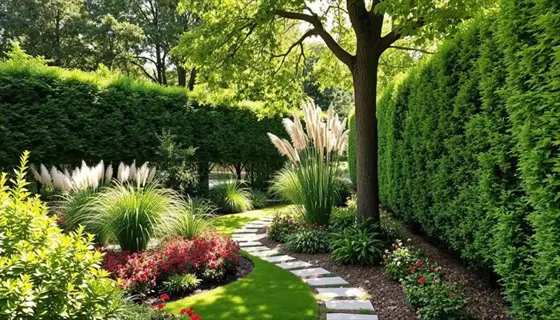
Juniper (Juniperus)
- Zone and size: Hardy across USDA Zones 3 to 9; forms range from low groundcovers under 1 foot (30 cm) to uprights over 15 feet (4.5 m).
- Light and soil: Wants full sun and sharp, well-drained soil, and shrugs off poor, rocky ground where many shrubs sulk.
- Drought notes: One of the toughest evergreens once established, with deep roots that let it skip summer water in most climates.
- Best uses: Excellent for slopes, foundations, low hedges, and erosion control thanks to its dense, spreading habit.
- Care tip: Needs almost no pruning; just remove dead wood, since junipers do not regrow from bare old stems.
- Bonus: Many forms hold blue-green or gold color all winter, so the planting never looks bare.
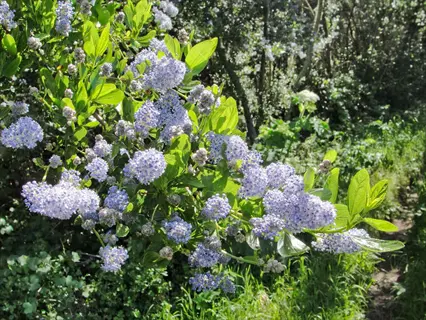
Ceanothus (Wild Lilac)
- Zone and size: Best in USDA Zones 7 to 10, with most types reaching 3 to 8 feet (1 to 2.5 m) tall and wide.
- Light and soil: Loves full sun and lean, fast-draining soil; rich, soggy ground shortens its life.
- Drought notes: OSU trials grew Ceanothus with no fertilizer and no summer irrigation, and most plants thrived and flowered heavily.
- Best uses: Stunning as a flowering screen, bank cover, or pollinator magnet thanks to its dense blue spring bloom.
- Care tip: Avoid summer watering once established, since extra moisture in heat can trigger root rot.
- Bonus: Evergreen types keep glossy foliage year round and feed bees during their long bloom.
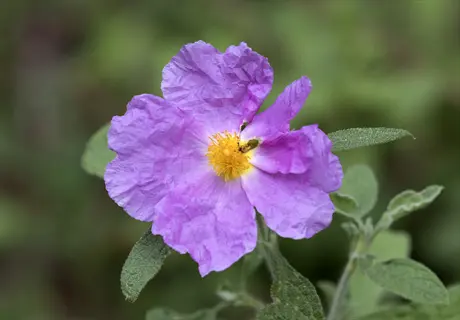
Rockrose (Cistus)
- Zone and size: Suited to USDA Zones 8 to 10, growing into mounds 2 to 5 feet (0.6 to 1.5 m) tall and wide.
- Light and soil: Demands full sun and gritty, well-drained soil; it is a true Mediterranean dry-summer plant.
- Drought notes: Studied in OSU drought trials and prized for thriving on baking slopes with no summer water once rooted in.
- Best uses: Ideal for hot banks, gravel gardens, and coastal sites, where it also tolerates salty wind.
- Care tip: Skip rich soil and heavy feeding, which make it leggy and short-lived; lean and dry is best.
- Bonus: Papery pink or white flowers open daily through early summer above aromatic evergreen leaves.
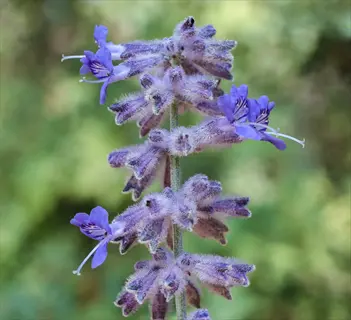
Russian Sage (Salvia yangii)
- Zone and size: Very cold-hardy in USDA Zones 4 to 9, reaching about 3 to 5 feet (1 to 1.5 m) tall.
- Light and soil: Thrives in full sun and average to poor, well-drained soil, and dislikes rich, wet ground.
- Drought notes: A go-to for hot, dry borders, it blooms hardest when watered the least once established.
- Best uses: Airy lavender-blue spires work in mixed borders, parking strips, and pollinator plantings all summer.
- Care tip: Cut the whole plant back hard in late winter, since flowers form on new growth each year.
- Bonus: Silvery, aromatic foliage shrugs off deer and rabbits and looks good even before bloom.
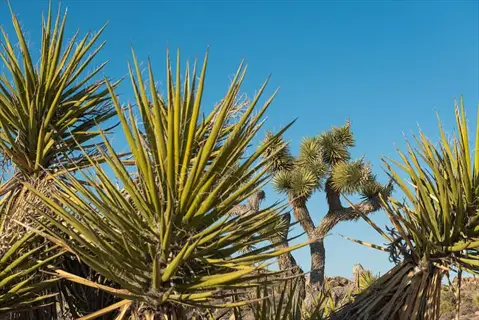
Yucca
- Zone and size: Depending on species, hardy across USDA Zones 4 to 10, with rosettes 2 to 5 feet (0.6 to 1.5 m) wide.
- Light and soil: Wants full sun and very sharp drainage; it rots quickly in heavy, wet soil.
- Drought notes: Among the most drought-proof shrubs anywhere, storing water and surviving long dry spells with ease.
- Best uses: A bold accent or specimen plant that adds strong architectural shape to dry and gravel gardens.
- Care tip: Plant where its sharp leaf tips will not catch passing people or pets along paths.
- Bonus: Tall spikes of creamy white summer flowers rise dramatically above the spiky evergreen rosette.
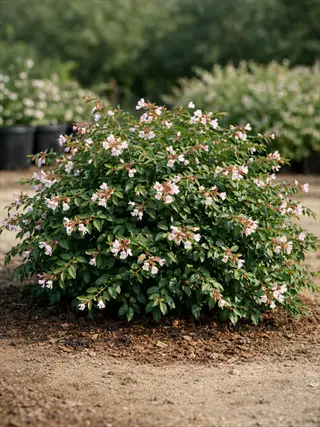
Abelia (Glossy Abelia)
- Zone and size: Hardy in USDA Zones 5 to 9, forming a graceful mound 3 to 6 feet (1 to 1.8 m) tall and wide.
- Light and soil: Grows in full sun to part shade and adapts to most well-drained soils, including poor ground.
- Drought notes: Listed by Clemson as drought tolerant once established, and one of the easiest care-free shrubs around.
- Best uses: Great for low hedges, foundations, and mixed borders, with arching stems that soften hard edges.
- Care tip: Prune lightly after flowering if needed; it blooms on new wood and recovers fast from a trim.
- Bonus: Small pink-white flowers run from summer into fall and draw butterflies for months.
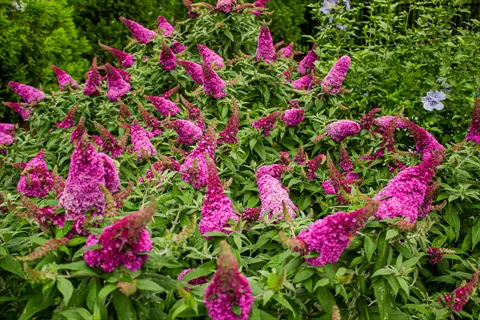
Butterfly Bush (Buddleia)
- Zone and size: Hardy in USDA Zones 5 to 9, growing 4 to 8 feet (1.2 to 2.5 m) tall, with compact forms too.
- Light and soil: Needs full sun and well-drained soil and tolerates poor, dry ground once it is rooted in.
- Drought notes: Listed by Clemson among drought tolerant shrubs, blooming heavily even through hot, dry summers.
- Best uses: A pollinator powerhouse for borders, its long flower spikes pull in butterflies and hummingbirds.
- Care tip: Cut back hard in late winter for the best bloom, and choose seedless cultivars where it is invasive.
- Bonus: Fragrant purple, pink, or white spikes flower for much of the summer with very little fuss.

Manzanita (Arctostaphylos)
- Zone and size: Best in USDA Zones 7 to 10, ranging from groundcovers to shrubs 3 to 8 feet (1 to 2.5 m) tall.
- Light and soil: Wants full sun and very fast-draining, lean soil; it hates summer water around its crown.
- Drought notes: Studied in OSU drought trials and famous for surviving bone-dry western summers once established.
- Best uses: Smooth mahogany bark and evergreen leaves make it a year-round feature on dry banks and borders.
- Care tip: Plant in fall or early spring and never irrigate in summer, which is the main cause of failure.
- Bonus: Tiny urn-shaped pink-white flowers in late winter are an early nectar source for bees.
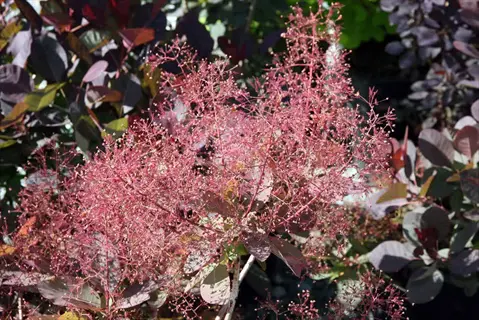
Smoke Bush (Cotinus)
- Zone and size: Hardy in USDA Zones 4 to 8, reaching 8 to 15 feet (2.5 to 4.5 m) tall unless pruned smaller.
- Light and soil: Grows best in full sun and average, well-drained soil, and colors most strongly in lean ground.
- Drought notes: A tough deciduous shrub that handles heat and dry spells well once its roots are established.
- Best uses: A standout specimen or screen, prized for purple or gold foliage and hazy summer flower plumes.
- Care tip: Cut back hard each spring for the biggest, most colorful leaves, or leave it to bloom.
- Bonus: The smoky pink seed heads give the plant its name and add a long season of interest.
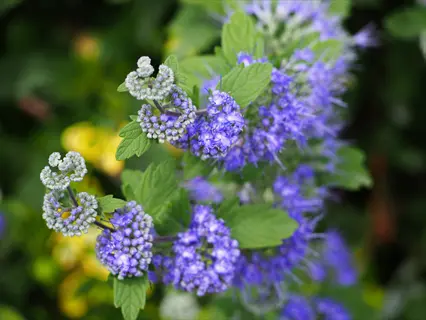
Blue Mist Shrub (Caryopteris)
- Zone and size: Hardy in USDA Zones 5 to 9, forming a tidy mound 2 to 4 feet (0.6 to 1.2 m) tall and wide.
- Light and soil: Loves full sun and well-drained soil and tolerates dry, poor ground once established.
- Drought notes: Listed by Clemson and others as drought tolerant, blooming late in summer when little else does.
- Best uses: A compact filler for borders and pollinator gardens, with aromatic gray-green foliage.
- Care tip: Cut back hard in early spring, since flowers form on the current season's new growth.
- Bonus: Clouds of blue late-summer flowers are a magnet for bees as other blooms fade.
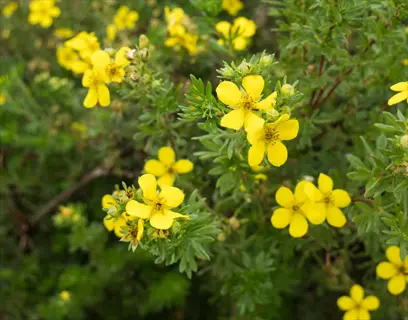
Shrubby Cinquefoil (Potentilla)
- Zone and size: Extremely cold-hardy in USDA Zones 3 to 7, forming a dense mound 2 to 4 feet (0.6 to 1.2 m) tall.
- Light and soil: Grows in full sun and tolerates poor, dry, rocky soil where fussier shrubs fail.
- Drought notes: Recommended by MSU as a drought tolerant, deer- and rabbit-resistant shrub for cold climates.
- Best uses: A reliable low hedge, edger, or mass planting that needs almost no care once established.
- Care tip: Shear lightly in early spring to keep it tidy and encourage fresh, full growth.
- Bonus: Cheerful yellow, white, or orange flowers bloom from early summer well into fall.
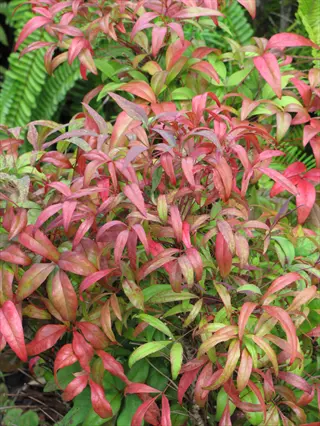
Heavenly Bamboo (Nandina)
- Zone and size: Hardy in USDA Zones 6 to 9, growing 2 to 7 feet (0.6 to 2 m) tall depending on the cultivar.
- Light and soil: Adapts to full sun or part shade and to most soils, including slightly acidic ground.
- Drought notes: Listed by Clemson as drought tolerant once established, and very forgiving of neglect.
- Best uses: Grown for fine evergreen leaves that turn red in cold weather, plus bright winter berries.
- Care tip: Choose berryless cultivars where Nandina is invasive, and note the berries are toxic to pets and birds.
- Bonus: Provides year-round structure and color, making it a useful evergreen in mixed plantings.

Lavender (Lavandula)
- Zone and size: English types are hardy in USDA Zones 5 to 9, forming bushy mounds 1 to 3 feet (30 to 90 cm) tall.
- Light and soil: Demands full sun and sharp, even gravelly drainage; wet soil is the fastest way to kill it.
- Drought notes: A classic Mediterranean shrub that thrives on heat and minimal water once established.
- Best uses: Perfect for low hedges, paths, and pollinator borders, where its scent and bloom shine.
- Care tip: Prune lightly after flowering to keep plants compact, but never cut into bare old wood.
- Bonus: Fragrant purple flower spikes draw bees, and the silvery foliage looks good all season.
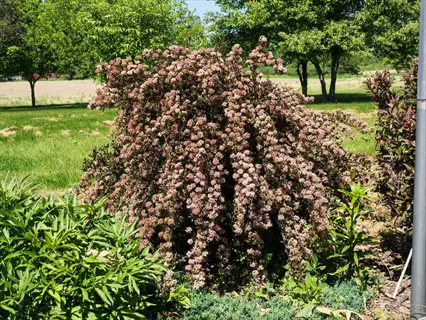
Ninebark (Physocarpus)
- Zone and size: Very hardy in USDA Zones 3 to 7, reaching 4 to 8 feet (1.2 to 2.5 m) tall and wide.
- Light and soil: Grows in full sun to part shade and tolerates a wide range of soils, including dry ground.
- Drought notes: A tough native shrub that handles heat, cold, and dry spells well once established.
- Best uses: Used as a screen, hedge, or backdrop, valued for bold burgundy, gold, or green foliage.
- Care tip: Prune after flowering to shape; older stems show peeling bark that adds winter interest.
- Bonus: White or pink spring flower clusters give way to colorful seed heads in late summer.
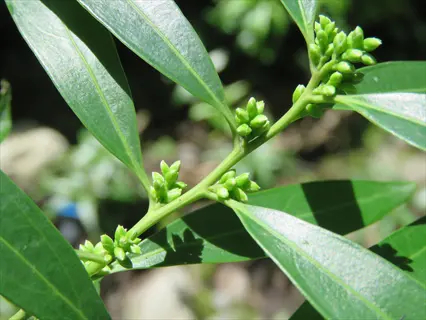
Sweet Box (Sarcococca)
- Zone and size: Hardy in USDA Zones 6 to 9, forming a low, spreading evergreen 1 to 4 feet (30 to 120 cm) tall.
- Light and soil: One of the few drought tolerant shrubs that prefers shade to part shade and humus-rich soil.
- Drought notes: Noted by Fine Gardening as tough once established, handling dry shade where few shrubs cope.
- Best uses: A glossy evergreen groundcover or low hedge for shaded foundations and woodland edges.
- Care tip: Mulch well at planting and water through the first seasons, since dry shade is still demanding early on.
- Bonus: Tiny late-winter flowers are intensely fragrant and perfume the whole garden on mild days.
One warning before you head to the nursery. A few plants on your list are invasive in parts of the country. That group covers butterfly bush, some Nandina, Japanese barberry, and burning bush. A shrub that behaves in your state can take over a roadside in another. So check your local invasive plant list first. Where a plant is flagged, look for seedless or sterile cultivars. They give you the same look without the spread.
How To Establish New Shrubs
No shrub is drought tolerant on day one. A plant earns that trait only after it grows a deep root system, and that takes real work from you in the early going. The phrase once established hides all the watering you do before the plant can fend for itself. Here is how to get it there.
Clemson Cooperative Extension found that roots need one to several years to settle in, scaled to plant size. A small one-gallon shrub roots faster than a big balled-and-burlapped one. So plan a watering schedule around how the plant actually grows, not around the calendar. The bigger the shrub you buy, the longer your establishment period runs.
The core rule is deep watering done rarely. Soak the root zone hard, then wait until the top inch of soil dries before you water again. Shallow daily sprinkles feed the plant snacks at the surface. A deep soak teaches roots to dig down and find their own water, which is what real drought tolerance depends on. Follow these steps for the first one to two seasons.
Set new shrubs out in fall or early spring so roots can grow into cool, moist soil before summer heat arrives. Dig the hole as deep as the root ball and twice as wide.
Soak the root zone thoroughly right after planting so the soil settles around the roots with no air pockets. The first deep drink is the most important one a new shrub gets.
Spread a 2 to 3 inch (5 to 8 cm) layer of mulch over the root area, keeping it off the stem. Mulch holds moisture, cools the soil, and slows evaporation while roots establish.
For the first one to two seasons, water deeply but infrequently, letting the top inch of soil dry between soakings. Deep, spaced watering pulls roots downward instead of keeping them at the surface.
As the shrub settles in over one to several years, stretch the time between waterings until the plant relies on rainfall. Larger shrubs take longer to reach this point than small ones.
Even an established drought tolerant shrub appreciates an occasional deep soak during a long, severe dry spell. A single thorough watering goes much further than frequent light sprinkles.
Do not water a little every day. Frequent shallow watering keeps roots shallow and actually makes a shrub less able to survive drought, the opposite of what you want.
Put in this effort up front and the payoff lasts for years. A 2 to 3 inch (5 to 8 cm) mulch layer cuts evaporation while roots build, so your soakings go further. Once the plant reaches drought tolerance, a water-wise planting needs little to no irrigation. You trade a season or two of careful watering for a shrub that pays you back in saved water and saved money.
How Drought Tolerance Works
Most plant lists tell you which shrubs survive a dry summer. Few tell you why. The answer comes down to a handful of survival tricks that tough plants share, and once you know them you can spot a true survivor on sight. A 2025 study in BMC Plant Biology looked at native desert shrubs. It pinned their staying power on three traits that work together.
The first is deep roots. Far-reaching roots act like a long straw that reaches a hidden water table other plants never touch. The study found the toughest shrubs poured energy into their root systems, so the part you cannot see is often bigger than the part you can. That single trait is why a well-chosen shrub stays green through a dry week while shallow-rooted plants flag.
The second trait is water-use efficiency, and it runs on stomatal regulation. Leaves breathe through tiny pores called stomata, and every open pore leaks water. When the heat climbs, a tough shrub closes those pores, much like you shut the windows on a hot day to keep the cool air in. This stomatal control is why some shrubs look fine at noon while thirstier neighbors droop. Small, waxy, or silvery leaves are a strong sign of it.
The third trait is osmotic adjustment. The plant's cells pack in proline and soluble sugars that grip water even as the soil dries out. You cannot see this one from the outside, but it is part of why a well-adapted shrub stays firm instead of wilting. Together these three forms of drought adaptation explain the survival you read about. The chart below breaks each one down with a clue you can check yourself.
Deep And Extensive Roots
- What it does: Far-reaching roots tap moisture deep in the soil that shallow-rooted plants simply cannot reach during a dry spell.
- Why it matters: The BMC Plant Biology study found the toughest desert shrubs invested heavily in roots, raising their root-to-shoot ratio to access water.
- Spot it: Plants that resent transplanting or send down a strong taproot are often the ones built to chase deep water.
- Garden link: This is exactly why deep, infrequent watering during establishment matters, since it trains roots to grow downward.
Water-Use Efficiency
- What it does: Drought tolerant shrubs lose less water per unit of growth by carefully controlling the pores, called stomata, on their leaves.
- Why it matters: Closing stomata during heat slows water loss, letting the plant ride out dry hours without wilting or damage.
- Spot it: Small, narrow, waxy, or silvery leaves usually signal a plant designed to conserve every drop of moisture.
- Garden link: It is why many tough shrubs look fine in heat that leaves thirstier plants drooping by mid-afternoon.
Osmotic Adjustment
- What it does: Cells pack in compounds like proline and soluble sugars that help them hold onto water even as the soil dries out.
- Why it matters: The BMC study identified osmotic adjustment as one of three key survival strategies in the toughest desert species.
- Spot it: This internal trick is invisible from outside, but it is part of why some shrubs simply do not wilt in conditions that flatten others.
- Garden link: It explains why a well-adapted shrub stays firm and green through a dry week with no extra watering.
Protective Leaf Adaptations
- What it does: Waxy coatings, fine hairs, and reduced leaf area all cut the amount of water a leaf loses to hot, dry air.
- Why it matters: MSU Extension lists these features as the visible adaptations that make a plant naturally drought tolerant.
- Spot it: Run your hand over silvery, fuzzy, or leathery foliage; that texture is moisture protection you can feel.
- Garden link: When choosing shrubs, these leaf clues help you pick genuinely tough plants over thirsty lookalikes.
The native plants are naturally adapted to arid climates, and they have developed special characteristics such as a group of adjusted qualities like deep roots, osmotic adjustment and water use efficiency that allow them to survive during droughts.
Water And Money You Save
Most of your home water bill in summer goes straight onto the ground outside. The EPA WaterSense program reports that outdoor use is more than 30% of household water on average, and up to 60% in dry regions. So if you want to save water, the yard is where the real gallons hide.
Here is the part that stings. As much as half of that outdoor water never feeds a single root. It blows away in the wind, burns off in the heat, or runs down the sidewalk before the soil can drink it. Thirsty plants make the problem worse because they ask for that water again and again.
The numbers below come straight from EPA WaterSense, not a vague sales pitch. A neglected sprinkler system can waste up to 25,000 gallons a year, about 95,000 liters. Swap in a smart WaterSense controller and you cut use by up to 30%. That is roughly 15,000 gallons saved each year, or 57,000 liters.
Outdoor water use accounts for more than 30 percent of total household water use, on average, but can be as much as 60 percent of total household water use in arid regions.
Now pair those watering habits with shrubs that barely need a drink once they settle in. It works like shutting off a leak you forgot was running. The savings show up on every summer water bill. Smart water conservation in the yard means a lower water bill and no more babysitting a hose.
The win goes past gallons too. MSU Extension says established drought tolerant shrubs ask for less time, less labor, and less fertilizer. So you save money on more than water. And sustainable landscaping quietly hands back the weekends you used to spend dragging sprinklers around the beds.
Best Shrubs By Region And Zone
The best drought tolerant shrubs for your yard depend on where you live more than on any other factor. A plant that thrives in the dry Southwest can die in a cold Midwest winter, even if both gardens skip summer watering. So your first job is to match the shrub to your climate, then check how little water it needs.
Think of USDA hardiness zones as a plant's cold-tolerance speed limit. The shrub has to be rated for your zone before any of its drought toughness matters. A tough desert plant still freezes if your winters run colder than it can take, so the zone rating comes first and the water needs come second.
Climate swings are wide. The shrubs gardeners trust span USDA Zones 2 to 11, from frozen northern yards to warm coastal ones. Oregon State trials prove how local this gets. Their Ceanothus shrubs lived through Zone 8 winters of 10 to 15°F (about -12 to -9°C). The plants got no water and no fertilizer. That same shrub would struggle in a true cold-winter region.
The table below sorts proven picks by region and zone so you can act fast. Match your area to a row, then confirm the details before you buy.
Cold-winter gardeners need cold-hardy picks that shrug off hard freezes. In the Midwest and Mountain West, shrubby cinquefoil and juniper handle the deep cold and still take full sun all summer. Hot, dry regions get more choices. Southwest gardeners can plant yucca, manzanita, and Russian sage, which all bake happily in heat with little water.
Zone maps and regional lists point you in the right direction, but they cannot read your exact yard. Your local extension office and the USDA zone map are the most reliable way to confirm a plant fits your area before you spend a dime. A quick call or web check now saves you a dead shrub and a wasted weekend later.
Design Ideas For Dry Gardens
The west-facing slope by my gravel driveway is now a thick bank of rockrose and Ceanothus 'Victoria'. I watch it bloom from the kitchen window each spring. It took four springs to get there. For years that same slope was scorched brown lawn that baked all afternoon. It never held green past June, no matter how often the sprinkler ran.
I gave up on grass and planted shrubs that want hot, dry, sharp-draining ground. They rooted in over two seasons, then took the heat on their own. The trick that ties the whole garden together is hydrozoning. That means you group plants by how much water they need, so you can water each area right.
Hydrozoning is simple to do once you map your yard by how harsh each spot is. Put your toughest drought tolerant shrubs in the driest, sunniest, hardest-to-reach places, like slopes, parking strips, and gravel beds. Keep your thirstier plants close to the house and the hose. That way the whole garden is not watered to the needs of its one thirstiest plant.
These shrubs earn their keep in design roles that defeat fussier plants. They make tidy low hedges and mixed borders, hold soil on banks, and shine in gravel and rock gardens. You can use them for mass plantings that knit together across a bank. They also work as foundation planting that frames your house with structure and color on little water. The ways below show where each role pays off most.
Group By Water Need (Hydrozoning)
- The idea: Place plants with similar water needs together so you can water each zone correctly instead of soaking the whole garden equally.
- Why it helps: EPA WaterSense recommends grouping by water need so established low-water shrubs are not over-watered alongside thirstier plants.
- How to do it: Put your toughest shrubs in the hottest, driest, hardest-to-reach spots, and keep thirsty plants near the house and the hose.
- The payoff: Hydrozoning is one of the simplest ways to cut outdoor water waste without giving up a full, planted look.
Cover Slopes And Banks
- The idea: Spreading, deep-rooted shrubs hold soil on slopes where lawns are hard to mow and water quickly runs off.
- Why it helps: Tough plants like juniper, manzanita, and rockrose knit the soil together and shrug off the dry, baking conditions on a bank.
- How to do it: Plant in fall or early spring, mulch well, and water through establishment before the slope is left to fend for itself.
- The payoff: A planted bank looks better than struggling turf and needs far less water and maintenance over time.
Build Low Hedges And Borders
- The idea: Compact drought tolerant shrubs make tidy, low-water hedges and mixed borders that define space without constant care.
- Why it helps: Plants such as abelia, cinquefoil, and lavender stay neat with light pruning and bloom for months on little water.
- How to do it: Space plants for their mature width so they knit together, and choose forms that suit the height you want.
- The payoff: You get structure, color, and pollinator value with a fraction of the watering a traditional hedge demands.
Plant Tough Spots And Strips
- The idea: Hot parking strips, gravel beds, and rock gardens are perfect homes for shrubs that actually prefer lean, dry, sharp-draining soil.
- Why it helps: Yucca, lavender, and rockrose thrive in the reflected heat and poor soil that defeat thirstier, fussier plants.
- How to do it: Improve drainage rather than richness, mulch with gravel where it suits the look, and keep summer water to a minimum.
- The payoff: The worst, driest corners of a yard become low-care features instead of bare, struggling problem areas.
Some tough shrubs are toxic if eaten, including oleander and the berries of heavenly bamboo (Nandina). Choose carefully and site them away from areas used by children and pets.
5 Common Myths
Drought tolerant shrubs never need watering, so you can plant them in dry soil and walk away from day one.
Every shrub needs regular water while its roots establish, which can take one to several years; drought tolerance comes only after that.
If a shrub is native to your region, it is automatically drought tolerant and will sail through any dry summer.
Native does not always mean drought tolerant. Many natives grew in moist sites, so always check a plant's real water needs before assuming.
Watering a little bit every day is the best way to keep a new drought tolerant shrub healthy and growing.
Frequent shallow watering keeps roots near the surface. Deep, infrequent soaking trains roots to grow down, which builds true drought tolerance.
Drought tolerant shrubs are all spiky desert plants, so a water-wise garden has to look bare and prickly.
Many drought tolerant shrubs flower for months, stay evergreen, or feed pollinators, so a low-water garden can be lush and colorful.
Mulch does not matter for tough, drought tolerant shrubs because they are built to handle hot, dry soil.
A 2 to 3 inch (5 to 8 cm) mulch layer keeps soil cooler and moister, cuts evaporation, and helps even tough shrubs need less water.
Conclusion
The right drought tolerant shrubs give you a yard that looks full and alive without asking for water every week. You saw the science behind why deep roots and smart leaves help these plants ride out a dry spell. None of this is a trade-off. You get the blooms, the evergreen color, and the shade, and you skip the constant watering that thirsty plants demand.
If you take one thing from this guide, make it this. Drought tolerance is earned, not instant. Even the toughest shrub needs steady water for its first season or two while the roots dig in. Larger plants take longer, sometimes several years. Water deep and water slow during that window. Once established, your shrubs can go long stretches with little help from you, season after season.
The payoff shows up on your water bill and in your free time. Outdoor watering makes up more than 30% of home water use, per EPA WaterSense, and it can climb to 60% in dry regions. Swap in water-wise shrubs and you cut that load right at the source. You save money, you save labor, and you spend less of your weekend dragging a hose around the yard.
So pick shrubs that match your USDA zone, give them a strong start, and group them by how much water they want so the dry-loving plants stay dry. Always check your local invasive-species list before you buy, since a great plant in one state can be a problem in the next. Do those few things and a hard, parched yard turns into an easy water-wise garden that mostly takes care of itself. Good water conservation has never looked this good.
Glossary
- Establishment
- The period after planting when a shrub builds its root system and needs steady water before it can survive on little or none.
- Hydrozoning
- Grouping plants with similar water needs together so each area can be watered correctly instead of soaking the whole garden the same.
- Osmotic adjustment
- A plant's ability to pack its cells with sugars and other compounds so they keep holding water as the soil dries out.
- Stomatal regulation
- A plant closing the small pores on its leaves to slow water loss during heat and dry weather.
- USDA hardiness zone
- A map-based number that tells you the coldest winter temperatures a plant can survive in your area.
- Water-use efficiency
- How much a plant grows for each unit of water it uses, helped by controlling the tiny pores on its leaves.
- water-wise garden
- A garden designed around plants and watering habits that thrive on far less water than a typical landscape.
- Xeriscaping
- A landscaping style that uses low-water plants and design to create a garden that needs little or no irrigation.
External Sources
Frequently Asked Questions
What is the most drought-resistant shrub?
No single shrub wins everywhere, but juniper, yucca, rockrose, and Russian sage rank among the toughest once established.
What shrubs don't need a lot of water?
Several shrubs need little water once established:
- Juniper
- Rockrose (Cistus)
- Russian sage
- Ceanothus (wild lilac)
- Yucca
Is lavender drought tolerant?
Yes, lavender is highly drought tolerant once established and prefers full sun with sharp, well-drained soil.
What can I plant in a very dry area?
Tough shrubs for very dry spots include yucca, rockrose, manzanita, Russian sage, and juniper.
What is the lowest maintenance shrub?
Junipers, abelia, and shrubby cinquefoil rank among the lowest maintenance drought tolerant shrubs once established.
What shrubs do well in full sun and heat?
Heat and sun lovers include Russian sage, rockrose, yucca, oleander, and butterfly bush.
What is a flowering shrub that blooms all summer?
Russian sage, butterfly bush, blue mist shrub, and abelia bloom for much of the summer with little water.
What shrubs grow well in full sun and acidic soil?
Heavenly bamboo (Nandina), juniper, and some viburnums handle full sun and slightly acidic soil.
What shrubs stay green year round?
Evergreen drought tolerant shrubs include juniper, abelia, manzanita, heavenly bamboo, and sweet box.
How often should I water newly planted drought tolerant shrubs?
Water deeply but infrequently during the first one to two seasons, then slowly taper as roots establish.

