
Introduction
A good evergreen ground cover gives you a green, weed-free yard in every season, even through the dead of winter. The right plants spread across bare soil, smother weeds, and fill in the spots where grass gives up. This guide does two things for you. It shows you the best plants for sun, shade, and slopes, and it walks you through how to actually plant and care for them.
These plants earn their keep by working as a kind of living mulch. The University of Maryland Extension says ground covers beat back weeds. They win by grabbing the light, water, and food before weeds can. Once a patch fills in, there is no bare soil left for weed seeds to grab. That natural weed suppression is why a thick mat of leaves stays cleaner than a stretch of open dirt and bark.
Picking the right plant is only half the job. A plant catalog with one photo each will not tell you how to plant, space, or care for ground cover plants. So people buy the plants, stick them in the ground, and wonder why half of them die or the weeds win. This guide adds that practical layer with clear planting and spacing steps, plus the timeline for when a bed actually fills in.
One honest warning before you shop. The word evergreen depends on your climate. So I split truly evergreen plants from the semi-evergreen ones that brown out in cold zones. That matters now more than ever, since more people are swapping thirsty lawns for water-wise beds. A smart low maintenance ground cover can hold a slope, fill a shady patch under trees, and give you year-round color where a mower never could.
Best Evergreen Ground Cover
Most plant lists hand you the same 25 names with a photo and a line of praise. The picks below go deeper. Each one comes with the honest trait the catalogs skip, like which plants you can step on and which ones spread far past where you want them.
I planted Japanese spurge three springs ago in the damp shaded corner where the maple's roots had left bare soil and grass refused to grow. I watched it from the kitchen window all that first summer, and the small clumps barely moved. It took two full seasons before the patches knit into one solid carpet, so plan for the wait if you choose it.
So read these with size and patience in mind as you shop. Creeping juniper matures at only 6 to 10 inches (15 to 25 cm) tall but spreads wide across your sunny slope. Vinca minor stays near 6 inches (15 cm), while Japanese spurge runs 6 to 12 inches (15 to 30 cm). A few stay truly evergreen all winter for you, and others go semi-evergreen and thin or bronze once hard cold sets in.
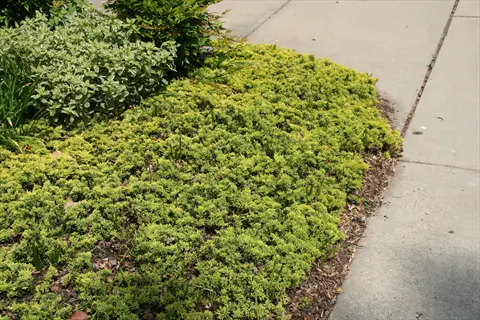
Creeping Juniper
- Light: Thrives in full sun, defined as 6 or more hours of direct summer sun each day, and is one of the most adaptable evergreens.
- Size: Stays low at about 6 to 10 inches (15 to 25 cm) tall while spreading widely to blanket large sunny areas.
- Evergreen status: Truly evergreen, though many forms take on a reddish-purple cast through the coldest part of winter.
- Best use: Excellent on sunny slopes and banks for erosion control where its dense, spreading habit holds soil in place.
- Care: Drought tolerant once established and needs sharp drainage, making it a reliable low-water choice for hot, open ground.
- Consider: Not steppable, so keep it off paths; give it room since it spreads far wider than it grows tall over time.
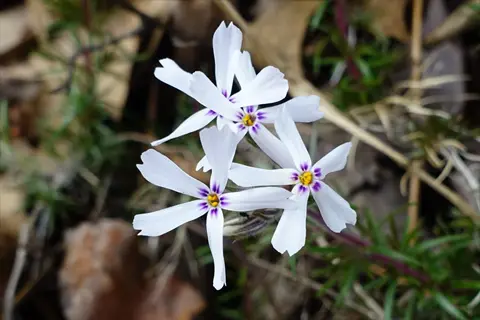
Creeping Phlox
- Light: Prefers full sun to light shade and rewards a sunny site with a dense carpet of spring color across the planting.
- Size: A low, mat-forming spreader that hugs the ground, ideal for edging, rock gardens, and gentle slopes.
- Evergreen status: Evergreen in mild zones but often semi-evergreen in cold winters, so expect some leaf loss where it freezes hard.
- Best use: Native Phlox stolonifera is cited for erosion control on slopes and looks striking cascading over walls.
- Care: Needs good drainage and benefits from a light shearing after bloom to keep the mat full rather than thinning in the center.
- Consider: The famous flush of flowers lasts only a few weeks, so value it for foliage and texture the rest of the year.
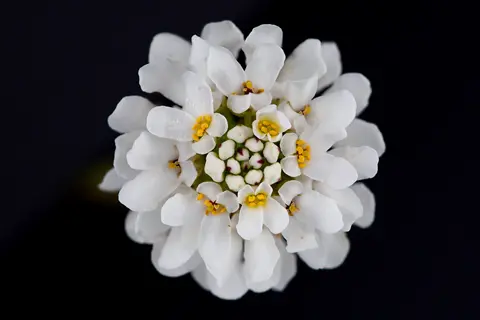
Candytuft
- Light: Performs best in full sun with well-drained soil and brings crisp white spring flowers above neat green foliage.
- Size: Forms a tidy low mound that spreads modestly, making it a clean choice for edges and the front of beds.
- Evergreen status: Reliably evergreen in many zones, holding its dark green leaves through winter for year-round structure.
- Best use: Works well in rock gardens, along walkways, and spilling over low walls where its mounding shape shows off.
- Care: Shear lightly after flowering to keep it compact; it tolerates lean soil and resents wet, poorly drained ground.
- Consider: It is a modest spreader, so plant it for refined edging rather than covering large areas quickly on its own.
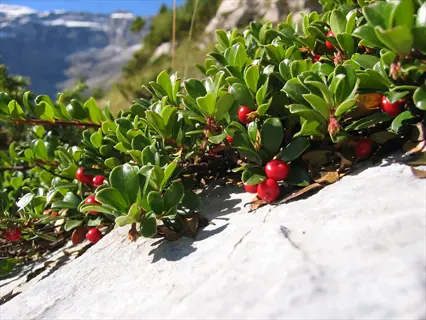
Bearberry
- Light: Handles full sun to partial shade and is exceptionally tough in cold climates and poor, lean, sandy soils.
- Size: A low, trailing evergreen that spreads to form a durable mat across difficult ground other plants reject.
- Evergreen status: Evergreen with glossy leaves that turn an attractive red to purple through the cold winter months.
- Best use: A strong native choice for slopes, sandy banks, and seaside or exposed sites where soil is thin.
- Care: Prefers acidic, well-drained soil and very low fertility; once established it is highly drought tolerant.
- Consider: Slow to establish and resents rich or wet soil, so place it deliberately in lean, sunny spots from the start.
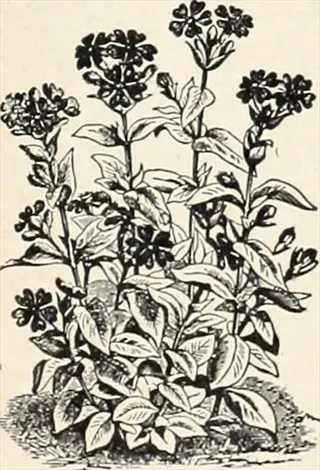
Japanese Spurge
- Light: A premier shade plant for partial to full shade, thriving under trees where grass thins out and fails.
- Size: Grows 6 to 12 inches (15 to 30 cm) tall and spreads steadily into a lush, uniform evergreen carpet.
- Evergreen status: Reliably evergreen, holding glossy green leaves through winter for dependable year-round shade coverage.
- Best use: Crowds out many weeds effectively, making it a classic, durable filler for shaded beds and tree bases.
- Care: Likes moist, well-drained, organic soil; once knit together it is very low maintenance in the right shade.
- Consider: It can be aggressive and is flagged as invasive in some regions, so confine it or choose Allegany spurge instead.
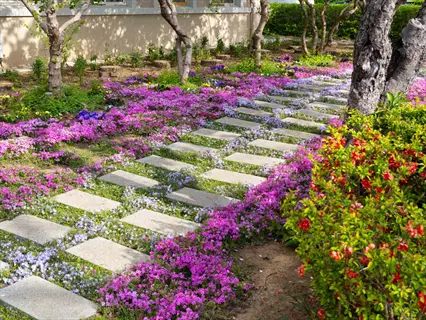
Creeping Thyme
- Light: Loves full sun and well-drained soil, releasing fragrance when brushed or stepped on in a sunny spot.
- Size: A very low, dense mat that hugs the ground, perfect for filling gaps between pavers and stepping stones.
- Evergreen status: Evergreen to semi-evergreen depending on climate, staying green in mild winters and thinning where cold is severe.
- Best use: One of the few ground covers that tolerates light foot traffic, ideal for pathways and patio joints.
- Care: Needs sharp drainage and dislikes wet feet; trim after its summer bloom to keep the mat tight and tidy.
- Consider: It is not a lawn substitute for heavy use, so reserve it for light-traffic gaps rather than play areas.
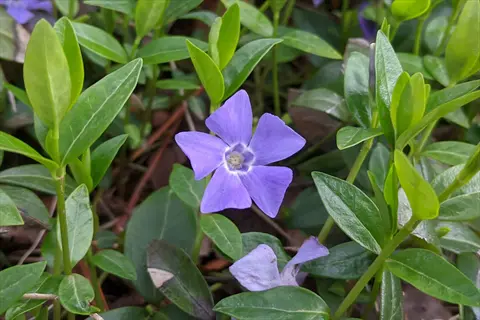
Periwinkle (Vinca minor)
- Light: Tolerates partial to full shade and stays green where many other plants struggle under trees and along north walls.
- Size: A trailing evergreen that grows to about 6 inches (15 cm) tall and spreads quickly into a glossy mat.
- Evergreen status: Reliably evergreen, with dark leaves and blue-purple spring flowers that add early color in shade.
- Best use: Fast cover for shaded slopes and bare ground under trees where erosion and weeds are problems.
- Care: Low maintenance once established and tolerant of dry shade, though it appreciates some moisture while young.
- Consider: Listed among invasive groundcovers in many regions, so contain it carefully or choose a native alternative instead.
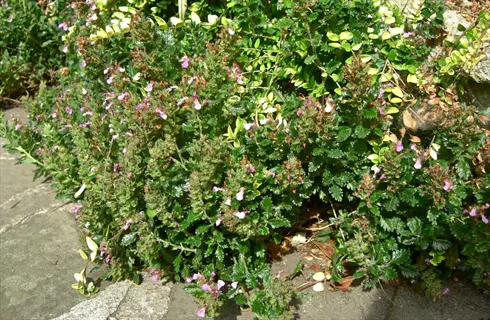
Wall Germander
- Light: Enjoys full sun and well-drained soil, bringing small glossy leaves and late-summer flowers loved by pollinators.
- Size: A low, shrubby evergreen that can be sheared into a neat low hedge or left as a flowering mound.
- Evergreen status: Evergreen in mild zones and semi-evergreen where winters are harsh, holding much of its foliage.
- Best use: A tidy, formal choice for edging, knot gardens, and sunny slopes that need structure and drought tolerance.
- Care: Drought tolerant once established and easy to shape with a light shearing to keep it dense and compact.
- Consider: It is a slower spreader than mat-forming options, so use it where neatness matters more than fast coverage.
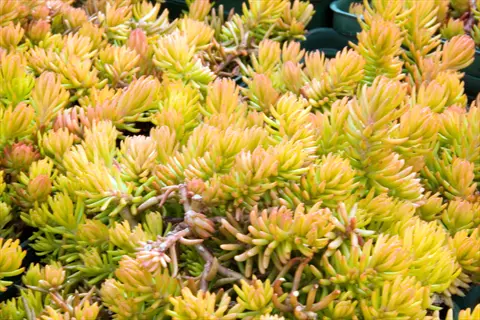
Angelina Stonecrop
- Light: A sun-loving sedum that thrives in full sun and poor, dry soil where little else will grow happily.
- Size: A very low succulent mat that spreads to fill gaps and spill over edges and rocks attractively.
- Evergreen status: Evergreen succulent foliage that shifts from chartreuse in summer to warm orange and amber in winter.
- Best use: Outstanding in rock gardens, green roofs, and hot, dry slopes where drought tolerance is essential.
- Care: Extremely drought tolerant and undemanding; it needs sharp drainage and resents soggy, heavy soil.
- Consider: Best for lean, sunny conditions, since rich soil and shade make it stretch and lose its compact color.
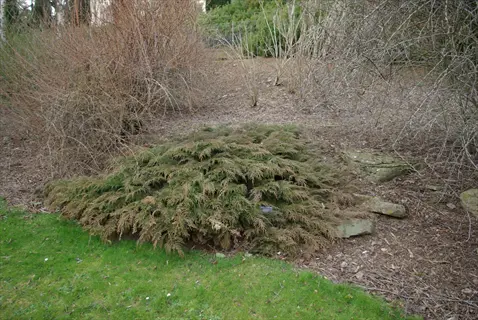
Siberian Cypress
- Light: Adaptable to full sun or partial shade and notably cold-hardy, with soft, feathery evergreen foliage.
- Size: A low, wide-spreading evergreen that forms a graceful, layered carpet broader than it is tall.
- Evergreen status: Evergreen, with green summer foliage that turns a warm bronze-purple through the winter months.
- Best use: A refined choice for slopes, foundation plantings, and shaded areas needing a soft, textured cover.
- Care: Prefers well-drained soil and is low maintenance once established, tolerating cold better than many evergreens.
- Consider: It spreads slowly and grows wide, so give it space and patience rather than expecting quick coverage.
Match the plant to the spot and half your work is done. Bearberry earns its keep on lean sandy banks. Creeping phlox spills over walls and edges. Creeping thyme is one of the few you can walk on between pavers. These evergreen ground cover plants reward you most when you pick for the site, not the photo.
Sun, Shade, and Zone Picks
Light decides your plant before anything else does. Think of sunlight as a budget each plant has to spend. A ground cover for full sun pours that budget into dense mats and heavy bloom. A ground cover for shade spends it on wide, broad leaves that grab what little light reaches the dirt.
So measure your spot first. Maryland Extension counts full sun as 6 or more hours of direct summer sun a day, and that one number sorts most of your choices. Grass is the other clue. Iowa State notes that turf fails in heavy shade. It leaves you bare soil and weeds. A spot where the lawn keeps thinning out is begging for a shade carpet instead.
The lists below split the work for you. Match the side to your light, then check the plant against your hardiness zone before you buy.
- Creeping juniper for sunny slopes and dry banks needing erosion control.
- Creeping thyme and Angelina stonecrop for hot, well-drained spots.
- Creeping phlox and candytuft for a flush of spring color.
- Bearberry for lean, sandy, exposed sites in cold zones.
- Japanese spurge for a lush evergreen carpet under trees.
- Periwinkle for fast cover on shaded slopes and bare ground.
- Allegany spurge as a less aggressive, hardier shade option.
- Siberian cypress for soft texture in part shade.
Most plant lists stop at zone 6, so warm-climate readers get left out. If you live in zone 7 or above, you still have strong picks. Creeping thyme and sedum shrug off heat in a baking sun bed. Bearberry handles lean, sandy ground that bakes all afternoon. Got a tough spot under a maple that stays bone dry? A dry shade ground cover like Japanese spurge or periwinkle will fill it where grass gives up.
Cold-zone readers get the safest bet by sizing up the winter. Pick a cold-hardy ground cover rated for one zone colder than yours. Hard cold turns a borderline plant semi-evergreen. You end up with thin, ragged patches by March.
To be sure a plant truly stays evergreen through your winters, pick one rated for at least one zone colder than yours, since cold often turns borderline plants semi-evergreen.
How to Plant and Space Them
Most plant catalogs sell you the species and then go quiet on the part that actually matters. Knowing how to plant ground cover the right way is what separates a bed that fills in fast from one that limps along for years. Get the groundwork right and the plants do the rest.
Start with soil preparation, since Clemson Extension calls it a top cause of failure. Work the bed 8 to 10 inches (20 to 25 cm) deep and mix in a 2-inch (5 cm) layer of organic matter. Blend your fertilizer down to 6 to 8 inches (15 to 20 cm). Aim for 1 pound of nitrogen per 1,000 square feet, using a blend like 12-4-8 or 16-4-8.
Clear every perennial weed before you set a single plant. Most ground covers cannot out-muscle weeds that are already dug in, so skip this step and the weeds win. The five steps below take you from bare dirt to a planted bed in order.
Remove every perennial weed before planting, since most ground covers cannot compete with established weeds once they are growing.
Work the bed 8 to 10 inches (20 to 25 cm) deep, mix in a 2-inch (5 cm) layer of organic matter, and blend fertilizer to 6 to 8 inches (15 to 20 cm).
Set plants in staggered rows for the quickest cover, adjusting spacing to each species since closer spacing fills faster but raises disease risk.
Apply a 2-inch (5 cm) mulch layer between plants to suppress weeds, then water well so roots settle into even moisture.
On steep ground, lay biodegradable coir or plant-fiber netting to hold soil while plants establish, and avoid plastic landscape fabric.
There is no single magic number for ground cover spacing. The right gap shifts with each species, so check the tag and plan from there. Setting plants in staggered rows gives you the quickest cover, and tighter spacing fills the bed faster. The catch is that closer plants trap more humid air, which raises disease risk.
Think of spacing like seating people at a table. Pack them too tight and they crowd, bump elbows, and pass germs around the room. Space them too far and you leave empty chairs where weeds sit down before your plants ever do. You want them close enough to fill the space but loose enough to breathe.
Patience pays off here. Aim for complete coverage by the end of the third growing season, and resist the urge to crowd plants just to rush it. Do the prep, space with intent, and the bed knits together into a thick green mat that shrugs off weeds on its own.
Improper soil preparation is a frequent cause of groundcover failures.
Establishment and Maintenance
How long ground cover takes to establish surprises a lot of people, so set your expectations now. A new planting needs patience before it looks like a solid green carpet. The first year can feel slow.
The establishment period can run up to two years, with complete coverage by the end of the third growing season. Slower spreaders take even longer, and lily-of-the-valley needs about 2 to 3 years to fill in when you set plants on 6-inch (15 cm) centers. Knowing this saves you from digging up plants that are doing fine.
Planting Day
Set plants into well-prepared, weed-free soil and apply a 2-inch (5 cm) mulch layer between them to suppress weeds.
First Season
Water regularly and weed by hand while young plants put down roots, since they cannot yet outcompete weeds.
Year Two
Plants fill in noticeably; establishment can take up to two years, so keep watering during dry spells and prune in early spring.
End of Year Three
Expect complete coverage by the end of the third growing season, after which maintenance drops sharply.
Established
Once knit together and matched to the site, the planting is low maintenance, needing only occasional watering in drought and a spring tidy.
Early spring is the best time to prune ground covers; avoid severe pruning in late summer or fall, which can leave plants weak going into winter.
The bare, dry slope by my driveway is now a solid green carpet of creeping juniper. It looked like a lost cause for two summers. I watered it every dry week and pulled weeds by hand while the young plants barely seemed to move. Year two it knit together, and the bald patches vanished without me adding a single new plant.
Your ground cover maintenance stays simple if you put in the early work. Weed and water through the first two seasons, since young plants cannot beat established weeds yet. Keep a 2-inch (5 cm) mulch layer around them during this stretch, then pull the between-plant mulch once the plants touch and shade the soil themselves.
On timing, when to prune ground cover matters as much as how. Cut in early spring before new growth pushes out, and skip the heavy late-season trim that sends plants into winter weak. Mulch for weed control does the heavy lifting until the plants take over that job.
The early effort pays off for years. Once a planting knits together and matches its site, it asks for little more than a drink in a drought and a quick spring tidy. A good match is low maintenance even next to lawn upkeep. Those two patient seasons buy you a green slope that takes care of itself.
Lawn Alternative and Water Saving
Think about the spots where your grass always loses. The shady strip under a tree. The steep bank you hate dragging the mower across. The dry corner that browns out every July. A good lawn alternative does not just survive those spots. It thrives in them and asks for almost nothing back.
The low-maintenance label barely scratches the surface. The real story runs deeper. A lawn is a high-maintenance pet. It needs constant feeding, mowing, and watering. An established grass alternative is more like a tidy houseplant. It mostly cares for itself.
The savings start with water. Cool-season turf goes dormant and turns brown through July and August unless you keep irrigating it. A drought-tolerant ground cover shrugs off the same heat with far less help. Iowa State Extension found a clear payoff. Swap turf for ground covers and you cut water, pesticides, and fertilizer at once.
Replacing turf with perennials, groundcovers, shrubs, and trees can reduce water consumption, pesticides, and fertilizers while increasing soil organic matter, building soil quality, and helping to retain and infiltrate stormwater.
The gap can be huge. One master gardener column tracked a Kurapia ground cover at about 8,000 gallons a year. A typical lawn used roughly 70,000 gallons. Treat that as an illustration, not a promise. Your own numbers ride on your climate and species, but the direction is clear.
There is a quieter win too. Ground covers work as living mulch, beating weeds by stealing their light, moisture, and nutrients. That means less watering and far less weeding as the planting fills in. Smart water-wise landscaping turns your toughest, ugliest patches into the spots you stop fussing over.
Invasive and Native Choices
"That spurge in your maple corner will take the whole yard," my neighbor called over the fence the spring after I planted it. I waved her off, but by the next April the patch had crept a foot past its bed and into the lawn. Now I edge it back hard every spring with a flat spade, slicing a clean trench around the whole stand. Miss one year and it jumps the line again, sending pale runners under the grass toward her side.
Judge a plant by one test before you buy it. A fast spreader is not always a problem. But an invasive ground cover breaks out of your garden and harms wild areas nearby. Maryland Extension flags 11 or more sold ground covers as invasive, and some are banned by law. That list has English ivy, vinca, Japanese spurge, ajuga, and creeping Jenny.
The fix is not to give up coverage. A native ground cover does the same job and tends to behave. Penn State notes that natives often have deeper roots and, once they settle in, may need less water and care than non-native plants. Many also shrug off browsing, so they double as a deer-resistant ground cover for tough corners. The watchlist below names the ground covers to avoid and a safer plant to use in each spot.
English Ivy
- Problem: A vigorous evergreen that escapes gardens, climbs and shades out tree trunks, and is regulated as invasive in some areas.
- Spreads by: Rooting stems and self-seeding, which let it blanket ground and woodland floors far beyond where it was planted.
- Plant instead: Use native bearberry or a non-aggressive evergreen for similar shade or slope coverage without the escape risk.
Creeping Jenny
- Problem: A fast, mat-forming spreader frequently flagged as invasive that can overrun beds and move into wet, natural areas.
- Spreads by: Creeping stems that root at every node, making it quick to cover ground but hard to contain once loose.
- Plant instead: Choose a native sedum or creeping phlox for color and coverage that stays where you put it.
Bishop's Goutweed and Lily-of-the-Valley
- Problem: Both spread aggressively, often become invasive, and are notoriously difficult to eliminate once established in a bed.
- Spreads by: Rhizomes and offsets that travel underground, so even small leftover pieces can resprout and reclaim the area.
- Plant instead: Use Allegany spurge or native wild ginger for shade coverage that behaves and is far easier to manage.
Native Alternatives
- Why choose them: Natives often have deeper roots and, once established, may need less water and maintenance than non-native plants.
- Good picks: Bearberry, creeping phlox (Phlox stolonifera), native sedges, and wild ginger offer reliable, well-behaved coverage.
- Bonus: Mixed native patchwork plantings support pollinators and resist the disease and pest losses that strike single-species beds.
Avoid plastic or synthetic landscape cloth under or over the soil; Penn State warns it can increase erosion and runoff and harm soil health, so use biodegradable netting on slopes instead.
Reach for a non-invasive ground cover and you skip the yearly fight at the property line. Check your state or county list before you buy, since a plant that is sold at the garden center can still be banned where you live. Pick natives that fit your sun and soil, and the bed fills in on its own without trying to claim the rest of the yard.
5 Common Myths
All ground covers labeled evergreen stay fully green and leafy through winter no matter how cold the climate gets.
Many plants are only evergreen in mild zones and turn semi-evergreen or bronze in cold winters, so status depends on your climate.
Evergreen ground covers are completely maintenance free, so you can plant them and never touch the area again at all.
They are low maintenance only after establishment, which can take up to two years of weeding, watering, and mulch during that time.
Ground covers smother weeds immediately, so you can plant them straight into a weedy bed without any preparation.
Most cannot outcompete established weeds at first, so you must clear perennial weeds before planting or they will overtake young plants.
Any spreading ground cover is a safe, harmless choice for filling in a bare area of your garden quickly.
Several common spreaders, including English ivy and creeping Jenny, are invasive and even regulated in some places, so check before planting.
A fast spreading ground cover gives you complete coverage within a single growing season after planting.
Establishment usually takes up to two years, with full coverage expected by the end of the third growing season for most species.
Conclusion
You now have both halves of the job in hand. You can pick the right plant for your spot, and you can put it in the ground the right way. The plant list points you to the best match for your light and your zone. The planting steps make sure that match actually takes hold and fills in.
Keep the load-bearing numbers close. Clear out every weed first, then work the soil 8 to 10 inches (20 to 25 cm) deep before a single plant goes in. Give the bed up to two years to truly settle, and aim for full coverage by the end of the third growing season. Rush those steps and you fight bare patches for years.
Match the plant to its site and the payoff is real. A well-chosen evergreen ground cover gives you year-round color. It holds soil for solid erosion control, and it crowds out the weeds that used to eat your weekends. Once it settles in, you have a true low maintenance ground cover that asks for far less than turf ever did. That is what makes it such a smart lawn alternative for the spots grass never wanted.
Lean toward native or non-invasive picks, and check each plant against your winters so it stays green when it counts. My first winter, a bed I rushed browned out by January because I skipped that one zone check. Then picture that bare slope or hard-to-mow corner one year on. Instead of mud and stray weeds, you get a soft green carpet that holds through every season and barely needs you at all.
Glossary
- Establishment period
- The first one to two years after planting when roots take hold before the plant needs little care.
- Evergreen
- A plant that keeps its leaves and stays green through all four seasons, including winter.
- Full sun
- A site that receives 6 or more hours of direct summer sun each day.
- Ground cover
- A low, spreading plant used to blanket bare soil, suppress weeds, and control erosion.
- Living mulch
- A spreading ground cover that suppresses weeds by outcompeting them for light, moisture, and nutrients, like mulch that grows.
- Semi-evergreen
- A plant that holds some of its leaves through winter but drops others or browns in cold climates.
- Staggered-row planting
- Setting plants in offset rows rather than a grid so they fill in and cover the ground faster.
- USDA hardiness zone
- A region-based rating that tells you how cold a winter a plant can survive.
External Sources
Frequently Asked Questions
What are the best evergreen ground cover plants?
Strong choices include creeping juniper, creeping phlox, candytuft, bearberry, Japanese spurge, and creeping thyme, chosen by light, zone, and use.
- Creeping juniper for sunny slopes
- Creeping phlox and candytuft for spring color
- Bearberry for cold, lean soil
- Japanese spurge for shade
- Creeping thyme for foot traffic
What is the best low maintenance ground cover?
The best low maintenance ground cover is one matched to your site, such as creeping juniper in sun or Japanese spurge in shade.
What evergreen ground cover blooms all year?
No ground cover truly blooms all year. Many perennials flower only a couple of weeks, but evergreen foliage gives color in every season.
What is the fastest growing evergreen ground cover?
Vigorous spreaders like creeping juniper, creeping Jenny, and wintercreeper cover quickly, though staggered close spacing also speeds coverage.
Can creeping thyme be walked on?
Yes, creeping thyme tolerates light foot traffic and works well between pavers and stepping stones, though it is not a lawn replacement.
What are the downsides of creeping phlox?
Creeping phlox blooms only a few weeks, needs sun and good drainage, can go semi-evergreen in cold zones, and may thin in the center.
Is October too late to plant ground cover?
October can work in mild areas if roots establish before hard frost, but in cold zones spring planting is usually safer.
What is the longest flowering evergreen ground cover?
Creeping thyme, some sedums, and ice plant offer long bloom windows, while evergreen foliage extends color beyond the flowering period.
What ground cover is best for erosion control on slopes?
Creeping juniper, creeping phlox, and St. John's-wort hold slopes well; biodegradable coir netting protects soil until roots establish.
Is evergreen ground cover the same as semi-evergreen?
No. Truly evergreen plants hold leaves all winter, while semi-evergreen plants keep some or lose them in cold zones.