
Introduction
Smart frost protection plants strategies can save a whole garden in a single cold night. Frost cost U.S. growers around $2.1 billion in 2007 crop losses, and home gardens take a beating each winter for the same reasons. You can stop most of that frost damage with a few simple moves you make before the sun sets.
I have been losing and saving plants for years in my own backyard test plots across two USDA zones. The first time I lost a whole row of tomatoes at 30°F, I thought the cold itself killed them. The truth is that ice inside the cells, not cold air, breaks down tender plants from the inside out.
Think of frost protection like an umbrella that traps the warmth your soil stored all day. A good cover blocks ground heat from leaving for the night sky. That keeps your tender plants above the freeze protection threshold. The 2023 USDA Plant Hardiness Zone Map shifted many regions half a zone warmer. Frost timing has changed even if your gut says otherwise.
This guide walks you through every step that matters when a frost advisory hits your town. You will learn which plants need help, what covers work best, and how to read the temperature numbers that decide who lives and who dies in the cold.
Plants Most at Risk From Frost
Not every plant in your garden needs the same care when frost hits. I have seen gardeners waste so much effort covering frost hardy plants that do not need a single sheet. Sort your plants into three buckets before the first cold snap arrives.
Per Iowa State Extension, cool-season vegetables tolerate 26°F to 28°F. Warm-season vegetables die at 32°F. Tropical plants and other tender plants suffer chill injury below 45°F. Use the traffic-light method to sort your frost-sensitive plants from the hardy ones.
Tender Plants (Damaged at 32 degrees Fahrenheit / 0 degrees Celsius)
- Examples: Tomatoes, peppers, basil, cucumbers, squash, beans, eggplant, and most tropical houseplants brought outdoors.
- Damage onset: Cells rupture as soon as ice forms, causing blackened leaves and collapsed stems within hours.
- Recovery odds: Very poor. One frost event typically ends the season for these warm-season crops in temperate gardens.
- Protection priority: Highest. Cover before sunset and remove during the day to prevent overheating under fabric.
- Geographic note: Plant only after the last frost-free date for your USDA zone to avoid early-season losses.
Semi-Hardy Plants (Tolerate Light Frost 28 to 32 degrees Fahrenheit)
- Examples: Lettuce, chard, cauliflower, celery, parsley, and many bedding annuals such as petunias and snapdragons.
- Damage onset: Brief light frost causes leaf-tip burn but plants recover. Hard freeze below 28 degrees Fahrenheit kills them.
- Recovery odds: Good after a light touch of frost; poor once a sustained hard freeze sets in overnight.
- Protection priority: Moderate. A single layer of frost cloth typically extends harvest by three to four weeks.
- Geographic note: Excellent candidates for cold frames and low tunnels to push the season in spring and fall.
Hardy Plants (Tolerate Hard Freeze Below 28 degrees Fahrenheit)
- Examples: Kale, spinach, Brussels sprouts, leeks, parsnips, garlic, and most established perennials and woody shrubs.
- Damage onset: Many varieties improve in flavor after light frost as starches convert to sugars in their tissues.
- Recovery odds: Excellent. Kale and spinach can survive temperatures as low as 10 degrees Fahrenheit under snow cover.
- Protection priority: Low. Per Iowa State Extension, most perennials and woody plants need no frost protection at all.
- Geographic note: Match selections to your USDA zone and consider snow cover as natural insulation in northern climates.
Tropical and Subtropical Plants (Chill Injury Below 45 degrees Fahrenheit)
- Examples: Hibiscus, bougainvillea, plumeria, citrus trees, banana, papaya, and most houseplants summered outdoors.
- Damage onset: Per FAO research, chill injury occurs below 12.5 degrees Celsius (45 degrees Fahrenheit) without any frost.
- Recovery odds: Variable. Brief chill stress may cause leaf drop only; sustained cold causes permanent vascular damage.
- Protection priority: Highest. Bring containers indoors and wrap in-ground citrus with frost cloth and string lights.
- Geographic note: Young citrus trees need frost protection for the first 4 to 5 years per UC Master Gardeners Sacramento.
Per Iowa State Extension, most perennials, woody shrubs, and established trees need no frost protection at all. That fact alone saves you hours of work each fall in a mature yard. Focus your fabric, your lights, and your time on the red and blue groups above.
Keep in mind that the 2023 USDA zone update redrew many boundaries across the country. Some plants you once treated as borderline now sit in a safer zone, so check your local first-frost date before you build your plan for the year.
Temperature Thresholds to Know
Knowing your frost damage temperature numbers is the difference between a saved garden and a dead one. I keep a thermometer right by my back door so I can spot the moment my yard drops below freezing. The chart below shows the exact thresholds I check each fall and spring.
There is a key split most beginners miss in the frost vs freeze debate. Radiation freeze happens on clear, calm nights when ground heat escapes to the open sky. Advection freeze rolls in with a cold air mass and brings wind, which makes covers far less helpful.
Per FAO research, apples at full bloom suffer 10% kill at -2.9°C and 90% kill at -4.7°C. Your garden has the same kind of split. The National Weather Service issues a frost advisory at 33°F to 36°F and a freeze warning at 28°F or colder.
Think of your garden the way you think of an oven. Just as ovens have warm zones and cool zones, your yard has cold pockets where frost settles first. Walk your property on a frosty morning to spot those low spots so you know which beds need cover first.
Most garden plants face a real hard freeze problem only at 28°F and below. Above that line, a single sheet or row cover can rescue most tender annuals through the night.
How Frost Damages Plant Cells
Knowing the frost damage mechanism changed how I cover my own beds at night. Cold air alone does not kill a plant. Per FAO source data citing Westwood 1978, ice formation is what causes the damage, not the temperature drop itself.
Think about a pipe that bursts in winter. Water expands as it freezes and breaks the pipe from the inside. The same thing happens with ice crystals inside plant cells when temperatures fall fast.
There is one more piece most gardeners skip. INA bacteria living on plant surfaces raise the freezing point by acting as seeds for new ice crystals. A leaf that could supercool to -8°C might freeze at -2°C because of these tiny passengers.
Extracellular Ice Formation
- What happens: Ice crystals first form in spaces between cells, not inside them, drawing water out of cell interiors.
- Result: Cells dehydrate as water migrates to growing ice masses outside the cell membrane, causing osmotic stress.
- Survivability: Many hardy plants tolerate this. Slow cooling allows orderly water movement and minimal structural damage.
- Visible signs: Wilting and water-soaked appearance after thaw, often recoverable within a few days of warmth.
- Plant defense: Hardened plants accumulate sugars and proteins that protect membranes during this dehydration process.
Intracellular Ice Formation
- What happens: When cooling is rapid or temperatures drop very low, ice crystals form inside the cell itself.
- Result: Sharp ice crystals puncture organelles and membranes, causing immediate and irreversible cell death within seconds.
- Survivability: Almost zero. This is the catastrophic damage that kills tender annuals on a single hard freeze night.
- Visible signs: Blackened, mushy tissue that collapses within hours of thawing in the morning sunlight.
- Plant defense: Only deep dormancy and high sugar concentrations in mature hardy plants prevent this damage.
Ice Nucleation Active Bacteria
- What happens: Per FAO research, INA bacteria living on plant surfaces trigger ice formation at warmer temperatures than pure water freezes.
- Result: A plant that could supercool to -8 degrees Celsius might freeze at -2 degrees Celsius because of bacterial nucleation sites.
- Survivability: Reduced. INA bacteria essentially raise the practical damage threshold for the plants they colonize.
- Visible signs: Damage occurs at temperatures that the species should otherwise tolerate based on lab measurements.
- Plant defense: Commercial bactericides can lower the critical damage temperature, though organic gardeners rely on healthy ecosystems.
Hardening and Acclimation
- What happens: Gradual exposure to cooling temperatures triggers biochemical changes that improve a plant's frost tolerance over weeks.
- Result: A hardened tomato seedling tolerates light frost for a few hours, while a greenhouse-grown one dies at 33 degrees Fahrenheit.
- Survivability: Much higher with proper hardening. Move transplants outdoors gradually over 7 to 10 days before planting.
- Visible signs: Hardened plants have thicker, darker leaves and shorter internodes compared to coddled greenhouse plants.
- Plant defense: Per FAO, hardiness is lost faster than gained, so warm winter spells can erase weeks of acclimation.
Hardening off plants is your best free defense against frost damage. Per FAO research, plant cold tolerance is lost faster than it is gained. A surprise warm spell in February can wipe out weeks of cold adaptation in just a few days.
That science changes the way you should water and cover. Slow cooling and steady moisture let plants pull water out of cells in an orderly way. This kind of safe cell dehydration keeps tissue alive. Fast cooling and dry soil lead to the sharp ice crystals that kill leaves overnight.
Best Materials to Cover Plants
Picking the right cover for your plants is like picking the right sleeping bag for a cold trip. The cover does not make heat. It traps the stored ground warmth that radiates up from the soil all night long.
Per UC Master Gardeners Sacramento, frost cloth gives 4°F to 8°F of protection. Per University of Missouri Extension, a plain sheet or frost blanket adds only about 2°F. That gap matters a lot when your forecast shows 27°F. Row covers and a floating row cover do the same job over wider beds.
One key warning before you start. Per UF/IFAS, plastic sheeting that touches foliage pulls heat away rather than trapping it. If you must use plastic, build a hoop frame to keep it off the leaves. Add C7 or C9 incandescent holiday lights under any cover to gain up to 4°F more, since LEDs make no usable heat.
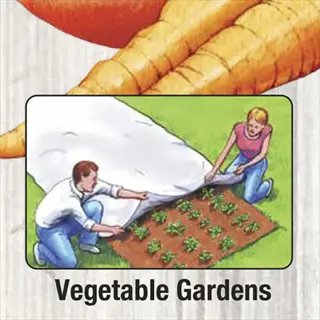
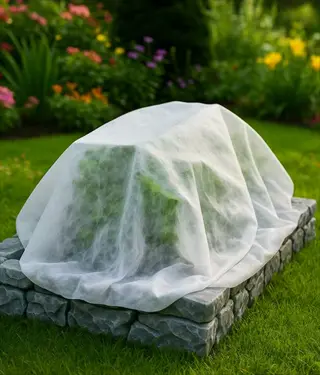
Commercial Frost Cloth (Horticultural Fleece)
- Protection level: Per UC Master Gardeners Sacramento, provides 4 to 8 degrees Fahrenheit depending on fabric weight.
- Best for: Larger garden beds, row crops, and citrus trees where consistent overnight coverage is needed.
- Cost range: $20 to $60 per roll covering 50 to 100 linear feet, lasting 3 to 5 seasons with careful storage.
- Application: Drape directly over plants or support with hoops. Anchor edges with bricks, rocks, or landscape staples.
- Reusable: Yes, machine washable in cold water and air dried. Fold and store in a dry container away from rodents.
- Drawback: Heavier weights block more light, so remove during the day if cover remains in place for multiple days.
Bed Sheets and Cotton Towels
- Protection level: Roughly 2 degrees Fahrenheit per University of Missouri Extension, useful for light frost events only.
- Best for: Emergency overnight protection when you receive a sudden frost advisory and have no commercial cloth.
- Cost range: Free if you already own old linens; thrift store sheets cost roughly $2 to $5 each.
- Application: Drape over a tomato cage or stakes so fabric does not touch leaves. Secure edges to trap ground heat.
- Reusable: Yes, but cotton absorbs moisture and grows heavy when wet, which can crush tender stems below.
- Drawback: Less effective than purpose-made cloth and not suitable for hard freezes below 28 degrees Fahrenheit.
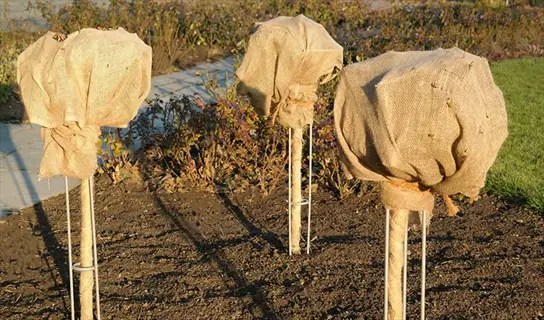
Burlap Sacks and Hessian Cloth
- Protection level: About 3 to 4 degrees Fahrenheit, similar to a light blanket but more durable outdoors.
- Best for: Wrapping evergreen shrubs, young trees, and rose bushes that need wind protection in winter.
- Cost range: $10 to $25 for a roll covering 40 to 50 square feet, lasting many seasons if stored dry.
- Application: Wrap around stakes driven into the ground around the plant, leaving a small air gap at the top.
- Reusable: Yes, very durable. Shake out and store rolled up in a dry shed or garage between uses.
- Drawback: Heavy when wet and blocks substantial light, so use only for overnight or short-term coverage.
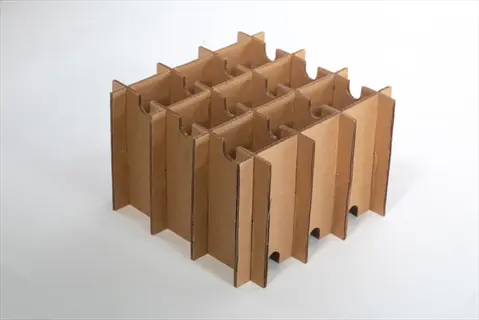
Cardboard Boxes and Paper Bags
- Protection level: Roughly 2 to 3 degrees Fahrenheit for short overnight events, dependent on box weight.
- Best for: Small individual plants, transplants, and seedlings during one-night spring or fall frost advisories.
- Cost range: Free from recycling bins; intentional cardboard cloches cost $1 to $5 per plant from gardening retailers.
- Application: Invert over plant before sunset and weigh down corners with stones. Remove first thing in the morning.
- Reusable: Limited, especially if cardboard gets wet. Most last 1 to 3 uses before degrading or molding.
- Drawback: Soaks through in rain, collapses easily, and cannot be left on during the day without blocking light.
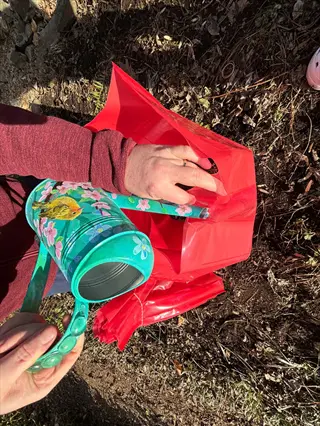
Plastic Sheeting (Avoid Direct Contact)
- Protection level: Variable. Per UF/IFAS, plastic touching foliage actually draws heat AWAY from leaves.
- Best for: Use ONLY over hoop tunnels or stakes that keep plastic completely off plant surfaces.
- Cost range: $5 to $20 for a contractor-grade roll covering a 10 by 25 foot section of garden.
- Application: Drape over hoops creating an air gap of at least 4 inches between plastic and foliage.
- Reusable: Yes, but UV light degrades thin plastic within one or two seasons of outdoor use.
- Drawback: Major heat-loss risk on contact, and overheating risk during sunny days if not ventilated promptly.
Buckets, Pots, and Cloches
- Protection level: Roughly 3 to 5 degrees Fahrenheit for small plants, depending on bucket thickness and size.
- Best for: Single transplants, tomato seedlings, pepper plants, and other tender single-plant protection needs.
- Cost range: Free for repurposed 5-gallon buckets; glass cloches cost $15 to $40 each from garden retailers.
- Application: Place over the plant before sunset, weighing it down if winds are expected during the night.
- Reusable: Excellent. Plastic buckets last decades; glass cloches handed down through generations of gardeners.
- Drawback: Heat builds up rapidly in sun, so remove first thing in the morning to prevent cooking the plant inside.
My own tomato plants taught me a hard lesson the first year I used plastic sheeting directly on the leaves. Every leaf that touched the plastic turned black by morning while leaves with an air gap survived. Always keep a buffer between fabric and foliage.
For most home gardens, a roll of horticultural fleece plus a few stakes is the best balance of cost and protection. You can add a bed sheet or burlap on top for extreme nights without breaking the bank.
Pre-Frost Preparation Tactics
The hours before sunset on a frost night are the most important hours of the entire season. I have watched my neighbor wait until the news flashed a warning at 9 PM, by which time ground heat is already lost. Acting at the right time is worth more than any single cover you buy.
Watering before frost feels backward to most new gardeners. But per UF/IFAS, wet soil acts like a brick oven. The dark, moist ground absorbs more sunlight during the day and radiates that thermal mass heat upward through the night. A mulch frost barrier on top locks even more warmth in.
Skip pruning and late-fall fertilizer too. Per UF/IFAS, both moves push out tender new growth that cannot harden off plants in time. Save shaping cuts for spring. When the cold rolls in, bring plants indoors and use the next task list to lock in ground heat for the rest.
Water Soil Thoroughly Before Sunset
- Why it works: Per UF/IFAS Extension, wet soil absorbs more heat during the day and radiates that heat at night.
- When to do it: Water deeply 24 hours before predicted frost so moisture reaches the root zone and stores warmth.
- How much: Apply 1 inch of water to a well-drained bed, or 2 inches in sandy soils that drain rapidly.
- Caution: Avoid waterlogging clay soils. Saturated roots in freezing conditions can suffer secondary damage from ice.
- Bonus benefit: Moist plant tissue is more frost-tolerant than drought-stressed plants with depleted water content.
Apply 4 Inches of Organic Mulch
- Why it works: Mulch insulates soil, keeping ground heat from escaping and protecting near-surface roots from temperature swings.
- Best materials: Straw, pine needles, shredded leaves, and wood chips per Old Farmer's Almanac recommendations.
- Depth target: Apply 4 inches around tender perennials, but keep mulch 2 inches away from stems to prevent rot.
- Timing: Apply before the first hard freeze when soil is still warm so the heat is locked in beneath the layer.
- Bonus benefit: Mulch also suppresses winter weeds and adds organic matter as it slowly decomposes over the season.
Bring Container Plants Indoors
- Why it works: Per UC Master Gardeners Sacramento, container roots are exposed on all sides and freeze much faster than in-ground plants.
- When to act: Move containers to a garage, porch, or basement when nights drop below 40 degrees Fahrenheit for tropicals.
- Inspection step: Check for pests like aphids and spider mites before bringing plants inside to avoid an indoor outbreak.
- Light considerations: Place near a south-facing window or under a grow light to prevent leaf drop from low-light shock.
- Bonus benefit: Plants that overwinter indoors get a head start in spring compared to replacements purchased annually.
Harden Off Spring Transplants
- Why it works: Per FAO research, gradual cold exposure triggers biochemical changes that improve plant tolerance by several degrees.
- Schedule: Set transplants outside for 1 hour on day one, increasing by 1 to 2 hours daily over 7 to 10 days.
- Conditions to avoid: Skip hardening on windy or sub-40 Fahrenheit days to prevent setting back tender seedlings.
- Visible signs: Hardened seedlings develop darker, thicker leaves and a sturdier stem compared to greenhouse plants.
- Bonus benefit: Hardened transplants typically survive light unexpected frosts that would otherwise kill coddled seedlings.
Cover Plants Before Sunset
- Why it works: Per UC Master Gardeners Sacramento, covering before sunset traps the day's accumulated ground heat under the fabric.
- Timing target: Place covers in position 1 to 2 hours before sunset on the day frost is forecast for overnight.
- Anchoring: Weigh down all edges with stones or landscape staples so wind cannot lift covers and let heat escape.
- Morning step: Remove covers shortly after sunrise so plants can photosynthesize and avoid overheating below the fabric.
- Bonus benefit: Covers also protect against frost-deposit damage on tender leaves of citrus and tropical ornamentals.
Stack these tactics for a much bigger payoff. A 4-inch mulch layer plus watering before frost plus a cover at sunset can give you a buffer of 8°F to 12°F combined. That kind of stack is often the difference between a saved row and a dead one.
Cold Frames and Hoop Tunnels
Per Iowa State Extension, cold frames and hoop tunnels can extend your growing season by 4 to 6 weeks on each end. That means salad greens in December and tomato seedlings in March without losing a single plant. Think of each layer like a piece of winter clothing.
Each cover stacks more warmth on top of the soil. Mulch, then row covers, then a hoop tunnel, then a second sheet of frost cloth can hold a buffer of 12°F to 16°F above outside air. The right mini greenhouses or DIY cold frame setup pays for itself in one bad winter.
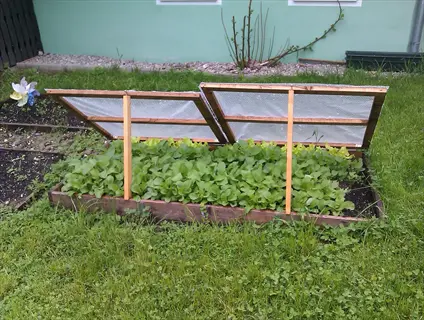
Cold Frame (Bottomless Insulated Box)
- What it is: A bottomless wooden or insulated box with a sloped, hinged transparent lid that captures solar heat.
- Protection level: Roughly 10 to 15 degrees Fahrenheit warmer than outside air on sunny days through stored heat.
- Build cost: $40 to $150 for a DIY 3 by 6 foot cold frame using scrap wood and a recycled window sash.
- Best crops: Hardy greens, lettuce, spinach, radishes, and overwintered onion or garlic starts in the coldest months.
- Setup tip: Angle the lid 30 to 45 degrees facing south to maximize winter sun capture and shed snow loads.
- Ventilation: Prop the lid open on days above 50 degrees Fahrenheit to prevent overheating and plant scorch.
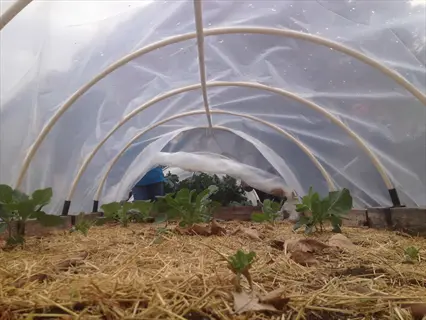
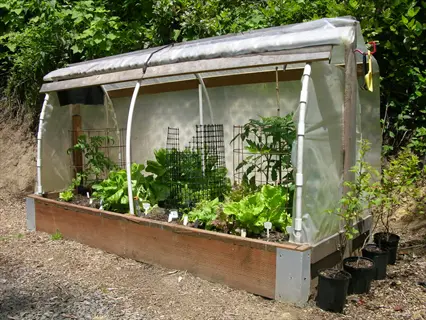
Low Tunnel (Hoop and Cover)
- What it is: Flexible PVC, metal, or fiberglass hoops covered with frost cloth or plastic over a garden row.
- Protection level: Frost cloth adds 4 to 8 degrees Fahrenheit; double layers add 8 to 12 degrees per UC Master Gardeners.
- Build cost: $30 to $80 for a 10-foot tunnel using 1/2 inch PVC hoops and a single roll of frost cloth.
- Best crops: Lettuce, spinach, kale, carrots, and other cool-season crops harvested through winter in mild climates.
- Setup tip: Space hoops 3 to 4 feet apart and anchor cover edges with sandbags, bricks, or landscape staples.
- Ventilation: Roll back one side on warm days. Plastic tunnels overheat fast; frost cloth breathes better in sun.
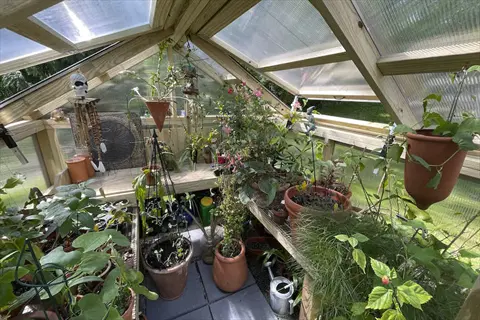
Mini Greenhouse (Walk-in or Lean-to)
- What it is: A small freestanding or wall-mounted greenhouse with rigid panels and a door for full-height access.
- Protection level: Holds 15 to 25 degrees Fahrenheit above ambient on sunny days; passive frost protection at night.
- Build cost: $150 to $1,500 depending on size, panel material (polycarbonate, glass), and frame quality.
- Best crops: Citrus trees, tropical herbs, overwintering tender perennials, and starting seedlings 6 to 8 weeks early.
- Setup tip: Place on the south side of a building so the wall acts as a thermal mass heat sink at night.
- Ventilation: Install at least one automatic vent opener that triggers when interior temperature exceeds 70 degrees Fahrenheit.
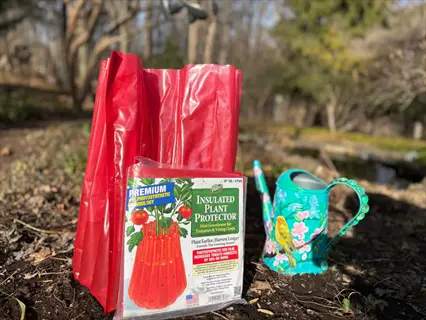
Walls of Water and Plant Cloches
- What it is: Water-filled plastic teepees or rigid glass and plastic domes placed over individual transplants.
- Protection level: Walls of Water buffer down to roughly 16 degrees Fahrenheit thanks to water's thermal mass.
- Build cost: $15 to $30 per Wall of Water; glass bell cloches cost $25 to $60 each from specialty retailers.
- Best crops: Single tomato, pepper, and squash transplants set out 4 to 6 weeks before the last frost date.
- Setup tip: Set up the cloche or wall in place a week early so soil beneath warms up before transplanting.
- Ventilation: Remove cloches on days above 70 degrees Fahrenheit; vent Walls of Water by leaving the top open.
A second layer of frost cloth under a hoop tunnel can add another 4°F. That trick is how zone 5 growers harvest spinach in January. Hoop houses and season extenders pay you back fast.
Start small with a single low tunnel over one row before you build a full cold frame. You can test your skills and your hoops without spending much money up front.
Container and Citrus Protection
A pot on a patio is like a picnic cooler with no lid. Cold air wraps the roots on all sides at the same time, while an in-ground plant has the earth as a buffer. That is why container plant protection always needs more care than the same plant in the ground.
Citrus protection rules are strict. Per UC Master Gardeners Sacramento, limes take damage at 29°F, while kumquats survive down to 19°F. The table below shows the threshold for each variety. Match your cover to your tree.
Young citrus trees need full frost-sensitive plants treatment for the first 4 to 5 years. After that, the trunk bark thickens enough to handle a light freeze on its own. A Meyer lemon frost wrap is the most common rescue I see on neighborhood walks each January.
Move Containers to Sheltered Locations
- Why: Container roots sit above ground in only a few inches of soil, freezing far faster than in-ground plantings.
- Where to go: An unheated garage, covered porch, or against a south-facing wall provides 5 to 15 degrees Fahrenheit buffer.
- Weight tip: Use a hand truck or pot caddy for containers over 20 pounds to prevent strain or dropped pots.
- Light needs: Tropical pots placed in garages need a grow light or window within 2 weeks to prevent leaf drop.
- Bonus tip: Group containers together so they share thermal mass and protect each other from cold winds.
Insulate Pots With Bubble Wrap or Burlap
- Why: Wrapping the sides of pots prevents soil from freezing solid, which can kill roots and crack ceramic containers.
- Materials: Two layers of bubble wrap, burlap sacks filled with leaves, or commercial pot covers all work well.
- Coverage: Wrap from the rim to the base and tuck under the pot, leaving the foliage above the wrap exposed.
- Drainage: Make sure drainage holes remain unblocked. Trapped water freezes and expands, cracking even sturdy pots.
- Bonus tip: Elevate pots on pot feet or bricks to prevent the bottom from freezing to a cold concrete patio surface.
Wrap Trees With Frost Cloth and Lights
- Why: Per UC Master Gardeners Sacramento, incandescent C7 or C9 holiday lights add up to 4 degrees Fahrenheit under cover.
- Wrap method: Use stakes to keep frost cloth off the leaves, then drape lights through inner branches before covering.
- Bulb selection: Use traditional incandescent bulbs, not LEDs. LEDs produce no measurable heat for frost protection.
- Safety: Use outdoor-rated lights and extension cords with a GFCI outlet to prevent electrical hazards in wet conditions.
- Bonus tip: Combine watering, wrapping, and lights for a stacked effect that can protect down to 18 degrees Fahrenheit.
Mulch Heavily Around the Trunk
- Why: A thick mulch ring insulates the root zone, the most temperature-sensitive part of a young citrus tree.
- Depth: Apply 4 to 6 inches of straw, wood chips, or shredded leaves in a 3-foot ring around the trunk.
- Gap rule: Keep mulch 4 inches away from the bark itself to prevent rot and rodent damage during winter.
- Timing: Apply before the first hard freeze while soil is still warm so heat is captured beneath the mulch.
- Bonus tip: A mulch volcano (mounded against the trunk) is harmful. Use a donut shape with a clear inner ring.
Stack these moves together for the best results with pot plants frost defense. A wrapped trunk plus mulch plus a covered crown can buy you down to 18°F for a young citrus. That is a huge buffer for a tree you would otherwise lose.
Garden Design and Microclimates
Smart garden placement saves more plants than any sheet ever will. Per UF/IFAS, microclimates can shift temperature by 3°F to 5°F within a single yard. That gap is often the line between a saved tomato and a black one.
Cold air behaves like water. It is denser than warm air and flows downhill, settling in cold pockets at the bottom of your slope. A fenced corner at the low end of your yard is the worst spot for tender plants and the best spot for hardy ones.
Heat sinks work the other way. The south-facing side of a brick or stone wall can stay 5°F to 10°F warmer at night thanks to stored daytime heat. Frost-resistant garden design uses windbreaks, south-facing slopes, and a smart map of your own yard.
Identify Cold Air Drainage Paths
- Concept: Cold air is denser than warm air and flows downhill, pooling in low spots like water in a riverbed.
- How to map: Walk your property on a frosty morning and note where frost is heaviest and lingers longest.
- Avoid planting: Tender plants and early bloomers at the bottom of slopes or in fenced-off pockets where cold collects.
- Best zones: Plant tender crops mid-slope where cold air drains past without stagnating around the plants overnight.
- Practical action: Remove or open low fences and dense hedges that trap cold air in the lower garden areas.
Use Structures as Heat Sinks
- Concept: Per UF/IFAS Extension, masonry walls, paved patios, and large boulders absorb daytime heat and release it overnight.
- Best locations: Plant tender perennials on the south side of brick walls, stone fireplaces, or paved driveways.
- Temperature gain: A south-facing wall niche can be 5 to 10 degrees Fahrenheit warmer at night than open ground.
- Material matters: Dark brick and stone store more heat than light-colored materials. Concrete and asphalt also work well.
- Practical action: Stack rocks around the base of borderline-hardy plants like fig trees or rosemary in zone 6 to 7.
Install Windbreaks for Advective Freezes
- Concept: Per UF/IFAS, windbreaks protect against advective freezes (cold air mass) but not radiation frost on calm nights.
- Best materials: A row of evergreen shrubs, a wooden fence, or a tall trellis covered with climbing plants.
- Placement: Position windbreaks on the north and west sides of the garden where winter winds typically originate.
- Spacing: Position windbreaks 5 to 10 times their height upwind of protected plants for full sheltering effect.
- Practical action: Plant a hedge of arborvitae, holly, or boxwood that doubles as wildlife habitat and visual screening.
Choose Sloped, Elevated Planting Areas
- Concept: Slight elevation (even 2 feet) keeps tender plants above the pooling cold air at the base of a slope.
- Best gardens: Raised beds 12 to 18 inches tall, terraced hillside gardens, and naturally elevated south-facing slopes.
- Temperature gain: A raised bed can stay 2 to 4 degrees Fahrenheit warmer than ground-level beds on radiation frost nights.
- Drainage bonus: Elevated beds drain faster after rain, reducing root rot risk during cold, wet winter periods.
- Practical action: Build raised beds with cedar, untreated hardwood, or galvanized steel for long lifespan in frost-prone zones.
Avoid Late-Season Pruning and Fertilizing
- Concept: Per UF/IFAS Extension, pruning and fertilizing in late fall trigger tender new growth that cannot harden before frost.
- Timing rule: Stop nitrogen fertilizing at least 6 weeks before the first expected hard frost date for your area.
- Pruning window: Limit fall pruning to dead, diseased, or broken branches only. Save shaping for late winter dormancy.
- Why it matters: New tender growth has no frost tolerance and dies first, sometimes causing dieback into mature wood.
- Practical action: Mark your calendar with the local first-frost date and count back 6 weeks for the last fertilizer application.
Spend one frosty morning walking your yard with a notebook. Mark the heaviest frost spots and the bare patches near walls. That simple frost map will guide your planting plan for the next ten years.
Post-Frost Recovery and Pruning
After a hard freeze, every gardener wants to grab the pruners and clean up the mess. But that rush is one of the biggest mistakes in frosted plants recovery. Damaged tissue insulates the live wood beneath. Cutting now strips away the safety blanket.
Think of after frost care like medical triage. Assess first, stabilize next, act last. Per UF/IFAS, do a quick cambium check by scraping the bark before you decide what is dead and what is only sleeping.
Per UF/IFAS, pruning after frost too early can wake up new growth that the next frost kills again. Watch for spring buds before you decide on damaged leaves removal. The five steps below walk you through the right order from the moment you spot the damage.
Step 1: Wait Before Acting
- Why wait: Damaged tissue insulates remaining healthy wood underneath the canopy from further cold injury.
- Wait period: Hold off pruning until new growth appears in spring, typically 4 to 8 weeks after the frost event.
- Visible damage: Blackened or water-soaked leaves are normal. Do not strip them off in panic, even on tropicals.
- Mental reset: Frost-damaged plants often look worse than they are. Many recover fully from the root system.
- Bonus advice: Take dated photos to document the damage progression and refine your frost protection for next year.
Step 2: Check the Cambium Layer
- What it is: The cambium is the thin green layer of living tissue just under the bark of stems and branches.
- How to check: Per UF/IFAS, scrape a small spot of outer bark with a fingernail or knife to expose the layer beneath.
- Green tissue: Indicates living wood. Branch is alive and will leaf out from this point with warmer weather.
- Brown or black: Indicates dead tissue. Move higher up the stem until you find living green, then mark that point.
- Bonus tip: Repeat the test on multiple branches across the plant to build a map of where to eventually prune.
Step 3: Water Sparingly During Recovery
- Why moderate: Damaged roots cannot absorb water efficiently, so overwatering causes root rot in compromised plants.
- How much: Water lightly when the top inch of soil dries, roughly half the normal volume for the first few weeks.
- No fertilizer: Skip fertilizer for at least 6 weeks. Damaged plants cannot use nutrients and salt damage can occur.
- Mulch retention: Keep the existing mulch layer in place to retain moisture and protect roots from temperature swings.
- Bonus tip: A diluted seaweed extract foliar spray once new growth emerges can support gentle recovery without overfeeding.
Step 4: Prune Once New Growth Emerges
- Timing: Wait until new buds clearly show living tissue, typically 6 to 8 weeks after the last frost event.
- Cut location: Prune just above the highest green bud, making clean angled cuts at 45 degrees with sharp pruners.
- Tool hygiene: Disinfect blades with 70% alcohol between cuts to prevent spreading disease through damaged tissue.
- Reshape gradually: Avoid removing more than one-third of total plant volume in a single pruning session.
- Bonus tip: Save the largest healthy cuttings to propagate replacements in case the parent plant fails to recover.
Step 5: Replace Plants That Do Not Recover
- When to give up: If no new growth appears 10 to 12 weeks after the last frost, assume complete plant death.
- Decision factors: Cost of replacement, sentimental value, and likelihood of future frost events all matter for this decision.
- Upgrade choice: Replace tender losses with more frost-tolerant varieties or species adapted to your USDA hardiness zone.
- Soil prep: Remove the dead plant entirely, including the root ball, and amend soil before planting a replacement.
- Bonus tip: Document which plants died at what temperatures to build a personal database for future planting decisions.
Frost damage signs can look brutal in the first 24 hours after a freeze. Black, mushy, water-soaked leaves shock most gardeners into action they will regret. Patience is the cheapest tool in your shed, and it saves more plants than any spray on the market.
5 Common Myths
Plastic sheets are the best material to drape directly over plants for overnight frost protection.
Plastic touching foliage pulls heat away and worsens damage. Use breathable frost cloth or sheets supported by stakes.
If a plant looks wilted and brown after frost, you should prune away damaged growth right away.
Wait until new spring growth appears before pruning. Damaged tissue insulates remaining healthy wood underneath the canopy.
Watering plants before a freeze damages roots and makes the cold injury much worse for the garden.
Moist soil absorbs daytime heat and radiates warmth upward at night, actually protecting plants from radiative frost damage.
All garden plants need frost protection whenever temperatures fall close to or below freezing point.
Most perennials, woody shrubs, and established trees tolerate frost naturally and require no protective coverings at all.
Spraying plants with antifreeze sprays or antitranspirants provides reliable protection from frost damage events.
Per FAO research, antitranspirants show no demonstrated effect on freeze protection. Use covers and watering instead.
Conclusion
Smart frost protection plants care comes down to three pillars. First, learn which plants in your yard are tender and which are hardy. Second, pick the right cover for the temperature drop you expect. Third, time your moves to capture ground heat before the sun sets.
Per FAO research, ice formation inside cells is the real cause of frost damage, not cold air. Every method in this guide aims at one goal. Block the ice from forming, or slow it down enough for the cells to survive the night.
Climate shifts have moved average frost dates in many regions. Even an old hand at gardening benefits from a fresh plan each year. The FAQ below answers common questions on materials, temps, and freeze protection.
The best tool you can build is your own frost log. Track the dates, the temperatures, and what worked or failed in your beds for the frost-sensitive plants you grow. In my experience, after two or three winters that journal becomes worth more than any product on the shelf.
External Sources
Frequently Asked Questions
What plants should you protect from frost?
Tender annuals, warm-season vegetables like tomatoes and peppers, tropical plants, citrus trees, and young transplants need frost protection.
Is 2 degrees cold enough for frost?
Yes, 2 degrees Celsius (about 36 degrees Fahrenheit) is within the frost advisory range where ground frost can form on clear, calm nights.
Do frost covers for plants work?
Yes, frost covers work by trapping radiated ground heat under the fabric, adding 4 to 8 degrees Fahrenheit of protection.
What can I use instead of a frost blanket?
Old bed sheets, burlap, cardboard boxes, towels, and overturned buckets all serve as effective frost blanket alternatives.
What is the most cold tolerant plant?
Kale tops the list, surviving temperatures as low as 10 degrees Fahrenheit, followed by spinach, Brussels sprouts, and rye.
What plants can be planted in October?
Garlic, spinach, kale, lettuce, radishes, spring bulbs, and cold-hardy perennials thrive when planted in October.
Can plants survive one night of freeze?
Most hardy plants survive one freeze night, but tender plants suffer permanent damage even from brief exposure to 28 degrees Fahrenheit.
Is 4 degrees Celsius frost?
4 degrees Celsius (39 degrees Fahrenheit) is not freezing, but ground frost can still form on calm, clear nights.
Will a cardboard box protect plants from frost?
Yes, a cardboard box protects small plants from light frost by trapping ground heat and blocking radiative cooling.
Can you use a towel to cover plants from frost?
Yes, a clean dry towel works as a frost cover by trapping ground heat, similar to a bed sheet or burlap.