

Introduction
Picture slim stems rising four feet above the bed. They sway in each breeze. Tiny pink and white blooms dance like a swarm of frozen butterflies. That sight stopped me cold the first time I saw a mature gaura plant at a Texas nursery in 2018. I bought three on the spot.
Oenothera lindheimeri is the new name for this Texas native. It blooms up to 8 months a year in the South per USGS. That window puts it ahead of most other plants you can buy. Most flowers give you 6 weeks of show. Gaura gives you most of the year.
Old books call it beeblossom or whirling butterflies. Pollinators swarm the open blooms in droves. Bees, butterflies, and hummingbirds all feed here. So does the white-lined sphinx moth, which lays eggs on the leaves. That makes this butterfly flower a true host plant, not just a pretty perennial wildflower.
Native plant gardening has surged since 2020. More people want tough, climate-ready picks. Gaura fits that brief better than most because it acts as a low-effort pollinator magnet that loves neglect. The next sections walk you through siting, care, top cultivars, and the few errors that trip up new growers.
What the Gaura Plant Offers
The gaura plant earns its space in your bed by being a wildflower with the manners of a garden plant. It blooms from April through November in the South per USGS data. One mature plant drops about 390,000 seeds per pound in a good year. That bloom span and seed output beat most named perennials by a wide margin.
Plant scientists moved it from Gaura to Oenothera lindheimeri in the early 2000s. DNA tests showed it fit best in the evening primrose family. That family also goes by Onagraceae. The species name honors Ferdinand Jacob Lindheimer, the 1800s Texas plant hunter. Most plant shops still sell it as beeblossom for ease.
I keep a label tag from one of my first plants from a small Texas grower. It still reads Gaura lindheimeri even though the new name was years old. That gap between books and tags trips up a lot of buyers.
The genus name gauros is Greek for superb, and that fits the show this Texas native puts on each year. The plant gives you the wild charm of a meadow flower with the soft form of a border perennial. You get long bloom, deer resistance, and pollinator value in one tough package. Few other plants check all those boxes at once.
Best Sun, Soil, and Site Setup
I lost two gaura plants in my first wet winter before I learned the hard truth. Sharp drainage matters more than sun, soil mix, or feed. Think of it as the concrete footing for your Texas wildflower house. Get drainage right, and the rest comes together with little effort on your end.
Where to plant gaura comes down to full sun plus well-draining soil that bakes a bit in summer. Aim for sandy loamy soil with a soil pH below 6.0 per NC State Extension. The right USDA hardiness zones run from 5 to 10 based on cultivar choice. South-facing slopes and raised beds shine for this plant.
Sunlight Exposure
- Hours needed: Provide a minimum of 6 to 8 hours of direct sunlight daily for steady flowering and compact stems.
- Afternoon shade: In zones 8 to 10 with brutal heat, light afternoon shade reduces stress without cutting bloom counts.
- Avoid: Deep shade and dappled morning sun cause leggy, sparse plants that lean and produce fewer flower spikes.
- Reflected heat: South-facing walls and stone borders boost performance in cooler zones 5 and 6 by adding warmth.
Soil Composition
- Texture: Sandy loam with sharp drainage suits gaura best; heavy clay holds winter water and rots the taproot.
- pH range: NC State Extension specifies acid soil below pH 6.0, slightly more acidic than many cottage perennials prefer.
- Amendments: Mix coarse sand or fine gravel into clay beds; skip rich compost, which encourages flopping and weak stems.
- Depth: Loosen soil to at least 12 inches (30 cm) deep so the carrot-like taproot can drive down without resistance.
Drainage and Moisture
- Slope advantage: Slight slopes, raised beds, or berms shed winter rain and dramatically improve gaura survival rates.
- Water frequency: Once established, water deeply every 7 to 10 days during summer drought; soggy soil is a bigger killer than dry.
- Mulch type: Use a thin 1 inch (2.5 cm) gravel or pine straw mulch instead of heavy bark, which traps moisture against the crown.
- Container drainage: For pots, drill extra holes and add a coarse gritty layer at the base before potting mix.
Climate and Hardiness
- Zone range: Wisconsin Extension lists 5b to 9a; NC State lists 5a to 9b; treat zone 5 plants as borderline and mulch heavily.
- Heat tolerance: Gaura handles temperatures above 95°F (35°C) better than most flowering perennials thanks to its deep taproot.
- Wind tolerance: Tall stems sway dramatically but rarely break; site away from foot traffic so they can move freely.
- Coastal use: Salt spray tolerance is moderate, which makes gaura a strong choice for inland coastal gardens with breezy exposure.
If you have only one good sunny spot, give it to gaura first. The taproot pushes deep, so you cannot move the plant later with much luck. Site choice is a one-shot deal with this perennial. Set it up right the first time and you save yourself a world of trouble.
Watering, Pruning, and Care
Wisconsin Extension sums up gaura care in one line. Water and fertilize sparingly to push compact growth and more blooms. I read that quote on a plant tag years ago and made it my rule. Watering gaura and fertilizing gaura with a light hand will reward you with more flowers all year.
Pruning gaura works best in stages, not one harsh cut. Think of it like trimming a beard in sections rather than a full buzz cut. The two-cut pruning method keeps blooms cycling without a sad gap in the middle of summer. Below are the four core tasks I run each year.
Watering Routine
- First season: Water new transplants deeply once a week to help the taproot establish before drought conditions arrive.
- Established plants: Soak roots every 10 to 14 days during summer dry spells, supplying about 1 inch (2.5 cm) of water per session.
- Container watering: Pots dry faster, so check moisture every 2 to 3 days in heat and water until it drains freely.
- Winter watering: Cut water back sharply in cool weather; wet, cold soil rots the taproot faster than any pest or disease.
Feeding Strategy
- Low-feed plant: Gaura blooms best on lean soil; over-fertilized plants grow tall, floppy, and produce fewer flower spikes.
- Spring boost: Apply a light scattering of balanced 10-10-10 fertilizer once in early spring as new growth pushes up.
- Organic option: A thin layer of aged compost or well-rotted manure in spring works for organic gardens without overdoing nutrients.
- Skip summer feeds: Avoid mid-season feeding; plants put energy into flowers when nitrogen stays low through the growing season.
Two-Cut Pruning Method
- Reasoning: Cutting every spike at once pauses flowering for 2 to 3 weeks, per Wisconsin Extension, leaving the garden empty.
- Step 1: In midsummer, shear half the spent flower stems back by one-third to provoke a fresh flush from those stems.
- Step 2: Three weeks later, cut the remaining stems back so blooms keep cycling without a noticeable gap in display.
- Final cleanup: In early spring, cut all stems to 6 inches (15 cm) above the crown before new basal growth emerges.
Deadheading and Tidying
- Self-seeding control: Deadhead spent stems to limit prolific self-seeding, which USGS notes can become weedy in warm zones.
- Shape correction: Shear leggy or flopping plants by one-third midseason to encourage bushier, sturdier regrowth.
- Tool choice: Use sharp bypass pruners or hedge shears for clean cuts that heal quickly and resist disease entry.
- Cut flower use: Long stems of cultivars like Siskiyou Pink make airy filler for cut flower arrangements indoors.
If you take one note from this section, make it the two-cut pruning rhythm above. That schedule, plus light deadheading along the way, shows you when to prune gaura for the longest show. I cut back gaura by a third in mid-July each year and never miss a bloom flush. Less feed and less water push more flowers, so treat gaura mean and it pays you back.
Top Gaura Cultivars to Grow
Picking your gaura varieties feels a bit like choosing a dance partner. Some sway tall and showy at the back of the border. Others stay tidy and quiet near your feet. I have grown most of the best gaura cultivars below over the past 7 years. My picks rank them by how they hold up in real beds, not just nursery photos.
The list mixes tall classics like Whirling Butterflies with shorter dwarf gaura picks like Rosy Jane and Belleza. Wisconsin Extension adds Snowstorm and Dauphine to the lineup most other guides skip. Read each profile and match the size to your spot. A compact gaura in a small bed beats a giant one that flops over your path.
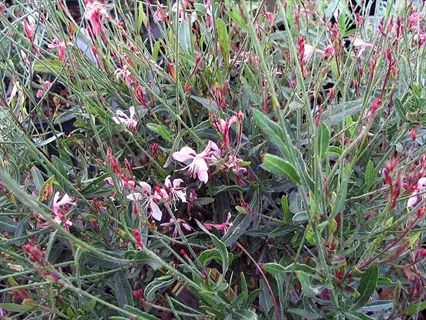
Siskiyou Pink
- Color: Deep rose-pink flowers with red-tinted stems and dark new foliage that holds color through the growing season.
- Size: Reaches 2 to 3 ft (60 to 90 cm) tall with a similar spread, a bit more compact than the species form.
- History: Introduced in 1994 by Siskiyou Rare Plant Nursery in Medford, Oregon, per Wisconsin Horticulture Extension records.
- Best for: Borders and cottage gardens where stronger pink color stands out against pale companions like silver artemisia.
- Cut flowers: Long, sturdy stems make Siskiyou Pink a favorite for airy filler in seasonal floral arrangements.
- Hardiness: Performs well in zones 5b to 9a with proper drainage and a layer of winter mulch in colder zones.
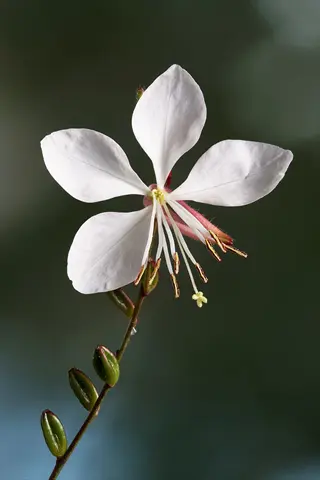
Whirling Butterflies
- Color: Bright white petals with pink buds, producing a two-tone effect that fades to soft blush in summer heat.
- Size: Reaches 3 to 4 ft (90 to 120 cm) tall, more upright than Siskiyou Pink but with the same airy habit.
- Movement: Long wand-like stems sway in each breeze, creating the classic dancing butterflies visual effect.
- Best for: Mass plantings, meadow gardens, and slope plantings where the motion reads from a distance.
- Pollinator value: Strong nectar producer that draws bees, butterflies, and hummingbirds across a long bloom season.
- Hardiness: Hardy in zones 5 to 9 and tolerates wind exposure better than many tall perennials thanks to flexible stems.
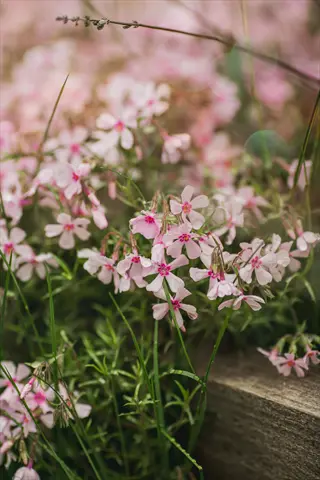
Rosy Jane
- Color: White petals edged in rich pink, creating a picotee effect that stands out among solid-color cultivars.
- Size: Compact at 18 to 24 inches (45 to 60 cm) tall, ideal for small gardens and the front of mixed borders.
- Bloom length: Flowers in a thick flush from late spring into fall with very little deadheading required to keep going.
- Best for: Container plantings, edging, and small-space gardens where height is limited but color is wanted.
- Companion fit: Pairs well with lavender, salvia, and ornamental grasses for a cohesive cottage look.
- Hardiness: Hardy in zones 5 to 9 with reliable winter return when planted in well drained soil.
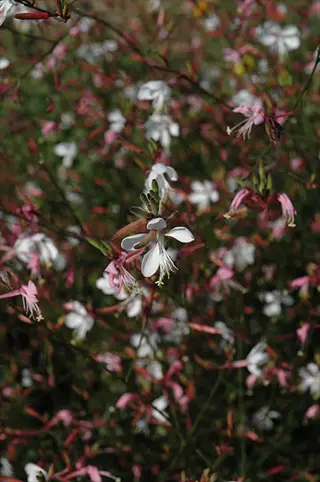
Snowstorm
- Color: Pure white flowers held on dark wiry stems for strong contrast in the garden bed throughout the bloom season.
- Size: Reaches 2 to 3 ft (60 to 90 cm) tall with a tidy mounded base and very upright flower stems.
- History: Released in 2007 by the University of Minnesota specifically for improved cold hardiness in zone 6 gardens.
- Best for: Northern gardeners who want gaura but lack reliable winter survival from older southern cultivars.
- Cold tolerance: Survives zone 6 winters with standard mulching, the most cold-hardy of mainstream cultivars.
- Garden role: Works well as a white bridge plant between pink and purple perennials in cottage-style borders.
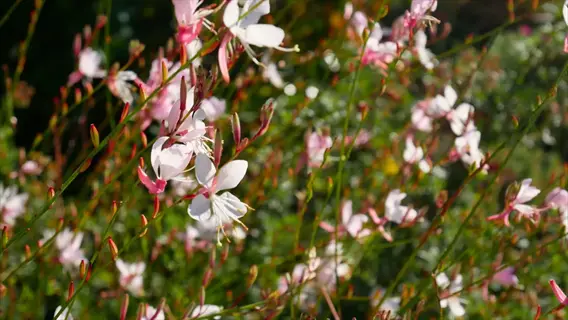
Dauphine
- Color: Soft pink flowers in dense clusters along very tall stems, giving a tall back-of-border anchor effect.
- Size: Reaches 5 to 7 ft (150 to 210 cm) tall, the tallest mainstream cultivar per Wisconsin Horticulture Extension.
- Use case: Best at the back of a deep border behind shorter perennials like coneflower, yarrow, or salvia.
- Best for: Cottage gardens and wildflower meadows where dramatic height adds vertical interest among shorter plants.
- Support note: May benefit from light staking in windy sites because of the unusual height for the species.
- Hardiness: Performs in zones 5 to 9 with the same drainage and winter mulch requirements as other tall cultivars.
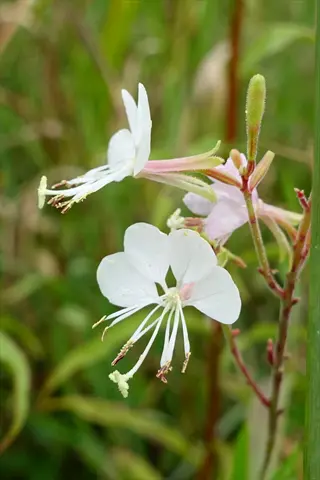
Crimson Butterflies
- Color: Deep rose-pink flowers held above bronzy burgundy foliage that adds three-season color even between flushes.
- Size: Compact at 18 to 24 inches (45 to 60 cm) tall, much shorter than the species and easier to manage in beds.
- Foliage value: The dark burgundy leaves stay attractive even when flowering pauses, giving year-round interest.
- Best for: Container groupings, front borders, and small gardens where dark foliage and pink flowers pair together.
- Pairing tip: Combine with chartreuse companions like Hakone grass or golden creeping Jenny for strong contrast.
- Hardiness: Hardy in zones 6 to 9; treat as borderline in zone 5 and mulch the crown well in late fall.
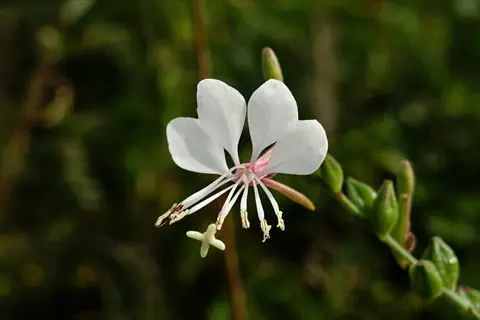
The Bride
- Color: Pure white flowers with no pink tinge, giving the cleanest white in the cultivar lineup at moderate height.
- Size: Reaches 3 to 4 ft (90 to 120 cm) tall with the classic airy wand-like flower stems of older cultivars.
- Garden style: Suits formal white gardens, moon gardens, and minimalist plantings where color is intentionally limited.
- Best for: Evening gardens where white flowers glow at dusk and on moonlit nights, with a soft glow near patios.
- Pollinator value: Strong evening nectar production that supports moth pollinators including the white-lined sphinx.
- Hardiness: Hardy in zones 5 to 9 and tolerates the same conditions as Whirling Butterflies with similar care.
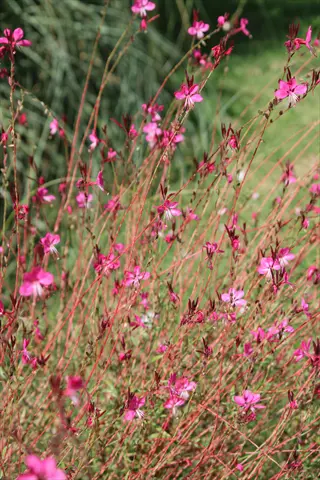
Belleza Dark Pink
- Color: Saturated dark pink flowers with strong color hold even in intense midsummer sun and high temperatures.
- Size: Very compact at 12 to 18 inches (30 to 45 cm) tall, the most container-friendly cultivar in the group.
- Habit: Mounded, bushy base with shorter flower stems that resist flopping better than the tall species form.
- Best for: Hanging baskets, mixed containers, patio pots, and the very front edge of borders and pathways.
- Bloom power: Flowers in thick flushes from spring through fall with minimal deadheading needed to keep the show going.
- Hardiness: Hardy in zones 6 to 9; treat as an annual or overwinter pots indoors in colder zones.
If I had to pick three to start with, I would grab Siskiyou Pink, Whirling Butterflies, and Rosy Jane. They cover pink, white, and picotee, plus tall and short heights. From there you can add Snowstorm for cold zones or Belleza for pots. Mix two or three cultivars in one bed and the show stretches even longer.
Gaura in Pots and Borders
Gaura earns its keep in your borders, pots, and cottage garden alike. The deep taproot acts as a soil staple, pinning hillsides through wind that flattens other plants. Texas Tech notes a mature plant spreads about 2 ft (60 cm) wide. That spread, plus the taproot, shapes how you size pots and bed spacing on slopes.
I tested gaura for slopes for erosion control where nothing else held soil through storms. Mass plantings of 7 plants 18 inches apart locked the bank in one season. Gaura for borders works the same way, with airy stems that fill gaps. For gaura in containers, pick small picks like Belleza for the best fit on a patio.
Xeriscape beds love this plant too thanks to low water needs once it settles in. Container gardening fans on small balconies will find a happy match in Belleza or Rosy Jane. The list below covers the top 5 uses I see in real yards across many garden styles.
Container Growing
- Pot size: Choose containers at least 12 inches (30 cm) wide and 14 inches (36 cm) deep to give the taproot room.
- Cultivar pick: Use compact selections like Belleza, Karalee Petite Pink, or Rosy Jane that stay under 24 inches (60 cm).
- Potting mix: Blend equal parts potting soil, coarse sand, and perlite to mimic the sharp drainage gaura prefers in nature.
- Sun placement: Set pots where they get at least 6 hours of direct sun; rotate weekly to keep growth even all around.
Border and Mass Plantings
- Spacing: Set plants 18 to 24 inches (45 to 60 cm) apart so airy stems can move freely without tangling neighbors.
- Drift size: Plant in groups of 5 to 9 of the same cultivar for natural-looking drifts in cottage and meadow gardens.
- Front-to-back layering: Use Belleza at the front, Siskiyou Pink in the middle, and Dauphine at the back for layered height.
- Color pairing: Mix white cultivars with purple salvias and golden coreopsis to amplify the dancing visual effect.
Slope and Erosion Control
- Taproot anchor: The deep carrot-like taproot stabilizes loose soil on slopes that erode under heavier flowering perennials.
- Drought slope use: South-facing dry slopes that bake other plants suit gaura perfectly thanks to its heat tolerance.
- Spacing on slopes: Stagger plantings 18 inches (45 cm) apart in a zigzag pattern to maximize root coverage of soil.
- Companion grasses: Pair with native bunch grasses like little bluestem to create a self-sustaining slope cover.
Xeriscape and Waterwise Gardens
- Water budget: Once established, gaura survives on rainfall in most climates south of zone 6 with only emergency irrigation.
- Rock garden role: The wispy stems contrast beautifully against solid boulders and gravel mulches in dry-style gardens.
- Mulch type: Use 1 to 2 inch (2.5 to 5 cm) gravel mulch rather than wood chips to keep crowns dry and prevent rot.
- Drought partners: Pair with lavender, Russian sage, agastache, and sedums for a low-water perennial combination.
Cottage and Meadow Styles
- Cottage role: Gaura softens hard edges in cottage borders, weaving between solid forms like roses and peonies.
- Meadow integration: Mixes naturally with native grasses and wildflowers, supporting both pollinators and seed-eating birds.
- Seasonal layering: Combine with spring bulbs at the base; gaura covers their fading foliage as summer arrives.
- Naturalization: Self-seeding habit fills gaps in informal gardens but can be controlled by deadheading in tidier settings.
Match the cultivar to your use case and you save a world of fuss. Tall picks like Dauphine need back-of-border room to look their best in your yard. Compact picks shine in your pots and at the front of a path. One plant family covers all 5 roles you need from gaura.
Pollinators and Companions
Most flowers act as restaurants for adult pollinators that drop in for a meal. Host plants act as nurseries that feed the next generation of caterpillars. Gaura plays both roles at once, which puts it in rare company. I have watched white-lined sphinx moth caterpillars chew leaves while bees fed on flowers above.
Gaura attracts butterflies in droves across an 8 month bloom run in the South. Gaura attracts bees of many native species, and gaura hummingbirds flock to the pink cultivars. Add deer resistant gaura to your yard if browse pressure rules out softer plants. As a true pollinator plant, your gaura beats most picks you can buy.
Bee and Butterfly Attraction
- Bee species: NC State Extension confirms gaura draws bumblebees, long-tongued bees, and many native solitary bee species.
- Nectar volume: USGS records gaura as producing large amounts of nectar, sustaining pollinators across a long bloom window.
- Bloom timing: April through November flowering covers the entire pollinator season in most temperate North American gardens.
- Butterfly use: Skippers, swallowtails, and small fritillaries feed regularly at gaura flowers throughout the warm months.
White-Lined Sphinx Moth Host
- Caterpillar food: Both Wisconsin and NC State Extensions confirm gaura is a larval host plant for white-lined sphinx moth caterpillars.
- Why it matters: Host plants supply food for caterpillars, the actual nursery role, not just nectar for adult moths and butterflies.
- Evening flight: Adult sphinx moths feed on gaura flowers at dusk, behaving like hummingbirds hovering at each bloom.
- Garden management: Accept some caterpillar damage as part of the ecosystem rather than spraying broad-spectrum insecticides.
Hummingbird and Deer Notes
- Hummingbird draw: NC State Extension lists hummingbirds among regular visitors, especially to pink-flowered cultivars.
- Deer resistance: Gaura is listed as deer resistant by NC State Extension, useful for rural gardens with browsing pressure.
- Rabbit tolerance: Young plants may be nibbled by rabbits, but established gaura rarely suffers significant damage from them.
- Cattle forage: USGS notes gaura is acceptable to cattle as forage, showing its broader role in mixed grazing landscapes.
Best Companion Plants
- Lavender pairing: Combine with lavender for matched drought tolerance, color contrast, and complementary bloom timing.
- Salvia partners: Purple, blue, or red salvias create vertical color blocks behind the airy horizontal sway of gaura stems.
- Grass anchors: Ornamental grasses like little bluestem and Mexican feather grass echo gaura's movement at lower heights.
- Coneflower contrast: Echinacea adds solid daisy-shaped flowers that ground the wispy gaura forms in the same border.
Plant gaura with a few of these companion plants and you build a mini wildlife refuge in one bed. USGS notes gaura makes large amounts of nectar that feed bugs for months. The native wildflower also acts as cattle forage in mixed pastures. Few plants pull this much ecological weight in such a small footprint.
Common Pests and Problems
Gaura is a tough Texas wildflower that mostly fails when you give it too much love. Too much water, too much food, too much shade. Gaura root rot kills more plants than any bug or fungus. I lost my first 2 plants this way in a wet clay bed before I learned the rules.
Most gaura pests and diseases stem from cultural slip-ups, not bug attacks. Black spot on gaura in early spring scares new growers but goes away on its own. Powdery mildew shows up where airflow is poor. Aphids on gaura target soft spring tips and rinse off with a strong water jet. If you wonder why is my gaura flopping or gaura flopping in midsummer, look at sun, water, and feed first.
Fix the cultural cause first and pest sprays often go to waste at the bottom of the shelf. Move the plant to full sun, cut back water, and skip the spring feed. Most issues clear up on their own within a few weeks of better care. Patience and less fuss pay the best rewards with gaura in your garden.
Winter Care and Hardiness
Overwintering gaura works like banking a campfire for the night. Protect the crown so it can flare back to life when warm weather returns. Gaura hardiness zones range from 5 to 10 per most sources. Wisconsin Extension says 5b to 9a, NC State says 5a to 9b, and Texas Tech says 6 to 10.
That spread tells you the gaura zone 5 gardener should treat the plant as borderline. As a short-lived perennial and a tender perennial in cold areas, gaura needs more help north of zone 6. I lost a Belleza pot one January when temps fell below 25°F (-4°C) on my unsheltered porch. Now I move all pots inside before that mark.
Mulching the Crown
- Timing: Apply mulch after the first hard frost so rodents do not nest in warm material against the crown.
- Depth: Use 2 to 3 inches (5 to 8 cm) of straw, pine needles, or chopped leaves over the base of the plant.
- Material choice: Avoid heavy wet bark mulch on the crown; airy materials shed moisture and protect from freeze damage.
- Spring removal: Pull mulch back gently in early spring once new basal growth begins to emerge from the crown.
Container Winterizing
- Trigger temperature: Move container gaura into shelter when forecast lows drop below 25°F (-4°C) in zones 5 and 6.
- Shelter type: An unheated garage, shed, or cold greenhouse holding temperatures of 32 to 45°F (0 to 7°C) works best.
- Watering schedule: Water lightly once every 4 to 6 weeks indoors; never let pots dry to bone or stay soggy and cold.
- Spring transition: Reintroduce pots to outdoor light gradually over 7 to 10 days to avoid shocking new growth.
Cuttings as Backup
- Why backup: Wisconsin Extension warns individual plants may not be long-lived, so cuttings hedge against winter loss.
- Timing: Take 4 to 6 inch (10 to 15 cm) semi-ripe cuttings in late summer before frost weakens parent plants.
- Rooting setup: Insert into a 50/50 mix of perlite and gritty potting soil; keep at 65 to 70°F (18 to 21°C) until rooted.
- Overwinter location: Hold rooted cuttings in a cool, bright spot indoors and plant out after the last spring frost.
Self-Seeding as Insurance
- Seed yield: USGS reports about 390,000 seeds per pound, so a single mature plant drops thousands of viable seeds yearly.
- Letting it seed: Skip fall deadheading on a few plants and let them scatter seed naturally in informal gardens.
- Germination: Seedlings appear in spring once soil warms above 65°F (18°C); thin or transplant young plants in early summer.
- Weediness warning: USGS notes gaura reseeds so readily it can become weedy; deadhead in tidy gardens to control spread.
Mix two or three of these tactics for the safest gaura winter care plan. Mulch the crown and take a few cuttings as backup. Gaura mulch winter beds with airy straw, not wet bark. If your plant dies, the seedlings or cuttings keep the line going. Bank the fire and you wake up to flowers next spring.
5 Common Myths
Gaura is a long-lived perennial that will return reliably in the same garden spot for many decades.
Gaura is a short-lived perennial, often lasting only 3 to 4 seasons, so allow self-seeding or replant every few years.
You can easily divide gaura clumps in spring like other perennials to make more plants for your garden.
Gaura grows a deep carrot-like taproot, making division almost impossible; propagate instead by seed or basal cuttings.
Black spots on gaura leaves in spring are always a serious fungal disease that needs immediate chemical treatment.
Black spotting often appears as a natural physiological response to cold temperatures, not disease, and disappears as plants warm.
Gaura needs rich, regularly fertilized soil and frequent watering to produce its best and longest flower display.
Gaura blooms best in lean soil with sparing water and fertilizer; rich, wet conditions cause floppy stems and root rot.
Gaura is just another butterfly and bee flower with no special ecological role in supporting native pollinators.
Gaura is the larval host plant for the white-lined sphinx moth, giving it a documented role in supporting native moth populations.
Conclusion
In my experience, the gaura plant rewards a do less style of care more than any plant I have grown. Give it full sun, sharp drainage, and lean soil. Skip the rich compost and the weekly water. Use the two-cut pruning method in midsummer to keep blooms cycling without a gap in your show.
Pick the right cultivar for your zone and the plant rewards your patience for years. Snowstorm suits zone 5 cold spots. Belleza fits small pots. Siskiyou Pink anchors a mixed border with strong color. Each pick honors the same plant, Oenothera lindheimeri, in a slightly new dress.
Think about one big swap you could make in your yard this season. Pull out a thirsty plant on that hot south slope and put gaura in its place. As a tough perennial wildflower, it works as drought tolerant and deer resistant cover where soft picks die out. Your water bill drops and pollinators flock in for the show.
Pair your new plants with lavender, salvia, and ornamental grasses for a full pollinator garden look. Native plant gardening keeps growing through 2026, and gaura sits at the heart of that wave. You bring style, ecology, and ease together in one tough Texas native. Plant it, step back, and let the dancing butterflies do the rest of the work.
External Sources
Frequently Asked Questions
Does the gaura plant come back every year?
Yes, gaura is a perennial in zones 5 to 10, though it is short-lived and often blooms for only 3 to 4 seasons before needing replacement.
Does gaura like sun or shade?
Gaura strongly prefers full sun with at least 6 to 8 hours of direct light daily; it tolerates light afternoon shade in very hot southern climates.
Where is the best place to plant gaura?
Plant gaura in a sunny, well-draining spot with these conditions:
- Full sun exposure, 6 to 8 hours minimum
- Sandy or loamy soil with sharp drainage
- Slightly acidic pH below 6.0
- Sheltered from strong winds for tall cultivars
Will gaura survive winter?
Gaura survives winter outdoors in zones 5b to 10 when planted in well-drained soil; wet, heavy soil in winter kills more plants than cold temperatures do.
How to prepare gaura for winter?
Prepare gaura for winter with these steps:
- Stop fertilizing by late summer to harden growth
- Reduce watering as temperatures drop
- Leave stems standing until early spring
- Apply 2 to 3 inches (5 to 8 cm) of mulch over the crown
- Move container gaura into an unheated greenhouse or garage
Is gaura difficult to grow?
Gaura is easy to grow once established, but it can be slow to settle in the first year and demands sharp drainage and full sun to thrive long-term.
Do gaura plants spread?
Gaura spreads mainly by self-seeding rather than rhizomes, with mature plants forming clumps about 2 feet (60 cm) wide and dropping thousands of seeds nearby.
Does gaura do well in pots?
Gaura grows well in deep containers at least 12 inches (30 cm) wide and tall, using compact cultivars like Belleza or Karalee Petite Pink for the best results.
How tall will gaura grow?
Most gaura cultivars reach 3 to 5 feet (90 to 150 cm) tall, while compact types stay around 18 inches (45 cm) and Dauphine can reach 5 to 7 feet (150 to 210 cm).
What is the new name for gaura?
The new botanical name for gaura is Oenothera lindheimeri, reclassified from Gaura lindheimeri in the early 2000s, though nurseries still commonly sell it under the older name.

