
Introduction
You want bold color in your yard that lasts all summer. Most flowers fade fast and turn to mush by August. But globe amaranth keeps its bright color through the worst heat. The plant looks just as good a year later in a dry vase.
I planted my first row of Gomphrena globosa ten years ago. Those plants taught me what real everlasting flowers look like up close. The little clover-like balls stand 1 to 2 feet (30 to 61 cm) tall. Each papery globe spans 1 to 2 inches (2.5 to 5 cm) wide at full size.
Here is the secret most guides skip. Those round balls are not real flowers at all. They are papery bracts, which means modified leaves. The tiny true flowers hide inside the bracts. That is why the color holds so well long after the season ends.
Think of each plant as nature's own dried flower factory. It locks in summer color for months of display. As a tropical annual, this plant ranks among the toughest drought tolerant annuals you can grow. Carl Linnaeus named it in 1753, and today scientists study its pigments for natural plant dyes.
9 Best Globe Amaranth Varieties
Not every globe amaranth grows the same way. In my experience trial-growing dozens of globe amaranth varieties over ten years, some stay short and tidy. Others tower above my head at peak bloom. The trick is to pick the right cultivar for your spot.
The Buddy series gomphrena and Gnome series gomphrena stay small for tight spots. The QIS gomphrena, Strawberry Fields gomphrena, and Fireworks gomphrena grow tall for cut flowers. The Pinball series fits in the middle for mixed beds. Match the height to your goal before you buy a single seed packet.
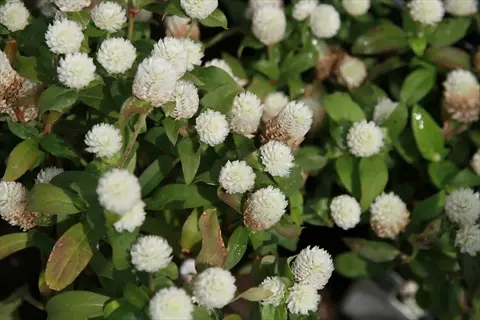
Buddy Series Dwarf Globe Amaranth
- Height: Stays compact at just 6 to 8 inches (15 to 20 cm), making it perfect for the front of borders and small containers.
- Colors: Available in vivid purple, rose, and white shades with full, rounded flower clusters that hold tightly to short stems.
- Best use: Ideal for edging beds, window boxes, and low container plantings where stronger growing habits would overwhelm.
- Bloom habit: Continuous flowering from early summer to first frost, producing dozens of small papery globes per plant.
- Care level: Extremely low-maintenance and tolerates heat, drought, and poor soil better than most full-sized annual flowers.
- Spacing: Plant 8 to 10 inches (20 to 25 cm) apart for a dense color block, with no pinching or staking required.
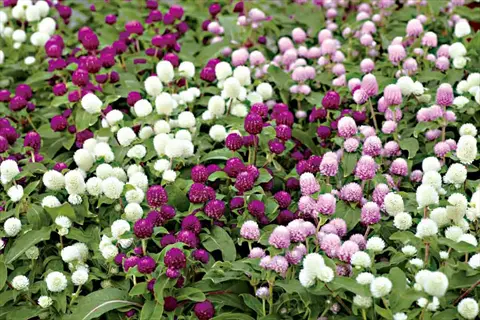
Gnome Series Compact Globe Amaranth
- Height: Grows 6 to 10 inches (15 to 25 cm) with a slightly taller, more rounded mound than the Buddy series.
- Colors: Mixed colors include pink, purple, and white, often sold as a multicolor pack for instant variety in containers.
- Best use: Excellent for mass plantings, container combinations, and rock gardens where compact mounding habit is preferred.
- Bloom habit: Heavy bloomer producing rounded papery globes that hold color from summer through fall without deadheading.
- Care level: Highly forgiving and resistant to heat stress, making it a top pick for beginner gardeners.
- Spacing: Plant 10 to 12 inches (25 to 30 cm) apart for a full appearance with overlapping mounds at maturity.
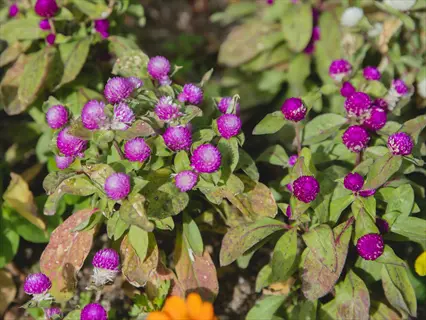
Las Vegas Series Mid-Height Globe Amaranth
- Height: Reaches 16 to 20 inches (40 to 50 cm), occupying a sweet spot between dwarf and full-sized cut-flower varieties.
- Colors: Vibrant purple and pink tones with sturdy stems that hold blooms well above the foliage for visibility.
- Best use: Works for mixed borders, mid-height container arrangements, and small-scale cut-flower production.
- Bloom habit: Continuous flowering with medium-sized papery globes about 1 inch (2.5 cm) across throughout summer.
- Care level: Heat-tolerant and drought-resistant once established, with no need for staking or special soil amendments.
- Spacing: Plant 12 inches (30 cm) apart for garden display or 8 inches (20 cm) apart for longer-stem cut-flower production.
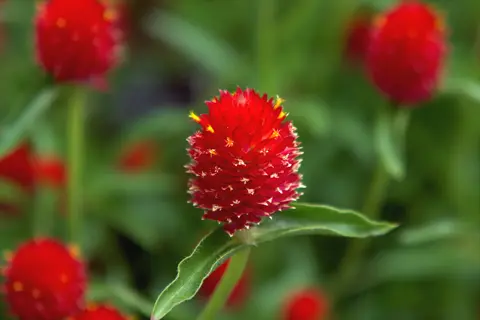
Strawberry Fields Red Globe Amaranth
- Height: Tall and elegant at 18 to 28 inches (45 to 70 cm), the showpiece variety for cottage gardens and arrangements.
- Colors: Brilliant strawberry red is its signature trait, the most vivid red available among globe amaranth varieties.
- Best use: Outstanding for cut-flower production, large mixed borders, and dried bouquets where red color retention matters.
- Bloom habit: Large papery flower heads up to 1.5 inches (4 cm) across on long, sturdy, branching stems.
- Care level: Needs full sun and well-drained soil but otherwise low-maintenance and reliable through summer heat.
- Spacing: Plant 12 to 18 inches (30 to 45 cm) apart for full display, or 6 to 8 inches (15 to 20 cm) for cut-flower rows.
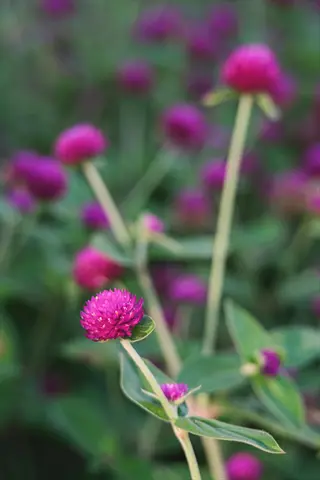
QIS Series Premium Cut-Flower Globe Amaranth
- Height: Tall and uniform at 24 to 30 inches (60 to 75 cm), bred specifically for commercial cut-flower farms.
- Colors: Wide range including purple, carmine, lilac, orange, red, rose, white, and pink in saturated tones.
- Best use: Top choice for cut-flower farmers and serious home arrangers who need long, straight stems and uniform timing.
- Bloom habit: Plants flower uniformly across a planting, making batch harvest easier than other globe amaranth series.
- Care level: Requires full sun and consistent water during establishment but is otherwise extremely low-maintenance.
- Spacing: Plant 6 to 9 inches (15 to 23 cm) apart in production beds to force longer stems through gentle competition.
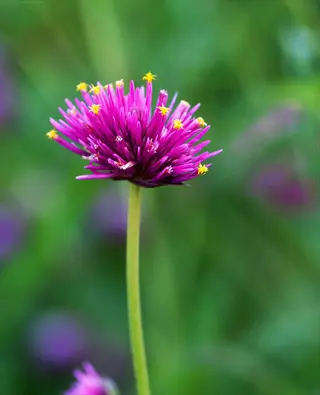
Fireworks Tall Pink Globe Amaranth
- Height: A statement plant at 36 to 48 inches (90 to 120 cm), one of the tallest globe amaranth cultivars available.
- Colors: Hot pink papery bracts tipped with yellow stamens that resemble exploding fireworks against the green foliage.
- Best use: Excellent as a back-of-border focal point, pollinator magnet, and architectural element in flower meadows.
- Bloom habit: Open, airy flower spikes rather than tight globes, blooming continuously from midsummer until frost.
- Care level: Heat and humidity-tolerant, with strong stems that rarely need staking even at full height.
- Spacing: Plant 18 to 24 inches (45 to 60 cm) apart to allow the airy branching habit to develop fully.
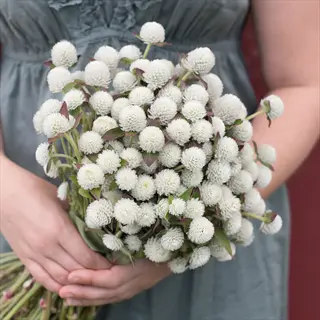
Audray White Cut-Flower Globe Amaranth
- Height: Reaches 18 to 24 inches (45 to 60 cm) with a clean, upright habit suited for both garden and vase.
- Colors: Pure crisp white papery bracts that pair beautifully with bolder colors in mixed bouquets and arrangements.
- Best use: A florist favorite for wedding work, mixed bouquets, and neutral-toned container displays.
- Bloom habit: Uniform flowering across the plant with strong, straight stems and good resistance to weather damage.
- Care level: Standard globe amaranth care with full sun and well-drained soil, plus occasional deep watering during droughts.
- Spacing: Plant 9 to 12 inches (23 to 30 cm) apart for the best balance of plant health and stem length.
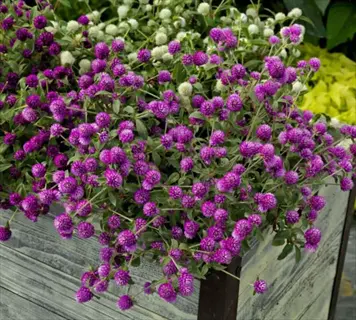
Pinball Series Globe Amaranth
- Height: Mid-sized at 14 to 18 inches (35 to 45 cm) with an upright branching habit that rarely needs support.
- Colors: Available in deep purple, electric pink, and pure white with strong saturation that holds well when dried.
- Best use: Versatile for mixed borders, cutting gardens, and container arrangements where moderate height works best.
- Bloom habit: Round, full flower heads about 1 inch (2.5 cm) across in dense clusters from early summer until first frost.
- Care level: Heat-tolerant and drought-resistant, with above-average resistance to humid weather and common foliar issues.
- Spacing: Plant 10 to 14 inches (25 to 35 cm) apart for a full, blended look in mixed plantings.
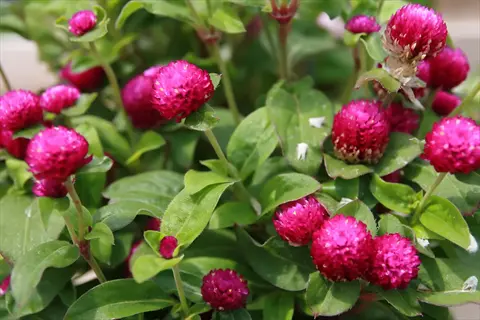
Bicolor Rose Globe Amaranth
- Height: Grows 14 to 20 inches (35 to 50 cm) with a tidy, mounding form ideal for ornamental beds.
- Colors: Distinctive two-tone rose and white bracts that give each flower a painted, hand-finished appearance.
- Best use: Eye-catching accent plant for mixed beds, containers, and small cut-flower bouquets that benefit from visual interest.
- Bloom habit: Steady production of papery flower globes about 1 inch (2.5 cm) across all summer long.
- Care level: Easy to grow with standard globe amaranth care, performing well in heat and humidity once established.
- Spacing: Plant 12 inches (30 cm) apart to allow each plant room to fill out without crowding neighbors.
Each variety here brings a different strength to the table. For pots and front borders, the dwarf types win. For long stems in a vase, the tall types come out on top. Pick two or three of these and you will have color from June until your first hard frost. I run this same plan in my own beds each spring.
Planting and Soil Preparation
Planting globe amaranth feels like waking up tropical visitors. The seeds need warmth before they will sprout. Cold soil keeps them asleep. Plan around your last frost date for the best start each spring.
I start my globe amaranth seeds indoors about 6 to 8 weeks before that last frost in my zone 5 yard. The key trick is to soak the seeds in warm water for one night before you plant them. This step boosts your sprout rate by a lot. Use a seed depth of just 1/8 inch and keep the trays warm at about 75 to 80°F (24 to 27°C).
Soil preparation matters more than fancy fertilizer with this plant. Pick a spot with well-drained soil and full sun. Loose, sandy loam works best, but globe amaranth handles poor soil too. Mix in 2 inches (5 cm) of compost before you plant. Move seedlings outside after a week of hardening off in a shaded spot.
Gardeners in zones 7 through 11 can skip the indoor start step in most years. Just sow seeds straight into warm garden soil once nights stay above 60°F (16°C). I tried this myself last summer in a friend's zone 8 bed with great results. This direct-sow trend has grown a lot in 2025. The plants catch up fast in warm dirt and bloom by midsummer.
Care and Maintenance Essentials
Think of globe amaranth care like managing a desert traveler. The plant thrives on tough love and dry ground. Baby it too much with water and rich food, and you will hurt your bloom count. Hold back, and the plant rewards you with a heavy show of color.
I once killed a whole row by watering them like petunias. Too much water leads to root rot and fewer flowers. Soak the ground once a week at most. These are some of the best full sun annuals and drought tolerant annuals for hot beds. A balanced 10-10-10 feed every 4 to 6 weeks keeps growth steady. Get globe amaranth spacing right at 12 to 18 inches (30 to 45 cm) apart for ornamental beds. Deadheading globe amaranth also boosts bloom count.
Sunlight Requirements
- Full sun preferred: Provide at least 6 hours of direct sunlight per day for the most vigorous growth and densest flowering performance.
- Partial shade tolerated: Plants accept 2 to 6 hours of direct sun but will produce fewer blooms and may stretch toward the light source.
- Heat performance: Unlike many annuals, globe amaranth thrives in intense summer heat and continues to flower when other plants pause.
- Morning sun bonus: Morning sun followed by light afternoon shade in extremely hot regions can help reduce midday water stress.
- Container placement: Position container plants where they catch unobstructed morning light for the strongest, most upright growth habit.
Watering Schedule
- Establishment phase: Water new transplants every 2 to 3 days for the first 2 to 3 weeks until roots reach into surrounding soil.
- Established plants: Once established, water deeply about once per week, allowing the top 1 to 2 inches (2.5 to 5 cm) of soil to dry between waterings.
- Avoid overhead watering: Water at the base of plants to prevent leaf wetness, which can trigger powdery mildew and gray mold infections.
- Container needs: Potted plants dry out faster and may need watering every 2 to 3 days during peak summer heat and direct sun.
- Drought tolerance: Globe amaranth handles drought well once established, but consistent moderate moisture produces the heaviest blooms.
Soil and Fertilizer
- Soil flexibility: Tolerates acidic, sandy, loam, and clay soils as long as drainage is good and water does not pool around roots.
- Soil pH: Performs best in slightly acidic to neutral soil with a pH between 6.0 and 7.0, though it adapts to a wider range.
- Fertilizer needs: Apply a balanced 10-10-10 fertilizer at planting and again every 4 to 6 weeks during the active growing season.
- Avoid excess nitrogen: Too much nitrogen produces lush foliage at the expense of flowers, so use a balanced or bloom-focused formula.
- Compost top-dress: A 1-inch (2.5 cm) layer of compost in spring provides slow-release nutrients and improves soil structure naturally.
Spacing and Pinching
- Standard spacing: Plant 12 to 18 inches (30 to 45 cm) apart for ornamental beds and mixed borders with full mounding habits.
- Cut-flower spacing: Reduce spacing to 6 to 8 inches (15 to 20 cm) apart to force longer, straighter stems through gentle plant competition.
- Pinch back tip: When seedlings reach 6 to 8 inches (15 to 20 cm), pinch off the top growing tip to encourage branching and more blooms.
- Deadheading: Remove faded flowers regularly to redirect plant energy toward new bud production rather than seed development.
- Mulch application: Apply 1 to 2 inches (2.5 to 5 cm) of mulch around plants to conserve moisture and suppress competing weeds.
Low-water and xeriscape gardens have grown a lot in the past five years. Globe amaranth fits this trend with ease. The plant cuts your water bill and still gives you bold color all season. Treat it rough, and it will pay you back every time.
Harvesting and Drying Techniques
Learning how to dry globe amaranth opened a new door for me as a gardener. Each cut stem feels like time-traveling color. You lock summer's bright shade into a forever bouquet. These dried flowers can last 1 to 2 years on a shelf with the right care.
The right harvest stage matters more than the drying step itself. Cut when the round balls feel firm and the color looks at its peak. I learned this the hard way after my first batch turned brown because I waited too long. Pick a dry morning, never a wet one. Use long stems for arranging. The vase life of fresh cut flowers runs about a week, but the dried form lasts for years.
Identify the Right Harvest Stage
- Full bloom timing: Harvest when flower heads are fully open and brightly colored but before any browning appears at the base.
- Stem firmness test: Squeeze the stem just below the flower head; it should feel firm and not soft or wilted at the cut point.
- Morning harvest: Cut stems in the early morning after dew has dried but before midday heat causes wilting and moisture loss.
- Color check: Look for bracts at their most saturated color since dried flowers retain whatever color they had at the time of harvest.
- Avoid wet days: Skip harvest after rain or heavy dew because moisture trapped in the bracts can lead to mold during drying.
Cut Stems Properly
- Sharp tool use: Use sharp pruning snips or scissors to make clean cuts that heal quickly and reduce the risk of plant stress.
- Long stem length: Cut stems as long as possible, ideally 8 to 18 inches (20 to 45 cm), for versatile arranging options later.
- Whole-plant option: For commercial cut-flower production, harvest entire plants at peak bloom rather than individual stems.
- Cut above a node: Make cuts just above a leaf node to encourage new growth and additional bloom flushes on remaining plants.
- Strip lower leaves: Remove leaves from the bottom one-third of each stem to prevent rot during the drying process.
Hang and Dry Indoors
- Bundle small groups: Tie 6 to 10 stems together with rubber bands or twine, leaving room for air to circulate between flowers.
- Hang upside down: Suspend bundles upside down in a dark, dry, well-ventilated space like an attic, closet, or spare room.
- Ideal conditions: Choose a location with low humidity (under 50% if possible) and steady airflow for the best color retention.
- Drying timeline: Allow 2 to 4 weeks for stems to dry completely, depending on local humidity and room temperature conditions.
- Test for dryness: Check that stems feel papery and snap cleanly when bent before removing them from the drying area.
Store and Display Dried Blooms
- Storage container: Place fully dried stems in a cardboard box or paper bag for long-term storage to prevent dust and breakage.
- Avoid sunlight: Store away from direct sunlight, which can fade the vibrant colors of dried bracts over several months.
- Display longevity: Dried globe amaranth holds color for 1 to 2 years when displayed indoors away from strong light and moisture.
- Craft uses: Use dried flowers in wreaths, potpourri, pressed botanicals, and everlasting arrangements for year-round color.
- Refresh display: Gently dust dried arrangements with a soft brush or cool hairdryer setting to keep them looking their best.
Crafters and home decor fans have brought everlasting flowers back into style since 2020. You will find globe amaranth at the top of most recommended lists for good reason. Your color holds. Your shape stays round. You get bouquets on your shelf in February that look as fresh as they did in July.
Pests, Diseases, and Solutions
Globe amaranth is one of the most pest resistant flowers you can plant. It is also deer resistant, which makes my country yard a happy place. But spotting plant problems early is like noticing a friend's bad mood before it turns into a fight. Catch issues fast, and your plants bounce right back.
Plant disease prevention starts with good airflow and base watering. Wet leaves cause most trouble. I learned this when I lost half a row to powdery mildew during the wet spring of 2024 here in the Midwest. In my experience, fungal diseases like gray mold thrive in cool, damp air. Pests like aphids and thrips show up too, but you can knock them back with soap spray and sticky traps.
Walk your beds once a week with a cup of coffee in hand. Look at the leaves and the bases of each stem. Early action saves your whole crop. Most years, you will find nothing at all. That is part of why this plant earns a spot in my yard every spring.
Garden Design and Companion Planting
Think of globe amaranth as the dependable supporting actor in your beds. It makes every garden star look even better next to it. The papery balls fill gaps between bolder blooms. I planted my first pollinator garden with this plant at the center five years ago, and the bees and butterflies have not stopped coming back.
Good companion plants for gomphrena share its love of full sun and dry feet. Pair it with zinnias and salvia for a classic butterfly garden. Use tall types in mixed borders or as the back row in a cottage garden layout. The plant works great in container gardening too. For dry climates, it fits the xeriscape style without a single complaint.
Heat-Loving Annual Borders
- Pairs well with: Combine globe amaranth with zinnias, marigolds, lantana, and salvia for a vibrant, drought-tolerant border that thrives in summer heat.
- Color strategy: Mix tall purple Strawberry Fields with golden marigolds and red salvias for high-contrast color blocks throughout the season.
- Care synergy: All these companions share similar full-sun, low-water needs, making maintenance simpler across the entire bed.
- Bloom timing: Plants flower simultaneously from early summer through first frost for nonstop color in mixed borders.
- Pollinator power: This combination attracts butterflies, bees, and hummingbirds, turning your border into a living pollinator habitat.
Container Recipes for Patios
- Thriller-filler-spiller approach: Use Fireworks gomphrena as the upright thriller, paired with sweet potato vine spiller and creeping zinnia filler.
- Container size: Choose containers at least 12 inches (30 cm) deep with drainage holes for healthy, well-rooted plants all season.
- Soil mix: Use a quality potting mix combined with 20% compost for water retention and balanced fertility throughout summer.
- Spacing in pots: Plant 3 to 5 globe amaranth plants per 12-inch pot for a full, lush appearance by midsummer.
- Watering tip: Container plantings dry out faster than ground plants, so check moisture daily during peak summer heat for best results.
Pollinator and Butterfly Gardens
- Pollinator allies: Combine globe amaranth with coneflower, butterfly bush, joe pye weed, and milkweed for a multi-species pollinator habitat.
- Visiting species: Expect monarchs, swallowtails, painted ladies, honeybees, native bees, and beneficial hoverflies throughout the bloom season.
- Long bloom period: Globe amaranth blooms continuously from early summer through frost, providing reliable nectar when other plants pause.
- Native plant pairing: Pair with native asters and goldenrod for a mix of nectar sources spanning spring, summer, and fall seasons.
- Habitat structure: Add low water dishes, dense plantings, and skip pesticides to create a true pollinator sanctuary in your garden.
Cottage Garden and Cutting Beds
- Cottage garden mix: Plant globe amaranth alongside cosmos, dahlias, snapdragons, and feverfew for an abundant cottage-style flower display.
- Cutting garden layout: Plant rows of QIS or Audray globe amaranth between rows of zinnias and dahlias for continuous bouquet harvests.
- Color palette: Choose harmonious colors like all pinks and purples, or contrasting palettes like purple and yellow for visual drama.
- Height layering: Use Buddy series at the front, Las Vegas in the middle, and Fireworks at the back for a stepped border effect.
- Succession planting: Stagger plantings 2 to 3 weeks apart through spring to extend the cut-flower harvest window into autumn.
The pollinator-friendly movement of 2025 has pushed long-blooming nectar plants into the spotlight. Globe amaranth feeds bees from June until your first frost in October. That is five months of food for your local pollinators on one easy plant. NC State Extension lists it as both a butterfly and pollinator garden plant.
Cultural History and Science
Your humble globe amaranth is a botanical time capsule. It carries centuries of meaning into modern science labs. Carl Linnaeus put a name on this plant back in 1753. Since then, you can find it in temples, gardens, and now in food research.
The plant belongs to the Amaranthaceae family. When I first learned about its betacyanins in a botany class, the topic stuck with me. In my experience, you grow a different plant once you know its story. These pigments work as a natural food colorant with strong antioxidant value. Many cultural plants carry stories like this one. Some folk healers list it among their medicinal herbs, though modern research is still in early stages.
Discovery and Botanical Naming
- Linnaeus origin: Swedish botanist Carl Linnaeus formally named Gomphrena globosa in 1753 as part of his Species Plantarum classification work.
- Native range: The plant is native to Central America, with documented populations from Guatemala and Panama extending into Mexico and Brazil.
- Family connection: Globe amaranth belongs to the Amaranthaceae family, which includes both ornamentals and the edible grain amaranths.
- Global spread: Spanish and Portuguese traders carried globe amaranth seeds across the world in the 1600s and 1700s, reaching Asia rapidly.
- Taxonomic siblings: Closely related to Gomphrena haageana, a sister species often grown alongside globe amaranth for orange and red tones.
Cultural Significance Worldwide
- Hawaiian leis: Globe amaranth, called bozu in some traditions, has been used in Hawaiian floral leis for its long-lasting papery texture.
- Nepali Tihar festival: Known as makhamali ful in Nepal, the flower is woven into garlands for the Bhai Tika sibling honoring ceremony.
- American historical use: Thomas Jefferson reportedly grew globe amaranth in his Shadwell garden as early as 1767, reflecting colonial-era interest.
- Symbolism: Many cultures associate the everlasting flower with immortality, lasting love, and remembrance because of its color retention.
- Religious offerings: In parts of South Asia, dried globe amaranth garlands serve as durable offerings in temples and ceremonies.
Modern Phytochemistry Research
- Pigment compounds: Peer-reviewed research has identified three main betacyanins in globe amaranth: gomphrenin, isogomphrenin II, and isogomphrenin III.
- Natural food colorant: A 2020 Food Chemistry study confirmed spray-dried extract produces intense pink color suitable for replacing synthetic dyes.
- Shelf stability: Betacyanin extracts remain stable at pH 3 to 7 over a 30-day shelf-life test, making them practical for food applications.
- Antioxidant activity: Globe amaranth contains over 27 phytochemicals including phenolic acids and flavonoids with documented antioxidant properties.
- Industry potential: Researchers see globe amaranth as a viable natural alternative to synthetic pink colorants in cookies, drinks, and cosmetics.
Traditional Medicinal Uses
- Folk medicine: Various cultures have used globe amaranth flower preparations in traditional teas and infusions for general wellness support.
- Genus context: Related Gomphrena species like G. celosioides have documented anti-inflammatory properties in peer-reviewed laboratory studies.
- Cautionary note: Modern medical claims about globe amaranth are preliminary, so always consult a healthcare provider before using it medicinally.
- Skin applications: In some folk traditions, the flower extract has been applied externally as part of skin care preparations and washes.
- Research frontier: Scientists continue to study the broader Gomphrena genus for potential pharmaceutical compounds and natural product chemistry.
Plant-based dyes have grown into a big trend since 2020. Food brands want pink color without synthetic chemicals. Globe amaranth fits this need with stable pigment that holds up at pH 3 to 7 for a full month. The little flower in your garden may end up in your next snack pack. You will look at your blooms with new respect.
5 Common Myths
Globe amaranth is the same plant as grain amaranth and produces edible seeds for cooking.
They are different species. Globe amaranth (Gomphrena globosa) is ornamental, while grain amaranth belongs to a separate genus called Amaranthus.
Globe amaranth needs constant watering and rich soil to produce its colorful blooms all season.
Globe amaranth thrives on neglect. It tolerates drought and poor soils, and overwatering actually leads to fungal issues.
The bright papery balls on globe amaranth plants are the true flowers of the plant.
The colorful papery structures are actually bracts, not flowers. The true flowers are small and tucked inside the showy bracts.
Globe amaranth is a true perennial that returns year after year in every climate zone.
Globe amaranth is only a perennial in USDA zones 9 to 11. In all other zones it grows as a frost-sensitive annual.
Globe amaranth attracts only butterflies and is not useful for other beneficial garden insects.
Globe amaranth supports many pollinators, including bees, butterflies, hoverflies, and other beneficial insects during its long bloom season.
Conclusion
Planting globe amaranth is like investing in a flower that gives back through every season. In my experience over ten years, no other annual works harder for less effort. You get heat tolerance and drought strength in one plant. It blooms for months and dries into a forever bouquet.
Gomphrena globosa ranks among the toughest drought tolerant annuals you can grow. The plant fits any pollinator garden plan with ease. Bees and butterflies flock to it from June until your first frost. Your cut stems will fill vases all summer. The dried flowers hold their color for a year or more on your shelf.
This plant bridges centuries of culture with cutting-edge science labs. Thomas Jefferson grew it at Shadwell in 1767. Nepali families weave it into Tihar festival garlands each fall. Hawaiian leis use it for its papery texture and color. Now food scientists study its betacyanin pigments as a natural pink dye. Few everlasting flowers carry this much history into a modern lab.
Gardening in 2025 leans toward low-water, high-impact plants. Globe amaranth checks every box on that list. Plant a row this spring. Cut some for fresh bouquets. Dry the rest for winter color in your home. You will look back next year and wonder why you waited so long to try this little flower in your own yard.
External Sources
Frequently Asked Questions
What is globe amaranth good for?
Globe amaranth is grown for ornamental color, cut flowers, dried bouquets, pollinator gardens, and as a natural pink food colorant.
Is globe amaranth hard to grow?
No, globe amaranth is one of the easiest annuals to grow. It tolerates heat, drought, and most soil conditions with minimal care.
Is globe amaranth a perennial or annual?
Globe amaranth is a tropical perennial in USDA zones 9 to 11 but grown as an annual everywhere else.
Is globe amaranth the same as amaranth?
No, they are different plants. Both belong to the Amaranthaceae family, but globe amaranth (Gomphrena globosa) is purely ornamental while grain amaranth (Amaranthus) is edible.
Is it okay to eat amaranth every day?
Grain amaranth can be eaten daily as part of a balanced diet, but always consult a nutritionist for personalized advice.
What is the most healing flower in the world?
Many flowers offer therapeutic uses, but chamomile, calendula, and lavender are often cited among the most widely used healing flowers worldwide.
Why avoid amaranth?
Raw amaranth leaves contain oxalates and nitrates, which may cause issues for some people when consumed in large amounts.
Can globe amaranth grow in pots?
Yes, globe amaranth grows well in containers. Choose pots at least 8 inches deep with drainage holes and use well-draining potting mix.
Will amaranth come back every year?
In most climates, globe amaranth is treated as an annual but often self-seeds, returning naturally each season from dropped seeds.
Can amaranth survive winter?
Globe amaranth cannot survive frost. It only overwinters as a perennial in frost-free USDA zones 9 through 11.