
Introduction
If the word orchid makes you nervous, the ground orchid is the plant that fixes that. Most orchids you see at the store cling to tree bark and want misting, special bark mix, and a careful hand. This one skips all of that. It roots in plain soil like any garden perennial, and that single difference is why beginners have such an easy time with it.
A terrestrial orchid simply grows in the ground instead of clinging to a tree. Tree-dwelling orchids hang onto bark and pull moisture from the air, which is what makes them fussy. Ground orchids feed through soil roots, so you water and plant them the same way you would a hosta or a daylily. That alone moves them into the easy orchids category for most gardeners.
One name hides two very different plants, and they want opposite things. Tender Spathoglottis, the Philippine ground orchid, loves heat and dies in frost. It suits warm regions and zones 9 to 11. Cold-hardy Bletilla striata, the Chinese version, comes back every spring. It survives USDA zones 5 to 9. Both numbers come from University of Arkansas and NC State Extension.
That split matters. A reader in Minnesota and one in Miami type the same words but need different advice. So this guide sorts out which plant you have first. Then you get clear, extension-backed help on light, soil, water, feeding, and how to make more. You also get an honest word on planting these without letting them spread into the wild.
The Two Main Ground Orchids
From my kitchen window I can see the north-side bed. I planted a deep rose Bletilla clump there three springs ago, and it has roughly doubled in size. A few feet from the glass sits an empty spot. I grew a tender Spathoglottis there once. It only ever made it through summer as a pot I dragged indoors each fall. Same name on the tags. Two very different plants in this zone 7 garden.
That is the trap with the term ground orchid. It covers two plants that share a habit but not a climate, so the right pick for you depends on where you live. Get this one choice right and the rest of the care falls into place.
Your first option is the tender tropical type. Its name is Spathoglottis plicata, the Philippine ground orchid. It is native to Southeast Asia and is not frost-hardy. The plant grows up to 100 cm (39 in) tall. Each raceme carries 8 to 27 magenta, red, yellow, or white flowers, with a main flush from May through July. Pick this one only if your winters stay warm.
Your second option is the cold-hardy type, Bletilla striata, known as the Chinese ground orchid. This one is a true hardy orchid, tough in USDA zones 5 to 9. It stays shorter, at 8 in to 1 ft 6 in (20 to 46 cm) tall and 7 in to 1 ft (18 to 30 cm) wide. It blooms spring to early summer. Then the pleated leaves carry it through the warm months. If your ground freezes each year, this is your plant.
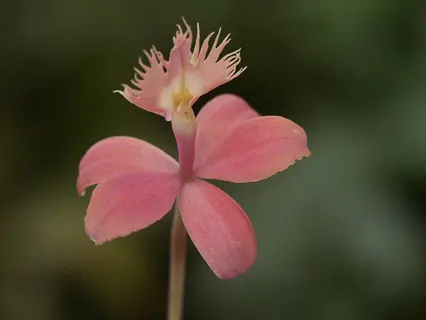
You will see a couple of other plants ride under the same broad label. The reed-stem orchid, an Epidendrum, brings bright clustered flowers to frost-free gardens. Eulophia graminea, the Chinese crown orchid, grows the same way from a pseudobulb. But it acts as a problem plant in Florida. Treat them as cousins. For your purposes the real call is still tender against hardy, set by your climate.
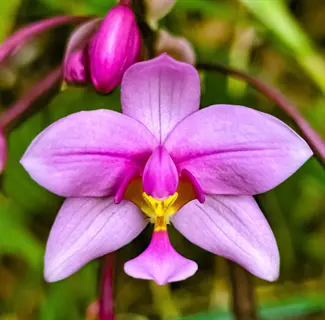
Spathoglottis (Philippine Ground Orchid)
- Climate: Tender and tropical, native to Southeast Asia, India, the Philippines, and Australasia, and not frost-hardy in cold winter regions.
- Size: Grows up to about 100 cm (39 in) tall with pleated leaves rising from a pseudobulb like a small palm.
- Flowers: Produces 8 to 27 magenta, red, yellow, or white flowers along an upright raceme above the foliage.
- Bloom time: Flowers May through July, and warm-climate plants can flower in longer overlapping flushes.
- Best use: A favorite landscape and bedding plant in Florida, Hawaii, and the Caribbean where frost is not a concern.
- Note: Has naturalized in some warm regions, so warm-climate gardeners should plant it responsibly and watch for spread.
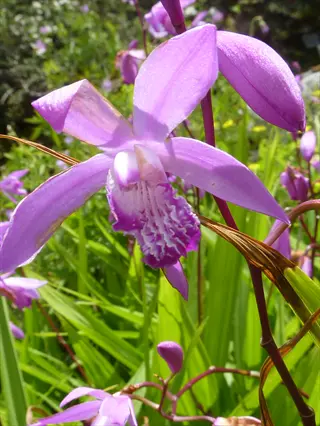
Bletilla striata (Chinese Ground Orchid)
- Climate: Cold-hardy in USDA zones 5 to 9, native to grassy slopes of China, Korea, and Japan, and dies back in winter.
- Size: Reaches 8 in to 1 ft 6 in (20 to 46 cm) tall and 7 in to 1 ft (18 to 30 cm) wide from a corm-like pseudobulb.
- Flowers: Carries 5 to 10 cattleya-like, purplish-pink blooms per spike, each about 2 inches (5 cm) wide; a white form exists.
- Bloom time: Flowers spring to early summer, then the pleated swordlike leaves carry the plant through the warm season.
- Best use: The top choice for gardeners in cold-winter climates who want a true orchid that survives outdoors in the ground.
- History: Introduced to England in 1802 by merchant Thomas Evans, giving it a long garden record in temperate regions.
Reed-Stem And Crown Orchid Relatives
- Reed-stem orchid: Epidendrum radicans is another terrestrial favorite in warm gardens, valued for bright clustered flowers on tall stems.
- Chinese crown orchid: Eulophia graminea is a terrestrial orchid that also grows from a pseudobulb but is treated as a problem plant in Florida.
- Shared trait: Like the two main types, these relatives root in soil and store energy in pseudobulbs rather than clinging to bark.
- Range: Reed-stem types suit frost-free landscapes, while crown orchid has spread on its own across parts of the southeastern United States.
- Why grouped: All of these appear under the broad ground orchid label, which is why clarifying the two main choices first matters so much.
- Takeaway: For most beginners the real decision stays between tender Spathoglottis and hardy Bletilla based on local climate.
Nun's Orchid (Phaius)
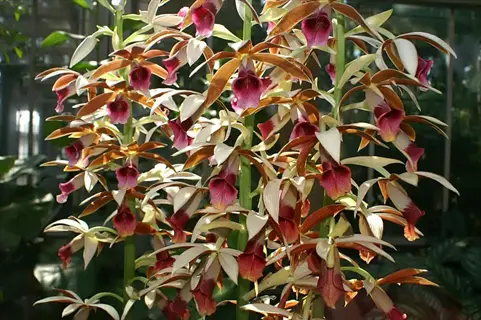
- Type: Phaius is another terrestrial ground orchid sometimes grown alongside Spathoglottis in warm, frost-free gardens.
- Climate: Tender like Spathoglottis, it suits shaded spots in tropical and subtropical landscapes rather than cold-winter beds.
- Flowers: Produces tall spikes of large, showy flowers, giving it a bigger presence than the compact Bletilla.
- Growth: Like the other ground orchids, it grows from a pseudobulb in soil rather than clinging to bark.
- Best use: A good choice for warm-climate gardeners wanting a larger terrestrial orchid for shaded borders.
- Takeaway: It widens the warm-climate options but, like Spathoglottis, is not a hardy substitute for Bletilla in cold zones.
If you garden where winters bite, your choice is easy. Bletilla is the one that survives in your ground. It earns a strong name among growers who expect orchids to be fussy.
Most hardy orchids are just as demanding as their tropical cousins, but the hardy Chinese ground orchid (Bletilla striata) defies the norm and is so easy even novice gardeners can grow it.
Light, Soil and Drainage
Light advice for a ground orchid splits two ways online, and that confuses new growers fast. Some pages shout full sun while others swear by deep shade. Both are half right. The honest answer depends on which plant you actually own.
Hardy Bletilla striata does best in partial shade with roughly 2 to 6 hours of direct sun a day, and gentle morning light suits it well. The tender type wants more. It can take full sun where the climate stays warm. So match the spot to your plant and your region before you dig.
Soil matters even more than light here, and the light needs above mean little if the roots stay wet. Bletilla wants soil packed with organic matter that still drains fast. NC State Extension notes it tolerates acidic, neutral, and alkaline soil but will not put up with wet ground. That wide soil pH range means most garden beds work without any special fix.
Here is the one rule that beats the rest. Well-draining soil is the single most important factor for any ground orchid, because soggy roots fail faster than any light or feeding mistake. A good mix feels like a wrung-out sponge, damp but never dripping, so roots get air along with water. Get drainage right and these orchids forgive almost everything else.
Light By Type And Region
- Hardy Bletilla: Prefers partial shade with about 2 to 6 hours of direct sun per day, especially gentle morning sun.
- Tender Spathoglottis: Tolerates brighter conditions and even full sun in warm regions, though some afternoon shade helps in intense heat.
- Reading your site: Watch how sun moves across the spot through the day before planting, since light shapes both growth and flowering.
- Indoor light: Near a bright window with strong indirect light works for tender types kept as houseplants in cooler climates.
Soil That Drains Freely
- Texture: Use a loose, high organic matter mix that lets water pass through quickly rather than pooling around the roots.
- Amendments: Work in compost and a gritty material like perlite or coarse sand to open up heavy or clay-rich ground.
- Drainage rule: The soil must never stay wet, since Bletilla and other ground orchids do not tolerate soggy, waterlogged conditions.
- Bed placement: Avoid low spots where rain collects, and raise beds or mound the soil slightly if your site holds water.
Soil pH And Fertility
- pH range: Bletilla tolerates acidic, neutral, and alkaline soil, so most garden beds suit it without special adjustment.
- Organic content: A bed rich in organic matter feeds the plant gently and improves both moisture holding and drainage at once.
- Mulch caution: A light mulch conserves moisture, but keep it off the crown so the base of the plant stays dry and airy.
- Testing: A simple soil test removes guesswork, though these orchids are forgiving enough that exact numbers rarely matter.
Containers and Drainage Holes
- Pot shape: Choose a container wider than it is deep, which suits the shallow, spreading rhizome and pseudobulb growth.
- Drainage holes: Make sure the pot has open holes so water escapes freely and never sits in the bottom.
- Mix for pots: A loose orchid-friendly potting mix with added grit keeps potted roots aerated and rot-free.
- Saucer care: Empty any saucer after watering so the pot is never standing in collected water.
If you keep only one rule, make it drainage: water at soil level, let the top layer dry between waterings, and never let a ground orchid sit in soggy soil.
Watering and Feeding
Get the water right and most other care falls into place. Overwatering is the top reason these plants fail, so this one habit protects the roots, the leaves, and next year's flowers all at once.
The golden rule for watering ground orchids is simple. Water when the top layer of soil feels dry to the touch, then soak it well. Think slow and deep, not little and constant, so the roots get a real drink and then breathe between drinks.
That breathing room matters more than people expect. Roots that sit in wet soil run out of air, and that quiet stress is what opens the door to root rot. A pot that drains fast and dries on top is your best defense.
Aim to keep the soil moderately moist but never soggy. Water more often in summer heat and active growth, then back off as growth slows or the plant goes dormant. Bletilla still wants steady moisture in summer, though, so do not swing to the bone-dry side.
Don't allow the plants to completely dry out during the summer or blooming will be reduced the following spring.
Feeding is where you should hold back. One popular site calls ground orchids heavy feeders. Most extension sources point the other way and favor light feeding, especially for plants in the ground. A hungry-looking plant is almost always thirsty or rootbound, not starved.
When you do feed, a slow-release fertilizer at a gentle rate works well during active growth. Skip it once the plant slows down for dormancy. Less food and smarter water beat any heavy feeding schedule with these orchids.
Temperature and Hardiness
Search around and you'll find a mess of numbers for cold hardiness. One page says zones 5 to 9, another swears it's 6 to 9, and a third lists zone 10. The reason is simple. People keep treating two very different plants as one, so here is the reconciled answer you can actually plant by.
Bletilla striata, the Chinese ground orchid, is the cold hardy orchid of the group. Experts at the University of Arkansas rate it for USDA hardiness zones 5 to 9, and NC State puts it at 5a to 9b. The plant dies back in fall and then sends up fresh growth each spring.
The Philippine ground orchid is a whole other story. This one is called Spathoglottis, it comes from Southeast Asia, and it is not frost-hardy. Orchid experts tie it to warm parts of the world where frost never shows up. So a hard freeze will end it fast. Keep it warm and you'll be fine.
Overwintering comes down to where you garden. In colder parts of the zones 5 to 9 range, mulch your Bletilla in late fall to guard the pseudobulbs through deep cold. Gardeners north of zone 5 take a different route, which the table below spells out.
The smart play is to match the plant to your climate instead of fighting it. If your winters bite, grow Bletilla and let it sleep under mulch until spring. If frost never visits your yard, you can keep Spathoglottis outdoors all year and enjoy the color.
Live somewhere very cold and still want Bletilla? Lift the pseudobulbs after the foliage fades and store them dry and frost-free until the ground warms. Pick the right plant for your zone and overwintering stops being a chore.
Propagation and Planting
One early spring I lifted a three-year-old deep rose Bletilla clump from the north-side bed and tipped it onto the path. The pseudobulbs had grown so crowded they pushed each other up out of the soil. I split them apart by hand, picked the fattest pieces, and reset both halves shallow in fresh ground. Both clumps bloomed that same season.
Propagating ground orchids is far simpler than most orchid growing because you skip seeds and just split the plant. Clump division is the only method you really need, and an old plant gives you several new ones in minutes. Lift the clump, break it into pieces, and replant each one.
The key to it all is the pseudobulb, a corm-like swollen stem that can reach about 2 inches (5 cm) across. Each one stores energy and water, so a single piece can power its own roots, leaves, and flowers. This is also why planting depth matters so much. The pseudobulb sits near the surface in nature, so bury it too deep and it can rot. Set it shallow and it does the rest.
Divide in fall or early spring while the plant is between active growth flushes, which lets divisions settle before the next bloom cycle.
Gently dig up the whole clump with a fork, keeping the shallow pseudobulbs and roots as intact as possible.
Pull or cut the corm-like pseudobulbs into sections, making sure each piece has healthy roots and at least one growing point.
Loosen well-draining, organic-rich soil in a partly shaded bed, or fill a wide pot with a loose, gritty mix.
Set the divisions no more than 4 inches (10 cm) deep, ideally about 2 inches (5 cm), so the pseudobulbs sit near the surface.
Water in the divisions to settle the soil, then keep it moderately moist while new roots and shoots take hold.
As the plant grows, the pseudobulbs spread along a short rhizome just under the soil, which is what builds those tight clumps over time. Give each new division room and well-draining ground, and within a few years you will have your own clump ready to split again.
Pests and Naturalization
Good news first. Ground orchids stay trouble-free once you get the drainage right. NC State Extension reports no known serious diseases for hardy Bletilla. It rates slugs and snails as only an occasional pest. Most trouble traces back to soil that holds too much water, and that one fix solves almost every problem you will see.
The biggest threat is root rot, and it always starts the same way. Soggy soil suffocates the roots, the crown turns soft, and the leaves yellow from the base up. Slugs and snails come second, chewing ragged holes in leaves and blooms during damp, shady spells. Both problems ease the moment you stop letting the soil sit wet, so drainage does double duty here.
One more point deserves attention. Some tropical ground orchids have naturalized well beyond gardens in warm regions. That fact should shape what you plant and where. Here is the full picture of what to watch for and how to plant with care.
Root And Crown Rot
- Cause: Soggy, poorly draining soil is by far the most common problem, suffocating roots and leading to rot at the base.
- Signs: Look for mushy roots, a soft crown, or yellowing leaves that signal the plant is sitting too wet.
- Prevention: Plant in well-draining soil, water only when the top layer dries, and never leave the pot in standing water.
- Recovery: Lift an affected plant, trim away rotted tissue, and replant healthy pseudobulbs in fresh, gritty mix.
Slugs And Snails
- Behavior: Slugs and snails are the main pests, chewing ragged holes in leaves and flowers, especially in damp shade.
- Frequency: Extension sources rate them only an occasional problem, so serious infestations are uncommon with good care.
- Control: Hand-pick at night, remove hiding spots like debris, and use simple barriers or traps around vulnerable plants.
- Drainage link: Keeping soil from staying constantly wet also makes the area less inviting to slugs and snails.
Spathoglottis Naturalization
- Where: Spathoglottis plicata has naturalized in Florida, Hawaii, and the Caribbean after escaping cultivation in warm climates.
- Status: It is listed as an environmental weed in Hawaii and can spread into sensitive habitats.
- Behavior: Naturalized plants often revert to a wild form and become self-pollinating, which helps them spread on their own.
- Action: Warm-climate gardeners should enjoy it responsibly, deadhead to limit seeding, and keep it out of wild areas.
Chinese Crown Orchid Spread
- Plant: Eulophia graminea, the Chinese crown orchid, is a terrestrial orchid that first appeared in Florida in 2007.
- Spread: It has since spread to thirteen Florida counties and can form a dense single-species stand.
- Origin: It arrived through mulch and now spreads by pseudobulbs and tiny dust-like seeds.
- Outlook: Researchers expect it to keep spreading, so it is best avoided rather than planted in at-risk regions.
None of this should scare you off. The invasive worry sits with tender tropical types in frost-free zones. There, escaped plants can seed into wild land. Hardy Bletilla in zones 5 to 9 stays put and behaves, so cold-climate gardeners can relax. Treat any invasive orchid risk as a regional caution, not a reason to skip these plants.
Responsible gardening here is simple. In warm areas, deadhead spent blooms to limit self-seeding. Keep naturalizing types out of nearby wild areas. Skip the Chinese crown orchid where it is already spreading. Do that, and you get all the color with none of the guilt.
In frost-free regions, choose ground orchids with care and keep naturalizing tropical types out of wild areas. Hardy Bletilla in zones 5 to 9 stays well behaved.
5 Common Myths
All orchids are fussy, demanding plants that only expert growers with greenhouses can keep alive and in bloom.
Ground orchids are unusually forgiving. A University of Arkansas horticulturist says the hardy Chinese ground orchid is so easy even novice gardeners can grow it.
Orchids cannot survive cold winters outdoors, so every type must be grown indoors or in a heated greenhouse.
Hardy Bletilla striata survives outdoors in USDA zones 5 to 9, dying back in winter and returning to bloom in spring.
Ground orchids grow on tree bark like the common orchids sold in stores, so they need bark chips instead of soil.
Ground orchids are terrestrial and root in soil. They need a high organic, well-draining ground mix, not the bark medium used for epiphytic orchids.
Ground orchids are heavy feeders that need frequent strong fertilizer to produce their flowers each season.
Most extension sources favor light feeding, especially in the ground. Too much fertilizer can harm roots more than it helps blooming.
The more you water an orchid, the happier it will be, so keeping the soil constantly wet is the safest approach.
Constant wetness causes root rot, the most common cause of failure. Water only when the top layer dries, and never leave roots soggy.
Conclusion
Good ground orchid care starts with one choice, and your climate makes it for you. If winters stay warm, you pick the tender Spathoglottis. If they turn cold, you reach for the hardy orchid instead, Bletilla striata. Once you name the right plant, the rest of the work feels the same for both.
The numbers back up that simple split, even without re-reading the whole guide. Bletilla shrugs off winter across USDA zones 5 to 9 and opens its purplish-pink blooms from spring into early summer. Spathoglottis cannot take frost, so it stays a warm-climate plant, and it flowers from May through July. Match the type to your zone and you skip almost every problem before it starts.
The core message of good care is short enough to hold in your head. Give your terrestrial orchid the well-draining soil it craves, since wet roots rot faster than anything else can hurt them. Add the right light, water with a restrained hand, and feed lightly. That short list is all most plants need to grow strong and bloom.
One last note leaves readers on a good footing as neighbors too. In warm spots like South Florida and Hawaii, Spathoglottis can spread past your beds on its own. So pull stray seedlings and keep naturalizing types in check. A little watch now saves wild ground later.
These really are easy orchids, and they pay back beginners more than almost any flower I know. Pick the type that fits your climate, set one plant in a bright, well-drained spot, and let it surprise you. Start with that single bloom, and you will want a whole row by next spring.
Glossary
- Bletilla striata
- The cold-hardy Chinese ground orchid that returns each spring and survives USDA zones 5 to 9.
- epiphytic orchid
- An orchid that grows on tree bark or branches instead of in soil, taking moisture from the air.
- naturalized
- A non-native plant that has escaped gardens and now reproduces and spreads on its own in the wild.
- pseudobulb
- A swollen, bulb-like storage organ at the base of many orchids that holds water and energy.
- raceme
- An unbranched flower stalk that carries many individual flowers along its length.
- rhizome
- A horizontal underground stem from which an orchid's roots and new shoots spread.
- Spathoglottis
- A genus of tropical ground orchids, including the Philippine ground orchid, that needs warmth and cannot survive frost.
- terrestrial orchid
- An orchid that grows rooted in soil on the ground rather than perched on a tree.
External Sources
Frequently Asked Questions
What are ground orchids?
Ground orchids are terrestrial orchids that grow rooted in soil rather than on trees. The name mainly covers tender Spathoglottis and hardy Bletilla striata.
Are ground orchids hard to grow?
No. Ground orchids are among the easiest orchids. A University of Arkansas horticulturist notes the hardy Chinese ground orchid is so easy even novice gardeners can grow it.
Can ground orchids grow in pots?
Yes. Ground orchids grow well in pots that are wider than deep, filled with a loose, well-draining mix that never stays soggy around the roots.
How often should ground orchids be watered?
Water when the top layer of soil feels dry. Keep the soil moderately moist but never soggy, and water more often in heat and less in cool, dormant periods.
Why are my ground orchids not blooming?
Common reasons include too much shade, soil that dried out completely in summer, overfeeding, or roots that never recovered from rot or recent division.
Can ground orchids grow indoors?
Tender ground orchids can grow indoors with bright light, warmth, and good drainage. Hardy types need a cold winter rest and do better outdoors.
Do ground orchids bloom all year?
Not usually. Bletilla blooms spring to early summer, and Spathoglottis blooms May through July, though warm-climate plants can flower in longer flushes.
What is a common mistake when caring for orchids?
Overwatering is the most common mistake. Soggy soil suffocates roots and causes rot, which is why well-draining soil and a top-layer dryness check matter most.
How do you propagate ground orchids?
The easiest method is dividing the clump and its pseudobulbs in fall or early spring, then replanting the divisions at the correct shallow depth.
Are ground orchids invasive?
Some are. Spathoglottis plicata is an environmental weed in Hawaii, and Chinese crown orchid has spread to thirteen Florida counties, so plant responsibly in warm regions.