

Introduction
That bare patch on your slope gets a little wider after every storm. Rain carves tiny channels, mud slides toward the sidewalk, and the grass seed you tossed down washes away by morning. The fix is not gravel or a tarp. The right erosion control plants hold that hillside in place and look good while doing it. This guide gives you science-backed picks, with a focus on native plants that thrive where you live, instead of one more generic list.
The problem is bigger than your yard, and it is getting worse. Research from UMass Amherst found that the U.S. Midwest has lost about 57.6 billion metric tons of topsoil since settlement. Heavy downpours are part of why. The EPA reports that intense rain events have climbed since the 1950s, and the heaviest storms in the Northeast jumped 55% between 1958 and 2016. More hard rain means more soil on the move, so good plantings matter now more than they used to.
Here is what most plant guides skip. Almost all of them are just buyer lists. They name a dozen species and never explain how the plants work or how well they hold soil. This guide does both. You get real plant picks paired with the mechanism behind them and the planting steps that make them stick, so you choose with confidence instead of guesswork.
The science is simpler than it sounds. A good plant works like an umbrella above and a net below. The leaves catch rain before it hits the ground, and the fibrous roots weave through the soil and bind it like a net. That two-part action is the heart of slope stabilization, and it is why the best plants to prevent erosion beat bare dirt every time. Next we will look at how this works underground, then move into the best plants for your exact site.
Best Erosion Control Plants
Three springs ago I knelt on the steep sunny back slope by the fence. I plugged in creeping phlox along the top edge. I set little bluestem mid-slope where hard rain had cut bare gullies. The soil there crumbled in my hand and slid downhill with every storm. From the kitchen window now I watch one solid green slope. The phlox carpet sits up top and the grass clumps knit tight below.
That mix worked because each plant took the spot it liked best. The phlox loves the dry upper crest. The bluestem digs into the open mid-slope. So matching the right plant to each spot beats leaning on one favorite for the whole hill.
The best erosion control plants all share one trait, and the science backs it up. The National Park Service and the USDA-NRCS both point to native grasses and sedges with fibrous roots as your most effective soil holders. One NPS shoreline project used more than 5,000 native specimens to lock down a single vulnerable shore.
The picks below show up on list after list because they earn it, and they span sun to part shade and dry to moist soil. You can combine several to cover your whole slope. Most are native, so they thrive with little water or fertilizer once they settle in. Each plant here gets a clear erosion role, so you know its root type, how wide it spreads, and the site it fits.
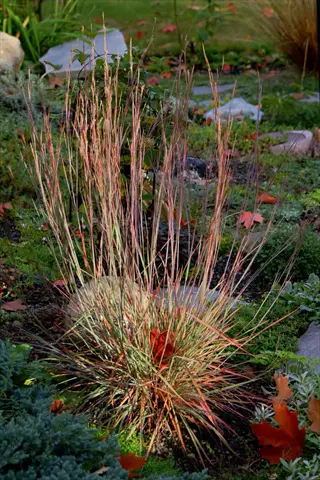
Little Bluestem
- Root type: Forms a dense, fibrous root system that binds surface soil tightly, making it one of the most effective native bunchgrasses for slopes.
- Light: Thrives in full sun and tolerates poor, dry, lean soils where many ornamentals struggle to take hold.
- Spread: Grows in clumps roughly 18 to 24 inches (45 to 60 centimeters) wide, so space plants to knit together as they mature.
- Hardiness: Suited to a wide range of regions and recommended by several extension lists for sunny hillside stabilization.
- Bonus: Turns warm copper and bronze in fall, giving the slope ornamental value beyond its erosion role.
- Best for: Sunny, dry slopes and meadows where a tough, low-maintenance grass is needed to anchor bare ground.
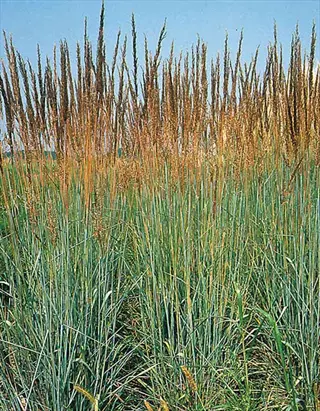
Switchgrass
- Root type: Sends down deep, vigorous fibrous roots that hold soil and improve water infiltration on slopes and banks.
- Light: Prefers full sun but adapts to many soils, from moist banks to dry ground, making it widely useful.
- Spread: Forms upright clumps about 2 to 3 feet (60 to 90 centimeters) wide that fill in to cover open soil.
- Hardiness: A native warm-season grass valued for roadside and steep-slope stabilization across much of the country.
- Bonus: Provides cover and seed for birds while standing through winter to keep protecting soil.
- Best for: Larger sunny slopes, swales, and pond edges that need a robust, fast-establishing native grass.
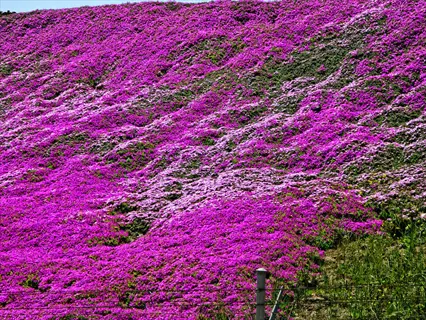
Creeping Phlox
- Root type: Spreads into a low, mat-forming root network that grips the soil surface, ideal for shallow slope erosion.
- Light: Grows best in full sun to part sun and tolerates rocky, lean slopes that drain quickly.
- Spread: A single plant can spread 1 to 2 feet (30 to 60 centimeters), forming a living carpet over bare ground.
- Hardiness: A popular, dependable ground cover featured on nearly every erosion plant list for sunny banks.
- Bonus: Bursts into pink, purple, or white blooms in spring, softening a slope while it stabilizes it.
- Best for: Sunny, well-drained slopes and rock gardens where a quick, colorful mat is wanted.
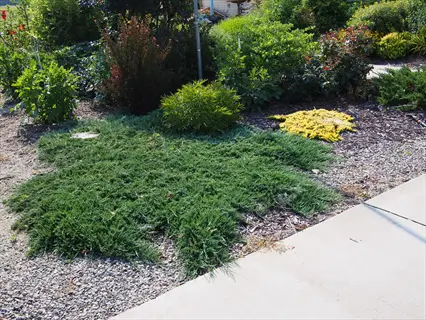
Creeping Juniper
- Root type: Roots along its spreading stems as it grows, anchoring soil across a wide area on tough sites.
- Light: Loves full sun and shrugs off heat, drought, and poor soil once established.
- Spread: Low shrub that can spread 4 to 6 feet (1.2 to 1.8 meters), covering large bare patches.
- Hardiness: An evergreen workhorse recommended across many regions for sunny slope cover.
- Bonus: Stays green year-round, giving continuous protection and structure through winter.
- Best for: Large, sunny, dry banks and slopes where an evergreen, low-care mat is needed.
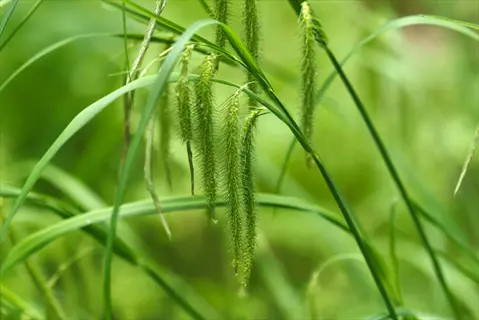
Pennsylvania Sedge
- Root type: Forms fibrous roots and slowly spreading rhizomes that grab and hold soil, much like native grasses.
- Light: Tolerates shade to part shade, filling dry, shaded slopes where grasses struggle.
- Spread: Spreads gradually into a soft, lawn-like carpet roughly 6 to 12 inches (15 to 30 centimeters) tall.
- Hardiness: A native sedge praised by extension sources for shaded erosion control and low maintenance.
- Bonus: Looks like a fine-textured meadow and needs little mowing or input once settled.
- Best for: Dry, shaded slopes under trees where a fibrous-rooted, grass-like cover is wanted.
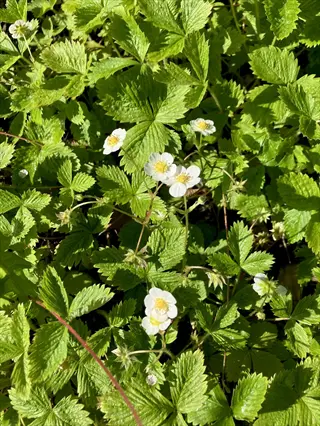
Wild Strawberry
- Root type: Spreads by runners that root at the nodes, quickly stitching a network across bare soil.
- Light: Adapts to full sun and part shade and tolerates a range of soils on gentle slopes.
- Spread: Runners can cover several feet in a season, filling in faster than many ground covers.
- Hardiness: A native, low-growing perennial recommended for sunny to lightly shaded banks.
- Bonus: Produces small edible berries and flowers that support pollinators and wildlife.
- Best for: Gentle slopes and edges needing a fast-spreading, low native ground cover.
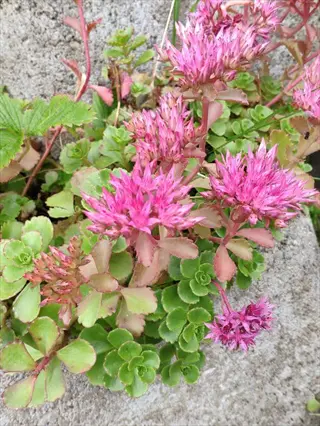
Stonecrop Sedum
- Root type: Develops shallow but dense roots and roots easily from stems, holding loose, dry surfaces.
- Light: Thrives in full sun and drought, perfect for hot, lean, fast-draining slopes.
- Spread: Low, mat-forming types spread 1 to 2 feet (30 to 60 centimeters) into a tight succulent carpet.
- Hardiness: A tough, low-water choice appearing on many erosion lists for dry, sunny sites.
- Bonus: Stores water in its leaves, so it survives where thirstier plants fail.
- Best for: Hot, dry, rocky slopes and green roofs where drought tolerance is essential.
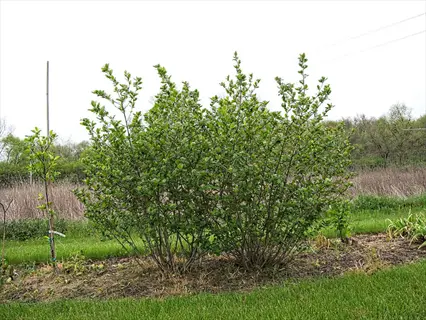
Aronia Chokeberry
- Root type: A suckering shrub whose spreading roots and stems lock soil across a slope over time.
- Light: Grows in full sun to part shade and handles wet or average soils with ease.
- Spread: Forms a thicket 3 to 6 feet (0.9 to 1.8 meters) wide, building a layered root mass.
- Hardiness: A native shrub recommended for slopes and damp areas across many regions.
- Bonus: Offers white spring flowers, dark berries for birds, and bright red fall foliage.
- Best for: Slopes and banks where a taller, suckering native shrub adds structure and wildlife value.
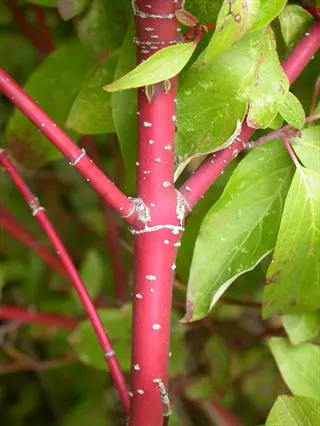
Red-Osier Dogwood
- Root type: Spreading, suckering roots make it a classic choice for stabilizing moist banks and streamsides.
- Light: Prefers full sun to part shade and thrives in wet, heavy soils that defeat other shrubs.
- Spread: Forms thickets 6 to 9 feet (1.8 to 2.7 meters) wide, binding large areas of bank.
- Hardiness: A native shrub featured in shoreline and riparian erosion plantings.
- Bonus: Bright red winter stems give striking color when the garden is bare.
- Best for: Wet banks, ditches, and streamsides needing a vigorous, moisture-loving shrub.

Christmas Fern
- Root type: Develops a fibrous, fine root network that holds soil on shaded, sloping ground.
- Light: Thrives in shade to part shade where most grasses and ground covers cannot.
- Spread: Forms tidy clumps about 1 to 2 feet (30 to 60 centimeters) wide that anchor the surface.
- Hardiness: A native evergreen fern recommended for shaded slopes and woodland banks.
- Bonus: Stays green into winter, giving year-round soil protection in the shade.
- Best for: Shaded, sloping woodland edges where evergreen, fibrous-rooted cover is needed.
Match each plant to its slope position and they knit together fast. A low ground cover like creeping phlox or sedum grips the surface up top. Clumping grasses such as little bluestem and switchgrass dig deeper to hold the open middle of a bank. Pair a few of these and you get a living mat that grows tougher every season.
Native grasses and sedges are particularly effective due to their fibrous roots that grab and hold the soil, keeping it from washing away.
How Plants Stop Erosion
The real answer to how plants help control erosion comes in two halves that work as a team. One half lives above ground in the leaves and stems. The other half lives below ground in the root systems that thread through the dirt. You need both.
Think of it as an umbrella and a net. The canopy overhead acts like an umbrella that catches rain before it can hit the surface. The root mat below works like a net that grips loose soil and ties it together. Both halves drive real soil stabilization. And a wide spreading net beats a single deep spike, because most erosion starts in the top few inches of soil.
The underground half is the part science measures best. A study in PLOS ONE by Cao and a team in 2023 found that roots fight both water and wind erosion at once. They weave through soil, break up large clay clumps, change how porous the ground is, and shift how water moves. Roots raised soil water by up to 52% for ryegrass and 63.7% for alfalfa, far more than bare ground held.
That root work feeds straight into water infiltration. Old root channels open paths for rain to soak in instead of sheeting across the top. More water goes into the ground, so less of it races downhill. That runoff reduction is what keeps your topsoil from washing away. The half people rarely hear about is the canopy itself, where foliage breaks the wind and stops droplets from hitting bare ground. Heavy downpours have risen across the country since the 1950s, so that rain-catching job matters more every year.
Canopy and foliage shield the surface
- Rain interception: Leaves and stems catch falling rain so droplets lose force before reaching the ground, reducing the splash that dislodges bare soil particles.
- Wind break: A layer of foliage slows wind at the soil surface, cutting the dry, particle-lifting gusts that drive wind erosion on exposed sites.
- Living mulch: Low, dense ground covers shade the soil, keeping it cooler and moister so the surface crust is less likely to crack and wash away.
Roots bind and consolidate the soil
- Interweaving: Fibrous roots weave through the soil and knit particles together, increasing cohesion and the shear strength that resists sliding on slopes.
- Particle binding: Roots disperse large clay clumps and bind small particles, changing soil structure so it holds together under rain and runoff (PLOS ONE, Cao et al., 2023).
- Surface grip: Horizontally spreading root mats grip the top layer of soil where most erosion happens, outperforming single deep taproots for surface stability.
Roots improve how water moves through soil
- Better infiltration: Root channels help rain soak into the ground instead of sheeting across the surface, which reduces the runoff that carries soil away.
- Water retention: Roots raised soil water retention substantially in testing, up to 52% for ryegrass and 63.7% for alfalfa at maximum suction versus bare soil (PLOS ONE, 2023).
- Less runoff: By soaking up and holding water, a vegetated slope sends far less fast-moving runoff downhill than bare, compacted ground does.
Diverse plantings protect more soil layers
- Layered roots: Combining grasses, perennials, and shrubs fills the soil with roots at different depths, binding more layers than any single species can.
- Continuous cover: A mix of plants keeps the surface covered across seasons, so soil is never left bare and vulnerable between one plant's dormant periods.
- Resilience: If one species struggles in a wet year or dry year, a diverse planting still holds the slope, which is why experts favor mixes over monocultures.
Plant roots collectively enhance the resistance of soil slope to water and wind erosion through the interweaving and consolidation of roots, dispersing large clay particles, altering soil porosity, enhancing soil water retention capacity, and reducing soil water infiltration, thereby achieving slope protection.
Plants by Site Condition
There is no single best plant for erosion. The right pick shifts with your region and your specific patch of ground. So before you shop, read your site first and match the plant to the conditions you actually have.
Start with the basics every spot has. How much sun does it get, how wet does the soil stay, and how steep is the grade? Once you know those three things, your plant list narrows fast. Sun-loving grasses fail in deep shade, and a dry-slope ground cover rots out on a soggy bank.
For most conditions, native grasses and sedges with fibrous roots are your workhorses. The National Park Service and USDA-NRCS both back this. Those dense root networks grab and hold surface soil where deep taproots leave the top layer loose. They cover plants for erosion control on slopes in sun and the shade plants for erosion control you need under trees.
I had a shady, damp strip at the bottom of my slope where it met the woods edge. It stayed muddy and bare through every rain, no matter what I tried. Plain turf grass drowned, mulch washed straight off, and the spot looked like a permanent scar. I planted Pennsylvania sedge along that line and let it spread. Within two seasons the muddy strip filled in green and held.
Wet ground and moving water need their own approach. For bank erosion plants along streams and rivers, UMaine Extension points to two goals at once. You want canopy cover above to soften falling rain. You also want a spreading mat of surface roots below. Those roots bind the soil as the water tugs at it. That is why moisture-loving shrubs like red-osier dogwood pair so well with switchgrass on a wet bank.
The table below sorts the main site types so you can find your match quick. Note which row fits your wet soil plants versus your full sun slope plants, then check that every pick is native and non-invasive where you live.
Planting and Establishing
From my kitchen window I now look out on a green knit slope by the back fence. Two years ago that same steep sunny back slope was raw dirt cut with rain gullies after every storm. The change came down to how I planted it, not just what I planted.
That first season was the hard part. I pinned an erosion blanket over the bare soil, set little bluestem and creeping phlox through it, and watered them little by little through a long dry spell. The grass looked thin and the phlox barely spread. But the matting held the surface while those young roots dug in, and by the next summer the plants had closed over the whole bank.
Knowing how to plant on a slope matters as much as your plant list. UMaine Extension says your planting needs to do two jobs at once. First, cover the soil with a leafy canopy that breaks the fall of rain. Second, build a horizontal mat of fibrous roots that grabs the surface. You hit both jobs by mixing low ground covers, clumping grasses, and a few shrubs.
Tight plant spacing is the part that saves your slope. Set plants close enough that their mats and clumps will knit together within a season or two. That leaves little open ground for water to channel through. Staggered plantings in offset rows force runoff to wander instead of cutting a straight line downhill. The steps below walk through the full sequence.
Set plants out in spring or early fall so roots can establish in mild, moist conditions before facing summer heat or winter.
Start planting at the base of the slope and work upward so you do not trample or dislodge soil and plants already placed.
Place plants in offset rows and mix grasses, ground covers, and shrubs so roots fill different depths and water cannot channel straight downhill.
Set plants close enough that mats and clumps will knit together within a season or two, leaving little bare soil exposed to rain.
Pin down an erosion blanket or biodegradable coir matting and mulch around plants to shield the surface while young roots take hold.
Water deeply and regularly during the first season so roots grow down and out, then ease off as native plants settle in.
The establishment time for native grasses and ground covers runs about one full growing season. On a tough slope it can take two. Water and watch them through that window. After that, USDA-NRCS says native grasses hold their own with little water or fertilizer in their home zone. The early work buys you years of easy cover.
This matters more now than it used to. The EPA reports heavy downpours have grown more common since the 1950s, which means more force hitting your bare soil during the months your plants are still small. Erosion blankets and mulch carry the slope through that gap, so the work is worth it before the next big rain arrives.
Lay erosion blanket or coir matting at planting time, not after the first storm. The matting holds soil through the months before roots can, which is exactly when slopes wash out.
Plants to Avoid and Partners
Some plants hold soil well but cause real trouble once they spread past your yard. Vinca and English ivy show up on many slope lists, yet both jump fences and smother wild plants in much of the country. That is why a list of invasive plants to avoid belongs right next to your list of picks.
The good news is that you give up nothing by going native. Native erosion control plants do the same job, and they feed local wildlife too. Both the NRCS and the National Park Service push a native-first approach for this very reason.
Use the chart below as a quick swap guide. Each risky pick on the left has a native match on the right that holds your slope without taking over.
- Vinca (periwinkle), which escapes gardens and smothers native ground layers in many regions.
- English ivy, an aggressive climber and ground cover invasive across large parts of the country.
- Other fast non-native spreaders sold for cover that jump fences into wild areas.
- Creeping phlox or wild strawberry for a sunny, fast-spreading native mat.
- Pennsylvania sedge or Christmas fern for shaded slopes where ivy is often used.
- Little bluestem or aronia chokeberry for tough, native, slope-holding structure.
Many big-box plant lists still recommend vinca and English ivy for slopes. Both are invasive in many U.S. regions, so check your state's invasive list before planting them.
Plants do not have to work alone. While roots take hold, a few simple tools keep your soil in place during that first risky season. Coir netting drapes over bare ground and lets new shoots grow up through it while it slows runoff.
Mulch covers open dirt and holds moisture. Terracing and swales break a long slope into steps that catch water instead of letting it race down. Rain gardens sit at the bottom of a slope and soak up the runoff your plants miss. Pair these tools with the right natives and your soil stays put for good.
5 Common Myths
Plants with the deepest taproots are always the best choice for stopping erosion on a slope or bank.
For surface erosion, horizontally spreading fibrous root mats grip soil better than deep taproots, according to extension experts.
Any fast-growing ground cover will do, so popular spreaders like vinca and English ivy are safe to plant anywhere.
Vinca and English ivy are invasive in many regions, escaping gardens and harming native habitat, so they should be avoided.
Once you plant erosion control plants, the slope is instantly protected and needs nothing else from you.
Young plants need time to root, so erosion blankets, mulch, and watering protect the soil while plants establish.
A single tough species planted across the whole slope is the most reliable way to control erosion.
Diverse plantings of grasses, perennials, and shrubs outperform monocultures because varied root depths bind more soil layers.
Plants only fight erosion underground, so leaves and canopy have nothing to do with protecting soil.
Foliage matters too: leaves intercept rain and break wind so droplets do not strike and dislodge bare soil directly.
Conclusion
The best erosion control plants are not the ones that top some generic list. They are the ones that fit your exact patch of ground. A plant that locks down a sunny bank may rot on a wet slope, so you read your site first and pick from there.
Lean on native plants for the real work. The National Park Service and USDA point to native grasses and sedges as the strongest performers. Their fibrous roots grab and hold the soil like a web. University of Maine experts add a key point: for surface soil, spreading fibrous mats beat deep taproots. So for slope stabilization, you want roots that knit sideways, not just dig down.
Keep four moves in mind as you plant. Match each plant to its spot. Layer grasses, perennials, and shrubs so varied roots bind more soil at once. Skip invasive spreaders like vinca and English ivy. And protect young roots with mulch and erosion matting while a ground cover fills in the gaps.
This matters more each year. Heavy downpours have climbed since the 1950s, and that rising rainfall keeps pushing harder on bare soil. The good news is that a well-chosen, layered planting only grows stronger with time. Roots reach deeper, cover thickens, and the slope you plant today holds firmer with every season that passes.
Glossary
- Erosion blanket
- A biodegradable mat laid over bare soil to shield it from rain while new plants take root.
- Fibrous roots
- A dense network of many fine, branching roots that spread sideways and grip the top layer of soil.
- Ground cover
- A low, spreading plant that forms a living carpet over the soil to protect and hold it.
- Runoff
- Rainwater that flows over the ground surface instead of soaking in, often carrying soil with it.
- Shear strength
- A soil's ability to resist sliding apart along a surface, important for keeping slopes stable.
- Soil cohesion
- How strongly soil particles stick together, which helps the ground resist sliding or washing away.
- Taproot
- A single thick main root that grows straight down to anchor a plant, with smaller side roots.
- Water infiltration
- The process of rainwater soaking down into the soil instead of running off across the surface.
External Sources
Frequently Asked Questions
What is the best plant for erosion control?
There is no single best plant, but native grasses and sedges with dense fibrous roots are the most effective overall.
How do I stop erosion on a slope?
Cover the slope with fibrous-rooted plants, layer grasses with perennials and shrubs, and use erosion blankets while roots establish.
What is the cheapest way to stop erosion?
Seeding native grasses and ground covers, then mulching bare soil, is the cheapest long-term way to stop erosion.
What plants grow well in poor soil?
Native grasses, sedges, and tough ground covers grow well in poor soil because they tolerate drought and low fertility.
Why do plants prevent soil erosion?
Plants prevent erosion because foliage shields soil from rain and wind while roots bind particles and absorb water.
What are the best ways to prevent soil erosion?
The best methods combine deep-rooted plant cover with mulch, erosion matting, terracing, and rain gardens.
- Plant fibrous-rooted grasses and ground covers
- Mulch bare soil right away
- Use erosion blankets while plants establish
- Add terraces or swales on steep slopes
- Direct runoff into a rain garden
Is soil erosion reversible?
Active erosion can be stopped and the surface healed with plants, but lost topsoil takes a very long time to rebuild.
Are fibrous roots better than taproots for erosion?
Yes, horizontally spreading fibrous roots bind surface soil better than deep taproots for controlling erosion.
What ground covers stop erosion fast?
Mat-forming ground covers such as creeping phlox, sedum, and wild strawberry spread quickly to cover bare slopes.
How do I fix soil erosion in my yard?
Find the runoff cause, plant deep-rooted cover over bare soil, mulch, and slow water with swales or terraces.

