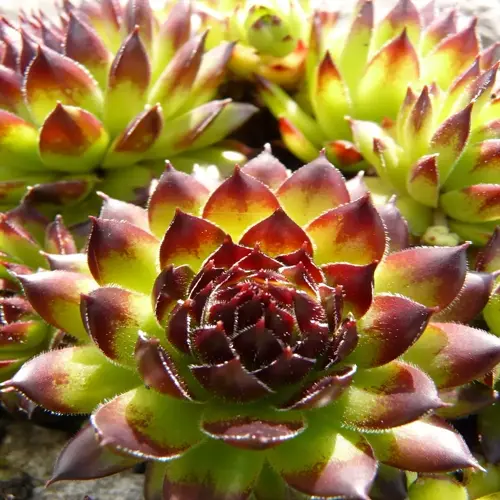

The answer to how long does sempervivum live has two parts. A single rosette lives 3-4 years before it blooms and dies. But the colony lives forever through offsets. Each mother makes a dozen or more chicks before death. So your patch will spread and renew for decades with the right care.
I bought a single rosette ten years ago for two dollars. That first plant bloomed and died after year three. Its sempervivum lifespan ended right on schedule. But the chicks took over and bloomed years later. I am now on my third generation of mother plants. The patch holds 40+ rosettes and gets bigger each spring.
Each rosette has a one-bloom life cycle, called sempervivum monocarpic in plant terms. The plant blooms once and then dies. It grows for 3-4 years to reach full size. Then it sends up a tall stalk with pink star flowers on top. After the seeds drop, the mother dies off. But the 10-20 chicks it made over its life live on.
NC State Extension confirms this lifecycle in their plant database. They also note the Latin name. Sempervivum means live forever in Latin. The name does not refer to one plant but to the colony as a whole. Each rosette dies on its own clock. The patch never dies as long as you keep new chicks safe.
Watch for clear signs when a rosette is about to bloom and die. The center starts to stretch up like a small green tower. The leaves get larger and spread apart from the tight rosette shape. Within a few weeks, a thick stalk shoots up with pink or red flowers at the top of the spike.
Year 1 - Baby chick
- Growth pace: A new offset roots quickly and grows from the size of a pea to a small 1-inch (2.5 cm) rosette in its first year.
- Care needs: Light watering and bright sun help the chick fill out fast. No fertilizer or extra care is needed at this stage.
- What to expect: The chick stays attached to the mother by a small stem at first, then breaks free and roots on its own by fall.
Years 2-3 - Mature mother
- Growth pace: The rosette reaches its full size of 3-4 inches (7-10 cm) across and starts to make its own offsets each spring.
- Care needs: This is the peak phase for bright color and tight form. Strong sun brings out red and purple tones in this stage.
- What to expect: A healthy mother makes 10-20 chicks over these two years. Each chick can grow into a new mother on its own timeline.
Year 4 - Bloom and death
- Growth pace: The center stretches up into a thick flower stalk that can reach 8-12 inches (20-30 cm) tall above the rosette.
- Care needs: Let the bloom finish its cycle. Cut the stalk only after the flowers fade and the mother starts to brown.
- What to expect: The mother dies after the bloom. Pull the dried husk gently to make room for the next generation of chicks.
When the mother dies, you have a simple job. Wait for the rosette to fully dry and brown. Then gently twist or pull the dead husk out of the soil. Take care not to disturb the live chicks around it. The empty spot will fill in with new growth within a season or two.
Your sempervivum colony life can extend for decades with almost no work. I know one rock garden that has held the same colony for 35 years straight. The original plant from the 1990s is long gone. But the great-great-grandchildren still cover that wall with bright green and red rosettes every summer.
Three things help your colony live forever. Give it the right spot with sun and drainage from day one. Let the natural cycle play out without trying to save dying mothers. Divide and replant chicks every few years to spread the colony to new spots. Do these and your patch will outlive your house.
In my experience, the colony actually gets stronger over time. New chicks grow up in soil their parents have lived in. They know the spot. They handle the local sun and rain pattern with no shock. By the third generation, the plants need zero input from me. The patch runs itself like a tiny self-sustaining garden.
Read the full article: Sempervivum Plant Complete Care Guide