
Introduction
Picture a coiled mound of stone tucked into a sunny back corner of the yard. Rosemary sits at the dry, breezy top, and a few steps down the curve, basil drinks up the moist soil at the base. That single mound is an herb spiral garden, and it grows both of those fussy plants in the space your kitchen table would cover. You can build one in a weekend, and this guide walks you through how to plan, build, plant, and care for your own.
The trick is the shape. A spiral stacks several growing conditions into one small mound. So you get full sun, light shade, dry soil, and moist soil all within arm's reach. These small pockets are called microclimates. They let you grow herbs side by side that would never share a flat row. The drainage-loving Mediterranean herbs like thyme and oregano take the high ground, and thirsty annuals settle in low.
It saves real estate too. The farm team at Case Western Reserve University put this to the test. They took a patch that gave about 50 square feet of growing space. With a spiral, they turned it into roughly 70 square feet. That is close to 40% more room in the same footprint. For small space gardening, where every square foot counts, that is a big win. Your spiral will be about 6 feet (2 m) across and 3 feet (1 m) tall at the center. So it fits in a corner of your yard that you probably write off as useless.
Here is where this guide goes further than most. Plenty of pages tell you what a spiral herb garden is and toss out a few build steps. Then they stop cold. They skip the extension-backed horticulture. They skip the zone-by-zone planting logic. They leave out the real soil and drainage detail. And they say nothing about the winter care that decides whether your rosemary lives to see spring. The spiral comes from permaculture. Most people credit it to co-founder Bill Mollison and his 1988 book Permaculture: A Designers' Manual. Now let's get into how it works so you can build one that lasts.
How to Build an Herb Spiral
I knelt with clay caked on both hands one spring morning, stacking the first stones in a sunny back corner of the yard. Before I lifted a single stone, I looped a garden hose on the ground and shaped it into a coil to mark the spiral path. I shifted that hose three times until the curve looked right, then traced the line with a trowel so I had a guide to build against.
Learning how to build an herb spiral comes down to five plain steps. The UF/IFAS Master Gardener demonstration build is the model I follow. You mark the site, lay a base, stack the wall, fill with soil, then plant from top to bottom. The steps below carry the real numbers and materials so you build it right the first time.
The whole thing is a raised bed in a coiling shape, sized about 6 feet (2 m) across and 3 feet (1 m) tall at the center. You stack the wall from stone or brick, lay a weed barrier of cardboard underneath, and pile a topsoil and compost mix into the mounded center. Here is the build, step by step.
Pick a spot with at least 6 hours of daily sun, then lay a garden hose in a coil on the ground to mark a circle about 6 feet (2 m) across before you place anything.
Cover the marked circle with cardboard or a weed barrier to smother grass and weeds; this layer breaks down over time and feeds the soil below.
Build a coiling retaining wall of stone, brick, or pavers that rises from ground level on the outside to a mounded center about 3 feet (1 m) tall.
Add a well-draining topsoil and compost mix, roughly 1 cubic yard for a 6 foot spiral, firming it gently so the mound holds its shape.
Set drought-loving herbs near the dry, sunny top and moisture-loving herbs near the cooler base, then water the whole spiral in well.
Plan on enough stone, brick, or pavers to wrap a coiling wall that climbs from the ground to a knee-high mound. For a 6 foot spiral you want about 1 cubic yard of soil, mixed from topsoil and compost so it drains well and still holds shape. The cardboard base costs you nothing, and it breaks down over time to feed the soil below as the worms move in.
Plenty of builders raid the scrap pile and use found fieldstone or leftover brick, which keeps the cost near zero. With your materials staged and the path already marked, a simple spiral goes up in a single afternoon.
Why an Herb Spiral Works
A flat herb bed gives you one set of conditions, so every plant in it has to share the same sun and the same moisture. An herb spiral breaks that rule. The single mound stacks several growing conditions at once through gravity, sun angle, and the heat held by its stone core.
That stacking pays off in real area. The farm at Case Western Reserve University tried this on a real plot. One flat footprint gave them about 50 square feet of growing space. The spiral turned it into roughly 70 square feet. The granite-block spine does double duty here. It soaks up solar heat through the day and acts as thermal mass, warming the soil around it as the air cools at night.
The water side of it is simple. When you water the top, gravity pulls that water down through the mound, so you get gravity-fed water spreading from peak to base. The top dries out fast and drains well. The base stays cooler and holds more moisture. That split is the drainage gradient, and it is what builds the distinct microclimates you plant into.
Picture the top of the spiral as a sunny, fast-draining hillside where rosemary and thyme bake happily. The base works like a cool, damp valley floor where basil and parsley keep their roots wet. One mound, two worlds, and a handful of zones in between.
In our example, we took an area that would have offered approximately 50 square feet of growing space and increased it to approximately 70 square feet of space.
This is the permaculture idea of stacking functions at work. By coiling a flat row into a mound, you add far more productive edge and pack many growing conditions into a tiny patch of yard. The space saving is real, but the bigger win is range. You can grow herbs that would never share a flat bed, all within one arm's reach.
Zone-by-Zone Planting Map
Your spiral works like a tiny hillside, and every loop offers a different mix of sun, drainage, and moisture. Water soaks in at the top and travels downward, so the top of the spiral stays dry and the bottom of the spiral holds the most moisture. Match each herb to the spot that fits how it likes to live, and the whole bed thrives with far less fuss.
Think in three tiers as you plan. The top tier suits dry Mediterranean herbs like thyme, oregano, and lavender that crave sharp drainage and full sun. The middle tier holds adaptable herbs such as basil and dill that want even moisture. The base tier feeds thirsty, shade-tolerant herbs like mint and chervil that sulk when the soil dries out.
Compass placement fine-tunes the plan once your tiers are set. The north and south faces of the mound sit in partial shade, so they reward herbs that scorch in harsh light. The east and west faces catch direct rays, so save those slopes for your sun lovers. Use this compass placement trick to squeeze two more microclimates out of the same pile of soil.
Keep tall herbs like rosemary and lemongrass off the very top row so they do not shade the low, sun-loving herbs below them.
One herb breaks every rule, and that herb is mint. Drop it straight into the base and it will send runners through the whole spiral within a season. Sink a buried pot at the bottom and plant the mint inside it, so the roots stay trapped while the leaves still drink up that moist, cooler soil.
Best Herbs and Where They Go
The best herbs for herb spiral beds sort themselves out once you read your mound like a map. Your dry, sunny crown suits one crowd of plants, and your cool, damp base suits another. I lost a rosemary to the wrong spot in year one, so match each herb to the place that fits how it grows and your whole bed runs itself.
Almost every herb you plant here wants at least 6 hours of sun a day, which is when its oils and flavor peak. Your big split is water. Mediterranean herbs like rosemary, thyme, and lavender are drought-tolerant herbs that ride the dry top. Put the moisture-loving herbs such as mint and basil lower, where your soil stays damp.
Below is where you put each herb on your spiral and why. Use it as a placement guide, not just a plant list. One warning up front: mint spreads by runners and will swallow your bed, so plant containerized mint in a buried pot at the base.
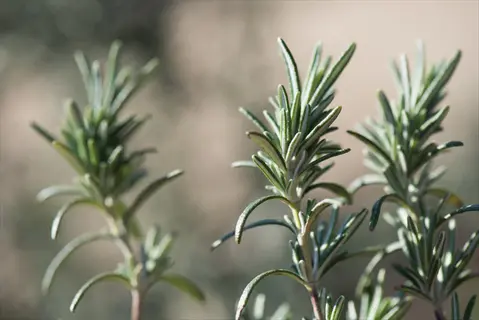
Rosemary
- Zone: Belongs in the dry upper section where drainage is sharpest, because standing wet soil rots its roots faster than cold harms it.
- Sun: Wants full sun for at least 6 hours a day, which keeps its fragrant oils and flavor at their peak.
- Water: Prefers to dry out between waterings, a match for the fast-draining top of the spiral.
- Habit: Grows tall and woody, so keep it just below the very top row so it does not shade lower herbs.
- Use: A perennial Mediterranean herb prized for roasts, breads, and infused oils across the kitchen.
- Note: My rosemary browned from the tips down and collapsed over its first winter at the dry top of the back-corner spiral. I moved it to the sharpest-draining top spot the next spring, and it held through the cold without a single dead branch.
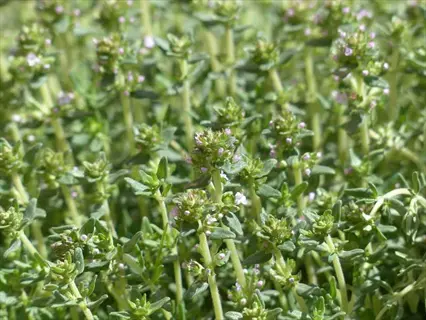
Thyme
- Zone: Thrives at the very top of the spiral where conditions stay driest, sunniest, and best drained.
- Sun: Soaks up full sun all day and rewards it with stronger fragrance and flavor.
- Water: Drought-tolerant once established, so it tolerates the quick-draining crown of the mound well.
- Habit: Low and spreading, it spills attractively over the spiral's stone edges without crowding neighbors.
- Use: A perennial workhorse for soups, stews, and roasted vegetables throughout the growing year.
- Note: A 1 to 2 inch pea-gravel mulch around the base helps keep its leaves dry and disease-free.
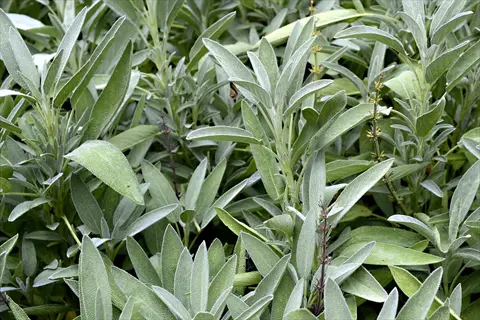
Sage
- Zone: Sits in the dry upper section that drains fast after rain or watering.
- Sun: Needs full sun, at least 6 hours daily, to grow dense and aromatic foliage.
- Water: Likes its soil on the drier side and dislikes soggy roots, matching the top tier well.
- Habit: A bushy perennial with soft gray-green leaves that suit the sunny, dry crown of the spiral.
- Use: Classic in stuffings, sausages, and brown-butter sauces, with a strong savory aroma.
- Note: Its gray, moisture-sensitive leaves benefit from a gravel mulch that keeps splashing soil away.
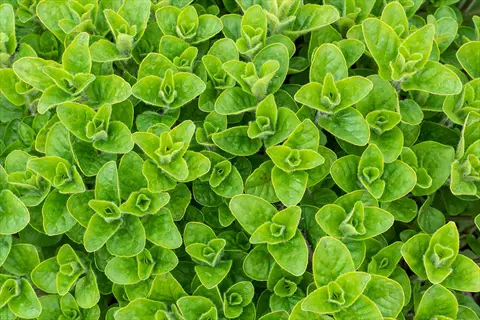
Oregano
- Zone: Performs best in the dry, sunny upper tier alongside thyme and sage.
- Sun: Demands full sun to concentrate the essential oils that give it punchy flavor.
- Water: Drought-tolerant and happiest when the soil dries between waterings near the top.
- Habit: A spreading perennial that can ramble, so give it room or trim it to stay tidy.
- Use: A staple of Mediterranean and Mexican cooking, from sauces to pizza and marinades.
- Note: Pinching it back regularly keeps growth compact and the flavor at its strongest.

Lavender
- Zone: Belongs near the dry top where full sun and sharp drainage meet its native preferences.
- Sun: Craves all-day sun, which it needs to bloom well and stay healthy.
- Water: Very drought-tolerant and quick to rot in heavy, wet soil, so the crown suits it.
- Habit: A woody perennial whose silvery foliage and flowers draw bees and other pollinators.
- Use: Grown for fragrance, culinary buds, and pollinator appeal as much as for the kitchen.
- Note: Light, sandy, fast-draining soil keeps it far happier than rich, moisture-holding ground.
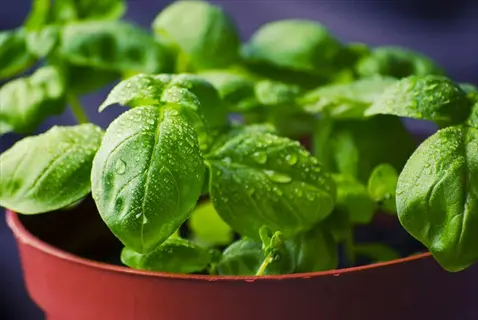
Basil
- Zone: Sits in the middle of the spiral where moisture stays steadier than at the dry top.
- Sun: Loves warmth and full sun but appreciates even soil moisture more than its Mediterranean neighbors.
- Water: Wants consistent moisture, so the cooler mid-level keeps it from wilting in heat.
- Habit: A tender annual that grows fast and bushy when pinched back regularly.
- Use: Essential for pesto, salads, and sauces, with the best flavor before it flowers.
- Note: Keep it trimmed and prevent it from blooming to hold peak leaf flavor all season.
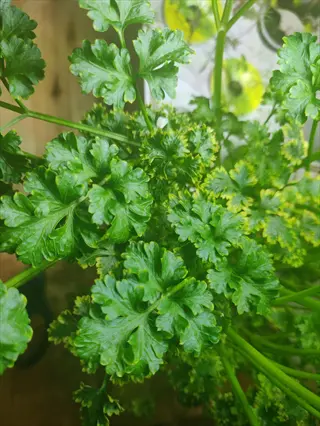
Parsley
- Zone: Grows well in the lower-middle band where the soil stays cooler and a little moister.
- Sun: Handles full sun but also tolerates light shade on the north or south side.
- Water: Prefers steady moisture, so it suits the base zones better than the dry crown.
- Habit: A leafy biennial most often grown as an annual for its tender, flavorful stems.
- Use: A kitchen staple for garnishes, sauces, and fresh chopped finishing of dishes.
- Note: Regular harvesting from the outside keeps it producing fresh leaves for months.
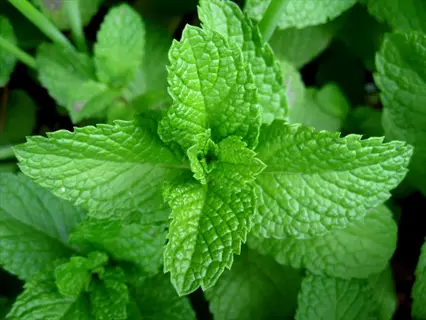
Mint
- Zone: Belongs at the moist base, planted inside a buried pot so it cannot overrun the spiral.
- Sun: Tolerates full sun to light shade and is one of the few herbs that enjoys damp soil.
- Water: Thrives in the wettest, coolest zone where most Mediterranean herbs would struggle.
- Habit: An aggressive spreader by runners, which is the very reason you must contain it.
- Use: Refreshing in teas, drinks, and desserts, with many flavored varieties to choose from.
- Note: Sink a bottomless pot into the base so its roots stay contained but still moisture-fed.
Let a few of your herbs flower and you feed the bees, since lavender and oregano blooms pull in pollinators all season. Basil is the one to watch. Pinch it back and keep it from flowering, because your leaf flavor drops once it blooms.
Soil, Drainage, and Watering
Most herb spirals fail for one quiet reason. The soil holds too much water, and the roots rot before the plant ever fills out. Drainage is the single most important factor in growing healthy herbs, and herbs simply will not grow in wet, soggy ground.
Here is the good news. The mounded spiral shape already solves the hardest part of this problem for you. Water moves top to bottom, so the crown drains fast for your dry-loving herbs while the base catches runoff for thirsty ones.
The best soil for herb spiral beds is a light, well-draining mix with a soil pH between 6 and 7 and only moderate compost. Skip the rich, fed blend you would use for tomatoes. Very fertile soil grows lush leaves that taste flat. And over-fertilizing lowers the aromatic oils while it invites root and stem rot.
Prioritize Drainage First
- Why it matters: Drainage is the single most important factor in growing herbs, and herbs simply will not grow in wet, soggy soils.
- How the spiral helps: The mounded shape lifts roots above standing water, draining the top fastest and the base slowest by gravity.
- Clay-soil fix: Do not add sand to heavy clay to fix drainage; build the raised mound and add moderate compost instead.
- Result: Sharp drainage at the crown is what lets Mediterranean herbs like rosemary and lavender thrive there.
Get the Soil Mix Right
- Target pH: Aim for a soil pH between 6 and 7, which suits the great majority of culinary herbs.
- Organic matter: Use moderate organic matter and compost, not a heavily enriched mix, to balance structure and fertility.
- Texture: A light, well-draining blend mimics the sandy soils that Mediterranean herbs evolved to grow in.
- Fill amount: Plan for roughly 1 cubic yard of soil mix to fill a 6 foot (2 m) spiral.
Go Easy on Fertilizer
- The trade-off: Highly fertile soil produces lush, leafy growth that actually lacks flavor and aromatic oils.
- Hidden risk: Over-fertilizing lowers essential-oil content and encourages root and stem rot in many herbs.
- Better approach: Feed sparingly, since most herbs perform best in lean to moderate soil rather than rich beds.
- Payoff: Restrained feeding rewards you with stronger fragrance and more concentrated flavor at harvest.
Water Deeply, Not Often
- Method: Water deeply but infrequently so roots reach down rather than staying shallow near the surface.
- Gravity advantage: Water moves top to bottom, so the dry-loving top sheds it quickly while the base holds more moisture.
- Mulch tip: A 1 to 2 inch pea-gravel mulch keeps gray-leaved, moisture-sensitive herbs dry and reduces disease.
- Reading the spiral: Let the top dry between waterings, and check the base more often during hot, dry spells.
Drainage is probably the most important single factor in successful herb growing. Herbs will not grow in wet soils.
If your yard is heavy clay, do not reach for sand to fix it. Sand mixed into clay packs down hard and makes drainage worse. Build the raised mound and work in moderate compost instead, which is exactly what the spiral form already does for you.
Once it is planted, water deeply but not often. Picture the spiral as a small hillside where the top sheds water in minutes and the base soaks it up. Let the crown dry out between waterings, and check the base more often during hot, dry spells.
Maintenance and Winter Care
The part that decides whether your spiral lives to see a second year is winter care. Planting day gets all the attention, but the cold months are the real test. A few simple habits spread across the seasons keep the whole structure productive year after year.
Think of upkeep as a rhythm that follows the calendar instead of a long chore list. Each season asks for one main job. You plant and feed in spring, water and harvest in summer, clean up and prep mulch in fall, then protect the tender herbs once the cold sets in.
Two tasks run year-round and matter more than people expect. Keep your mint trapped in a buried pot at the base, since it spreads fast and will swallow neighbors if you let it. And trim herbs like basil before they flower, because flavor drops off hard once a plant puts its energy into blooms.
Spring
Plant new herbs from top to bottom, feed only lightly, and refresh compost; pull any mint runners trying to escape the buried pot at the base.
Summer
Water deeply but infrequently, harvest often to keep growth bushy, and trim basil before it flowers to hold peak leaf flavor.
Fall
Cut back spent annuals, let some perennials bloom for late pollinators, and move tender herbs like basil indoors before the first hard frost.
Winter
After the ground freezes, mulch shallow-rooted herbs about 4 inches deep to limit frost heaving, and protect or overwinter tender rosemary.
Overwintering herbs starts with knowing which ones take care of themselves. Thyme, sage, oregano, and chives come back year after year in most zones and shrug off the cold on their own. Basil is a true annual, so bring a pot of it indoors or plan to replant next spring.
The mulch depth matters as much as the timing. Wait until the ground freezes, then pile mulch about 4 inches deep over your shallow-rooted herbs. Mulching too early traps warmth and confuses the plants, so the freeze comes first and the mulch comes second.
That timing protects against frost heaving, where the repeated freeze-thaw of the soil pushes shallow roots up and out of the ground. The mulch holds the soil temperature steady and keeps roots tucked where they belong. Rosemary needs the most attention here, and the warning below explains why.
In cold regions rosemary is often lost to the freeze-and-thaw cycle and wet roots, not the cold itself, so keep its roots sharply drained and protected through winter.
The spiral shape actually helps you here, since the dry, well-drained top is the safest winter home for rosemary. Standing spring rain rots more rosemary than any cold snap does. Get the drainage right and your spiral wakes up green and ready when the warm weather returns.
5 Common Myths
An herb spiral must point a certain compass direction or it will not drain and the herbs will fail to thrive.
Water drains from top to bottom by gravity regardless of compass facing, so direction only matters for fine-tuning sun and shade on the sides.
Herbs grow best in rich, heavily fertilized garden soil, so feed an herb spiral often to get the most flavorful leaves.
Very fertile soil and over-fertilizing produce lush foliage with weaker flavor and lower essential-oil content, and they can invite root rot.
A spiral is just decorative, so it does not really grow more food than a flat bed of the same footprint would.
By mounding upward, a spiral added growing area, turning about 50 square feet of ground into roughly 70 square feet of planting space.
Mediterranean herbs like rosemary die in winter simply because the cold temperatures are too low for them to survive.
In many regions rosemary is lost less to cold itself and more to the freeze-and-thaw cycle and standing wet soil rotting the roots.
You can plant any herbs anywhere on the spiral because the mound shape alone makes every spot equally good for growth.
Each level has different sun, moisture, and drainage, so dry-loving herbs belong near the top and moisture-lovers belong near the base.
Conclusion
You now know what an herb spiral garden is and how to put one together from start to finish. It starts as a coiled mound of stone and soil, and it grows into a tidy bed that packs many herbs into one small corner. You build it, plant each zone by sun and water, then keep it going through the seasons.
The real payoff is space. One example took an area of about 50 square feet of growing room and turned it into roughly 70 square feet without using any more ground. The mound stacks plants up the sides, so you get more bed in the same footprint. And because it sits in a tight coil, watering and harvesting both get easier, not harder.
That extra room works because the shape builds microclimates into a single bed. The dry, sunny top suits Mediterranean plants like rosemary and thyme. The cooler, moist base feeds thirsty herbs like basil and parsley. Match each plant to its zone and most of your work is already done.
The single most useful rule is simple to follow. Put drainage first, since herbs will not grow in wet soil. Feed the bed sparingly, because rich soil gives you lush leaves with weak flavor. Pick the best herbs for herb spiral life by their sun and water needs, not by what looks nice at the store. Then plan a little for overwintering herbs, with deep mulch after the ground freezes to guard shallow roots.
I built my first spiral in a dead corner by the fence where nothing else would grow. Two summers later it still hands me thyme, sage, and basil with almost no fuss. I clip what I need, top up the mulch each fall, and that is most of the work.
Let me close on an encouraging note. A simple stone spiral in a sunny corner can give you fresh herbs for years on modest upkeep. The pages above point you toward the right seasonal rhythm and the right plant for each zone. Build it once, plant it with care, and your kitchen will thank you every time you step outside to clip a handful.
Glossary
- essential-oil content
- The level of aromatic oils in an herb's leaves, which gives the herb its flavor and fragrance.
- freeze-and-thaw cycle
- Repeated swings between freezing and thawing that stress plant roots and can kill herbs like rosemary in winter.
- frost heaving
- The lifting of shallow plant roots out of the soil caused by the ground repeatedly freezing and thawing.
- Mediterranean herbs
- Herbs native to the Mediterranean region, like rosemary and thyme, that prefer full sun and dry, well-draining soil.
- microclimates
- Small areas within a garden that have different sun, moisture, or temperature conditions than the space around them.
- permaculture
- A design approach that arranges plants and structures to work together the way they do in natural ecosystems.
- soil pH
- A measure of how acidic or alkaline soil is, where most herbs grow best between a value of 6 and 7.
- thermal mass
- A dense material such as stone that absorbs heat during the day and slowly releases it to warm the surrounding soil.
External Sources
Frequently Asked Questions
Do herb spirals actually work?
Yes, when built correctly. The mound creates real sun, drainage, and moisture differences that suit different herbs.
What is a spiral herb garden?
A spiral herb garden is a mounded raised bed that coils upward to create several growing zones in a small footprint.
What herbs grow well in an herb spiral?
Match herbs to zones:
- Rosemary, thyme, sage, oregano, and lavender near the dry, sunny top
- Basil, parsley, cilantro, and chives near the moist base
- Mint in a buried pot to keep it from spreading
Are herb spirals worth it?
For most small gardens, yes. You gain space, easier watering, and better drainage in exchange for some upfront build effort.
How big should an herb spiral be?
A common size is about 6 feet (2 m) across and roughly 3 feet (1 m) tall at the center, which fits most yards.
What is the best soil for an herb spiral?
A well-draining mix with moderate compost and a soil pH between 6 and 7 suits most herbs in a spiral.
Does an herb spiral attract pests?
Not unusually. Many culinary herbs repel common pests, and the airy, well-drained mound limits disease problems.
What herbs should never be planted together?
Avoid pairing herbs with opposite water needs, such as thirsty mint next to dry-loving rosemary or lavender.
What are common herb growing mistakes?
The most common errors are:
- Over-fertilizing, which lowers flavor and essential oils
- Poor drainage that rots roots
- Too little sun and overcrowding plants
How do you overwinter herbs in a spiral?
Mulch shallow-rooted herbs about 4 inches deep after the ground freezes, and protect or move tender herbs before hard frost.