
Introduction
You know the spot. That bare patch under a tree, the slope you hate to mow, or the strip by the driveway where grass gives up and weeds move in. You reseed it every spring and it still looks rough by July. A flowering ground cover fixes that problem and adds color while it does the work for you.
These plants are simple to picture. A ground cover is a low, spreading plant that stays generally under 1 to 2 feet (30 to 60 cm) tall and carpets the soil instead of turf. It knits across the ground, fills the gaps, and rewards you with bloom that a plain lawn never gives. Many gardeners use one as a lawn alternative in spots where grass struggles.
You can find the same dozen ground cover plants in plenty of guides online. This article goes beyond the roster. You will learn how far apart to space each plant for full coverage. You will see real weed suppression that field research backs up. And you will get honest warnings about the spreaders that can take over your yard.
Here is the quick payoff, and these four benefits all have research behind them. A good ground cover holds soil on a slope to fight erosion. It chokes out weeds. It stays low maintenance and sips less water once it settles in. And many feed bees and butterflies through the season. Let's get into the best plants and how to make them work.
12 Best Flowering Ground Covers
Three springs ago I knelt on my own front bank, sun hot on my neck, and I planted plugs of creeping phlox 'Emerald Blue' into the dry slope one at a time. The plugs looked sparse and lonely that first April, just little green tufts a foot apart. By the third summer my front slope had knit into one solid carpet of fine green needles that blazed lavender every spring.
That carpet sold me on what a good sun plant can do. So this list leans on plants that earn their place. Below are 12 flowering ground cover plants that competitors all name. But here you also get the spacing, bloom window, and care notes those photo galleries skip. The list splits sun plants from shade plants, so you can match each one to the spot you have.
For a sunny bed you want tough plants that love dry soil. Good picks are creeping phlox, creeping thyme, and sedum. All three bake happily on a slope and ask for little water. For a shady corner where grass gives up, you lean on bugleweed, sweet woodruff, and coral bells. Each entry below lists light needs, bloom color, and hardiness zone. That way you can pick a ground cover for sun or a ground cover for shade with ease.
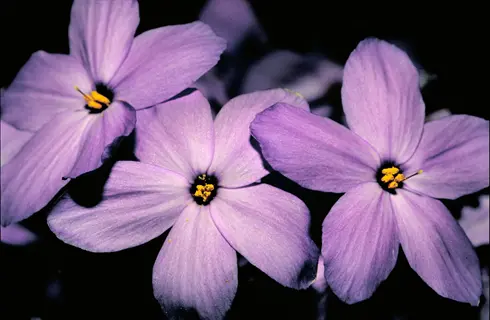
Creeping Phlox (Phlox subulata)
- Light: Thrives in full sun and needs well-drained soil to form its dense low mat without rot.
- Bloom: Carpets itself in pink, lavender, or white flowers for a few weeks in early spring before going green.
- Size: Stays about 6 inches (15 cm) tall and spreads 12 to 24 inches (30 to 60 cm) wide over time.
- Hardiness: Reliably perennial across cold zones, so it returns each spring even after hard winters.
- Wildlife: Draws early bees and butterflies and tends to be left alone by browsing deer.
- Care: Shear the mat lightly after bloom to keep it tidy and encourage fresh, dense growth.
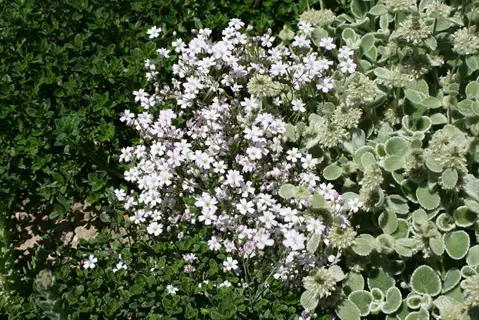
Creeping Thyme (Thymus serpyllum)
- Light: Wants full sun and lean, fast-draining soil, much like the dry rock gardens it naturally suits.
- Bloom: Covers itself in tiny pink to purple flowers through summer that hum with visiting bees.
- Size: Hugs the ground at 2 to 4 inches (5 to 10 cm) tall and creeps outward into a fragrant mat.
- Traffic: Tolerates occasional light foot traffic, making it one of the few plants for stepping stones.
- Drought: Shrugs off dry spells once rooted, which suits water-wise and xeric plantings.
- Aroma: Releases a warm herbal scent when brushed, a sensory bonus along paths and patios.
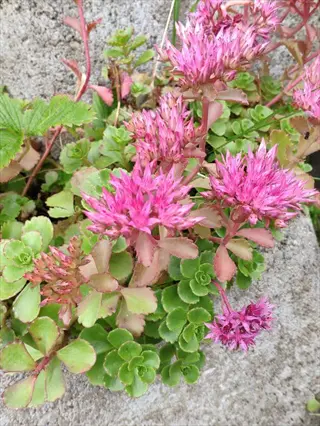
Stonecrop and Sedum (Sedum spp.)
- Light: Loves full sun and gritty soil, storing water in its fleshy leaves for tough dry sites.
- Bloom: Sends up star-shaped yellow, pink, or red flowers that pollinators work in summer and fall.
- Size: Low creeping types stay a few inches tall, forming a succulent carpet that resists drought.
- Toughness: Handles heat, poor soil, and neglect, ranking among the most forgiving choices for beginners.
- Texture: Adds year-round structure with evergreen or colorful foliage even when not in bloom.
- Care: Needs almost no watering once established, so it suits a true plant-it-and-forget-it bed.
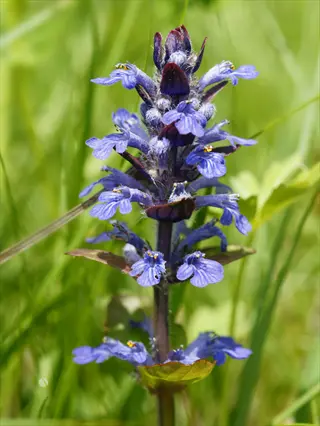
Bugleweed (Ajuga reptans)
- Light: Grows happily in part shade to shade, filling difficult spots under trees and along north walls.
- Bloom: Throws up short spikes of blue-purple flowers in late spring above glossy foliage.
- Size: Forms a low rosette mat and spreads quickly by runners to cover bare ground fast.
- Foliage: Offers bronze, burgundy, or variegated leaves that hold interest well beyond the bloom.
- Speed: Establishes and knits together faster than many shade plants, closing gaps in a season or two.
- Caution: Spreads vigorously, so plant it where its runners can roam without invading the lawn.

Candytuft (Iberis sempervirens)
- Light: Prefers full sun and well-drained soil, doing well in rock gardens and along sunny edges.
- Bloom: Smothers itself in crisp white flowers in mid to late spring above evergreen leaves.
- Size: Mounds to roughly 8 to 12 inches (20 to 30 cm) tall and spreads into a tidy clump.
- Foliage: Keeps its dark green leaves through winter, giving structure when little else is showing.
- Pollinators: Its spring flowers feed early bees emerging on the first warm days of the season.
- Care: Trim lightly after flowering to keep the mound compact and the foliage dense.
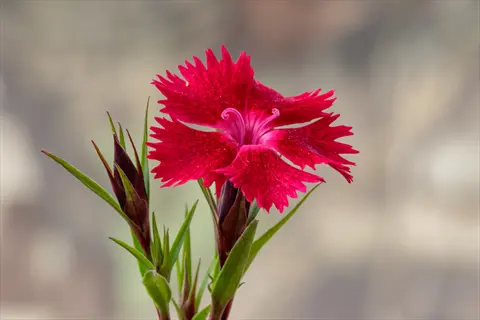
Cheddar Pink (Dianthus gratianopolitanus)
- Light: Wants full sun and sharp drainage, thriving in gritty, slightly alkaline garden soil.
- Bloom: Produces fragrant pink flowers in late spring and early summer above blue-green foliage.
- Award: The 'Firewitch' cultivar was named 2006 Perennial of the Year for its reliable color.
- Size: Forms a low cushion a few inches tall that slowly widens into a neat evergreen mat.
- Scent: Carries a clove-like fragrance that makes it a favorite near paths and seating areas.
- Care: Deadhead spent blooms to extend the show and keep the cushion looking fresh.
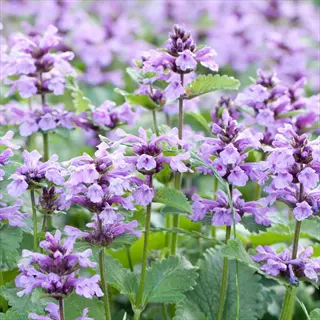
Catmint (Nepeta x faassenii)
- Light: Thrives in full sun and average soil, tolerating heat and drought once it is rooted.
- Bloom: Sends up clouds of lavender-blue flowers from early summer into fall with light shearing.
- Weeds: Field research found it strongly weed-suppressive, partly through chemicals it releases into the soil.
- Size: Forms a soft mound roughly 12 inches (30 cm) tall that spills outward into a haze of bloom.
- Pollinators: Bees and butterflies work its flowers heavily across the long blooming window.
- Care: Shear it back by half after the first flush to trigger a fresh wave of flowers.
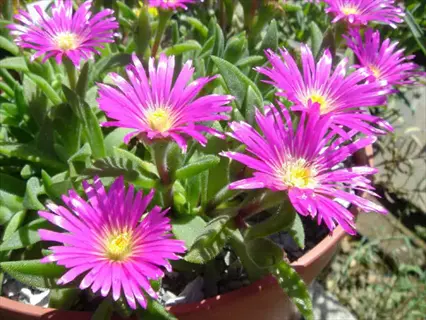
Ice Plant (Delosperma spp.)
- Light: Demands full sun and very fast-draining soil, excelling on hot, dry slopes and parking strips.
- Bloom: Opens dazzling daisy-like flowers in pink, orange, or purple through the warm season.
- Size: Stays low and succulent, forming a tight drought-proof mat only a few inches tall.
- Drought: Stores water in its leaves and shrugs off heat, a top choice for xeric and water-wise beds.
- Wildlife: Its bright open flowers attract bees and butterflies on sunny afternoons.
- Care: Needs little water and resents wet feet, so avoid heavy clay and overwatering.
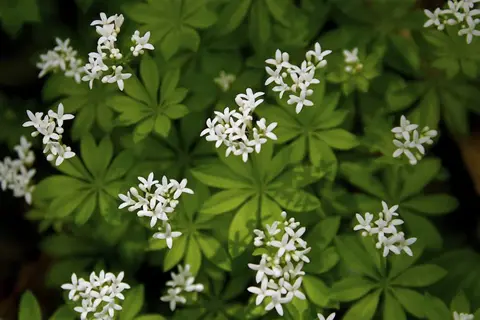
Sweet Woodruff (Galium odoratum)
- Light: Prefers part shade to full shade and moist soil, thriving under trees where grass fails.
- Bloom: Carries delicate white star-shaped flowers in late spring above whorled green leaves.
- Size: Stays low at 6 to 8 inches (15 to 20 cm) and spreads into a soft carpet in shade.
- Speed: Fills shady ground quickly, knitting bare soil together within a season or two.
- Aroma: Its foliage smells of fresh-cut hay when dried, a traditional touch in shady borders.
- Care: Keep the soil from drying out and let it roam in woodland beds where it has room.
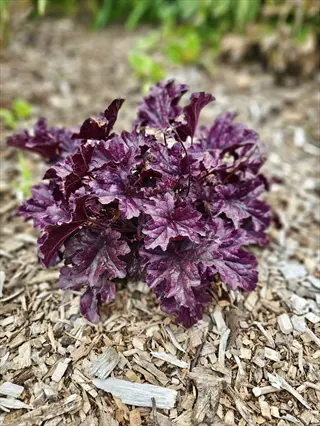
Coral Bells (Heuchera spp.)
- Light: Grows in part shade and rich, moist soil, with some types taking more sun than others.
- Bloom: Lifts airy sprays of tiny pink or white bells on slender stems in late spring and summer.
- Foliage: Its main draw is bold leaves in burgundy, amber, lime, or silver that last all season.
- Size: Forms a clump roughly 8 to 12 inches (20 to 30 cm) tall, widening slowly over the years.
- Wildlife: The slender flower stems draw hummingbirds along with bees to a shady border.
- Care: Refresh crowns that heave in winter and divide clumps every few years to keep them vigorous.
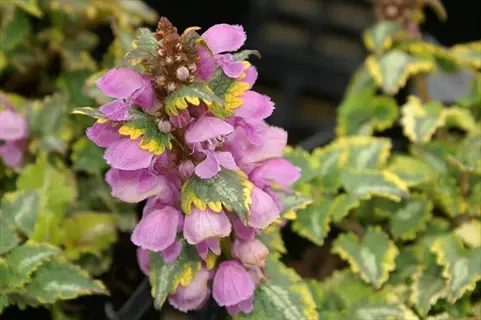
Lamium or Spotted Dead Nettle (Lamium maculatum)
- Light: Thrives in part shade to shade and average soil, brightening dim corners with silvery leaves.
- Bloom: Carries pink or white hooded flowers from late spring through summer above patterned foliage.
- Size: Stays low at 6 to 9 inches (15 to 23 cm) and trails outward into a luminous shade mat.
- Foliage: Its silver-marked leaves light up shade and hold interest long after the flowers fade.
- Speed: Spreads readily to cover ground, so give it room or contain it along an edge.
- Care: Trim back leggy stems through the season to keep the patch full and fresh.
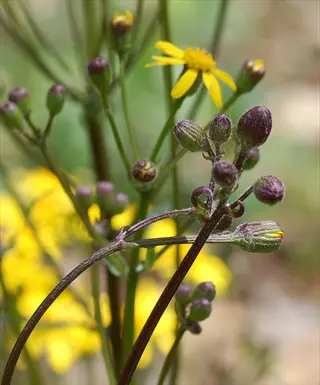
Golden Groundsel (Packera aurea)
- Light: A North American native that takes part shade to shade and moist soil, ideal for woodland edges.
- Bloom: Raises cheerful clusters of small yellow daisy-like flowers in mid to late spring.
- Size: Forms a low rosette of rounded leaves and sends flower stems up to about 1 to 2 feet (30 to 60 cm).
- Natives: As a native, it supports local pollinators and, once established, needs little extra water.
- Spread: Colonizes damp ground steadily, making it a strong native choice for tricky wet spots.
- Care: Let it naturalize in moist, shaded beds where its spreading habit is an asset rather than a problem.
Picking Sun and Shade Plants
Check the light before you buy a single plant. These carpets work best as a lawn alternative in the spots where your grass struggles. Think hot dry banks, deep shade under trees, steep slopes, and skinny parking strips you hate to mow or water.
Matching a plant to its light is like grabbing the right tool for the job. Put a sun lover in deep shade and it will sulk and stretch toward the light with thin, floppy growth. Plant a shade species in full sun and the leaves will scorch brown by July.
The split comes down to how the leaves and roots are built. A ground cover for full sun tends to have small, waxy, or fuzzy leaves that hold water and shrug off heat. A ground cover for shade spreads broad, thin leaves to catch every bit of weak light, so it wants steady moisture instead of a baking position.
- Creeping phlox blankets sunny slopes in spring color and handles dry, well-drained soil.
- Creeping thyme and sedum thrive in heat and lean soil, perfect for hot rock gardens.
- Catmint and ice plant bloom for weeks in full sun while shrugging off drought.
- Candytuft and cheddar pink edge sunny beds with evergreen foliage and spring flowers.
- Sweet woodruff and golden groundsel carpet moist shade under trees where grass fails.
- Bugleweed and lamium fill dim corners fast with colorful, patterned foliage.
- Coral bells brighten part shade with bold leaves and airy flower stems.
- Foamflower and barrenwort handle deep, dry shade beneath established trees.
The sun list leans on drought tolerant plants for a reason. Creeping thyme and sedum store water in their leaves, so they thrive in lean rocky soil where most plants give up. That makes them a smart pick for a sunny slope you would rather not drag a hose to all summer.
A good shade tolerant ground cover asks for the opposite. Sweet woodruff, bugleweed, and foamflower want cool, moist soil and even pull through under thirsty tree roots where lawn always thins out and dies.
Most yards are not all sun or all shade, and that gray zone trips up new gardeners. For a mixed light ground cover that takes part sun and part shade, plant cranesbill, heuchera, or tiarella. All three hold their color through shifting light and bridge the awkward spots between a bright border and a dim corner.
Ground cover plants are appealing for their variety of ornamental features that add interest to landscapes. They provide a variety of textures and colors, help to reduce soil erosion, and can function as a transition between landscape spaces.
Choking Out Weeds and Erosion
Plenty of plant tags promise to choke out weeds, but few back it up. The proof is real here. A field trial tested 15 perennials and found 4 that strongly suppressed weeds, so the right pick does cut your weeding.
The weed suppression comes from a simple trick. A dense leaf canopy shades the soil so seeds never get the light they need to sprout. Some plants like catmint go further and release natural compounds into the soil that hold back young weeds.
Picture a bare slope where you set out moss phlox or catmint. As the plants knit into a thick mat, they blanket the dirt and starve weed seeds of sun. The same living cover gives you erosion control, since spreading roots grip the bank and a leafy layer shields it from wind and rain.
Be patient in year one. The canopy is still open while plants are small, so weeds slip through and soil erosion stays a risk on open ground. Suppression jumps in the second year once the cover fills in. Hand-weed early and you give the planting a clean start. The four standouts from the trial were lady's mantle, catmint, moss phlox, and dwarf goldenrod, and any of them makes a strong ground cover for slopes.
Dense Canopy Blocks Light
- Mechanism: A tight leaf canopy reduces light reaching the soil surface, so most weed seeds never get the trigger they need to sprout.
- Evidence: Field research found that the most successful ground covers had dense foliage that strongly reduced light transmittance at the soil surface.
- Best plants: The trial named lady's mantle, catmint, moss phlox, and dwarf goldenrod as strongly weed-suppressive among 15 species tested.
Allelopathy Adds Chemical Help
- Mechanism: Some species release natural compounds into the soil that inhibit nearby weed seedlings, adding to the shading effect.
- Examples: Catmint and creeping red fescue are documented to suppress weeds partly through these chemicals in the root zone.
- Takeaway: This is a bonus on top of light competition, not a replacement for a dense, well-established mat.
Suppression Builds Over Time
- Mechanism: Weed control is weak in year one when plants are small and the canopy is open, then strengthens as the cover fills in.
- Evidence: Suppression increased significantly in the second year at both trial locations once the perennials were well established.
- Action: Plan to hand-weed during the first season so weeds do not get ahead of the young planting.
Roots and Cover Hold Soil
- Mechanism: Spreading roots and a living mat shield slopes from wind and rain, reducing erosion on banks that are hard to mow.
- Slope method: On steep ground, plant through biodegradable coir or plant-fiber netting and avoid plastic landscape cloth, which can increase runoff.
- Benefit: A settled ground cover keeps soil cooler and reduces water loss compared with bare ground.
On a bank, set plants through biodegradable coir netting and mulch with 2 inches (5 cm) of organic matter. Skip plastic landscape fabric, which can worsen runoff and erosion.
Planting and Spacing Guide
A good plant list is only half the job. Ground cover spacing and timing decide whether your bed fills in fast or sits patchy for years. Get the soil prep and the spacing right, and the rest mostly takes care of itself.
Good soil preparation comes first, and skipping it is a frequent cause of failure. Work the bed 8 to 10 inches (20 to 25 cm) deep and mix in a 2-inch (5 cm) layer of organic matter. If you want a bigger number to plan around, aim for 3 to 5 cubic yards of compost per 1,000 square feet of bed.
Spacing is a tradeoff, like seating a room. Pack the plants close and you get fast cover, but you pay for more plants. Space them wide and you save money, but you wait longer for the gaps to close. Either way, plan for full coverage by the end of the third growing season.
Work the bed 8 to 10 inches (20 to 25 cm) deep and mix in a 2-inch (5 cm) layer of organic matter or compost, since poor soil prep is a common cause of ground cover failure.
Space plants so the bed fills by the end of the third growing season. Closer spacing covers faster at more cost, while wider spacing saves money but takes longer to knit together.
Set plants in offset, staggered rows rather than a straight grid, because the staggered pattern closes gaps and gives the quickest, most even coverage.
Spread at least 2 inches (5 cm) of mulch between plants to hold moisture and suppress weeds while the young cover fills in over the first season or two.
Water deeply while roots establish, then ease off as the plants spread. Expect up to two years for full establishment, with fall planting often easing the process.
Now you know how to plant ground cover the way the pros do. The staggered pattern is the trick that closes gaps fastest, so use it on every bed you start. Full establishment can still take up to two years, so a little patience pays off.
When to plant ground cover matters as much as how. Fall is often the better window because cooler weather and steady moisture ease the young roots in with less stress. Once the plants knit together, ground cover maintenance drops off to little more than the odd water during a dry spell.
Color Through Every Season
Plenty of plant tags promise blooms all year, and that claim does not hold up for a single species in most climates. No one ground cover flowers in every season where winters turn cold. The honest path to year-round bloom is layering several plants so one picks up color as the last one fades.
Start with early risers like creeping phlox and candytuft for the first wave of spring. Then catmint and creeping thyme take the baton through the warm months and bloom for weeks. Sedum carries the show into fall, and evergreen leaves hold the bed together once the flowers quit. Stack the bloom times this way and you get long flowering color from March through October.
The creeping phlox Emerald Blue on my sunny upper front bank glowed pink from the path one early spring while the rest of my zone 5 yard sat brown and flat. Candytuft had not woken up yet. The thyme behind it was a tan mat. That one strip of color pulled the whole tired bed forward weeks before anything else broke dormancy.
Foliage does the heavy lifting between the bloom windows. Sedum leaves shift from blue-green to deep red, heuchera holds amber and burgundy through the cold, and lamium stays silver into winter. An evergreen flowering ground cover like candytuft keeps green structure when no petals remain. A bed built for succession never looks fully bare, which is what most people really want from flower color in the yard.
Early Spring
Creeping phlox, candytuft, and ajuga open first, carpeting beds in pink, white, and blue as the garden wakes up.
Late Spring
Sweet woodruff, cheddar pink, and coral bells take over in sun and shade, bridging into the warm season.
Summer
Creeping thyme, catmint, ice plant, and lamium bloom for weeks, feeding bees and butterflies through the heat.
Fall
Sedum and dwarf goldenrod carry late color, while many foliage plants deepen their leaf tones.
Winter
Evergreen candytuft, sedum, and coral bells hold structure and leaf color when no flowers remain.
Invasive Risks and Natives
A fast ground cover is a great helper right up until it turns into a problem you cannot dig out. The same dense growth that lets a plant choke out weeds can also let it jump your bed and crawl into a lawn or a patch of woods. That is the line between a good ground cover and an invasive ground cover, and it pays to know which side a plant sits on before you put it in the soil.
Clemson puts the rule plainly. Good ground covers are tough, durable, and fast, but not invasive. Plenty of the usual picks bring real risk here. People often ask which is the most invasive ground cover. English ivy lands near the top, since it climbs trees and smothers everything under it. The table below pairs four common aggressive spreaders with a calmer native swap, so you get coverage without the cleanup.
Invasive status changes from place to place. Periwinkle and bugleweed can run wild in one region. The same plants behave fine in another. So a plant on a friend's do-not-plant list might be safe in your yard. Check your local extension or native plant list before you buy, and skip the big single-species sweep that Penn State warns against. A mix of plants holds up better than one plant doing all the work.
Leaning on a native ground cover solves two problems at once. Penn State notes that many natives have deeper roots and, once they settle in, may need less water and less fuss than imported plants. Golden groundsel, dwarf tickseed, wild violet, creeping phlox, and coral bells all spread well and give pollinators something to feed on. Several also work as a deer resistant ground cover, which saves you from watching new growth vanish overnight. You skip the invasive risk and still fill the bed fast.
So, choose your ground cover plants carefully so that you do not end up with a mass planting that is on its way to take over your garden a few years after planting.
5 Common Myths
Many gardeners believe one flowering ground cover will stay in bloom every single day from spring straight through to late autumn.
No single species blooms all year in most climates. You get continuous color by layering plants that peak in different seasons.
A common belief is that ground covers smother weeds the moment they go in the ground, so the bed needs no weeding at all.
Suppression depends on a dense canopy that takes time. Research shows weed control increases significantly in the second year as plants fill in.
People often assume that the fastest-spreading plant is always the smartest pick because it covers bare soil the quickest.
The fastest spreaders are often the most invasive. A plant that fills fast can also escape the bed and overrun nearby gardens.
Some think laying plastic landscape fabric under a slope planting is the best way to stop erosion and hold the soil in place.
Plastic cloth can increase runoff and erosion. Extension guidance favors biodegradable coir netting that lets roots knit the soil together.
A widespread idea is that any low plant labeled ground cover can be walked on and treated like a tough lawn replacement.
Most ground covers cannot take foot traffic the way turf can. Only a few, such as creeping thyme, tolerate occasional light stepping.
Conclusion
A flowering ground cover trades a patch of struggling grass for low maintenance color that fills in on its own. You stop fighting bare spots under trees or on a slope, and you start getting blooms where lawn never wanted to grow. That swap is the whole point, and it pays you back more every year.
The research behind weed suppression is the part most people miss. A dense canopy chokes out weeds by cutting light at the soil surface, so fewer weed seeds ever sprout. In one field trial the effect grew much stronger in the second growing season, once the plants knit together and shaded the ground. Give your bed that time and it gets easier, not harder, to keep clean.
Three choices set you up to win. Match each plant to its light, whether you need a spot for full sun or deep shade. Space for full coverage by the third growing season so the carpet closes before weeds move in. And lean toward a native ground cover over an aggressive spreader. Natives root deeper, ask for less water, and won't try to take over the yard. As a lawn alternative, that mix of color and toughness is hard to beat.
No single plant blooms all year, so the real trick is layering. Pair a spring bloomer like creeping phlox with a summer star like catmint. Add a fall performer too. Then back them all with evergreen foliage that holds the bed through winter. Do that once and a problem patch turns into a self-sustaining carpet that only looks better with each passing season.
Glossary
- Allelopathy
- A natural process where some plants release chemicals into the soil that slow or stop nearby weed seedlings from growing.
- Coir netting
- A biodegradable mat made from coconut fiber laid on slopes to hold soil and seedlings until roots take hold.
- Erosion control
- Using plant roots and a living mat of foliage to hold soil in place on slopes and stop it washing away.
- Establishment
- The first one to two years after planting when roots settle in and the cover fills out before it becomes low-maintenance.
- Flowering ground cover
- A low, spreading plant generally under 1 to 2 feet tall used to carpet soil instead of turf while adding seasonal bloom.
- Native ground cover
- A spreading plant that grows naturally in a region, often needing less water once settled and supporting local pollinators.
- Staggered planting
- Setting plants in offset rows rather than a straight grid so the gaps close faster for quicker, even coverage.
- Weed suppression
- The way a dense plant canopy blocks light at the soil surface so weed seeds cannot sprout and grow.
External Sources
Frequently Asked Questions
Is there a ground cover that blooms all year?
No single ground cover blooms all year in most climates. Continuous color comes from layering several plants.
What is the best ground cover to choke out weeds?
Dense maters like creeping phlox, catmint, and lady's mantle are research-backed weed suppressors.
What is the most low-maintenance ground cover?
Sedum, creeping thyme, and native choices rank highest once they establish.
What is the fastest growing ground cover?
Creeping jenny, ajuga, and sedum spread fast, but full coverage still takes a season or two.
What is the most invasive ground cover?
English ivy, periwinkle, and bishop's weed are widely flagged as aggressive or invasive.
What are the downsides of creeping phlox?
Its bloom is brief, it needs well-drained soil, and the mat can thin out without a post-bloom shear.
What is a fast-spreading ground cover for shade?
Sweet woodruff, ajuga, and dead nettle spread quickly in shade.
Is October too late to plant ground cover?
Fall planting is often ideal, so October usually works if roots can settle before a hard freeze.
How far apart should you space ground cover?
Space plants so the bed fills by the third growing season, using staggered rows for the fastest cover.
Are flowering ground covers good for pollinators?
Many are, with catmint, thyme, and phlox drawing bees and butterflies through the season.