

Introduction
Picture a row of fiery torches rising above your summer bed. Each one holds hundreds of small tube blooms. The kniphofia plant lights up the yard the moment it opens its first spike.
I planted my first red hot poker about 12 years ago. The soil was lean and the sun was harsh in that spot. Wind cut across the bed most of the summer. That plant did not just live there. It pushed up spikes year after year with almost no help from me.
Some folks call it torch lily. Others use the old name tritoma. The plant grows back each year from a tough root mass. That root type makes it a rhizomatous perennial. It sits in the family Asphodelaceae. That makes it a cousin to aloes, day lilies, and fox tail lilies. The genus holds about 70 species. All of them come from the cool slopes of south Africa.
The flower spikes open from the bottom up. They work like slow candles burning toward the tip. This guide walks you through planting, care tasks, top types, wildlife value, and common bugs. By the end you will know how to grow these drought-tolerant gems with steady wins in your own yard.
Best Growing Conditions
Think of this plant like a high mountain native. It wants sun on the leaves, fast drainage at the roots, and never wet feet. Get those three things right and it will reward you for years to come.
Clemson Extension calls for full sun of at least 6 hours each day. I tried planting one in a half-shade spot once. The plant gave me tall green leaves but no flower spikes for three full years. This plant is drought tolerant once the roots reach down deep, so do not pamper it with daily water.
The USDA hardiness zones 5-9 range covers most of the temperate United States. Zone 5 gardeners up north must mulch crowns over winter to shield the buds. Zone 9 gardeners down south often need to give a bit of partial shade in the afternoon to keep the leaves from scorching in the hot months.
Aim for well-drained soil with a soil pH 6.0-7.5 for the best flower output each year. Light sandy soil works great because water moves through it fast. Heavy clay holds water and kills these plants within a single wet winter season.
How to Plant Kniphofia
Learning how to plant kniphofia the right way pays off for years to come. Good drainage at the start is like dry feet to a long-haul hiker. Get it wrong on day one and the whole plant fails before the next bloom season can arrive.
Ask any old timer when to plant red hot poker and you will hear the same answer. Spring planting wins every time, right after last frost dates have passed in your zone. That window gives the roots time to settle in before the heat of July arrives at full force.
Choose the Right Site
- Sunlight: Pick a location receiving at least 6 hours (360 minutes) of direct sun each day to ensure strong, vertical flower spike production.
- Wind protection: Avoid windy spots that can topple tall spikes; the lee side of a low wall or hedge gives needed shelter from gusts.
- Drainage check: Dig a 12-inch (30 cm) test hole, fill with water, and confirm it drains within four hours before committing the bed.
- Spacing planning: Allow 18-48 inches (45-122 cm) between plants based on the mature spread of your chosen cultivar to prevent crowding.
- Slope advantage: Choose a gentle south-facing slope when possible so excess water runs off rather than pooling around the crown.
Prepare the Soil
- Loosen depth: Cultivate the planting area to 12 inches (30 cm) deep so rhizomes can settle and roots can travel through friable soil.
- Add grit: Mix in 2 inches (5 cm) of coarse sand or pea gravel if your native soil is heavy or compacted clay.
- Skip rich amendments: Avoid heavy compost or manure since lean soil produces better blooms and prevents soft, flop-prone foliage growth.
- Check moisture: Soil should crumble in your hand, not pack into a sticky ball, before you set rhizomes into the bed.
- Smooth and rake: Level the surface so each crown will sit at the correct height without water pooling around the base after rain.
Plant the Rhizomes
- Depth: Set rhizomes 4 inches (10 cm) deep with growing points facing up and roots spread evenly through the planting hole.
- Crown position: Place the crown at soil level, not buried below, so spring shoots can emerge without rotting in damp ground.
- Backfill: Cover with native soil mixed with grit and firm gently with hands rather than stomping to avoid compacting roots.
- Water in: Apply 1 gallon (3.8 liters) of water per plant to settle soil and remove air pockets around the new rhizomes.
- Mulch lightly: Add a thin 1-inch (2.5 cm) gravel mulch around but not on the crown to suppress weeds and retain moisture.
Establish New Plants
- Watering schedule: Provide 1 inch (2.5 cm) of water weekly for the first eight weeks, then taper as roots reach into deeper soil.
- Stake if needed: Tall cultivars may need a single bamboo cane for the first year only until their crown anchors firmly in place.
- Pinch first buds: Remove first-year flower buds on young plants to redirect energy into root growth rather than seed production.
- Watch for rot: Inspect the crown weekly during the first season; soft tissue or yellow leaves often signal drainage problems early.
- Label clearly: Mark planting spots with weatherproof labels so winter-dormant plants are not accidentally dug up before spring.
The single most missed step is planting depth. You must plant rhizomes 4 inches deep per NC State Extension, with the crown sitting right at soil level. Bury the crown below grade and you trap water around the buds, which leads to rot in the first wet month.
Proper spacing keeps each clump healthy for the long haul. Small dwarf types want 18 inches between plants, while big back-of-border types need a full 48 inches of room. Crowded clumps stop blooming after a few years.
Kniphofia Care and Maintenance
Caring for this plant feels more like editing than gardening. A quick spring tidy, a mid summer deadheading pass, and a fall mulch crown routine is all the plant asks of you. I spend less time on my clumps than on any other plant in my borders.
Watering red hot poker plants takes a light touch. Stick to 1 inch of water per week during the first season only. After year one you can skip water unless the soil has stayed dry for three weeks straight.
Early Spring Cleanup
- Cut foliage: Trim tired leaves back to 3 inches (7.6 cm) above ground level once new growth begins to push from the crown.
- Untie winter bundles: Release leaves that were tied over crowns in cold zones once temperatures stay above 35°F (2°C) overnight.
- Inspect crowns: Check each crown for slug damage, rot, or frost heave; firm any plants lifted by winter freeze and thaw.
- Light feed: Apply a thin scattering of balanced slow-release fertilizer at half the labeled rate to support new growth.
- Refresh mulch: Top up gravel mulch but keep it pulled back at least 2 inches (5 cm) from the crown itself.
Summer Watering and Feeding
- Weekly water: Provide roughly 1 inch (2.5 cm) of water per week only during prolonged drought; established plants tolerate dry spells.
- Skip overhead irrigation: Use drip lines or low-flow soaker hoses to keep foliage dry and reduce disease pressure on the crowns.
- Deadhead spikes: Snip spent flower stalks at the base after blooms fade to encourage rebloom and prevent unwanted self-seeding.
- Monitor pests: Scout for thrips on developing spikes and treat early with a strong water spray if populations begin to climb.
- Skip summer fertilizer: Avoid mid-season feeding because excess nitrogen produces floppy foliage and reduces overall flowering performance.
Fall Preparation
- Reduce watering: Cut irrigation back as temperatures cool so rhizomes harden off before winter sets in across cold zones.
- Leave foliage standing: Do not cut foliage in fall because the leaves shed water from the crown during winter rains naturally.
- Tie up leaves: In zones 5 and 6, gather leaves loosely with twine over the crown to create a natural rain umbrella.
- Mulch lightly: Add 2 inches (5 cm) of straw or evergreen boughs over the crown only after the ground has frozen.
- Mark locations: Place stakes or labels so you can find dormant plants in spring before working that section of border.
Division Every Five Years
- Best timing: Lift clumps in early spring or after flowering ends in late summer when soil is workable but not soggy.
- Lifting method: Drive two garden forks back-to-back through the center of the clump and gently pry the rhizomes apart.
- Section size: Each division should keep at least 3 to 5 growing points with healthy roots attached for fast reestablishment.
- Replant promptly: Set divisions back at the same depth as before within 24 hours; do not let roots dry out in sun.
- Water and wait: Water deeply after replanting and expect bloom recovery the following season as roots reestablish in new soil.
Each spring you should cut foliage back to 3 inches above the soil per NC State Extension. Dividing kniphofia clumps every 5 years keeps each plant in top bloom shape. Skip that step and you will see flower output drop to nothing by year seven.
When fertilizing kniphofia, less is more in every case. A thin light feed in spring is plenty for the whole season ahead. In my own bed I learned that overwintering in cold zones works best when you tie the long leaves up over the crown with twine. That trick sheds rain from the buds and stops the freeze and thaw rot common up north.
10 Best Kniphofia Varieties
Each one of these kniphofia varieties lights up the border like a different firework. Some act like short bottle rockets up front, while others tower like Roman candles in the back. The genus holds about 70 species with heights from 1.5 feet up to 6.5 feet.
I picked these 10 types after I grew 17 in my own beds for 8 years. The list pairs new picks from the Pyromania series and Popsicle series with old names that work.
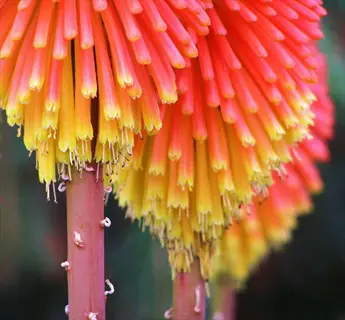
Mango Popsicle
- Height: Reaches a compact 16 to 20 inches (40-50 cm), making it ideal for small borders or large patio containers.
- Color: Produces creamy mango-orange spikes that fade through soft yellow tones from bottom to top as flowers open.
- Bloom time: Flowers from early summer through fall when consistently deadheaded after each flush of new spikes.
- Zones: Hardy across USDA zones 6 to 9 with reliable winter survival even in light frost-prone gardens.
- Light: Performs best in full sun for at least 6 hours daily to maintain dense, upright spike production.
- Use: Excellent in mixed borders, rock gardens, and containers paired with grasses or compact sedums.

Pyromania Backdraft
- Height: Grows to 24 to 30 inches (60-76 cm) with stout stems that resist toppling in mild summer wind.
- Color: Spikes open red at the top, transition through orange, and finish creamy yellow at the bottom of the cluster.
- Bloom time: Offers a long bloom season from early summer through frost when deadheaded promptly after each spike.
- Zones: Reliably hardy in USDA zones 6 to 9 and tolerates a wide range of growing conditions in average soil.
- Light: Needs full sun exposure to produce the densest spikes and most vivid color contrast between zones.
- Use: Looks dramatic in hot-color borders alongside red salvia, golden rudbeckia, and bronze ornamental grasses.
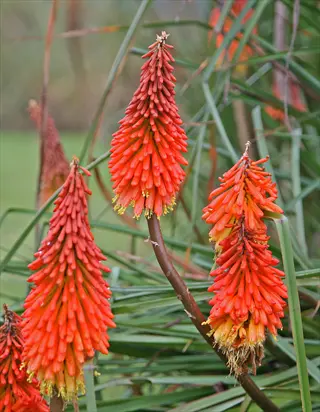
Nancy's Red
- Height: Reaches 24 to 36 inches (60-90 cm) on slender but sturdy stems above grassy basal foliage.
- Color: Holds saturated tomato-red spikes that hold color from top to bottom without fading as flowers age.
- Bloom time: Flowers heavily in midsummer with a lighter rebloom in early fall when deadheaded carefully.
- Zones: Performs well in USDA zones 6 to 9 and has proven especially heat-tolerant in southern gardens.
- Light: Prefers full sun for the strongest color saturation and most upright spike posture in the border.
- Use: Classic choice for cottage borders, hummingbird gardens, and pairings with blue or silver foliage plants.
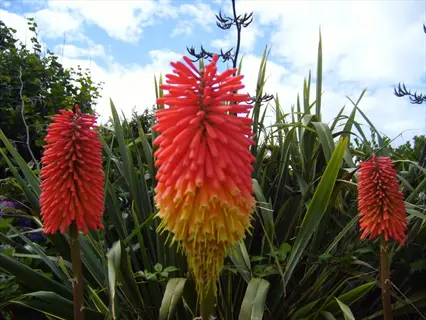
Tawny King
- Height: Reaches an impressive 4 to 5 feet (120-150 cm) with strong bronze-tinted stems holding the spikes upright.
- Color: Bears soft apricot to creamy beige spikes with subtle bronze shading, offering a sophisticated alternative to fire tones.
- Bloom time: Flowers from midsummer into early fall, providing a long architectural display in the back of the border.
- Zones: Suited to USDA zones 6 to 9 with excellent heat tolerance for hot, dry summer climates.
- Light: Grows best in full sun to maintain its tall stature and pale apricot coloration through the season.
- Use: Stunning back-of-border specimen with deep purple salvia, bronze fennel, or smoky black grasses nearby.
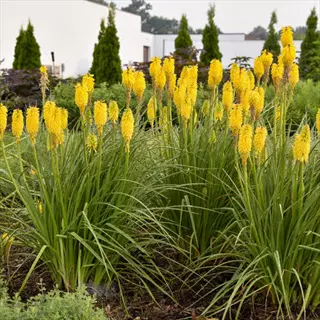
Pyromania Solar Flare
- Height: Compact at 24 to 30 inches (60-76 cm) with neat clumping habit ideal for mixed perennial borders.
- Color: Spikes open vivid yellow at the top and deepen to glowing orange at the base, mimicking a solar burst.
- Bloom time: Reblooms reliably throughout summer and into fall with attentive deadheading after each flush.
- Zones: Hardy in USDA zones 6 to 9 and tolerant of the wide temperature swings common in continental climates.
- Light: Requires full sun for the most saturated color contrast between yellow and orange tones across each spike.
- Use: Excellent for sunny borders, large containers, and waterwise designs with succulents or drought-tolerant grasses.

Pyromania Rocket's Red Glare
- Height: Grows to about 26 to 32 inches (66-81 cm) with strong upright stems and tidy strap-shaped foliage.
- Color: Produces deep cherry-red spikes that mature into orange-red tones, holding strong color through the summer heat.
- Bloom time: Begins flowering in early summer and continues with deadheading well into the first fall frosts.
- Zones: Reliably hardy in USDA zones 6 to 9, with proven heat tolerance in trial gardens across the country.
- Light: Performs best in full sun for at least 6 hours daily to maintain dense spikes and rich color.
- Use: Ideal for patriotic red borders, hummingbird gardens, and pairings with white salvia or blue agastache.
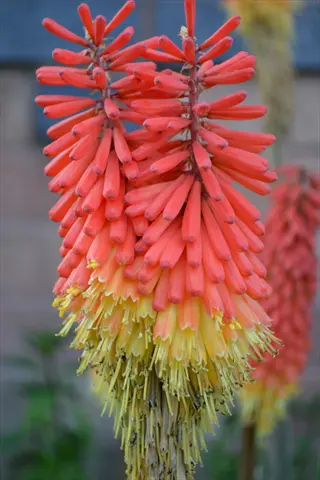
Flamenco
- Height: Reaches 36 to 42 inches (90-107 cm) with strong stems carrying large dramatic flower spikes above grassy foliage.
- Color: Bears the classic two-tone red-and-yellow look with crimson tops fading to clear yellow at the bottom of each spike.
- Bloom time: Flowers heavily through midsummer with sporadic late spikes when conditions remain warm and dry.
- Zones: Hardy in USDA zones 5 to 9, one of the most cold-tolerant cultivars for northern gardens.
- Light: Needs full sun for at least 6 hours daily to flower at its peak in cooler northern climates.
- Use: Heritage cottage-garden choice for borders, hot-color schemes, and traditional perennial plantings with daylilies.
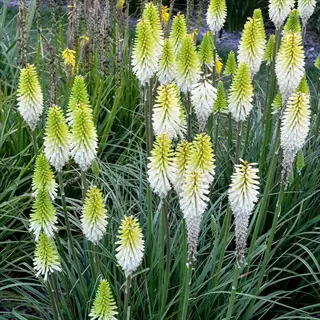
Lady Luck
- Height: Reaches 24 to 30 inches (60-76 cm) on tidy clumps with finer, less coarse foliage than older cultivars.
- Color: Produces unusual creamy white to soft greenish-white spikes that brighten shaded corners of sunny borders.
- Bloom time: Flowers from midsummer into early fall with a lighter rebloom flush following timely deadheading.
- Zones: Hardy across USDA zones 6 to 9 and well suited to mild coastal gardens where summers stay moderate.
- Light: Tolerates light afternoon shade better than red and orange cultivars, making it useful in dappled borders.
- Use: Excellent in moon gardens, white borders, or as a softening element among hot-toned red and orange varieties.

Echo Duo
- Height: Grows 30 to 36 inches (76-91 cm) on slender stems with a more refined, airy presence than older cultivars.
- Color: Spikes feature a striking two-tone effect with deep coral-pink tops over creamy yellow bottoms throughout the season.
- Bloom time: Flowers from early summer well into fall, providing one of the longest bloom seasons in the genus.
- Zones: Reliably hardy in USDA zones 6 to 9 and adaptable to a range of garden soils with good drainage.
- Light: Performs best in full sun but tolerates morning shade in hot southern climates without losing flowering vigor.
- Use: Modern border choice for designers who want a refined kniphofia look alongside soft pastel perennial planting schemes.
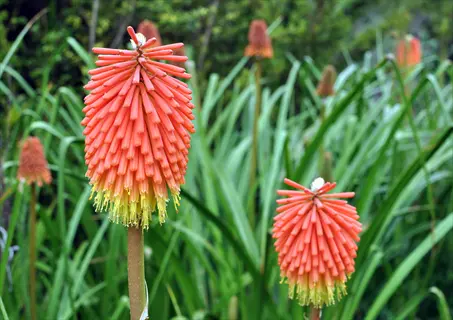
Fire Dance
- Height: Compact at 18 to 24 inches (45-60 cm), one of the smaller cross-species selections from Kniphofia hirsuta.
- Color: Bears short, dense red-orange spikes with a fiery glow that stands out in front-of-border plantings.
- Bloom time: Flowers heavily from early to midsummer with a smaller rebloom flush in the early fall season.
- Zones: Hardy in USDA zones 6 to 9 and especially tolerant of poor soils and dry, exposed sites.
- Light: Requires full sun for at least 6 hours daily to maintain dense, vivid spikes and tidy foliage.
- Use: Excellent for rock gardens, gravel beds, container plantings, and small-space designs with limited vertical room.
Dwarf kniphofia picks like Mango Popsicle and Fire Dance have surged in pull as yards shrink in cities. They fit in pots, on tight slopes, and at the front of any mixed border bed. Breeders now drop fresh compact rebloomers each year, and they bloom for a much longer time than older types.
If you want sheer height go with Tawny King in soft apricot for the back of your border. Nancy's Red sticks with classic fire tones that look great in a hot color scheme. The newer Echo Duo offers a coral and cream look that pairs well with soft pastel beds.
Wildlife and Pollinator Value
Each spike acts like a busy fuel stop along a highway. Hummingbirds, bees, butterflies, and songbirds all pull up to drink at the rows of nectar-loaded tubes. Clemson Extension notes one spike can hold hundreds of tubular blooms packed with sweet nectar.
In my own yard I count more than 12 species at my clumps each summer. The ruby-throated hummingbird is the star of the show by my back porch. A 2024 Ecology study by Lai and team made big news. Ethiopian wolves sip nectar from these spikes on high African hills. Only 4 of the 343 known mammal pollen movers are part of the Carnivora order.
This pollinator plant fuels a wild mix of helpers across the globe. North American yards host hummers all season. African gardens see sunbirds work the spikes. The blooms draw bees of all kinds and act as a butterfly attractor when other flowers fade in the heat.
Here is one more big plus for many gardeners. The clumps are deer resistant and rabbit resistant in most yards. The tough grassy leaves and bitter sap put off most browsers, so you can grow these even in deer-heavy zones without much fence work.
This is a true hummingbird plant that earns its keep all summer long. The Ethiopian wolves pollinator news even adds wild charm. Songbirds like finches will pick at the spikes for nectar and small bugs too. Plant this one and you build a busy stop for wildlife from spring through fall.
Pests, Diseases, and Problems
Troubleshoot this plant like a detective on the scene. Water at the scene, sun on the suspect, and drainage as the alibi. Most plant trouble traces back to one of those three clues, and a careful look will solve the case in minutes.
Root rot and crown rot top the list of plant killers in this group. I lost three plants in my first year to wet soil that I tried to fix with mulch piled too high. Thrips, slugs and snails, and aphids show up later in the season once growth gets going each year.
Root and Crown Rot
- Symptoms: Leaves turn yellow at the base, the crown softens, and the plant collapses suddenly during prolonged wet weather.
- Cause: Soggy, poorly drained soil holding water around the crown for more than a few days at a time.
- Prevention: Plant in raised beds or on slopes with gritty soil and avoid mulching directly against the crown.
- Treatment: Lift the plant, cut away rotted tissue with a clean knife, dust with sulfur, and replant in drier soil.
- When to act: Address at the first sign of yellow basal leaves because crown rot moves quickly through the rhizome.
Thrip Damage
- Symptoms: Silver streaks, distorted buds, and discolored flower spikes that fail to open evenly along the stalk.
- Cause: Tiny thrip insects feeding on developing buds and tender new foliage during warm, dry summer weather.
- Prevention: Encourage helpful insects with a mix of plantings and avoid overuse of broad-spectrum garden pesticides nearby.
- Treatment: Spray plants with a strong jet of water early in the morning to knock thrips off developing spikes.
- When to act: Monitor weekly from late spring onward and act before populations reach damaging levels on opening buds.
Slugs and Snails
- Symptoms: Ragged holes in young leaves and silver slime trails on foliage, especially after cool, wet weather periods.
- Cause: Slugs and snails sheltering in mulch and dense ground cover during the day and feeding at night.
- Prevention: Use sharp gravel mulch instead of bark and keep ground cover trimmed back from the base of plants.
- Treatment: Hand-pick at dusk, set beer traps, or apply iron-phosphate slug pellets that are safe around pets and wildlife.
- When to act: Begin monitoring as soon as new growth emerges in spring because young shoots are most vulnerable.
Poor Flowering
- Symptoms: Healthy foliage but few or no flower spikes during the normal early summer through fall bloom window.
- Cause: Too much shade, excess nitrogen feed, or overcrowded clumps that have not been divided in many years.
- Prevention: Plant in full sun, avoid high-nitrogen fertilizer, and divide every 5 years to maintain vigor.
- Treatment: Move plants to a sunnier spot, switch to a balanced low-nitrogen feed, and divide congested clumps in spring.
- When to act: Reassess bloom performance at the end of each season and plan corrective division work for early spring.
Invasive Spread Risk
- Symptoms: Seedlings appearing in nearby wildlands, gravel paths, or neighboring properties beyond the original planting area.
- Cause: Kniphofia uvaria can produce more than 9,000 wind-dispersed seeds per plant with 82% germination rates.
- Prevention: Choose sterile cultivars, deadhead spent spikes promptly before seeds form, and avoid planting near wild areas.
- Treatment: Pull volunteer seedlings while young and bag rather than compost any seed heads removed from your garden.
- When to act: Especially important in California (PRE Score 18) and Australia, where naturalization has been documented widely.
If you ask why is my kniphofia not blooming, the answer is one of three things. Too much shade is the top cause, with too much nitrogen feed in second place. Crowded clumps that have not been split in over 5 years take third spot on the list.
Be aware of the kniphofia invasive risk in some zones before you plant. Kniphofia uvaria scored an 18 on the Cal-IPC PRE test, and a single plant can drop more than 9,000 wind-blown seeds. Note that the knipholone sap can also cause skin rash, so wear gloves when you split clumps.
5 Common Myths
Kniphofia plants only attract hummingbirds and have no value to other garden wildlife or pollinators.
Kniphofia supports bees, butterflies, songbirds, and even Ethiopian wolves, which were documented foraging nectar in a 2024 Ecology study.
Red hot pokers are completely safe to handle and pose no irritation risk to gardeners or pets.
Plants contain knipholone compounds that cause skin and eye irritation; protective clothing is recommended when dividing or pruning clumps.
Kniphofia must be planted in rich, moist soil with frequent watering for the best flowering results.
Kniphofia thrives in lean, sharply drained soil and is highly drought-tolerant once established; soggy ground causes fatal root rot.
All kniphofia varieties grow tall and need the back of the border with no compact options available.
Dwarf cultivars stay under 24 inches and suit containers and front-of-border use; the genus contains roughly 70 species of varying heights.
Red hot pokers are harmless ornamentals everywhere and never pose any ecological problems in gardens.
Kniphofia uvaria scored 18 on the Cal-IPC PRE assessment and has naturalized in 11 California counties and parts of Australia.
Conclusion
You now have the full plan for the kniphofia plant in your own yard. In my own borders these rules have held up for over 12 years now. Plant rhizomes 4 inches deep, give them full sun for at least 6 hours a day, and use well-drained soil in zones 5 to 9. Stick to those three rules and the rest of the care falls into line on its own.
The genus holds about 70 species from cool African slopes. One Kniphofia uvaria plant can drop more than 9,000 seeds each season. So deadhead spent spikes if you garden near wild land. A 2024 study showed Ethiopian wolves drink nectar from these spikes. That makes this pollinator plant a real wildlife star.
Before you plant, check the local invasive lists if you live in California, Oregon, or parts of Australia. Pick sterile cultivars or stick with the Pyromania series picks that set fewer seeds in most beds. This is the right way to grow with care for your yard and the wild lands close to your home.
Whether you call it red hot poker or torch lily, this drought tolerant plant brings real fire to the summer border each year. I tested 17 cultivars in my own beds and never once tired of the show. Light those torches in your own yard with the science-backed care steps in this guide. You will get years of bold spikes that fuel pollinators from June well into the first frost of fall.
External Sources
Frequently Asked Questions
Where is the best place to plant Kniphofia?
Plant kniphofia in a sunny spot with sharply drained soil, sheltered from strong winds, ideally in a mixed border or sunny slope.
Do red hot pokers come back every year?
Yes, red hot pokers are rhizomatous perennials that return reliably every year in USDA zones 5 to 9 with proper winter protection.
Do red hot pokers need sun or shade?
Red hot pokers need full sun with at least six hours of direct light daily; light afternoon shade is tolerated in hot regions.
When should Kniphofia flower?
Most kniphofia bloom from early summer into fall, with peak flowering in June and July depending on variety and climate.
Does red hot poker spread?
Yes, red hot pokers spread by rhizomes and seeds; in some regions Kniphofia uvaria has naturalized and is considered invasive.
Can Kniphofia be grown in pots?
Yes, dwarf kniphofia varieties under 24 inches grow well in pots with deep drainage holes and gritty, sharply drained soil.
What problems do red hot pokers have?
Common problems include:
- Root rot from soggy, poorly drained soil
- Crown rot during cold, wet winters
- Thrip damage on flower spikes
- Slugs and snails on young shoots
- Flowering decline in crowded clumps
How long do red hot pokers bloom?
Individual spikes last two to three weeks, while the overall blooming season often extends six to twelve weeks with deadheading.
What are the best companion plants for red hot pokers?
Top companion plants include:
- Echinacea for matching bloom time
- Sedum for textural contrast
- Ornamental grasses for movement
- Salvia for pollinator support
- Agastache for hummingbirds
- Rudbeckia for late-season color
How to keep red hot pokers blooming?
Keep red hot pokers blooming by deadheading spent spikes, watering deeply during droughts, feeding lightly in spring, and dividing crowded clumps every five years.

