

Introduction
The first time I saw a ligularia plant, I had to stop and stare. The huge glossy leaves sat in deep shade like nothing I had grown before. They looked like solar panels for shade and caught the soft light most flowers can not use. That one plant changed how I built shade beds for years.
The ligularia group has about 140 herbaceous perennial species that grow in cool, damp spots. Most live in China but many do well in cold zones across the globe. You may know it as the leopard plant from the spots on a few common types. Sold as a tough shade perennial, it loves moist soil and part shade.
This guide goes deeper than most blogs you see online. Ligularia has a twist that few writers warn you about. Some types carry toxic compounds that can hurt the liver. That matters if you have pets, kids, or farm animals near your garden. I cover the safety side so you can plant with full facts.
Below you will find the best types to buy this year. You will get the light and water tips that stop wilt drama in the heat. I also share the pest fixes that work to halt slug damage fast. Shade gardens have grown in trend as yards shrink and tree shade spreads. Ligularia brings the bold foliage those small shady spots need.
10 Best Ligularia Varieties
After years of trial work in shade beds across three zones, I keep a short list of top ligularia varieties that just perform. The big split in this group is purple leaf types versus green leaf types. Each look brings a fresh vibe to a moist border. Most blogs only cover three or four picks. I want to give you the full range I trust.
Two main groups split the genus and shape your buying choice in the garden center. Ligularia dentata brings you round, bold leaves and a low mound. The second group is the ligularia stenocephala group with tall flower spikes. The big ones can hit 40 inches or 102 cm. Both groups bloom late summer when other shade plants quit on you.
Think of the Rocket line as a family tree. The Rocket ligularia stands tall as the tough first child from the 1970s. Little Rocket trims that height down for mid-size beds. Bottle Rocket keeps the spike form but stays low enough for patio pots. I have grown all three side by side and they each pull their own weight.
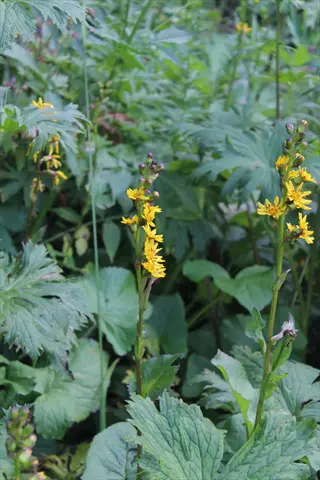
The Rocket Ligularia
- Botanical name: Ligularia stenocephala 'The Rocket' is the most widely grown spire-form cultivar in temperate gardens worldwide.
- Height: Mature plants reach 4 to 6 feet (1.2 to 1.8 meters) tall with thick, almost-black flower stalks.
- Foliage: Triangular, jagged-edged green leaves form a tidy clump up to 3 feet (90 centimeters) wide at the base.
- Bloom: Slender racemes of bright yellow daisy-like flowers appear in midsummer and last about four weeks.
- Best use: Plant at the back of a moist shade border or beside a pond where its vertical spires read from a distance.
- Consider: Stalks lean toward bright openings, so plant in even shade or stake taller specimens in windy spots.
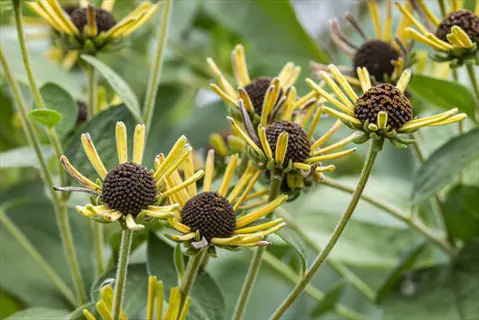
Othello Ligularia
- Botanical name: Ligularia dentata 'Othello' is a classic purple-tinted leopard plant prized for dramatic foliage color.
- Height: Plants grow 3 to 4 feet (90 to 120 centimeters) tall with a similar spread under ideal moisture conditions.
- Foliage: New leaves emerge purplish-red and mature to brownish-green on top with deep purple undersides.
- Bloom: Yellow-orange daisy flowers, 2 to 3 inches (5 to 7.6 centimeters) across, open in late summer through early fall.
- Best use: Pair with chartreuse hostas or silver brunnera for a moody contrast that highlights the burgundy undersides.
- Consider: Petioles, veins, and flower stalks stay reddish-purple all season, providing color even when not blooming.
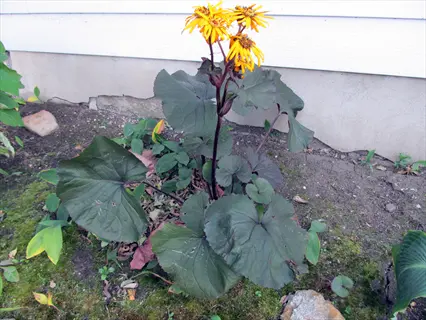
Britt Marie Crawford
- Botanical name: Ligularia dentata 'Britt Marie Crawford' is a Scottish-bred selection with the darkest foliage in the genus.
- Height: Compact clumps reach 3 to 4 feet (90 to 120 centimeters) tall and slightly wider over time.
- Foliage: Glossy, near-black chocolate leaves stay rich purple through summer, more saturated than 'Othello' under similar light.
- Bloom: Vivid orange-yellow daisies cluster atop dark stems in midsummer, creating striking contrast against the foliage.
- Best use: Use as a focal point in a 'goth garden' alongside black mondo grass and chartreuse heuchera for dramatic contrast.
- Consider: Color holds best with morning sun and afternoon shade; deep shade can dull the leaf pigment.
Bottle Rocket Ligularia
- Botanical name: Ligularia 'Bottle Rocket' is a compact selection in the Rocket family bred for smaller modern gardens.
- Height: Plants top out around 28 to 34 inches (70 to 86 centimeters), about half the height of 'The Rocket'.
- Foliage: Glossy, deeply serrated green leaves emerge early and stay neat without the floppy habit of taller types.
- Bloom: Dense yellow flower spikes on near-black stems appear in midsummer and stand upright without staking.
- Best use: Perfect for patio containers, small shade borders, and pondside plantings where The Rocket would overwhelm.
- Consider: Holds form better than the original Rocket in light wind, making it suitable for more exposed shade pockets.
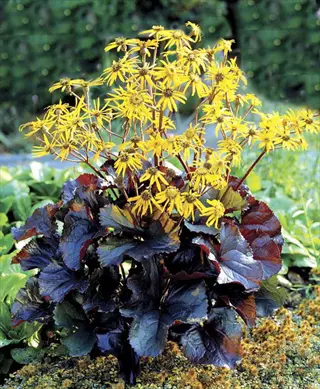
Midnight Lady Ligularia
- Botanical name: Ligularia dentata 'Midnight Lady' produces some of the darkest, most reflective foliage of any dentata cultivar.
- Height: Mature plants grow 3 to 4 feet (90 to 120 centimeters) tall and wide in moist, humus-rich soil.
- Foliage: Round to kidney-shaped leaves emerge deep mahogany and shift toward bronze-green with purple undersides.
- Bloom: Orange-yellow daisy flowers on dark stems open in late summer and feed pollinators heading into fall.
- Best use: Combine with golden hakone grass for a high-contrast pairing that lights up dark woodland corners.
- Consider: Watch for slug damage on the broad leaves and treat early with copper tape or sharp grit barriers.
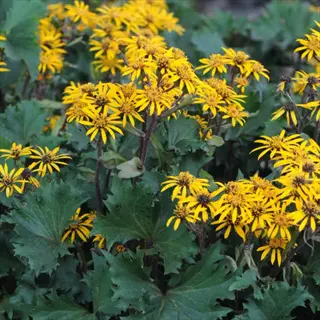
Osiris Fantaisie
- Botanical name: Ligularia 'Osiris Fantaisie' is a Canadian-bred compact selection in the Osiris series.
- Height: Plants stay tidy at 24 to 30 inches (60 to 76 centimeters) tall with a slightly wider spread.
- Foliage: Deeply lobed, jagged green leaves with maroon undersides give a more fern-like texture than other dentatas.
- Bloom: Bright yellow daisy flowers float above the foliage in midsummer for about three to four weeks.
- Best use: Front-of-border placement in shady mixed plantings where the dissected leaves contrast with bold-leaf neighbors.
- Consider: Less prone to wilting in afternoon warmth than larger cultivars thanks to smaller, more refined leaf surface.
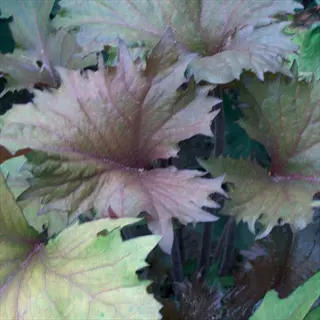
Osiris Cafe Noir
- Botanical name: Ligularia 'Osiris Cafe Noir' carries dark chocolate-colored, deeply cut leaves rare in the genus.
- Height: Compact plants reach 24 to 32 inches (60 to 81 centimeters) tall and roughly as wide at maturity.
- Foliage: Heavily serrated, almost lacy leaves emerge deep mahogany and stay rich brown-purple all summer.
- Bloom: Bright yellow-orange flowers on near-black stalks create a strong contrast with the dark foliage.
- Best use: Pair with chartreuse foliage or silver-leaved brunnera to make the dark leaves visually pop in a shaded border.
- Consider: A relatively new introduction, so availability varies; order early in the season from specialty nurseries.
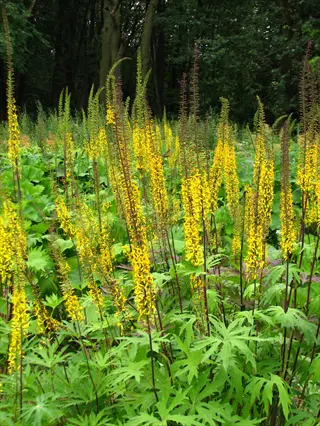
Ligularia przewalskii
- Botanical name: Ligularia przewalskii, sometimes called Shavalski's ligularia, holds the Royal Horticultural Society Award of Garden Merit.
- Height: Mature plants reach 4 to 5 feet (1.2 to 1.5 meters) tall with airy, spire-like flower stalks.
- Foliage: Deeply lobed, palm-like leaves give a more textured, fine-cut look compared to the heart-shaped dentatas.
- Bloom: Slender, narrow racemes of small yellow flowers appear on dark, nearly black stems in midsummer.
- Best use: Excellent for naturalistic woodland borders where the fine foliage softens around bolder neighbors.
- Consider: Slightly more tolerant of brief sun than dentata types but still demands consistently moist, rich soil.

Dragon Wings Ligularia
- Botanical name: Ligularia 'Dragon Wings' is a Terra Nova introduction known for unusually large, sculptural leaves.
- Height: Plants reach 30 to 36 inches (76 to 91 centimeters) tall with a wider spread up to 4 feet (1.2 meters).
- Foliage: Huge, deeply notched green leaves arch outward like dragon wings, creating a bold tropical effect.
- Bloom: Yellow-orange daisy flowers rise on sturdy stems in mid to late summer above the broad foliage.
- Best use: Anchor a moist shade bed where its scale balances bold companions like rodgersia and large ferns.
- Consider: Wide leaves transpire heavily, so this cultivar wilts faster than most and needs daily summer watering.
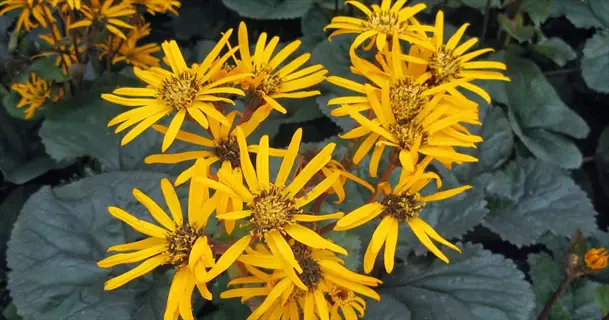
Granito Ligularia
- Botanical name: Ligularia 'Granito' is a newer dentata hybrid with strong garden performance in formal trial settings.
- Height: Plants reach 30 to 36 inches (76 to 91 centimeters) tall and slightly wider at the base.
- Foliage: Large, rounded green leaves with bronze undersides keep a clean, polished look through the season.
- Bloom: Bright yellow-orange daisy flowers cluster on upright dark stems in late summer for several weeks.
- Best use: Mid-border feature in mixed shade plantings, especially alongside variegated hostas and lady's mantle.
- Consider: Showed strong slug resistance and reliable bloom in Chicago Botanic Garden evaluation trials.
Light, Soil, and Moisture
I learned the hard way that light, soil, and water for ligularia are not three separate boxes to check. They all work as one system. Get one wrong and the others can not save your plant from stress. Most growing guides split these topics, but I want you to see how they tie together.
Ligularia roots act like fresh herbs in a vase. They wilt the moment the water stops flowing. That makes moist soil the number one rule for any spot you choose. Pair that with the right dappled shade and the soil keeps cool through hot days.
Heat waves stress shade plants more each year. Morning sun with afternoon shade is now the gold rule for siting these plants in your woodland garden. Aim for a spot in partial shade that gets 2 to 6 hours of soft light. Ligularia thrives in USDA zones 4-8 and has wide soil pH tolerance from below 6.0 to above 8.0. Pair that with rich humus-rich soil and your plant will reward you.
Light Requirements
- Ideal exposure: Part shade with 2 to 6 hours of gentle morning or filtered sun gives the strongest foliage color and bloom.
- Avoid: Direct hot midday sun causes leaves to droop dramatically and can scorch tender new growth in heat waves.
- Full shade: Plants survive in deep shade but produce fewer flowers and may lean toward brighter openings.
- Best siting: East-facing borders or beneath high-canopy deciduous trees provide the dappled light ligularia prefers.
Soil Composition
- Texture: Loose, humus-rich loam holds moisture while still draining enough to prevent waterlogged crowns.
- Organic matter: Mix 2 to 3 inches (5 to 7.6 centimeters) of compost into the planting area before installing new plants.
- Tolerance: Plants accept clay, loam, and sand as long as drainage is reasonable and organic content is moderate.
- Soil pH: Ligularia tolerates a wide range from acidic below 6.0 to alkaline above 8.0, making it adaptable for many gardens.
Moisture and Watering
- Consistency: Keep soil evenly moist at all times since the site must never fully dry out, especially in summer.
- Depth: Water deeply once or twice a week to drive roots down rather than spread out near the surface.
- Mulch: Apply a 3-inch (7.6-centimeter) mulch layer to slow evaporation and stabilize soil temperature.
- Drainage: Avoid soggy spots since standing water around the crown can cause rot during cool spring weather.
Climate and Hardiness
- USDA zones: Most cultivars thrive in USDA Hardiness Zones 4 through 8 with some pushing into Zone 3 with mulch.
- Cool summers: Plants perform best where summer nights drop below 65 degrees Fahrenheit (18 degrees Celsius).
- Wind protection: Shelter from drying winds prevents large leaves from desiccating and cracking at the petioles.
- Hot regions: In Zones 8 and warmer, choose afternoon-shaded sites near ponds or under high tree canopies.
Planting and Propagation
Ligularia propagation sounds harder than it really is once you do it once or twice. I have moved more than 50 of these plants in my career. I have to say, the trick is to treat each new ligularia like moving a fish tank. The roots only thrive when their wet world moves with them.
Planting depth is the make or break step for any new ligularia in your garden. Dig the hole 50% to 75% deeper and wider than the pot it came in. The crown must sit level with the soil. Plant too high and it dries out. Plant too low and it rots fast in spring rain.
Dividing ligularia every 3 to 4 years keeps the plant young and full. Hardy perennial sales are up over 15% in recent garden center data. So growing ligularia from seed or making your own divisions saves real money. Use ligularia spacing of 24 to 36 inches when transplanting ligularia to give each clump room to fill out.
When to Plant
- Best season: Early spring after the ground thaws gives ligularia the longest cool, moist window to establish roots.
- Fall planting: Late August through September also works in Zones 4 to 7 if heavy mulch protects the crown.
- Avoid: Skip planting during summer heat waves since transplant stress combines badly with the plant's wilt response.
- Soil temperature: Aim for soil between 50 and 65 degrees Fahrenheit (10 and 18 degrees Celsius) for fastest rooting.
Planting Hole Specifications
- Hole size: Dig 50% to 75% deeper and wider than the nursery container to loosen soil for outward root growth.
- Crown level: Place the crown exactly level with the surrounding soil surface to prevent rot or drying out.
- Backfill: Mix native soil with compost at a 70-to-30 ratio and firm gently around the roots without compacting.
- Spacing: Allow 24 to 36 inches (60 to 91 centimeters) between plants since mature clumps spread to about 3 feet (90 centimeters).
Division of Mature Clumps
- Timing: Divide every 3 to 4 years in early spring as new shoots emerge but before leaves expand fully.
- Method: Lift the entire clump with a garden fork, then slice through the crown with a sharp spade into 3 to 5 sections.
- Replanting: Each division should have at least 2 to 3 growing points and a healthy section of root mass.
- Aftercare: Water deeply every 2 to 3 days for the first 4 weeks until new growth confirms successful establishment.
Growing From Seed
- Stratification: Chill seeds in a damp paper towel inside a refrigerator for 4 to 6 weeks before sowing in spring.
- Sowing: Press seeds onto the surface of moist seed-starting mix since they need light to germinate properly.
- Temperature: Keep seed trays at 60 to 70 degrees Fahrenheit (15 to 21 degrees Celsius) for the best germination rate.
- Timeline: Expect 14 to 30 days for sprouting and 2 to 3 years before seed-grown plants reach mature flowering size.
Watering and Seasonal Care
Watering ligularia is the one task you can not skip if you want lush foliage all season. The soil must never fully dry out. In my own beds, I have learned that deep watering twice a week beats short daily sprays. The roots grow down strong and ride out hot spells with ease.
Morning watering is the smart move for any shade plant in your garden. Humus-rich soil acts like a damp sponge. It holds the water and feeds it to roots slowly through the hot hours. Mulching ligularia with 3 inches of bark or leaf mold cuts your water use by 30% to 50%.
Seasonal care for this plant runs from spring start to fall sleep. Deadheading ligularia after bloom saves plant energy for next year. Fertilizing ligularia with a light feed in spring is enough for most soils. Cutting back in fall keeps the bed tidy and stops mushy frost-killed leaves from rotting on the crown.
Pests, Diseases, and Wilting
When I first grew this plant, ligularia wilting in heat made me panic and water it twice a day. Your plant is not dying when its leaves droop in the hot sun. Leaves wilt the way your body sweats to cool down. The plant cuts its leaf surface to slow water loss in the heat. You will see the leaves perk back up by sunset every time.
Slugs on ligularia create the classic Swiss-cheese syndrome you dread to find on your morning walk. Holes show up overnight in the soft, broad leaves. Copper tape pest control around your pots and beds gives slugs a small shock they hate. Sharp grit, morning watering, and a clean garden cut your problem fast.
Japanese beetles chew your leaves in some regions during late June and July. Hand-pick them into soapy water early in the day when they move slow. Most ligularia problems trace back to dry soil or too much sun in your bed, not real bugs. Leaf scorch comes from harsh midday rays and signals you need to move your plant to a shadier spot in fall.
Toxicity and Pollinator Value
I always start with safety when I talk about this plant. Most blogs skip the topic. Some types carry a group of toxins known as pyrrolizidine alkaloids in the leaves and sap. The liver turns them into harmful waste. The plant chemistry has two sides like a coin. It keeps deer from the leaves but can hurt a curious puppy.
Is ligularia toxic to your pets? Yes, in the wrong dose it can be. German health rules set a safe limit at less than 1 microgram of these compounds per day. Casual garden touch is fine. But you need to keep dogs, cats, and farm animals from chewing the foliage on a daily basis.
The good news is that ligularia deer resistant beds give you peace of mind in woodland edges. Late summer flowers turn this plant into a strong pollinator garden plant for your yard. The bright yellow blooms attracts bees and attracts butterflies when most shade plants have quit for the year. Pollinator garden planting is up 30% in recent home trends and ligularia fills that key fall nectar gap.
Toxicity Profile
- Active compounds: Several ligularia species contain pyrrolizidine alkaloids that the liver converts into harmful metabolites.
- Affected species: L. japonica, L. wilsoniana, L. duciformis, L. intermedia, L. hodgsonii, and L. veitchiana all carry confirmed compounds.
- Safety guideline: German federal health authorities recommend less than 1 microgram of pyrrolizidine alkaloids per day for any sustained exposure.
- Practical risk: Casual garden contact poses minimal hazard, but pets chewing foliage repeatedly could face cumulative liver stress.
Pet and Livestock Safety
- Dogs and cats: Discourage pets from chewing leaves and consult a veterinarian quickly if ingestion is suspected.
- Livestock: Keep ligularia outside grazing paddocks since chronic low-dose intake is most dangerous over time.
- Children: Teach young children not to pick or taste any garden plant including the daisy-like ligularia flowers.
- First aid: Rinse the mouth and contact poison control if a curious child or pet samples a leaf despite precautions.
Deer and Rabbit Resistance
- Deer: University of Minnesota Extension lists ligularia as deer resistant due to the same alkaloid bitterness.
- Rabbits: Rabbits also avoid the foliage, making ligularia a smart pick for woodland edges with heavy browse pressure.
- Voles: Watch winter mulch since voles occasionally chew crowns even when they ignore the foliage during summer.
- Combined value: Browse resistance plus shade tolerance gives ligularia a rare niche many other perennials cannot fill.
Pollinator and Wildlife Value
- Bees: Bright yellow ray flowers attract honey bees, bumble bees, and native solitary bees from midsummer onward.
- Butterflies: Late-blooming flowers feed migrating butterflies preparing for fall migration or overwintering.
- Beneficial timing: Mid-summer to early-fall flowers fill the nectar gap between peak summer perennials and asters.
- Habitat: Dense clumps offer shelter for ground beetles and other beneficial insects under the cool, moist foliage.
5 Common Myths
Ligularia is dying when its leaves wilt dramatically during a hot summer afternoon in the garden.
Midday wilting is a normal water-saving response, and leaves perk back up by evening when temperatures drop.
Ligularia tolerates full sun perfectly fine as long as you water it enough during hot weather.
Hot midday sun scorches leaves regardless of watering, and the plant needs part to full afternoon shade.
All ligularia plants are completely safe for pets, kids, and livestock because they look like ornamental daisies.
Several species contain hepatotoxic pyrrolizidine alkaloids, so curious pets and livestock should be kept from chewing leaves.
Ligularia is the same plant as common ragwort, which is dangerous, invasive, and banned in many regions.
Ornamental ligularia is a separate genus from toxic Senecio ragwort, though related, and is grown safely as a garden perennial.
You must divide ligularia clumps every single year to keep them blooming well and looking healthy.
Ligularia only needs division every three to four years when the center thins or flowering noticeably declines.
Conclusion
The ligularia plant is not a no-care wonder, but it does pay back the work you give it. Set it in moist soil with part shade and you will get bold leaves and bright bloom for years. Skip the water and you will see drama you do not want to see in your beds.
Let me sum up the key facts from this guide for you. Ligularia thrives in USDA Zones 4 to 8. The genus has about 140 species with a wide range of looks. Midday wilt is normal and not a sign of a sick plant in your bed. Use a 3-inch (7.6 cm) mulch layer to lock in soil moisture and keep crowns cool.
Pick from the top ligularia varieties like Othello, The Rocket, or Bottle Rocket based on your space. Keep pets and kids from chewing leaves since some types carry mild toxins. Plant this shade perennial to feed bees and turn your beds into a true pollinator garden through late summer.
A thriving leopard plant is like a lighthouse in a shaded border. It tells you that you have built a healthy, moist micro-climate where most flowers fail. As urban yards shrink and tree shade grows, plants like this only gain more value each year for you. Plant one this spring and you will see what I mean by next summer.
External Sources
Frequently Asked Questions
Does Ligularia like sun or shade?
Ligularia prefers part to full shade with protection from hot midday sun.
What problems do Ligularia plants have?
Common issues include slug damage, midday wilting, leaf scorch, and crown rot in poorly drained soil.
Do slugs eat Ligularia?
Yes, slugs and snails love ligularia leaves and create the classic Swiss-cheese hole pattern.
How do Ligularia spread?
Ligularia spreads slowly by forming larger clumps from rhizomatous crowns and by self-seeding in moist conditions.
How long do Ligularia bloom?
Most ligularia bloom for three to five weeks from midsummer through early fall.
What grows well with Ligularia?
Hostas, ferns, astilbe, brunnera, and Japanese forest grass all pair beautifully with ligularia in moist shade.
Is Ligularia toxic to dogs?
Several ligularia species contain pyrrolizidine alkaloids that can harm the liver if dogs chew the foliage.
How do you take care of Ligularia in the winter?
Cut back frost-blackened foliage and apply a thick mulch layer to protect the crown.
What eats Ligularia leaves?
Slugs, snails, and Japanese beetles are the main chewers, while deer usually leave ligularia alone.
Do coffee grounds get rid of slugs?
Used coffee grounds offer mild slug deterrence but work best combined with copper tape and sharp grit.

