

Introduction
You hold a bottle of bright blue feed in the garden aisle. Is the liquid fertilizer plants drink up worth more than a cheap bag of granules? The honest answer is in the science, not the label. Liquid and granular feeds give plants the same total nutrients at a given rate. So the real choice is about speed, not how much you feed.
The experts at Michigan State put it plainly. Plants cannot tell a granule from a drop. So liquid plant fertilizer is not richer than dry feed. It just hands those nutrients to the roots right away. That is why people grab it for a quick boost.
So what is liquid fertilizer in plain terms? It is plant nutrients mixed into water. The same building blocks live in dry feed too. The water just lets them move fast. This fast-acting fertilizer shines on seedlings, mid-season boosts, pots, and houseplants. But quick release cuts both ways. It washes out sooner, and it burns plants when you pour it on too strong.
This guide on liquid fertilizer for plants gives you the real numbers. You get a dilution ratio, a timing window, and a rate you can copy at home. It all leans on university extension data. You get strengths to mix, the right months to feed, and clear safety limits.
Up next you will see how liquid feed works and a clear verdict on liquid versus granular. You will learn the real types you can buy or brew. Then you get the right way to apply it, how to feed by plant type, and how to fix over-feeding fast.
How Liquid Fertilizer Works
How liquid fertilizer works comes down to one simple idea. The plant food is already dissolved in water before it ever reaches the soil. That means roots can pull in the nutrients the moment the solution soaks in.
A water-soluble fertilizer carries the same NPK as a dry granule. You get the same nitrogen, phosphorus, and potassium either way. Michigan State University Extension says each drop holds the same nutrients. So a well-mixed batch feeds your plants in even amounts, not in hot spots.
Think of it like sugar in your coffee. Stir the sugar into water and it spreads through the cup right away. Drop in a sugar cube and it just sits there until it dissolves. A granule works like that cube. It has to break down in the soil first, while a nutrient solution is ready the second it touches the root zone.
This is why liquid feed counts as quick-release. It gives your plants immediately available nutrients the moment you water it in. That makes it a strong starter and a handy mid-season boost. Granular tends to release more slowly over weeks. One detail surprises a lot of gardeners. Less-mobile nutrients like phosphorus reach roots better in a soil-water solution than they do from a solid granule.
Delivers nutrients in a dissolved form
- Same nutrients, faster access: Liquid feed carries the same nitrogen, phosphorus, and potassium as dry fertilizer, only already dissolved in water so roots can take them up right away.
- Even distribution: Because the nutrient content is identical in every drop, a properly mixed liquid spreads nutrients uniformly rather than in concentrated spots.
- Better phosphorus movement: Less-mobile nutrients such as phosphorus reach roots more readily from a soil-water solution than from a solid granule.
Acts as a quick-release feed
- Immediate availability: Dissolved nutrients are available to roots almost as soon as they reach the soil, making liquid feed a fast way to respond to a hungry plant.
- Ideal as a starter: Liquid is often preferred as a starter fertilizer because it carries a lower salt-burn risk than a concentrated granular band near young roots.
- Short-lived effect: Because it is quick-release, a single dose does not last long, so feeding has to be repeated through the growing season.
Supports the root uptake pathway
- Roots do the work: The root system is the main route plants use to take up nutrients, so most liquid feed is applied to the soil rather than the leaves.
- Solution over suspension: Solution-type liquids stay fully dissolved, while suspension types hold extra nutrients with the help of suspending agents and must be used quickly.
- Reaches the root zone: Watering a diluted liquid into the soil places nutrients exactly where roots can absorb them most efficiently.
Matches the job to the plant
- Containers and houseplants: Quick-release feeding suits potted and indoor plants, where soil volume is small and nutrients leach out with each watering.
- Mid-season boosts: A diluted liquid is a practical way to give an established plant a controlled lift during active growth.
- Precision feeding: Because you mix it yourself, you can adjust strength to the plant and stage, from a gentle houseplant dose to a stronger vegetable feed.
Here is the key takeaway. Liquid is a delivery method, not a stronger plant food. Extension scientists treat the nutrient match as settled. You feed faster and with more control, but you are not handing your plants extra fuel per dose.
Theoretically, plants can't tell the difference between nutrients supplied by the granular and liquid fertilizers, but they both have advantages depending on the farming application.
Liquid vs Granular Fertilizer
The liquid vs granular fertilizer debate sounds like it should have a clear winner. It does not. Mississippi State Extension says it plainly. Properly applied, fluid fertilizers are no more or less efficient than dry ones. Most fluid products hold the same basic stuff as dry products, just dissolved in water.
So which fertilizer is better comes down to the job, not the bag. Liquid feeds reach roots almost at once. That makes them great for a quick fix or a starter near young plants. Granular feeds your soil over weeks. It also gives you true slow release options that liquids cannot match.
Cost and storage settle a lot of choices too. Michigan State Extension notes that granular is cheaper in bulk and easier to store on a shelf for months. Liquids are pricier per pound of nutrients, and they can settle out or salt out in cold storage, which clogs your sprayer and wastes the bottle. Here is the trade-off side by side.
- Quick-release, so nutrients are available to roots almost immediately.
- Lower salt-burn risk as a starter near young roots.
- Easy to dilute and apply evenly to containers and houseplants.
- Must be reapplied often, typically every one to four weeks in active growth.
- Can settle out or salt out during cold storage.
- Slower, longer-lasting feeding, including true slow-release coated products.
- Cheaper in bulk and simpler to store over time.
- Concentrated bands can be hot, so roots may steer away from them.
- Less convenient for precise small doses on potted plants.
- Applied less often, on a scale of weeks rather than days.
Many gardeners get the best of both by laying down a slow-release granular base for steady feeding, then using diluted liquid feed for quick mid-season boosts when plants need a lift.
Match the tool to the task and you stop chasing a winner. Granular is the cost-effective base for a big garden bed or a lawn you feed a few times a year. Reach for liquid when you want fast results, even feeding in pots, or a gentle starter for seedlings.
So when to use liquid fertilizer? Use it for houseplants and containers, for a quick green-up mid-season, and any time a plant needs nutrients now rather than next month. Pair a granular base with liquid boosts and you cover both the slow burn and the fast lift.
Types of Liquid Fertilizer
Your first choice is organic or synthetic. A synthetic feed gives you a precise NPK ratio and acts fast. You know the exact dose of nitrogen, phosphorus, and potassium your plants get. An organic feed works the other way. It feeds with a gentle touch and adds a smaller, slower supply that builds over time.
There is a second split, and it changes how you store your feed. Fluid feeds come in two forms, per Mississippi State Extension. There are solutions and there are suspensions. A solution is fully dissolved. But it stays low in potash, because no more than about 11% potash will dissolve in water. Want a higher-potash fluid? That one is a suspension, and you have to use it the same day you mix it before the nutrients settle out.
Inside those groups sit the everyday types of liquid fertilizer you reach for. On the synthetic side you have all-purpose feeds with a balanced ratio. On the organic side, the common picks are fish emulsion, seaweed extract, and compost tea. Each one feeds in its own way. So the right one depends on the plant and the job in front of you.
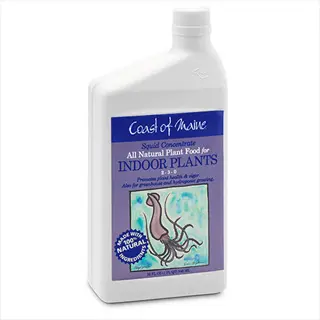
All-Purpose Synthetic Liquid Feed
- What it is: A water-soluble synthetic concentrate with a balanced or labeled NPK ratio that you dilute before applying to soil or as a foliar spray.
- Speed: It is fast-acting and gives a precise, predictable dose of nitrogen, phosphorus, and potassium for active growth.
- Best for: General feeding of containers, houseplants, and garden beds where you want a controlled, repeatable nutrient ratio.
- Strength: For houseplants, general all-purpose products are usually diluted to half or quarter strength before use.
- Trade-off: It must be reapplied regularly because the quick-release nutrients do not last long in the soil.
- Consider: Always follow label dilution to avoid the salt buildup and burn that come with over-concentration.
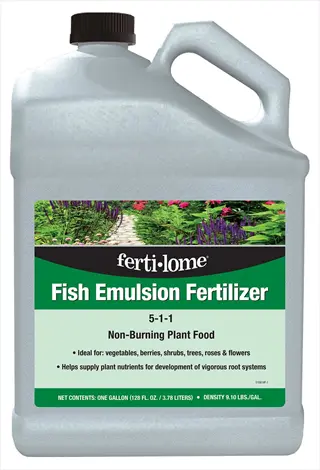
Fish Emulsion
- What it is: An organic liquid made from processed fish, supplying nitrogen along with a range of secondary nutrients.
- Speed: It feeds reasonably quickly for an organic product and supports leafy, vegetative growth.
- Best for: Vegetables and leafy plants that benefit from a nitrogen-forward organic feed during active growth.
- Application: It is typically diluted in water and applied as a soil drench so roots can take up the nutrients.
- Odor: It can have a strong smell, which is worth noting for indoor use.
- Consider: Dilute it properly, since even organic feeds can burn plants when applied too strong.
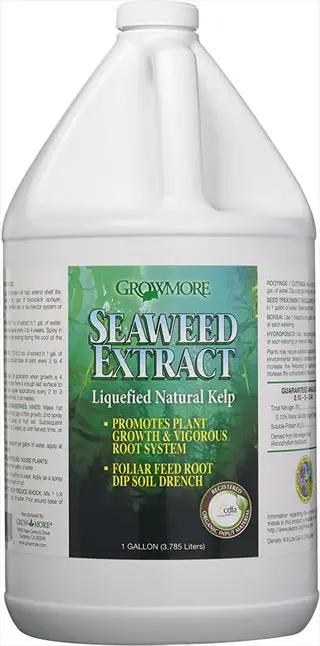
Seaweed and Kelp Extract
- What it is: An organic liquid derived from seaweed, valued more for trace elements and plant-supporting compounds than for high NPK numbers.
- Nutrients: It supplies micronutrients and is often used to support overall plant vigor rather than to drive heavy growth.
- Best for: A gentle, all-round supplement for houseplants and garden plants during the growing season.
- Application: It mixes easily into water for a soil drench and is generally mild when diluted as directed.
- Pairing: It is often combined with a nitrogen source like fish emulsion for a more complete feed.
- Consider: Treat it as a supplement rather than a sole nutrient source for heavy feeders.
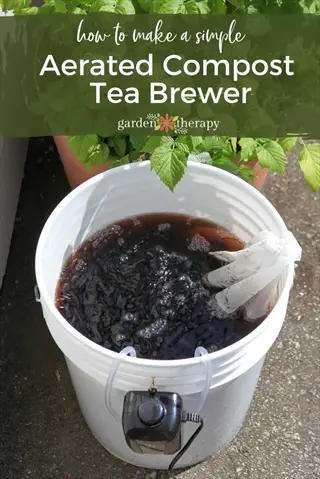
Compost Tea
- What it is: A homemade liquid made by steeping finished compost in water to draw out soluble nutrients.
- Nutrients: It provides a mild, broad nutrient supply rather than a concentrated NPK dose.
- Best for: Gardeners who want a low-cost, do-it-yourself feed for beds and containers.
- Preparation: Some recipes aerate the tea with an air bubbler while it steeps before straining and applying.
- Application: Apply it diluted as a soil drench so the nutrients reach the root zone.
- Consider: Strength varies by batch, so dilute and observe how plants respond rather than assuming it is always gentle.
Pick a synthetic liquid fertilizer when you need a fast, exact dose. It works well for feeding houseplants on a set schedule. Reach for an organic liquid fertilizer when you want a gentle feed that builds up the soil over time. Many gardeners use both. That mix often gives you the steadiest growth.
How to Apply It Correctly
Sunday morning I mix a fresh dose at the south-facing kitchen window, where the light shows me the cap lines on the bottle. I pour the diluted feed straight at the base of the pothos and let it soak into the pot. The leaves stay dry. The roots get the meal.
That base-of-the-plant pour is the whole trick to knowing how to use liquid fertilizer well. A plant takes up most of its nutrients through its roots, so a soil drench does the real work. Misting the leaves looks productive, but it feeds your plant far less than the soil does.
Penn State Extension puts the science plainly. The major route for nutrient uptake is the root system, not the leaves. The amount a leaf can pull in is small and short-lived, so it can't meet what your plant needs over a season. Treat the soil as your main feeding path and the leaves as a backup.
The method itself stays simple once you have it down. Get the dilution right, time it to active growth, and pour it into the root zone on a steady schedule. Here is the order I follow every time.
Measure the concentrate and water to the labeled ratio. For houseplants using a general all-purpose feed, mix to half or quarter strength so the dose stays gentle and won't burn the roots.
Apply during the active growing season when plants can actually use the nutrients. Skip dormant or stressed plants, since feeding a plant that isn't growing just leaves salt behind in the soil.
Pour the diluted feed at the base of the plant so it soaks into the root zone. Roots are the main pathway for uptake, which is why this soil drench does most of the feeding.
Reserve diluted foliar spray for a confirmed mid-season deficiency. Apply it in the cooler parts of the day, so the diluted feed doesn't scorch the leaves in strong sun.
Liquid feed is quick-release, so it doesn't linger. Repeat at the product's recommended interval instead of expecting one dose to last the whole season.
Nutrients absorbed through leaves are small in amount and short-lived, so routine foliar feeding is not recommended without a confirmed deficiency, and undiluted feed can burn foliage.
Bigger setups use the same idea through fertigation. The diluted feed runs in with the watering. So whether you pour from a can or run it through a line, the goal stays the same. Get the application timing right and send the food to the roots, not the leaves.
Feeding by Plant Type
The same bottle of liquid feed should never hit every plant at the same dose. A tomato plant in full fruit eats far more than a pothos on your windowsill. Match the strength and the feeding schedule to the plant, and you skip most of the problems people blame on the fertilizer itself.
Indoor plants need the most restraint. Iowa State and University of Maryland both say to dilute an all-purpose feed for houseplants. Cut it to half strength or even quarter strength. Feed them only during active growth, roughly March through September. The frequency swings wide by product. Some bottles want a dose every two weeks, while a slow-release type runs once every three to four months.
Step outside and the math flips. Vegetables are heavy feeders that take a balanced liquid at label strength through the season. For the best liquid fertilizer for tomatoes, switch to a feed with more phosphorus and potassium once fruit sets. That is when the plant pulls hardest. Lawns get the label strength too, just spread evenly across a much larger area while the grass grows.
Pro growers dial this in even tighter. They measure greenhouse rates in parts per million of nitrogen. A target of 200 ppm nitrogen is a standard constant-feed rate, and they hit it at most waterings. That one number shows how exact feeding can get once you treat it like a recipe.
When using general, all-purpose fertilizers, mix them at half or quarter the strength outlined in the instructions because houseplants grow slower than the outdoor plants the instructions on the fertilizer label are written for.
That advice is the whole reason fertilizer for indoor plants trips so many people up. The label numbers were written for outdoor plants in full sun, not a slow houseplant in a pot. Cut the dose, feed only in the growing months, and your plants get just enough to push new growth without the salt buildup that comes from overfeeding.
Over-Feeding and Safety
Two weeks after I gave my windowsill pothos a too-strong dose, the leaf margins turned brown and crusty to the touch. I had mixed the feed at full label strength instead of cutting it down. So I carried the pot to the kitchen sink and ran water through it for a few minutes, then set it back at the south-facing window. New leaves came in green and healthy within a month.
Those crusty edges are one of the clearest signs of over fertilization in any potted plant. Most fertilizers can burn plants if you do not dilute them enough, and the damage shows up first along the leaf tips and margins.
Fertilizer burn happens when too much feed leaves salt behind in the soil. Plant experts at the University of Maryland warn that this leads to salt buildup and leggy growth. So your plant gets weak, thin stems. You may also spot a white crust on the soil and brown leaf margins on older leaves.
Most fertilizers can injure or burn plants if they are not sufficiently diluted, and over-applying nutrients can cause toxicity, so always mix to label strength or weaker for sensitive plants.
The good news is that an over-fed plant can bounce back. To flush soil, set the pot in a sink and run plain water through it slowly for a few minutes. The water washes out the excess salts and gives the roots a clean start. Hold off on feeding for a month, then resume at half strength so you do not repeat the same mistake.
5 Common Myths
Liquid fertilizer feeds plants better than granular because plants absorb the nutrients more completely from a liquid form.
Both forms supply the same total nutrients for a given rate. Liquid is just faster to act, while granular lasts longer and resists salt buildup.
Spraying fertilizer on leaves, called foliar feeding, is the most effective way to feed any plant its full nutrient needs.
Roots are the main nutrient pathway. Leaf-absorbed amounts are small and short-lived, so foliar feeding only suits confirmed mid-season deficiencies.
If a little liquid fertilizer helps plants grow, then feeding more often or at full strength will help them grow even faster.
Excess fertilizer causes salt buildup, leggy growth, and burned leaf margins. Diluting to half or quarter strength protects most houseplants.
You can keep feeding houseplants liquid fertilizer all year round because indoor plants grow steadily through every season.
Feed indoor plants only during active growth, roughly March through September. Skip winter, when reduced light and temperature slow growth.
Homemade liquid fertilizers like compost tea are always gentle, so you can pour them on plants at any concentration safely.
Even homemade feeds can burn plants if too strong. Most fertilizers need sufficient dilution, and over-applied nutrients can cause toxicity.
Conclusion
There is no single winner between liquid and granular feed. The right pick comes down to fit. Liquid and granular fertilizers carry the same total nutrients at the same rate. So one does not feed your plants better than the other. What sets liquid apart is speed, ease, and precision in pots. That control is why liquid fertilizer for plants works so well in containers and on houseplants.
Keep the practical rules close as you start feeding plants. Mix general fertilizers to half strength or even quarter strength for houseplants. They grow slower than the outdoor plants the label was written for. Feed only during active growth, which runs from about March through September for most indoor plants. And if a plant gets too much feed, flush the soil with plain water to wash the extra salts out.
A simple fertilizer schedule turns all of this into a habit. Watch for the salt buildup and leaf burn signs covered earlier. Ease off when growth slows in winter. Lean on extension-backed rates, not the bold claims on a marketing label. Do that, and you will keep healthy plants all season without guessing at the numbers.
Glossary
- Fertigation
- Delivering liquid fertilizer to plants through an irrigation or watering system.
- Foliar feeding
- Applying diluted fertilizer directly to a plant's leaves so a small amount of nutrients is absorbed through them.
- NPK
- The three numbers on a fertilizer label showing its percentages of nitrogen, phosphorus, and potassium.
- Parts per million of nitrogen (ppm N)
- A way of measuring fertilizer strength by the concentration of nitrogen in the final water solution applied to plants.
- Quick-release fertilizer
- A fertilizer whose nutrients become available to plants almost immediately rather than over a long period.
- Soil drench
- Pouring diluted liquid fertilizer onto the soil at the base of a plant so it soaks into the root zone.
- Solution fertilizer
- A liquid fertilizer in which all the nutrients are fully dissolved in water and stay dissolved during storage.
- Suspension fertilizer
- A liquid fertilizer that holds extra undissolved nutrients with the help of suspending agents and must be used soon after mixing.
External Sources
Frequently Asked Questions
Is liquid fertilizer good for plants?
Yes. Liquid fertilizer is quick-release and well suited to starters, mid-season boosts, containers, and houseplants when applied at the correct rate and timing.
Does liquid fertilizer actually work?
Yes. University extension research shows liquid and granular fertilizers deliver the same total nutrients for a given rate; liquid simply makes them available faster.
What are the disadvantages of liquid fertilizer?
The main drawbacks are:
- It must be reapplied often, typically every one to four weeks during active growth
- It is easier to over-apply and can burn foliage or roots if not diluted
- It can settle out or salt out in cold storage
- It usually costs more per nutrient than granular feed in bulk
How often should you use liquid fertilizer on plants?
Frequency depends on the product and plant, ranging from every two weeks to once every three to four months, applied only during active growth.
Should you water plants after fertilizing?
Often yes. Watering helps move dissolved nutrients to the root zone and reduces salt concentration around roots, lowering the risk of fertilizer burn.
Can you make your own liquid fertilizer?
Yes. Common homemade options include compost tea, fish emulsion, seaweed extract, and diluted Epsom salt solutions, all of which need careful dilution to avoid burn.
What is the best liquid fertilizer for plants?
The best liquid fertilizer is the one matched to your plant and growth stage; choose by NPK ratio and whether you want an organic or synthetic source.
Is liquid or granular fertilizer better?
Neither is better overall. Liquid acts fast and feeds containers and starters well; granular is cheaper, longer lasting, and easier to store. Many gardeners use both.
What is liquid fertilizer made of?
Liquid fertilizer is nutrients dissolved or suspended in water. It contains the same basic ingredients as dry fertilizer, only in a liquid carrier.
How do you apply liquid fertilizer to plants?
You can apply it three ways: as a soil drench at the base, as a diluted foliar spray, or through fertigation in an irrigation system.

