Tree · Ulmaceae
American Elm
Ulmus americana
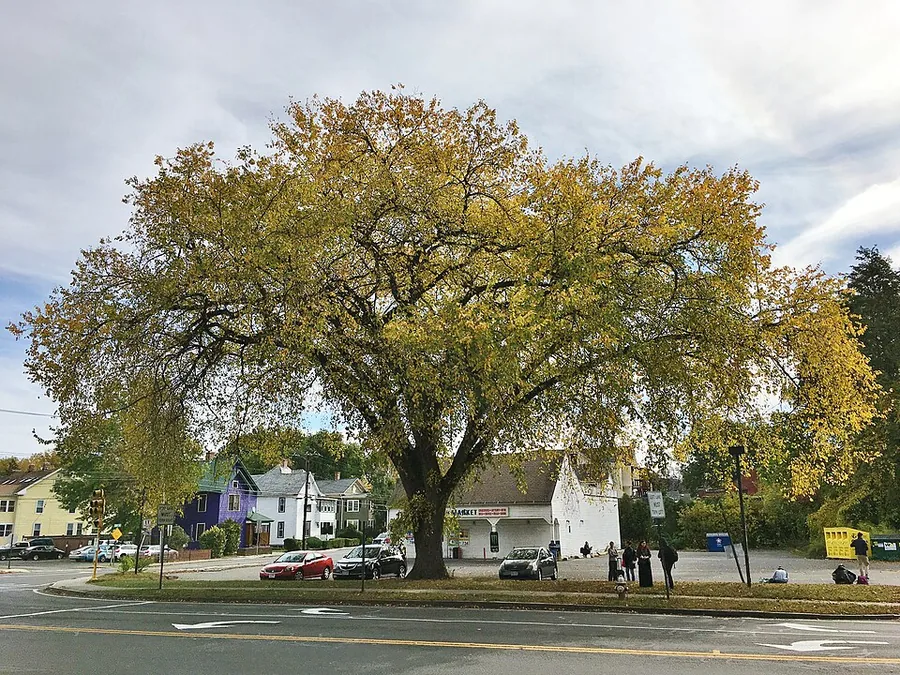
A fast-growing, vase-shaped canopy tree that defines the American streetscape and brings cool, graceful shade to any property with the room to hold it.
Full sun
Every 7–14 days
USDA 2–9
60–80 ft · 18.3–24.4 m
Overview
Few trees command a landscape the way the American elm does. Its signature silhouette, tall and arching, creates the kind of overhead canopy that turns a backyard into a cool retreat and a street into a shaded promenade. At 60 to 80 feet (18 to 24 m) tall with a spread that often exceeds its height, it is a tree that sets the tone for an entire property rather than filling a corner of it.
That legacy came close to being erased. Dutch elm disease swept through North American cities during the 20th century and took down millions of the trees that once lined every main street. The species survived, and breeders have since produced cultivars with genuine resistance, so the elm is back on the landscape designer's list where it belongs.
What you are choosing when you plant one is a long-term investment in shade and character. Hardy from zone 2 to zone 9 and tolerant of nearly any soil condition, it asks only for open space, since the shallow roots and breakage-prone wood mean it belongs away from pavement and structures, in a spot where it can grow into the architectural presence it was always meant to be.
Care
The short version: place it in full sun with generous clearance from buildings and paving, keep young trees watered through dry spells on a schedule of roughly every 7 to 14 days, prune in late winter to build sound structure, and choose a named disease-resistant cultivar from the start.
Light
The American elm performs best in full sun, which gives the crown its fullest spread and most defined form. It will accept partial shade without serious complaint, but more light means a stronger, more structurally sound tree over the long run.
Water
Newly planted trees need consistent moisture while they settle in, typically a deep watering every 7 to 14 days through dry periods. Once the root system establishes, the elm adapts to both dry and wet conditions with ease, and a mature specimen rarely needs supplemental watering.
Soil
This tree is one of the most soil-tolerant you can put in a landscape. It prefers an average, medium-moisture, well-drained loam but performs acceptably in clay, sand, wet ground, and dry sites alike, across a pH range from 5.5 to 8.0.
Temperature
Cold hardiness is one of the elm's genuine strengths. It holds from zone 2 to zone 9 and has been documented surviving temperatures from -51°F to 100°F (-46°C to 38°C), a range that reflects just how widely it once blanketed the continent.
Humidity
No humidity management is needed. As a large outdoor tree adapted to a wide geographic range, it simply takes the ambient conditions it is given without any intervention.
Feeding
Apply a balanced slow-release tree fertilizer in spring to help young trees establish and put on height efficiently. Mature, established trees need little to no supplemental feeding and do fine left to their own resources.
Pruning
Schedule structural pruning for late winter while the tree is dormant, removing branches that cross, rub, or show weak attachment. The wood is prone to breakage, so building good structure early pays dividends. There is also an urgent pruning task: any branch showing signs of wilting should come out immediately, well below the affected tissue, to limit the spread of Dutch elm disease.
Repotting
The American elm is not suited to long-term container growing, so repotting is not a routine consideration. Move nursery-grown saplings into the ground before roots begin circling inside the container or emerging from drainage holes.
Size & spacing
Site this tree with the end result in mind. A mature American elm reaches 60 to 80 feet (18 to 24 m) in height with a canopy spread of 40 to 70 feet (12 to 21 m), and its shallow roots will eventually lift any pavement within reach. Give it open lawn or a generous parkway strip, well away from foundations, walks, and drives.
When to plant
The American elm follows the unhurried calendar of a temperate shade tree. It goes into the ground best in spring or fall while dormant, offers its small reddish-green flowers during March and April, and releases its winged samaras as they mature through April and May.
Northern hemisphere
Southern hemisphere
Typical months for a temperate climate: start earlier in warm zones, later where spring frosts linger.
- Plant: Spring or fall
- Harvest: Tiny reddish-green flowers in late winter to early spring (March-April), followed by flat winged samaras maturing April-May
Hardiness
USDA hardiness zones: 2–9
Temperature: down to -46°C
Troubleshooting
Most problems with the American elm trace back to two causes, and the one that matters most announces itself early at the top of the canopy. A single out-of-season limb that wilts is the signal to act quickly. The other issue, chewed foliage, is far less urgent. Match what you see below and respond accordingly.
One limb suddenly wilts and browns while the rest of the canopy holds
A single branch flagging out of season while its neighbors stay full and green is the opening act of Dutch elm disease, a lethal fungal wilt delivered by elm bark beetles and passed silently from tree to tree through grafted root systems. Peel the bark of a dying limb and brown streaks in the outer sapwood are the typical tell, though elm yellows can produce the same collapse, so a lab confirmation is worth the trouble before you decide on a course of action. Speed is everything: remove infected limbs well below the staining the moment flagging appears, sever any root grafts connecting neighboring elms, and clear dead trees promptly so beetles lose their breeding ground.
Fix:
- Prune out and destroy infected limbs well below visible streaking as soon as flagging appears
- Remove and destroy severely affected or dead trees promptly to eliminate beetle breeding sites
- Sever root grafts between adjacent elms to stop underground spread
- Consult an arborist about fungicide injection for high-value trees
Canopy leaves reduced to lace with beetles present on the foliage
Leaves browning and thinning to a skeleton of veins, with only the framework left behind, signal the elm leaf beetle at work. The pale larvae feed along the undersides while the striped adults chew the tops. Japanese beetles can produce a similar picture, so identify who is actually feeding before acting. A well-established tree in good condition carries light beetle pressure without lasting harm, so hold off where you can, support natural predators in the landscape, and consider a labeled insecticide only when a heavy wave arrives on a younger tree.
Fix:
- Tolerate light feeding on otherwise healthy trees
- Apply an appropriately labeled insecticide for heavy infestations on smaller trees
- Encourage natural predators
Toxicity
One thing you do not need to factor into your planting decision is toxicity. The American elm is not toxic to pets, livestock, or people. Nothing in the foliage, bark, or samaras causes harm to anything that nibbles or browses it. The genuine landscape cautions here are about scale and structure, not chemistry.
Safe for
People · Cats · Dogs · Horses · Rabbits · Livestock · Birds
Cats None
A cat that investigates a fallen leaf or samara under the canopy has nothing to fear. The tree carries no toxin, so any mild stomach upset from nibbling plant matter is the only thing worth a passing thought.
Dogs None
Dogs that chew on a loose twig or test the bark on a walk around the property come away unharmed. The wood and foliage hold nothing harmful, so afternoons under a big elm are perfectly fine for them.
Horses Safe
Horses turned out near an elm can browse its leaves and bark without concern. The tree is entirely non-toxic, and grazing animals have long had access to it without incident.
Rabbits Safe
Rabbits naturally seek out elm bark and buds in winter and take no harm from it. The plant is safe to have anywhere near a hutch or a garden where rabbits roam.
Livestock Safe
Cattle, goats, and sheep can graze elm foliage freely, and the leaves have served as fodder for generations. Nothing in the tree poses a risk to grazing stock.
Birds Safe
Birds visit the tree in spring to feed on the samaras and shelter in the canopy year-round without any risk. The elm is a welcome and completely safe part of a garden habitat.
People Safe
The American elm poses no poisoning risk to people whatsoever. The considerations here are structural: the breakage-prone limbs and creeping surface roots are the things worth planning around.
No special handling is required for toxicity, though the tree's large size, surface roots, and falling samaras and limbs are landscape considerations.
Varieties
Today, virtually every American elm sold for landscape use is a named cultivar selected for resistance to Dutch elm disease. These are the four worth knowing.
'Princeton'
Selected as early as 1922, this cultivar has earned its longevity by holding the classic vase silhouette while standing up to Dutch elm disease better than most of its era.
'Valley Forge'
A U.S. National Arboretum introduction recognized for carrying some of the highest Dutch elm disease tolerance available, though complete immunity remains out of reach for any elm.
'New Harmony'
Another Arboretum-bred selection that pairs dependable disease resistance with strong growth, performing reliably through approximately zone 4.
'Jefferson'
Chosen specifically to preserve the sweeping, vase-shaped architecture the species is known for, this selection combines that signature form with meaningful disease resistance.
How to propagate
Seed is the simple route to an American elm, but it will not give you a disease-resistant tree. For that, you need to reproduce a named cultivar through grafting or stem cuttings.
SeedModerate
Sow fresh samaras in late spring soon after they mature · A few weeks to germinate; several years to establish as a tree
Fresh samaras sown in late spring, right after they ripen, typically sprout within a few weeks and develop into trees over several years. The trade-off is that seed-grown elms do not carry the disease resistance that defines the named cultivars, so consider what role this tree will play before choosing this path.
GraftingDemanding
Dormant season · One or more seasons
Grafting during dormancy is the nursery standard for reproducing the named, disease-resistant elms true to form. The union needs a season or more to establish and calls for practiced technique, placing it firmly in the professional propagator's territory.
Stem cuttingsDemanding
Softwood in late spring to early summer · Weeks to root, then years to establish
Softwood cuttings taken in late spring or early summer produce a clone of the parent cultivar, preserving its disease resistance exactly. Rooting takes a matter of weeks, but the cutting then needs years to become a proper tree, and the initial strike rate asks for some experience to achieve.
Myths
The American elm is extinct or no longer worth planting because of Dutch elm disease.
Dutch elm disease reshaped the American landscape in the 20th century, but the species was never lost. Named resistant cultivars are available today, including 'Princeton', 'Valley Forge', 'New Harmony', and 'Jefferson', and planting one is a reasonable and rewarding choice.