Tree · Anacardiaceae
American Smoketree (Tree Form)
Cotinus obovatus
Set against poor soil and open sun, the American smoketree drifts a summer haze over the garden and closes the year in fiery color.
Full sun
Every 7–21 days
USDA 4–8
20–30 ft · 6.1–9.1 m
Overview
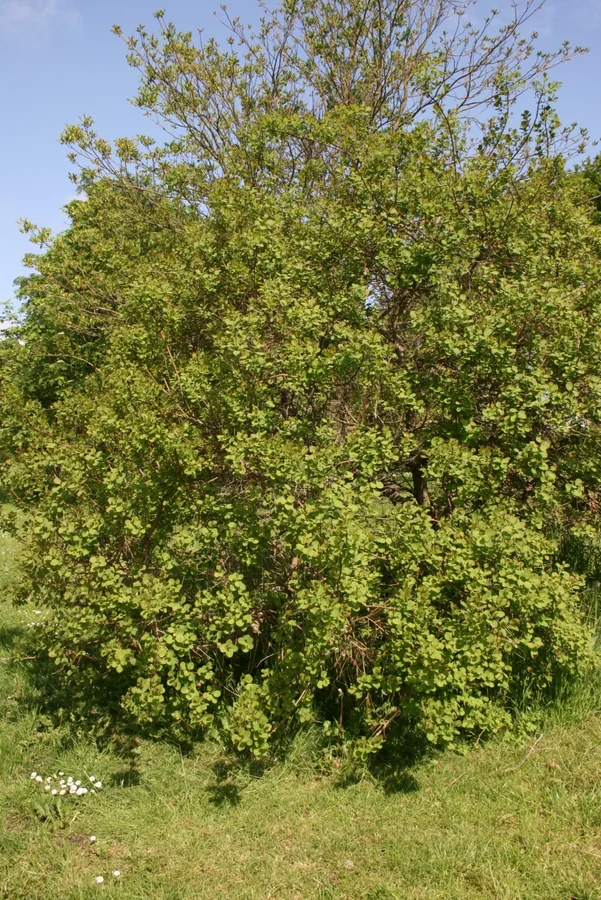
The American smoketree earns a place wherever a garden wants a quiet centerpiece with two seasons of drama. Named for the airy plumes that seem to smolder above its branches by early summer, it grows as a single-trunk tree to 20 to 30 feet (6 to 9 m), giving it the presence of a small specimen rather than the sprawl of the European smokebush. In the same family as cashews and sumacs, it settles happily into the tougher corners of a property.
Part of its appeal is how gracefully it fits a low-maintenance life. Once rooted it rides out dry summers, takes to poor and rocky ground, and holds through winters down to -29°F (-34°C), so it suits a garden built for ease rather than fuss. The lean conditions it prefers are the same ones that reward you, since spare soil brings on the fullest flowers and the richest fall color.
This is a tree that repays patience with atmosphere. It grows slowly, then delivers a soft summer haze followed by a canopy that turns orange, red, and purple as the season cools, a natural focal point for a courtyard, a driveway, or the far end of a lawn. Give it full sun and open, well-drained ground, and it anchors the view for decades.
Care
The short version: full sun and lean, free-draining soil, with steady water only while the tree finds its feet. From there it carries itself through dry spells, asks for little or no feeding, and needs only a light seasonal trim to keep its shape.
Light
Give this tree an open, sun-filled spot, because full sun brings out its heaviest flowering and its most vivid autumn turn. It accepts partial sun or a little shade, though a shadier position quietly dims both the summer smoke and the fall color that make it worth planting.
Water
While the tree is young and establishing, keep it on a regular drink, about every 7 to 21 days as the weather asks. Once settled it is drought tolerant and needs watering only through a long dry stretch, which makes it an effortless fit for a hands-off garden. Keep it clear of soggy ground, since wet soil is what invites disease.
Soil
This tree looks its best in lean, well-drained ground and takes gracefully to the poor, dry, rocky, clay, and alkaline limestone spots that stump more pampered plants. With a comfortable pH range of 5.5 to 8.5, it rarely calls for any soil work, an easy match for a difficult corner.
Temperature
Its wide comfort zone, from -29°F to 100°F (-34°C to 38°C), lets it settle into a great many gardens and climates. That resilience is part of what makes it such a dependable, low-drama fixture in a planting scheme.
Humidity
There is no humidity to manage, since ordinary outdoor air serves it well. What matters for a clean, healthy look is open air movement and dry soil, because still, damp corners are where leaf fungi and rust find a foothold.
Feeding
Feeding is best kept light or skipped altogether, as this is a tree that thrives on spare ground. Too generous a hand dulls the flowers and the fall color, so if you feed, a gentle spring application is plenty.
Pruning
Pruning stays refreshingly minimal. A little shaping in late winter or early spring, plus the removal of dead or crossing wood and training toward a single trunk, is all it wants. Keep the touch light, since the smoke gathers on the prior season's wood and hard cutting sacrifices the show.
Repotting
Repotting rarely enters the picture, since the tree belongs in open ground for good. A young plant held briefly in a container should move up only when roots circle the rim or reach through the drainage holes.
Size & spacing
As a standing tree it reaches 20 to 30 feet (6 to 9 m) in both height and spread, so plan for a generous footprint. Set it well away from the house and other trees, giving the crown room to open and air room to move, and let it hold the scene on its own.
When to plant
The rhythm of this tree suits an unhurried garden. Plant it while it rests, in spring or fall, so the roots settle before the season turns harsh. Its smoky bloom arrives with May and June and lingers as a haze across summer, then gives way to the year's most striking color in autumn.
Northern hemisphere
Southern hemisphere
Typical months for a temperate climate: start earlier in warm zones, later where spring frosts linger.
- Plant: spring or fall
- Harvest: May to June, with the smoky display persisting through summer
Hardiness
USDA hardiness zones: 4–8
Temperature: down to -34°C
Troubleshooting
For all its presence, this is an easygoing tree, and the rare setback usually traces to wet ground or a stressed plant. A little seasonal attention to the branches and leaves, caught early, keeps the display intact.
Branches failing section by section
The culprit is verticillium wilt, a soilborne fungus that travels up the tree's water-carrying wood and shuts down whole limbs. A cut through an affected branch usually reveals dark streaking within. Since nothing cures it, remove the dead wood well below the damage, keep the tree watered through drought, and never plant a susceptible species back into that soil.
Fix:
- Prune out and destroy affected branches well below symptoms
- Keep the tree vigorous with appropriate water during drought
- Do not replant susceptible species in confirmed infested soil
Spots and rust marks across the canopy
This is leaf spot and rust fungi, most often seen on a tree already under strain. The damage is purely cosmetic and rarely worth concern. Clear away the fallen leaves, open the canopy so air can circulate, and ease whatever stressed the tree to begin with, whether a dry spell or a waterlogged spot.
Fix:
- Rake and remove fallen infected leaves
- Improve air circulation and avoid overhead watering
- Reduce plant stress with proper siting and watering
Toxicity
In a home shared with animals, the American smoketree fits without worry. It is not toxic to pets or people and stays off the ASPCA poison lists. The only note for the gardener is its sap, which, like a sumac's, can leave sensitive skin irritated, so gloves belong on the pruning kit.
Safe for
People · Cats · Dogs · Horses · Rabbits · Livestock · Birds
Cats None
A cat can nose through the leaves and nibble without harm, as the tree holds nothing toxic to them.
Dogs None
Dogs are welcome around it, and gnawing on a leaf or twig carries no poison for them.
Horses Safe
Horses grazing close by are in no danger from this tree.
Rabbits Safe
Rabbits find nothing troublesome in the foliage.
Livestock Safe
Grazing cattle, goats, and sheep come to no harm alongside it.
Birds Safe
Birds that perch or forage in the branches are at no risk.
People Safe
There is no poisoning danger to people here, though the sap can leave sensitive skin irritated, so keep gloves on for pruning.
The plant is in the Anacardiaceae (cashew/sumac) family, and its sap contains urushiol-type compounds that may cause mild contact dermatitis in sensitive people; wear gloves when pruning. This does not affect pet toxicity rating.
Varieties
Smoketrees range from the larger American native to the more decorative European types and their hybrids. The three below are the ones most often planted and most easily shaped into a standing tree.
Cotinus obovatus (American smoketree, species)
The native species is the largest and most tree-like choice, prized for a bold orange-red-purple autumn and a rare ease with dry, rocky, and alkaline sites.
Cotinus coggygria 'Royal Purple'
'Royal Purple' is the purple-leaved European favorite, its foliage deepening toward near-black maroon; usually a multi-stemmed shrub, it can be trained into a small single-trunk tree for a tidier form.
Cotinus x 'Grace'
'Grace' is a vigorous European-American hybrid carrying large purple-red leaves and a showy pink smoke, and it takes well to being grown as a small tree.
How to propagate
A smoketree can be increased by seed, by cuttings, or by layering, and the route you choose comes down to whether the garden calls for the wild species or a particular named cultivar.
SeedModerate
Fall (sow outdoors) or stratify for spring · 1-2 growing seasons
Seed is the slow, patient path. Because the seed is dormant, it needs a cold period to break, whether sown outdoors in fall or chilled for a spring start, and that lifts germination. The species stays true from seed, with a young plant taking one to two growing seasons to establish.
Stem cuttingsModerate
Early to mid summer (softwood) · Several weeks to root, then 1-2 seasons
Softwood cuttings taken in early to midsummer and rooted under mist strike within several weeks, then settle over the following season or two. This is the way to hold a named cultivar, since only cuttings keep it faithful to its parent.
LayeringEasy
Spring · 1 growing season or more
Layering is the gentlest method of all. In spring, secure a low branch against the soil, let it root through a season or more, then separate it as a finished young plant.
Myths
The smoketree is as dangerous as the poison ivy and poison sumac it is related to.
The family tie is real, but the reputation is not. Cotinus is not considered toxic to pets and never appears on the ASPCA lists. The single caveat is the sap, which can irritate sensitive skin, so gloves are worth wearing before pruning.
American smoketree wants rich, fertile, moist soil to look its best.
The truth runs the other way. It prefers lean, well-drained ground, shrugs off drought, and performs best on poor, dry, rocky, and alkaline sites. Overwater and overfeed it, and the flowers and fall color are exactly what you forfeit.