Shrub · Rosaceae
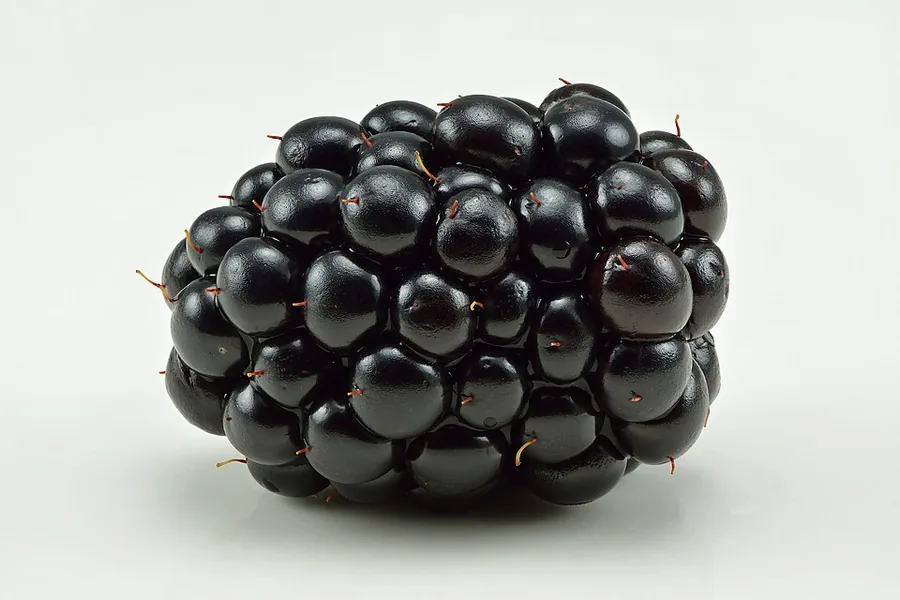
Blackberry
Rubus fruticosus
Give it full sun and room to ramble, and a blackberry turns a back fence into a summer larder.
Full sun
Every 3–7 days
USDA 5–9
3–10 ft · 0.9–3 m
Overview
A blackberry earns its keep in the garden the way few plants can, repaying a beginner with more fruit than seems fair. It is a bramble in the rose family, all long arching canes that lean and root wherever they meet the ground, and it suits the loose, lived-in edge of a plot far better than a tidy border. Let it have a sunny corner and it will furnish that corner all on its own.
The pleasure of growing one comes from learning its two-year rhythm, a quiet calendar the plant keeps without being asked. Each cane spends a first season as a leafy primocane, then bears fruit the next as a floricane before bowing out. Once that cadence becomes familiar, the patch settles into an easy seasonal routine and the harvest arrives like clockwork.
Hardy and undemanding, these are the plants that make a garden feel generous in high summer. Sun, decent soil, and one annual tidy-up are the whole ask, and the reward is warm fruit gathered by the handful between chores. The one thing to plan for is room, since a contented patch will quietly claim more of the space each year.
Care
The short version: a sunny spot, deep well-drained soil, and about an inch or two of water a week. Clear out the old fruited canes each year and let the plant have the room it wants to roam.
Light
Blackberries give their best in full sun, six or more hours of it a day, the kind of open, bright corner they thrive in. A little afternoon shade is no disaster, but the sunnier the spot, the sweeter and heavier the fruit you carry indoors.
Water
Keep the soil evenly moist but never waterlogged, which works out to about 1 to 2 inches of water a week. Lean a touch more generous while the plant is in flower and filling its fruit, since a dry stretch then is what leaves you with small, crumbly berries instead of the good ones.
Soil
Set them into deep, well-drained loam worked through with organic matter, the foundation of a long-lived patch. A pH between 5.5 and 7.0 keeps them content, and good drainage quietly spares you most of the root and cane trouble down the line.
Temperature
Blackberries are wonderfully sturdy, weathering winters down to -4°F (-20°C) and summers up to 95°F (35°C) without fuss. They settle happily into hardiness zones 5 through 9, so most gardens can hold them year-round with no special protection.
Humidity
Ordinary outdoor humidity of 40% to 70% suits them well. Air movement counts for more than the reading, since still, damp air around a crowded patch is what invites rust and blight to linger.
Feeding
A single feeding in early spring, as growth stirs again, is the rhythm to keep, using a balanced 10-10-10 or a nitrogen-rich complete fertilizer. That one seasonal gesture usually carries the canes comfortably through fruiting.
Pruning
The canes are biennial, so the yearly tidy-up simply honors their two-year turn. Take the spent floricanes down to the ground after harvest, tip-prune the primocanes in summer to coax out fruiting laterals, and thin the patch back to a handful of strong canes.
Repotting
Blackberries belong in open ground rather than a pot, so repotting rarely enters the picture. Should one live in a container, move it on when the roots begin to circle or growth slows and the soil dries out fast.
Size & spacing
Canes rise 3 to 10 feet (90 cm to 3 m) and spread to match, so they make a real presence in a plot. Give each plant that much room to arch and sucker, both for the air to move and to keep the patch from leaning into its neighbors.
When to plant
Blackberries take their place in the garden while still dormant. Set bare-root or potted canes out in late winter to early spring once hard frosts have passed, watch the blossom open in late spring, and let the season build toward warm berries gathered through July and August.
Northern hemisphere
Southern hemisphere
Typical months for a temperate climate: start earlier in warm zones, later where spring frosts linger.
- Plant: Set out dormant bare-root or container canes in late winter to early spring after danger of hard frost has passed.
- Harvest: Blooms in late spring; berries ripen mid to late summer (typically July to August).
Hardiness
USDA hardiness zones: 5–9
Temperature: down to -29°C
Troubleshooting
Most blackberry concerns surface on the canes or the fruit, and an unhurried walk through the patch is usually all it takes to notice them early. Find the picture that matches yours below, then step in before a fungus or a mite makes itself at home.
Bright orange powder turning up beneath the leaves
A flush of orange powder under the foliage is the calling card of orange rust, a fungus that takes up residence inside the entire plant rather than dusting the surface. There is no rehabilitating a cane once the spores arrive, and it lingers as a quiet source of trouble for the rest of the garden. The clean solution is to lift the plant entirely, roots and all, and keep it well clear of the compost heap.
Fix:
- Dig out and destroy entire infected plants including roots
- Do not compost infected material
Dark cracking marks along a cane, with dieback above
Dark, splitting marks along a cane usually signal cane blight and anthracnose, fungi that settle into a wound and strangle the cane so the growth above it fades. The remedy keeps the planting looking its best: prune the affected canes out below the mark and thin the rest until air drifts through freely. Save the work for a dry day, since a fresh cut in damp weather is the opening the fungus waits for.
Fix:
- Prune out and destroy affected canes below the lesion
- Thin canes to improve air circulation
Small, lopsided berries dotted with hard red bumps
A berry where only part of it fills out while the rest stays hard and red is usually a story of poor pollination, though a redberry mite or a virus can write the same ending. Bringing bees back to the bowl is the prettiest fix, so plant flowers nearby, and turn to horticultural oil if mites are behind it. Anything you suspect of carrying a virus is best pulled and replaced, for the sake of the whole planting.
Fix:
- Encourage pollinator activity near the planting
- Apply horticultural oil to manage mites
Toxicity
This is a planting you can live alongside without a moment's worry. The berries, leaves, and canes are safe for people, pets, and livestock, and the fruit is a shared pleasure for all of them. The only genuine hazard is a physical one, since most blackberries carry sharp thorns that can scratch skin and snag fur.
Safe for
People · Cats · Dogs · Horses · Rabbits · Livestock · Birds
Cats None
A cat wandering the garden faces no poison from this plant whatsoever. The only thing to keep in mind is the thorns, which can catch a curious paw or nose.
Dogs None
A dog can share in the ripe berries with no harm done, and plenty of household dogs come to expect their portion. Keep the helpings modest, since a generous pile can settle uneasily.
Horses Safe
Horses take to the leaves and fruit without any ill effect. The canes are the part to mind, since their thorns can catch a soft muzzle.
Rabbits Safe
The foliage and fruit are both safe, and rabbits are glad of the leaves. Berries are best offered in small measures, as the sweetness runs rich for a little animal.
Livestock Safe
Cattle, goats, and sheep browse brambles freely, and a goat will clear a thicket with evident pleasure. None of it carries any poison for them.
Birds Safe
Garden birds gather to ripe blackberries and carry the seeds far across the landscape. The fruit holds no danger for them at all.
People Safe
Blackberries have long graced the table fresh or cooked, and the young leaves once steeped into a quiet tea. The single thing to mind is the thorns as you gather them.
The main hazard is physical rather than chemical: most wild and cultivated blackberries bear sharp thorns (prickles) along the canes that can scratch skin or injure pets, though thornless cultivars such as 'Navaho' and 'Apache' exist and are safer to handle.
Varieties
Blackberries run to the hundreds, sorted broadly into upright and trailing forms. The three below are the ones worth knowing first, a pair of them bred to leave the thorns out of the picture.
Navaho
A thornless, upright selection from the University of Arkansas and USDA breeding program, prized for sweet, firm berries on canes that invite a bare hand into the harvest.
Marionberry
A trailing blackberry created at Oregon State University from a cross of Chehalem and Olallie, and a name that has come to define summer across the Pacific Northwest.
Apache
Another thornless, upright cultivar, this one a quiet showpiece for its very large fruit and its dependable resistance to disease.
Companions
Blackberries do best kept apart from their own relatives and from the nightshade family, since both trade diseases that brambles are prone to.
Keep apart
Raspberry and other Rubus: Planting close to other brambles spreads shared diseases such as orange rust and viruses.
Tomato, potato, and other Solanaceae: They share susceptibility to Verticillium wilt, so avoid planting blackberries where solanaceous crops recently grew.
How to propagate
Few fruits are as easy to multiply, and a single plant quietly offers several ways to do it. Layering and division ask almost nothing of the gardener, while cuttings reward a little more patience.
LayeringEasy
Late summer · Roots form in 6 to 8 weeks; transplant the following spring
Trailing types all but propagate themselves, which makes layering the most effortless route of all. In late summer, ease a cane tip down to bare soil and pin it, and roots gather in roughly 6 to 8 weeks. Let the new plant overwinter where it sits, then lift it the following spring when the season turns.
DivisionEasy
Late winter to early spring while dormant · One growing season
A settled clump offers up rooted suckers around its base, the gardener's free supply. Lift those suckers, or split a crown, in late winter to early spring while the plant rests, then replant without delay. Allow each new piece one growing season to find its place before you look for a true crop.
Stem cuttingsModerate
Winter for root cuttings or summer for softwood cuttings · Several weeks to a few months
Cuttings reward a slower, more considered hand than the other two methods. Take root cuttings in winter or softwood cuttings in summer, and let rooting unfold across several weeks to a few months. Root cuttings remain the nursery's favored way to build up the upright kinds.
Myths
Blackberries and raspberries are the same fruit since both are brambles.
Sharing the genus Rubus, the two are easy to conflate, yet the fruit settles the matter at the table. A picked blackberry holds onto its pale core, the small plug called the receptacle, while a raspberry releases and leaves that core on the cane, which is why a raspberry arrives hollow.
Every blackberry has thorns.
Thorns remain common, but they have stopped being a foregone conclusion. Many of today's cultivars, Navaho and Apache among them, are entirely thornless and crop just as generously, so the harvest can be gathered without a single scratch.