Shrub · Rosaceae
Common Ninebark
Physocarpus opulifolius
A native shrub of peeling bark and colorful foliage that gives a garden year-round structure with an easy hand.
Full sun
Every 7–14 days
USDA 2–8
5–8 ft · 1.5–2.4 m
Overview
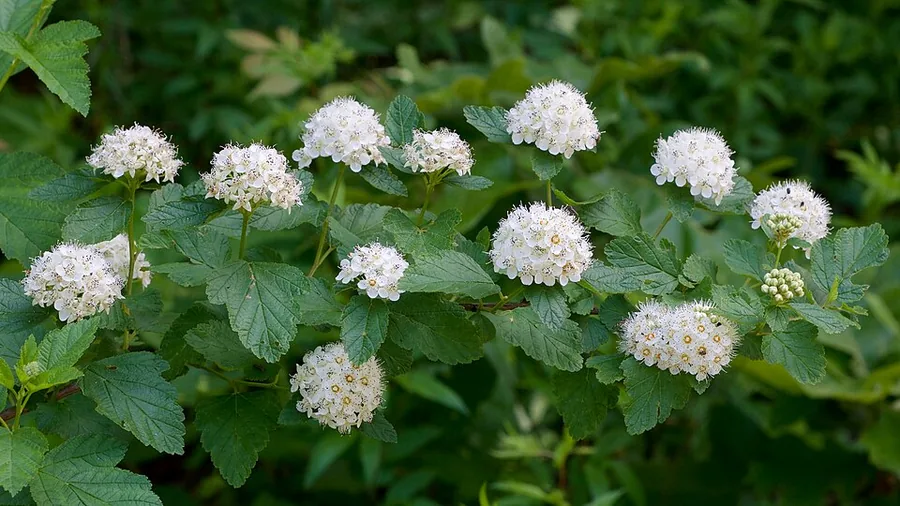
Ninebark earns its place in a garden the way a good sofa earns its place in a room: it holds the composition together and asks for little in return. A rose-family native of eastern North America, it stands through winters down to zone 2, weathers a dry spell once settled, and takes to nearly any soil a border offers. Its name comes from the bark that peels away in thin papery strips, a quiet detail that keeps the planting interesting long after the flowers have gone.
The reason it has become a designer's shrub is the foliage, which sets a mood in a way few others manage. Cultivars come in deep purple, gold, copper, and wine-red, with clusters of small white-to-pink flowers arriving in late spring to soften the effect. In the dark and gold forms, that leaf color carries the border from spring straight through to fall.
Fast and generous, it wants space and sun to look its best, so give it an open, breezy position and it becomes the frame the rest of the planting hangs on. Crowd it into damp shade and powdery mildew intrudes on the scene. Placed well, it settles in as a low-care backbone shrub that shapes a garden for years.
Care
The short version: full sun brings out the richest leaf color, average well-drained soil suits it since it adapts with grace, and watering matters only through that first season. From then on it is drought tough, wants little feeding, and asks for a single considered prune each year, just after it flowers.
Light
Ninebark looks its best in full sun, where the purple and gold cultivars keep their color richest and read most clearly across a border. It will settle for partial shade, but the leaves turn duller and the risk of powdery mildew rises once the air goes still.
Water
Water a newly planted shrub regularly through its first growing season to let it root into the border. After that it is truly drought tolerant and wants a drink only in a long dry spell. Let the top half of the soil dry between waterings, which tends to fall around every 7 to 14 days.
Soil
This is a forgiving shrub where soil is concerned. It prefers average, well-drained soil but takes to clay, loam, sand, rocky, dry, and even wet ground. It sits happily across a wide pH from 5.5 to 8.0, so most gardens welcome it without any reworking.
Temperature
Ninebark is remarkably tough, standing winter cold to about -51°F (-46°C) and summer heat to 100°F (38°C). That reach spans hardiness zones 2 through 8, which is why it appears in so many cold-climate gardens.
Humidity
Outdoor humidity is nothing to plan around on its own, and there is no figure to aim for. Air movement is what counts, since crowded, stagnant corners are what draw powdery mildew onto the leaves.
Feeding
This tough native rarely wants feeding, which keeps its upkeep pleasingly simple. If growth looks thin, offer a light application of balanced fertilizer in early spring and no more. Too much, nitrogen above all, only forces soft growth that fireblight finds easy to exploit.
Pruning
Prune right after it blooms and no later than mid-August, because next year's flowers form on old wood and a late cut takes them with it. To reset an overgrown, leggy shrub, cut it close to the ground in winter and let it return renewed.
Repotting
Ninebark belongs in the open ground and seldom needs potting on. Should one live in a container, move it up when the roots circle the pot, reach out through the drainage holes, or water begins running straight through.
Size & spacing
Allow room for a substantial shrub, 5 to 8 feet (152 to 244 cm) tall with a spread of 4 to 6 feet (122 to 183 cm). Give it that full width so air drifts through the branches and mildew finds little foothold, and the planting keeps its shape.
When to plant
Ninebark is a hardy shrub with an obliging planting window, which makes it easy to work into a garden's schedule. Set new plants out in the mild weather of spring or fall, then look for the white-to-pink flowers in late spring, roughly April through June, before the colored foliage takes over the display for the rest of the year.
Northern hemisphere
Southern hemisphere
Typical months for a temperate climate: start earlier in warm zones, later where spring frosts linger.
- Plant: Spring or fall
- Harvest: Late spring (April to June)
Hardiness
USDA hardiness zones: 2–8
Temperature: down to -46°C
Troubleshooting
Ninebark keeps its composure in most gardens, and when something does appear it usually settles on the leaves rather than the whole shrub. The handful of issues worth knowing come down to crowding and damp, still air. Find the match below and act before it disturbs the picture.
Blackened shoot tips curling over as though scorched
This is fireblight, a bacterial trouble that darkens the tips and turns them down into a shepherd's crook while they hold to the branch. Address it decisively: cut the affected wood away well below the visible damage, clean the blade between each cut, and send the trimmings to the fire or the bin rather than the compost heap. Restraint with nitrogen and pruning on a dry day keep the border looking composed again.
Fix:
- Prune out blighted wood well below visible damage
- Disinfect pruning tools between cuts
- Destroy removed material; do not compost
A pale, dusty veil over the leaves and shoot tips
That haze is powdery mildew, a fungus that takes hold in the quiet, shaded pockets of a garden where the air never quite stirs, and it shows most on the dark-leaved cultivars. The remedy is a gardener's version of opening a window: thin the crowded stems to let a breeze pass, clear away the tired leaves, and let the border catch more sun. The look suffers for a season, but the shrub carries on.
Fix:
- Improve air circulation by thinning crowded stems
- Remove and dispose of badly infected foliage
- Site or move plants into full sun
Dark spots and blotches marking the leaves
These blemishes are fungal leaf spots, the kind that appear when leaves stay damp and the planting sits too tightly packed. They dull the effect of the border for a while, yet the shrub itself stays sound beneath them. Gather the fallen leaves, give the planting more breathing room, and water low at the roots to keep the display clean.
Fix:
- Rake up and dispose of fallen infected leaves
- Improve spacing and airflow
- Avoid wetting foliage when watering
Toxicity
There is nothing here to unsettle a household. Ninebark stays off the ASPCA poison lists and is treated as non-toxic to pets, livestock, and people alike. At worst, a large mouthful might bring a brief, mild stomach upset, no more than overindulging in any leafy plant.
Safe for
People · Cats · Dogs · Horses · Rabbits · Livestock · Birds
Cats None
A household cat can wander the garden alongside ninebark in complete ease, as the shrub never appears on the ASPCA poison list. Should one pause to chew a leaf, expect nothing more dramatic than a little drool or a brief upset, the ordinary result of tasting any greenery.
Dogs None
Ninebark makes an untroubled companion for a garden that dogs share. A greedy mouthful of foliage might unsettle the stomach for an afternoon, yet there is no genuine poison at play to spoil the peace.
Horses Safe
Horses turned out beside a ninebark hedge come to no harm. The shrub holds no toxin that would trouble them, and its woody stems rarely tempt a grazing horse in the first place.
Rabbits Safe
Rabbits, whether pets in the yard or wild visitors to the border, are safe near ninebark. They tend to browse the young shoots, and the leaves suit them without any bother.
Livestock Safe
Cattle, goats, and sheep may graze around ninebark with ease, since it carries nothing that would poison them. A goat might work over the soft new growth and be none the worse for the meal.
Birds Safe
Birds enrich a garden built around ninebark rather than come to any harm in it. Many take the dry seed capsules through the leaner winter and settle their nests among the dense branches, drawn by the shelter.
People Safe
Ninebark presents no poisoning risk to the people who tend it. It earns its place for looks rather than the table, so there is little cause to taste it, but a stray nibble does no harm.
No special handling precautions are required; wear gloves when pruning if you have sensitive skin.
Varieties
Most ninebark offered today is a colored-leaf cultivar rather than the plain green species, and each brings its own tone to a planting. These are the ones you are most likely to meet, grouped by the foliage that defines them.
Diabolo
The celebrated dark selection, its deep purple foliage anchoring a border in shadow, though the color can soften toward green through a hot summer.
Dart's Gold
A bright golden-yellow presence that lifts a planting, holding its glow most surely where full sun reaches it.
Summer Wine
A more compact choice for a tighter setting, its dark wine-red foliage playing against soft white-to-pink flowers.
Coppertina
New growth arrives in a warm coppery orange before settling into red as the leaves mature, an evolving note in the border.
Amber Jubilee
A shifting palette of gold, orange, and amber that changes its mood as the season moves along.
How to propagate
Ninebark offers three ways to make more for the garden, and the one to choose really comes down to whether keeping a cultivar's leaf color true matters to the scheme you have in mind.
Stem cuttingsEasy
Late spring to summer using softwood cuttings · 4 to 8 weeks to root
To carry a favorite colored-leaf cultivar into another corner of the garden true to form, cuttings are the elegant answer. Take softwood or semi-hardwood pieces from late spring into summer, and they root over 4 to 8 weeks. It is the surest of the three routes.
SeedModerate
Sow in fall or after cold stratification in spring · Several weeks to germinate; seedlings of cultivars vary
Seed suits the wild species beautifully, sown in fall or given a cold rest before a spring sowing, with sprouts appearing over several weeks. Keep in mind that seedlings from a colored cultivar will not echo the parent's leaves, so this route is best kept for the plain green form.
LayeringEasy
Spring through summer · One growing season
Layering is the most unhurried method of all. Draw one of the low arching branches down to the soil and pin it any time from spring through summer, let it root across one growing season, then part it from the parent as a plant of its own.
Myths
The name ninebark means the bark peels off in exactly nine separate layers.
The name is a nod to the handsome bark that flakes away in thin strips down the stems, not to any real tally of layers. Nine is an old figurative turn of phrase here, a poetic way of saying many rather than a precise nine.