Ornamental · Apocynaceae
Butterfly Weed
Asclepias tuberosa
A sun-drenched corner of poor soil is all the staging it needs, and the monarchs supply the rest.
Full sun
USDA 3–9
1–3 ft · 0.3–0.9 m
Overview
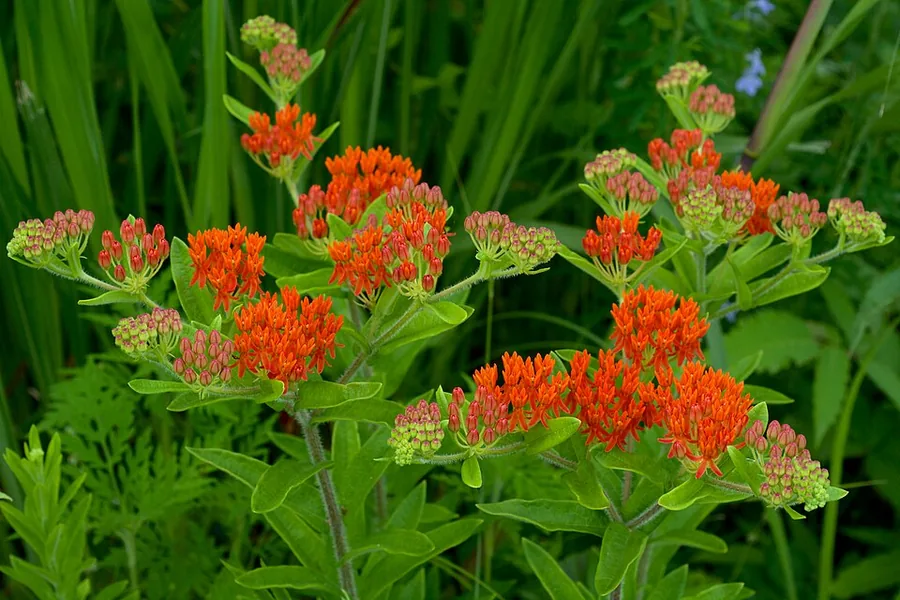
Butterfly weed lends a clean, confident note of orange to a sunny border and asks almost nothing in return. A native perennial of open meadows and roadside ground, it belongs in the driest, brightest part of a garden, where it reads as relaxed and unfussy rather than precious. Its flat heads of orange open from late spring into summer and keep the planting in motion with butterflies, bees, and other pollinators throughout the season.
Its real appeal is the company it keeps. Like the rest of the milkweed family, it works as a host plant for monarch caterpillars, turning a single sunny patch into a small theater of wildlife as the caterpillars feed and store the plant's defensive compounds. That same chemistry is why every part is toxic if eaten, the quiet caveat behind a plant grown to bring life to the garden.
Living with it is an exercise in editing rather than effort. It anchors on a deep taproot, takes a season or two to settle into the scene, and prefers to be left undisturbed and unindulged. Give it the warm, dry position it wants when you first lay out the bed, skip the feeding and the extra water, and it returns each year a little more at home in the design.
Care
The short version: stage it in full sun, in lean and dry well-drained soil, and water only sparingly once it has rooted in. Pass on the fertilizer, let the deep taproot stay where it sits, and give it a year or two to grow into the planting before it truly blooms.
Light
Give butterfly weed full sun, at least six hours of it a day, and it carries itself with poise. It manages in part shade, but the upright shape loosens and most of the flowers go missing, so a bright, open position is where it earns its place in the border.
Water
Water young plants until they take hold, then water rarely, which slots it neatly into a low-maintenance border. An established plant is drought tolerant and far happier dry than wet, since soggy ground rots the crown, so let the soil dry out completely between drinks.
Soil
Lean ground flatters this plant more than rich ground ever could. It thrives in average to poor, dry to medium, well-drained soil and takes clay, sand, loam, or shallow rocky ground in stride, so long as the drainage stays sharp. A pH between 6.0 and 7.0 sits comfortably within its range.
Temperature
This is a cold-hardy native that handles a wide swing in temperature, from -40°F to 100°F (-40°C to 38°C), carrying it through USDA zones 3 to 9. It dies back to the ground each winter and rises again from the taproot in spring, a rhythm worth designing the bed around.
Humidity
Ordinary outdoor air is all the planting wants, so there is no figure to chase. Air that moves freely matters far more than any humidity reading, since still, damp air around the leaves is what invites rust and leaf spot to settle in.
Feeding
Leave the fertilizer out of the picture entirely. Butterfly weed grew up on thin, lean ground, and extra richness works against the look, drawing out floppy stems and fewer flowers. Skip the feeding and let the plant keep its easy, upright poise.
Pruning
Upkeep is light and undemanding. Cut the spent stems to the ground in late fall or early spring, and trim the seed pods before they split if you would rather it not wander through the bed. Leave settled plants exactly where they stand, since the taproot will not forgive a move.
Size & spacing
A grown plant holds at about 1 to 3 feet (30 to 91 cm) tall and gathers into a clump near 12 to 18 inches (30 to 46 cm) across. Give it that much room in the layout so air drifts through the planting and the foliage stays dry.
When to plant
Butterfly weed keeps a slow seasonal rhythm that suits a garden planned in advance. Start seed in late winter after a cold spell, or sow it in fall and let winter handle the chilling, then ease young plants into the bed in spring once the frost has passed. The flowers carry the planting from late spring through summer, though a seed-grown plant often takes 2 to 3 years to reach its first real display.
Northern hemisphere
Southern hemisphere
Typical months for a temperate climate: start earlier in warm zones, later where spring frosts linger.
- Sow: Late winter, about 8 to 10 weeks before last frost, after 30 days cold moist stratification
- Plant: Spring after last frost, or direct sow in fall to allow natural cold stratification
- Harvest: Late spring through summer (roughly May to August)
Hardiness
USDA hardiness zones: 3–9
Temperature: down to -40°C
Troubleshooting
Butterfly weed asks very little of a gardener, and the few setbacks it does meet usually come from generosity rather than neglect. Too much water and too rich a soil disturb the look of the planting far more than any insect does. Find the match below, then ease off the watering before you reach for anything stronger.
A once-tidy clump that softens and folds in on itself
When a clump darkens at the base and topples, the trouble is crown and root rot, and it almost always follows a spot that holds water too long. This is a plant for the driest, brightest part of the garden, so retiring the watering can and opening up the drainage is the way to protect the planting. A crown that has gone soft will not return, but the next one set in full sun on poor, gritty ground will keep its shape beautifully.
Fix:
- Improve drainage and stop supplemental watering
- Plant in lean, well-drained or rocky soil in full sun
A relocated plant that quietly loses its footing
A plant that fades after being shifted is paying for a disturbed taproot, the long, fleshy anchor this species sends straight down and never forgives a gardener for cutting. The elegant solution is to choose the planting's lasting place at the very start and design the border around it. For more of the same effect, sow fresh seed directly into the chosen spots rather than lifting and moving what has already settled.
Fix:
- Leave established plants undisturbed
- Start new plants from seed in place rather than transplanting
A flush of bright specks gathered at the new shoots
Those bright dots crowding the fresh growth are oleander aphids, a common and largely cosmetic visitor to a sunny border. A firm pass with the hose, every two or three days for about a week, keeps them from spoiling the look of the planting. When only a few appear, the graceful move is to let them stay, since reaching for a strong spray would also clear out the monarchs and ladybugs that make this corner of the garden come alive.
Fix:
- Knock aphids off with a strong spray of water every two or three days for about a week
- Tolerate minor infestations to protect monarch larvae and beneficial insects
Foliage marked with orange flecks or dark blemishes
Orange bumps that brush off as powder are rust, and flat dark blemishes are usually a leaf spot fungus, both of which can dull the clean look of the foliage. They settle in where leaves stay damp and the air around the planting hangs still. A quick tidy of the spotted leaves, water directed to the soil rather than the foliage, and a little breathing space between plants restore the crisp, healthy look you want from the border.
Fix:
- Remove and discard affected foliage
- Improve air circulation by spacing plants
Toxicity
This is a milkweed, so a clear caution comes with the beauty. Every part holds cardiac glycosides that upset the stomach and, in larger amounts, trouble the heart, which makes it toxic to cats, dogs, horses, rabbits, livestock, birds, and people alike. It is also a valued host for monarch caterpillars, so the aim is to grow it for the wildlife it brings to a space while keeping pets, grazing animals, and children from eating it.
Toxic to
Cats · Dogs · Horses · Rabbits · Livestock · Birds · People
Cats Mild
A cat that samples it tends toward vomiting, diarrhea, a dwindling appetite, tiredness, and weakness, and after a large mouthful the picture can turn to seizures, breathing difficulty, a weak or rapid pulse, dilated pupils, and effects on the heart.
Dogs Mild
A curious dog usually meets an upset stomach with vomiting, diarrhea, poor appetite, tiredness, and weakness, while a heavy helping may bring seizures, labored breathing, a weak or rapid pulse, dilated pupils, and cardiac trouble.
Horses Moderate
Horses can grow listless and weak with vomiting and diarrhea, and a larger dose may add staggering, seizures, a weak or rapid pulse, breathing difficulty, and even heart failure.
Rabbits Toxic
Rabbits have no place nibbling this one. The cardenolides that unsettle cats and dogs work fast in a small grazer, bringing gut upset, weakness, and an unsteady heartbeat.
Livestock Severe
In cattle and sheep the signs run to weakness, staggering, hindquarter weakness, seizures, and coma within hours, a course that can end in death from heart and respiratory failure.
Birds Toxic
Poultry and pet birds belong well away from the planting. The leaves and seeds carry the same heart-active compounds, which fall heavily on a small bird, so any pecking is a real danger.
People Caution
This is a plant for looking at, not for the table. Eating any amount can turn the stomach and unsettle the heart, and the sap may sting bare skin and eyes, so wear gloves and keep children from chewing the leaves or pods.
Keep grazing animals away from the plant, as livestock such as cattle, sheep, and horses can be seriously poisoned. Wear gloves when handling, as sap may cause skin and eye irritation.
Helpline numbers

United States
ASPCA Animal Poison Control: (888) 426-4435 (fee applies)
Poison Control: (800) 222-1222



Canada
Poison Centres: 1-844-764-7669
Varieties
Most gardens plant the wild orange form, but a few named selections turn up at better nurseries. These are the ones worth knowing as you plan a palette.
Hello Yellow
A refined alternative that trades the customary orange for a soft, glowing yellow bloom.
Blonde Bombshell
A yellow-flowered selection prized for tall, willing growth and an abundant flowering display.
subsp. interior
The wild interior subspecies of the central United States, recognized by its leaf shape and leaf base.
How to propagate
Butterfly weed comes almost entirely from seed, since its deep taproot rules out the usual cloning shortcuts. Sow it into the place it will hold in the design, then give it the time it needs to settle.
SeedModerate
Sow after about 30 days of cold moist stratification in late winter, or direct sow in fall for natural stratification · Typically 2 to 3 years from seed to first flowering
Seed is the natural way to build a drift of butterfly weed, and it rewards a planner who thinks a season ahead. Treat the seed to about 30 days of cold, moist chilling first, either by sowing in late winter or by setting it out in fall and letting the season supply the cold, and a far better stand comes up. Sow it straight into the place it will hold in the design, since the deep taproot dislikes moving, and look ahead 2 to 3 years to the first flowers.
DivisionModerate
Early spring, only on younger plants if at all · Slow; the deep taproot resents disturbance
Lifting and splitting a clump rarely repays the effort and is best left out of the plan. The long taproot dislikes disturbance, so a divided plant is slow to settle and the attempt suits only young plants in early spring, if at all. Root cuttings are the more dependable route to new plants when you would rather not disturb a crown that has already established.
Myths
Butterfly weed oozes milky sap and leaves a sticky mess like other milkweeds.
This is the milkweed that keeps your hands clean, producing little of the white latex its relatives are known for, so its sap runs essentially clear. The cardenolides remain and the sap can sting skin and eyes, which makes gloves a sensible habit even with the tidier sap.
Every milkweed is equally and dangerously toxic.
The cardenolide load shifts considerably from one milkweed to another rather than holding steady. Butterfly weed sits near the gentle end of that range, so it is far milder than most of its relatives, though milder is not the same as safe, and it stays toxic to pets and grazing animals.