Houseplant · Apocynaceae
Dischidia
Dischidia nummularia
Give it bright light, fast-draining roots, and a long dry-out, and dischidia becomes a quiet, trailing fixture of the room for years.
Bright indirect
Every 7–14 days
64–84°F · 18–29°C
USDA 10–12
Overview
Dischidia is a trailing epiphyte of the wet tropics, a plant that lives against tree bark and rock rather than down in soil. In a room it reads as soft strands of small, fleshy leaves spilling over a pot rim or a mounted piece of bark, an easy, unhurried line of green. It belongs to the milkweed family, and like its relatives it holds a thin milky sap within its stems.
What gives it character as a houseplant is the way it likes to drink. Its canopy roots dry within hours of rain, so at home it wants a coarse, airy mix and a true dry-out between waterings. Settle into that rhythm and it grows quickly, sending long trailing stems that turn a hanging pot or a wall mount into a living feature.
It asks a touch more attention than the easiest plants, mostly around water and air. Warmth and high humidity keep it looking lush against a wall or shelf, while soggy roots are the one thing it won't abide. Read the watering well and it settles comfortably into the daily life of a room.
Care
The short version: a bright, indirectly lit corner, a coarse epiphyte mix that drains fast, and a full dry-out between waterings. Keep the room warm and humid, feed lightly through the growing season, and let the roots breathe rather than sit wet.
Light
A spot with bright, indirect light brings out its fullest, most generous trailing, though it stays presentable in medium indirect light if a room runs darker. Keep it back from harsh direct sun, which scorches the leaves, and watch for thin, leggy stems as a sign the corner is too shadowed.
Water
Let the mix dry out completely before watering again, a rhythm that tends to land every 7 to 14 days and fits easily into a weekly routine. As an epiphyte made for fast-draining roots, it forgives a forgotten watering far more readily than an overzealous one. Overwatering is the surest way to lose it, since soggy roots rot fast.
Soil
House it in a coarse, airy epiphyte or orchid mix of bark and perlite that lets water pass straight through. Many growers forgo the pot altogether and mount it on bark, a striking, sculptural way to display it that echoes how it grows in the wild.
Temperature
Keep the room between 64°F to 84°F (18°C to 29°C), the comfortable warmth most living spaces already hold. It has no patience for cold, so steer it clear of chilly windows and the drafts of an entryway.
Humidity
This is a humidity lover at its best around 60% to 80%, which makes a bathroom, a kitchen, or a place near a humidifier a natural home for it. In dry indoor air it survives but loses its fresh look, the leaves turning tired against the wall.
Feeding
Through spring and summer, while it is actively growing, a monthly dilute balanced liquid fertilizer keeps the trailing full and the color even. As the cooler, slower months arrive and growth pauses, let the feeding lapse and allow it to rest.
Pruning
An occasional trim of leggy or overlong trailing stems coaxes fuller, bushier growth and keeps the silhouette tidy on a shelf. Remove any rotted or damaged stems as they appear, both for the plant's health and for a cleaner look.
Repotting
Refresh it every 2 to 3 years, or sooner if roots crowd the container, growth slows, or the old mix breaks down and stays wet. Move it into fresh coarse mix and a pot only slightly larger, keeping the scale right for its spot.
Size & spacing
Its stems trail from 2 to 36 inches (5 to 91 cm) and the plant spreads around 2 to 3 feet (61 to 91 cm), enough to fill a corner of a room. Hung high or set on a tall shelf, those strands cascade and draw the eye upward and down.
Troubleshooting
Living with dischidia, almost every misstep circles back to water and air. The roots, leaves, and stems tend to flag a problem early, which leaves room to adjust before it settles in. Find the symptom that matches your plant below, then make the change while it still counts.
Soft, browning base and toppling stems
When the base goes soft, brown, and mushy and the stems give way, the trouble is root rot, nearly always from too much water or a mix that holds moisture. As an epiphyte, dischidia expects its roots to dry between drinks, so a soggy pot smothers them quickly. Lift the plant from its display, cut away every brown, soft root and stem, then repot into fresh airy mix and water only once it has dried.
Fix:
- Remove the plant and cut away all rotted roots and stems
- Repot into fresh coarse, fast-draining epiphyte mix
- Water only after the medium dries out
Spots appearing on the leaves
Marks scattered across the leaves usually signal leaf spot, which arrives when the air stays too damp or water lingers on the foliage. Water at the base to keep the leaves dry, open up the air around the plant, and remove any badly marked leaves so the blemishing doesn't carry through the rest of the display.
Fix:
- Water at the base and avoid wetting foliage
- Improve air circulation around the plant
- Remove badly affected leaves
Long, bare stems with leaves spaced far apart
Stretched, leggy stems with wide gaps are the plant reaching for more light, a quiet cue that its corner has gone too dim. Shift it to a brighter spot with strong indirect light while keeping it clear of harsh direct sun that scorches the leaves. A trim of the longest stems then restores the denser, fuller line that looks right on a shelf.
Fix:
- Move to a brighter spot with bright, indirect light
- Avoid harsh direct sun that scorches leaves
- Trim leggy stems to promote denser regrowth
Toxicity
For a home shared with pets or young children, this plant slips in without concern, since dischidia carries no real poisoning risk. Its milky sap simply tastes unpleasant, so a curious nibble may bring a little drool or a passing upset stomach and nothing more. It earns a place among cats, dogs, and small children without worry.
Safe for
People · Cats · Dogs · Horses · Rabbits · Livestock · Birds
Cats None
Dischidia isn't known to poison cats, so a curious nibble around the room shouldn't cause harm. A cat that works through a lot of any houseplant might get a mildly upset stomach, but that settles on its own.
Dogs None
Dogs can share a living space with this plant without worry, since there's no toxic compound here. A dog that swallows a mouthful of stems may drool or bring it back up, simply because the leaves are tough.
Horses None
Nothing in dischidia is poisonous to horses, and as a small trailing houseplant kept indoors it's unlikely to ever cross a horse's path.
Rabbits None
Rabbits face no poisoning risk from this plant. Keep it out of reach more to protect the trailing foliage than to safeguard the rabbit.
Livestock None
Grazing animals such as cattle, goats, and sheep aren't harmed by dischidia, which lives indoors and well out of their reach in any case.
Birds None
A dischidia can trail beside a bird's perch with no cause for concern, since none of its parts are toxic to them.
People None
The plant poses no poisoning danger to people, children included. It earns its place for looks rather than eating, so there's no reason to taste it.
Wear gloves when handling, as the milky sap may irritate skin and eyes.
Helpline numbers

United States
ASPCA Animal Poison Control: (888) 426-4435 (fee applies)

United Kingdom
Animal PoisonLine: 01202 509000 (fee applies)

Australia
Animal Poisons Helpline: 1300 869 738
Varieties
A few dischidia move through the houseplant trade, each bringing its own leaf shape and trailing line to a shelf. These are the ones worth knowing by name.
Dischidia nummularia
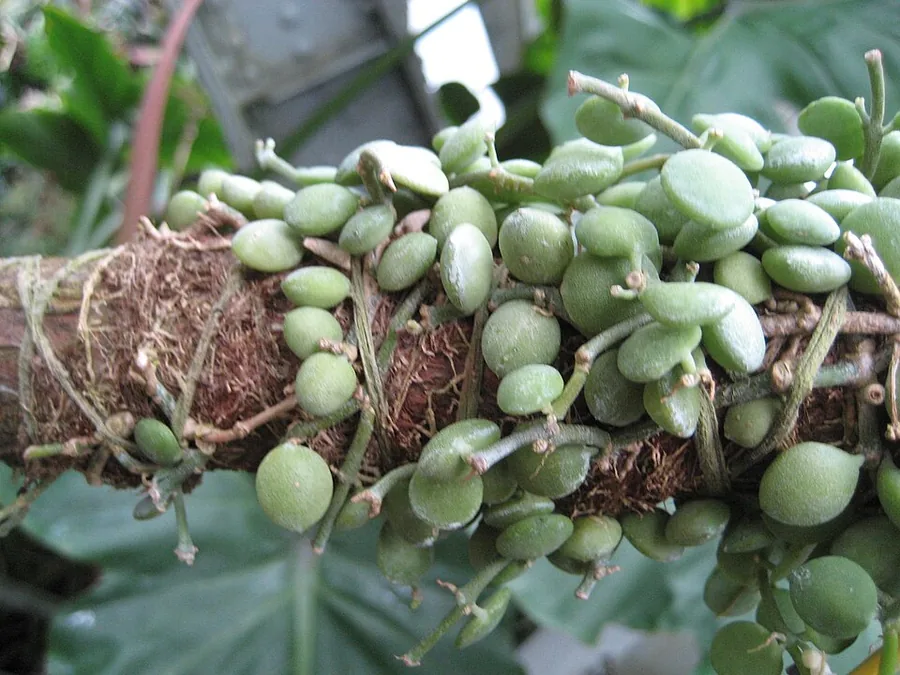
Known as string of nickels for its trailing stems strung with rounded, coin-like paired leaves, this species ranges in the wild from southern China through tropical Asia to northern Queensland.
Dischidia ruscifolia
Sold as million hearts, it carries dense trailing stems lined with small heart-shaped leaves that suit a tight, layered display.
Dischidia ovata
The watermelon dischidia brings oval green leaves striped with silver, and in bright light they warm to a pinkish-red tinge.
How to propagate
Building a fuller display is easy, since one healthy dischidia offers all the cuttings you need to fill more pots around the home or pass along to friends.
Stem cuttingsEasy
Spring or summer during active growth · A few weeks to root
Stem cuttings are far and away the simplest path to more dischidia, ideal for spreading the look across a home. Take them in spring or summer while the plant is growing, set them into a coarse, moist mix, and they root within a few weeks. From there each cutting fills out into a trailing plant identical to its parent, ready for another pot or shelf.
Myths
Dischidia leech off their host trees and slowly damage them.
It is a tidy story, but an inaccurate one: these plants are epiphytes, and sometimes lithophytes, which means they rest on tree bark or rock purely for support. They take nothing from the surface beneath them, drawing their water and food from the air and rain instead. A dischidia never feeds off its host, so the tree comes to no harm.