Shrub · Solanaceae
Goji Berry
Lycium barbarum
Give it full sun, lean alkaline soil, and room to sprawl, and this tough nightshade earns its keep with superfood berries.
Full sun
Every 7–14 days
USDA 4–7
3–12 ft · 0.9–3.7 m
Overview
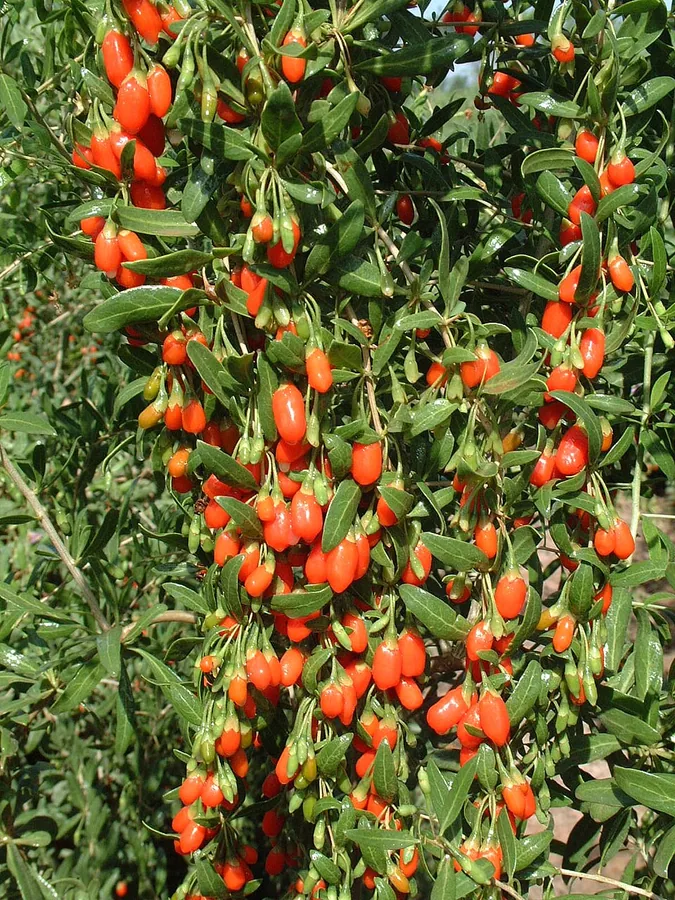
Goji berry brings a working superfood into the garden, the same bright red fruit you have met on the health-food shelf, now growing at the edge of a sunny border. It carries a long history from China, where it has been cultivated for centuries, and it wears that heritage lightly, proving far hardier than its delicate name suggests. Set in an open, sunlit spot, it takes cold to -20°F (-29°C) and pays no mind to heat, drought, or thin ground.
As a garden presence it is loose and informal, all sprawling, thorny canes that arch and wander. Those canes reach 3 to 12 feet (91 cm to 3.7 m) and lean, root, and sucker where they touch the soil, which makes goji a plant for a relaxed corner rather than a clipped bed. Purple flowers open in late spring, and about 35 days on the berries come, carrying the season from midsummer into late fall.
This is a fruit for a low-maintenance, productive garden, an easy plant to keep and a spreading one to place with intent. It fruits with little fuss once settled, though it suckers freely and self-seeds, and in some regions it has slipped the garden and gone weedy. Give it a spot where its spread won't become a problem, a back fence line or a wild edge, and it earns its place for years.
Care
The short version: a sunny open position, lean soil on the alkaline side with sharp drainage, a weekly inch of water, and one pruning session a year so the thorny, wandering canes keep their place in the garden.
Light
Goji is built for full sun, and the more it gets the better it looks and bears, since bright, hot positions bring the best fruit and the least disease. A little partial shade is workable, but light shade costs berries and lets mildew settle on crowded foliage.
Water
Offer about 1 inch of water a week and let the top half of the soil dry between drinks, an easy rhythm to fold into a garden routine. New transplants want steady watering as they settle, while established plants take drought in stride. What it will not abide is waterlogged ground or sharp swings from soaked to bone dry.
Soil
Set it in well-drained light loam, though goji is easy about the ground it takes. It leans alkaline, a pH of 6.8 to 8.2, the reverse of most berries, which is why it falters where the soil turns acidic.
Temperature
This is a genuinely hardy shrub, at home from -20°F to 100°F (-29°C to 38°C). It carries through fierce winters and searing summers alike, and that toughness is part of why it settles into a landscape so readily once planted.
Humidity
Goji prefers the dry side, around 20% to 50% humidity, a match for its hot, arid origins. Damp, still air is what invites powdery mildew, so open placement and good airflow serve it better than any effort to add moisture.
Feeding
Feed a balanced 16-16-16 fertilizer through spring and summer, timed to budbreak, flowering, and fruit ripening. Roughly 4 to 5 tablespoons per 10 square feet a year, split into three feedings, is all this undemanding plant asks.
Pruning
Let it be for its first year. After that, prune during dormancy to remove weak or damaged branches and shorten the laterals 6 to 18 inches, then pinch the terminals back 2 to 3 inches in early summer to encourage branching and hold the thorny, sprawling canes in a pleasing shape.
Repotting
Goji is a plant for open ground rather than a pot, so repotting rarely enters the picture. Should you grow it in a container, move it up when you notice roots circling, water running straight through, or top growth that has stalled.
Size & spacing
Plan for a large, arching shrub of 3 to 12 feet (91 cm to 3.7 m) tall with an even broader sprawl of 4 to 8 feet (120 to 244 cm). Give it that footprint from the outset, since the canes lean, sucker, and claim their space quickly.
When to plant
Goji is a cold-hardy perennial shrub for zones 4 to 7, a fixture that returns year after year. Start seeds indoors in late winter, or set out plants after the last spring frost once the soil has warmed, then watch for purple flowers in late spring and ripe berries from midsummer into late fall.
Northern hemisphere
Southern hemisphere
Typical months for a temperate climate: start earlier in warm zones, later where spring frosts linger.
- Sow: 8 to 10 weeks before last frost (seed); or propagate from cuttings or suckers
- Plant: after last spring frost once soil has warmed
- Harvest: purple flowers in late spring; berries ripen mid-summer to late fall, about 35 days after full bloom
Hardiness
USDA hardiness zones: 4–7
Temperature: down to -34°C
Troubleshooting
Goji asks little and gives back plenty, with few real troubles, and nearly all of what does appear shows on the leaves. Know the handful of pests and the one common disease below, and you can step in early. Read what you see, then act before it spreads through the bush.
Raised welts and rumpled, distorted foliage
When the foliage turns warty and misshapen, the cause is the goji gall mite, a pest too small to see that works inside the leaf and raises those green to yellow galls that spoil the plant's tidy look. It is a manageable setback rather than a lasting one. Prune out the worst-affected growth and burn it, then treat the buds with horticultural oil or sulfur as they break in spring, and the shrub returns to form.
Fix:
- Prune out and destroy heavily galled growth
- Apply horticultural oil or sulfur per label as buds break
- Remove and dispose of fallen infested leaves
A pale, powdery cast settling over the leaves
A soft white haze that dulls the leaves is powdery mildew, the kind of thing that arrives when a season stays cool and damp, and it wipes away under a finger. Set in a sunny, open spot, goji casts it off once the heat returns, so the answer is really about giving the plant air. Thin any crowded stems, water at the base, and keep a labeled fungicide in reserve for the rare case that spreads.
Fix:
- Improve air circulation by thinning crowded stems
- Avoid overhead watering
- Apply a labeled fungicide or sulfur if severe
Twisted, tacky young growth alive with minute pests
Sticky leaves and tips that curl inward usually mean aphids have gathered on the tender new growth, though spider mites and potato leafhoppers can leave a similar impression. Turn the leaves to find the soft-bodied insects, the sheen of honeydew, or a trace of fine webbing. A firm jet of water clears most of them, insecticidal soap tidies the rest, and the ladybugs drawn to the scene will see the job through.
Fix:
- Dislodge with a strong jet of water
- Apply insecticidal soap or horticultural oil to affected growth
- Encourage natural predators such as ladybugs
Toxicity
The ripe berries are a celebrated superfood, safe to eat fresh, cooked, or dried, so the harvest is nothing to fret over. The foliage is the caveat: as a nightshade, the leaves and unripe parts carry trace alkaloids that make them a mild caution for cats, dogs, horses, and other animals inclined to graze. Keep the sharp thorns on the stems in mind as well.
Toxic to
Cats · Dogs · Horses · Rabbits · Livestock · Birds
Safe for
People
Cats Mild
The ripe berries pose no trouble for a cat, though the leaves are another matter, carrying trace nightshade alkaloids. A cat that samples the foliage may drool a little or feel a mild upset, so a household with a curious cat is wise to keep it clear of the plant.
Dogs Mild
A dog that picks up a fallen berry is in no danger, but the leaves and green stems can bring on mild drooling or a touch of digestive upset if chewed. In a home with a grazer, a little discouragement is all it takes.
Horses Mild
For horses the foliage is only a low risk, where the trace alkaloids may leave mild stomach discomfort should they browse the bush. The berries are no concern at all.
Rabbits Mild
Ripe berries make a fine treat, yet the leaves and unripe parts hold the same trace alkaloids and can unsettle a rabbit's delicate gut. The foliage is best offered as an occasional nibble, if at all.
Livestock Mild
Cattle, goats, and sheep can browse near a goji planting with little bother, though heavy grazing on the leaves may bring mild digestive upset from the nightshade alkaloids they carry.
Birds Mild
Birds take the ripe fruit without harm and lend a hand spreading the seed. Since the leaves carry trace alkaloids, the only caution is around the foliage rather than the fruit.
People Ripe fruit safe
Ripe goji berries are a celebrated superfood, enjoyed fresh, cooked, or dried with no concern. Leave the foliage and unripe parts, which hold trace alkaloids, and mind the sharp thorns along the stems.
Stems carry sharp thorns that can scratch people and pets, and the leaves and unripe parts contain only trace solanaceous alkaloids, so discourage pets from grazing foliage.
Helpline numbers

United States
ASPCA Animal Poison Control: (888) 426-4435 (fee applies)
Poison Control: (800) 222-1222



Canada
Poison Centres: 1-844-764-7669
Varieties
Goji comes to the garden under a handful of named cultivars, and choosing a known name secures the predictable fruit that seed-grown plants cannot offer. These are the selections you are most likely to find.
Crimson Star (Ningxia #1)
A widely grown favorite that begins bearing 1 to 2 years after planting and reaches full production in 3 to 5 years.
Phoenix Tears
A productive selection valued for the generous crop of fruit it yields.
Wolfberry Agrodevco
A named cultivar offered with home gardens and small plantings in mind.
How to propagate
Goji increases in several ways, from patient seed to freely offered suckers, and the route you choose shapes how soon the berries arrive and whether the new plant echoes its parent.
SeedEasy
Start indoors in late winter to spring · 2 years to first fruit, full production in 3 to 5 years
Started indoors in late winter or spring, goji rises easily from seed, though the seedlings arrive variable and the wait runs about 2 years to the first fruit and 3 to 5 years to a full crop. For a known cultivar and dependable berries, a named plant is the surer beginning.
Stem cuttingsModerate
Softwood cuttings in early summer or hardwood cuttings during dormancy · Several weeks to root, fruiting within a couple of years
Softwood cuttings taken in early summer or hardwood cuttings taken during dormancy root over several weeks and fruit within a couple of years. Because cuttings come true to type, this is the route that keeps a cultivar's character intact.
DivisionEasy
Dig and transplant suckers in dormancy · Establishes quickly once moved
A settled plant sends up suckers freely from about year 3, and the simplest new plants come from lifting those rooted suckers during dormancy. Dug and moved at that point, they take hold quickly.
Myths
The berries of this nightshade shrub are unfit for the table.
The ripe berries are enjoyed across the world as a superfood, whether fresh, cooked, or dried. Only the leaves and unripe parts hold trace solanaceous alkaloids, and even those amount to a mild caution rather than a real danger. The fruit is safe to eat.
Goji needs rich, acidic soil to thrive.
The reverse is the case, since goji comes from slightly alkaline ground and settles best at a pH of 7 to 8. Acidic soil actually holds it back, so set aside the soil acidifier you would reach for with blueberries.