Vegetable · Solanaceae
Ground Cherry
Physalis pruinosa
Let the husks dry, drop, and turn gold, and the ground cherry brings a sweet treat to the table all season.
Full sun
Every 3–7 days
59–86°F · 15–30°C
70–90 days
Overview
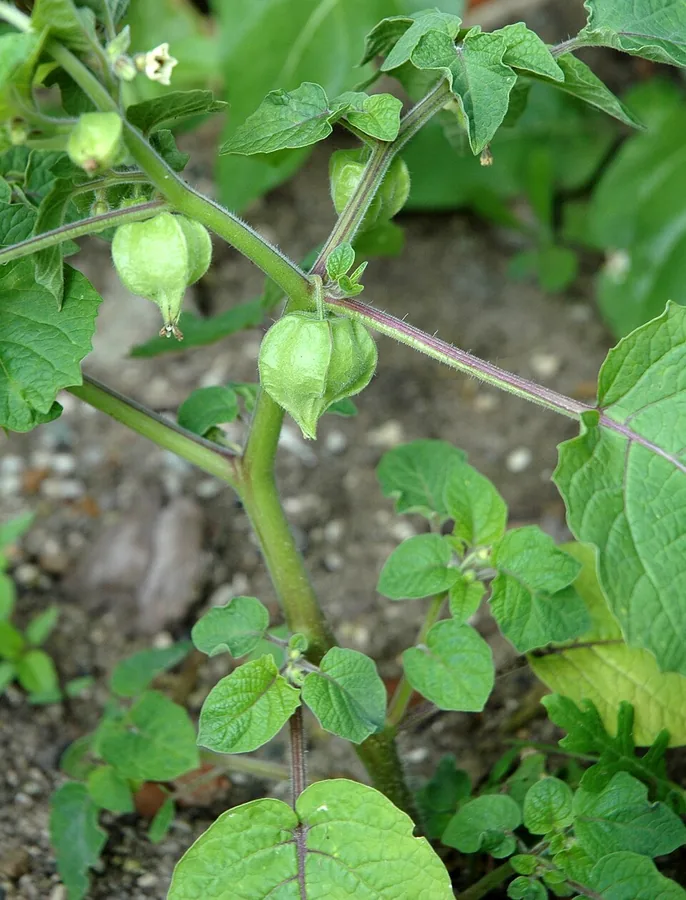
The ground cherry brings an old-fashioned, kitchen-garden charm to a sunny corner of the yard, a low, sprawling member of the nightshade family and a close cousin of the tomato and tomatillo that any first-time grower can carry off. Each small fruit rides inside a papery husk shaped like a tiny lantern, a detail that earns it a place among the prettier edibles you can grow. It answers to a few names too, the husk cherry, the husk tomato, and the strawberry tomato.
It also rewards a slower, more attentive kind of gardening, because the fruit is never picked from the plant. You wait for the husks to dry to a thin, papery brown and the golden berries to fall on their own, then gather them from the ground on a morning walk through the bed. That ripe fruit tastes sweet and a touch tropical, sitting somewhere between a tomato and a pineapple, a treat to fold into a summer table.
One note of caution keeps company with the sweetness. Only the fully ripe golden fruit belongs on the plate, while the green unripe fruit, the husk, the leaves, and the stems hold solanine and will make you sick. Grow it for that candy-sweet harvest, and simply keep every green part out of the kitchen.
Care
The short version: a full-sun spot, with a little shade tolerated, soil kept evenly moist at about an inch a week, rich and well-drained ground, and room enough for the sprawling plants to breathe.
Light
Ground cherries fruit best in full sun, with 6 or more hours of direct light a day, so give them the brightest corner of the plot. They accept a little partial shade, but the sunnier the spot, the more fruit fills the basket.
Water
Keep the moisture steady and even, about an inch of water a week, and the fruit fills out beautifully. Once established the plants take some heat and drought in stride, so a light touch serves them best. Water at the base rather than overhead, since damp leaves are what invite disease into the bed.
Soil
Set them in fertile, well-drained loam enriched with plenty of organic matter. A pH of 6.0 to 6.8, just on the acidic side, suits them well.
Temperature
They settle in from 59°F to 86°F (15°C to 30°C). Warmth is what carries the fruit along, so a cool spell early in the season slows the whole planting down.
Humidity
Ordinary outdoor air, roughly 40% to 70%, is all they ask, and the number rarely needs a second thought. Airflow matters far more, since crowded, damp leaves are where disease settles in.
Feeding
Feed monthly through the growing season with a balanced, low-nitrogen food or compost. Too much nitrogen grows a leafy plant with little fruit, so a restrained hand is the right one.
Pruning
These plants ask for little pruning. Pinch or stake the sprawling stems to keep the fruit off wet soil and let air move through the bed, and clip out any diseased foliage as it appears.
Repotting
Start seedlings in cells or pots and move them once into the garden. They are not kept on as repotted houseplants, so the transplant into the bed is the only move they need.
Size & spacing
Plants reach 18 to 35 inches (45 to 90 cm) tall and spread about as wide, holding a low, relaxed shape in the bed. Give each one 18 to 24 inches of room so air can move and the sprawling stems find support.
When to plant
Ground cherries want warmth and won't stand a frost, so let the calendar lead. Start the seeds indoors in early spring, move the plants into the garden a few weeks after the last frost once the soil has warmed, and gather fruit from mid-summer into fall as the husks dry and drop.
Northern hemisphere
Southern hemisphere
Typical months for a temperate climate: start earlier in warm zones, later where spring frosts linger.
- Sow: 6-8 weeks before the last expected spring frost
- Plant: After all danger of frost, about 2-4 weeks after the last frost once soil is warm
- Harvest: Harvest from mid-summer into fall once husks turn dry and papery and the golden ripe fruit drops to the ground
Hardiness
USDA hardiness zones: 3–9
Temperature: down to -40°C
Troubleshooting
Most ground cherry trouble surfaces on the leaves or in thin, empty husks, and a little attention keeps the bed looking its best. Catch the early signs and you can step in before a small issue spreads through the planting. Match what you see below, then act while it still helps.
Chewed holes and stripped leaves
The ragged, lace-edged leaves that spoil a tidy bed are usually the work of tomato hornworms, big green caterpillars that can strip a stem overnight, with small hopping flea beetles and Colorado potato beetles adding to the mess. Handpicking the hornworms and beetles keeps the planting looking cared for, and a row cover over young transplants protects them until they settle. A regular walk through the patch and a rotation away from other nightshades keeps the whole corner in good order.
Fix:
- Handpick hornworms and beetles
- Use row cover on young transplants
- Apply an approved insecticide only if damage is severe
Full of husks, short on actual berries
A planting that reads all lush, dark leaves with little to gather is often the sign of too much nitrogen, which favors foliage over the flowers you actually want. A cool start to the season and thin early pollination leave the husks flat as well. Ease off the high-nitrogen feed, keep the watering even, and let warmth and a patient hand bring the harvest in.
Fix:
- Stop high-nitrogen feeding
- Keep moisture even
- Allow plants time and warmth to set fruit
Foliage fading to yellow, spotted dark, or drooping
Target-ringed dark blotches and a yellowing lower canopy signal early blight and the leaf diseases that pass through nightshades, while an abrupt one-sided wilt reads as verticillium wilt or tobacco mosaic virus. Removing the marked leaves, watering low at the base, and pulling any plant that wilts for good keeps the bed presentable and healthy. A rotation out of nightshade ground and generous spacing for airflow keeps the trouble from returning.
Fix:
- Remove affected foliage
- Avoid overhead watering
- Rotate crops and remove infected plants
Trailing stems leaving fruit to rest on muddy ground
That relaxed, tumbling look is simply the ground cherry's low, spreading habit, and a crowded bed or a windy corner pushes it further until the husks settle into wet soil. A stake or cage set early keeps the planting looking composed, and a layer of mulch beneath catches the fallen fruit so it stays clean. Set each plant 18 to 24 inches apart and the arrangement holds its shape from the beginning.
Fix:
- Stake or cage plants
- Mulch underneath to keep fallen fruit clean
- Space plants 18-24 inches apart
Toxicity
The ripe fruit is a treat, but the rest of the plant stays out of the kitchen. The unripe green fruit, the husk, the leaves, and the stems all hold a natural compound called solanine that upsets the stomach. Eat only the fully ripe golden berries, and keep the green parts away from children, pets, and grazing animals.
Toxic to
Cats · Dogs · Horses · Rabbits · Livestock · Birds
Safe for
People
Cats Caution
A cat that samples a leaf or a green husk fruit may drool, be sick, or pass loose stools. Keep the foliage and any green windfall well out of a curious cat's reach around the garden.
Dogs Caution
A dog that nibbles the green parts tends to drool, feel queasy, and turn listless. Gather up fallen green fruit wherever a dog spends its time outdoors.
Horses Caution
The solanine in the leaves and stems can leave a horse off its feed, dull, and unsteady, so keep grazing animals clear of the plants.
Rabbits Caution
The foliage and unripe fruit make poor browse for rabbits and bring on digestive upset. Never offer trimmings from the plant.
Livestock Caution
Cattle, goats, and sheep can react to the alkaloids in the green plant with stomach trouble and weakness. Fence them away from any patch.
Birds Caution
Treat the green parts as unsafe for backyard hens and other birds, since the same toxin is present. A bird may take a fully ripe berry without harm.
People Ripe fruit safe
The fully ripe golden berry, husked and fallen from the plant, is sweet and safe to enjoy at the table. The green unripe fruit, the husk, the leaves, and the stems hold solanine and will upset the stomach, so keep children clear of the green plant.
Eat only the fully ripe, golden fruit that has dropped to the ground and shed its papery husk. Do not eat unripe/green fruit, the husk, leaves, or stems, which are toxic and can cause stomach upset or poisoning. Keep windfall green fruit picked up where children or pets browse.
Helpline numbers

United States
ASPCA Animal Poison Control: (888) 426-4435 (fee applies)
Poison Control: (800) 222-1222



Canada
Poison Centres: 1-844-764-7669
Varieties
Only a few ground cherries make their way into home gardens, and they set themselves apart by size and sweetness. These are the ones worth knowing by name.
Aunt Molly's
A Polish heirloom favored for setting sweet golden fruit dependably and quietly reseeding itself season after season.
Cossack Pineapple
A ground cherry chosen for a rich, almost pineapple-like sweetness that makes it a standout on the table.
Cape gooseberry (Physalis peruviana)
A taller, upright relative grown as an annual, carrying larger orange-gold berries than the low, sprawling husk cherry.
How to propagate
Ground cherries are simple to raise from seed, and once they fruit they quietly sow the next season for you.
SeedEasy
Start indoors 6-8 weeks before the last frost; transplant after frost danger passes · About 2-3 weeks to germinate at 75-85°F and roughly 6-8 weeks to reach transplant size
Raising ground cherries from seed follows the same easy routine as tomatoes and makes a pleasant early-season project on a bright windowsill. Sow about a quarter inch deep in a sterile soilless mix 6 to 8 weeks before your last frost, and keep the tray warm at 75°F to 85°F (24°C to 29°C), where the seeds sprout in 2 to 3 weeks and reach transplant size in another 6 to 8. Harden the seedlings off and set them out once the frost has passed. Once the plants fruit, they self-sow freely from any berries that drop and rot in place, folding the next season into this one.
Myths
Everything this plant produces is dangerous to eat, the golden berries no less than the leaves.
The fully ripe golden fruit is sweet and welcome at the table. The unripe green fruit, the husk, the leaves, and the stems are the parts that hold solanine-type alkaloids, and those are left off the plate.
The lantern-like husk is meant for the table, an edible wrapping around the berry.
The husk is only a wrapper and is set aside. The ripe berry inside is the part you serve, once the dry, papery shell is peeled away.