Vegetable · Solanaceae
Chili Pepper
Capsicum annuum
Offer it heat, sun, and steady water, and a chili plant rewards the patio with fruit from summer into fall.
Full sun
Every 2–4 days
59–86°F · 15–30°C
70–85 days
Overview
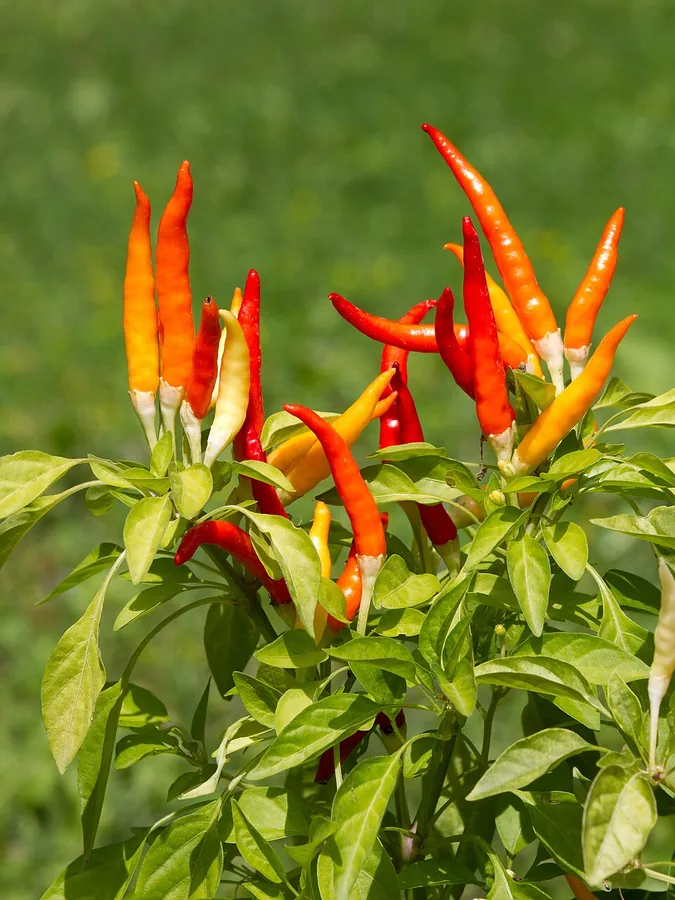
A chili pepper earns its keep wherever it lands, and it asks for a warm, sunny spot to do it. Kin to the tomato within the nightshade family, the chili first traveled out of the Americas and now finds a home on every continent gardeners tend. Think of it as a warm season annual, equally at ease anchoring a sunny bed or holding court in a pot on a hot patio.
The fruit comes in a remarkable spread. Some peppers keep things gentle and thick-walled for eating fresh, while others arrive with a bite serious enough to call for gloves at the cutting board. The heat traces back to capsaicin, gathered in the ribs and the seeds, the very compound that also stings skin, eyes, and the mouths of most animals.
Peppers reward a patient start and a warm season from end to end. They are unhurried out of seed and disgruntled by the cold, but set them up with full sun, even moisture, and a long warm season and they keep handing over fruit right up until frost arrives.
Care
The short version: full sun and lasting warmth, with the soil held evenly moist so the fruit never rots at the tip. Set them in rich, well drained ground, feed with a light touch across the season, and resist hurrying them out into the cold.
Light
Give chili peppers a place in full sun, eight or more hours of it through the day. Short them on light and the plants stretch leggy, the foliage thins, and the harvest dwindles to a fraction of what it might have been.
Water
Hold the soil evenly moist, watering deeply to at least 6 inches and tucking mulch over the surface to keep the moisture from escaping. The steady hand counts most through flowering and fruit set, since it is the dry-then-wet swing that brings on blossom end rot. Tucked into a pot or caught in a heat wave, the plant may need water every 2 to 4 days.
Soil
Settle them into well drained loam or sandy loam generously worked with organic matter. A pH between 6.0 and 6.8 sits right, leaning a touch acidic, and free drainage keeps the roots from lingering in wet ground.
Temperature
Warmth is where peppers come into their own, with the sweet spot between 59°F and 86°F (15°C to 30°C). Cold soil holds them back at the outset, and fruit set falters once the days run too hot, so it is a long, mild stretch that truly fills the plant.
Humidity
Everyday humidity in the 40% to 70% range is more than enough, so there is no figure here to lose sleep over. Air movement matters far more, since leaves left crowded and damp open the door to the bacterial spots that plague peppers.
Feeding
Feed once a month across the growing season with a balanced vegetable fertilizer. A side-dressing of calcium nitrate roughly 3 to 4 weeks after transplanting, then again a few weeks down the line, helps the fruit set, though a soil test is wiser than guesswork.
Pruning
Peppers want very little from the pruners. You might pinch off the first flowers to coax fuller growth and stronger roots, clear away any damaged or diseased leaves, and stake the taller plants so a generous crop of fruit does not pull them over.
Repotting
Treat the chili as a plant for a single season, begun fresh from seed each year. Shift the seedlings into roomier pots before they head outdoors so the roots never wind around themselves, and let circling roots or fast wilting tell you a young plant has outgrown its cell.
Size & spacing
Most chili plants reach 12 to 35 inches (30 to 90 cm) tall according to type, filling out 12 to 24 inches (30 to 60 cm) across. Allow each one that breathing room so air drifts through and the leaves dry quickly.
When to plant
Chili peppers are creatures of the heat with no patience for frost. Sow the seed indoors well ahead of the last frost, keep the transplants back until nights hold above about 55°F (13°C), and gather fruit from summer on into fall.
Northern hemisphere
Southern hemisphere
Typical months for a temperate climate: start earlier in warm zones, later where spring frosts linger.
- Sow: 6 to 8 weeks before the last spring frost
- Plant: After the last frost once night temperatures stay above about 55°F (13°C)
- Harvest: Summer to fall harvest of fruit
Hardiness
USDA hardiness zones: 9–11
Temperature: down to -7°C
Troubleshooting
Trouble with peppers tends to surface on the fruit, the foliage, or the flowers. Notice it early and there is room to act before a small issue works its way through the plant. Find the description that matches your plant, then move while it still does some good.
Angular brown leaf spots ringed with yellow
These angular marks signal bacterial leaf spot, a problem that travels quickly through wet, splashing conditions and can leave a plant bare. Once a plant is badly marked there is no turning it back, so lift out the worst offenders and bin them. From there, water low at the base, leave wet foliage untouched, and shift your peppers well clear of tomatoes and the rest of the nightshade kin.
Fix:
- Remove and discard heavily infected plants
- Avoid overhead watering and handling plants when wet
- Use copper-based products where appropriate
Dark, sunken patch on the bottom of the fruit
What you are looking at is blossom end rot, and the cause sits in your watering rhythm rather than in soil that runs short on calcium. Let the soil lurch from parched to drenched and the plant simply can't move calcium up into the fruit it is filling. Settle into a steady watering routine, lay down mulch to hold the soil even, and keep a light hand with nitrogen.
Fix:
- Maintain even soil moisture and mulch to buffer drying
- Avoid over-applying nitrogen fertilizer
- Confirm adequate calcium with a soil test and amend if needed
Flowers drop without setting fruit
When the weather runs to extremes, peppers respond by letting their open blossoms go, releasing flowers once daytime climbs past 90°F (32°C) or nights slip below about 60°F (16°C). The plant itself carries on green and healthy through all of it. Hold the soil evenly moist, ease back on nitrogen while it blooms, and fruit set returns on its own once the weather finds a calmer middle.
Fix:
- Wait for moderate temperatures, when fruit set usually resumes
- Keep soil evenly moist
- Avoid heavy nitrogen feeding during flowering
Curled leaves with clusters of tiny insects and sticky residue
Those tiny soft bodies, green through to black, are aphids, and they gather along the tender shoot tips and the underside of leaves, trailing a sticky honeydew as they feed. A firm jet of water knocks most of them loose, and insecticidal soap or spinosad is worth keeping in reserve for the heaviest colonies only. Left to it, lady beetles and lacewings will quietly finish the job.
Fix:
- Dislodge colonies with a strong spray of water
- Apply insecticidal soap or spinosad if populations are high
- Encourage natural predators such as lady beetles and lacewings
Toxicity
The fruit is a pleasure to eat and a kitchen mainstay the world over, which puts people firmly on the safe side of chilis. The complication is capsaicin, the heat compound, a sharp irritant for cats, dogs, and most animals that can bring on a burning mouth, drooling, and an unsettled stomach. Birds stand apart as the lone exception, untroubled by any of it.
Toxic to
Cats · Dogs · Horses · Rabbits · Livestock
Safe for
People · Birds
Cats Mild
Bite into a pepper and a cat gets a sudden mouthful of burn. Look for drooling, a paw working at the mouth, and perhaps a little vomiting or loose stool that clears up on its own.
Dogs Mild
A dog that chews a pepper meets the same sting, with drooling, a queasy stomach, and a rush of thirst. Most come right once the heat dies down and they have had a good drink.
Horses Caution
A horse will seldom go near the spicy fruit, yet capsaicin would still scald the mouth and unsettle the gut, so it pays to keep the plants well beyond reach.
Rabbits Caution
For a small grazer the heat is simply too much. One nibble can leave a rabbit drooling and reluctant to eat, so keep it away from the plant entirely.
Livestock Caution
Goats, sheep, and cattle tend to find the burn unappealing and step around peppers, though a curious one that does take a mouthful can end up with an irritated mouth and stomach.
Birds Safe
Birds register none of the heat at all, missing the receptor that capsaicin works on. That is precisely the arrangement wild peppers depend on to have birds carry off and scatter their seeds.
People Edible
Chili fruit is a fixture of the kitchen and perfectly safe to eat, fierce as it can be. Pull on gloves before cutting the hottest sorts and keep the cut flesh nowhere near your eyes.
Capsaicin causes painful skin and eye irritation when handling or cutting hot peppers. Wear gloves, avoid touching your eyes or face, and wash hands thoroughly afterward; inhaling fumes from cut peppers can irritate the airways.
Helpline numbers

United States
ASPCA Animal Poison Control: (888) 426-4435 (fee applies)

United Kingdom
Animal PoisonLine: 01202 509000 (fee applies)

Australia
Animal Poisons Helpline: 1300 869 738
Varieties
There are thousands of chilis in cultivation, yet a handful keep returning to home gardens season after season. These are the ones worth recognizing by name and by their heat.
Jalapeno
Thick-walled and only medium-hot, this one is usually gathered while still green and tends to be the first reach for fresh dishes and pickling jars.
Cayenne
Slim, long, and wrinkled, with more bite than a jalapeno, and the pepper that dries down into the everyday ground cayenne powder.
Habanero
Shaped like a little lantern and very hot, this one belongs to the Capsicum chinense species and carries a clear fruity scent beneath the heat.
Thai (bird) pepper
Tiny and fiercely pungent, its fruit stands upright in clusters above tidy, compact plants.
How to propagate
Chili peppers come up from seed, and the whole of the craft is offering them warmth enough and a generous head start under cover indoors.
SeedModerate
Start seed indoors 6 to 8 weeks before the last spring frost · Germinates in roughly 1 to 3 weeks in warm soil (about 80-85°F); transplants are field-ready 6 to 8 weeks after sowing
Seed is the way peppers begin, and the one thing they truly ask for is steady warmth. Start them indoors 6 to 8 weeks before your last frost, set bottom heat near 80°F to 85°F (27°C to 29°C) under bright light, and they break the surface in about 1 to 3 weeks. Six to eight weeks on, once they have been hardened off and the frost is behind you, the seedlings are ready to take their place in the garden.
Myths
Chili peppers are deadly poisonous to dogs and cats.
The burn from capsaicin is real, but it is not the work of a true toxin. Chew a hot pepper and a pet earns a sore mouth and a turn of stomach upset for a while, nothing that lingers, and culinary peppers aren't on the ASPCA's classic toxic-plant list.
The heat in chili peppers harms birds.
Capsaicin simply does not register with birds, and they take the fruit without so much as a pause. That blind spot is the whole point, because wild peppers count on birds to swallow the fruit and carry the seeds far and wide.