Tree · Rutaceae
Grapefruit
Citrus × paradisi
Give it full sun, deep watering, and frost-free warmth, and a grapefruit tree carries fruit through winter.
Full sun
Every 7–14 days
55–100°F · 13–38°C
USDA 9–11
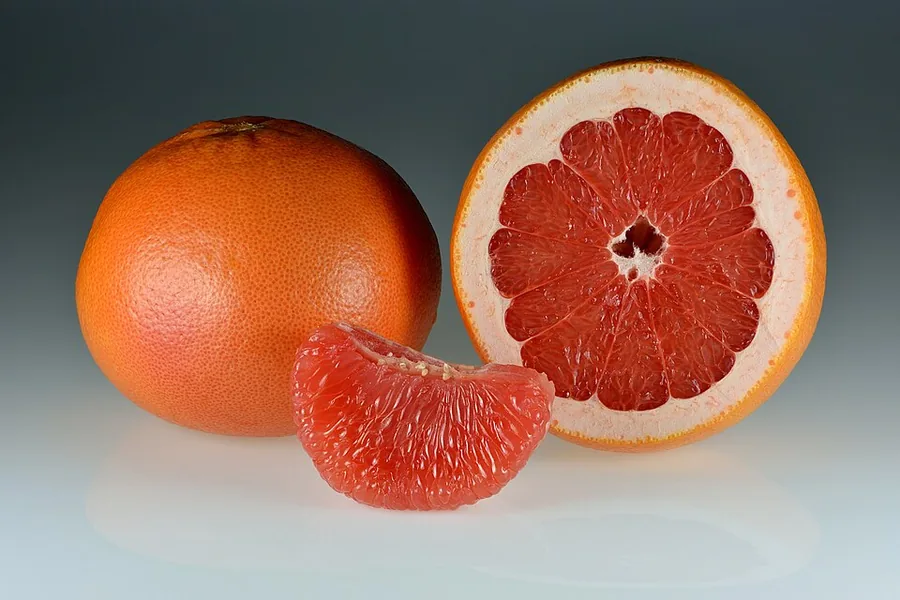
Overview
A grapefruit tree gives a garden an anchor with presence, a broad canopy of glossy leaves that holds bright fruit through the quiet cool months. It came about as a hybrid of the pomelo and the sweet orange, first noticed in the Caribbean before it found a home in orchards. Reaching 15 to 20 feet (4.5 to 6 m), it belongs where a courtyard, lawn, or wide bed can frame it as a centerpiece rather than a filler.
Where it lives is really a question of climate. Grapefruit settles happily into USDA zones 9 to 11, the warm-winter, long-summer regions where an outdoor life suits it and the fruit has time to sweeten. In cooler places a dwarf tree in a handsome pot becomes a movable feature, dressing a terrace in the warm season and retreating under cover when the air turns.
The daily rhythm it asks for is an easy one to fold into a life. Full sun, a deep and unhurried drink, and a seasonal citrus feed are nearly the whole routine. Keep to it and the tree returns the favor with more fruit than a single household can use, ripening in slow succession from fall into spring.
Care
The short version: a full-sun, frost-free position, a deep watering once the top few inches dry, well-drained sandy loam underfoot, and a citrus feed with micronutrients through the growing season.
Light
Grapefruit is a creature of full sun, and it repays every open hour with better fruit. Set it in shade and the tree stretches leggy, sets little, and struggles to sweeten what it holds. Give it the brightest, most open corner of the plot.
Water
Water deeply, then let the top few inches of soil dry before the next, which usually falls around every 7 to 14 days. In real heat, and for any tree in a pot, lean toward the wetter side. Steady, even moisture is the quiet secret to fruit that never splits.
Soil
Root it in well-drained sandy loam above all, since citrus resents wet feet and rots in soggy ground. A pH between 6.0 and 7.5 keeps it content, and good drainage counts for more than any richness in the soil.
Temperature
Grapefruit is comfortable across a generous range, roughly 55°F to 100°F (13°C to 38°C), but it will not weather a hard frost. A freeze can ruin the fruit and, deep enough, the tree that carries it.
Humidity
Ordinary garden air, near 40% to 60% humidity, is all a grapefruit tree wants. There is no reading to chase outdoors, and open airflow through the canopy does far more for its health than any measured figure.
Feeding
Offer a citrus fertilizer carrying nitrogen and micronutrients such as iron, zinc, and manganese. Feed through the growing season, from spring into late summer, then ease off as the air cools so the tree is not pushed into soft, pest-prone growth.
Pruning
Grapefruit asks for little pruning. In late winter to early spring, take out dead, damaged, or crossing branches and clear any suckers rising below the graft. Beyond that, let the canopy build its own generous shape.
Repotting
A container dwarf tree wants a roomier pot every 2 to 3 years. Roots slipping from the drainage holes, growth that has stalled, or water that races straight through all signal the moment to move it up.
Size & spacing
At its full stature a grapefruit reaches 15 to 20 feet (4.5 to 6 m) tall and spreads nearly as wide, around 12 to 15 feet (3.6 to 4.5 m). Plan that clearance so the canopy fills its space gracefully and air drifts freely through it.
When to plant
Grapefruit keeps a long, warm calendar and asks to be spared any frost. Set young trees into the garden in spring once the cold has truly gone, enjoy the fragrant bloom around March and April, and gather fruit from late fall into spring as it comes ripe in its own time.
Northern hemisphere
Southern hemisphere
Typical months for a temperate climate: start earlier in warm zones, later where spring frosts linger.
- Plant: Spring, after all danger of frost has passed.
- Harvest: Blooms in spring (mainly March to April); fruit matures over fall to spring and is harvested roughly November to May depending on variety.
Hardiness
USDA hardiness zones: 9–11
Temperature: down to -7°C
Troubleshooting
A grapefruit tree tells you how it is doing through its leaves and its fruit, and the signals are easy to read from the garden path. Match what you notice below, then act while the fix is still a small one.
Leaves turning yellow
When the canopy loses its polish and leaves fade, the tree is asking for something. An even yellow across the leaf points to a shortage of nitrogen, while yellow panels held inside green veins ask for iron or magnesium. Look down at the roots too, since ground that stays wet will dull the foliage just as surely as an empty feed can.
Fix:
- Apply a balanced citrus fertilizer with micronutrients
- Correct drainage and avoid waterlogging
Fruit dropping early or splitting open
A grapefruit that drops early or splits its skin has been living through uneven soil moisture. A dry stretch broken by a heavy soak sends the fruit swelling faster than its rind can grow, and the skin gives way. A calm, deep watering rhythm and a collar of mulch keep the soil settled, and the fruit stays whole on the branch where it belongs.
Fix:
- Provide consistent, deep irrigation
- Mulch to buffer soil moisture
Silvery winding trails on curled new leaves
Fine silver ribbons wandering across the newest leaves are the signature of the citrus leafminer, a small larva at work inside the soft growth. On a settled tree the marks are a cosmetic quirk more than a worry, easy to overlook from across the patio. Keep a light hand with nitrogen, because a rush of tender new leaves is the very thing that invites the pest to stay.
Fix:
- Tolerate light damage on mature trees
- Avoid excess nitrogen that triggers vulnerable new flushes
Toxicity
The flesh is a healthy pleasure for people, but the rest of the tree calls for a little household caution. Peel and leaves hold essential oils and psoralens that mildly upset cats, dogs, and horses and can leave skin sensitive to sunlight. Keep peels, leaves, and fallen fruit away from animals, and for people, keep in mind grapefruit's strong interaction with many medications.
Toxic to
Cats · Dogs · Horses · Rabbits · Livestock · Birds
Safe for
People
Cats Mild
For the household cat, the essential oils and psoralens in peel and leaves can mean vomiting, loose stools, and a subdued, off day. A brush of skin against the same parts can also leave a cat sensitive to sunlight.
Dogs Mild
A dog that mouths the rind or leaves tends toward vomiting, diarrhea, and a low, sluggish spell. The flesh troubles them far less, so the oily peel is the part best kept off the floor and out of the bin's easy reach.
Horses Mild
In a horse, citrus oils and psoralens can unsettle the stomach and take the shine off its energy. They seldom go looking for grapefruit, so the concern is really windfall fruit or peel left within reach of the paddock.
Rabbits Caution
Citrus never belonged on a rabbit's plate, and the oils in the rind sit poorly with a delicate gut. Leave the peel and leaves out of the hutch altogether, and treat even the flesh as something best not offered.
Livestock Caution
Cattle, goats, and sheep may pick at windfall fruit, though the peel oils can sour the rumen and dull the appetite. A quick sweep of fallen grapefruit from grazed ground removes the temptation entirely.
Birds Caution
Many pet birds enjoy a morsel of ripe flesh, but the peel and its concentrated oils are another matter. Serve only small, peeled pieces, and keep the rind and leaves well away from the cage.
People Flesh safe
At the table, the flesh is a wholesome, everyday pleasure. The one caveat is the drug interaction, since furanocoumarins can lift the blood levels of many medications too high, so a word with a pharmacist is wise for anyone on prescriptions.
Grapefruit furanocoumarins (such as bergamottin) inhibit intestinal CYP3A4, producing the well-known grapefruit drug interaction that can raise blood levels of many medications including some statins, blood pressure drugs, and anti-anxiety drugs; consult a pharmacist if you take affected medicines (FDA, NIH).
Helpline numbers

United States
ASPCA Animal Poison Control: (888) 426-4435 (fee applies)
Poison Control: (800) 222-1222



Canada
Poison Centres: 1-844-764-7669
Varieties
Grapefruit varieties sort themselves mostly by flesh color and seed count. These are the ones a home grower meets most, from the pale classic white to the glowing reds.
Ruby Red (Redblush)
The first red-fleshed grapefruit ever patented, still cherished for its warm pink-red flesh and its near-seedless fruit.
Marsh
The dependable white seedless grapefruit, its pale yellow flesh the commercial standard for many decades.
Star Ruby
A deep red, nearly seedless choice that rewards a sheltered spot, since it takes less kindly to cold and herbicides than most.
Rio Red
A Texas commercial favorite that keeps its deep red flesh color beautifully from the first fruit to the last.
How to propagate
There are two ways to bring a grapefruit into the garden, and the choice sets how soon the first fruit arrives. Grafting offers a dependable tree without a long wait, while seed is the slow and speculative option.
GraftingModerate
Spring to summer when bark slips easily · 1 to 2 years to a transplantable tree
Grafting is the nursery's chosen route, and the reasons are sound. Carried out in spring or summer while the bark slips easily, it keeps the young tree faithful to its parent and lends it the disease and cold tolerance of the rootstock. Allow 1 to 2 years for it to become a tree ready to take its place in the garden.
SeedEasy
Spring · Several years; fruiting may take 5 or more years
Seed is the simple, unhurried path. Sown in spring, the pips sprout with ease, though the seedlings may stray from the parent's flavor and can take 5 or more years to fruit. It makes a charming project for the patient, not a reliable way to fill the fruit bowl.
Myths
Grapefruit juice is a harmless, natural way to wash down medication.
The glass may look innocent, but grapefruit holds furanocoumarins that block the CYP3A4 enzyme in the gut, which can send the blood levels of many drugs far too high. The effect lasts most of a day, so setting the juice apart from the dose offers no real safety. Speak with a pharmacist or doctor before pairing grapefruit with any prescription.
Citrus fruit is completely safe for dogs and cats.
It is a comfortable assumption, yet the ASPCA lists grapefruit as toxic to cats and dogs, largely for the essential oils and psoralens packed into the peel. A pet that chews the rind or leaves can turn to vomiting, diarrhea, and a flat mood. Keep the peels and trimmings well out of reach.