Tree · Rutaceae
Kumquat
Citrus japonica
Give it full sun, even water, and shelter from hard frost, and this little citrus brings fruit to the room all winter.
Full sun
Every 5–10 days
USDA 8–11
8–15 ft · 2.4–4.6 m
Overview
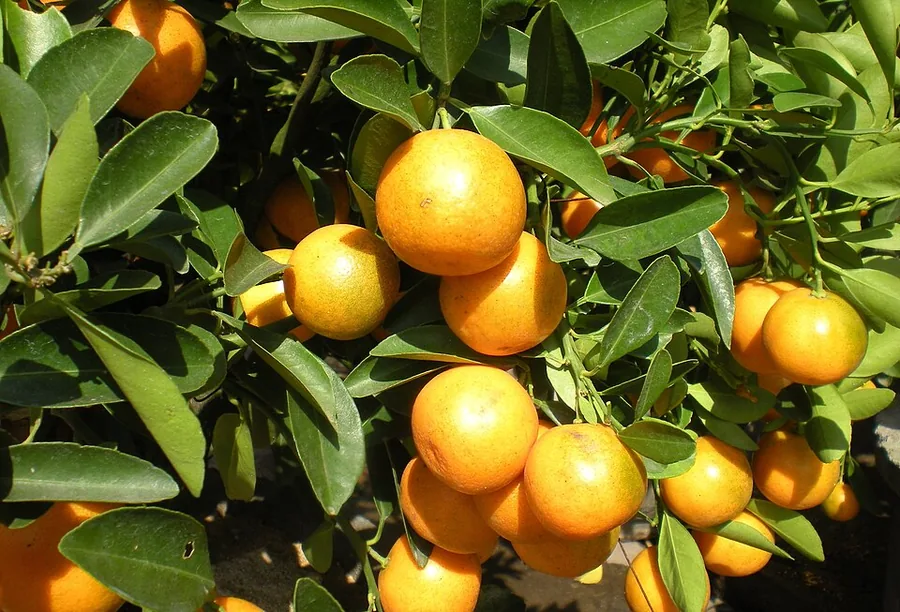
The kumquat is the citrus that earns a spot indoors as much for its presence as its fruit, a small, slow-growing tree that carries thumb-sized fruit you eat whole. Native to East Asia, it settles happily into a sunny patio or a generous pot by a bright window, staying compact enough to move under cover once the season turns. Its charm is a quiet reversal of the usual citrus, a sweet rind around tart flesh.
What lets it live where other citrus cannot is its ease in the cold. A lemon or lime would falter as the temperature drops, yet a kumquat holds its fruit through a brief chill, so it belongs to a cool porch, a winter sunroom, or a doorway that catches the low light of the year. That composure, paired with its slow, tidy shape, keeps it looking settled in a room rather than sprawling.
Living with one is refreshingly low-key. It slots into an everyday rhythm of sun by the window, an even drink, and a seasonal feed, then quietly holds fruit as a bright note through the darker months. The single thing to mind is drainage, since soggy roots undo a kumquat far sooner than any draft near the glass.
Care
The short version: full sun, loamy soil that drains quickly, and even moisture that never leaves the roots wet. Feed monthly through spring and summer, and move the tree out of a hard freeze.
Light
Set a kumquat where it drinks in full sun, six hours or more a day, for the fullest crop and the sweetest fruit. It will take a little afternoon shade in a hot spot, but a dim corner leaves it thin and reluctant.
Water
Keep the soil evenly moist, letting the top dry a touch between drinks, which tends to fall around every 5 to 10 days. Warmth and life in a pot dry it faster, so water more often then, and always let it run through freely, since soggy roots are the quickest way to lose the tree.
Soil
Give it loamy, well-draining soil on the acidic side, near a pH of 6.0 to 6.5. Free drainage counts for more than rich ground here, because standing water, not lean soil, is what ends a kumquat.
Temperature
The tree is at ease across a wide band, roughly 10°F to 100°F (-12°C to 38°C), which places it among the hardier citrus. It still welcomes cover through a hard freeze, most of all in its early years.
Humidity
Ordinary air of about 40% to 60% keeps a kumquat content, so outdoors there is nothing to manage. Indoors, in the dry heat of winter, a touch more moisture keeps the leaf edges from browning by the window.
Feeding
Feed monthly through spring and summer while the tree is in growth, using a balanced citrus fertilizer. Choose one carrying the micronutrients citrus wants, namely iron, zinc, and manganese, since a shortfall there is what turns the leaves yellow.
Pruning
A kumquat asks for very little cutting. Take out dead, damaged, or crossing branches and any rootstock suckers in late winter to early spring, once the harvest is behind you.
Repotting
A potted kumquat likes a fresh, roomier home every 2 to 3 years, or sooner if the roots begin to circle and water rushes straight through. Roots reaching from the drainage holes and stalled growth are the other cues to move it up.
Size & spacing
A kumquat rises slowly to about 8 to 15 feet (2.4 to 4.5 m) tall with a 6 to 10 foot (1.8 to 3 m) spread. A container holds it toward the smaller end, part of why it slips so gracefully into a room.
When to plant
The kumquat keeps a slow, cool-season calendar that fits neatly into the year at home. It flowers in late spring around May and June, then ripens its fruit through the colder months, so the harvest carries the room from October into March. Bring new trees outdoors in spring once the danger of frost has passed.
Northern hemisphere
Southern hemisphere
Typical months for a temperate climate: start earlier in warm zones, later where spring frosts linger.
- Plant: Spring, after danger of frost has passed
- Harvest: Blooms late spring (May to June); fruit ripens October through March
Hardiness
USDA hardiness zones: 8–11
Temperature: down to -12°C
Troubleshooting
Most of what goes wrong with a kumquat shows in the leaves or the fruit, and it traces back to water, feeding, or cold. Learn to read the first signs and you can settle the cause before it dims the display. Match what you notice below, then act while it still turns things around.
Leaves losing their green
Before the tree earns its place by the window, learn to read a fading leaf. Yellow caught between still-green veins signals a micronutrient gap, usually iron or zinc, while an even pale wash over the whole leaf means it wants nitrogen. Damp, poorly drained soil can stage the same look, so offer a chelated citrus feed, let the roots dry, and the canopy comes back to form.
Fix:
- Apply a citrus fertilizer with chelated micronutrients
- Correct drainage and reduce watering frequency
Fruit falling before its moment
The little fruits are the whole point of keeping this tree in view, so it stings when they drop early. A kumquat lets go of fruit under stress, and uneven watering is the usual reason, whether the roots run dry or sit soaked, with a sudden cold snap doing the same. Glance back at your watering and the weather, hold the soil evenly moist, and move the tree out of a frost's reach.
Fix:
- Maintain consistent soil moisture
- Protect the tree from frost during cold snaps
A dark film dulling the leaves
A tree meant to brighten a corner has no business looking dusty, and that black film is sooty mold. It settles on the sticky honeydew that sap-feeding insects leave behind, so lift a few leaves and you will likely find soft scale, whiteflies, or aphids at work below. Clear the insects with horticultural oil or insecticidal soap, and once they are gone the mold washes away and the shine returns.
Fix:
- Treat the insect pest with horticultural oil or insecticidal soap
- Wash off the mold once pests are controlled
Toxicity
The fruit is a pleasure for people, but the rest of the tree is not for the household pets. Its peel, leaves, and stems hold essential oils and psoralens that irritate the gut, so a cat, dog, or horse that chews them tends toward a mild upset stomach. Keep prunings and dropped fruit tidied away wherever animals roam.
Toxic to
Cats · Dogs · Horses · Rabbits · Livestock · Birds
Safe for
People
Cats Mild
A cat that samples the peel or a leaf tends to land an upset stomach, with drooling, vomiting, and loose stools to follow. The oils can leave a patch of skin reddened as well.
Dogs Mild
Let a dog gnaw the leaves or a piece of windfall and expect vomiting, diarrhea, and a subdued, off-color mood. The episode usually stays mild and settles on its own.
Horses Mild
The same citrus oils and psoralens unsettle a horse's digestion, bringing colic-like discomfort and loose droppings. Sweeping prunings and windfall from the paddock keeps the risk away.
Rabbits Caution
A rabbit carries a delicate digestive balance that the oily peel and bitter leaves can easily tip. Kumquat is best left off its plate entirely.
Livestock Caution
Goats, sheep, and cattle may pick at a little windfall without harm, yet a generous helping of oily peel and foliage can sour the rumen and dull their appetite. Clearing the drops is the graceful precaution.
Birds Caution
Birds prove sensitive to citrus essential oils, which readily irritate the gut. A small taste of the flesh passes fine, though the peel and leaves are better kept out of reach.
People Fruit safe
For people the whole fruit, peel and all, is a kitchen pleasure and perfectly safe to eat. Handling a great deal of cut peel or foliage can leave sensitive skin a touch irritated.
The fruit flesh is edible to people, but pets chewing peel, leaves, or large amounts of plant material can get mild GI irritation; essential oils may also irritate skin.
Helpline numbers

United States
ASPCA Animal Poison Control: (888) 426-4435 (fee applies)
Poison Control: (800) 222-1222



Canada
Poison Centres: 1-844-764-7669
Varieties
Only a few kumquats find their way into gardens and grocers, and they part company over shape, sweetness, and how much cold they take. These are the names worth knowing when you choose one for the house.
Nagami
Nagami is the kumquat you meet most often, its oval fruit setting tart flesh against a sweet, edible rind.
Meiwa
Meiwa comes round, larger, and nearly seedless, sweeter than the others and the natural choice for a bowl meant for eating fresh.
Marumi
Marumi offers a round, slightly tart fruit on a thorny tree that shrugs off cold better than the rest.
How to propagate
Kumquats are raised from grafts, cuttings, or seed, and the route you take decides how soon the tree fruits and how closely it echoes its parent.
GraftingModerate
Spring to early summer when bark slips · 1 to 2 years to a sizable tree
Grafting is the classic way growers raise new kumquats, and its appeal is easy to see. Carried out in spring or early summer while the bark slips, it delivers a true-to-type tree that grows briskly and keeps the parent's cold tolerance, filling out into a sizable tree within 1 to 2 years.
Stem cuttingsModerate
Late spring to summer · Several months to root
Cuttings taken in late spring or summer will strike, though they ask for patience, rooting slowly and unevenly over as long as several months. A dip of rooting hormone and a little warmth beneath the pot improve the odds considerably.
SeedEasy
Spring · Several years to fruiting
Seed sown in spring is the simplest start and a rather slow, chancy one. Seedlings often stray from the parent and can take several years to bear, which is why they serve mainly as rootstock or as a quiet experiment rather than a reliable crop.
Myths
You should peel a kumquat before eating it because the skin is the bad part.
The kumquat is that rare citrus made to be eaten whole. Its sweetness lives in the rind and its tartness in the flesh, the mirror image of an orange, so peeling it strips away the best of the experience. The rind is safe for people and meant to be eaten.
Kumquats are too tender to survive any frost.
Far from fragile, the kumquat stands among the hardiest citrus in cold weather. It takes brief spells well below freezing in stride, with sources noting hardiness to about 10°F (-12°C).