Tree · Rutaceae
Meyer Lemon
Citrus × meyeri
Set it in bright sun, keep the water even, and spare it hard frost, and this dwarf citrus brings fragrant blooms and sweet fruit to a room.
Full sun
Every 5–10 days
USDA 9–11
6–10 ft · 1.8–3 m
Overview
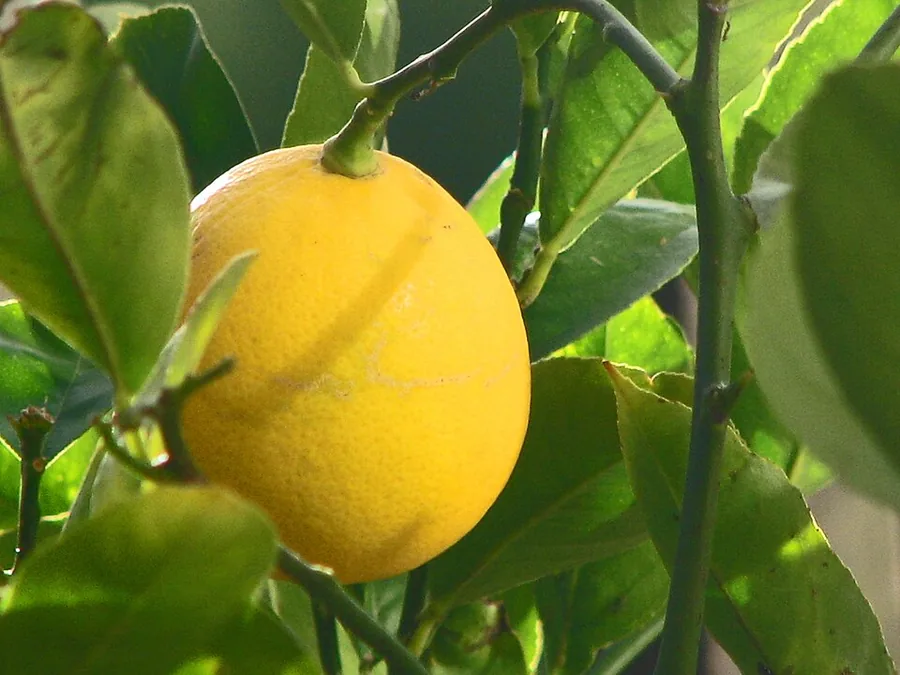
Few plants earn a place in a bright room as gracefully as the Meyer lemon, a hybrid citrus most likely born of a lemon crossed with a mandarin or sweet orange. That heritage gives it fruit that is rounder, sweeter, and thinner-skinned than a grocery lemon, the kind that turns a kitchen counter into something worth photographing. Compact enough for a pot, it has become the citrus of choice for anyone who wants a living tree indoors, far from the warm zones where it thrives outside.
Grown its own way, it becomes a compact evergreen reaching 6 to 10 feet (1.8 to 3 m) in the ground and far less in a container that suits a sunroom or a bright landing. Fragrant white flowers open on and off through the year, at their fullest in spring, while the fruit ripens unhurried from fall into winter. A single well-kept tree can hold blossom and fruit together, a quiet centerpiece that shifts with the seasons.
It asks for little beyond the right corner. Give it generous light, steady water, and shelter from hard frost, and it holds a glossy, poised presence that anchors a space. Let the cold or the watering slide, and it answers plainly, dropping leaves or yellowing between the veins in a way that is hard to overlook.
Care
The short version: set it in full sun with a well-draining, slightly acidic mix, water once the top inch dries, feed monthly through the growing season with a citrus fertilizer, and keep the tree above 50°F by bringing containers indoors before frost.
Light
Give the tree full sun, ideally eight hours a day or more, and it holds the steady bloom and fruit that make it worth a prime spot. In partial sun or light shade it carries on, though the canopy thins and the crop shrinks. Indoors, the brightest window in the house is its place, with a grow light to fill the gap through short days.
Water
Let the top inch (about 3 cm) of mix dry, then water deeply until it runs from the drainage holes. Never let the rootball go bone-dry or stand in water, and pour more often for container trees through summer heat. That even moisture is what keeps the foliage and fruit on show.
Soil
Pot it in a well-draining, slightly acidic sandy loam or a good citrus or potting mix. A pH of 6.0 to 7.0 keeps the micronutrients within reach, which is what preserves the deep, glossy green the plant is prized for. Above all, sharp drainage is the detail to get right.
Temperature
The tree lives comfortably across roughly 23°F to 95°F (-5°C to 35°C), but the cold end is where a display is lost. With protection it holds near 20°F (-7°C), yet hard frost scorches the leaves and can take an unguarded tree, so bring containers above 50°F (10°C) before winter settles in.
Humidity
Ordinary room air near 40% to 60% suits it well. The dry heat of a heated winter room can stress an indoor tree and invite spider mites, so a humidity tray or an occasional misting keeps the foliage fresh. Out in the garden there is nothing to tend.
Feeding
Feed monthly from spring through late summer while the tree is in active growth, using a balanced citrus fertilizer that carries nitrogen along with iron, zinc, and manganese. Those micronutrients keep the yellowing at bay and the canopy the rich green a room wants. Ease off through the quieter winter months.
Pruning
Prune lightly after the main harvest to shape the tree and open the canopy to light and air. Clear deadwood, crossing branches, and any suckers rising below the graft to keep the outline clean. It takes a firmer cut in stride, which makes holding a container tree to a tidy scale simple.
Repotting
Move it into fresh citrus or potting mix every 2 to 3 years, or sooner once it turns rootbound. Roots circling the pot, edging through the drainage holes, or water running straight through all mark the moment. Step up only one pot size so the mix never stays soggy and the display stays steady.
Size & spacing
In the ground a Meyer lemon reaches about 6 to 10 feet (1.8 to 3 m) tall and 4 to 8 feet (122 to 244 cm) wide, while a pot keeps it to a scale that fits a room. Give an in-ground tree space for that full spread and for air to move around the canopy.
When to plant
Meyer lemon feels most at home in the mild winters of zones 9 to 11, where it can hold a spot in the garden all year. In cooler places it becomes a movable feature, out on the terrace after the last frost once nights stay above 50°F (10°C), then back indoors before the cold returns. Bloom recurs through the year with a spring crescendo, and the fruit colors up across fall and winter.
Northern hemisphere
Southern hemisphere
Typical months for a temperate climate: start earlier in warm zones, later where spring frosts linger.
- Plant: After the last frost when night temperatures stay above 50°F (late spring); in zones below 9 grow in a container and overwinter indoors
- Harvest: Blooms intermittently year-round, heaviest in spring; fruit ripens mainly fall through winter
Hardiness
USDA hardiness zones: 9–11
Temperature: down to -7°C
Troubleshooting
Most of what troubles a Meyer lemon traces to cold, water, or feeding, and the canopy is the first place it registers. Read those early cues and you can set things right long before the tree loses the leaves that make it a centerpiece. Match what you see below, then act while it still counts.
Foliage paling while the veins keep their green
A canopy that turns pale over green veins loses the glossy poise that makes this tree a focal point, and the name for it is interveinal chlorosis, a sign the roots cannot reach iron, zinc, or manganese. The cause is usually soil pH that has slipped too high or a mix left too wet. A complete citrus fertilizer with chelated micronutrients, better drainage, and a pH eased back toward 6.0 to 7.0 restore the deep green a room deserves.
Fix:
- Apply a complete citrus fertilizer with chelated micronutrients
- Improve drainage and reduce watering frequency
- Adjust soil pH toward 6.0 to 7.0
A canopy shed in a single spell
Few things dim a corner faster than a tree that sheds its whole canopy at once, and the trigger is almost always a shock. Cold near or below 20°F (-7°C) leads the list, though a hard dry-out, waterlogged roots, or a hurried move between rooms and terrace can do the same. Settle the tree in a sheltered position above 50°F (10°C), keep the watering even, and dress it in frost cloth before a cold spell arrives.
Fix:
- Move the container to a sheltered spot above 50°F
- Maintain even soil moisture
- Protect with frost cloth during cold spells
Blossoms and young fruit letting go
A scatter of spent flowers and tiny fruit on the floor is nothing to fret over, since modest drop is the tree's own editing, shedding more than it could ever carry to term. A heavier fall is worth reading, and it usually follows water or temperature stress, dry air, or a move made while the tree is in flower. Hold the setting constant, keep watering and feeding to their rhythm, and leave the tree where it stands once the blossoms open.
Fix:
- Maintain steady watering and feeding
- Avoid relocating the plant during bloom and fruit set
- Keep humidity moderate when grown indoors
Toxicity
The juicy flesh is a pleasure at the table, but the rest of the tree is best left be. Its peel, leaves, and seeds hold essential oils and psoralens that irritate an animal's stomach and can leave skin sensitive to sunlight. Keep prunings, peels, and windfalls away from cats, dogs, horses, and grazing animals.
Toxic to
Cats · Dogs · Horses · Rabbits · Livestock · Birds
Safe for
People
Cats Mild
A curious cat that chews the peel or leaves tends to come away with an upset stomach, marked by vomiting, loose stools, and a subdued mood. The essential oils can also leave the skin sensitive to sunlight.
Dogs Mild
A dog that has been at the leaves, peel, or a fallen fruit usually shows vomiting, diarrhea, and flagging energy. Most episodes remain mild, though the oils may irritate the skin.
Horses Mild
The same oils and psoralens unsettle a horse's gut, dulling its appetite and loosening its droppings. It is wise to keep prunings and windfalls clear of the paddock.
Rabbits Caution
With those irritant oils in the peel and leaves, neither makes a safe nibble for a rabbit. One that gets into them may lose interest in food or pass soft stools.
Livestock Caution
Goats, sheep, and cattle can take a stomach upset from the oily peel and foliage if they browse the tree or its trimmings. Fencing them out and clearing fallen prunings keeps them well.
Birds Caution
The concentrated oils in peel and leaves can irritate a bird, so both are best left off the menu. A small taste of the plain flesh is the safer indulgence.
People Flesh safe
The juicy flesh is a kitchen pleasure and good to eat. Working with a lot of peel or leaves can leave skin sensitive to sun, so a wash after pruning is worth the moment.
Keep prunings, peels, leaves, and seeds away from pets; the fleshy fruit is generally only a mild stomach irritant in small amounts.
Helpline numbers

United States
ASPCA Animal Poison Control: (888) 426-4435 (fee applies)
Poison Control: (800) 222-1222



Canada
Poison Centres: 1-844-764-7669
Varieties
Only two clones really matter, and the tale that separates them turns, in the end, on a virus.
Improved Meyer
The virus-free, tristeza-tested selection from the 1970s is the one most homes end up with, having taken over as the nursery standard after the original trees were removed as symptomless carriers of the disease.
Original (True) Meyer
The pre-1970s clone left cultivation for good because it carried citrus tristeza virus all along without ever betraying a single sign of it.
How to propagate
Meyer lemon is among the easier citrus to increase at home, and the method you choose simply sets how soon a new tree earns its place.
Stem cuttingsModerate
Late spring to summer from semi-hardwood growth · 6 to 12 weeks to root; 2 to 3 years to first fruit
Meyer lemon takes to cuttings more graciously than most citrus, so it is often kept on its own roots. Set semi-hardwood pieces in late spring or summer, allow them 6 to 12 weeks to root, and look to the first fruit another 2 to 3 years on.
GraftingDemanding
Spring or late summer (T-budding) · A few weeks to take; 1 to 2 years to a field-ready tree
Budding or grafting onto a disease-tolerant rootstock rewards you with a more vigorous, more resilient tree. The T-budding is done in spring or late summer, the bud unites within a few weeks, and a field-ready tree follows in 1 to 2 years.
SeedModerate
Sow fresh seed in warmth · Several years to fruit
Fresh seed sown in warmth will sprout, yet the seedlings are slow and not reliably true to type, taking several years to fruit. Treat it as a pleasant experiment rather than the path to genuine Meyer lemons.
Myths
A Meyer lemon is a true lemon.
In truth it is a hybrid, most likely a lemon crossed with a mandarin or sweet orange. That lineage is why the fruit reads as sweeter, less sharp, and thin-skinned, and why the tree keeps a compact, room-friendly shape and takes cold in better stride than a true lemon.
You can grow a true Meyer lemon from a saved seed.
A saved seed rarely obliges, since seedlings are slow and will not dependably echo the parent tree. A named Meyer lemon is raised from cuttings or grafting, the one reliable way to hold the fruit true to type.