Shrub · Rosaceae
Groundcover Rose
Rosa
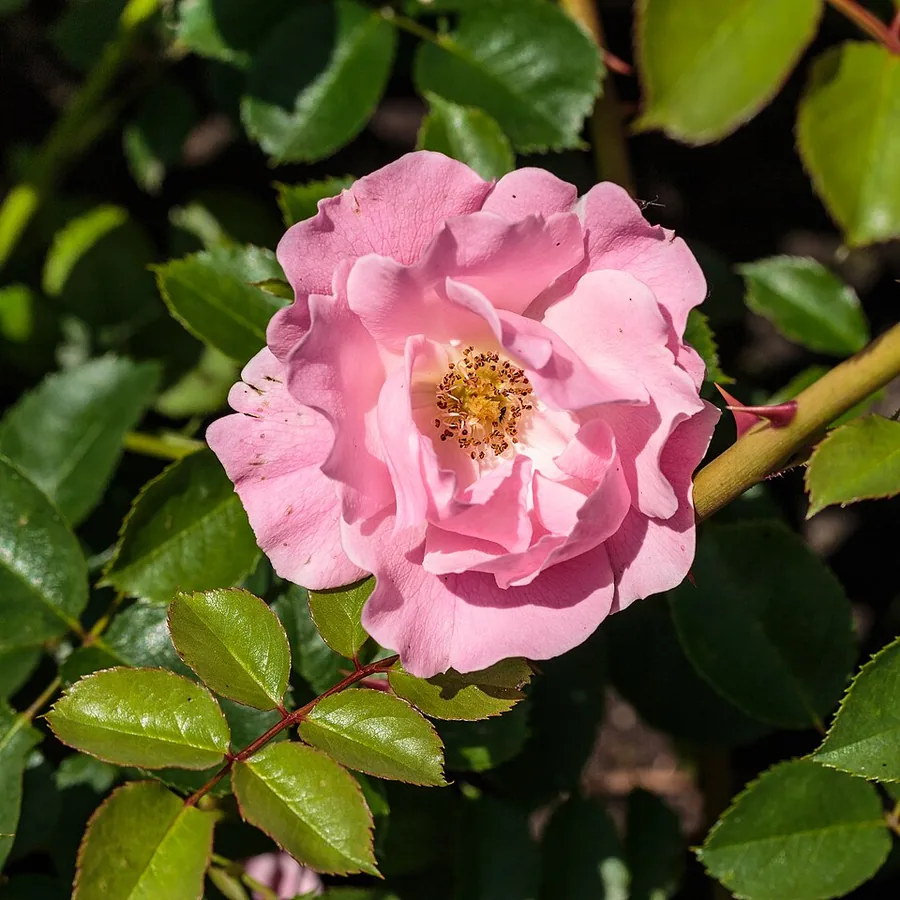
Set in full sun with room to breathe, a groundcover rose carpets the ground in bloom from spring to frost.
Full sun
Every 3–7 days
USDA 5–9
12–35 in · 30–90 cm
Overview
A groundcover rose is a true rose styled by breeding to run low and wide rather than stand upright, and that habit is what makes it such a graceful player in the garden. It belongs to the genus Rosa in the rose family, and where a hybrid tea asks for constant attention, this one offers a relaxed, spreading form that settles a bed or eases the edge of a slope. Most keep below 3 feet (90 cm) in height while reaching far wider, so a handful of plants shapes a whole stretch of ground.
Its charm is the long season of flower. Bloom comes in waves from late spring through to frost, often without deadheading, so a planting holds color across the months when a garden is most lived in. That makes it a natural choice for banks, borders, and the softer margins of a terrace or a path, where a low drift of color sets the mood without demanding a standing weekly ritual.
It is among the most easygoing roses to keep, though a little placement thought pays off. Give it full sun with air moving freely around the canes, keep water off the leaves, and it returns a long, generous show that carries a space through the warm months. Tuck it into damp shade instead and the setting invites black spot and mildew rather than bloom.
Care
The short version: a sunny open spot, fertile and well-drained soil, a deep drink about twice a week at the base rather than overhead, a light prune in late winter, and enough room for air to drift through the canes.
Light
Give a groundcover rose full sun, at least six hours a day, and it answers with the fullest bloom and the healthiest foliage, the display a garden is planted for. It will accept partial sun or light shade, but the flowering thins and the damp, shaded leaves grow more prone to disease.
Water
Water deeply and regularly, roughly twice a week according to soil and weather, and do it in the morning. Direct the water to the base of the plant, since wet leaves are how black spot and mildew take their start.
Soil
Set it in fertile, well-drained soil worked full of organic matter. These roses are relaxed about pH and take anything from acidic to neutral, with a range of 6.0 to 7.0 suiting them well.
Temperature
Groundcover roses hold up across a wide range, hardy from about -20°F to 100°F (-29°C to 38°C). That cold tolerance is what carries a planting through winter in zones 5 to 9 with little fuss.
Humidity
Ordinary outdoor humidity poses no trouble, so there's no number to chase. Air movement counts for far more than the moisture level, since still, crowded air around the canes is what lets leaf diseases settle in.
Feeding
Feed with a slow-release nitrogen fertilizer in spring and again in fall, at about a pound of nitrogen per 1,000 square feet across the two applications. Steady, moderate feeding keeps the bloom coming without forcing the soft, sappy growth that draws aphids.
Pruning
These roses spare a garden the heavy, precise pruning a hybrid tea demands. Shear or shape them lightly in late winter to early spring for a denser, bushier form, cut away any dead or diseased canes, and give the oldest stems a firmer rejuvenation cut every 2 to 3 years to keep them vigorous.
Repotting
Groundcover roses live in the ground as landscape shrubs and rarely sit in a pot. Where one is kept in a container, repot it when roots begin circling the inside or slipping out the drainage holes.
Size & spacing
Plants reach about 12 to 35 inches (30 to 90 cm) tall and spread wider than they stand, around 2 to 4 feet (60 to 120 cm) across. Give each one room to fill out so air moves freely and the leaves stay dry.
When to plant
Groundcover roses are hardy across zones 5 to 9 and settle in for years once they root, a quietly permanent part of the planting. Set them out in spring after the last frost, give them a light prune in late winter as they stir, and let the color roll on from late spring until frost.
Northern hemisphere
Southern hemisphere
Typical months for a temperate climate: start earlier in warm zones, later where spring frosts linger.
- Plant: spring after the last frost
- Harvest: Continuous bloom from late spring or early summer through fall (May to frost)
Hardiness
USDA hardiness zones: 5–9
Temperature: down to -29°C
Troubleshooting
Most of what unsettles a groundcover rose shows on the foliage, and it traces back to damp leaves or crowded, still air around a bed. Noticing the early signs and tidying up quickly keeps a small blemish from spreading across the planting. Match what you see below, then act while it still helps the look.
Unruly red shoots in warped, thorny clusters
The most serious problem a planting can meet is rose rosette disease, a virus carried by minute eriophyid mites that has no cure once it arrives. The signs read clearly against a tidy bed: red shoots that race upward, a snarl of extra thorns, and warped witches-broom clusters that never resolve. Lift the affected plant with its roots, bag it for disposal rather than the compost, and clear any wild multiflora roses nearby that keep the disease in circulation.
Fix:
- Remove and destroy infected plants promptly including roots
- Do not compost infected material
- Replace with resistant plants and avoid planting roses in the same spot immediately
Dark leaf spots framed in yellow
The culprit here is black spot, a fungus that arrives once foliage stays damp and the air around a planting goes still. It rises from the lower canopy, tinting leaves yellow before they fall and thinning the look of a bed. Clear away the spotted leaves, tidy any that have dropped, and give the planting a morning drink at the base so the foliage dries before the day cools.
Fix:
- Remove and discard infected leaves and fallen debris
- Avoid overhead watering and water at the base in the morning
- Improve air circulation and apply a fungicide in humid climates if needed
A soft white haze over leaves and buds
A pale, talc-like veil across the leaves and shoot tips points to powdery mildew, which dulls the crisp look of a planting and curls the fresh growth. It settles in where a bed sits crowded and shaded and the air seldom stirs. Thin the planting with a light prune to let air pass, ease back on nitrogen so growth stays firm, and reach for a fungicide only if the haze keeps spreading.
Fix:
- Prune to improve air circulation
- Avoid excess nitrogen that pushes soft growth
- Apply an appropriate fungicide if severe
Soft insects gathered along the fresh shoots
Small clusters along the tender buds and shoot tips are aphids, drawn to the softest new growth to feed on the sap. They leave a sticky honeydew that can bring on sooty mold and pull the new shoots out of line, unsettling the trim look of a border. A firm spray of water sends them off, insecticidal soap handles any that linger, and resident lady beetles keep the rest in balance.
Fix:
- Spray plants with a strong stream of water to dislodge aphids
- Apply insecticidal soap if populations are high
- Encourage natural predators such as lady beetles
Toxicity
A reassuring note for homes with pets or children: true roses are non-toxic to cats, dogs, horses, and people, so a chewed leaf or a stolen petal does no chemical harm. The only real hazard is mechanical. The thorns can scratch or prick, so wear gloves to prune and place the canes where pets and children will not brush past them.
Safe for
People · Cats · Dogs · Horses · Rabbits · Livestock · Birds
Cats None
A cat that wanders through the planting comes to no chemical harm, since a true rose is non-toxic and a nibbled leaf or petal means nothing. The thorns are the only note of caution, since the canes can scratch an inquisitive nose or paw.
Dogs None
A dog can pass through or chew the foliage without any risk of poisoning at all. Scratches are the thing to watch instead, as the prickles can catch a snout or a paw pad.
Horses None
A browsing horse takes no chemical harm from a rose planting. The sharp canes are the concern worth planning around, so set the bed where a horse will not push into the thorns.
Rabbits None
Rabbits can graze the leaves and stems freely, with no poisoning risk to trouble them. Only the thorns call for care around such small, soft-skinned visitors.
Livestock None
Cattle, goats, and sheep can browse the foliage without harm, since nothing in a true rose is toxic to them. The prickly canes are the sole concern, and even then it amounts to a scratch.
Birds None
Birds face no poisoning risk from the leaves, petals, or hips. The dense thorny canes even lend the garden a benefit, offering small birds cover and a safe place to perch.
People None
Rose petals and hips are safe to eat, and the hips carry a well-known store of vitamin C. The thorns are the single hazard to respect, so slip on gloves before pruning or handling the canes.
Thorns and prickles can cause scratches or puncture wounds; wear gloves when pruning or handling and place plants where pets and children will not brush against the canes.
Varieties
Groundcover roses arrive in several well-loved series and named plants, each shaped by breeding toward a slightly different size, color, or hardiness to suit a particular corner of the garden. These are the ones most often found at the nursery.
Flower Carpet series
A low, trailing groundcover rose of roughly 2 to 3 feet tall and 3 to 4 feet wide, it lays down a continuous sweep of bloom over glossy, disease-resistant foliage and never asks for deadheading.
Drift series
A compact, low-spreading landscape rose that brings groundcover toughness into a small, neat mound that reads well at the front of a bed.
Red Meidiland
A vigorous, disease-resistant rose that carries a slope or a low-maintenance planting with quiet confidence.
Ralph's Creeper
A spreading groundcover rose prized for its bright orange-red flowers held close to the ground.
How to propagate
A groundcover rose you already grow can furnish more for the garden, either by rooting a cutting or by layering a low cane straight into the soil.
Stem cuttingsModerate
Softwood cuttings in late spring to summer or hardwood cuttings in fall · Several weeks to a few months to root
New plants come from healthy current-season growth, taken as softwood cuttings in late spring through summer or hardwood cuttings in fall, and they need several weeks to a few months to root. One point of etiquette before propagating to sell: many named groundcover roses are patented and may not be reproduced for resale.
LayeringEasy
Spring to summer · One growing season
The low, spreading canes make layering effortless, since they root on their own wherever they settle against moist soil. Pin a cane down in spring or summer, cover a section, and let a full growing season pass before cutting the rooted piece free to stand as a new plant.
Myths
Roses are poisonous to dogs and cats and shouldn't be planted where pets roam.
There is no need to keep a rose planting away from where pets wander, since the ASPCA lists true roses in the Rosa genus as non-toxic to cats, dogs, and horses, and a chewed leaf or petal poisons nothing. The one caution a garden owes its pets is the thorns, not any poison. Do mind the lookalikes, though, since a plant like desert rose borrows the rose name yet belongs elsewhere and can be toxic.
All roses need heavy, complicated yearly pruning at exact bud nodes.
Groundcover and landscape roses free a garden from the exacting bud-node ritual, which is part of their easy charm. A light shearing and the removal of dead or diseased canes is the whole of it, a far cry from the heavy, precise pruning a hybrid tea expects.